
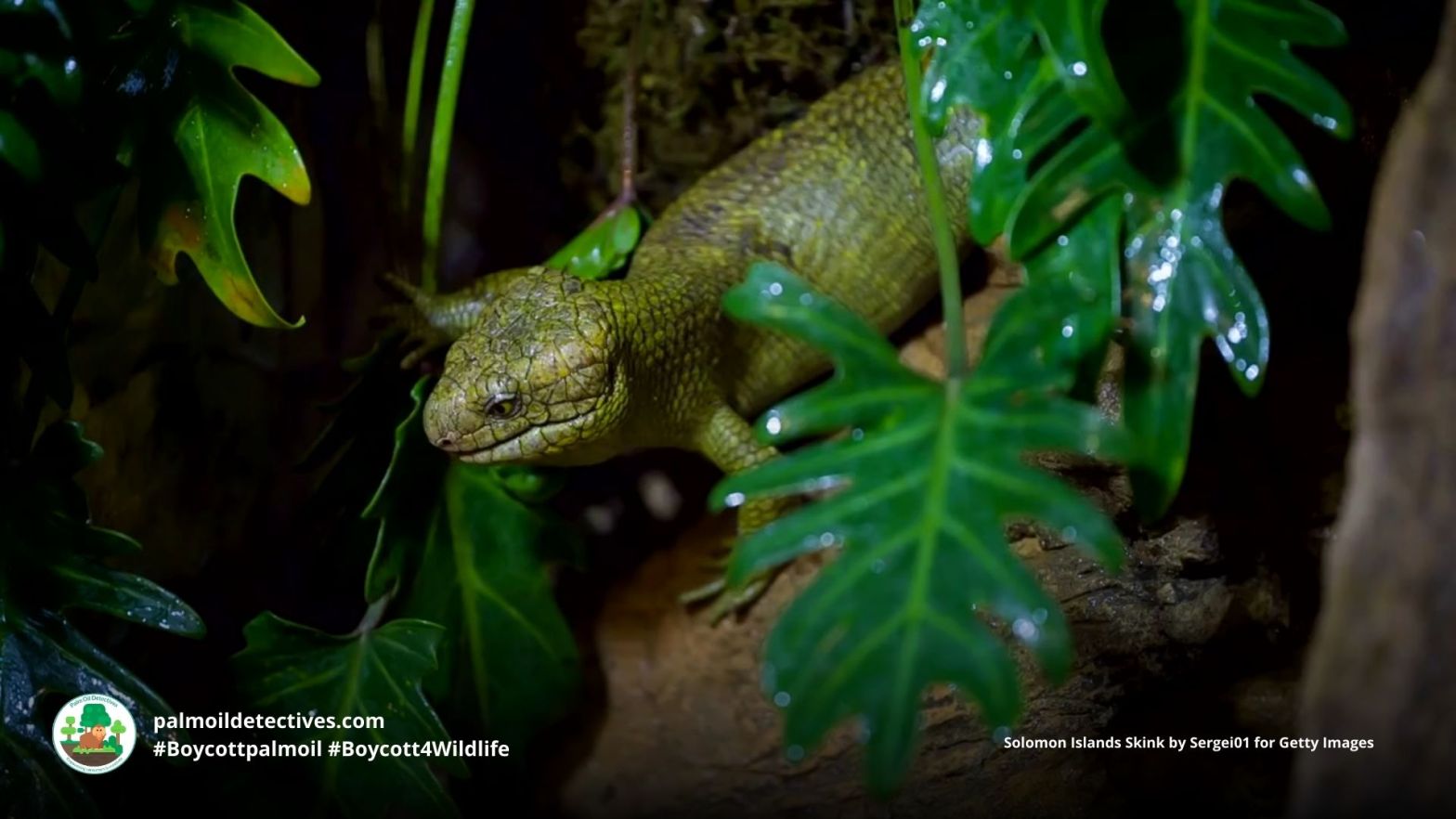
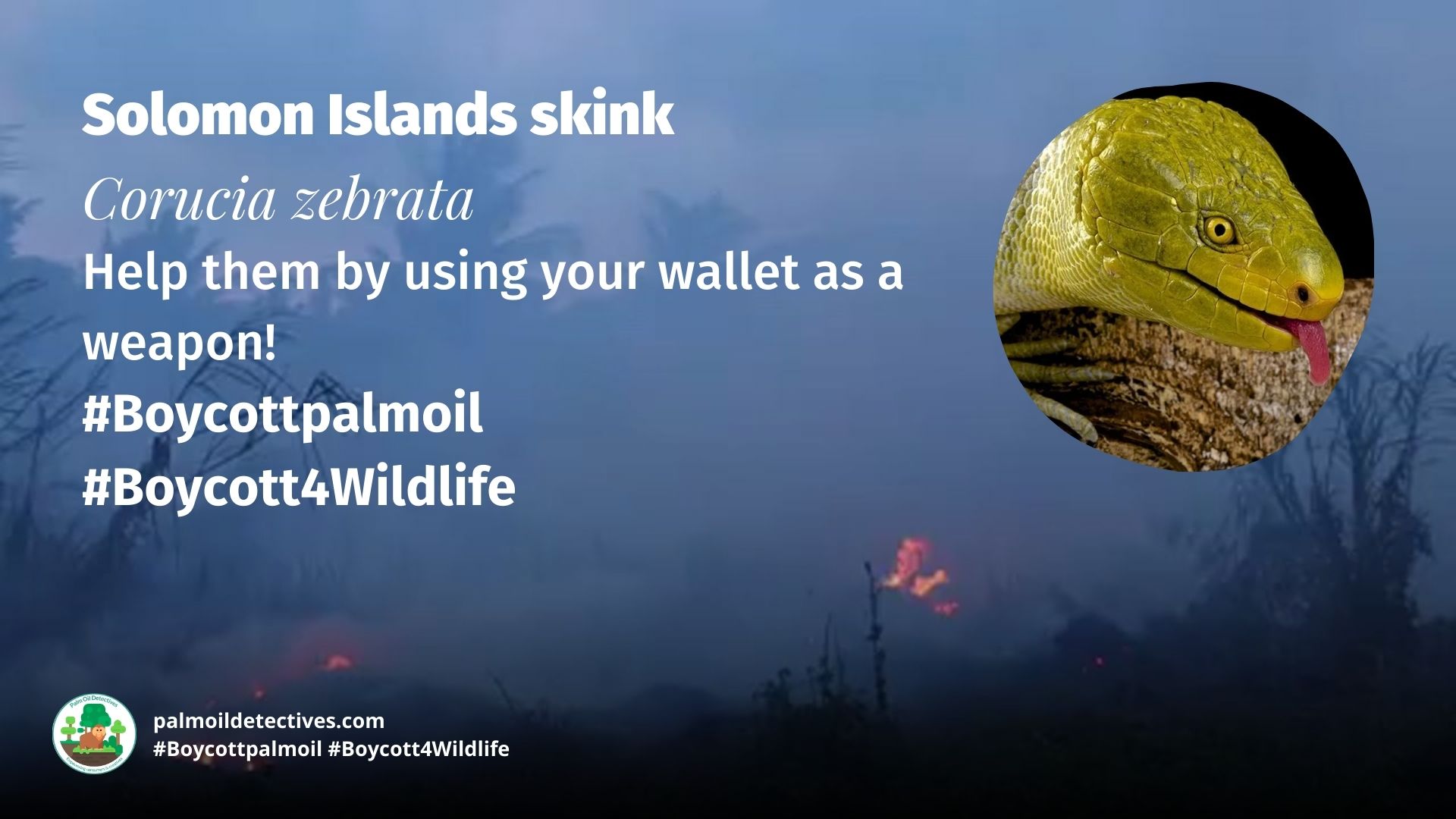
Solomon Islands skink Corucia zebrata
Near Threatened
Extant (resident)
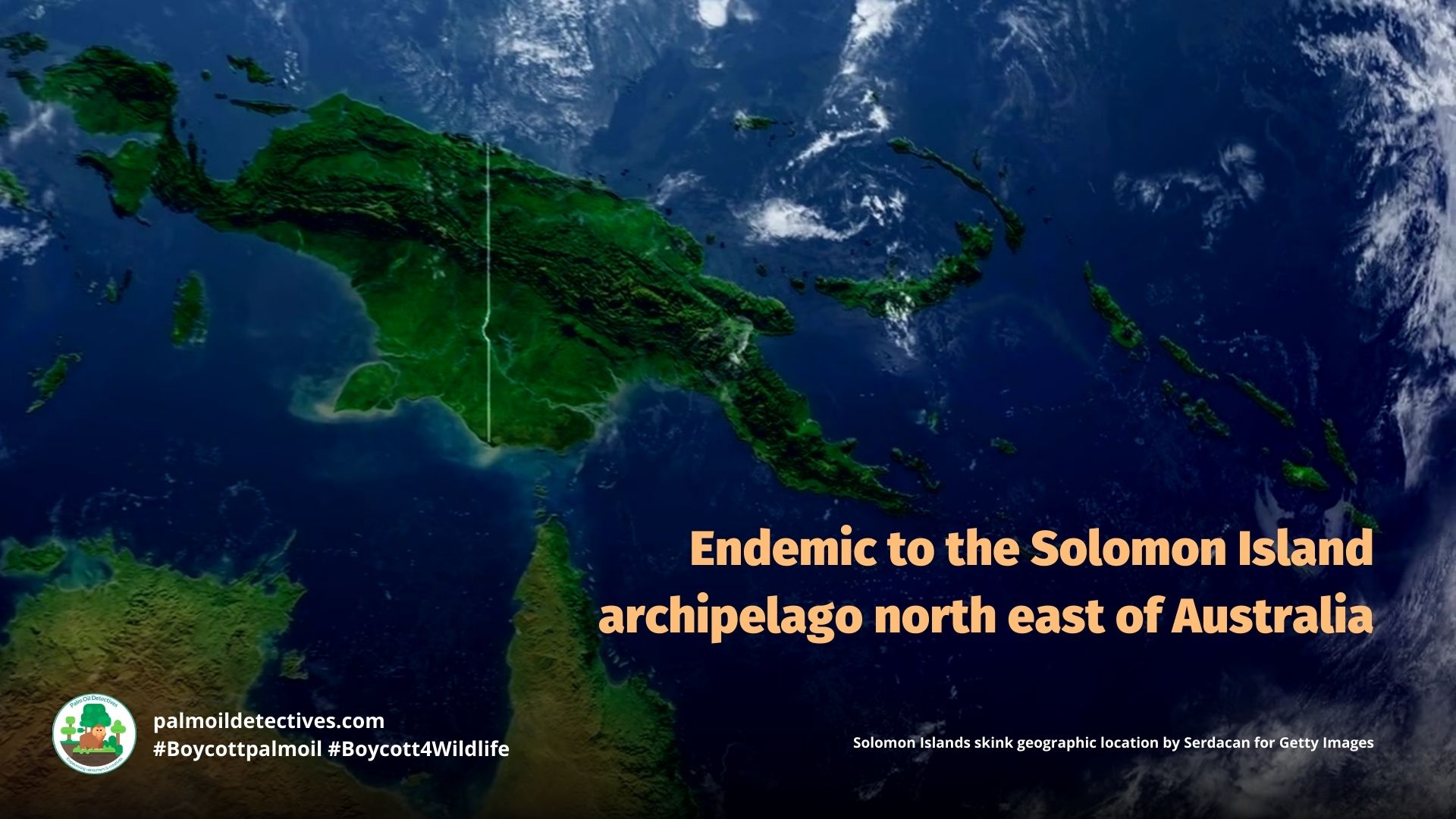
Solomon Islands archipelago, Papua New Guinea, Melanesia.
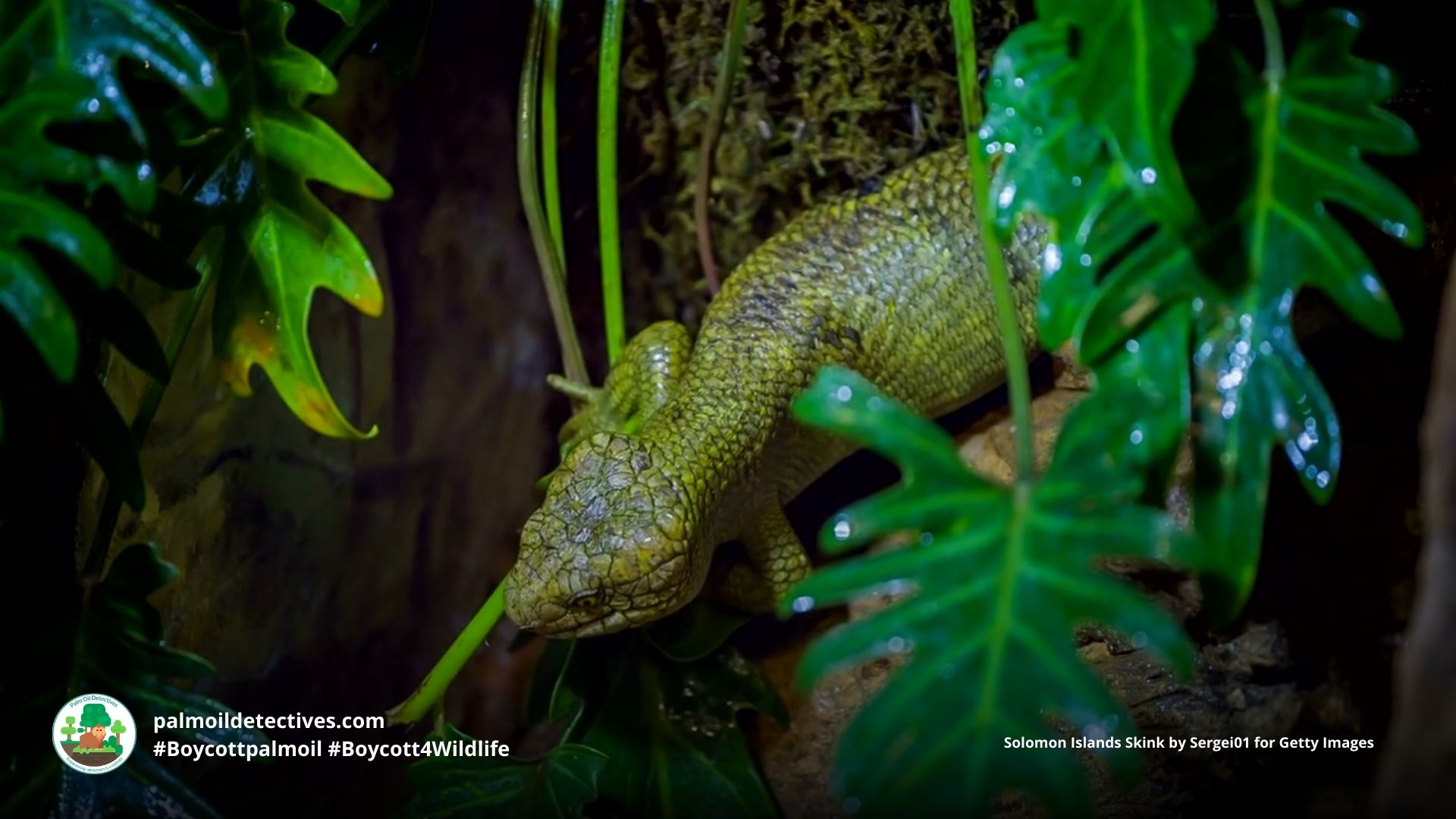
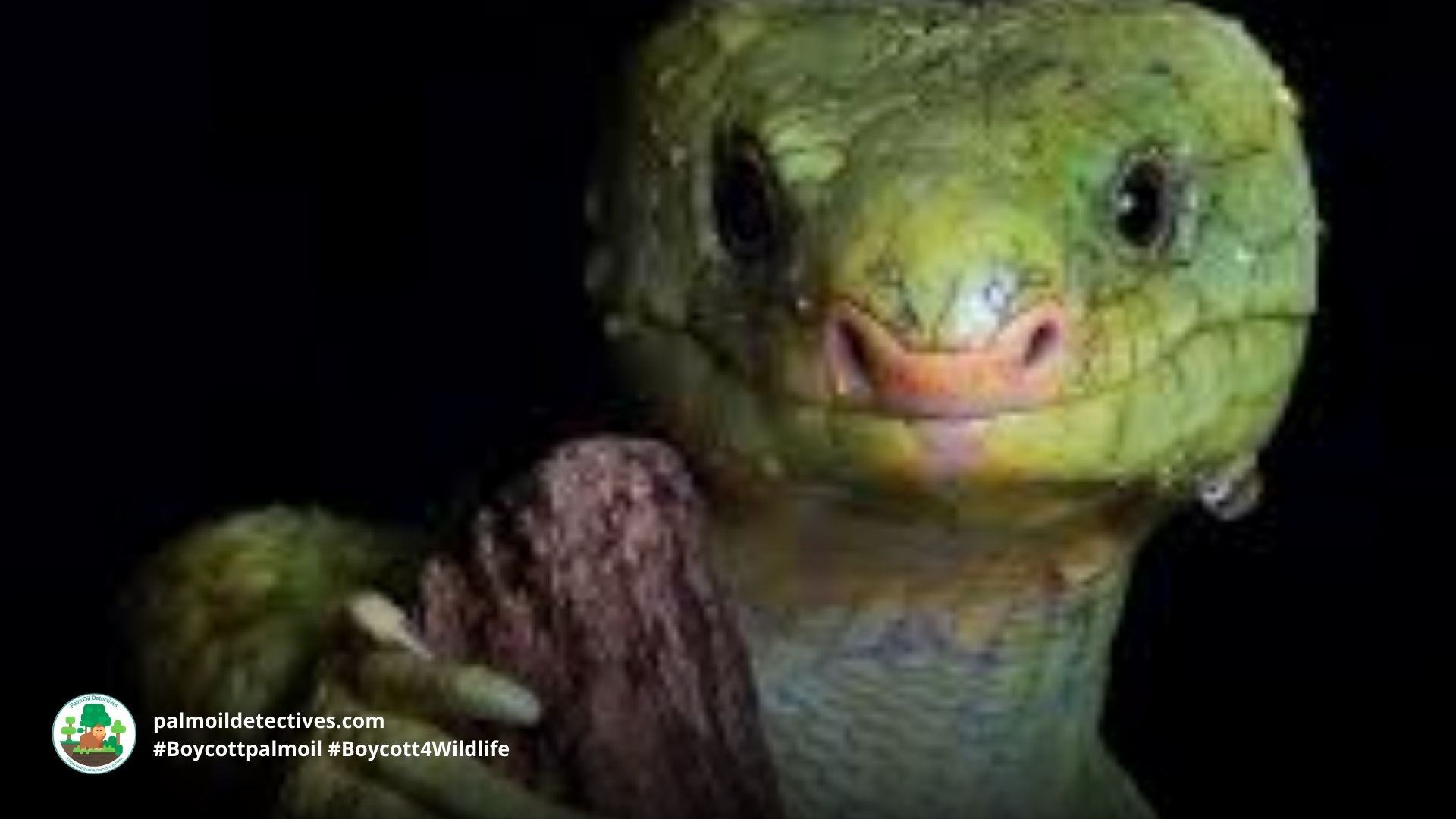
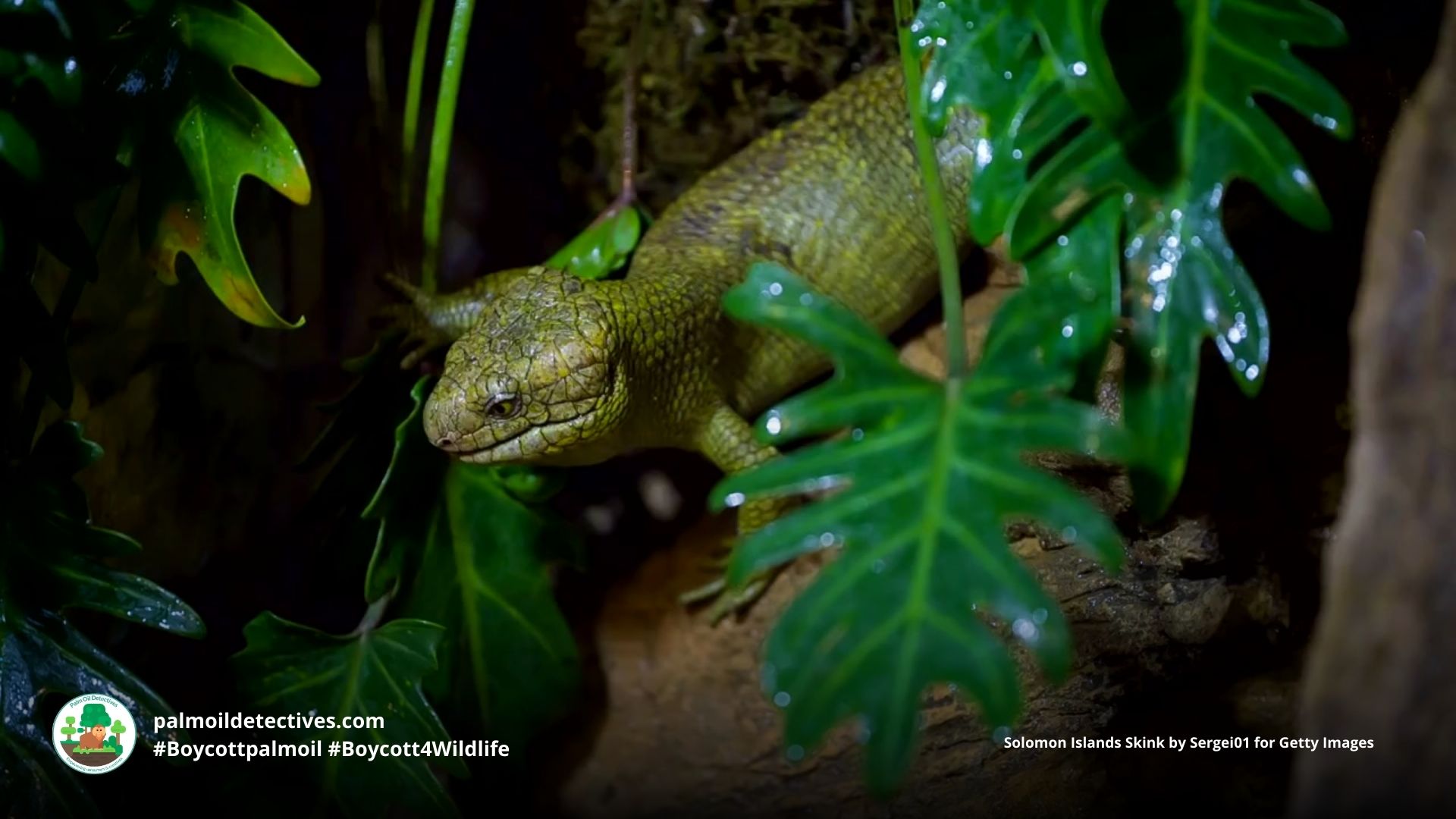
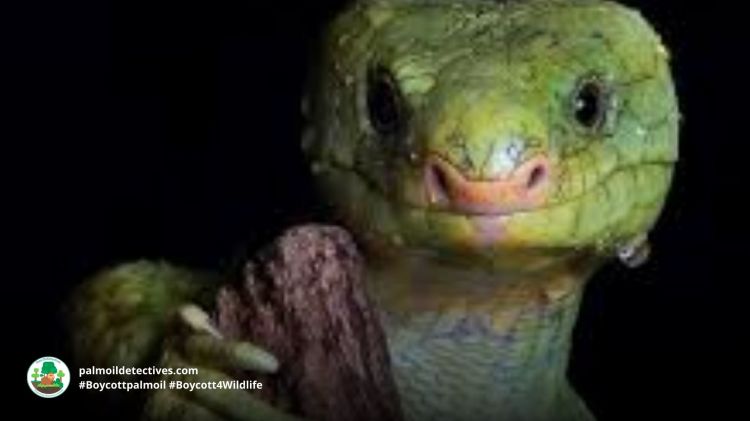
Imagine a creature straight out of a fantastical computer game – this could be the Solomon Islands skink Corucia zebrata, also affectionately known as the monkey-tailed skink. Their silhouette dances between shadows of the jungle in the Solomon Islands archipelago, to the north east of Australia. They are the largest species of skink alive and boast a long, slender body poised elegantly on short, yet robust legs. Their head forms a perfect triangle, housing small, beady and curious looking eyes. This magnificent reptile is now classified as Near Threatened due to rainforest destruction of their home for palm oil, timber and mining. Help them to survive every time you shop – #Boycottpalmoil #Boycott4Wildlife
Solomon Island Skinks of #Melanesia 🇸🇧 are striking looking green #reptiles 🦎🐍 They have prehensile tails like #monkeys and are threatened by #palmoil and other #deforestation. Help them and #Boycottpalmoil #Boycott4Wildlife when you shop @palmoildetect https://wp.me/pcFhgU-7jc
The world’s largest #skink 🌍🦎 is the Solomon Islands Skink, a #lizard endemic to #Melanesia 🇸🇧 They are ‘Near Threatened’ from #palmoil and other threats, help them to survive 🌴☠️⛔️ #Boycottpalmoil #Boycott4Wildlife @palmoildetect https://wp.me/pcFhgU-7jc
Appearance & Behaviour
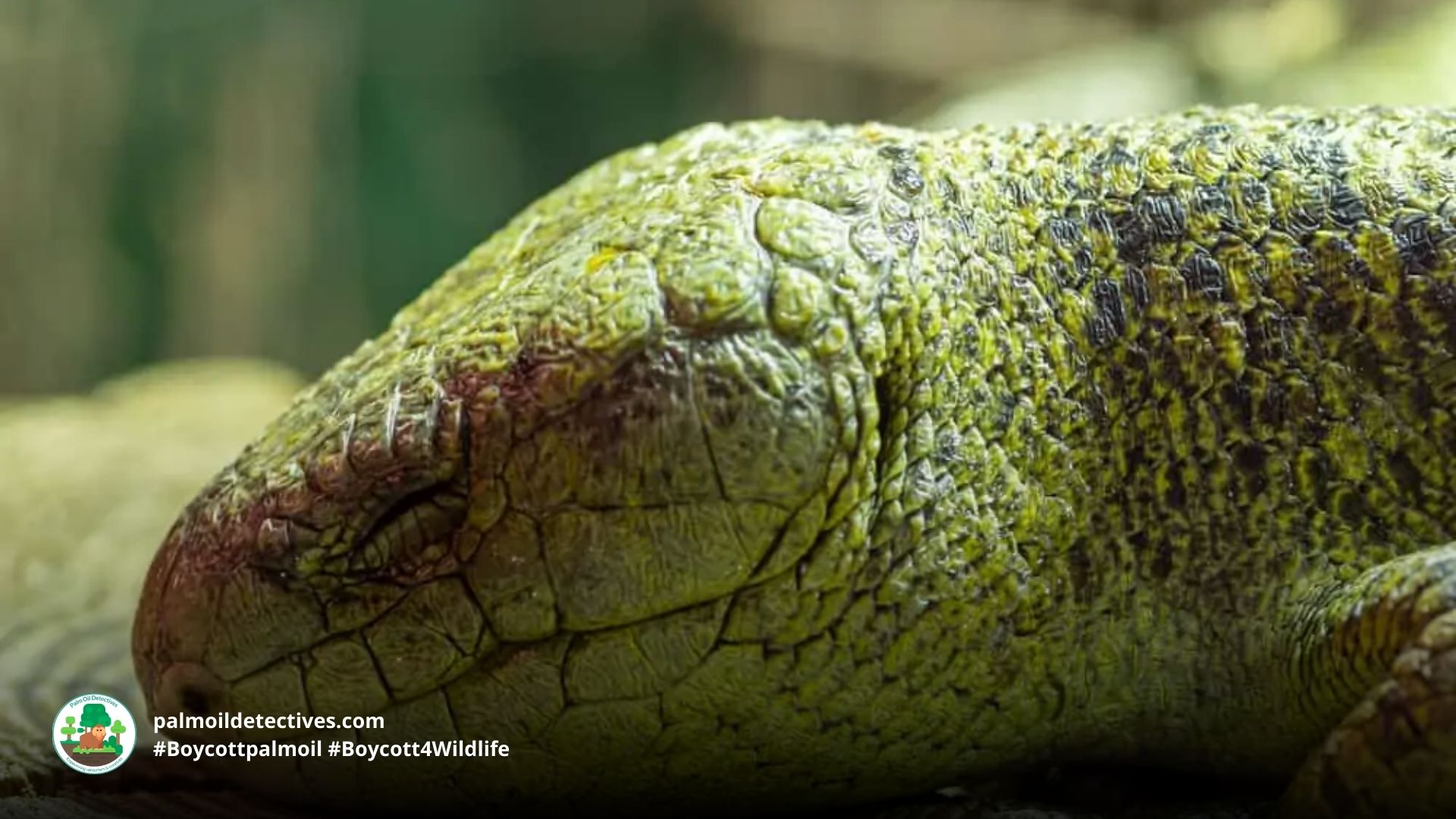
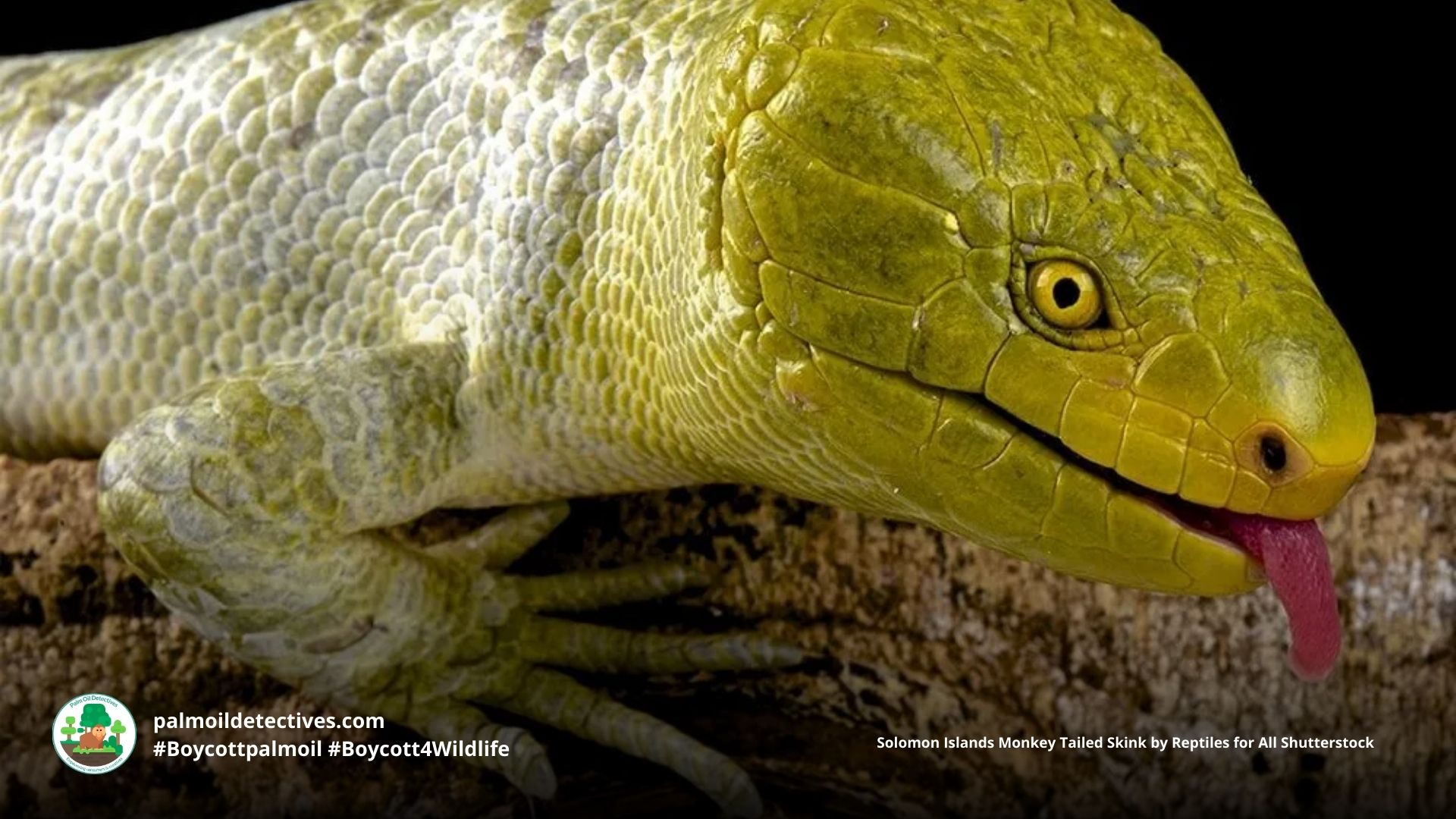
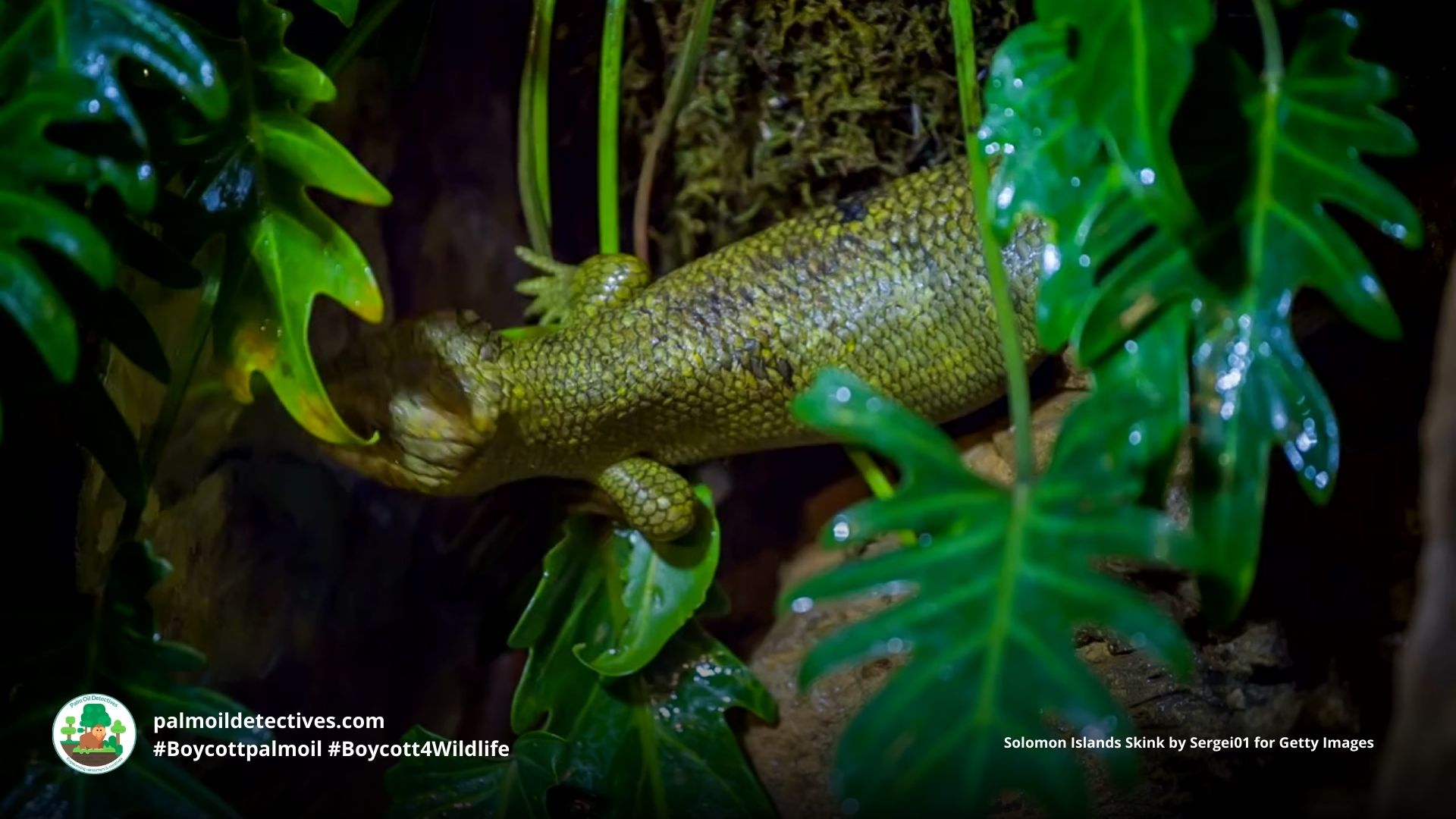
The true acrobatic power of the Solomon Islands Skink becomes evident when you see their prehensile tail in action. This enables them to have the grace normally afforded to a small mammals like monkeys or possums as they navigate the forest branches. The males, with their broader heads and sleek bodies, carry a unique V-shaped scale pattern, which is absent in the females. Their dark green, light brown and black scales shimmer in the sunlight, while their underbelly features yellow and green hues. Their sharp nails are curved like a crescent moon and their small teeth are surprisingly sharp. As the largest of the skink species in existence, they are undisputed climbers of their leafy realms, making homes in the verdant domain of strangler figs in the Solomon Islands archipelago.


Threats
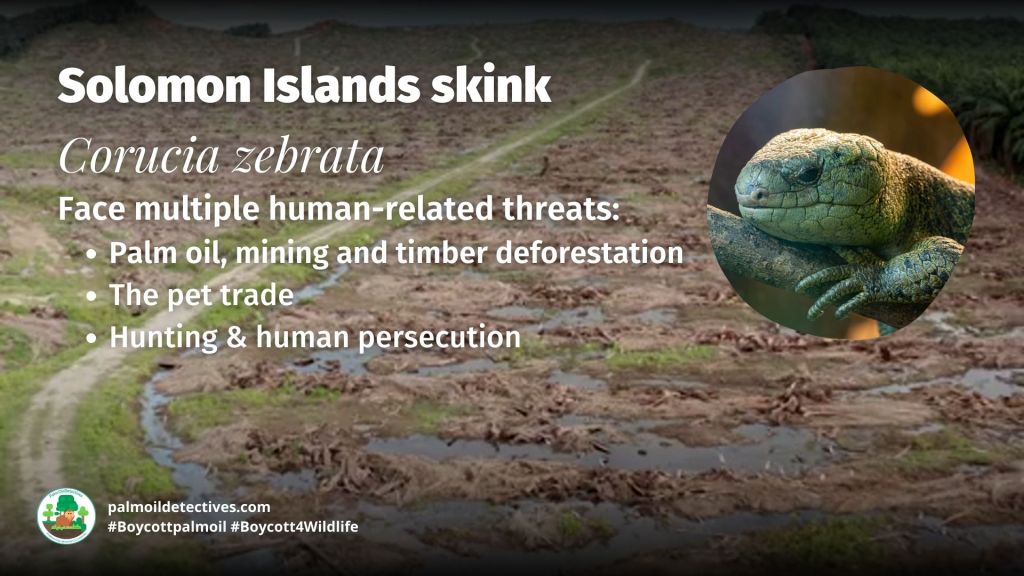
The Solomon Islands skinks face several significant threats that challenge their survival:
- Extensive and unrestricted deforestation for mining, palm oil and timber: The destruction of their forest habitat for mining, palm oil and timber logging is ongoing. Unlike in other countries this is not well-regulated and is therefore a major threat to this reptile.
- Consumption for Food: These lizards are hunted by local populations for consumption, impacting their numbers.
- Pet trade: The international pet trade puts pressure on their populations due to high demand for these unique creatures, which takes them away from opportunities to mate and reproduce in the wild.

Habitat
The Solomon Islands skink is strictly arboreal, making their home in the upper canopy of the forests in Papua New Guinea and the Solomon Islands. These lizards establish territories within the canopy, favouring areas where their food sources, particularly the strangler fig tree, are abundant. Their preference for living in trees extends to semi-cleared areas and cultivated food gardens, provided their dietary needs are met, illustrating their adaptability to varied arboreal environments.
Diet
As herbivores, Solomon Islands skinks have a diet that includes leaves, flowers, fruit, and growing shoots from a variety of plant species. Remarkably, they can consume the Epipremnum pinnatum plant without any ill effects, despite its high concentrations of calcium oxalate, which is toxic to many animals. Juvenile skinks often eat faeces from adults to acquire essential microflora needed for digesting their plant-based diet. This diet reflects their ecological niche as primary consumers within their habitat, playing a vital role in the ecosystem by contributing to the cycle of plant matter decomposition and nutrient recycling.
Mating and breeding
Solomon Islands skinks exhibit remarkable reproductive strategies, living in communal groups known as circuli. They are one of the few reptile species that practice viviparous matrotrophy, where the female provides a placenta to nourish the young inside her.
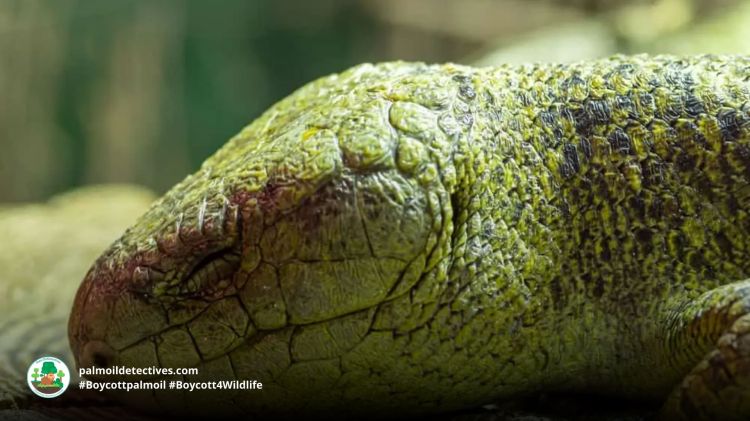
The gestation period lasts six to eight months, culminating in the birth of relatively large offspring. These newborns receive protection not only from their parents but also from other group members. This communal approach to raising young is extremely rare among reptiles.
This system allows for a supportive environment where the young can grow and eventually, around the age of one, set off to establish new groups or remain within their natal group for extended periods.
Support the Solomon Islands Skink by going vegan and boycotting palm oil in the supermarket, it’s the #Boycott4Wildlife
Support the conservation of this species
This animal has no protections in place. Read about other forgotten species here. Create art to support this forgotten animal or raise awareness about them by sharing this post and using the #Boycottpalmoil #Boycott4Wildlife hashtags on social media. Also you can boycott palm oil in the supermarket.
Further Information
Hagen, I.J., Harlow, P., Allison, A., Hamilton, A. & Tallowin, O. 2021. Corucia zebrata. The IUCN Red List of Threatened Species 2021: e.T196593A2463961. https://dx.doi.org/10.2305/IUCN.UK.2021-3.RLTS.T196593A2463961.en. Accessed on 28 February 2024.
Solomon Islands skink Wikipedia article: https://en.wikipedia.org/wiki/Solomon_Islands_skink
Solomon Islands Skink on Animalia.bio: https://animalia.bio/solomon-islands-skink

How can I help the #Boycott4Wildlife?
Take Action in Five Ways
1. Join the #Boycott4Wildlife on social media and subscribe to stay in the loop: Share posts from this website to your own network on Twitter, Mastadon, Instagram, Facebook and Youtube using the hashtags #Boycottpalmoil #Boycott4Wildlife.
2. Contribute stories: Academics, conservationists, scientists, indigenous rights advocates and animal rights advocates working to expose the corruption of the palm oil industry or to save animals can contribute stories to the website.



3. Supermarket sleuthing: Next time you’re in the supermarket, take photos of products containing palm oil. Share these to social media along with the hashtags to call out the greenwashing and ecocide of the brands who use palm oil. You can also take photos of palm oil free products and congratulate brands when they go palm oil free.
4. Take to the streets: Get in touch with Palm Oil Detectives to find out more.
5. Donate: Make a one-off or monthly donation to Palm Oil Detectives as a way of saying thank you and to help pay for ongoing running costs of the website and social media campaigns. Donate here
Learn about other animals endangered by palm oil and other agriculture
Learn about “sustainable” palm oil greenwashing
Read more about RSPO greenwashing
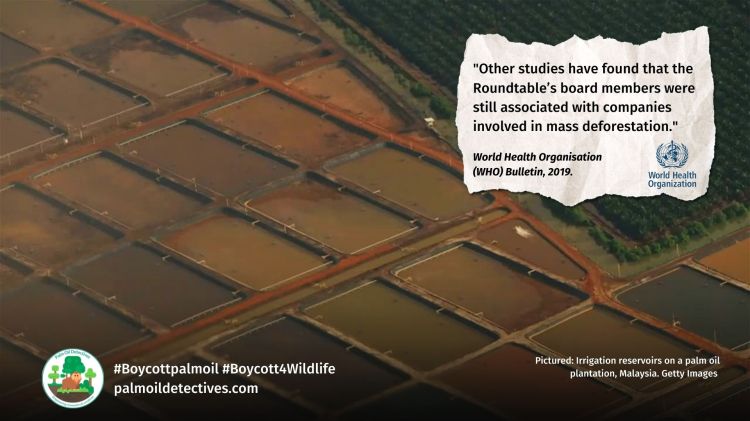
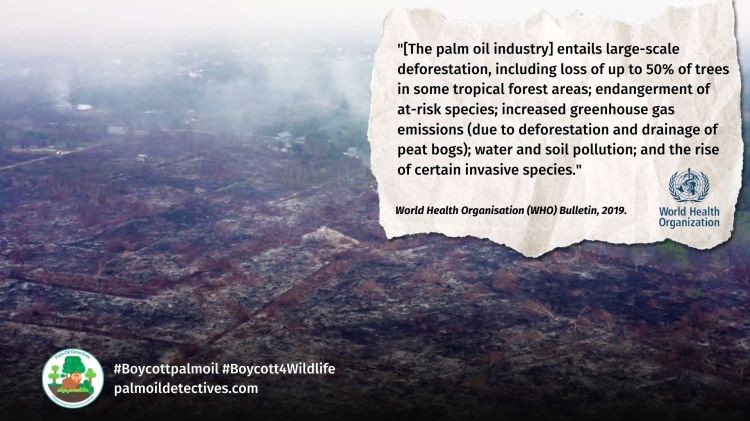
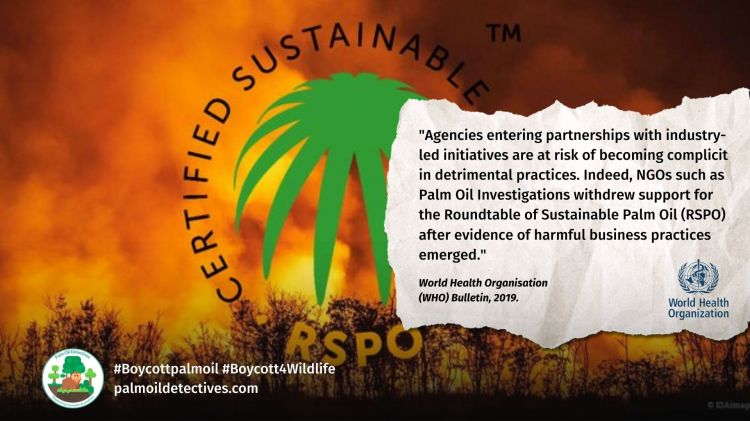
A 2019 World Health Organisation (WHO) report into the palm oil industry and RSPO finds extensive greenwashing of palm oil deforestation and the murder of endangered animals (i.e. biodiversity loss)


Discover more from Palm Oil Detectives
Subscribe to get the latest posts sent to your email.
 Palm Oil Detectives
One thought on “Solomon Islands skink Corucia zebrata”