
Vulnerable
Extant (resident)
India (Nicobar and Andaman Islands)
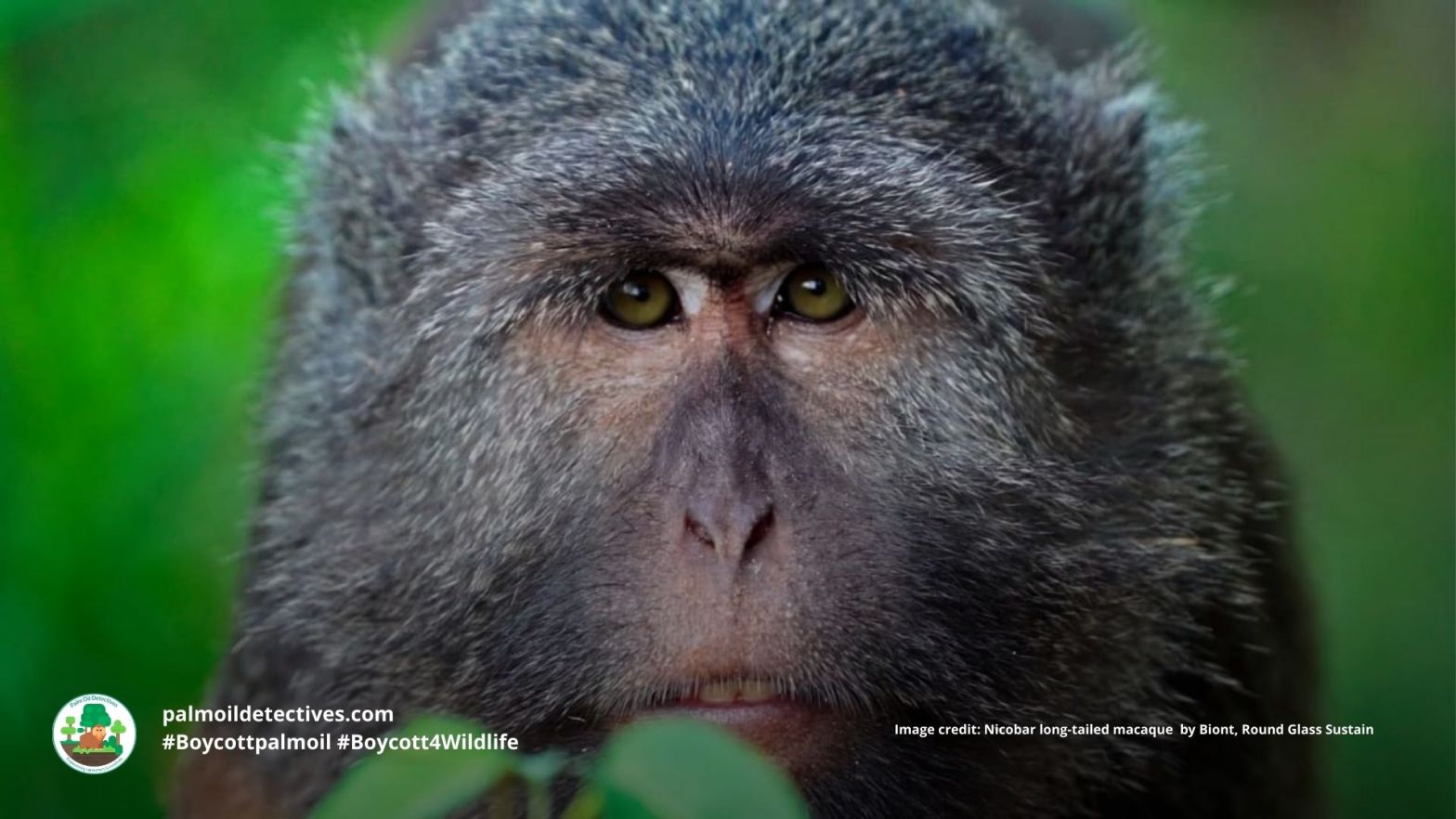
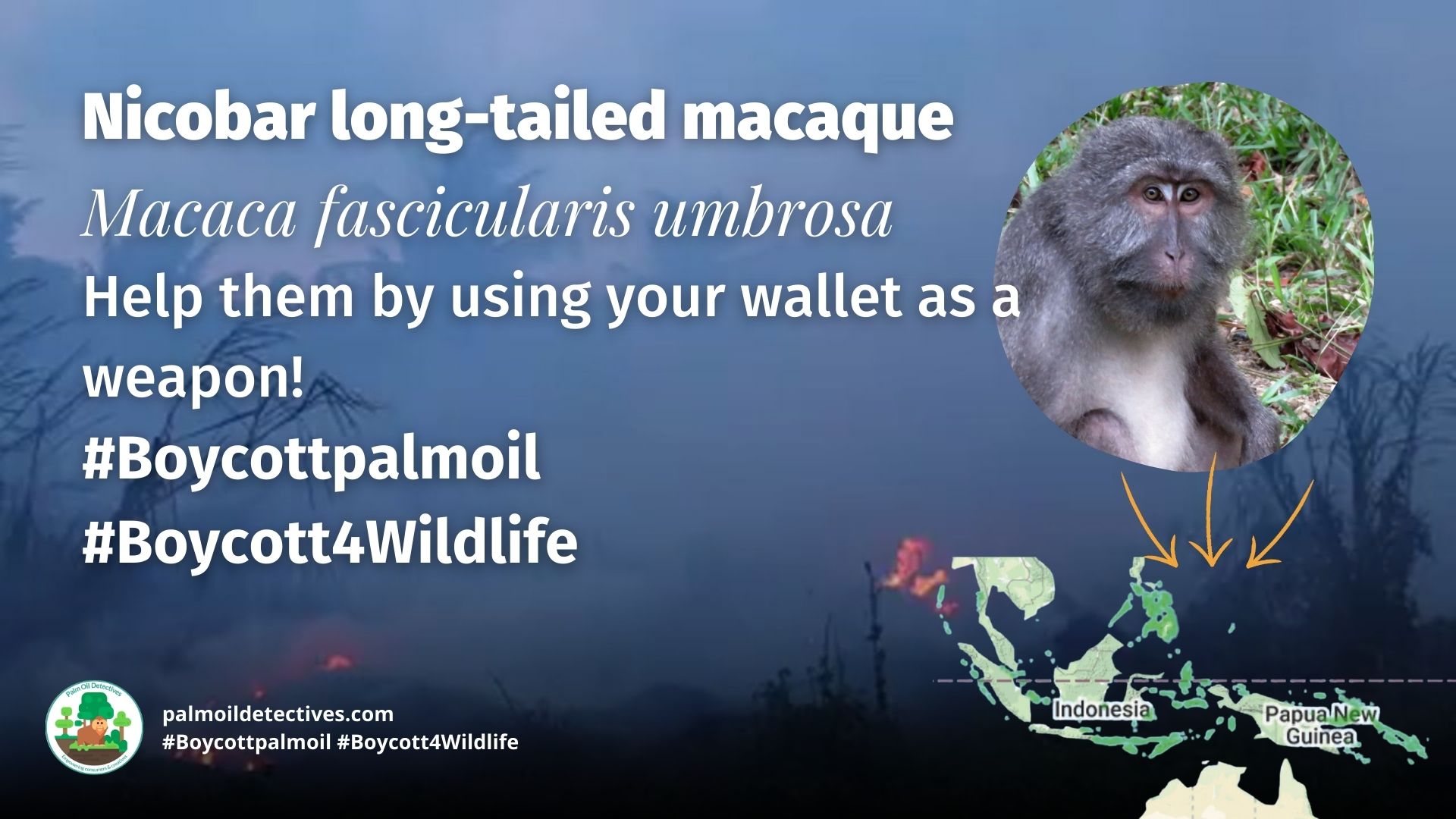
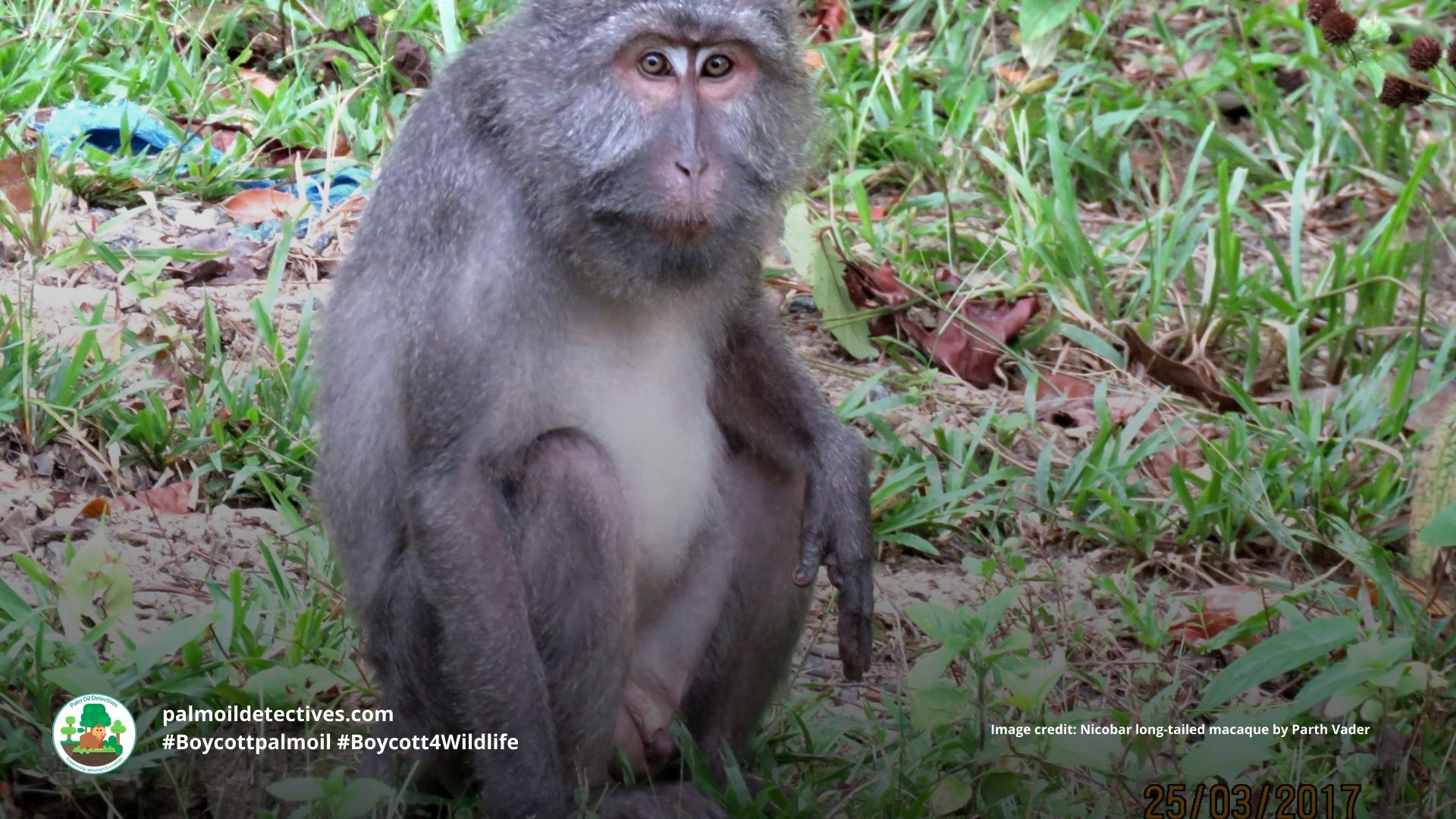
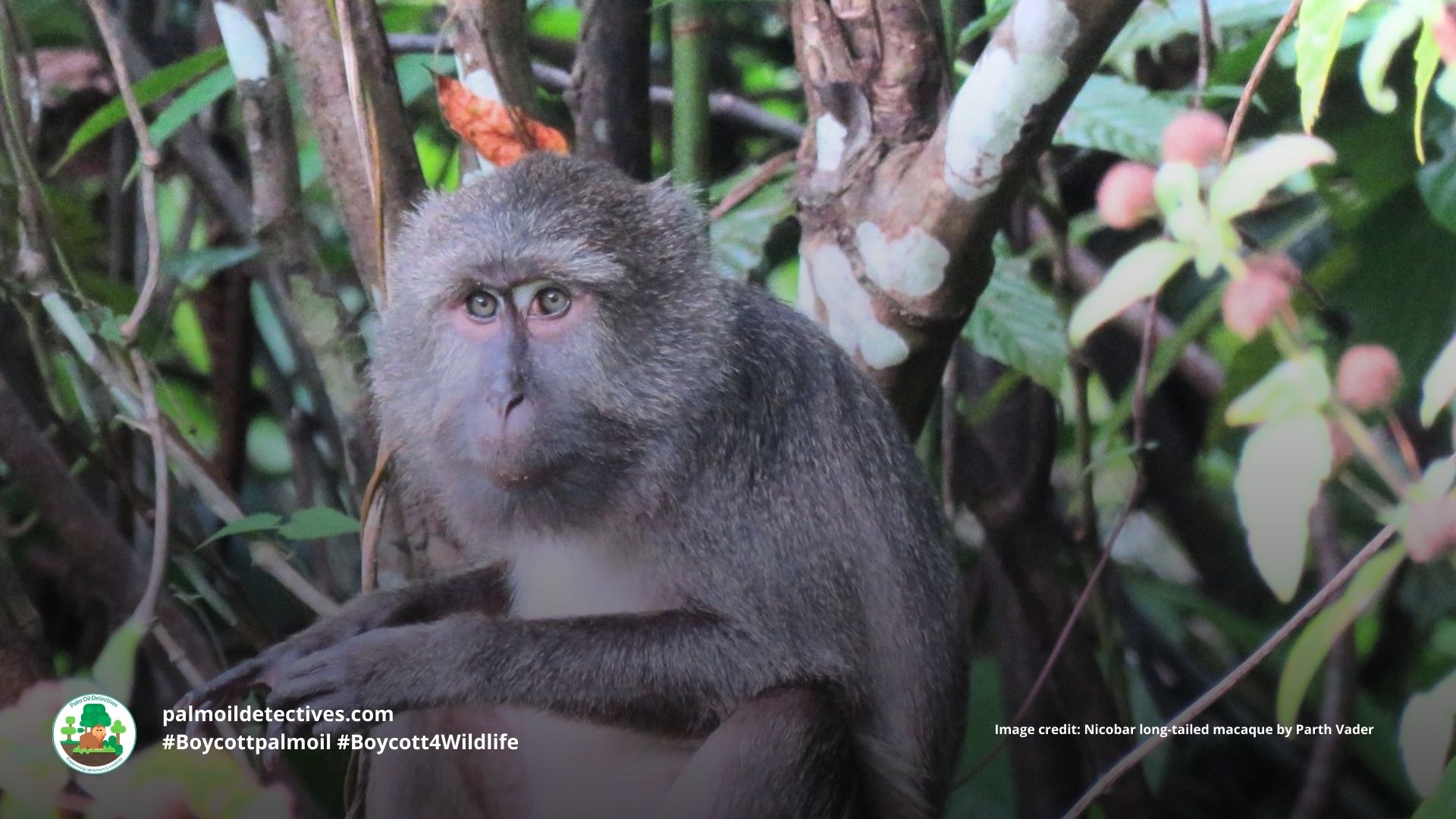
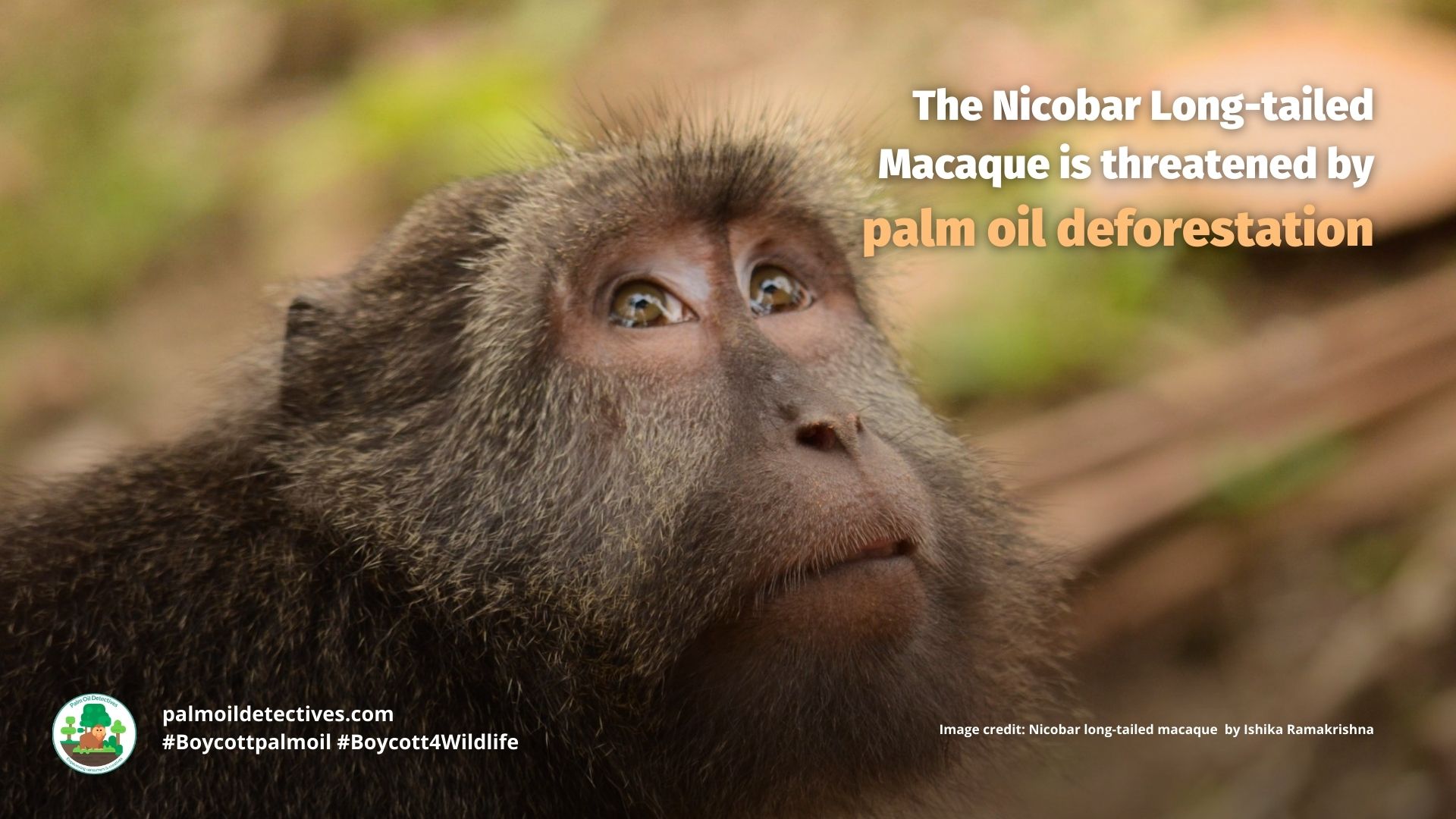
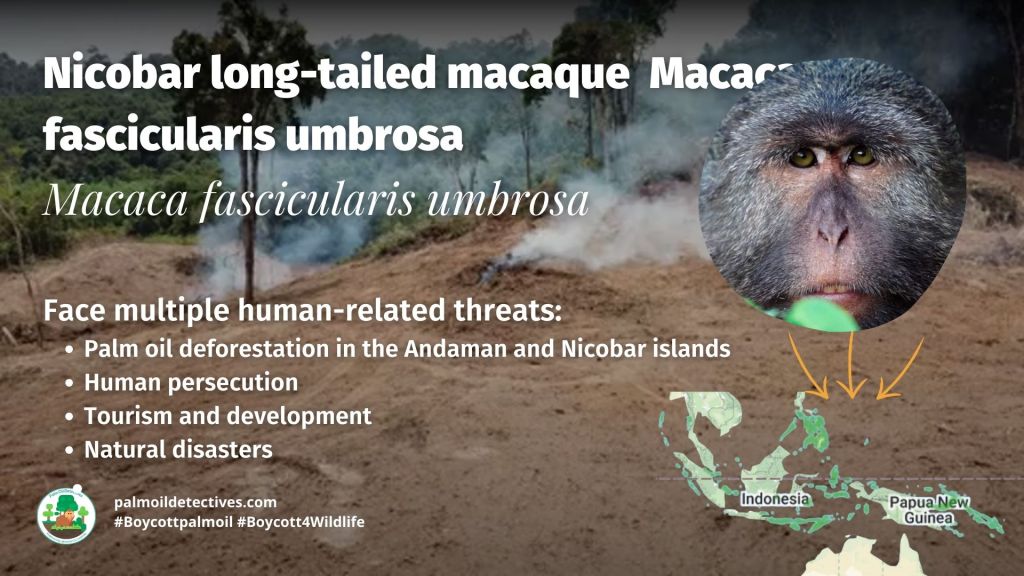
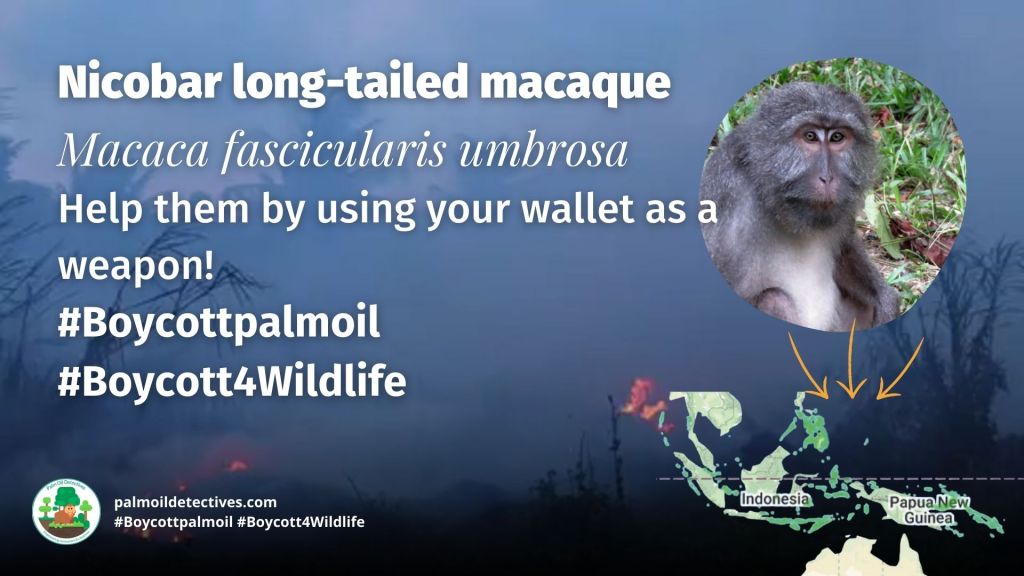
Discover the intriguing world of the Nicobar long-tailed macaque, a true survivor of India’s Andaman and Nicobar Islands. These intelligent, adaptable, and highly social creatures navigate a variety of habitats with remarkable resilience. With their broad, chubby faces , deep-set and inquisitive eyes and wiry fur, they differ in appearance from their mainland counterparts. Nicobar long-tailed macaques now face threats including palm oil deforestation and human persecution in their island home. Help them to survive and safeguard their future every time you shop, #Boycottpalmoil and #Boycott4Wildlife.
The #Nicobar long-tailed #macaque, is a gem of #India’s Andaman and Nicobar Islands. With charming chubby faces and curious eyes, they’re easy to love. Yet danger looms from #palmoil #ecocide. Help them and #Boycottpalmoil #Boycott4Wildlife @palmoildetect https://wp.me/pcFhgU-7rM
Resilient tool-using Nicobar long-tailed #macaques are now #vulnerable from #palmoil and human persecution in India’s Nicobar and #Andaman islands. Take a stand for them with your consumer choices! #Boycottpalmoil, and #Boycott4Wildlife @palmoildetect https://wp.me/pcFhgU-7rM
Appearance & Behaviour
Tool-using, intelligent and charming Nicobar Long-tailed Macaques are survivors of the far-flung Indian Nicobar and Andaman islands.
In the sun-drenched Andaman and Nicobar Islands, the Nicobar long-tailed macaque flourishes, showcasing their intelligence, adaptability, and social nature. Amidst the rich biodiversity of Great Nicobar Island, these robust, grey monkeys begin their day with grooming rituals and foraging, favoring the native screw pine before venturing into nearby farms in search of coconuts and areca nuts.
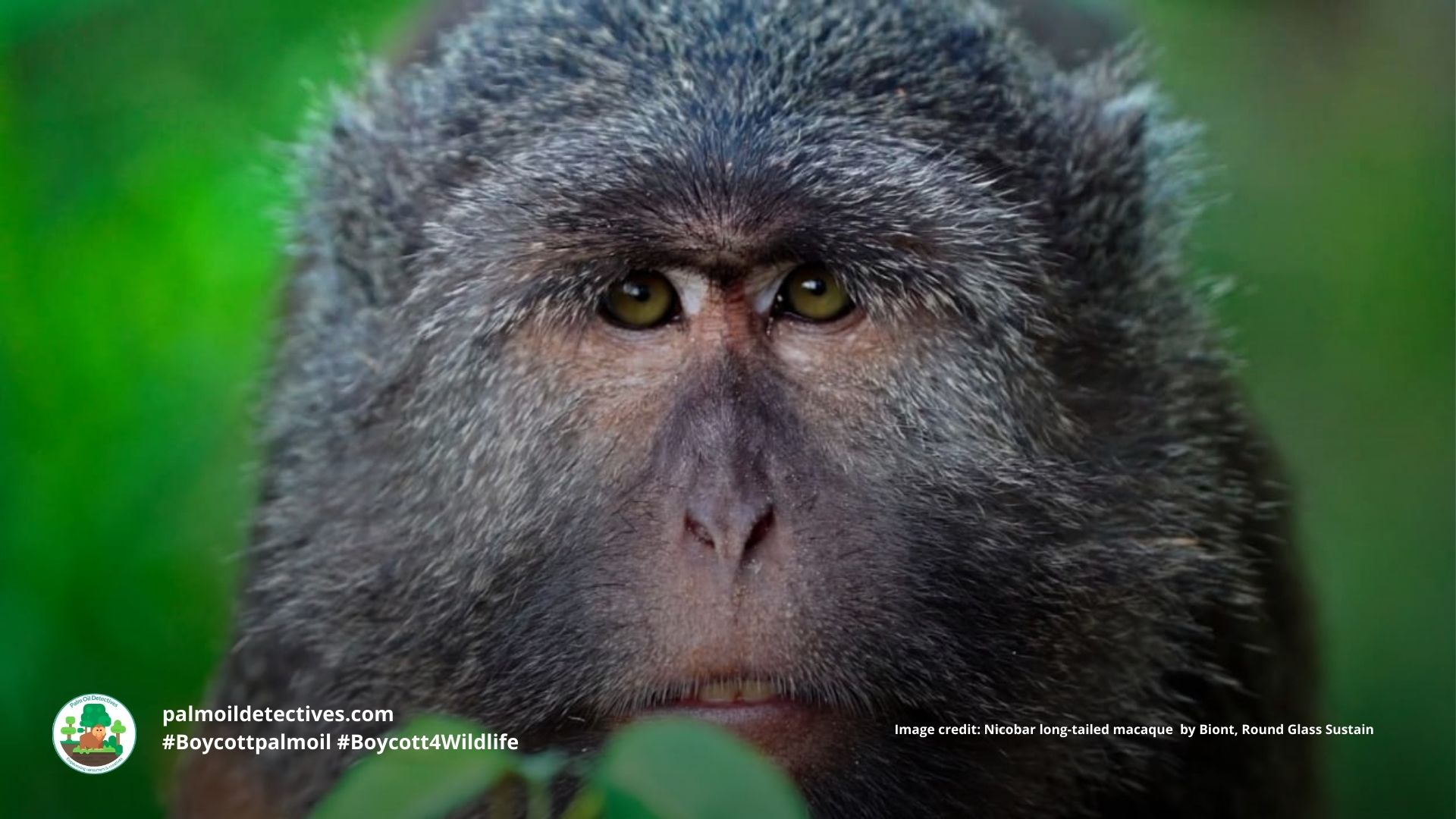
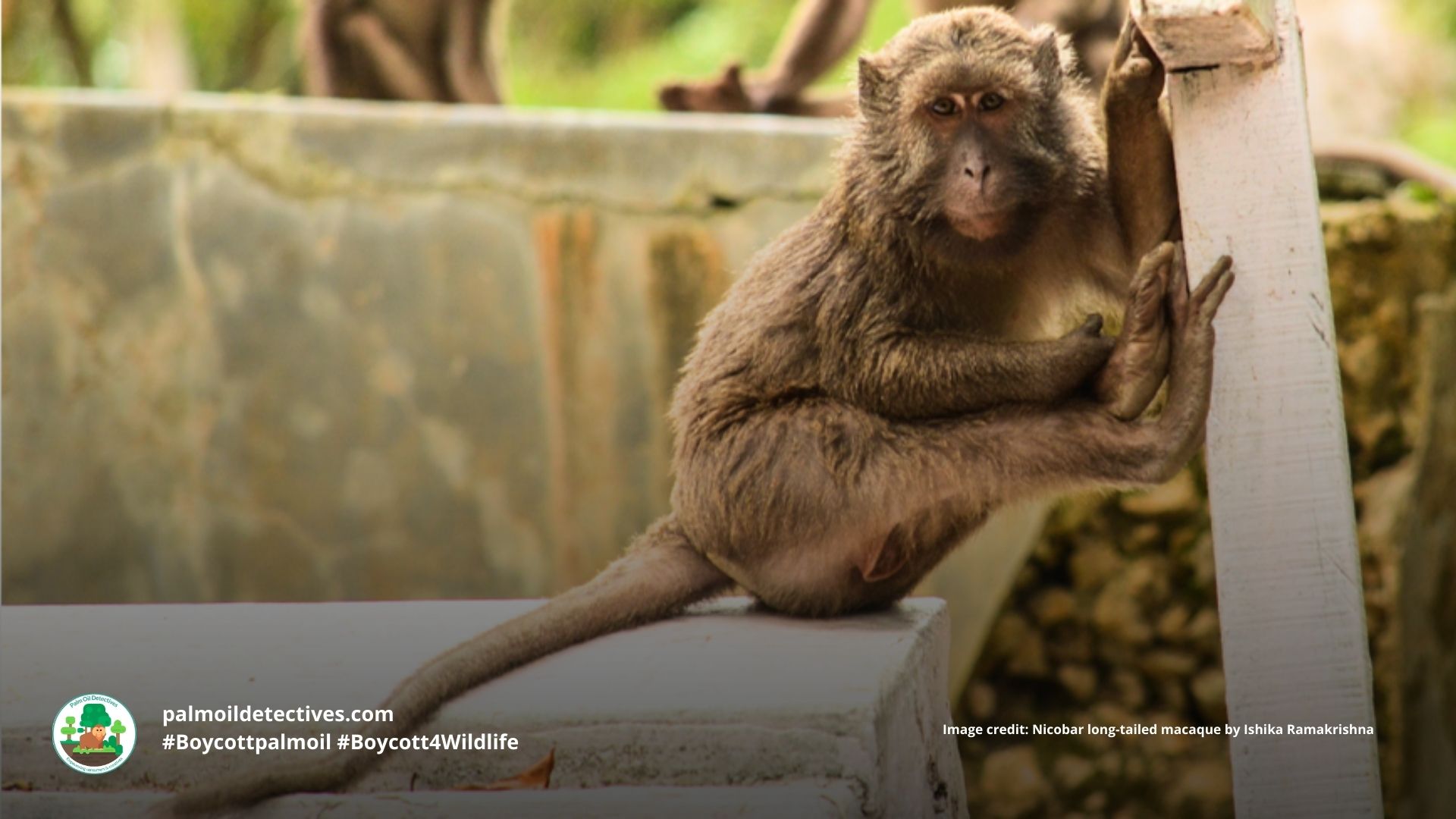
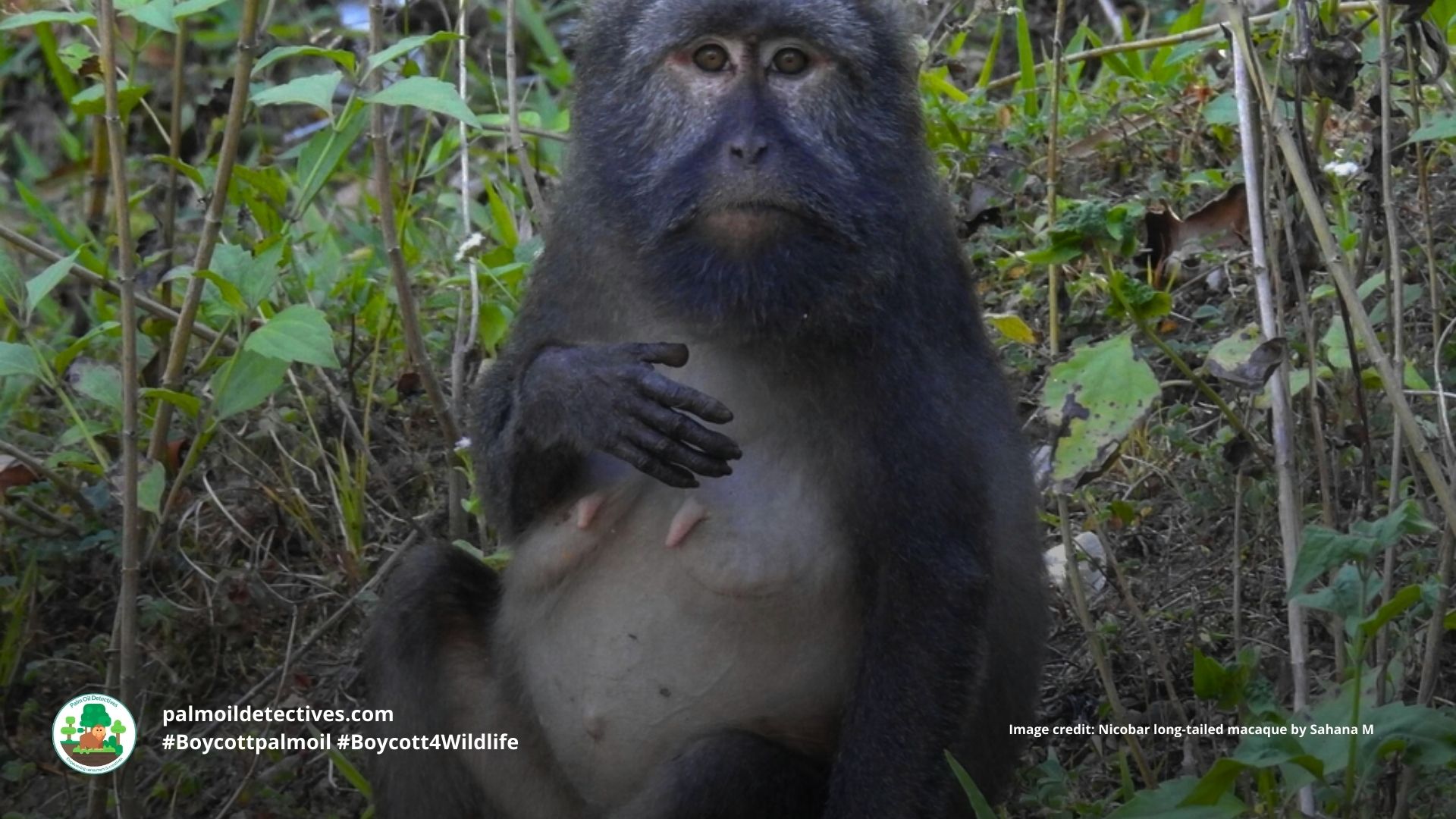
Distinct from their mainland counterparts, the Nicobar long-tailed macaques have broader faces, deep-set eyes, and long tails that aid their balance on the coastal trees—a necessary skill in the gusty sea breezes. Their fur, a wiry brown in the sunlight, is adapted to the islands’ humid climate, allowing them to stay dry and warm. They make their homes in a variety of environments, from mangrove forests and dense rainforests to human settlements, demonstrating their versatility and resilience across Great Nicobar, Katchal, and Little Nicobar.
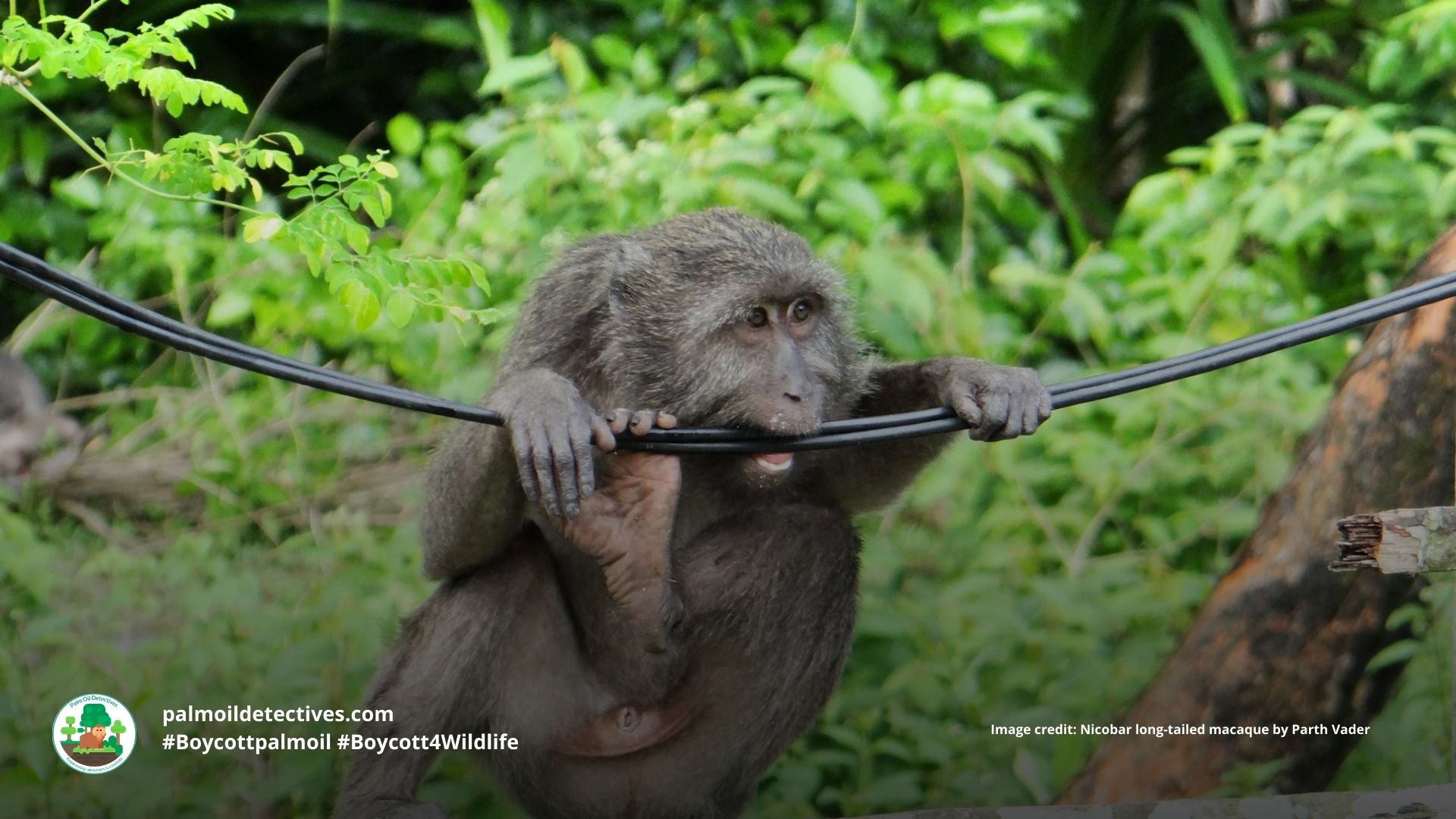
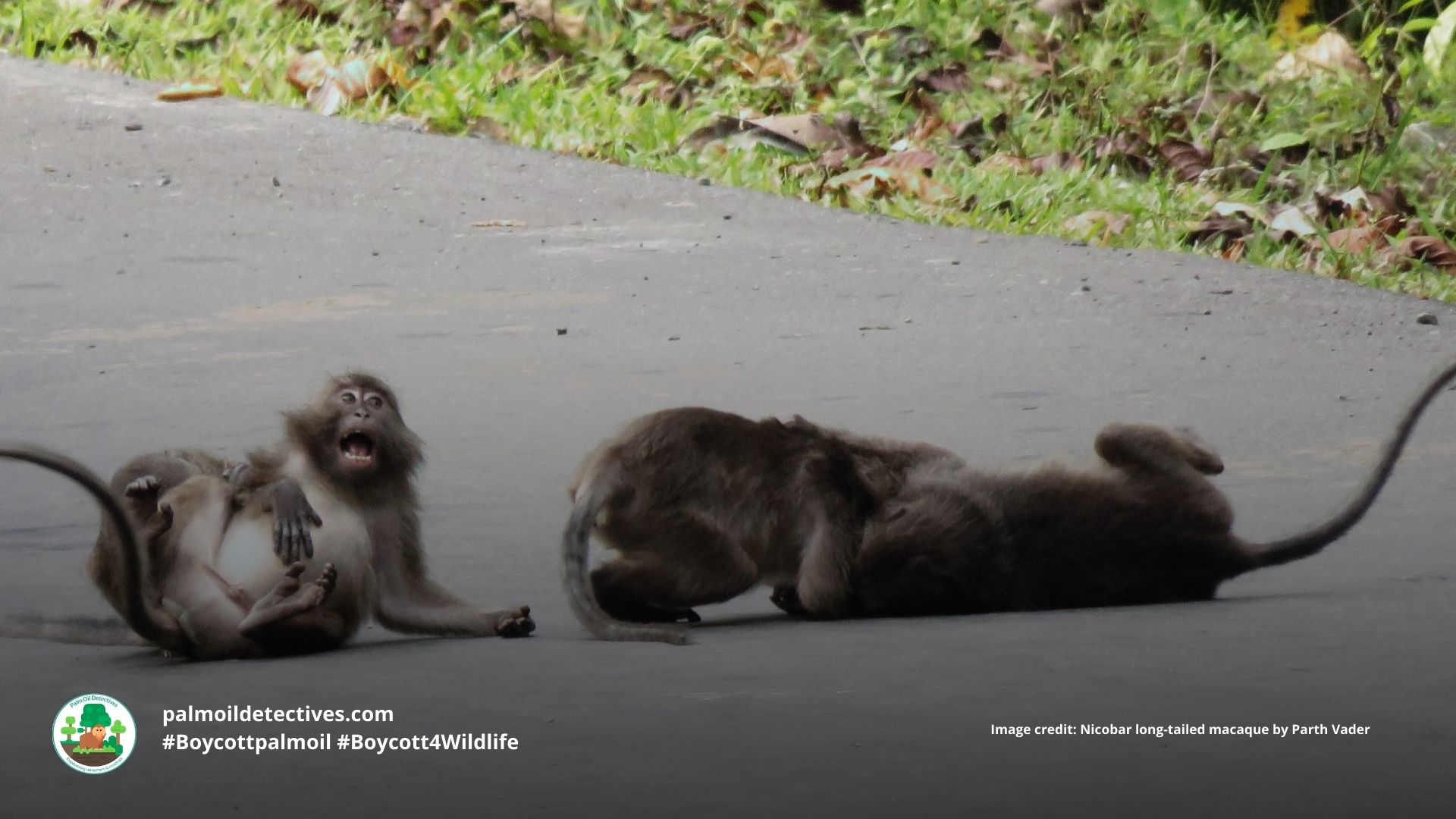
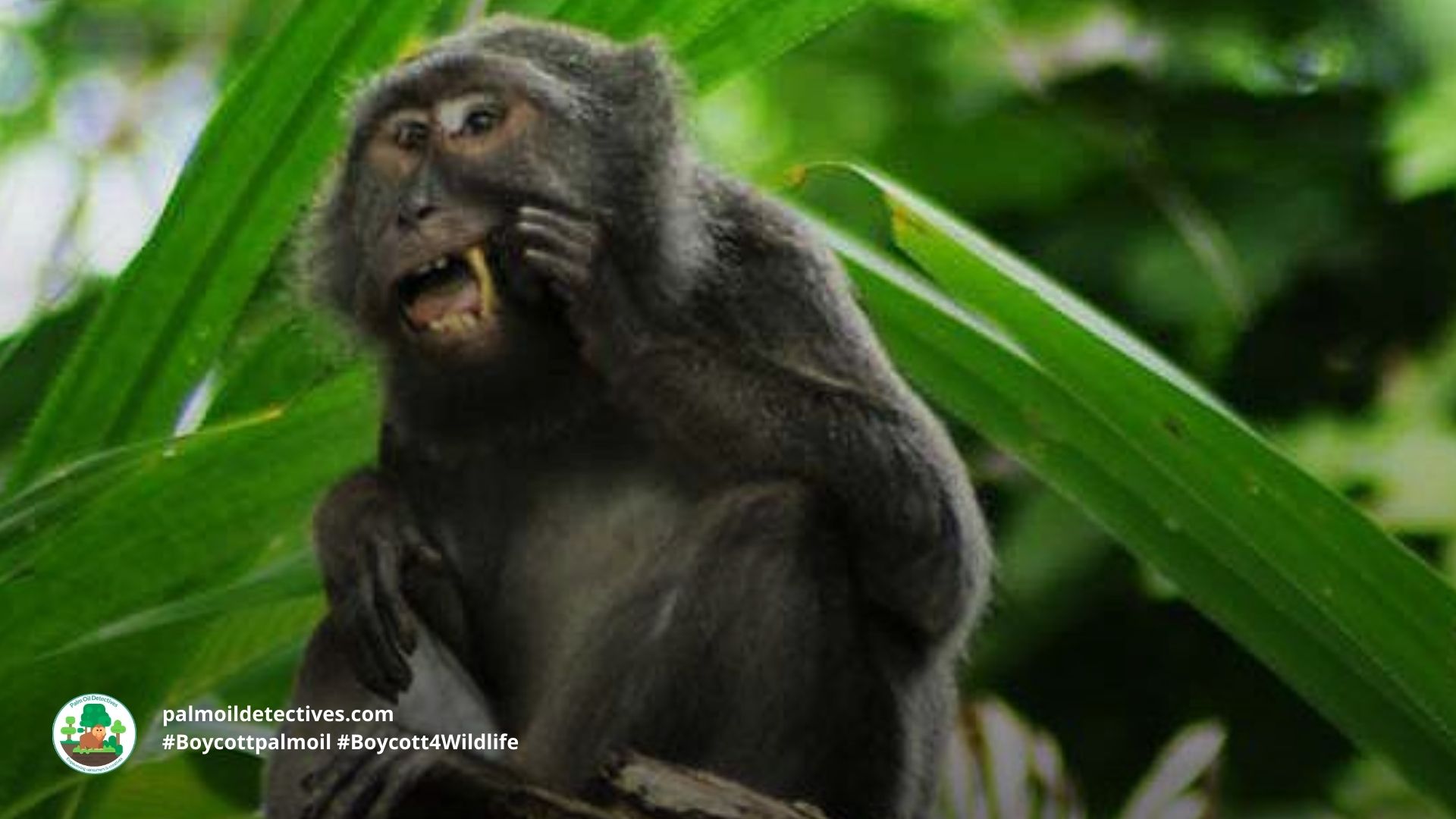
This species is a master of social living and survival, defending territories and using intricate social behaviours like grooming and group foraging to maintain bonds and communication within troops. They’re inventive, using tools for flossing, foraging, and communication, and have adapted their foraging tactics to include raids on village gardens during rainstorms, showcasing their creativity and intelligence.
Threats
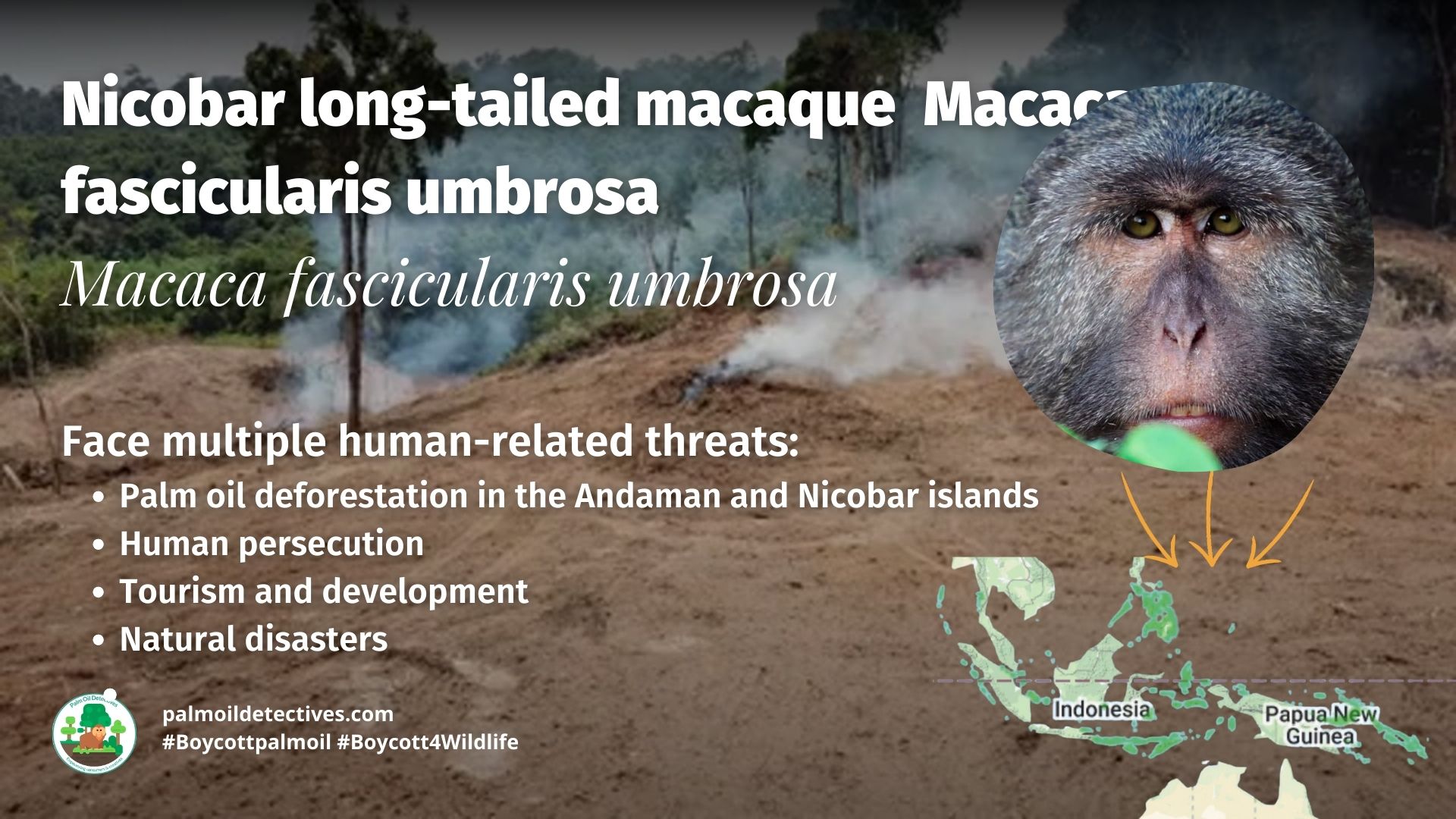
- Natural disasters: The long-tailed macaque population suffered due to a major tsunami event but showed signs of recovery later.
- Competition with humans over coconuts: Conflict over coconuts between human Nicobar islanders and long-tailed macaques, especially in Great Nicobar and Katchal islands is occurring. This is due to the monkeys’ reliance on coconuts, a valuable commercial resource. These monkeys are increasingly vilified as pests, ignoring their long evolutionary relationship with coconuts.
- Human persecution and killing: Recent migrants and the indigenous Nicobarese tribe both view monkeys as pests and engage in acts of cruelty, including poisoning, to eliminate them.
- Development of the island for tourism and deforestation for palm oil: Large-scale tourism development projects on Great Nicobar Island threaten the macaque’s habitat. Also deforestation for palm oil and other agriculture. Such development, covering 18% of the island, not only affects wildlife but also indigenous peoples on the islands.
Habitat
On the Nicobar Islands of India—Little Nicobar, Great Nicobar, and Katchall—this unique subspecies of crab-eating macaque umbrosa or Nicobar thrives, found at elevations up to 600 meters. A study from 2003 discovered around 788 groups living across these islands, with groups averaging 36 members, though some were as large as 56. Each group typically includes multiple adult males and females, along with their offspring. Interestingly, adult females usually outnumber males by a ratio of 4:1, with a nearly equal number of young monkeys to adult females, suggesting a strong, healthy population. There’s also talk and some early findings suggesting they might be living on a fourth island, Kondul, but more investigation is needed to confirm their presence there.
Diet
The Nicobar long-tailed macaque, a discerning frugivore, feasts mainly on fruits and nuts. Like their crab-eating kin, they diversify their diet in leaner seasons or when preferred fruits are scarce, opting for young leaves, insects, flowers, seeds, and bark. When exploring shorelines and mangroves, they also snack on small crabs, frogs, and other creatures. Living near human settlements, these macaques frequently venture into croplands in search of food and may even enter homes if not deterred by human activity.

Mating and breeding
The study of Nicobar long-tailed macaques’ mating and reproduction is still in its nascent stages. Only recently research has begun in this area, but was hampered by the 2004 tsunami. More needs to be discovered about these macaques’ mating habits, including how they form relationships, choose mates, and time their births, against the backdrop of their rapidly changing environments.
Support Nicobar Long-tailed Macaques by going vegan and boycotting palm oil in the supermarket, it’s the #Boycottpalmoil #Boycott4Wildlife
Support the conservation of this species
This animal has no protections in place. Read about other forgotten species here. Create art to support this forgotten animal or raise awareness about them by sharing this post and using the #Boycottpalmoil #Boycott4Wildlife hashtags on social media. Also you can boycott palm oil in the supermarket.
Further Information
Ramakrishna, I., Mishra, P., Mazumder, J. & Pal, A. 2022. Macaca fascicularis ssp. umbrosa. The IUCN Red List of Threatened Species 2022: e.T39791A215086130. https://dx.doi.org/10.2305/IUCN.UK.2022-1.RLTS.T39791A215086130.en. Accessed on 08 April 2024.
Nicobar long-tailed macaque Wikipedia article: https://en.wikipedia.org/wiki/Nicobar_long-tailed_macaque
Nicobar long-tailed macaque on Animalia.bio website: https://www.iucnredlist.org/species/39791/10257717
Partha Sarathi Mishra – research

How can I help the #Boycott4Wildlife?
Take Action in Five Ways
1. Join the #Boycott4Wildlife on social media and subscribe to stay in the loop: Share posts from this website to your own network on Twitter, Mastadon, Instagram, Facebook and Youtube using the hashtags #Boycottpalmoil #Boycott4Wildlife.
2. Contribute stories: Academics, conservationists, scientists, indigenous rights advocates and animal rights advocates working to expose the corruption of the palm oil industry or to save animals can contribute stories to the website.






3. Supermarket sleuthing: Next time you’re in the supermarket, take photos of products containing palm oil. Share these to social media along with the hashtags to call out the greenwashing and ecocide of the brands who use palm oil. You can also take photos of palm oil free products and congratulate brands when they go palm oil free.
4. Take to the streets: Get in touch with Palm Oil Detectives to find out more.
5. Donate: Make a one-off or monthly donation to Palm Oil Detectives as a way of saying thank you and to help pay for ongoing running costs of the website and social media campaigns. Donate here
Learn about other animals endangered by palm oil and other agriculture
Learn about “sustainable” palm oil greenwashing
Read more about RSPO greenwashing
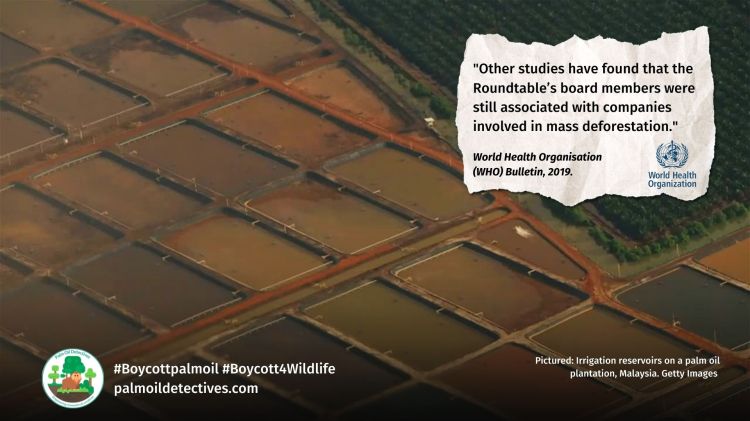
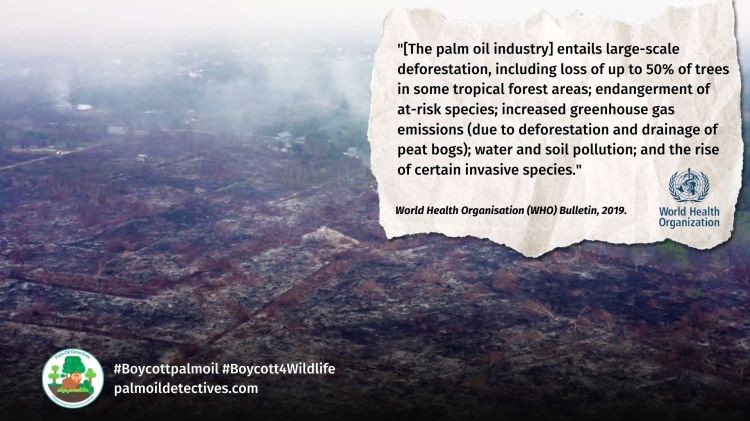
A 2019 World Health Organisation (WHO) report into the palm oil industry and RSPO finds extensive greenwashing of palm oil deforestation and the murder of endangered animals (i.e. biodiversity loss)


Discover more from Palm Oil Detectives
Subscribe to get the latest posts sent to your email.
 Palm Oil Detectives