

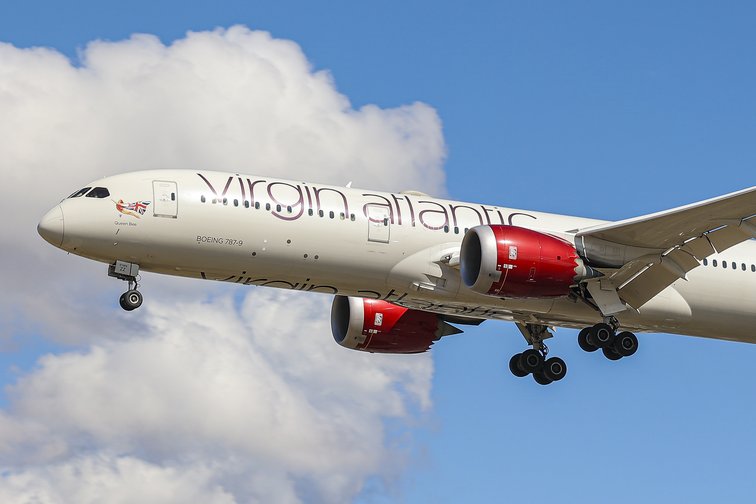
Virgin Atlantic airlines now uses ‘sustainable aviation fuel’ – a technology it claims will result in ‘Net Zero’ flights. However experts and researchers have lambasted this #aviation and #palmoil industry promotion as #greenwashing. They cite problematic evidence that using Sustainable Aviation Fuel or #SAF in #airlinefuel will undermine goals of keeping climate warming below 1.5°. In the meantime, despite the greenwash and industry spin, SAF is poised to flush gigatonnes of #rainforest #carbon into the sky exacerbating #climatechange. #BoycottPalmOil #Boycott4Wildlife
Is #SAF or “Sustainable” Aviation Fuel really a #climate saviour? Or just a greedy #greenwashing lie about #palmoil #deforestation? 🤮🌴🔥 Cut through the BS with this article by Open Democracy #Boycottpalmoil #Boycott4Wildlife @palmoildetect https://wp.me/pcFhgU-9cg
Despite #aviation ✈️ and #palmoil industry #greenwashing, #climate experts predict “Sustainable” Aviation Fuel or #SAF will flush gigatonnes of rainforest #carbon into the sky. We demand better! #Boycottpalmoil #Boycott4Wildlife 🌴 🔥🚫 @palmoildetect https://wp.me/pcFhgU-9cg
Written by Ben Webster for Open Democracy, read original article. Republished under the Creative Commons Attribution Licence.
Virgin Atlantic and the UK government have been accused of misleading the public over what they claim will be “the world’s first net zero transatlantic flight” ahead of next week’s COP28 summit.
The Department for Transport said the flight, scheduled for Tuesday, was “ushering in a new era of guilt-free flying” because it will run entirely on so-called “sustainable aviation fuel” (SAF).
But openDemocracy revealed concerns earlier this year that SAF production in the UK may be linked to deforestation.
“There are some incredible double standards at play here,” said Matt Finch, UK policy manager of green campaign group Transport & Environment.
The SAF market in the UK is largely dependent on used cooking oil from Asia – where sellers are suspected of passing off unused palm oil as waste in order to attract lucrative credits. This is a particular problem for the environment, as producing palm oil drives deforestation.
Virgin last year bought more than 600,000 litres of “used” cooking oil from China and Indonesia to turn into SAF and mix with regular fuel for routine flights. Although it says the raw material for next week’s flight from London to New York will come purely from Europe and the US, the airline admitted it was still buying “feedstocks” from Asia for further SAF production this year.
“Some British airlines are – right now – greenwashing themselves by using used cooking oil made from Asian feedstocks,” said Finch.
“If airlines were genuinely trying to be sustainable, they would stop right now because of the huge risk of rogue palm oil getting into the SAF supply chain.”

Green Lie of “Sustainable” Aviation Biofuel
“Sustainable” Aviation Fuel (SAF) is a biofuel alternative to using fossil fuels for powering planes and cars. SAF is being aggressively marketed by multiple industries as a greener alternative to burning fossil fuels in cars and airplanes.
However, SAF is produced from food crops such as rapeseed, palm oil, soy and sugar cane. This…

Net zero target
The aviation industry claims that SAF – which is almost all made from either biofuel crops or waste – could deliver around 65% of the reduction in emissions needed for airlines to reach net zero in 2050.
Under the Renewable Transport Fuels Obligation (RTFO), the government allows used cooking oil to be used to make the fuel. It currently accounts for the vast majority of SAF declared in the UK, most of which comes from Asia.
In 2024 alone, British airlines have bought more than 26 million litres of used Asian cooking oil – including 18 million litres from Malaysia, five million from China and two million from Indonesia.
Only about 15% of the used cooking oil purchased by airlines in 2023 has come from European sources, mainly the UK and the Netherlands.
Investigations suggest there is a high risk of fraud in the supply of biofuel from Asia, with particular concern over virgin palm oil being passed off as used cooking oil.
Labelling virgin palm oil as used makes it more valuable, partly because waste products earn double credits under the UK government’s rules for sustainable fuels.
Even genuine used cooking oil can indirectly cause deforestation because countries export waste oil they would otherwise have used domestically, and instead use virgin palm oil to meet their own local demand, according to T&E.
The campaign group says used cooking oil from Asia would be more effective at cutting emissions if it were used to replace diesel in road vehicles in the countries where it was produced – rather than being shipped across the world to be refined, using additional energy, into jet fuel.
The Royal Society, which represents the UK’s leading scientists, has also warned that an area at least half the size of the UK would be needed to grow enough biofuel crops to meet existing aviation demand in the UK alone. Increased levels of recycling are also likely to mean less waste material is available for making the fuel.
Green fuel mandate
Commercial jet engines are currently allowed to burn a maximum of 50% SAF, which is blended with traditional kerosene jet fuel. But next week’s demonstration flight is expected to show that it is safe to use 100% SAF. It is being funded with a government grant of up to £1m.
It comes only weeks before the government is due to announce details about the so-called “SAF mandate”, which will require at least 10% of jet fuel in the UK to come from “sustainable sources” by 2030.
The Department for Transport (DfT) is planning to cap the amount of used cooking oil and animal fat that airlines can use to meet this obligation, because demand could divert the products away from efforts to decarbonise road transport.
The cap, though, could be as high as 250 million litres a year of waste fats and oils.
Finch of T&E said: “The SAF mandate will be the biggest environmental regulation applied to UK aviation ever, and the government has a choice to make: should it carry on allowing SAF to be made from feedstocks that have dubious environmental benefits, or should it ensure that the sustainability criteria it sets genuinely achieve carbon reductions? Used cooking oil should be banned from UK planes.”
‘Undermining’ climate goals
Virgin and other UK airlines say their SAF has been certified by International Sustainability and Carbon Certification (ISCC), a scheme governed by a board that includes an executive from Air BP – one of Virgin’s SAF suppliers.
ISCC has nonetheless taken some action over SAF mis-selling. It launched an investigation this year into “potentially fraudulent behaviour” involving biodiesel that had been declared as waste from Indonesia or Malaysia and then exported from China to Europe.
It also suspended the sustainability certification of three Chinese biofuel exporters and last month pledged to clamp down on fraud by implementing “a traceability database by the end of the year”.
A Virgin Atlantic spokesperson told openDemocracy: “With all SAF purchases, we require suppliers to comply with applicable sustainability standards. In respect of HEFA (Hydrogenated Esters and Fatty Acids) SAF, we ask suppliers to ensure that feedstocks do not contain palm oil or its derivatives.
“SAF is an emerging industry and we source feedstocks from regions around the world and ask that suppliers undertake robust due diligence to ensure there is no palm oil or derivatives.”
However, the Aviation Environment Federation says the aviation industry’s enthusiasm for SAF is obscuring the urgent need for genuinely sustainable solutions to aviation emissions, including development of zero emission aircraft and an overall reduction in flying.
Even if every drop of used cooking oil available globally were refined into jet fuel, there would only be enough to power about one in every 40 flights, according to estimates by sustainable fuel consultancy Cerulogy.
The aviation industry says it is developing alternative sources of sustainable aviation fuel, including “non-edible industrial corn”, “forestry residues” and household waste.
But a study in August by Manchester Metropolitan University challenged the industry’s claims that sustainable aviation fuel can drastically cut emissions.
It said: “The scaling up of SAF to not only maintain but grow global aviation is problematic as it competes for land needed for nature-based carbon removal, clean energy that could more effectively decarbonise other sectors, and captured CO2 to be stored permanently. As such, SAF production undermines global goals of limiting warming to 1.5°C.”
Cait Hewitt, policy director of the Aviation Environment Federation, said one flight using 100% SAF “will make no difference to the fact that only 2.6% of UK aviation fuel is anything other than kerosene. And globally, the figure is more like 0.1%.”
She said the industry and DfT were wrong to suggest that waste-based SAF could be scaled up sustainably.
“It’s a nice idea to make fuel out of rubbish, which is what the UK government and others are pushing for, but producing more rubbish to turn into plane fuel is pretty obviously not a sustainable long-term option.”
She also said it was misleading to claim, as the DfT has, that SAF cuts greenhouse gas emissions by 70%.
“Even using 100% SAF, as with the forthcoming Virgin Atlantic flight, reduces tailpipe emissions by 0% compared with using kerosene. Any CO2 savings will be net savings, just as with carbon offsets.”
She said the flight would not achieve any net CO2 savings unless Virgin and the DfT could demonstrate that more carbon had been captured than would have happened anyway.
A Department for Transport spokesperson said: “Our sustainable aviation fuel programme is one of the most comprehensive in the world.
“We require that the fuel used [for the 100% SAF flight] must meet the specified sustainability criteria. However, it is for the operator and their fuel suppliers to determine the exact nature of the fuel within these parameters. Fuel suppliers are subject to independently verified checks to confirm the authenticity of their materials.”
Written by Ben Webster for Open Democracy, read original article. Republished under the Creative Commons Attribution Licence.
ENDS
Read more about deforestation and air pollution, climate change and palm oil deforestation

Forest Protection Equals Climate Protection
Forests offer climate protection and safeguard indigenous peoples, endangered animals and rare plants. Deforestation is a major threat. Boycott palm oil!
Read more
World’s Wealthiest Drive Two Thirds of Global Warming Since 1990
Wealthiest people in USA and China responsible for 2/3 of global warming since 1990. Climate policies needed to target the richest people on the planet now!
Read more
Mountain Tapir Tapirus pinchaque
Mountain Tapirs are the most threatened large mammals of the northern Andes, hunting, climate change and mining are threats, take action and boycott gold!
Read more
Saola Pseudoryx nghetinhensis
Saolas are rare and considered Southeast Asia’s ‘unicorns’, this Critically Endangered antelope is facing imminent extinction due to hunting and deforestation
Read more
Frill-Necked Lizard Chlamydosaurus kingii
Frill-necked lizard AKA frilled dragons are endangered in southern Papua New Guinea and Indonesian-occupied West Papua due to palm oil ecocide, take action!
Read moreSomething went wrong. Please refresh the page and/or try again.
Take Action in Five Ways
1. Join the #Boycott4Wildlife on social media and subscribe to stay in the loop: Share posts from this website to your own network on Twitter, Mastadon, Instagram, Facebook and Youtube using the hashtags #Boycottpalmoil #Boycott4Wildlife.
2. Contribute stories: Academics, conservationists, scientists, indigenous rights advocates and animal rights advocates working to expose the corruption of the palm oil industry or to save animals can contribute stories to the website.



3. Supermarket sleuthing: Next time you’re in the supermarket, take photos of products containing palm oil. Share these to social media along with the hashtags to call out the greenwashing and ecocide of the brands who use palm oil. You can also take photos of palm oil free products and congratulate brands when they go palm oil free.
4. Take to the streets: Get in touch with Palm Oil Detectives to find out more.
5. Donate: Make a one-off or monthly donation to Palm Oil Detectives as a way of saying thank you and to help pay for ongoing running costs of the website and social media campaigns. Donate here
Discover more from Palm Oil Detectives
Subscribe to get the latest posts sent to your email.
 Palm Oil Detectives