

Southern Pudu Pudu puda
IUCN Status: Near Threatened
Location: Chile, Argentina
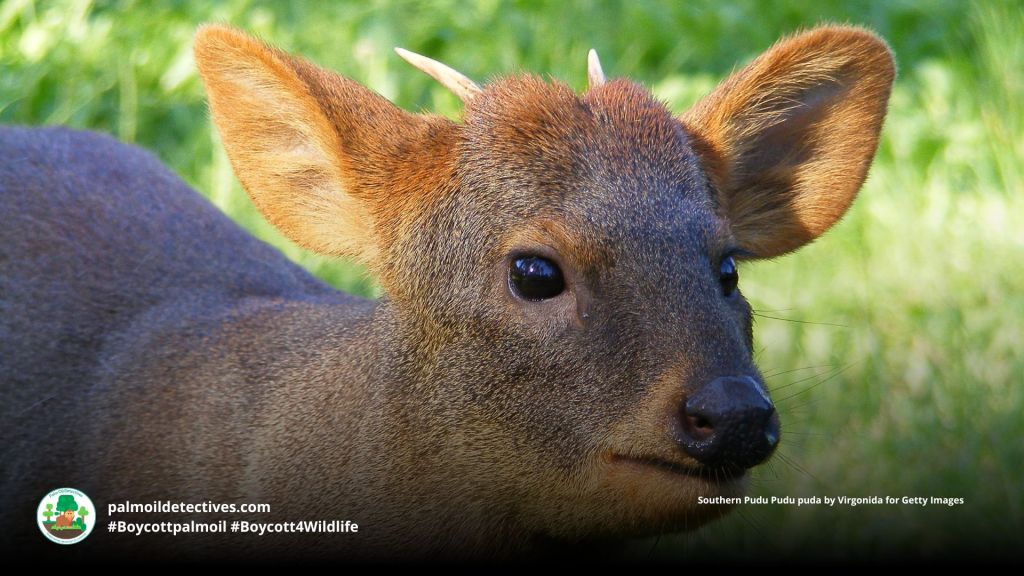
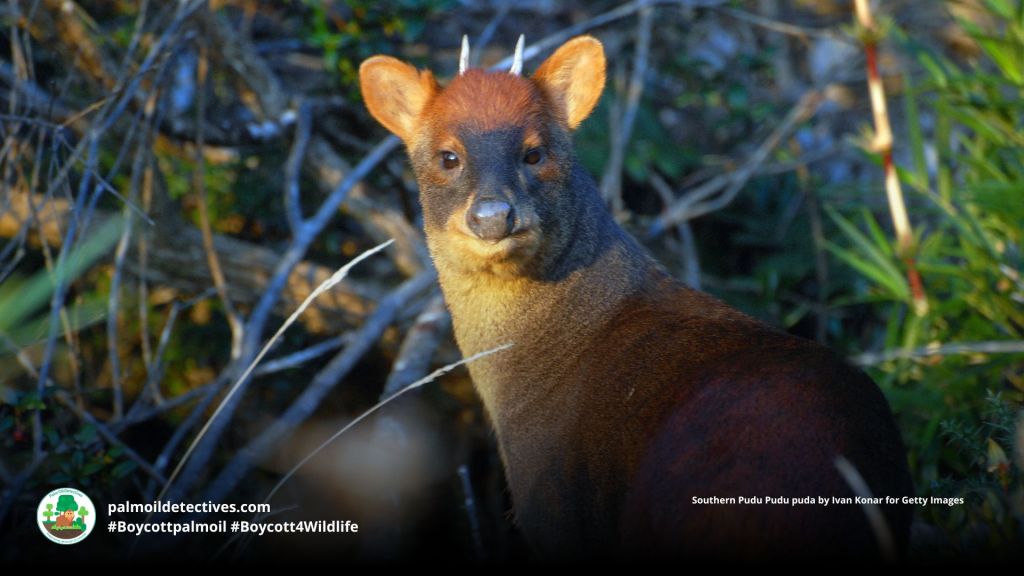
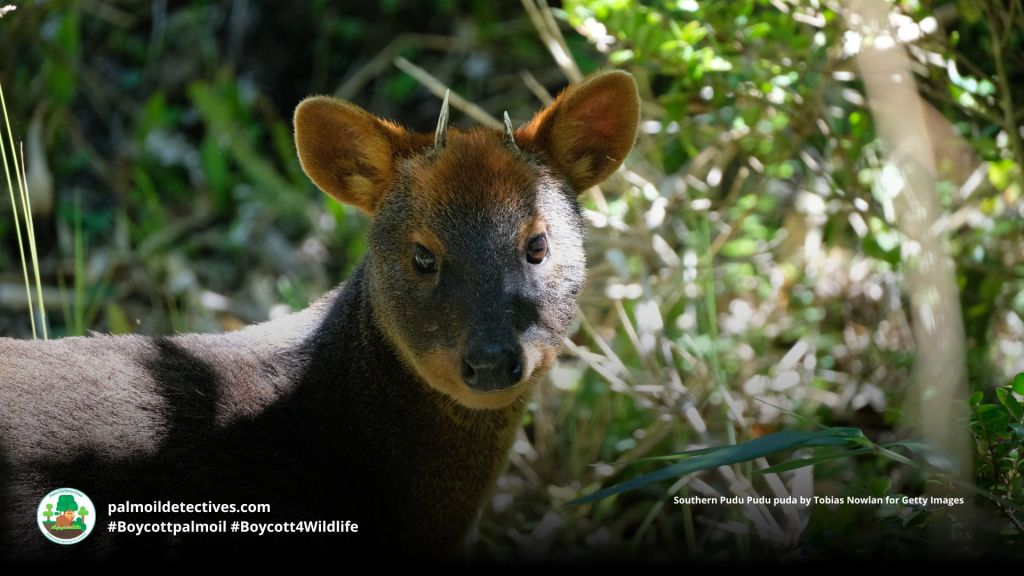
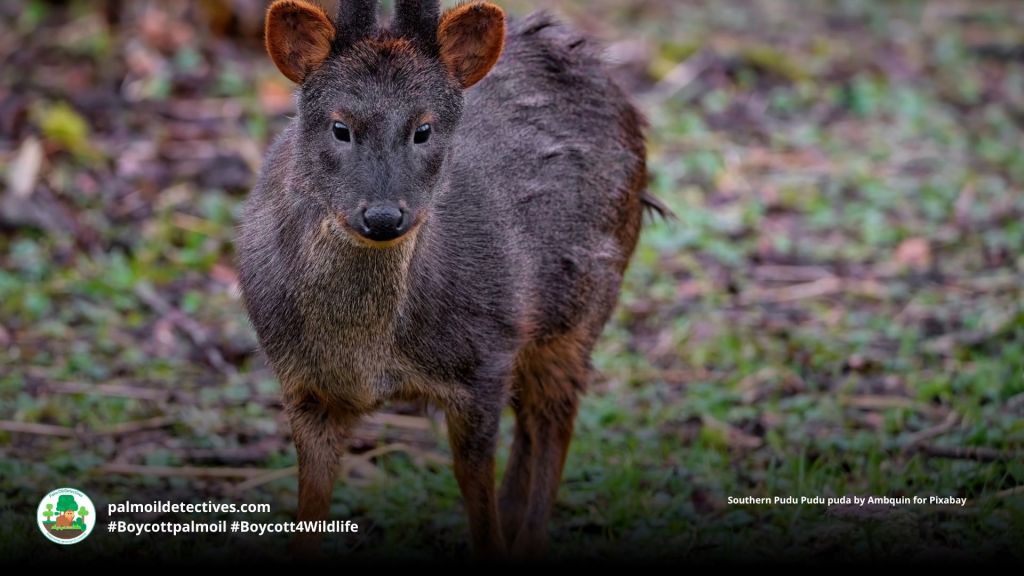
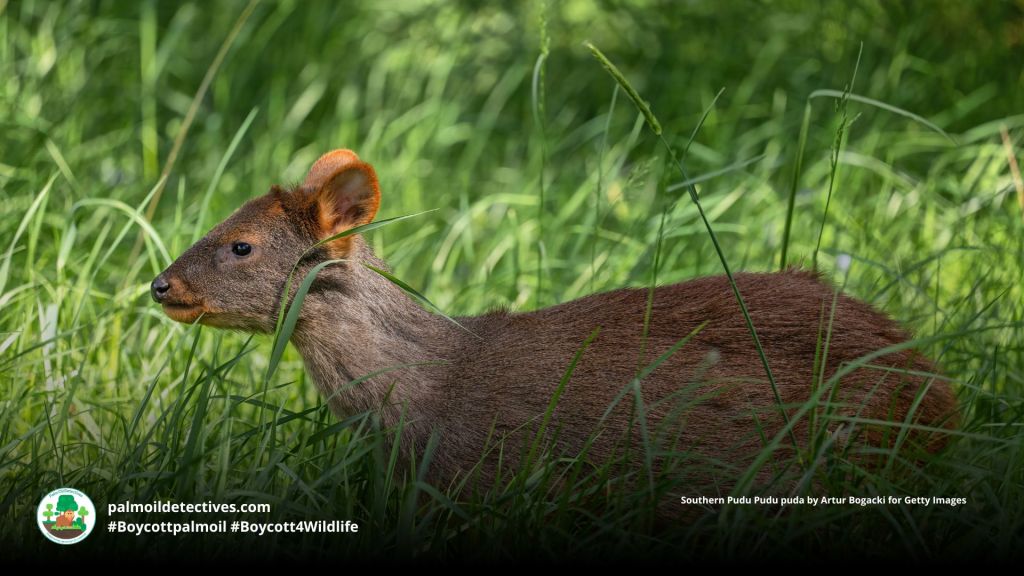
Darting around and hiding on the forest floor, the Southern Pudu, known as püdü or püdu in Mapudungun (the language of the indigenous Mapuche people), is the world’s second-smallest #deer species. Weighing just 6.4 to 13.4 kg and standing at 35 to 45 cm at the shoulder, these miniature deer are remarkably adapted to their forested environments and communicate with each other through scent. Their short, spiky antlers curve slightly backward, and their thick chestnut-brown coat provides excellent camouflage in the undergrowth.
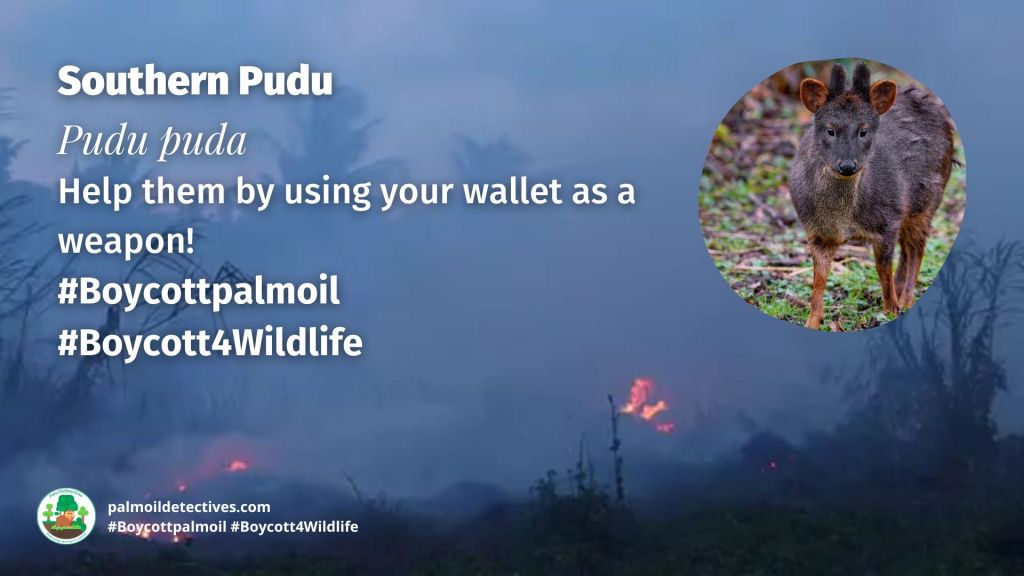
Despite their small size, Southern Pudus are resilient #ungulates in one of the world’s most biodiverse but increasingly threatened temperate forests in #Argentina and #Chile. However, habitat destruction for eucalyptus and pine monoculture, predation by invasive species, road collisions and disease transmission from farmed animals are pushing populations to the brink. Help them by raising awareness, it’s the #Boycott4Wildlife
Southern #Pudus are timid and wary tiny #deer 🦌one of the smallest in the 🌎, they hide in the undergrowth of #Argentina’s forests 🇦🇷 They’re ‘Near Threatened’ by #poaching and #deforestation. Raise your voice for them #Boycott4Wildlife ✊ @palmoildetect https://wp.me/pcFhgU-aoq
As silent as a mouse 🐭 and smaller than a house #cat 🐱, Southern Pudus are miniature #deer 🦌🤎 who peer from rainforest shadows in #Chile 🇨🇱 Eucalyptus monoculture #deforestation 🌳🎋🔥is a major threat. Help them and #Boycott4Wildlife @palmoildetect https://wp.me/pcFhgU-aoq
Appearance & Behaviour
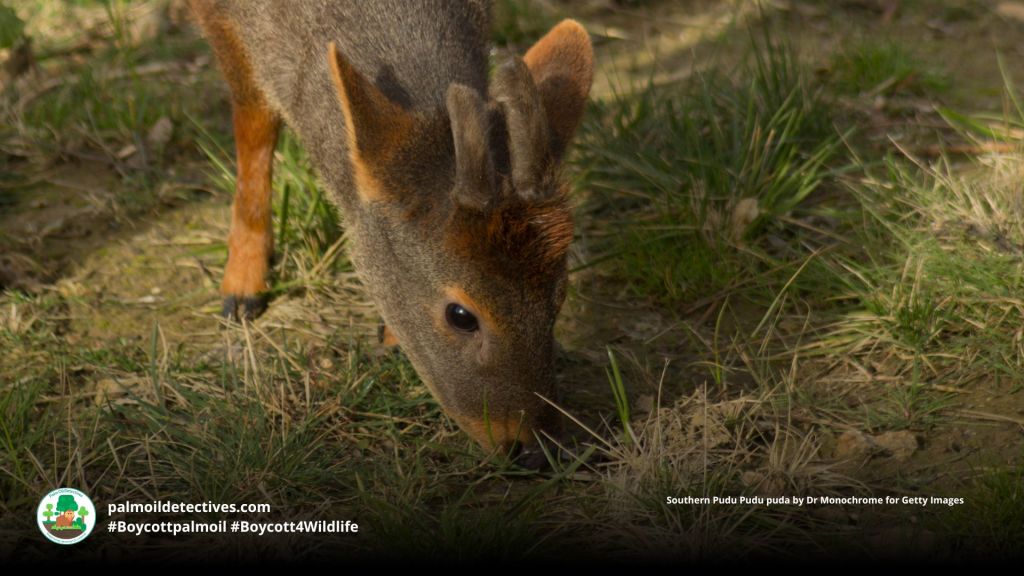
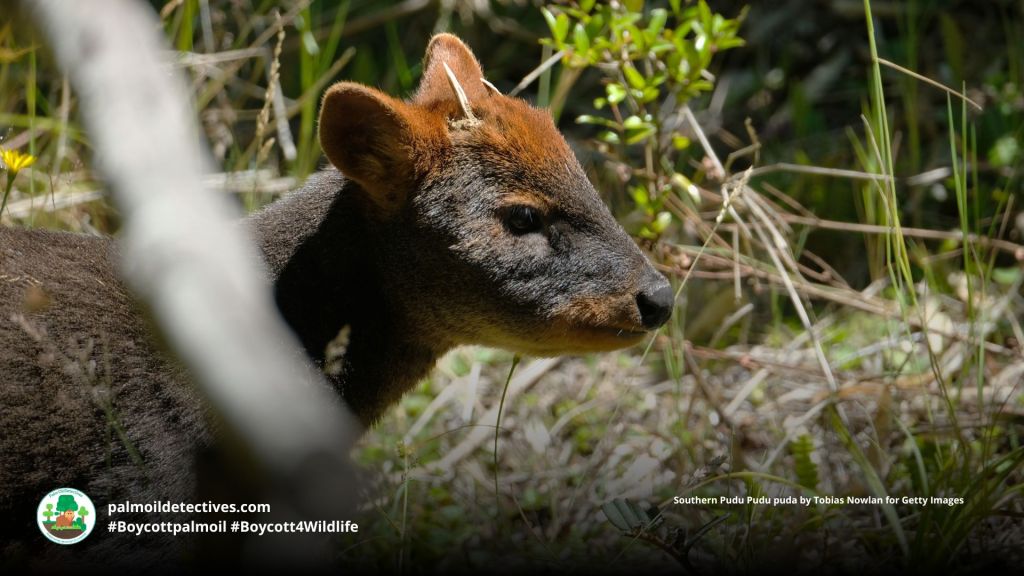
Southern Pudus are a stocky tiny deer species with short legs, rounded ears, and large, dark eyes. Their small antlers, present only in males, measure between 5.3 and 9 cm and are shed annually. Their dense fur varies from reddish-brown to dark brown, often appearing darker in winter.
Unlike many other ungulate species, Pudus are solitary and highly secretive. They are mostly crepuscular, active mostly during dawn and dusk, and use scent-marking to communicate with other individuals. They rely on zigzagging escape routes through dense undergrowth to evade predators, making them difficult to spot in the wild.

Threats
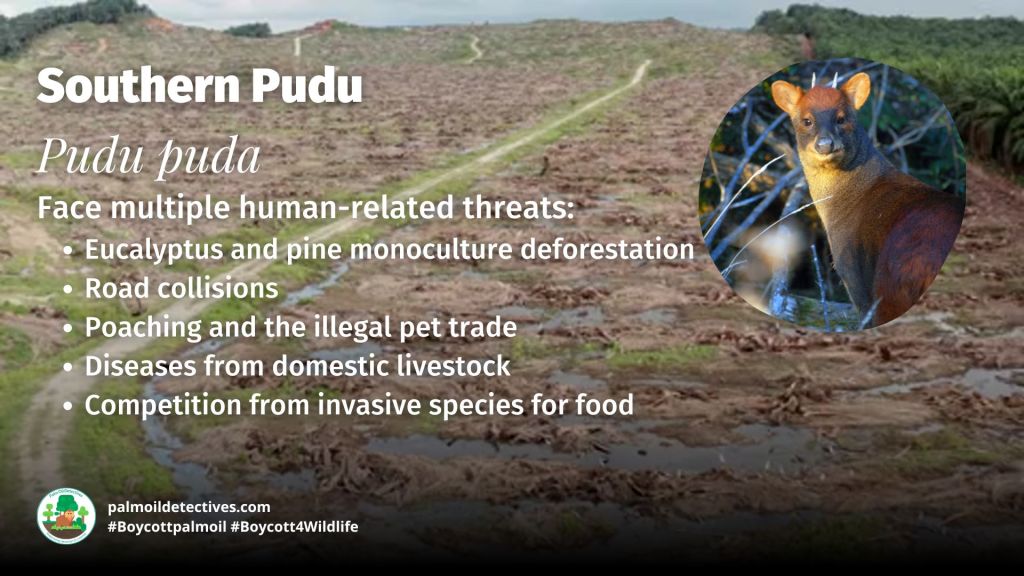
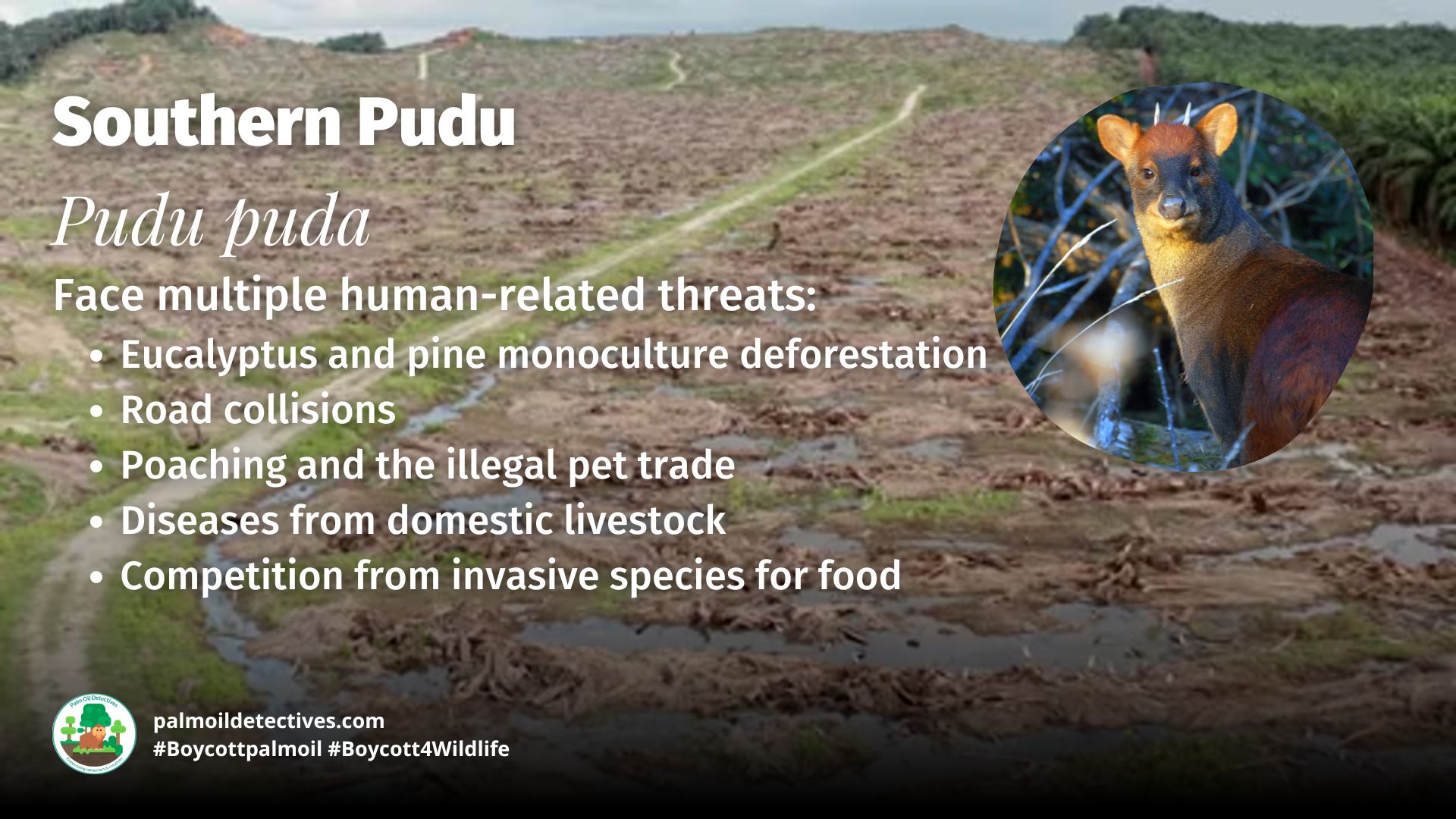
Southern Pudu populations face multiple threats that have led to drastic declines in recent decades.
1. Habitat Loss and Deforestation
- Widespread forest clearance: Nearly 50% of the Valdivian temperate rainforest has been destroyed since 1550, with severe deforestation in the Maule and Araucanía regions.
- Deforestation for agriculture: Native forests are being replaced with monoculture plantations (eucalyptus, pine), cattle ranching, and agriculture, significantly reducing their available habitat.
- Fragmentation of remaining forests: The loss of continuous forest corridors isolates populations, leading to inbreeding and reduced genetic diversity.
2. Predation and Competition with Invasive Species
Free-ranging dogs attack and kill Pudus, even inside protected areas. Invasive deer and wild boar species compete for food and damage the undergrowth that Pudus rely on for shelter.
3. Road Development and Vehicle Collisions
Increasing road networks in Chile and Argentina have led to frequent roadkill incidents, including deaths inside national parks. The planned Chiloé-Mainland bridge could expose isolated Chiloé populations to new predators and human disturbances.
4. Disease Transmission from Livestock
Livestock diseases, including pestivirus, Leptospira, and bovine tuberculosis, are increasingly affecting wild Pudu populations. The presence of cattle-related pathogens has been documented, though their full impact is still being studied.
5. Illegal Poaching and Capture for the Pet Trade
Hunting for food still occurs in some rural areas. Some Pudus are illegally captured and sold in the exotic pet trade, despite their poor survival rate in captivity.
Geographic Range
The Southern Pudu is found in the temperate rainforests of southern Chile and southwestern Argentina, primarily within the Valdivian temperate forest. This elusive deer inhabits dense forests with thick underbrush, bamboo thickets, and Nothofagus-dominated woodlands, where they can navigate the understory with ease.
Diet
Like other deer species, Southern Pudus are browsing herbivores, feeding on a wide variety of shrubs, vines, bamboo shoots, ferns, leaves, and fallen fruit. Due to their small stature, they employ clever techniques to access food, including standing on their hind legs, bending saplings, or even climbing on logs and rocks to reach foliage. They obtain much of their moisture from their diet and can survive without drinking water for extended periods.
Mating and Reproduction
Mating season occurs during the Southern Hemisphere’s autumn (April to May). Males engage in territorial scent-marking but do not form harems. The gestation period for these miniature deers lasts approximately 210 days, with fawns typically born between November and January.
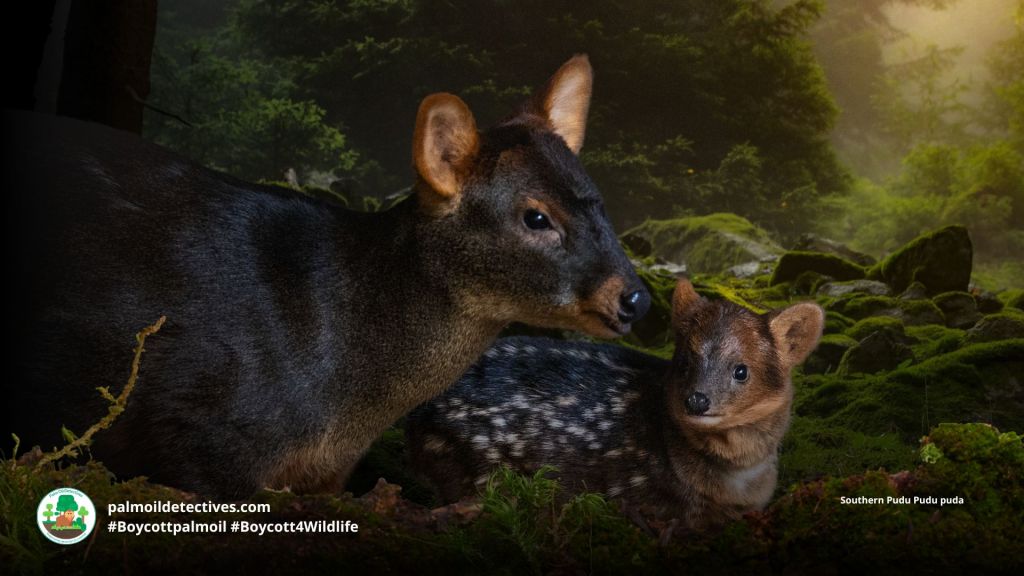
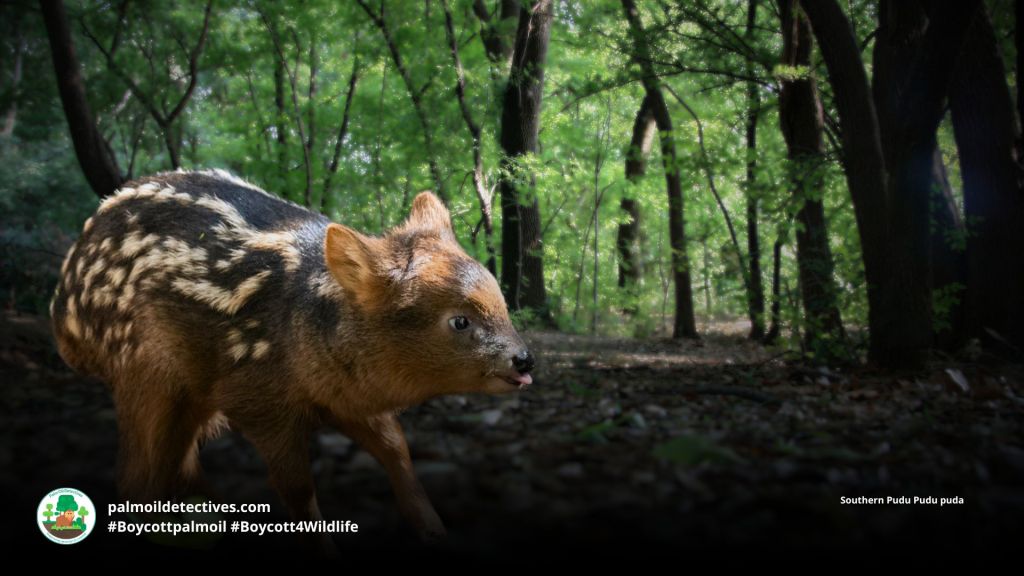
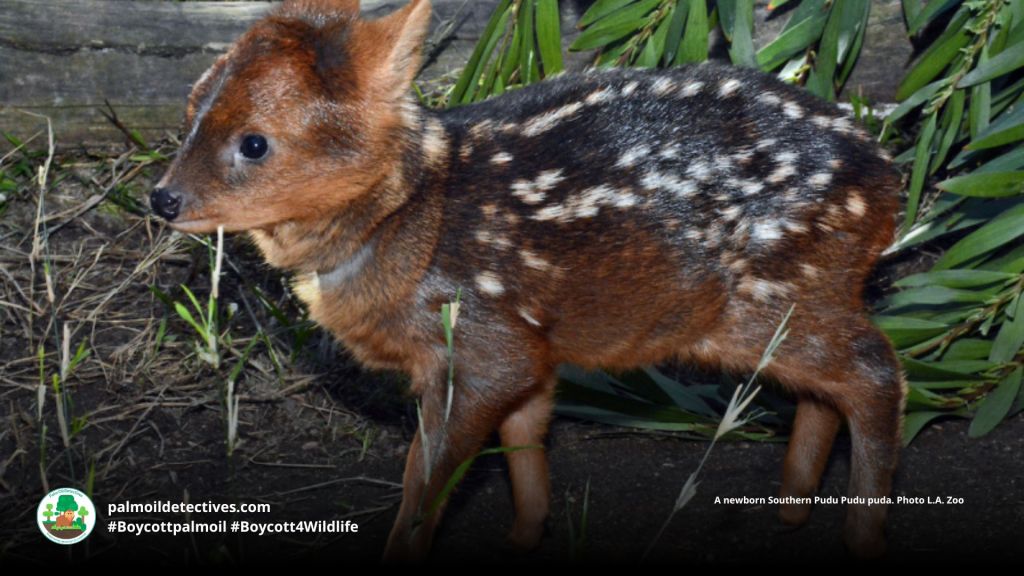
At birth, fawns weigh between 700 and 1,000 grams and have white-spotted coats for camouflage. They are weaned after two months but may remain with their mother for up to a year. Sexual maturity is reached at six months for females and 8–12 months for males.
FAQs
How small is the Southern Pudu compared to other deer?
The Southern Pudu is the second-smallest deer species in the world, only slightly larger than the Northern Pudu (Pudu mephistophiles). They stand 35–45 cm tall and weigh between 6.4–13.4 kg, making them smaller than many domestic cats.
Why are Southern Pudus classified as Near Threatened?
Their rapidly declining population is mainly due to habitat destruction, hunting, vehicle collisions, and diseases from livestock.
How do they communicate?
Southern Pudus use scent-marking from facial glands and urine to establish territories. They also emit barking sounds when alarmed.
Do Southern Pudus make good pets?
Absolutely not. Keeping a Pudu as a pet is illegal and highly unethical. These deer are extremely stress-prone and rarely survive in captivity unless part of scientific conservation efforts. They are meant to roam in the forests not be captive for their lives in a domestic environment or in a Zoo. If you want to help Southern Pudus raise awareness about them by sharing this post.
How do Southern Pudus avoid predators?
Pudus rely on stealth, agility, and dense undergrowth to evade predators. When chased, they zigzag through the forest and can jump over logs and climb steep terrain.
How do Pudus adapt to deforested areas?
While they prefer native forests, some Pudus have been observed using commercial tree plantations, but only when there is a dense understory for cover.
Take Action!
- Support conservation organisations that work to protect the Valdivian temperate forest.
- Advocate against the pet trade – Pudus are wild animals and they belong free in the wild, not kept as pets!
- Promote stricter regulations on free-roaming dogs in national parks.
- Raise awareness about the threats posed by deforestation and invasive species by sharing this post to social media. Use the one-click shares at the top of this post.
The Southern Pudu may be small, but their role in the biodiversity of South American forests is crucial. Protecting them means preserving one of the last temperate rainforests on Earth.
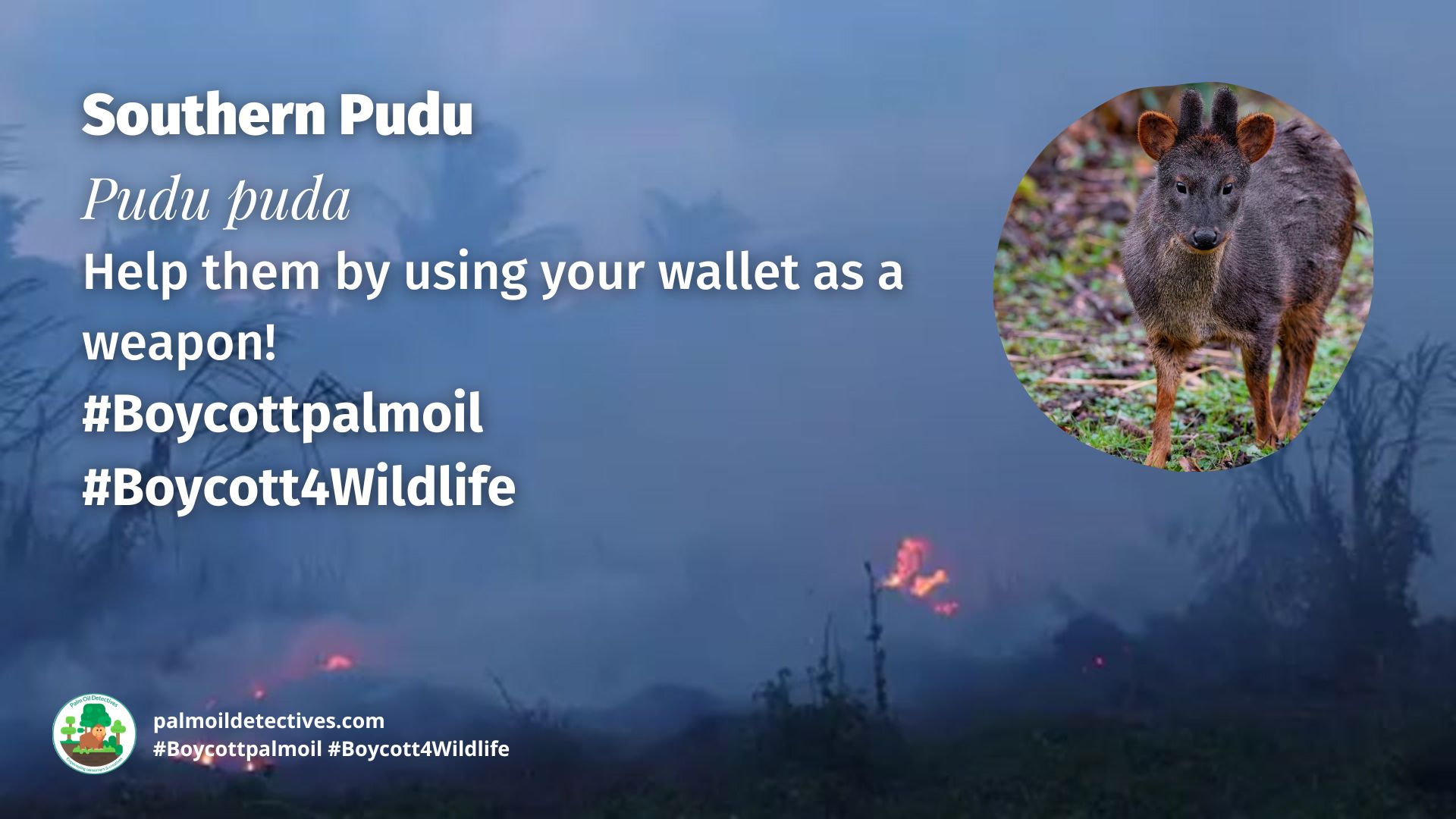
Support Southern Pudu by going vegan and boycotting deforestation causing commodities in the supermarket, it’s the #Boycott4Wildlife
Support the conservation of this species
This animal has no protections in place. Read about other forgotten species here. Create art to support this forgotten animal or raise awareness about them by sharing this post and using the #Boycottpalmoil #Boycott4Wildlife hashtags on social media. Also you can boycott palm oil in the supermarket.
Further Information
Hidalgo-Hermoso, E., et al. (2024). High exposure to livestock pathogens in Southern Pudu (Pudu puda) from Chile. Animals, 14(4), 526. https://doi.org/10.3390/ani14040526
Silva-Rodríguez, E. A., et al. (2011). Priorities for the conservation of the Pudu (Pudu puda) in southern South America. Animal Production Science, 51(4), 375-377. https://doi.org/10.1071/AN10286
Silva-Rodríguez, E, Pastore, H. & Jiménez, J. 2016. Pudu puda. The IUCN Red List of Threatened Species 2016: e.T18848A22164089. https://dx.doi.org/10.2305/IUCN.UK.2016-1.RLTS.T18848A22164089.en. Accessed on 26 February 2025.
Wikipedia contributors. (n.d.). Southern Pudu. Wikipedia, The Free Encyclopedia. https://en.wikipedia.org/wiki/Southern_pudu
Zúñiga, A. H., & Jiménez, J. E. (2018). Activity patterns and habitat use of Pudu deer (Pudu puda) in a mountain forest of south-central Chile. Journal of Natural History, 52(33-34), 2047-2054. https://doi.org/10.1080/00222933.2018.1510995

How can I help the #Boycott4Wildlife?
Take Action in Five Ways
1. Join the #Boycott4Wildlife on social media and subscribe to stay in the loop: Share posts from this website to your own network on Twitter, Mastadon, Instagram, Facebook and Youtube using the hashtags #Boycottpalmoil #Boycott4Wildlife.
2. Contribute stories: Academics, conservationists, scientists, indigenous rights advocates and animal rights advocates working to expose the corruption of the palm oil industry or to save animals can contribute stories to the website.





3. Supermarket sleuthing: Next time you’re in the supermarket, take photos of products containing palm oil. Share these to social media along with the hashtags to call out the greenwashing and ecocide of the brands who use palm oil. You can also take photos of palm oil free products and congratulate brands when they go palm oil free.
4. Take to the streets: Get in touch with Palm Oil Detectives to find out more.
5. Donate: Make a one-off or monthly donation to Palm Oil Detectives as a way of saying thank you and to help pay for ongoing running costs of the website and social media campaigns. Donate here
Learn about other animals endangered by palm oil and other agriculture
Learn about “sustainable” palm oil greenwashing
Read more about RSPO greenwashing
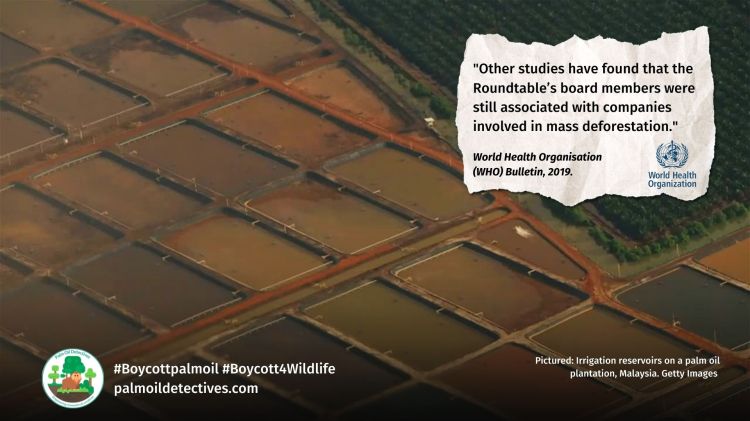
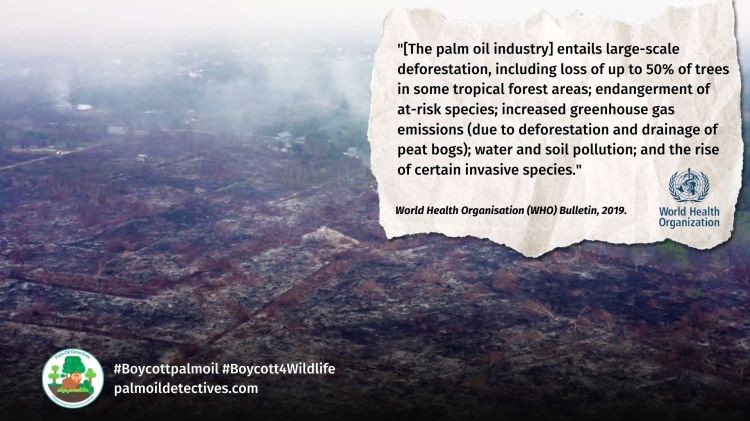
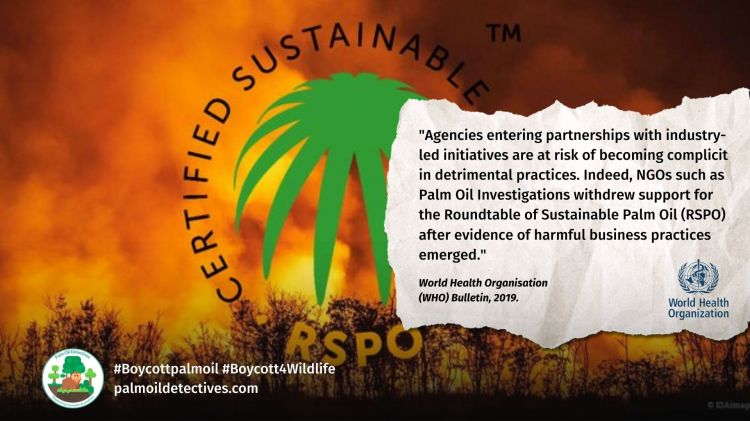
A 2019 World Health Organisation (WHO) report into the palm oil industry and RSPO finds extensive greenwashing of palm oil deforestation and the murder of endangered animals (i.e. biodiversity loss)


Discover more from Palm Oil Detectives
Subscribe to get the latest posts sent to your email.
 Palm Oil Detectives