
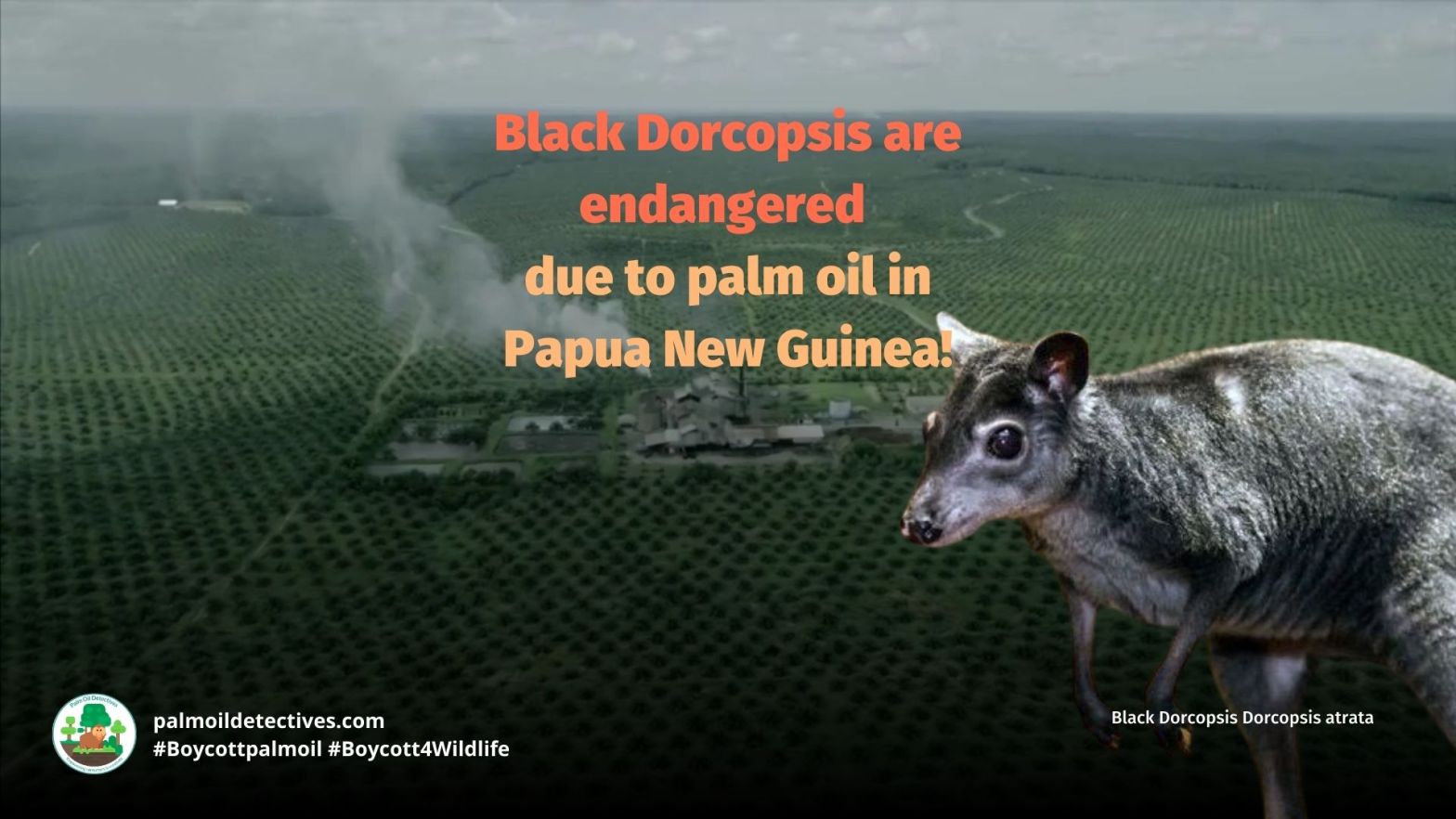
Black Dorcopsis Dorcopsis atrata
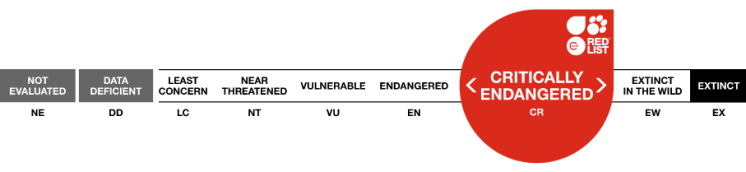
IUCN Red List Status: Critically Endangered
Location: The Black Dorcopsis, also known as the Black Forest Wallaby, is found only on Goodenough Island in the D’Entrecasteaux Archipelago, Papua New Guinea. They inhabit lowland and montane forests, preferring dense vegetation at elevations between 300 and 1,500 metres.
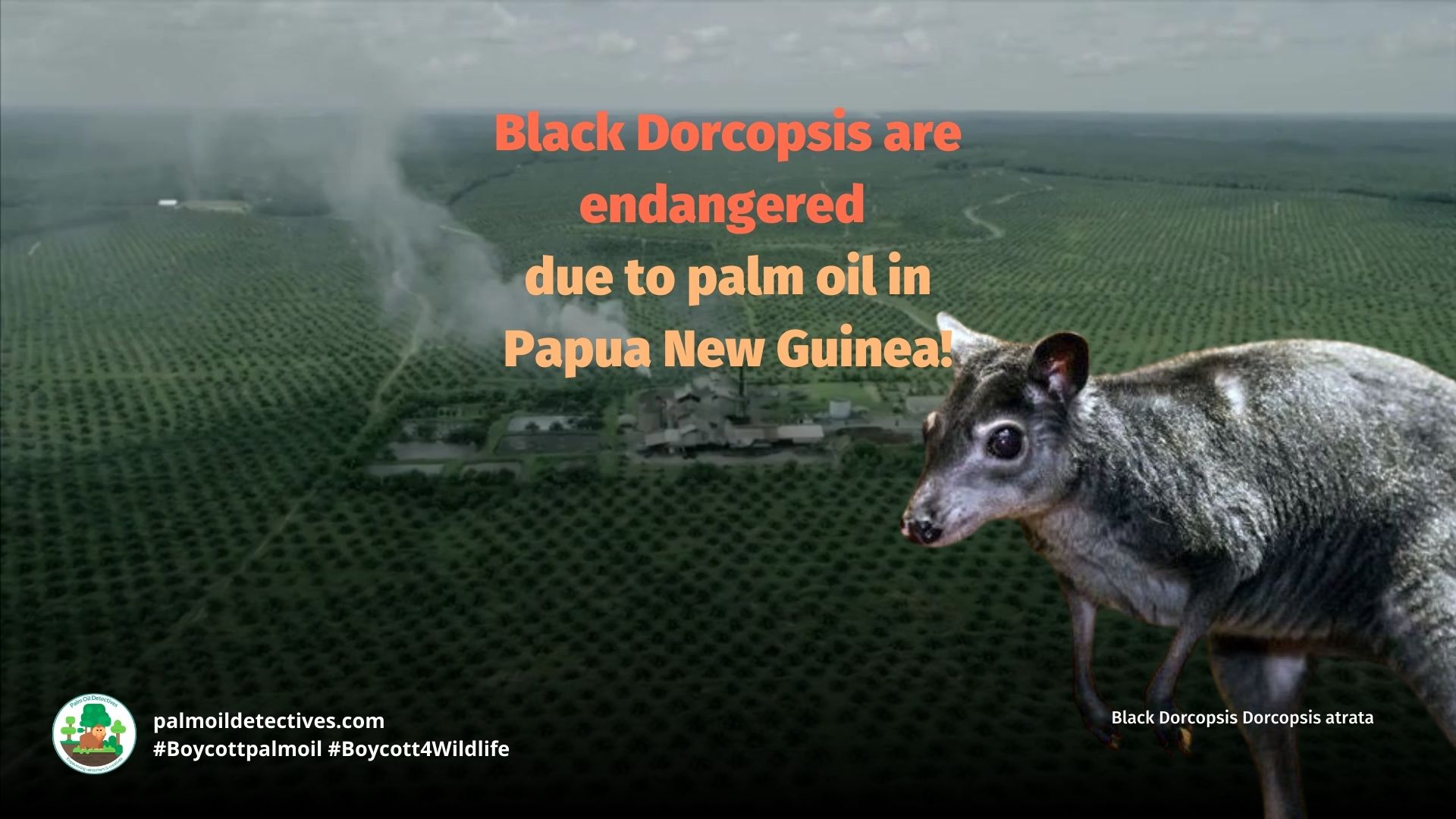
The Black Dorcopsis is a rare and elusive wallaby, crucial to the health of Goodenough Island’s forest ecosystem in Papua New Guinea. However, their survival is under severe threat due to hunting and the relentless destruction of their habitat by logging, palm oil plantations, and subsistence agriculture. Without urgent conservation action, this unique species could vanish forever. Protecting them requires halting deforestation, boycotting palm oil, and supporting indigenous-led conservation initiatives. #BoycottPalmOil #Boycott4Wildlife
Small bouncy #marsupials 🦘🦘 Black Dorcopis 🖤 are critically #endangered on the edge of survival in GoodEnough Island #PapuaNewGuinea due to #palmoil #deforestation Help them survive #BoycottPalmOil 🌴🪔💩🤮☠️⛔️ #Boycott4Wildlife @palmoildetect https://palmoildetectives.com/2021/01/26/black-dorcopsis-dorcopsis-atrata/
Appearance and Behaviour
- The Black Dorcopsis is one of the few macropod species found exclusively on a single island, highlighting their ecological and evolutionary uniqueness.
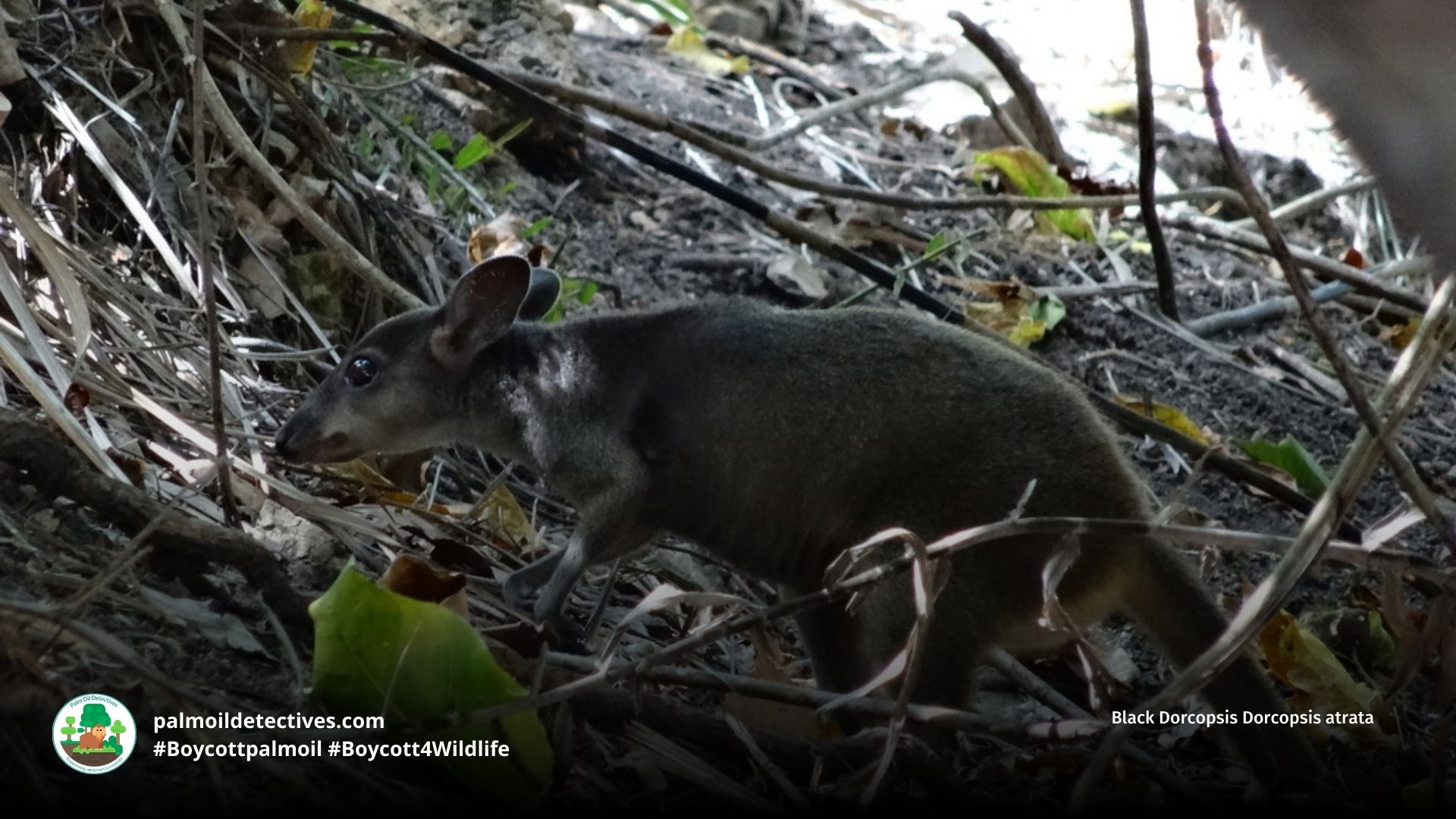
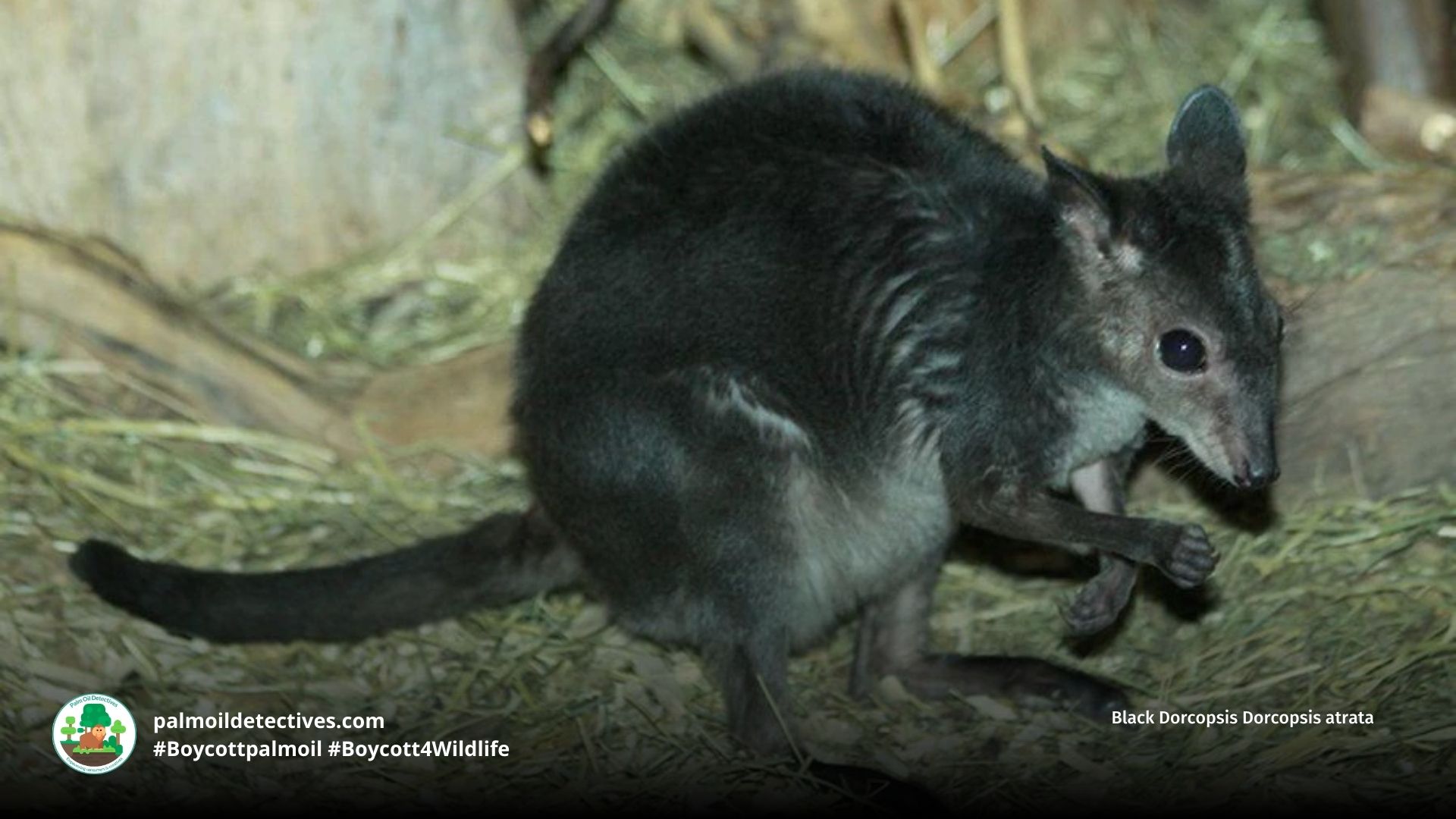
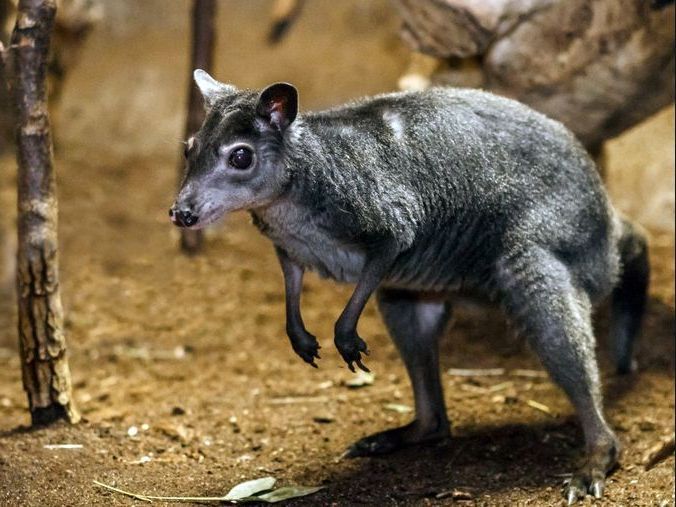
- Their dark grey to black fur, with subtle grey accents, helps them blend seamlessly into the shadows of the forest, making them almost invisible to predators and humans.
- Despite their nocturnal and elusive nature, they are a keystone species, playing a critical role in maintaining the health of Goodenough Island’s forests.
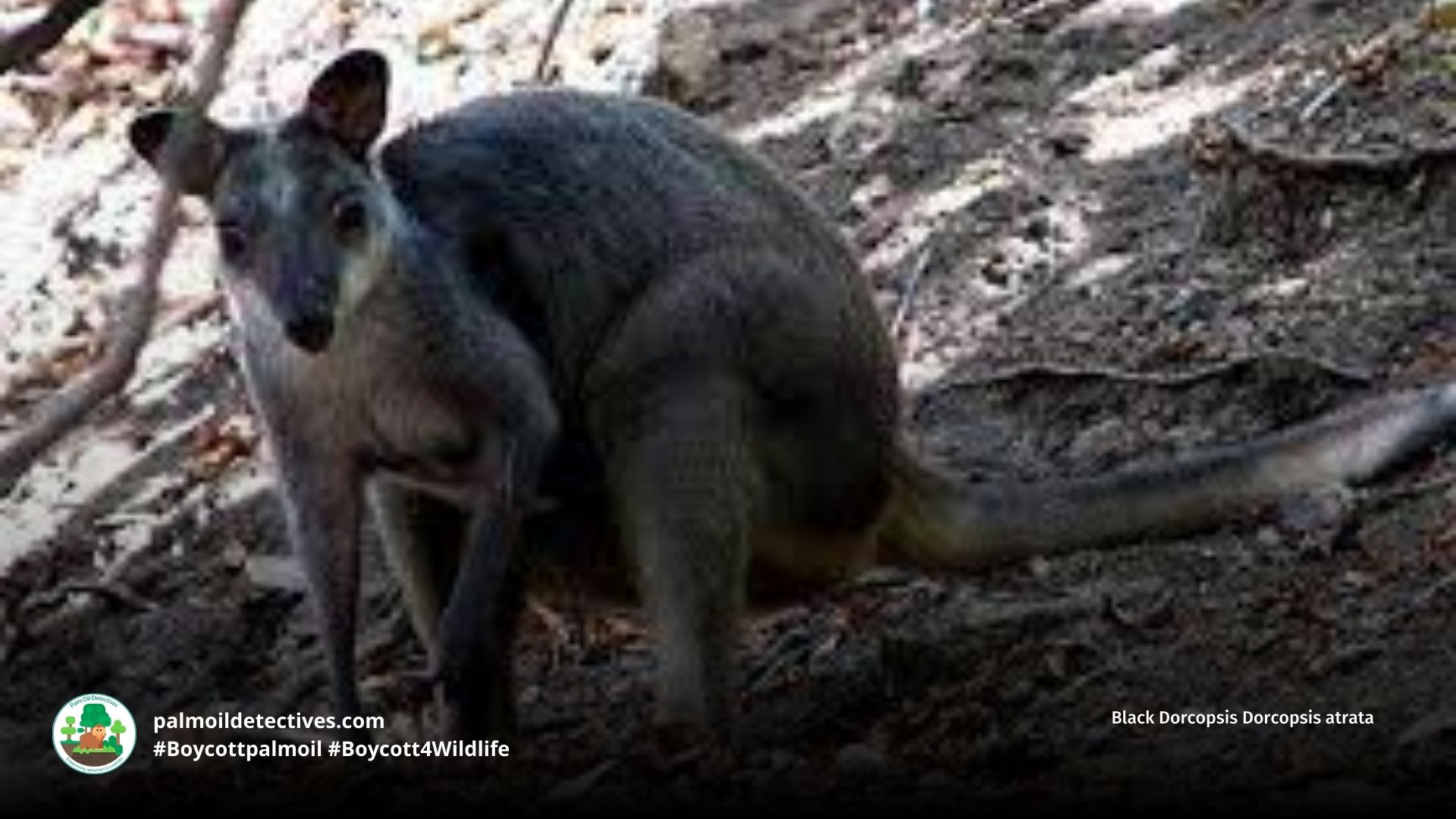
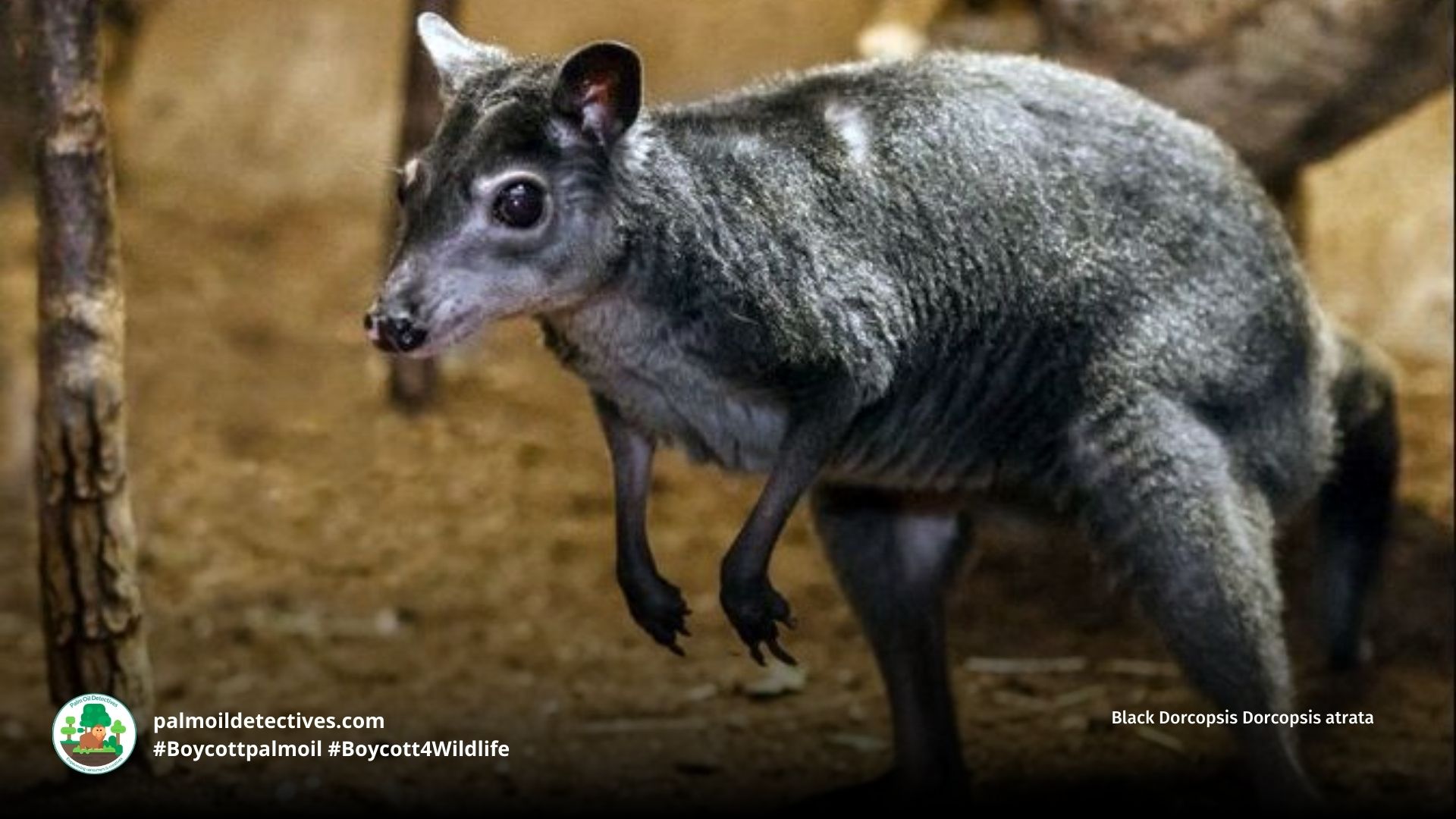
The Black Dorcopsis is a medium-sized macropod with a dense coat of fur ranging in colour from dark grey to black. Subtle grey highlights appear on their face, chest, and undersides, softening the otherwise dark hues. This unique colouring offers effective camouflage in the dimly lit forest undergrowth.
Adults weigh up to 8 kilograms and measure around 50 centimetres in body length, with an additional 30–40 centimetres for their long, tapering tail. Their strong hind legs and short, muscular forelimbs allow them to move swiftly and silently through rugged terrain. Black Dorcopsis like many other macropods and tree kangaroos are shy and nocturnal, emerging under the cover of darkness to forage. Their secretive nature makes them a challenge to study in the wild.
Diet
Black Dorcopsis are herbivores, feeding on a diet of fruits, leaves, roots, and other vegetation found on the forest floor. Their role as seed dispersers makes them crucial to the health and regeneration of Goodenough Island’s forests. By consuming and spreading seeds, they contribute to maintaining the biodiversity of their ecosystem.
Reproduction and Mating
Like other macropods, the Black Dorcopsis gives birth to a single joey after a short gestation period. The joey remains in the mother’s pouch for several months, continuing to develop until it is ready to emerge. Although specific details of their reproductive habits are unknown, their life cycle likely mirrors other forest wallabies, involving strong maternal care and seasonal breeding.
Geographic Range
This critically endangered wallaby is endemic to Goodenough Island, a small volcanic island with rugged terrain and limited forest cover. Their range is confined to approximately 687 square kilometres of lowland and montane forests. Habitat fragmentation and human encroachment have reduced their available range, isolating populations into smaller patches and threatening their long-term survival.
Threats
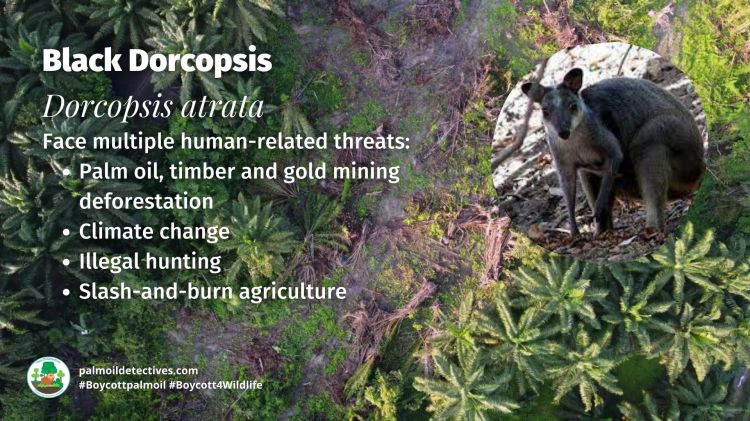
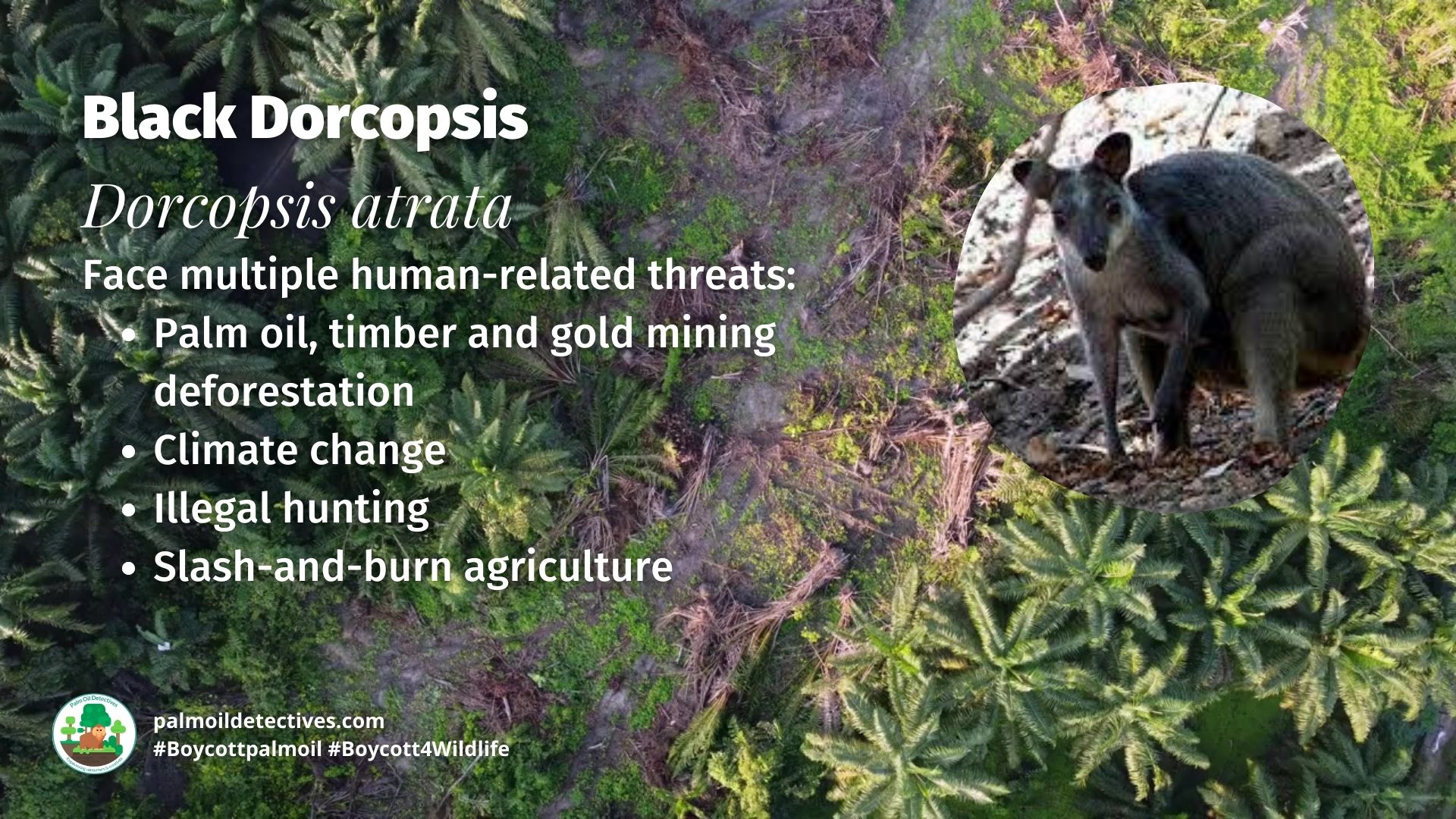
The forest habitat of this species is being cleared by slash-and-burn agriculture and is rapidly being converted to grassland.
IUCN Red List
Palm Oil and Timber Deforestation:
Logging for timber plantations and the expansion of out-of-control palm oil plantations are the most significant threats to the Black Dorcopsis. These activities destroy vital forests, leaving the wallabies with fewer safe areas to live and forage. Habitat loss and fragmentation reduce their chances of survival and force them into contact with humans, increasing hunting pressures.
Illegal Hunting:
The Black Dorcopsis is heavily hunted for subsistence by local communities. Despite their small population size and critically endangered status, hunting remains a significant threat, exacerbated by their restricted range.
Slash-and-Burn Agriculture:
The practice of clearing forests for subsistence farming depletes the habitat of Black Dorcopsis, further isolating their populations and limiting the resources available for foraging and reproduction.
Climate Change:
Rising temperatures and shifting rainfall patterns threaten the montane forests that the Black Dorcopsis depends on. As a high-altitude specialist, this species is particularly vulnerable to these changes, which degrade their already limited habitat.
Ecological Role
As herbivores, Black Dorcopsis are vital to the ecosystem of Goodenough Island. By consuming forest fruits and dispersing seeds, they contribute to the regeneration of vegetation and maintain the biodiversity of their habitat. Their presence is essential to the balance and health of this unique forest ecosystem.
Take Action
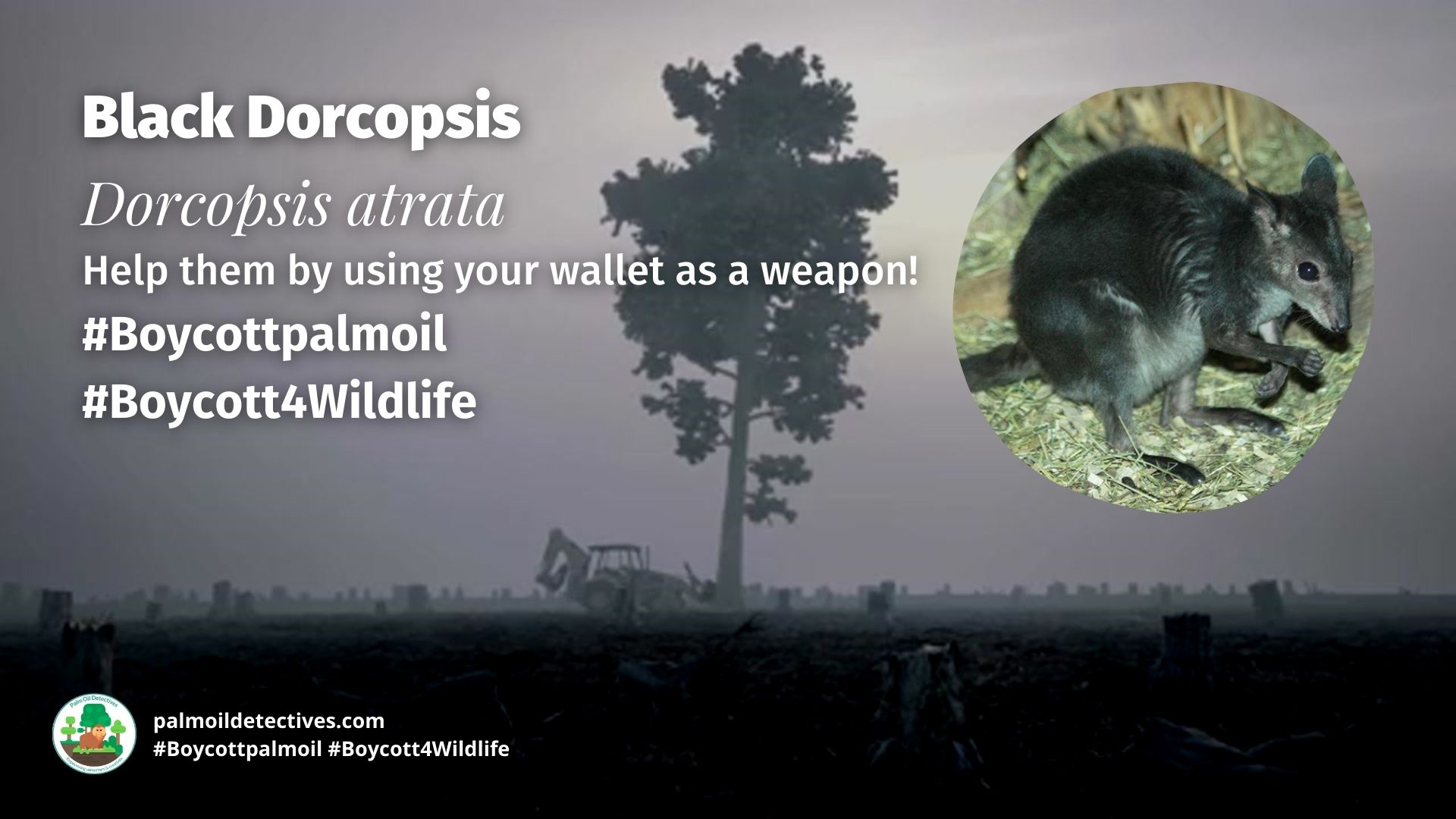
The Black Dorcopsis is teetering on the edge of extinction, and their survival depends on immediate action. Boycott palm oil products, demand responsible forestry practices, and support indigenous-led conservation initiatives in Papua New Guinea. Raising awareness and advocating for stronger protections for their habitat are crucial to ensuring this unique species does not disappear. #BoycottPalmOil #Boycott4Wildlife
Further Information
Global Biodiversity Information Facility (GBIF). (n.d.). Dorcopsis atrata. Retrieved from https://www.gbif.org/species/165474543
Leary, T., Wright, D., Hamilton, S., Singadan, R., Menzies, J., Bonaccorso, F., Helgen, K., Seri, L., Allison, A. & James, R. 2016. Dorcopsis atrata. The IUCN Red List of Threatened Species 2016: e.T6794A21952571. https://dx.doi.org/10.2305/IUCN.UK.2016-2.RLTS.T6794A21952571.en. Downloaded on 26 January, 2021.
The Conversation. (2023). Meet 5 marvellous mammals of the South Pacific you’ve probably never heard of. Retrieved from https://theconversation.com/meet-5-marvellous-mammals-of-the-south-pacific-youve-probably-never-heard-of-209038

How can I help the #Boycott4Wildlife?
Take Action in Five Ways
1. Join the #Boycott4Wildlife on social media and subscribe to stay in the loop: Share posts from this website to your own network on Twitter, Mastadon, Instagram, Facebook and Youtube using the hashtags #Boycottpalmoil #Boycott4Wildlife.
2. Contribute stories: Academics, conservationists, scientists, indigenous rights advocates and animal rights advocates working to expose the corruption of the palm oil industry or to save animals can contribute stories to the website.



3. Supermarket sleuthing: Next time you’re in the supermarket, take photos of products containing palm oil. Share these to social media along with the hashtags to call out the greenwashing and ecocide of the brands who use palm oil. You can also take photos of palm oil free products and congratulate brands when they go palm oil free.
4. Take to the streets: Get in touch with Palm Oil Detectives to find out more.
5. Donate: Make a one-off or monthly donation to Palm Oil Detectives as a way of saying thank you and to help pay for ongoing running costs of the website and social media campaigns. Donate here
Discover more from Palm Oil Detectives
Subscribe to get the latest posts sent to your email.
 Palm Oil Detectives