
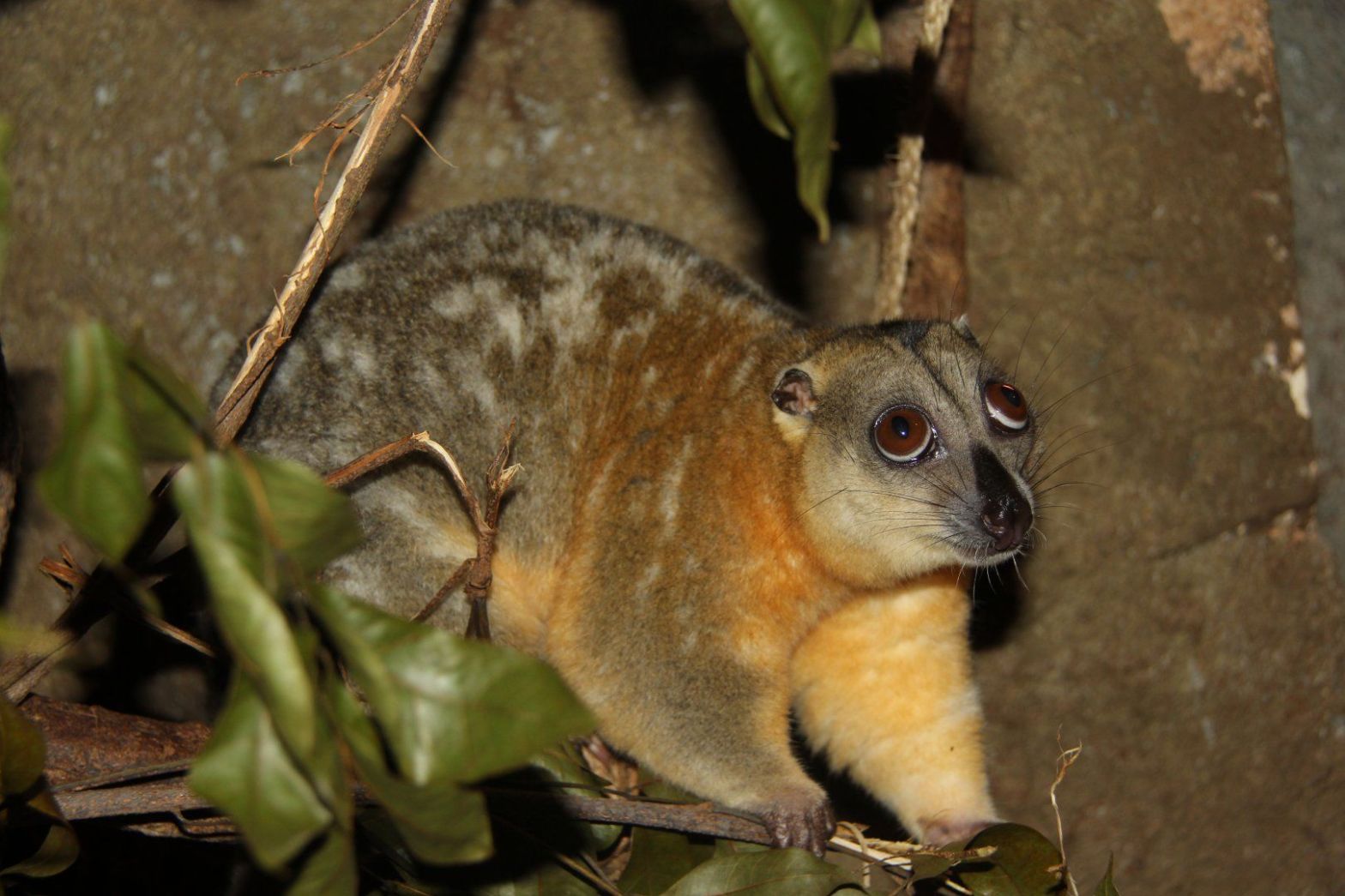
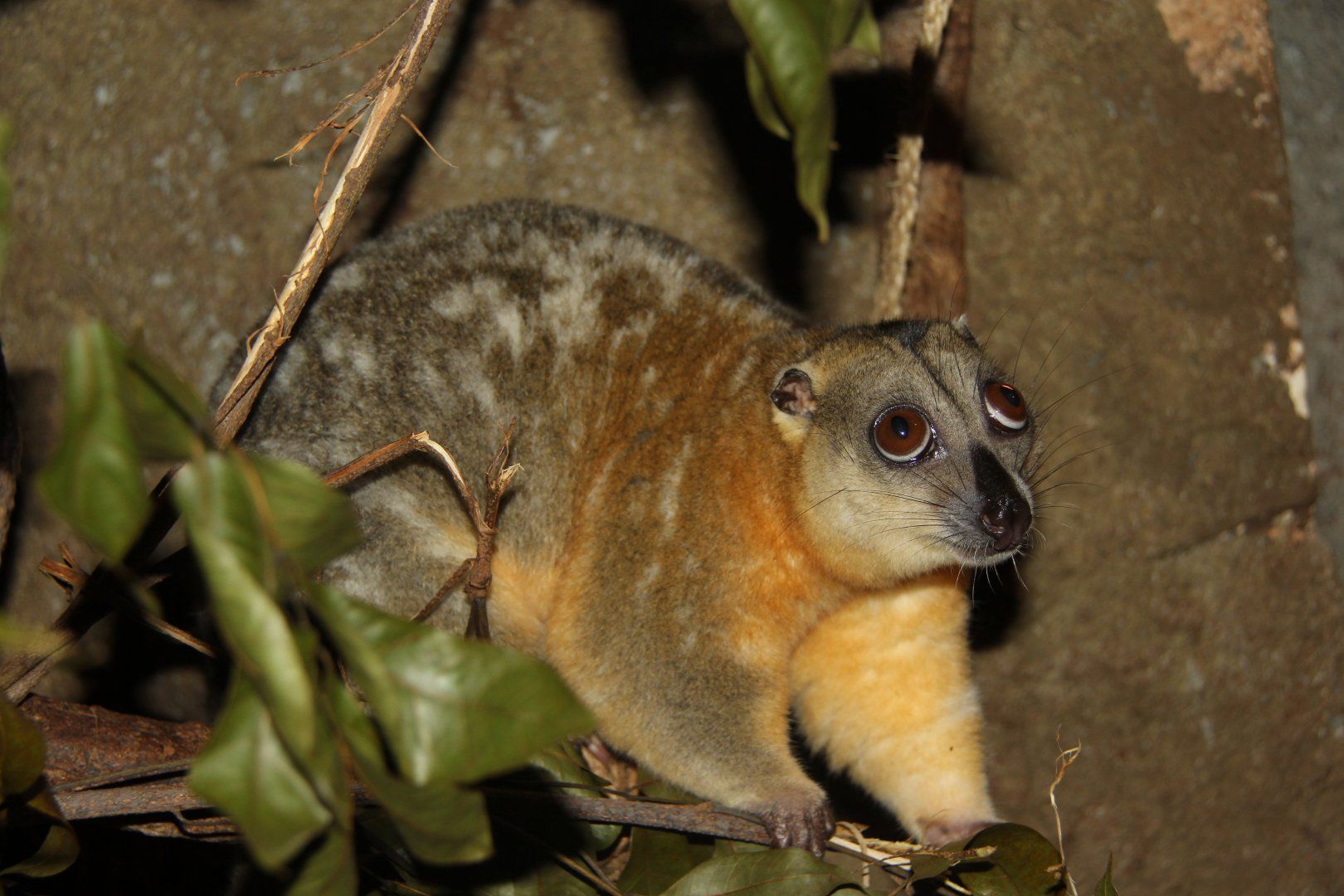
Telefomin Cuscus Phalanger matanim
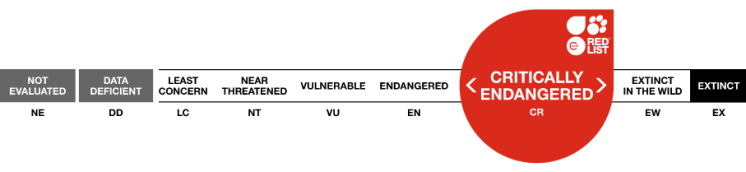
Critically Endangered
Locations: Papua New Guinea
The Telefomin Cuscus is a critically endangered marsupial, found exclusively in the montane forests of Papua New Guinea’s Nong River Valley. Known to the indigenous Telefol people for several millennia, this species was formally described by scientists in 1985.
The Telefomin Cuscus faces an uncertain future due to habitat destruction for palm oil and gold mining in Papua, along with climate change. Some experts fear they may already be extinct. Fight for their survival each time you shop by boycotting products linked to deforestation and supporting the #BoycottPalmOil #Boycott4Wildlife movement.
Experts fear these precious animals may already be extinct, less than 50 remain alive due to #goldmining and #palmoil. Help protect the enchanting Telefomin #Cuscus from disappearing forever when u #BoycottPalmOil #Boycott4Wildlife @palmoildetect https://wp.me/pcFhgU-nv
Fuzzy haired, gentle-natured Telefomin Cuscus are one of the rarest #possums alive. Just a few dozen remain in #PapuaNewGuinea’s Nong River Valley. Fight for them and #BoycottPalmOil #Boycott4Wildlife @palmoildetect https://wp.me/pcFhgU-nv
Appearance and Behaviour
The Telefomin Cuscus is a medium-sized, nocturnal marsupial with dense, woolly fur that provides insulation in its cool, high-altitude habitat. Their fur is grey to brown, helping them blend into the forest canopy. They are arboreal, relying on strong limbs and a prehensile tail to navigate the treetops.
Known for their elusive nature, these cuscuses are primarily solitary and spend much of their time hiding in dense vegetation. As nocturnal animals, they forage at night, avoiding potential predators.
Geographic Range
The Telefomin Cuscus is known to inhabit the areas of Telefomin and Tifalmin in Papua New Guinea. They may also exist further northeast or west of these collection areas.
The only confirmed location of their range was largely destroyed by a fire in 1998, caused by a drought during an El Niño event. This catastrophic habitat loss has contributed significantly to their critical conservation status.
Diet
More research is needed on this animal to confirm their dietary needs. The Telefomin Cuscus likely feeds on leaves, fruits, and flowers, making them important contributors to seed dispersal within their montane forest ecosystem. Their diet reflects their arboreal nature, relying on the rich vegetation of the canopy.
Reproduction and Mating
There is little information about the reproductive habits of the Telefomin Cuscus. Like other marsupials, females likely give birth to underdeveloped young, which complete their development in the mother’s pouch. Research is urgently needed to understand their breeding patterns and population dynamics.
Threats
IUCN Status: Critically Endangered (Possibly Extinct)
Deforestation for palm oil and gold mining: Gold mining and palm oil deforestation are ongoing threats to their survival.
Climate Change: Severe and unprecedented weather patterns pose ongoing threats to their montane forest habitat. The habitat of this species was completely destroyed by fire in the 1998 El Niño event.
Extremely Limited Range: With a habitat restricted to one small area, they are highly vulnerable to localised threats.
Human encroachment and hunting: This species is threatened by local hunting for food and loss of suitable habitat through human encroachment.
Conservation Status
The Telefomin Cuscus is classified as Critically Endangered by the IUCN. Despite recent efforts, no confirmed sightings have occurred in decades, raising fears of extinction. Conservation measures should focus on habitat restoration and climate resilience to preserve this species.
Take Action!
Protect the Telefomin Cuscus by boycotting products linked to deforestation, such as palm oil. Use your wallet as a weapon to support eco-friendly choices and conservation efforts. Join the #BoycottPalmOil and #Boycott4Wildlife movements to fight for their survival.
This species is threatened by local hunting for food and loss of suitable habitat through human encroachment.
IUCN Red List
Further Information
Leary, T., Seri, L., Flannery, T., Wright, D., Hamilton, S., Helgen, K., Singadan, R., Menzies, J., Allison, A., James, R., Salas, L. & Dickman, C. 2016. Phalanger matanim. The IUCN Red List of Threatened Species 2016: e.T16851A21950802. https://dx.doi.org/10.2305/IUCN.UK.2016-2.RLTS.T16851A21950802.en. Downloaded on 26 January 2021.
Recently Extinct Species. (n.d.). Phalanger matanim. Retrieved from Recently Extinct Species.
Wikipedia contributors. (n.d.). Telefomin Cuscus. Retrieved from Wikipedia.

How can I help the #Boycott4Wildlife?
Take Action in Five Ways
1. Join the #Boycott4Wildlife on social media and subscribe to stay in the loop: Share posts from this website to your own network on Twitter, Mastadon, Instagram, Facebook and Youtube using the hashtags #Boycottpalmoil #Boycott4Wildlife.
2. Contribute stories: Academics, conservationists, scientists, indigenous rights advocates and animal rights advocates working to expose the corruption of the palm oil industry or to save animals can contribute stories to the website.





3. Supermarket sleuthing: Next time you’re in the supermarket, take photos of products containing palm oil. Share these to social media along with the hashtags to call out the greenwashing and ecocide of the brands who use palm oil. You can also take photos of palm oil free products and congratulate brands when they go palm oil free.
4. Take to the streets: Get in touch with Palm Oil Detectives to find out more.
5. Donate: Make a one-off or monthly donation to Palm Oil Detectives as a way of saying thank you and to help pay for ongoing running costs of the website and social media campaigns. Donate here
Discover more from Palm Oil Detectives
Subscribe to get the latest posts sent to your email.
 Palm Oil Detectives