
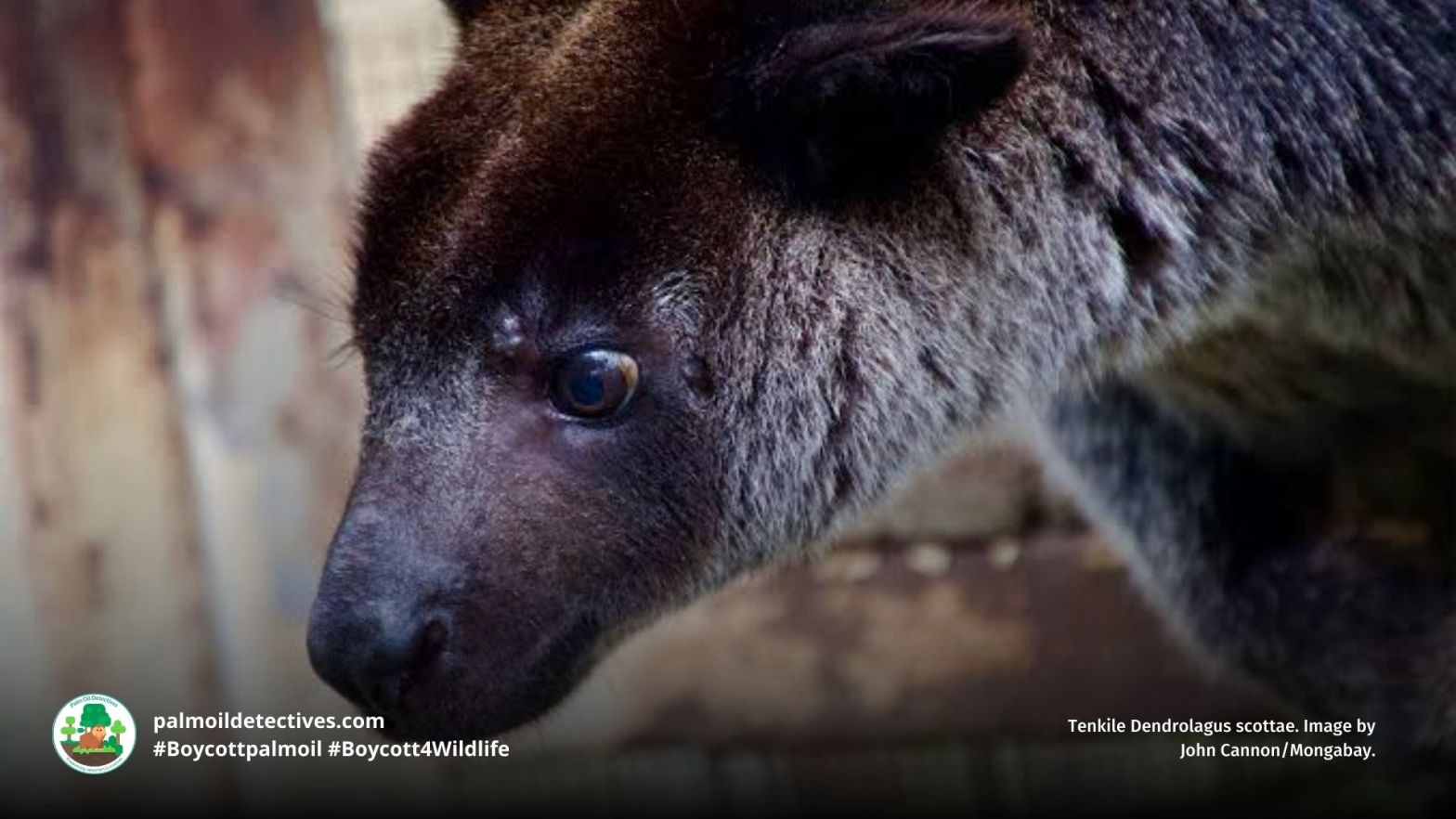
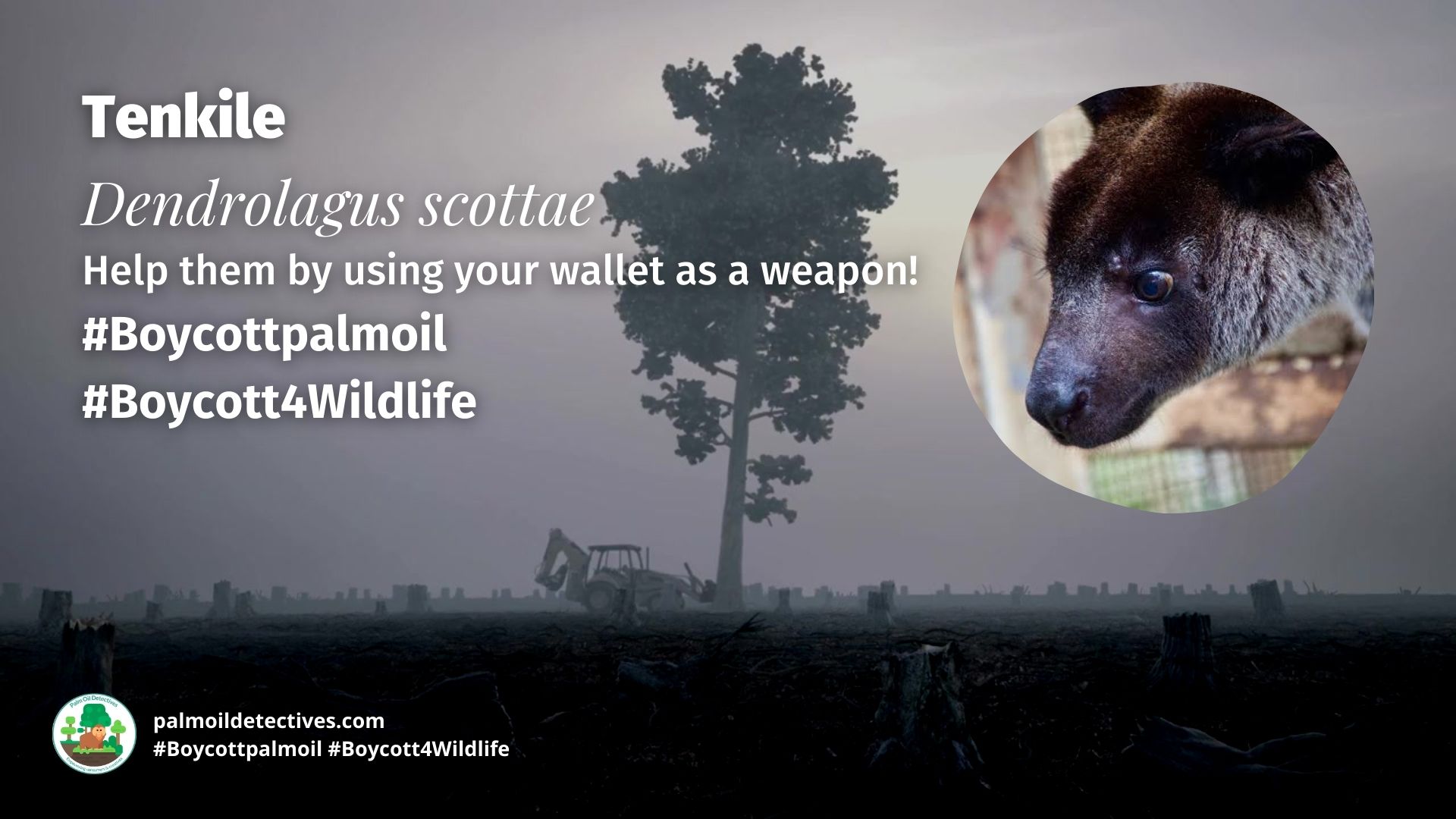
Tenkile Dendrolagus scottae
Location: Torricelli Mountains and Bewani Range, Papua New Guinea
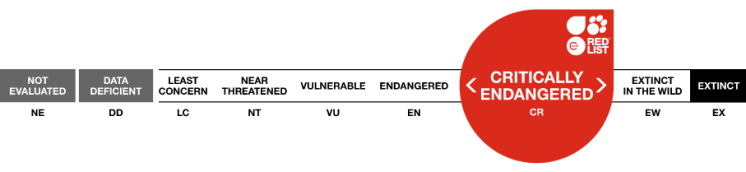
IUCN Status: Critically Endangered
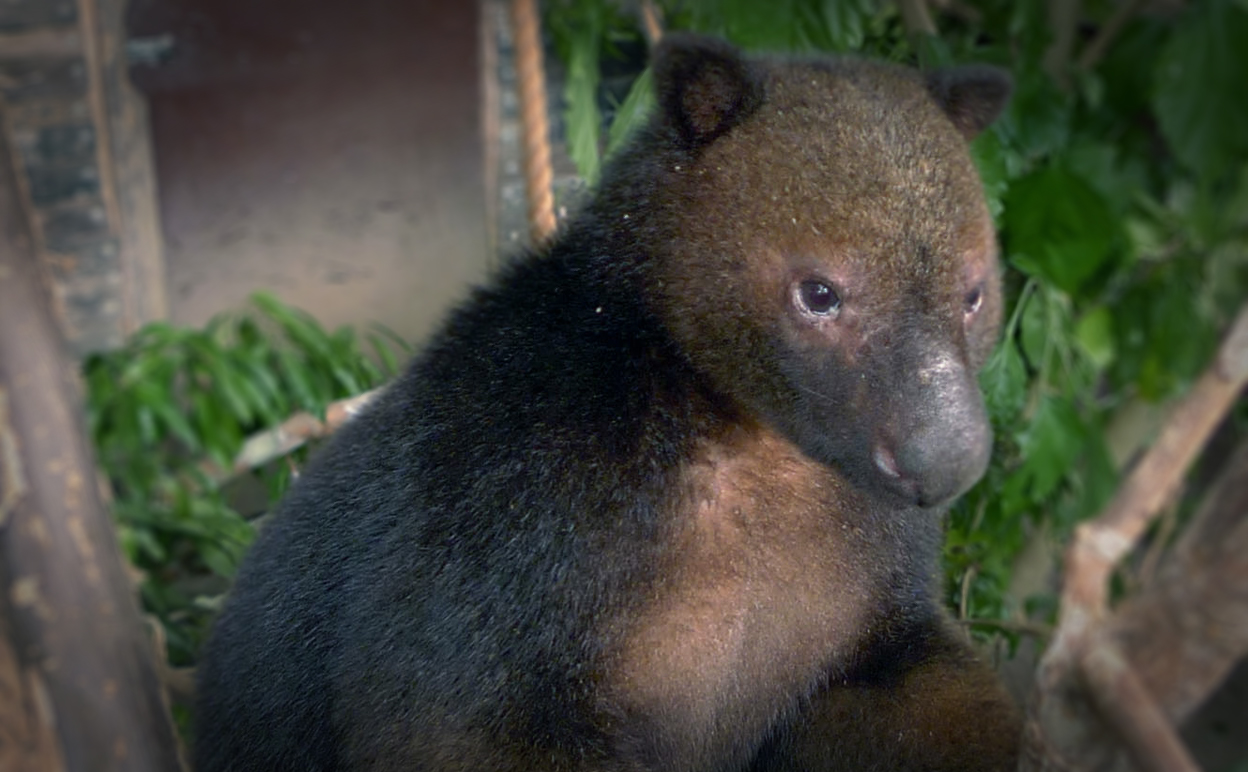
The #Tenkile, or Scott’s Tree #Kangaroo Dendrolagus scottae, is one of the most endangered #marsupials in the world, found only in the Torricelli Mountains and Bewani Range of #PapuaNewGuinea. These elusive tree kangaroos are unlike others of the #Dendrolagus genus as they spend a lot more time on the ground. These #treekangaroos were once widespread, but decades of hunting for food and deforestation for subsistence farming have driven them to the brink of extinction and they are now critically endangered. By the early 2000s, their population had plummeted to an estimated 100 individuals. However, the Tenkile Conservation Alliance (TCA) has led a community-driven conservation effort that has helped stabilise and even increase their numbers. Despite these successes, #timber and #palmoil expansion stills pose a major threat to this species’ survival. Resist and fight for their survival each time you shop—#BoycottPalmOil #Boycott4Wildlife.
Appearance and Behaviour
The #Tenkile is a critically #endangered chocolate brown tree #kangaroo 🦘🤎 bouncing in #PapuaNewGuinea’s 🇵🇬 #rainforests #PalmOil is a major threat. Help them, every time you shop #BoycottPalmOil 🌴🪔🤮🧐⛔️ #Boycott4Wildlife @palmoildetect #marsupial https://palmoildetectives.com/2021/01/26/tenkile-dendrolagus-scottae/
#Tenkiles are unlike other #TreeKangaroos as they spend time on the ground leaving them at risk of hunting. They have increased from 100 but #PalmOil #deforestation in #PapuaNewGuinea is a threat #BoycottPalmOil #Boycott4Wildlife @palmoildetect #marsupial https://palmoildetectives.com/2021/01/26/tenkile-dendrolagus-scottae/
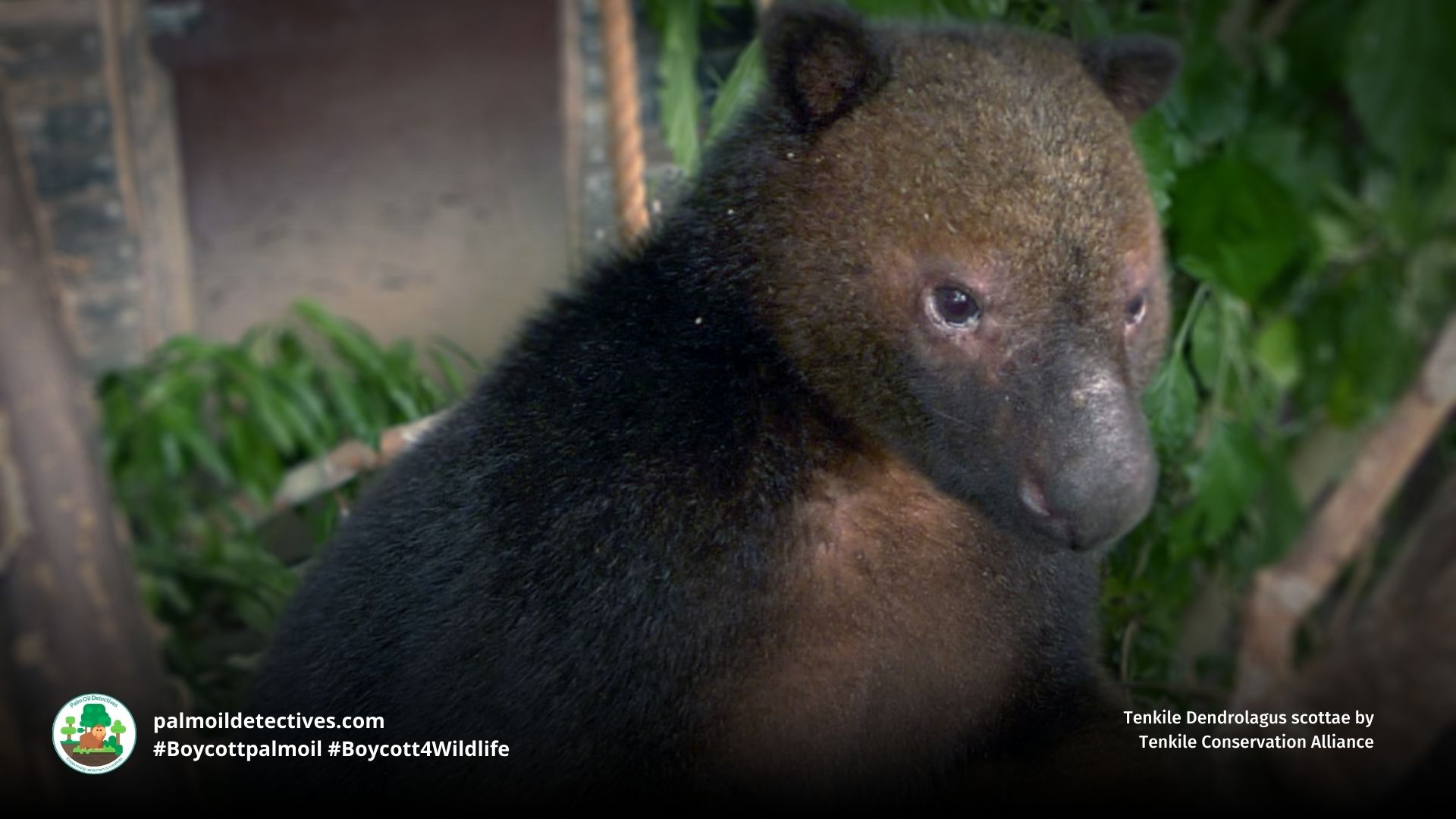
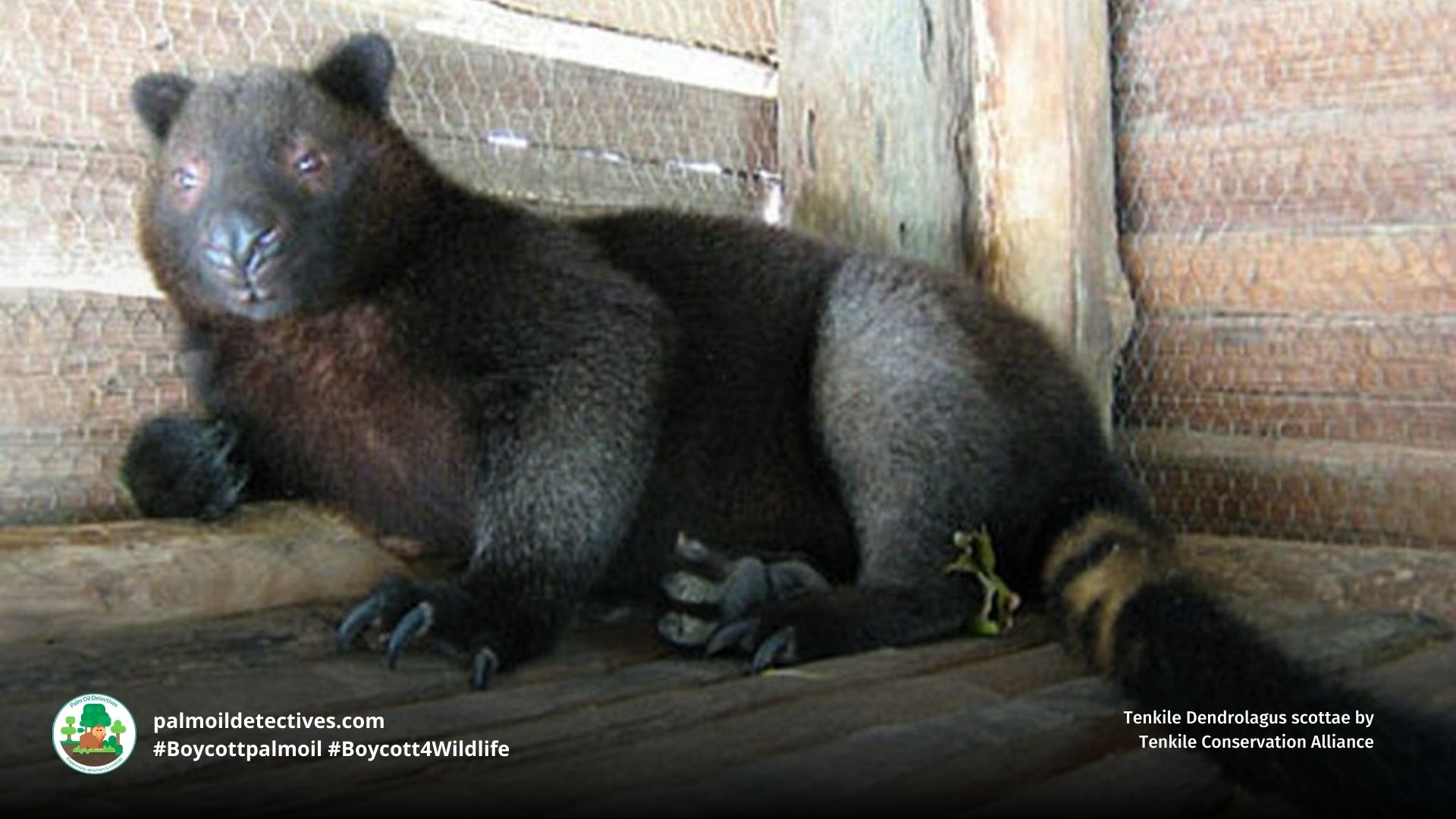
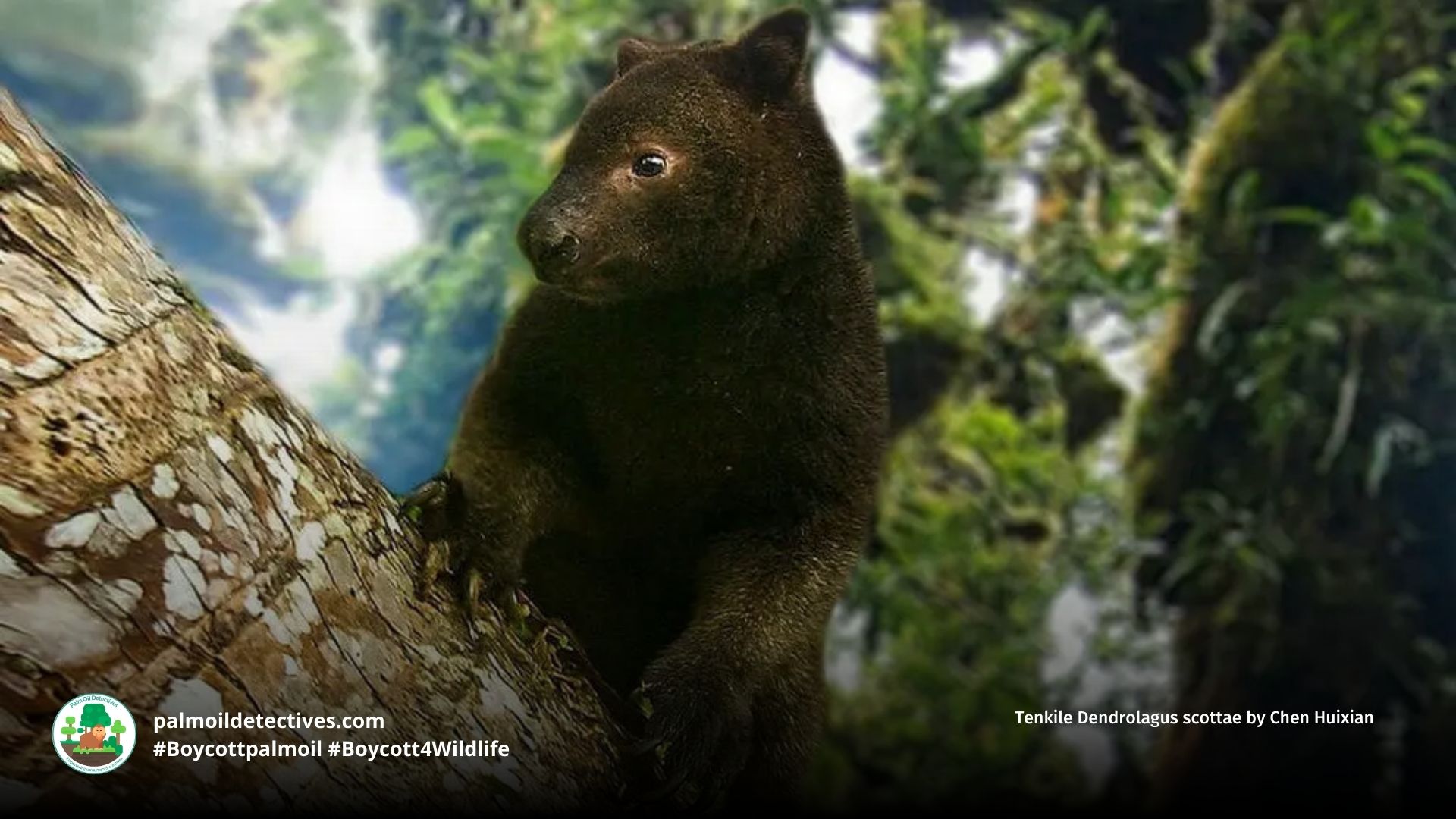
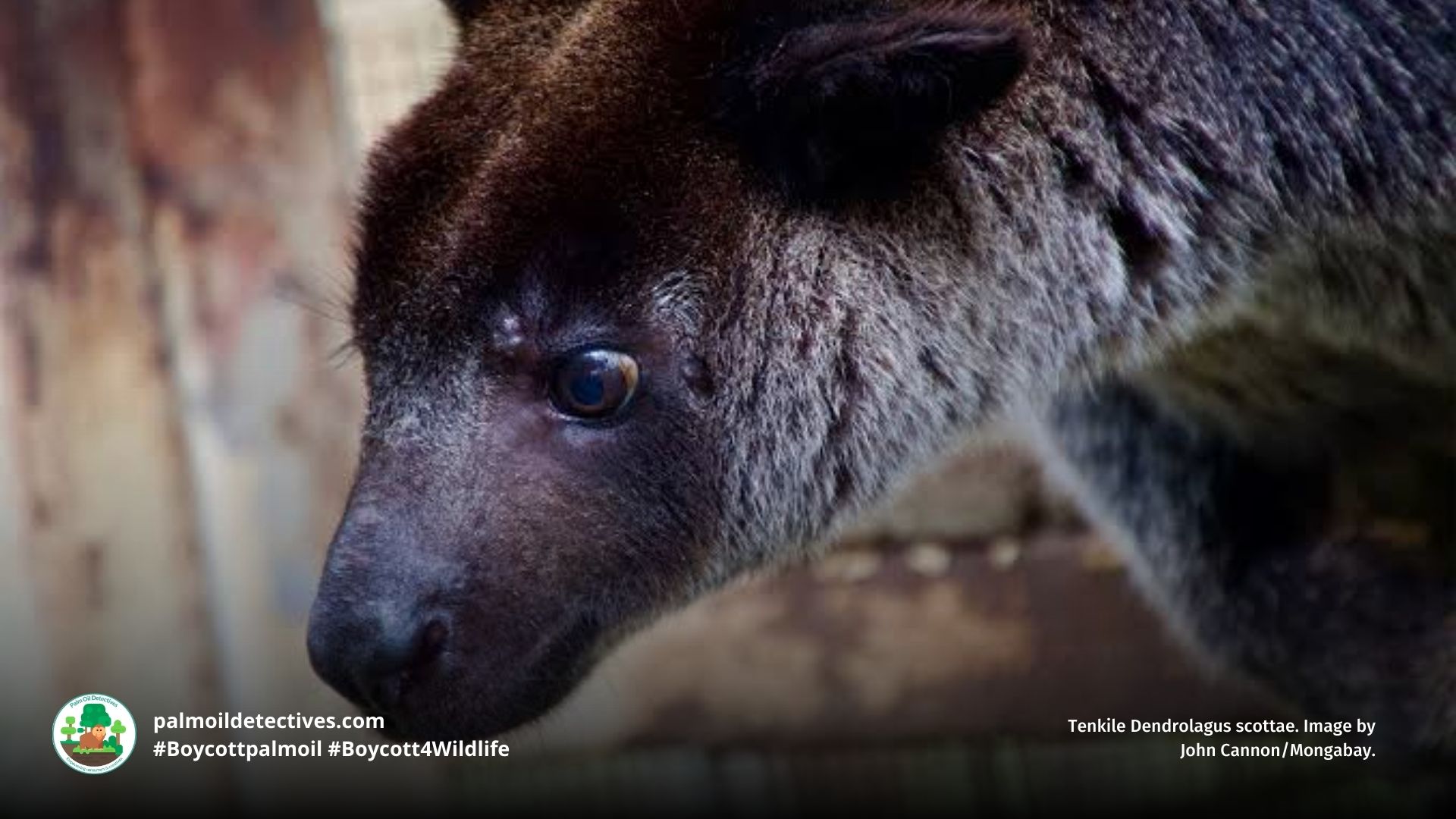
With their dense chocolate-brown fur, rounded face, and short, bear-like snout, Tenkile tree kangaroos are uniquely striking among their species. Their long, powerful tail helps them maintain balance while navigating the treetops, though unlike many tree kangaroos, they spend a significant amount of time on the ground. They move carefully and cautiously, using their strong forelimbs to grip branches and their hind legs for leaping between trees.
These tree kangaroos are highly elusive and difficult to spot in the wild. They are usually solitary, but historical accounts suggest they may have once lived in small groups. Due to intense hunting pressure, they have become particularly wary of human presence and avoid areas of disturbance.
Diet
Although no formal diet studies have been conducted, Tenkile tree kangaroos are known to feed on a variety of forest plants, vines, and epiphytes. They have been observed consuming Scaevola and Tetracera vines, as well as leaves from various rainforest species such as Podocarpus, Libocedrus, Auraucaria, Rapanea, and Syzygium. Their diet suggests they play a crucial role in their ecosystem by dispersing seeds and maintaining the health of montane rainforests.
Reproduction and Mating
Unlike some marsupials, Tenkile tree kangaroos do not have a fixed breeding season. Females typically give birth to one or possibly two joeys, which they carry in their pouch while they develop. Very little is known about their reproductive cycle, but as with other tree kangaroos, joeys likely spend months in the pouch before emerging and learning to navigate their treetop habitat. Given their slow reproductive rate, any decline in population is extremely difficult to reverse.
Threats
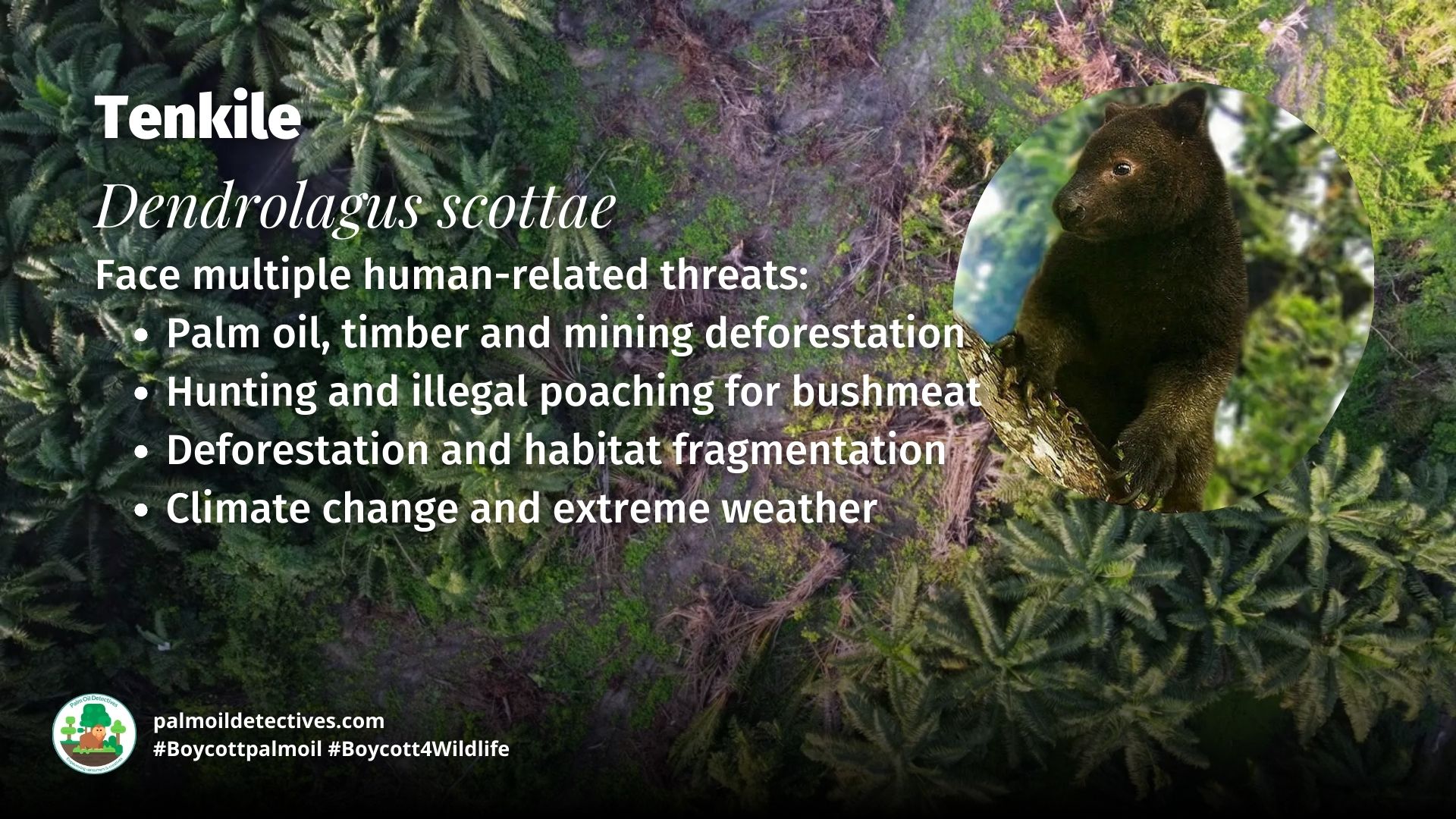
The Tenkile faces severe threats from hunting and habitat destruction for palm oil, gold mining and timber already present throughout their range.
This species is listed as Critically Endangered because of a rapid population decline suspected to be 90% or more over the last three generations, which in this species is a period of 30 years
IUCN Red List
Hunting and human encroachment
For generations, local communities hunted the Tenkile for food, leading to devastating population declines. Increased human population density has made this worse, as more people depend on hunting. However, conservation efforts have drastically reduced hunting, helping stabilise the species in the Torricelli Mountains.
Infrastructure and road construction
Around 75% of the Tenkile’s inferred range is now covered by timber and palm oil concessions, leading to widespread forest loss and fragmentation. Additionally, new roads built for petroleum and gas development have opened up previously inaccessible areas to hunters, worsening the threat.
Palm oil and industrial agriculture
Large-scale palm oil plantations are intruding into the Tenkile’s habitat. As corporate logging and agribusiness expands, the risk of palm oil and commercial plantations replacing their habitat has become a grave risk to their survival.
Climate change-induced extreme weather
As a forest-dwelling species, the Tenkile is highly sensitive to temperature changes. Climate change threatens to alter forest composition, food availability, and disease prevalence, putting additional stress on their already fragile population.
Take Action!
The Tenkile’s survival depends on protecting its rainforest home and ensuring local communities are supported in sustainable conservation efforts. You can help by using your wallet as a weapon—#BoycottPalmOil #Boycott4Wildlife every time you shop.
FAQs
What does the Tenkile eat?
The Tenkile’s diet consists mainly of forest vines, leaves, and epiphytic ferns, with a preference for plant species like Scaevola and Tetracera. These seed-dispersing tree kangaroos play a crucial ecological role in maintaining rainforest biodiversity.
How is the Tenkile different from other tree kangaroos?
Unlike most tree kangaroos, the Tenkile spends a high proportion of time on the ground rather than staying exclusively in the treetops. This makes them more vulnerable to hunting and habitat destruction.
Why are Tenkile tree kangaroos endangered?
The Tenkile has been severely impacted by hunting and habitat loss from logging, agriculture, and road construction. Despite successful conservation efforts, threats from industrial expansion and climate change continue to endanger its survival.
What is the Tenkile Conservation Alliance (TCA)?
The Tenkile Conservation Alliance is a community-driven conservation group that has helped protect the Tenkile by working with local villages to ban hunting and establish conservation of tree kangaroos and other small marsupials in Papua. Their work has stabilised the Tenkile’s population, proving that local-led conservation efforts can be effective.
How can I help protect the Tenkile?
One of the biggest threats to Tenkile habitat is deforestation, particularly for logging, agriculture, and palm oil expansion. Always choose products that are 100% palm oil-free to avoid contributing to deforestation and biodiversity loss. Support organisations like the Tenkile Conservation Alliance, and spread awareness about this critically endangered species.
Further Information
Flannery, T. F., & Seri, L. (1990). Tree kangaroos of New Guinea. Records of the Australian Museum, 42(3), 237–245. https://journals.australian.museum/flannery-and-seri-1990-rec-aust-mus-423-237245/
Leary, T., Wright, D., Hamilton, S., Helgen, K., Singadan, R., Aplin, K., Dickman, C., Salas, L., Flannery, T., Martin, R. & Seri, L. 2019. Dendrolagus scottae. The IUCN Red List of Threatened Species 2019: e.T6435A21956375. https://dx.doi.org/10.2305/IUCN.UK.2019-1.RLTS.T6435A21956375.en. Downloaded on 26 January 2021.
Cannon, J. (2023). Defending a forest for tree kangaroos and people: Q&A with Fidelis Nick. Mongabay https://news.mongabay.com/2023/10/defending-a-forest-for-tree-kangaroos-and-people-qa-with-fidelis-nick/
Tenkile Conservation Alliance. (2024). Tenkile Tree Kangaroo. https://tenkile.com/tenkile-tree-kangaroo-2/

How can I help the #Boycott4Wildlife?
Take Action in Five Ways
1. Join the #Boycott4Wildlife on social media and subscribe to stay in the loop: Share posts from this website to your own network on Twitter, Mastadon, Instagram, Facebook and Youtube using the hashtags #Boycottpalmoil #Boycott4Wildlife.
2. Contribute stories: Academics, conservationists, scientists, indigenous rights advocates and animal rights advocates working to expose the corruption of the palm oil industry or to save animals can contribute stories to the website.




3. Supermarket sleuthing: Next time you’re in the supermarket, take photos of products containing palm oil. Share these to social media along with the hashtags to call out the greenwashing and ecocide of the brands who use palm oil. You can also take photos of palm oil free products and congratulate brands when they go palm oil free.
4. Take to the streets: Get in touch with Palm Oil Detectives to find out more.
5. Donate: Make a one-off or monthly donation to Palm Oil Detectives as a way of saying thank you and to help pay for ongoing running costs of the website and social media campaigns. Donate here
Discover more from Palm Oil Detectives
Subscribe to get the latest posts sent to your email.
 Palm Oil Detectives
One thought on “Tenkile Dendrolagus scottae”