
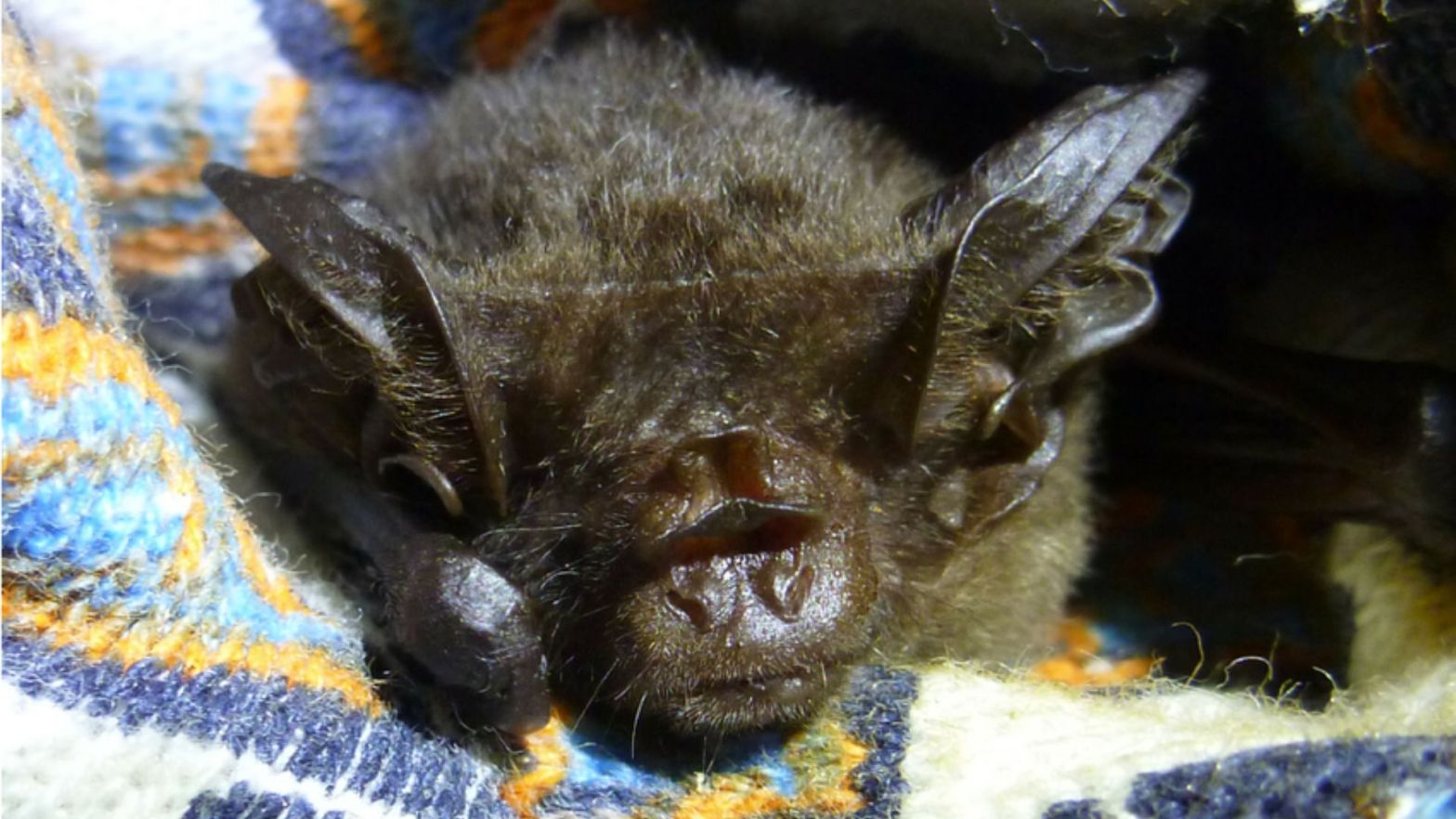
Thomas’s Big-eared Bat Pharotis imogene
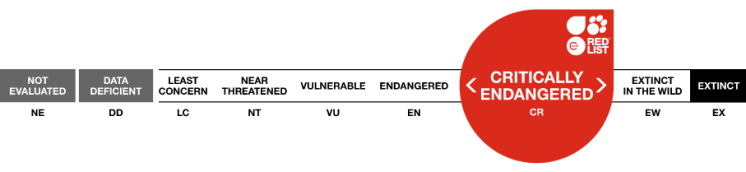
Status: Critically Endangered (IUCN 2016)
Location: Papua New Guinea – Central Province (Kamali District), lowland forests and coastal woodland regions
Thomas’s Big-eared #Bat Pharotis imogene, also known as the #NewGuinea Big-eared Bat, is one of the world’s rarest and most elusive #mammals- they are critically endangered by #PapuaNewGuinea. Thought to be #extinct for over a century, they were rediscovered in 2012 in Central Province, Papua New Guinea, in an area heavily impacted by palm oil deforestation, firewood collection, and land clearing for timber, mines and palm oil. Despite their rediscovery, habitat destruction due to palm oil expansion, logging, mining and human encroachment which continues to threaten their survival. Without urgent intervention, they may disappear again—this time, permanently. Help them every time you shop and #BoycottPalmOil #Boycott4Wildlife
Thomas’s Big Eared #Bats 🦇🖤 have trumpet like ears for ultra sensitive hunting of insects in #PapuaNewGuinea, Only a handful remain alive. #PalmOil and #mining are major threats. #BoycottGold #BoycottPalmOil 🌴🤮☠️⛔ #Boycott4Wildlife @palmoildetect.bsky.social https://palmoildetectives.com/2021/01/26/thomass-big-eared-bat-pharotis-imogene/
This bat species is threatened by loss of woodland and forest habitat in general, especially in lowland regions near the coast.
IUCN Red List
Appearance and behaviour
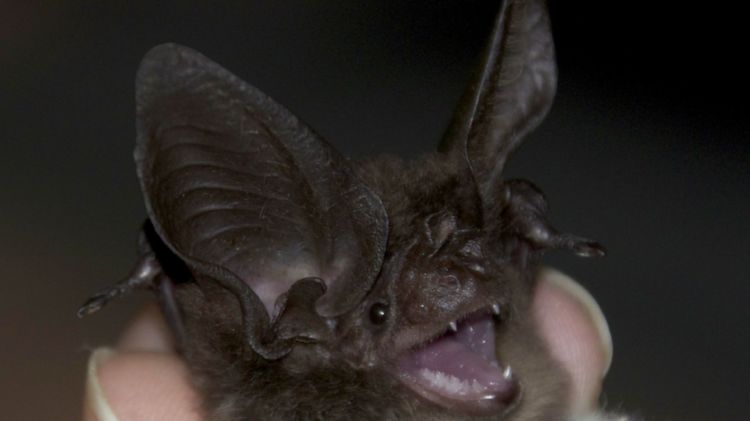
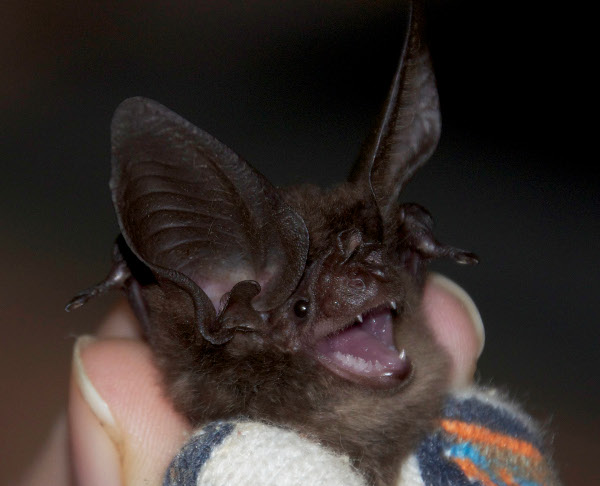
Thomas’s Big-eared Bat is a small, insectivorous bat with large ears that likely help them detect prey in dense undergrowth. Unlike other New Guinea bat species, they have a distinctively short, broad muzzle and a paler brownish-grey fur coat. Their large ears may also assist in echolocation, a vital adaptation for hunting in lowland tropical forests. Because they have been recorded in coastal and woodland regions, they are believed to rely on dense vegetation for roosting and foraging, though little is known about their social behaviours.
Threats
Palm oil and agricultural expansion
One of the biggest threats to Thomas’s Big-eared Bat is the expansion of palm oil plantations across Papua New Guinea. These industrial monocultures replace biodiverse forests with barren land, depriving them of the habitat they need to forage and roost. The use of pesticides in palm oil agriculture further contaminates soil and water sources, impacting the entire ecosystem.
Logging and habitat destruction
Widespread commercial logging operations, including the deliberate targeting of protected areas, have devastated much of the lowland and coastal forests where they once thrived. Even in areas where trees remain, habitat fragmentation makes it difficult for small, isolated populations to survive.
Firewood collection and human encroachment
The Kamali District, where Thomas’s Big-eared Bat was rediscovered, is experiencing increasing pressure from local human populations. Firewood collection, land clearing, and small-scale agriculture are rapidly reducing available roosting sites, forcing them into smaller and more vulnerable habitats.
Climate change and extreme weather
The lowland forests of Papua New Guinea are particularly vulnerable to the effects of climate change. Rising temperatures, increased droughts, and extreme weather events such as cyclones threaten to disrupt the delicate ecosystem that they depend on for survival.
Diet
Like other members of the Vespertilionidae family, Thomas’s Big-eared Bat is believed to be insectivorous. Their large ears and likely use of echolocation suggest that they prey on moths, beetles, and other nocturnal insects found in the undergrowth of forests. Because they are so rare, there is still much to learn about their specific feeding habits.
Reproduction and mating
Little is known about the reproductive behaviour of Thomas’s Big-eared Bat. Given what is understood about similar species, it is likely that females give birth to one or two offspring at a time, with newborns being highly dependent on their mothers for warmth and nutrition. Their breeding season and specific mating behaviours remain unknown due to a lack of field observations.
Geographic range
Thomas’s Big-eared Bat has only been recorded in Papua New Guinea’s Central Province, particularly in the Kamali District. Their habitat consists of lowland tropical forests and coastal woodlands, which have been increasingly degraded by human activity. They may have once been more widespread, but habitat destruction has likely reduced their range significantly.
FAQs
Are Thomas’s Big-eared Bats extinct?
No, but they were believed to be extinct for over a century until their rediscovery in 2012. However, their population is critically endangered due to severe habitat loss.
Where do Thomas’s Big-eared Bats live?
They are currently only known from Papua New Guinea’s Central Province, specifically in the Kamali District. They inhabit lowland forests and coastal woodlands.
What do Thomas’s Big-eared Bats eat?
They primarily feed on insects, including moths, beetles, and other small nocturnal prey. Their large ears and echolocation abilities help them locate food in dense forests.
Why are Thomas’s Big-eared Bats endangered?
Their biggest threats include habitat destruction caused by palm oil deforestation, logging, firewood collection, palm oil agricultural expansion, and climate change.
Can Thomas’s Big-eared Bats be kept as pets?
Absolutely not. Keeping wild bats as pets is both cruel and illegal. Thomas’s Big-eared Bat is a critically endangered species that belongs in the wild. They have specific ecological needs that cannot be met in captivity.
Take Action!
Every time you shop, you can help protect Thomas’s Big-eared Bat by choosing products that are palm oil free. The expansion of palm oil plantations is one of the biggest drivers of deforestation in Papua New Guinea, pushing species like Thomas’s Big-eared Bat closer to extinction. Support indigenous-led conservation efforts, avoid products that contribute to habitat destruction, and advocate for stronger protections for Papua New Guinea’s forests. Use your voice and wallet to make a difference. #BoycottPalmOil #Boycott4Wildlife
Further Information
Armstrong, K.D., Aplin, K. & Broken-brow, J. 2020. Pharotis imogene. The IUCN Red List of Threatened Species 2020: e.T16887A22114175. https://dx.doi.org/10.2305/IUCN.UK.2020-2.RLTS.T16887A22114175.en. Downloaded on 26 January 2021.
BirdLife International. (2016). Pharotis imogene. The IUCN Red List of Threatened Species 2016: e.T16887A22114175. https://www.iucnredlist.org/species/16887/22114175
Hamilton, S. (2014). Rediscovery of the New Guinea Big-eared Bat Pharotis imogene from Central Province, Papua New Guinea. Records of the Australian Museum, 66(4), 225–232. https://doi.org/10.3853/j.2201-4349.66.2014.1632
Wikipedia Contributors. (n.d.). New Guinea Big-eared Bat. Wikipedia, The Free Encyclopedia. Retrieved from https://en.wikipedia.org/wiki/New_Guinea_big-eared_bat

How can I help the #Boycott4Wildlife?
Take Action in Five Ways
1. Join the #Boycott4Wildlife on social media and subscribe to stay in the loop: Share posts from this website to your own network on Twitter, Mastadon, Instagram, Facebook and Youtube using the hashtags #Boycottpalmoil #Boycott4Wildlife.
2. Contribute stories: Academics, conservationists, scientists, indigenous rights advocates and animal rights advocates working to expose the corruption of the palm oil industry or to save animals can contribute stories to the website.





3. Supermarket sleuthing: Next time you’re in the supermarket, take photos of products containing palm oil. Share these to social media along with the hashtags to call out the greenwashing and ecocide of the brands who use palm oil. You can also take photos of palm oil free products and congratulate brands when they go palm oil free.
4. Take to the streets: Get in touch with Palm Oil Detectives to find out more.
5. Donate: Make a one-off or monthly donation to Palm Oil Detectives as a way of saying thank you and to help pay for ongoing running costs of the website and social media campaigns. Donate here
Discover more from Palm Oil Detectives
Subscribe to get the latest posts sent to your email.
 Palm Oil Detectives