
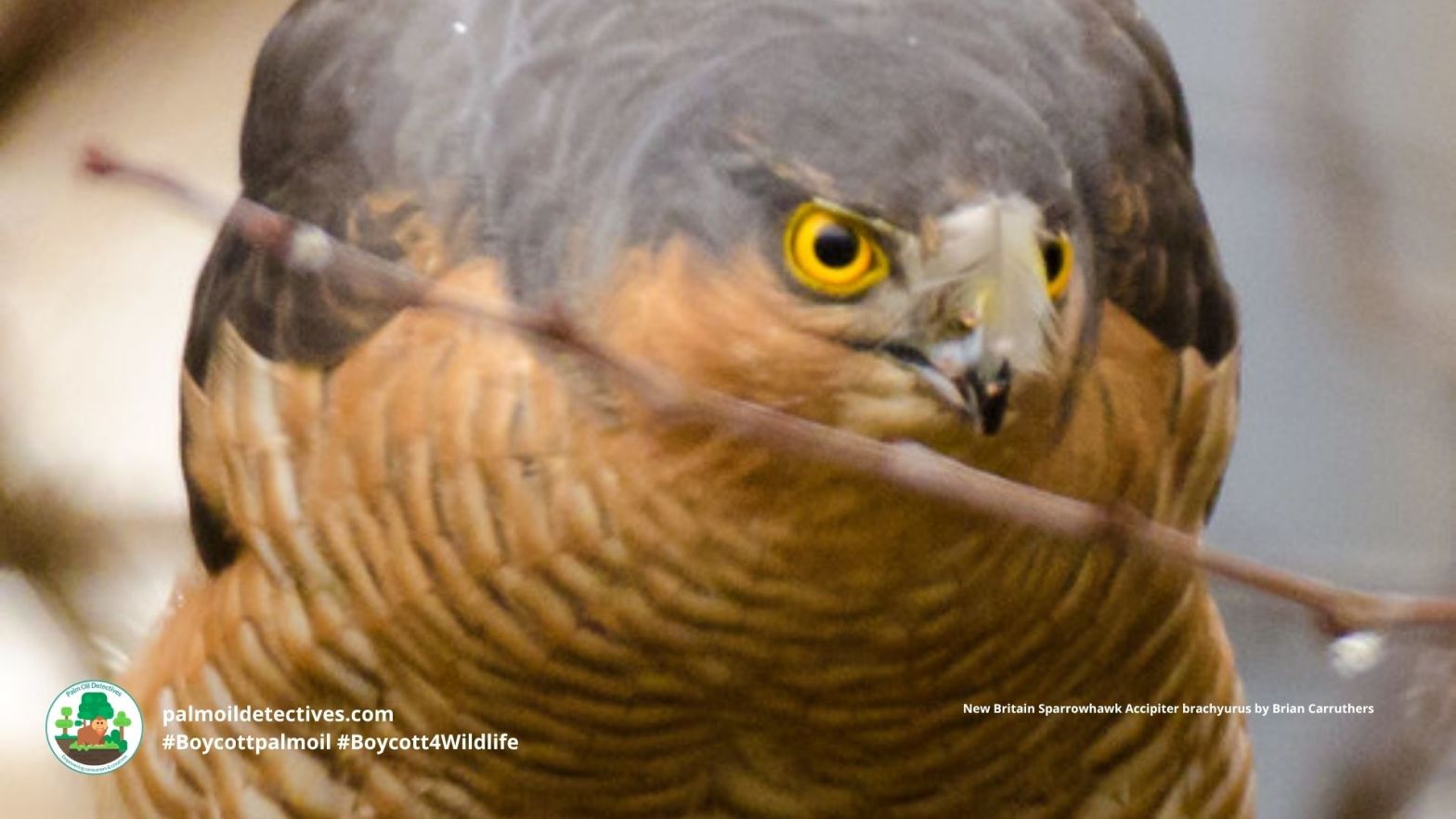
New Britain Sparrowhawk Accipiter brachyurus
Red List: Vulnerable
Locations: Endemic to the islands of New Britain and New Ireland, Papua New Guinea
High in the mist-draped montane forests of New Britain and New Ireland, the New Britain Sparrowhawk drifts through the canopy. These rare raptors are guardians of the ancient forests, their presence a fleeting shadow among the mossy branches and filtered sunlight of Papua New Guinea’s wildest heights.
The New Britain Sparrowhawk is an elusive bird-of-prey, found only in the forests of New Britain and New Ireland in remote #PapuaNewGuinea. Their survival is threatened by #palmoil-driven #deforestation and extensive #timber logging, which have stripped away much of their habitat. With populations rapidly dwindling and no known conservation measures in place, this little-known raptor faces an uncertain future. Use your wallet as a weapon #BoycottPalmOil, #Boycott4Wildlife.
The New Britain Sparrowhawk is a soaring bird of prey 🦅🪽🪺 in #PapuaNewGuinea 🇵🇬 who are vulnerable due to #palmoil #deforestation #mining and hunting. Stop them from disappearing for good when you #BoycottPalmOil 🌴⛔️ #Boycott4Wildlife @palmoildetect https://palmoildetectives.com/2021/02/03/new-britain-sparrowhawk-accipiter-brachyurus/
Appearance and Behaviour
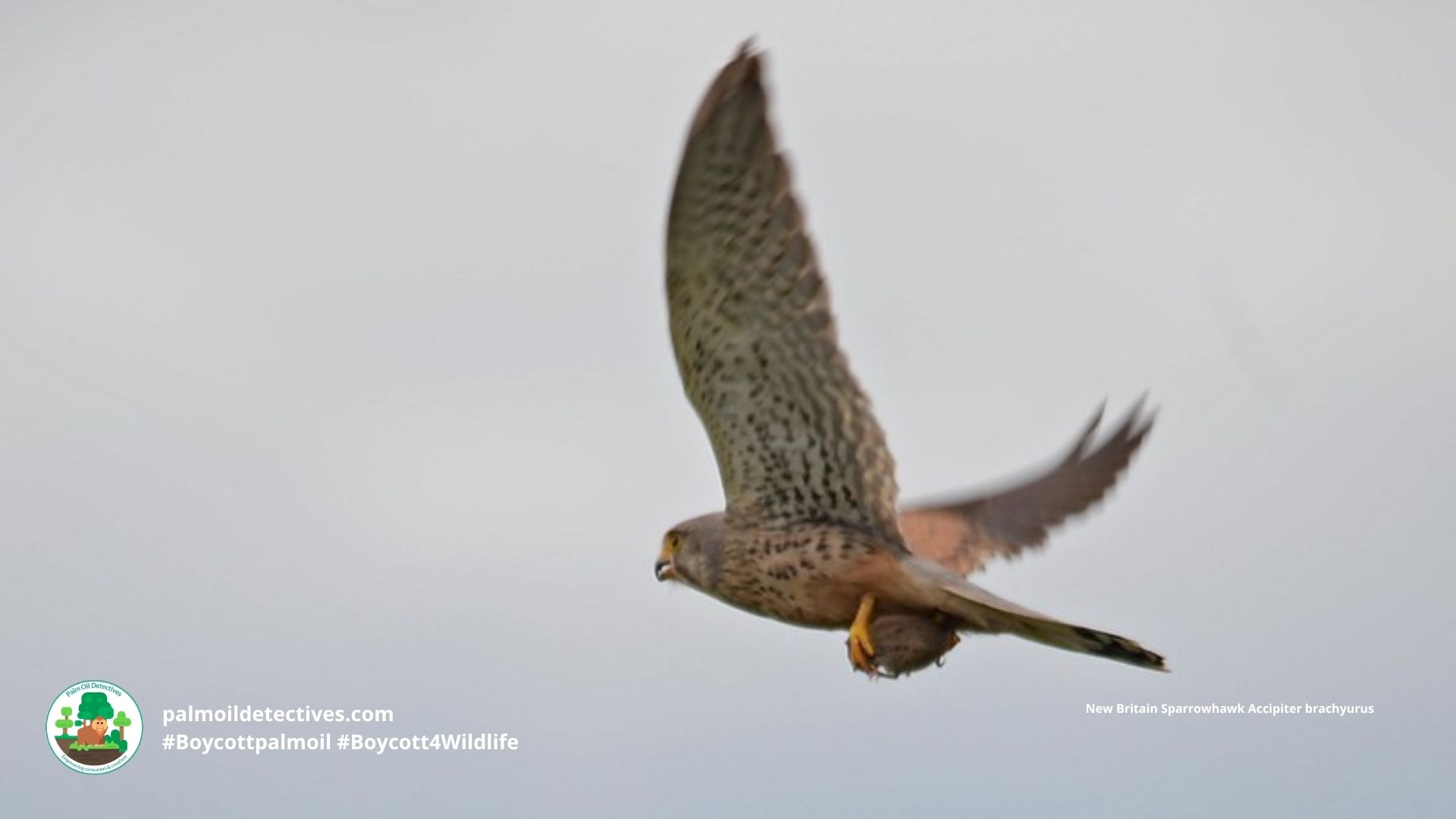
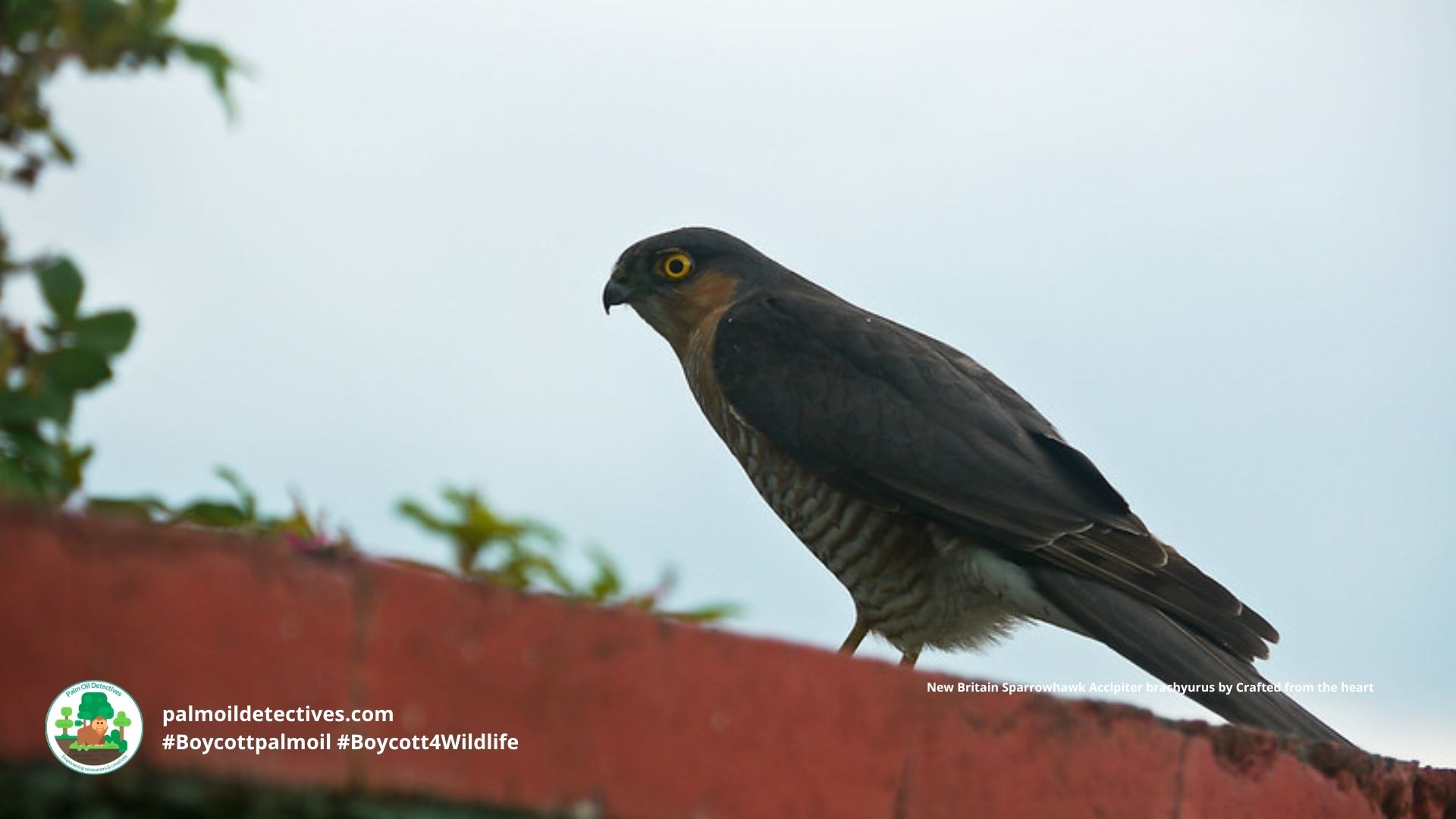
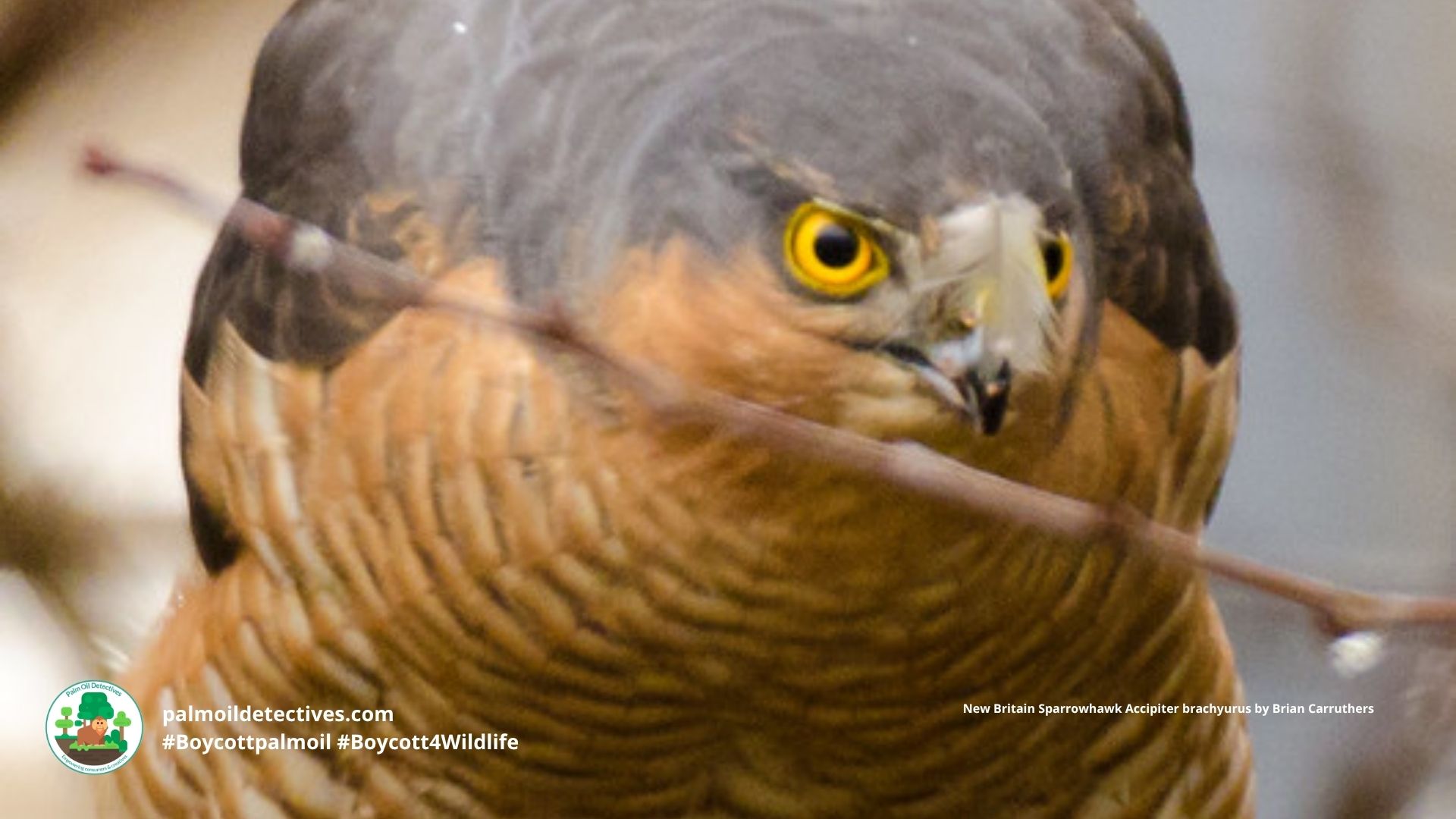
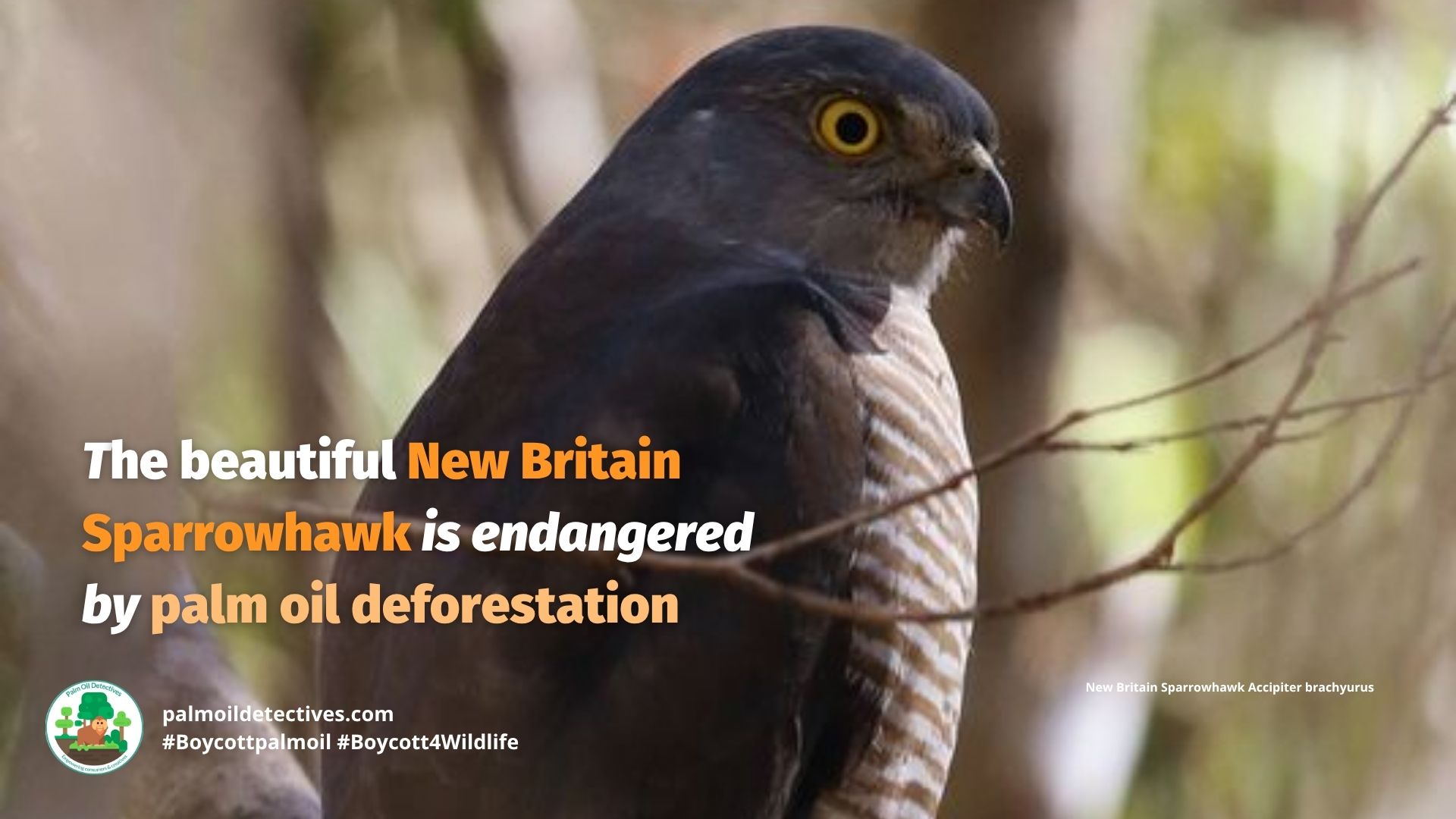
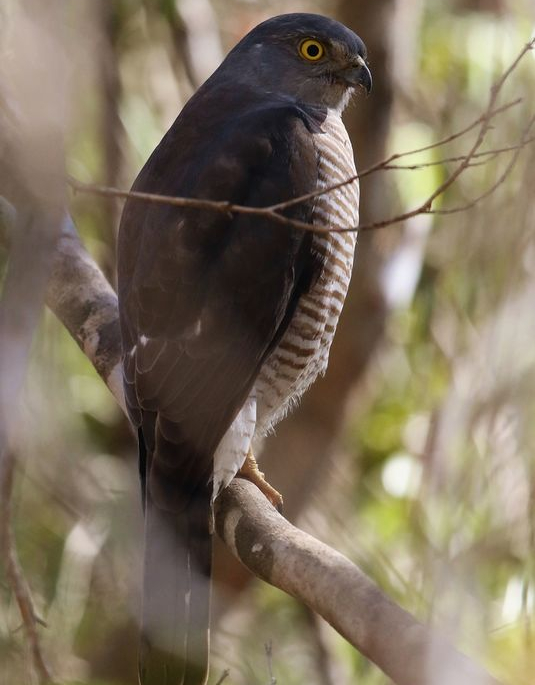
New Britain Sparrowhawks are small, slender raptors measuring 27–34 cm, with striking grey plumage, a white underbelly, and orange accents at the neck. Their large, pale yellow feet are distinctive, especially the elongated middle toe, which sets them apart from other hawks in the region. These birds move swiftly and silently through the forest, using their agility to hunt small birds and animals. New Britain Sparrowhawks are rarely seen, making their behaviour and social lives a mystery, but their presence is a sign of a healthy, undisturbed forest.
Threats
Lowland forest clearance for conversion to oil palm plantations has been intense in recent decades in both New Britain and New Ireland (Swartzendruber 1993, Stattersfield et al. 1998, Buchanan et al. 2008). On New Britain about 17.5% of habitat within this species’ altitudinal range was cleared in three generations or 15 years (Buchanan et al. 2008).
IUCN Red List
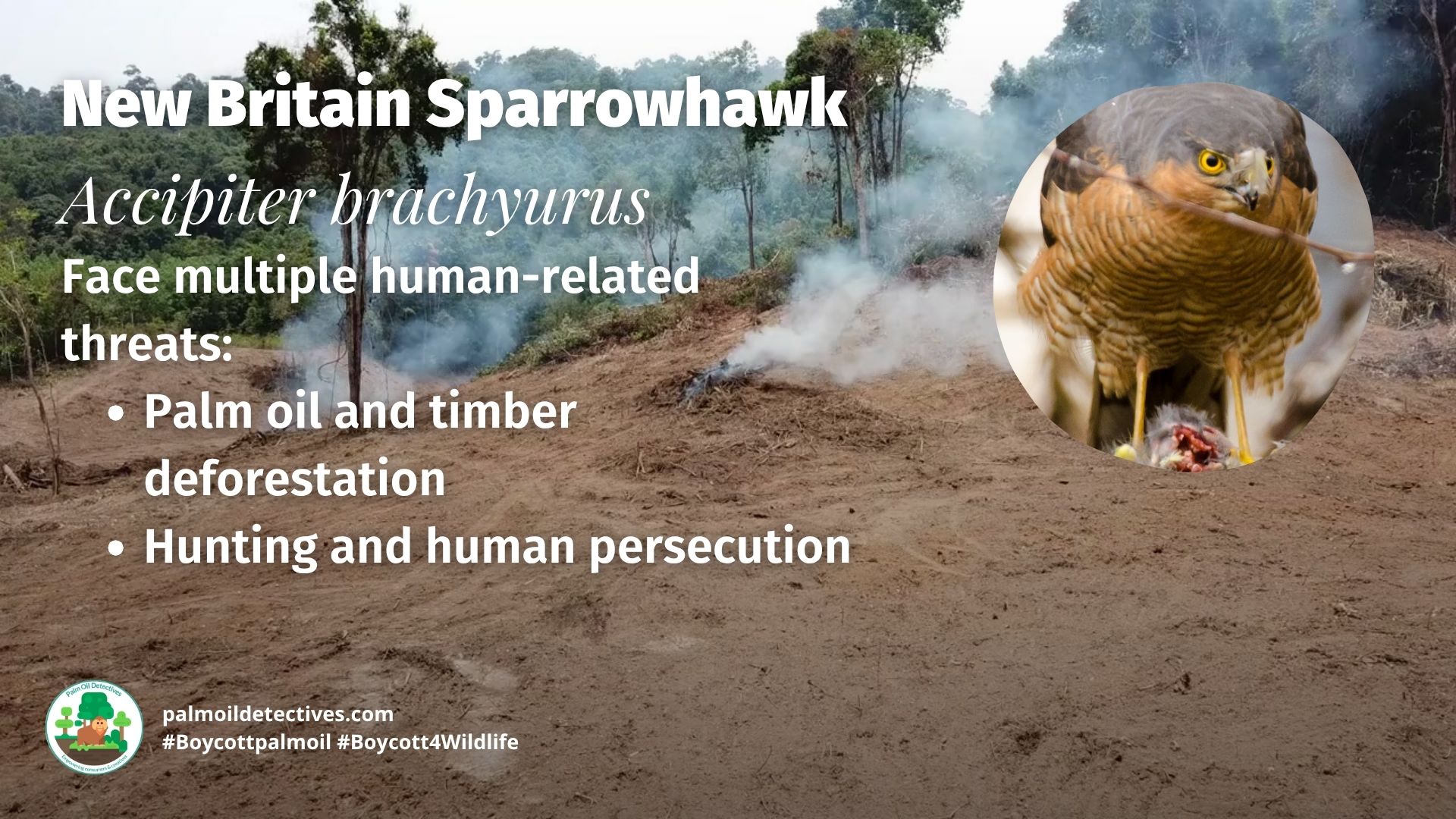
Palm oil and timber deforestation
The New Britain Sparrowhawk is highly vulnerable to habitat loss, as palm oil plantations and logging operations clear vast tracts of lowland and hill forests. New Britain alone has accounted for half of Papua New Guinea’s timber exports, leaving forests fragmented and silent. Even as the rate of forest loss has slowed in recent years, the damage is profound—over 2 percent of forest was lost and more than 5 percent degraded between 2002 and 2014. Bulldozers and chainsaws carve roads and scars through the landscape, leaving the sparrowhawk with fewer places to hunt and nest. The relentless conversion of forest to agriculture and palm oil plantations drives these birds higher into the mountains, squeezing them into ever smaller refuges. With every tree felled, the forest’s intricate web of life is torn apart, and the sparrowhawk’s future grows more precarious. The loss of old-growth trees also means fewer nesting sites and less prey, further endangering the species. Logging roads open up remote areas to further exploitation, compounding the threat. The haunting calls of the sparrowhawk are fading from the forests, a warning of the ecosystem’s unraveling.
Diet
New Britain Sparrowhawks are predators, feeding on small birds and possibly mammals or reptiles found in the dense forest canopy. Their powerful feet and sharp talons allow them to catch agile prey among the branches. The sparrowhawk’s hunting style is likely fast and precise, taking advantage of cover and surprise in the tangled forest.
Reproduction and Mating
Very little is known about the breeding of the New Britain Sparrowhawk. Like other raptors, they are believed to build nests high in the trees, raising their young in the safety of the canopy. The scarcity of sightings and the remoteness of their habitat mean that many details of their family life remain a mystery.
Geographic Range
The New Britain Sparrowhawk is found only on New Britain and New Ireland in Papua New Guinea. Most records are from montane forests between 1,200 and 1,800 metres, though some have been seen in lowland areas. Their range is shrinking as forests are cleared, and the species is now rare even in remote mountain regions.

FAQs
What is the current population of the New Britain Sparrowhawk?
The population is estimated at 1,000–2,499 individuals. Numbers are declining due to ongoing habitat loss.
How long do New Britain Sparrowhawks live?
The lifespan of the New Britain Sparrowhawk is unknown, but similar raptors can live over 10 years in the wild.
What are the threats to the New Britain Sparrowhawk’s survival?
The main threats are deforestation for palm oil and logging, which destroy and fragment their forest habitat.
Are there any conservation actions for the New Britain Sparrowhawk?
No formal conservation measures are in place. Surveys and community-based protection have been proposed but not yet implemented.
What can you do to help the New Britain Sparrowhawk?
You can boycott palm oil and products driving deforestation. Support campaigns for indigenous-led forest protection and share information about this rare raptor.
Take Action!
Fight for the survival of the New Britain Sparrowhawk every time you shop. Boycott palm oil. Support indigenous-led conservation. Use your wallet as a weapon and BoycottPalmOil Boycott4Wildlife.
Further Information
BirdLife International. (2018). Accipiter brachyurus. The IUCN Red List of Threatened Species 2018: e.T22695605A131936960. https://dx.doi.org/10.2305/IUCN.UK.2018-2.RLTS.T22695605A131936960.en
Wikipedia. (2025, March 19). New Britain sparrowhawk. In Wikipedia. Retrieved June 13, 2025, from https://en.wikipedia.org/wiki/New_Britain_sparrowhawk
BirdLife International. 2018. Accipiter brachyurus. The IUCN Red List of Threatened Species 2018: e.T22695605A131936960. https://dx.doi.org/10.2305/IUCN.UK.2018-2.RLTS.T22695605A131936960.en. Downloaded on 03 February 2021.

Support the conservation of this species

How can I help the #Boycott4Wildlife?
Take Action in Five Ways
1. Join the #Boycott4Wildlife on social media and subscribe to stay in the loop: Share posts from this website to your own network on Twitter, Mastadon, Instagram, Facebook and Youtube using the hashtags #Boycottpalmoil #Boycott4Wildlife.
2. Contribute stories: Academics, conservationists, scientists, indigenous rights advocates and animal rights advocates working to expose the corruption of the palm oil industry or to save animals can contribute stories to the website.




3. Supermarket sleuthing: Next time you’re in the supermarket, take photos of products containing palm oil. Share these to social media along with the hashtags to call out the greenwashing and ecocide of the brands who use palm oil. You can also take photos of palm oil free products and congratulate brands when they go palm oil free.
4. Take to the streets: Get in touch with Palm Oil Detectives to find out more.
5. Donate: Make a one-off or monthly donation to Palm Oil Detectives as a way of saying thank you and to help pay for ongoing running costs of the website and social media campaigns. Donate here
Discover more from Palm Oil Detectives
Subscribe to get the latest posts sent to your email.
 Palm Oil Detectives