
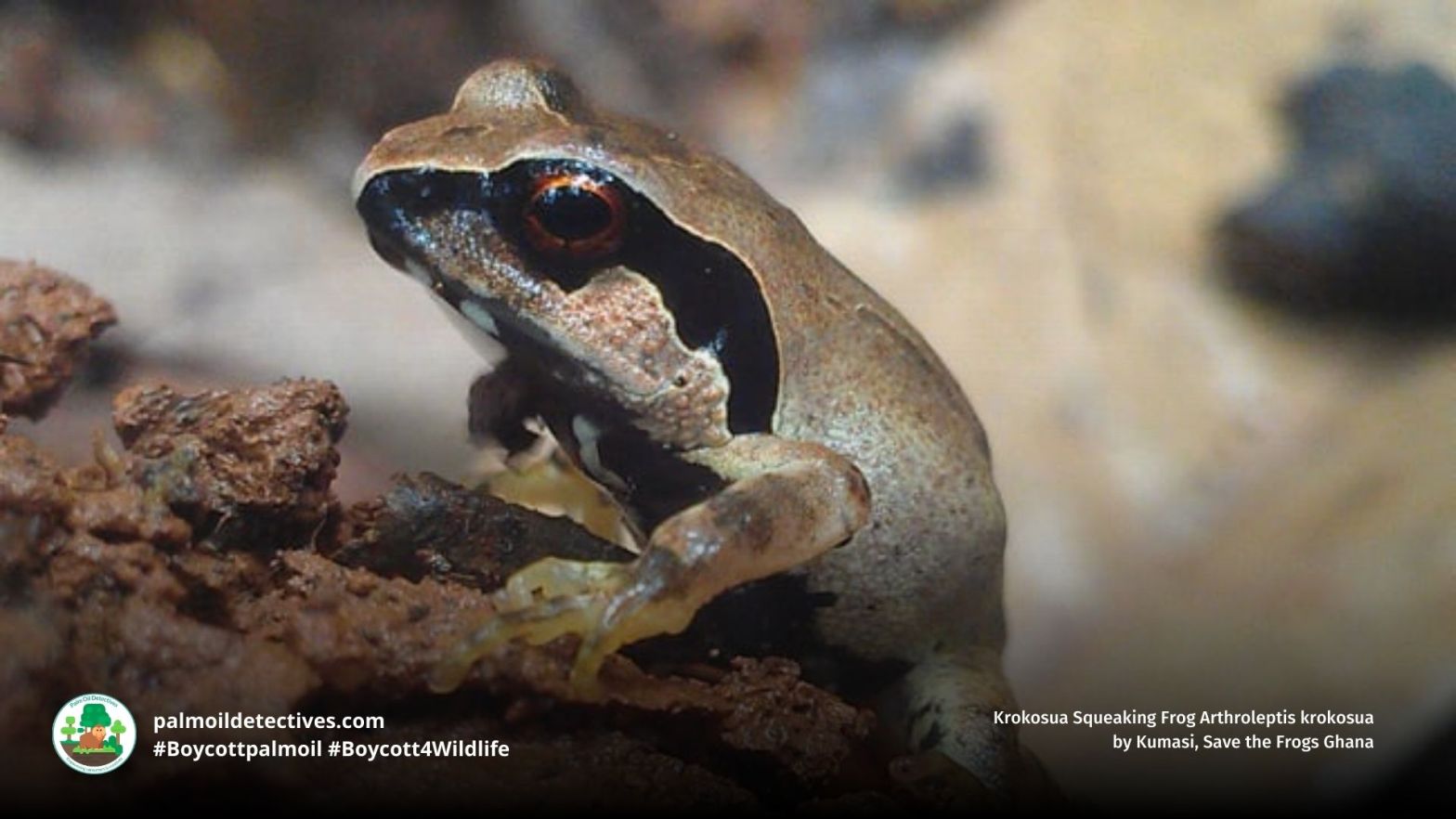
Krokosua Squeaking Frog Arthroleptis krokosua
IUCN Red List Status: Critically Endangered
Location: This species is found in the tropical rainforests of Ghana and Côte d’Ivoire in West Africa. Its range is extremely limited, primarily confined to the Krokosua Hills Forest Reserve and one additional site in the Ankasa Conservation Area.
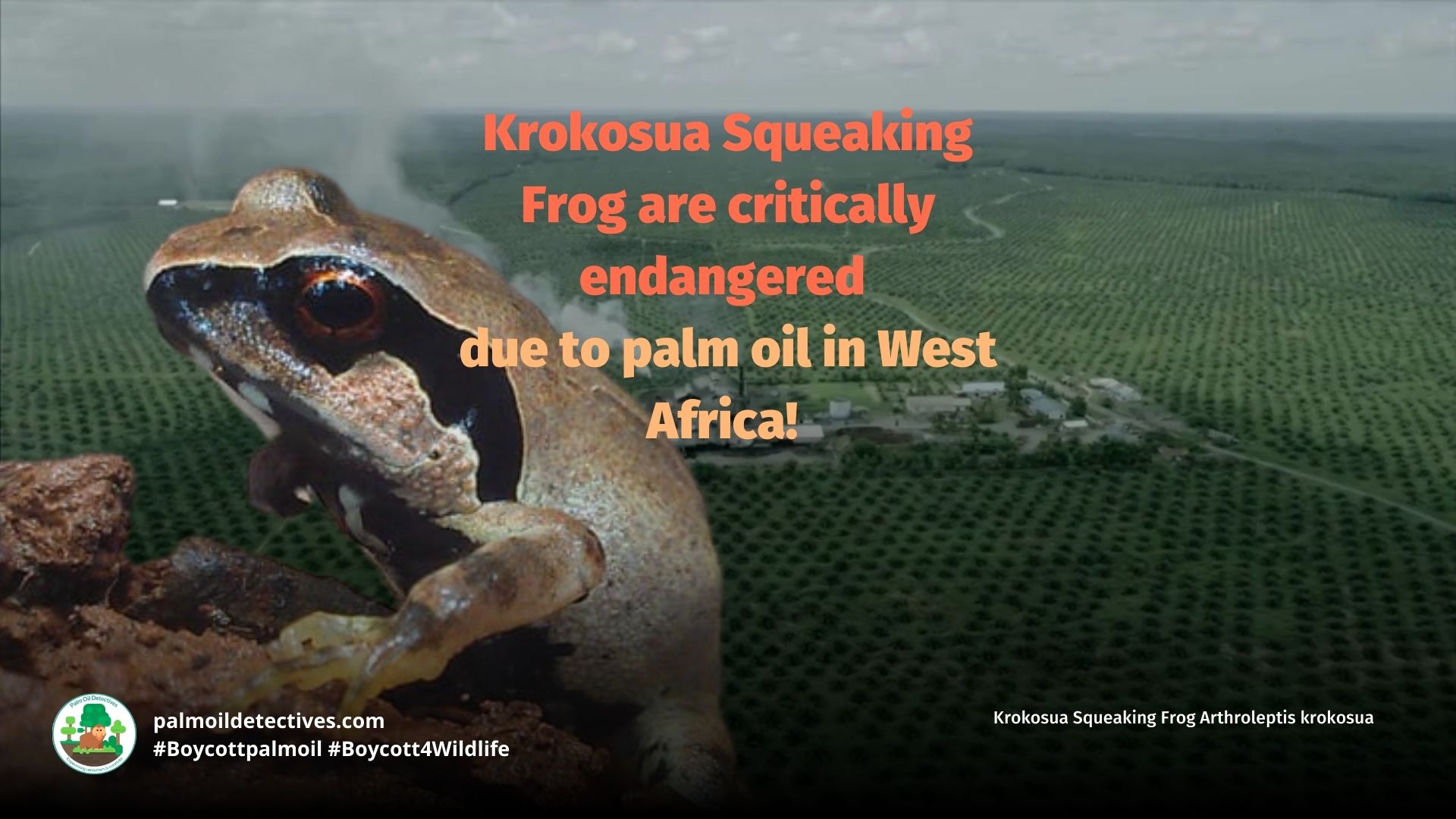
The Krokosua Squeaking Frog is one of the most endangered amphibians in Africa, threatened by rapid habitat destruction driven by logging, agriculture, and out-of-control palm oil plantations. This diminutive frog, named for its high-pitched squeaking call, is a vital part of its ecosystem, helping control insect populations and maintaining forest health. Protecting its habitat is crucial to its survival. Use your voice to save them every time you shop! #BoycottPalmOil #Boycott4Wildlife.
Big-eyed Krokosua Squeaking #Frogs 🐸 make a shrieking sound 🔊 when frightened. They’re critically #endangered in #Ghana #WestAfrica due to #palmoil #deforestation. Help them survive #herpetology #BoycottPalmOil 🌴🪔☠️⛔️ #Boycott4Wildlife @palmoildetect https://palmoildetectives.com/2021/02/15/krokosua-squeaking-frog-arthroleptis-krokosua/
Deep within the rainforests of Ghana and Côte d’Ivoire, a rare and enigmatic frog fights for survival. The Krokosua Squeaking Frog, with their tiny bodies and distinctive squeaking call, are both wonders of nature and stark symbols of the fragility of tropical ecosystems. Their survival depends on the integrity of the dense forest floors they inhabit, where they feed on insects and find safety beneath leaf litter. However, these critical habitats are disappearing at an alarming rate.
The relentless expansion of palm oil plantations, illegal logging, and agricultural activities are devastating their already fragmented range. This fragile species needs immediate intervention to prevent their extinction. Every choice you make matters. Support indigenous-led conservation #BoycottPalmOil #BoycottPalmOil to protect their home.
Appearance and Behaviour
The Krokosua Squeaking Frog is a petite amphibian, measuring just 2–4 centimetres in length. Their smooth, brown to reddish-brown skin is dappled with darker markings, offering natural camouflage against the forest floor’s leaf litter. Large, dark eyes dominate their delicate faces, lending an air of quiet watchfulness as they navigate their humid environment.
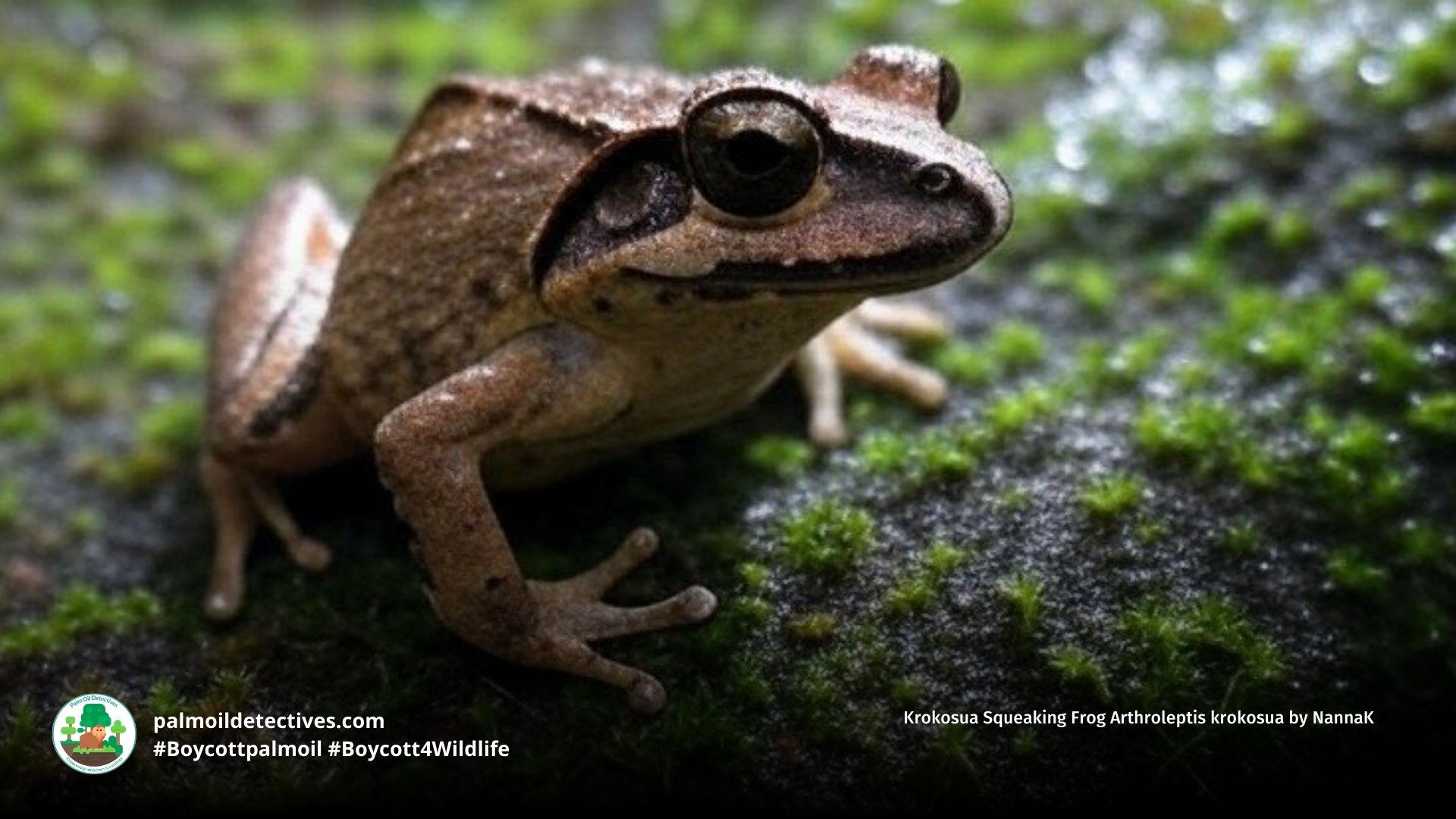
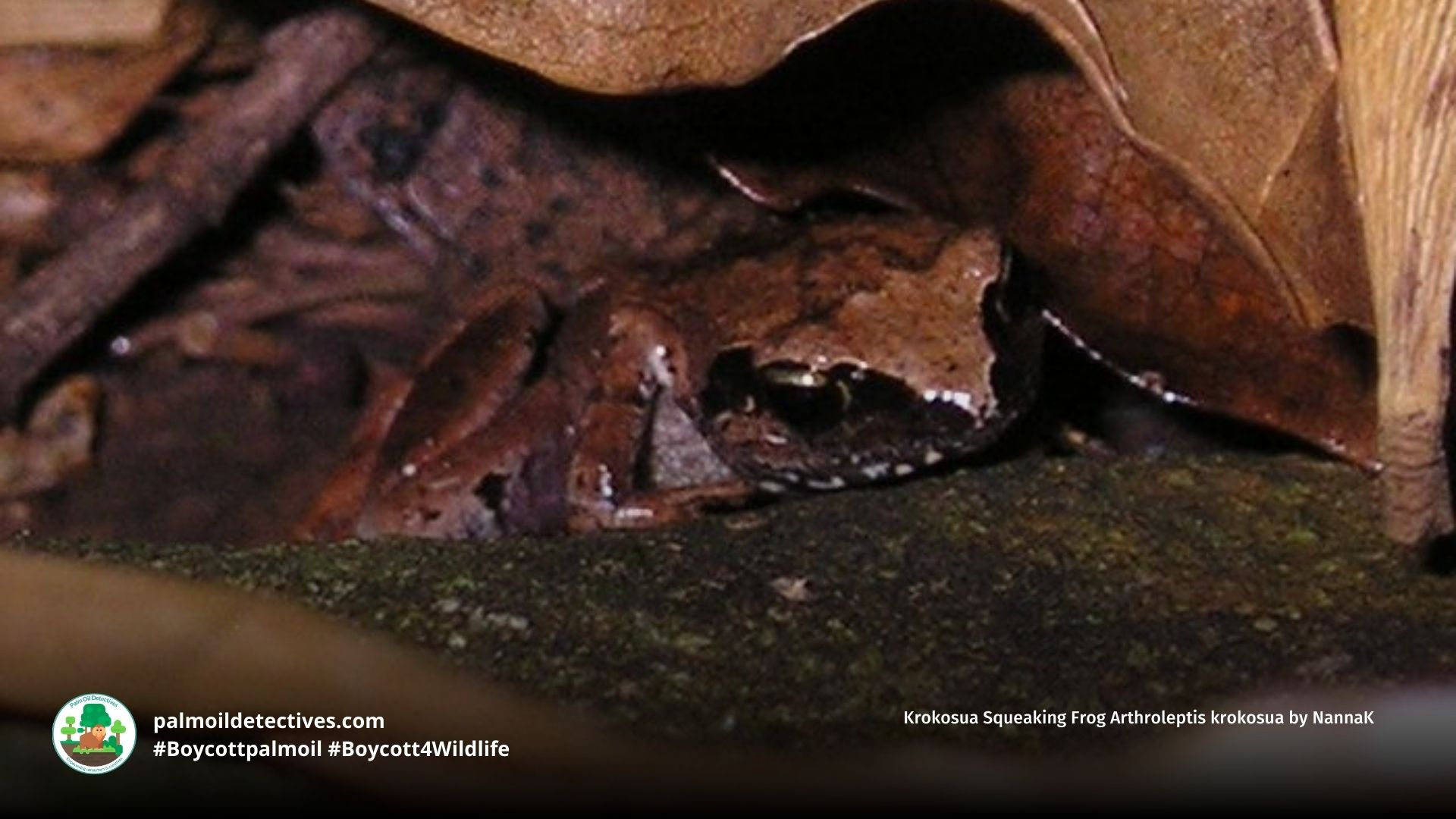
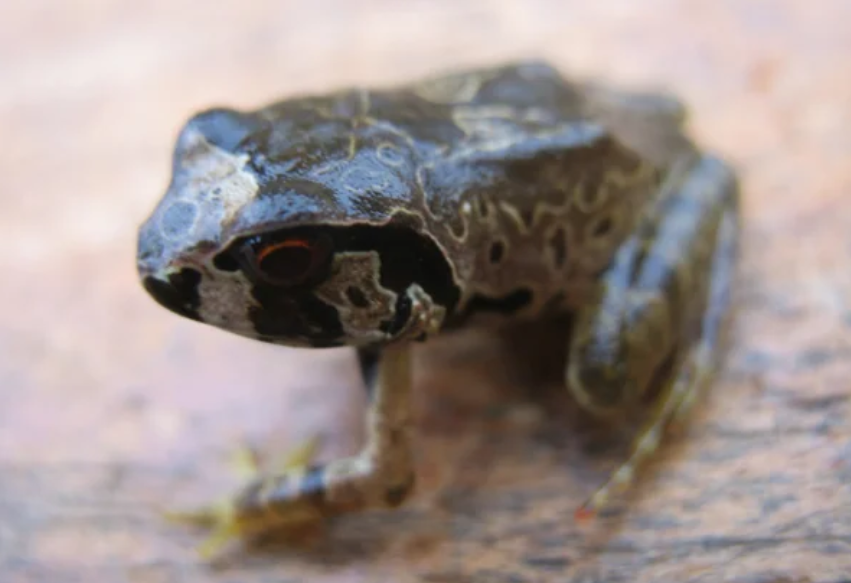
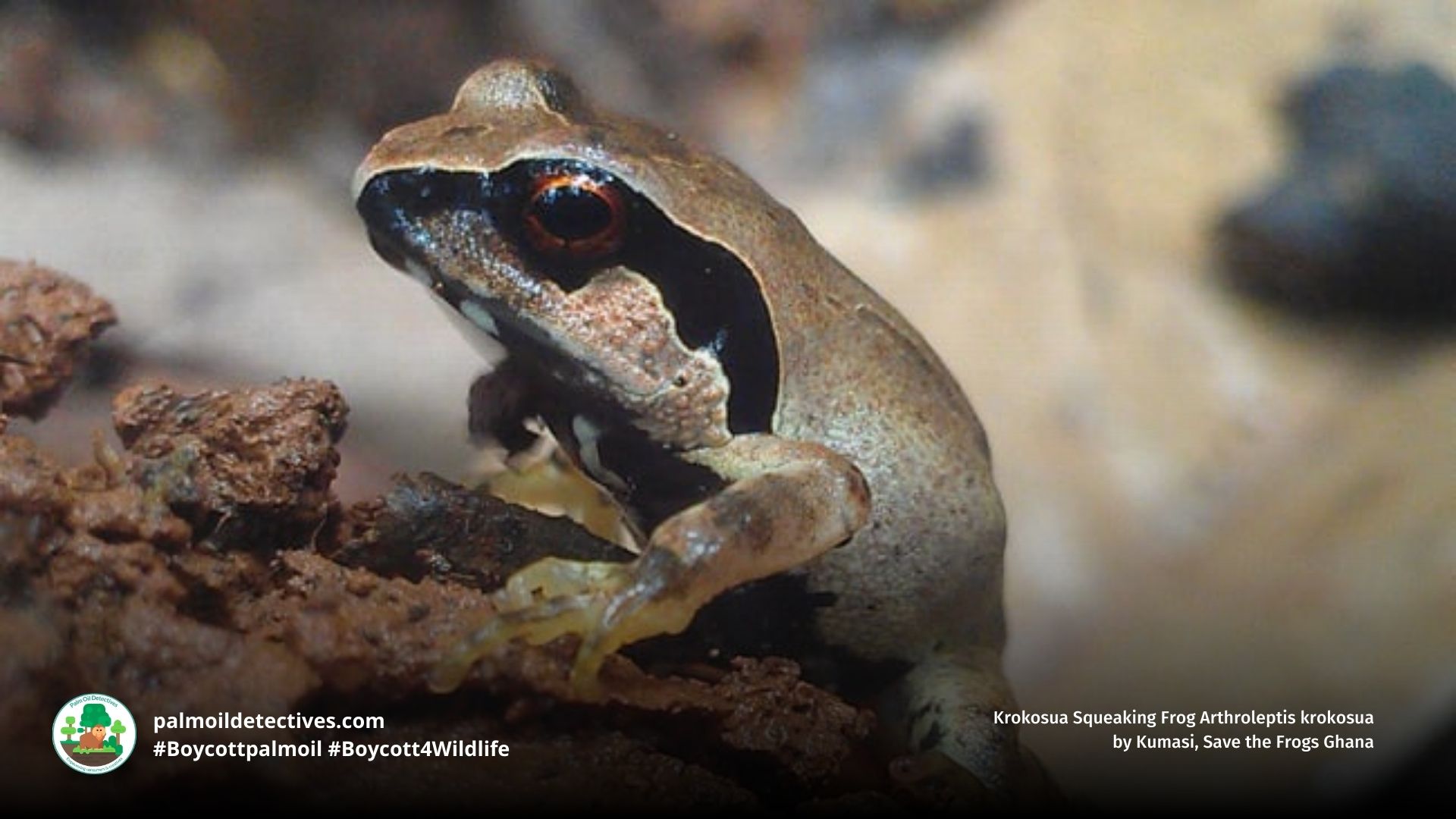
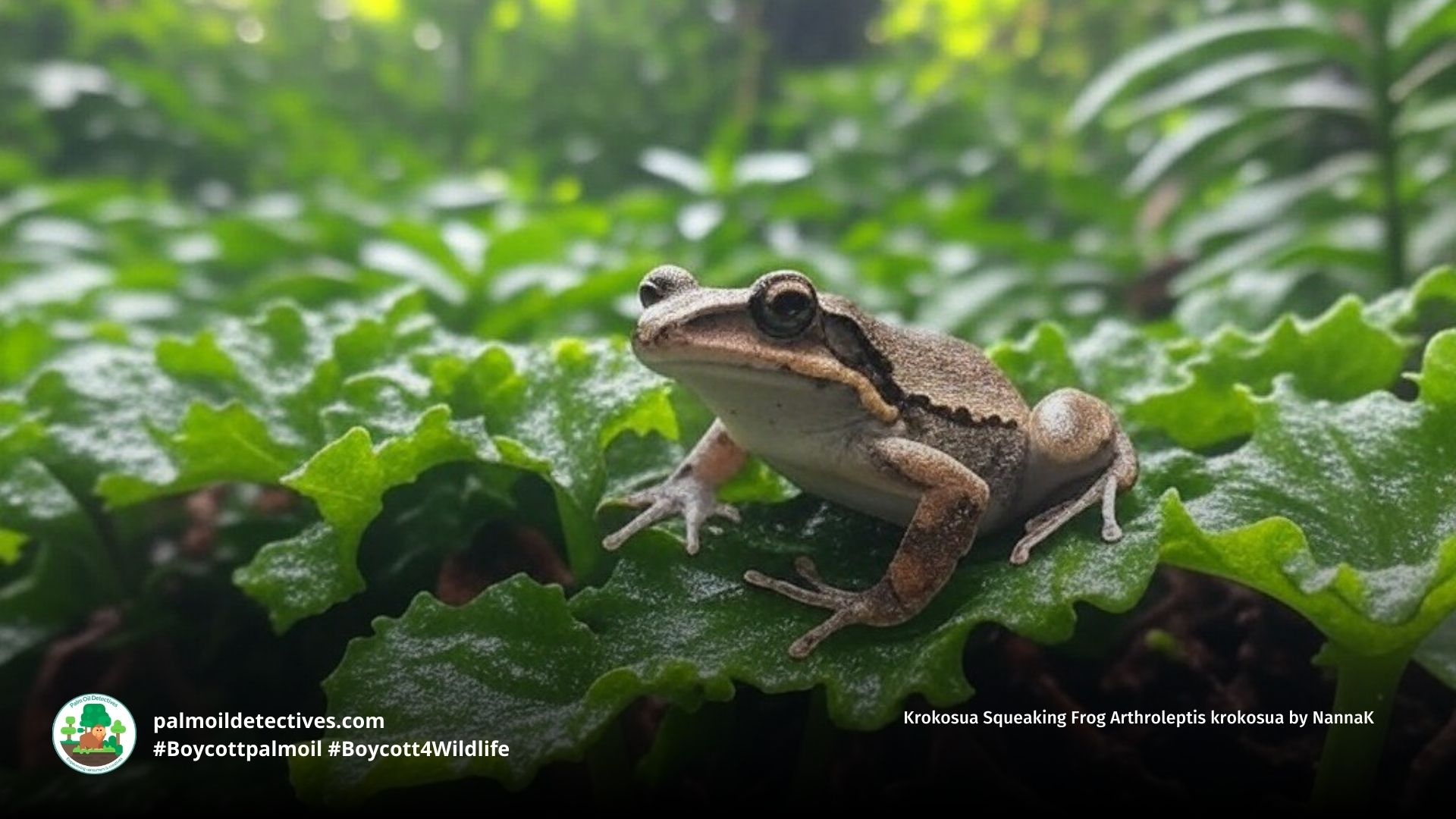
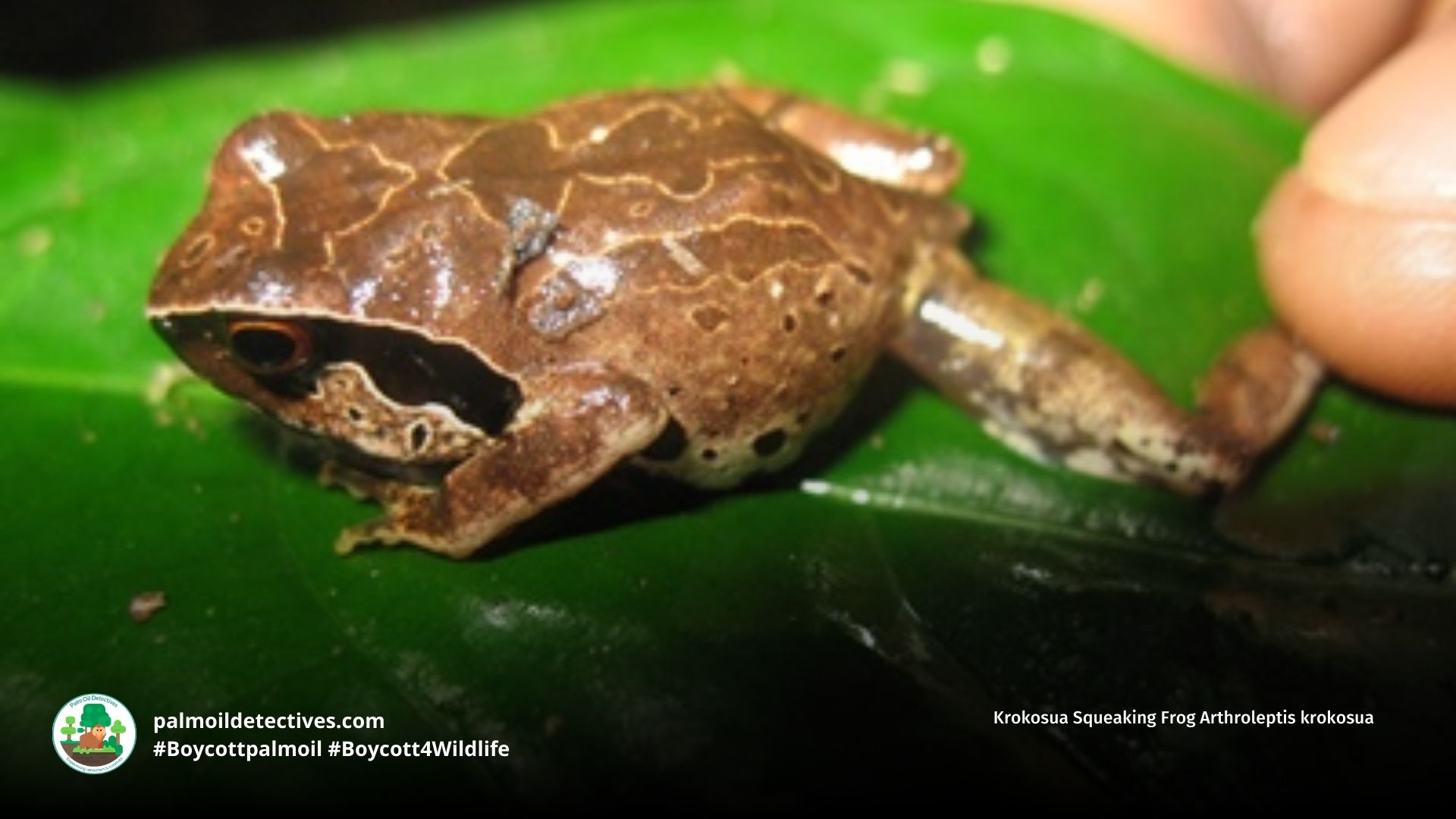
This frog species is nocturnal and terrestrial, spending its days hidden beneath logs, leaves, or rocks, and emerging at night to forage. The frog’s most remarkable trait is its unique vocalisation—a high-pitched squeak that pierces the rainforest’s evening calm. This call is used to communicate with other frogs, likely as part of territorial defence or courtship.
Threats
The Krokosua Squeaking Frog is listed as Critically Endangered because there are believed to be fewer than 250 mature individuals, with 90% of these occurring within the sub-population found in the Sui Forest Reserve.
The Krokosua Squeaking Frog faces continuing decline in the number of mature individuals caused by habitat loss from logging activities, farming (especially for cocoa), illegal plantations and small-scale mining.
IUCN Red List
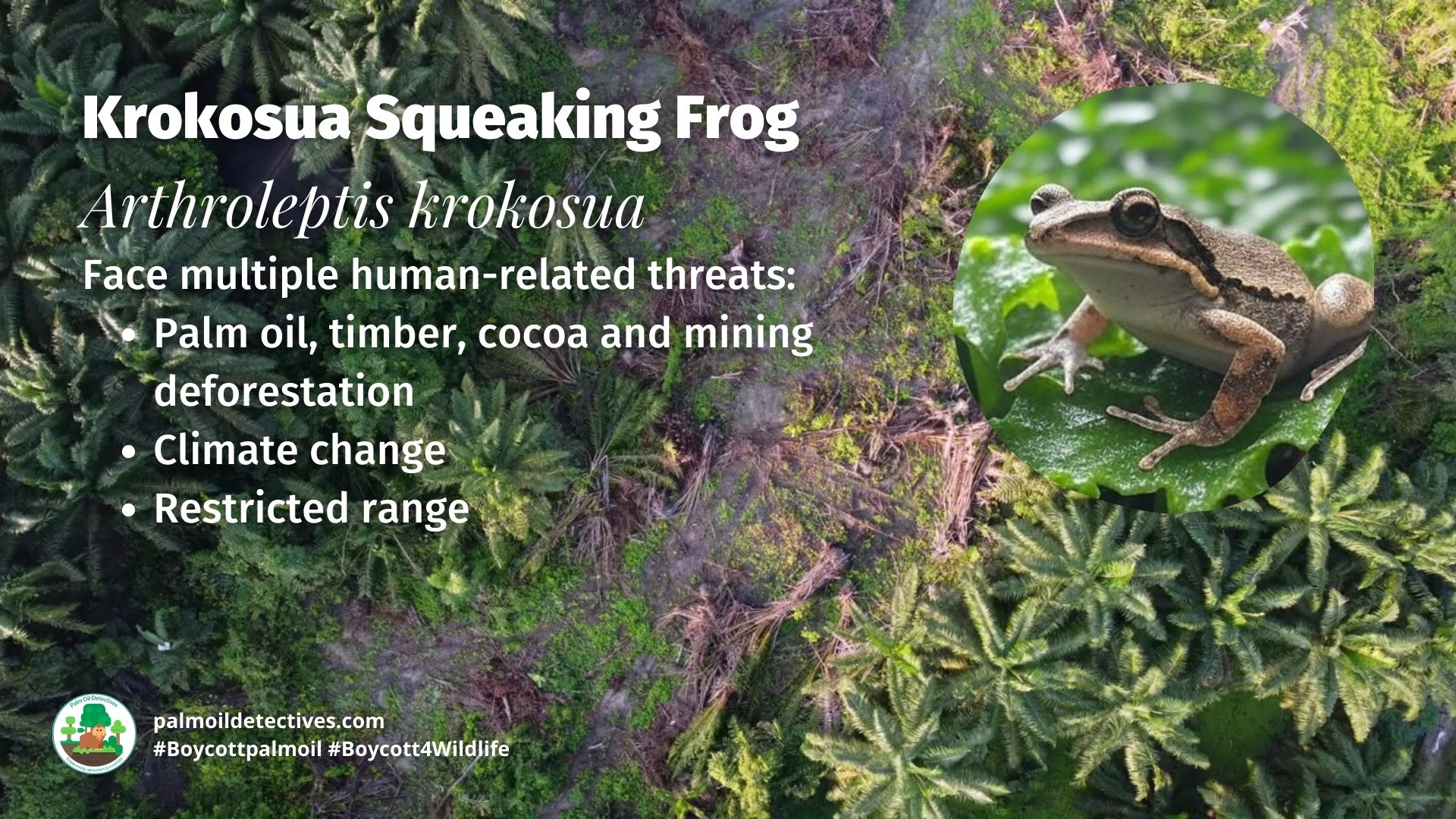
Palm oil, tobacco, cocoa and mining deforestation:
The greatest threat to the Krokosua Squeaking Frog is habitat destruction caused by logging, agricultural expansion for cocoa and tobacco, and the proliferation of out-of-control palm oil plantations. These activities strip away the dense forest undergrowth they rely on for cover and breeding, fragmenting their already limited range.
Extreme Temperature Changes from Climate Change:
Rising temperatures and altered rainfall patterns due to climate change further threaten the delicate balance of their habitat. As a species highly dependent on stable rainforest ecosystems, they are particularly vulnerable to these shifts.
Restricted Range:
With a range limited to the Krokosua Hills Forest Reserve and a small portion of the Ankasa Conservation Area, this frog is at high risk of extinction from stochastic events such as droughts, fires, or disease outbreaks.
Diet
The Krokosua Squeaking Frog feeds on small invertebrates, such as ants, beetles, and other forest floor arthropods. Their diet not only sustains them but also plays a critical role in regulating insect populations within their habitat. This makes them essential contributors to the overall health and balance of their rainforest ecosystem.
Reproduction and Mating
Little is known about the specific reproductive habits of this species, but like other frogs in the Arthroleptis genus, they are likely to lay their eggs in moist leaf litter or soil. The direct development of their offspring—where eggs hatch directly into miniature frogs rather than passing through a tadpole stage—is an adaptation that allows them to thrive in terrestrial habitats.
Geographic Range
The Krokosua Squeaking Frog’s range is among the smallest of any amphibian, restricted to just two known locations: the Krokosua Hills Forest Reserve and the Ankasa Conservation Area. These areas, although legally protected, are under intense pressure from human activities. The total extent of their range is estimated to be less than 100 square kilometres, with much of this fragmented and degraded.
FAQ
What is the squeaking frog?
The squeaking frog refers to members of the genus Arthroleptis, known for their high-pitched vocalisations. The Krokosua Squeaking Frog, specifically, is a critically endangered amphibian found only in the rainforests of Ghana and Côte d’Ivoire.
What is the squeaking frog in South Africa?
The term “squeaking frog” in South Africa typically refers to other species within the Arthroleptis genus, as the Krokosua Squeaking Frog is only found in West Africa. South African species, like their West African counterparts, share similar behaviours and habitats but are distinct in range and conservation status.
Why is the Krokosua Squeaking Frog endangered?
The Krokosua Squeaking Frog is critically endangered due to habitat loss caused by illegal logging, agricultural expansion, and out-of-control palm oil plantations. Additionally, their extremely restricted range makes them highly susceptible to climate change and other stochastic events.
Why are they called squeaking frogs?
They are called squeaking frogs because of their distinctive, high-pitched calls. These squeaks are used to communicate, likely for territorial or mating purposes, and can often be heard echoing through the rainforest at night.
Take Action!
The Krokosua Squeaking Frog urgently needs your help. Use your voice to demand an end to deforestation caused by palm oil plantations and illegal logging. Support indigenous-led conservation efforts in Ghana and Côte d’Ivoire to protect this critically endangered species. Every purchase you make can help safeguard their fragile rainforest home. Fight for their survival: #BoycottPalmOil #Boycott4Wildlife.
The Krokosua Squeaking Frog is critically endangered on @IUCNredlist in #Ghana and #IvoryCoast due to illegal logging for #cocoa #palmoil. Make art for this dissapearing creature and #Boycott4Wildlife
Tweet
Support the conservation of this species
Further Information

International Fund for Animal Welfare (IFAW). (2023). 20 most endangered animals in Africa. Retrieved from https://www.ifaw.org/au/journal/20-most-endangered-animals-wildlife-africa
IUCN SSC Amphibian Specialist Group. 2019. Arthroleptis krokosua. The IUCN Red List of Threatened Species 2019: e.T174591A137083009. https://dx.doi.org/10.2305/IUCN.UK.2019-1.RLTS.T174591A137083009.en. Downloaded on 15 February 2021.
STF! Webmaster. (2013, October 23). One of the world’s rarest frogs (Arthroleptis krokosua) finally found. Save the Frogs. Retrieved from https://savethefrogs.com/arthroleptis-krokosua-found/
World Species. (n.d.). Arthroleptis krokosua. Retrieved from https://worldspecies.org/ntaxa/2171926

How can I help the #Boycott4Wildlife?
Take Action in Five Ways
1. Join the #Boycott4Wildlife on social media and subscribe to stay in the loop: Share posts from this website to your own network on Twitter, Mastadon, Instagram, Facebook and Youtube using the hashtags #Boycottpalmoil #Boycott4Wildlife.
2. Contribute stories: Academics, conservationists, scientists, indigenous rights advocates and animal rights advocates working to expose the corruption of the palm oil industry or to save animals can contribute stories to the website.






3. Supermarket sleuthing: Next time you’re in the supermarket, take photos of products containing palm oil. Share these to social media along with the hashtags to call out the greenwashing and ecocide of the brands who use palm oil. You can also take photos of palm oil free products and congratulate brands when they go palm oil free.
4. Take to the streets: Get in touch with Palm Oil Detectives to find out more.
5. Donate: Make a one-off or monthly donation to Palm Oil Detectives as a way of saying thank you and to help pay for ongoing running costs of the website and social media campaigns. Donate here
Discover more from Palm Oil Detectives
Subscribe to get the latest posts sent to your email.
 Palm Oil Detectives