
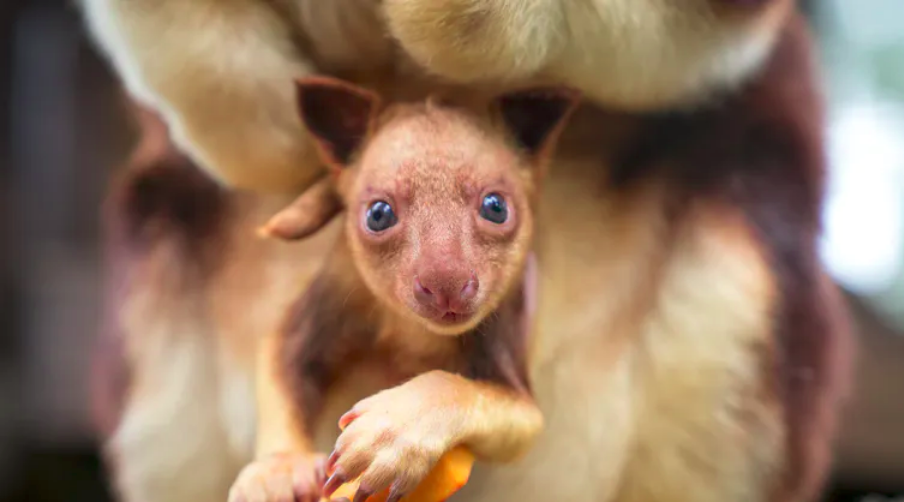
Tree kangaroos are so unusual that when Europeans first encountered them in Australia in 1872, back on the continent they were sceptical if they were real! Who would believe a #kangaroo could climb a tree?
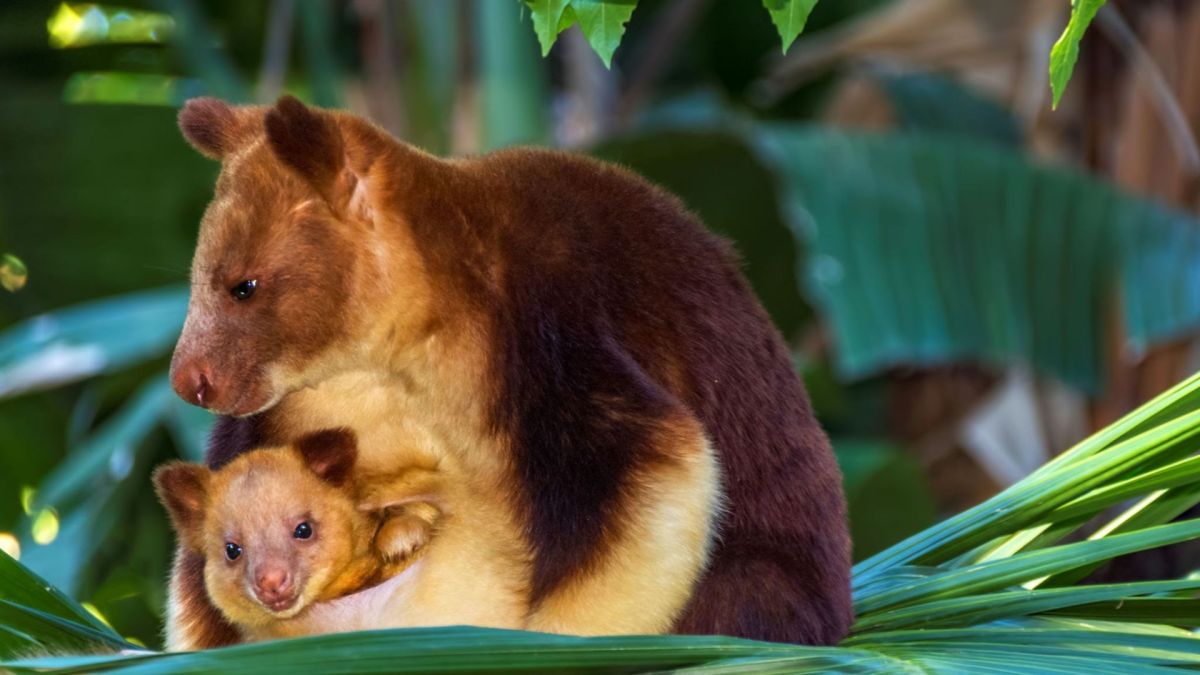
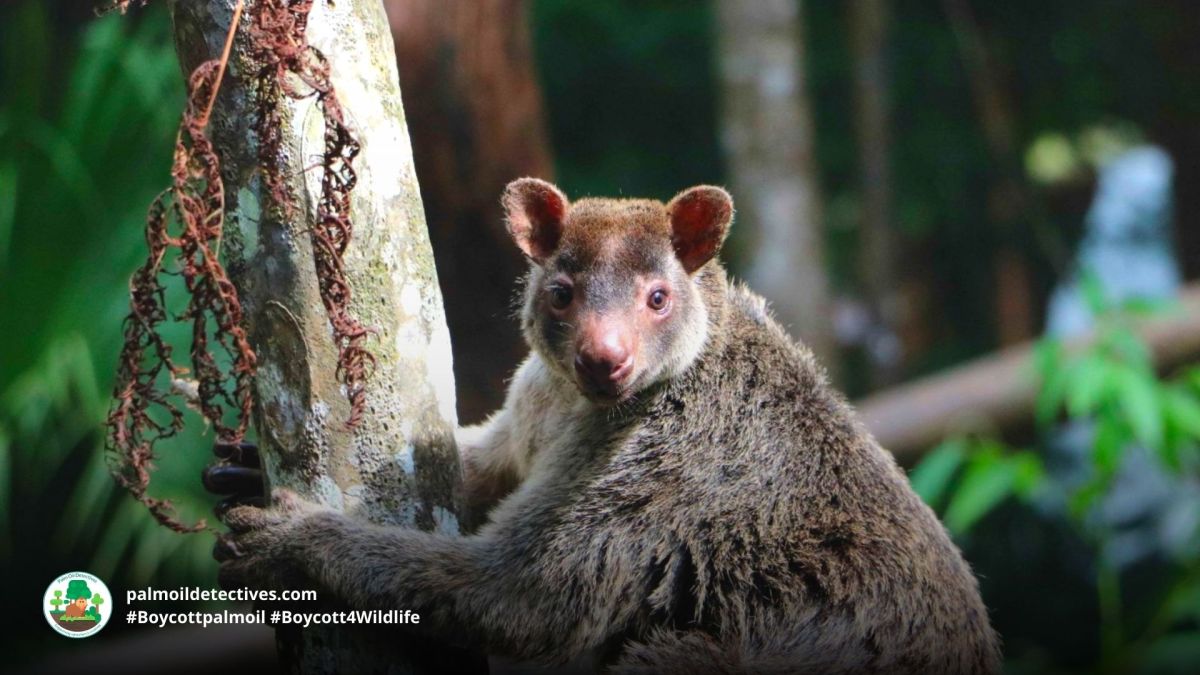
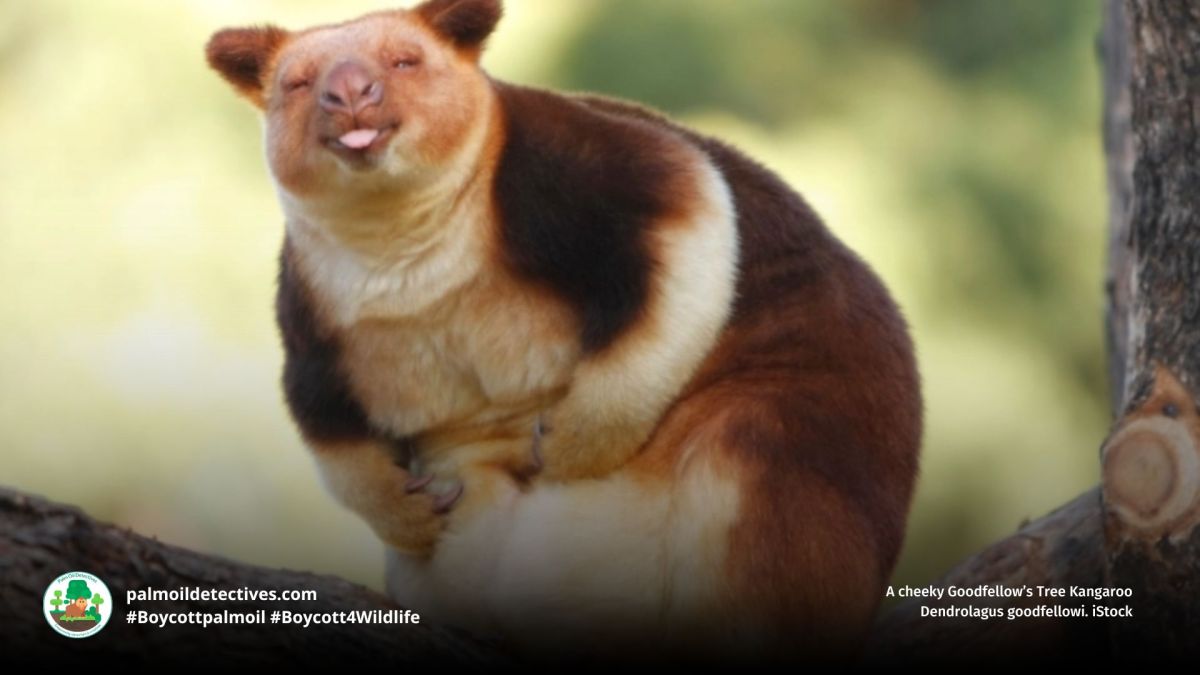
The Goodfellow’s tree kangaroo is an endangered species of the genus dendrolagus living in the Central Cordillera mountain ranges of Papua New Guinea. Help them to survive every time you shop and be #Vegan #BoycottPalmOil #Boycott4wildlife
The Goodfellow’s tree #kangaroo 🦘🤎 is an #endangered macropod of #PapuaNewGuinea 🇵🇬 Threats include #palmoil and #mining #deforestation #Boycottpalmoil 🌴🪔☠️🚜🧐🙊⛔️#Boycott4Wildlife @palmoildetect https://palmoildetectives.com/2021/11/03/meet-chimbu-the-blue-eyed-bear-eared-tree-kangaroo/
A climbing kangaroo? That’s roo-diculous!
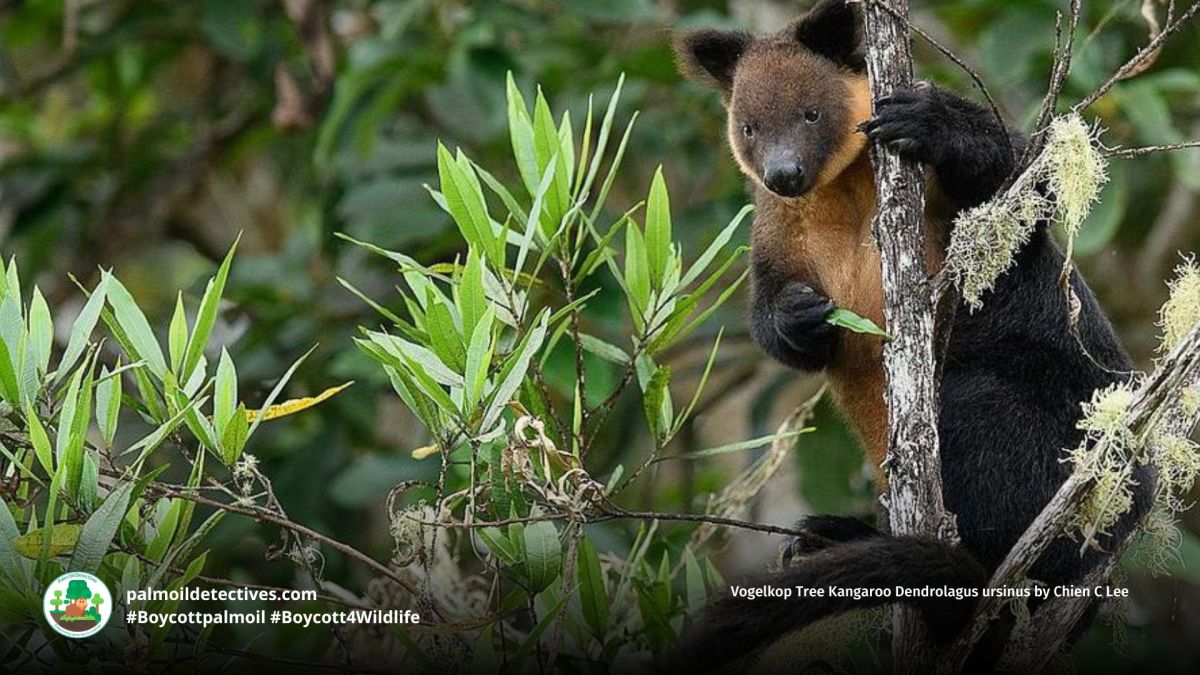
Europeans in New Guinea first described tree kangaroos in 1828. While there have been plenty of disagreements about who is related to whom, we now know there are 14 distinct species.
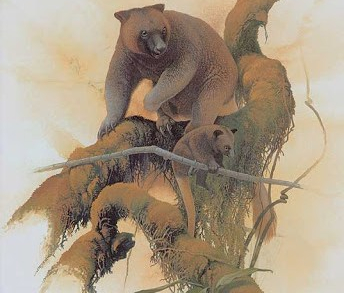
Early explorers considered the very idea of a climbing roo ridiculous, but these animals are specially adapted to life in the trees. They likely all evolved from a terrestrial ancestor earlier in the Pliocene, 5.3 million to 2.5 million years ago.
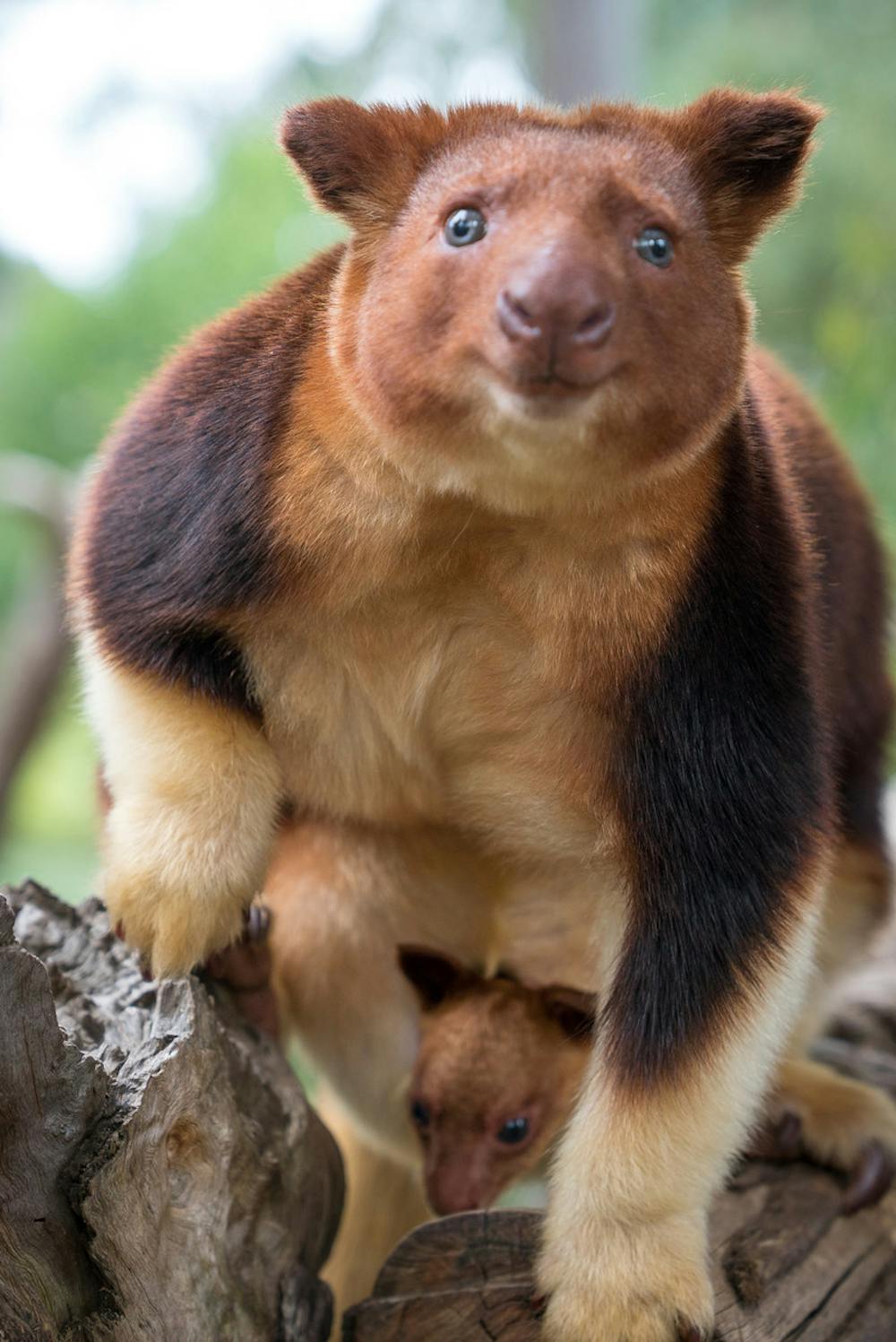
Tree kangaroos have much longer forelimbs than their ground-dwelling cousins and their claws are much larger and strongly curved. This provides much stronger grip when climbing trees and gripping smaller branches.
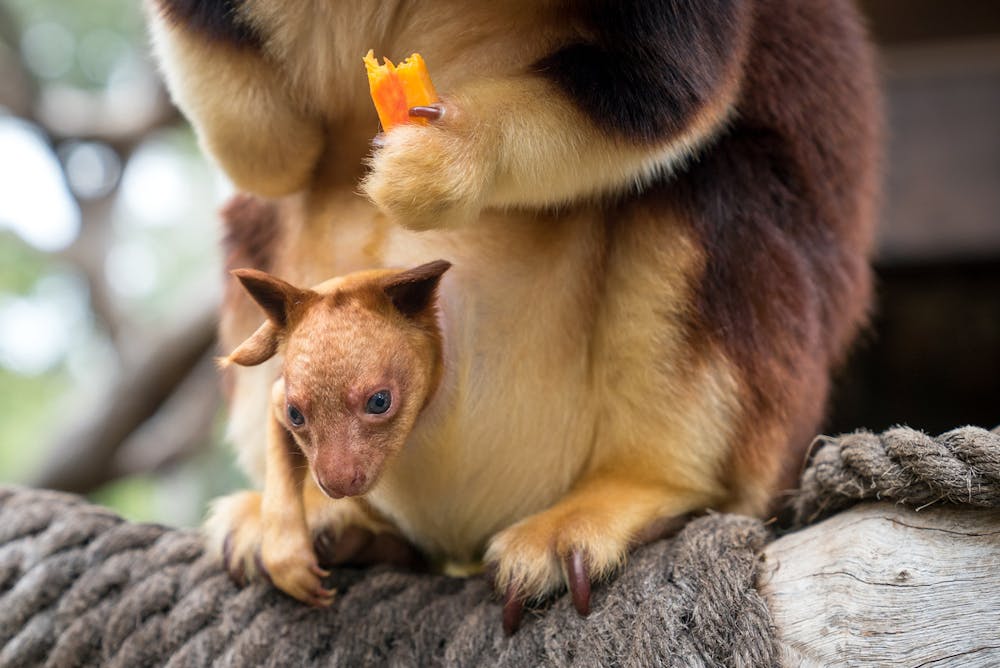
They still have large strong hind limbs, but their feet are shorter, broader and have a long curved claw on each toe.
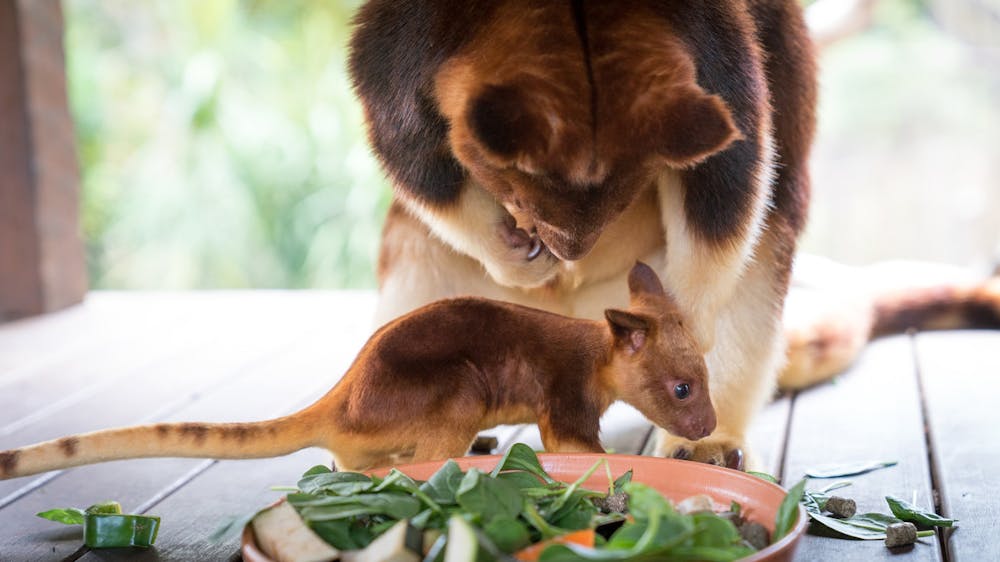
The pad of the hindfoot is single, large and with prominent grooves, all of which enhance the animal’s grip when climbing and walking in the canopy. The tails of tree kangaroos aren’t capable of grasping things like a monkey’s, but they’re long and often held out behind the animal for balance.
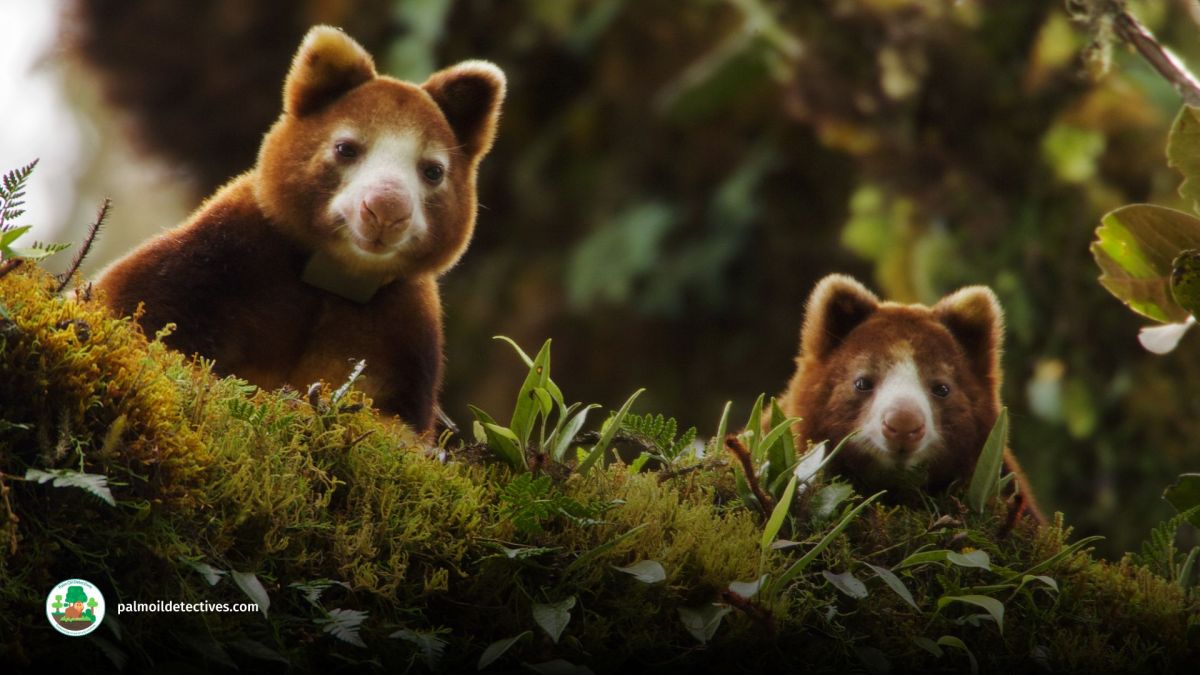
But perhaps one of the most obvious differences between tree kangaroos and their terrestrial cousins is their adorably small bear-like ears.
Threatened with extinction
Two species of tree kangaroos are found in the forests of northeast Australia and 12 species in the jungles of New Guinea. All species of tree kangaroos are threatened with extinction in New Guinea, although much about these animals is unknown.
Traditionally hunted for food, hassled by dogs and threatened by the destruction of their forest habitat, the soft thud of tree roo feet among the trees is falling silent.
But conservation work in their natural habitat and through a globally managed tree kangaroo captive breeding program is helping not only the species, but the people who live alongside them.
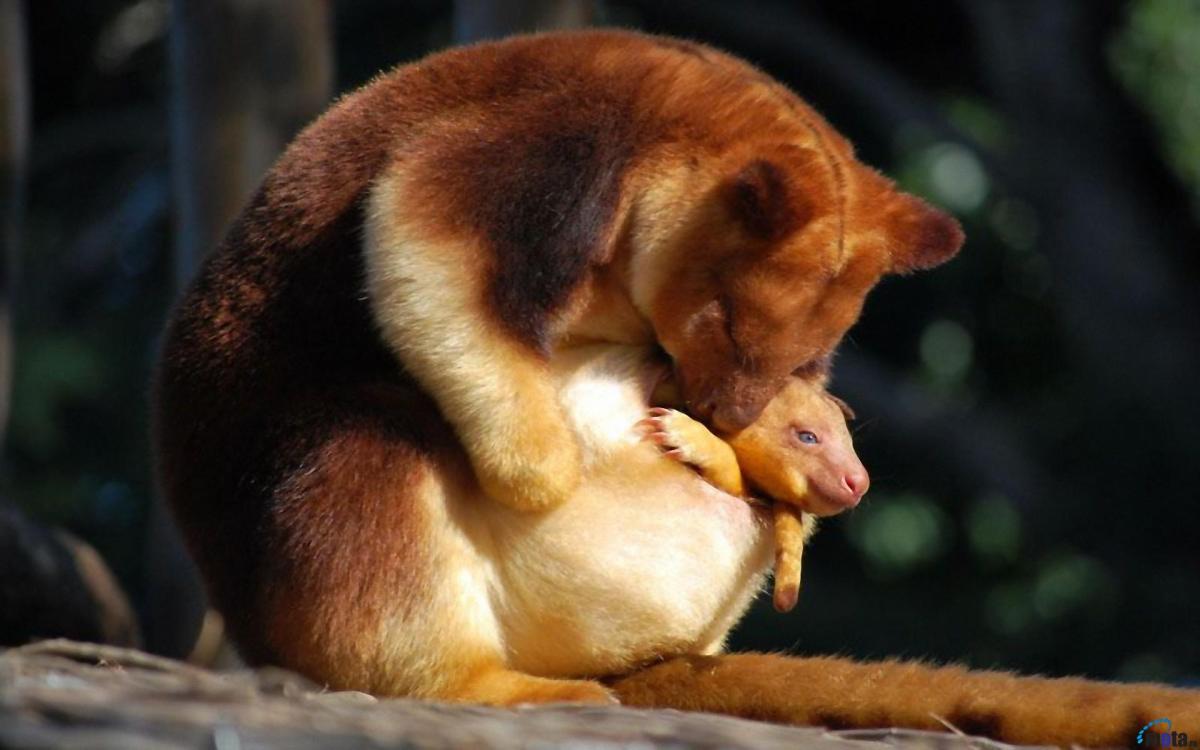
Baby Chimbu – a new hope
Chimbu was born in Victoria, but is really an international fellow. His mother Mani came from the National Zoo and Aquarium in Canberra, and his father Bagam arriving from Kreffeld Zoo in Germany.
Mani and Bagam were paired based on the recommendation of scientists and managers who maintain a studbook of Goodfellow’s tree kangaroos around the world.
These gorgeous animals are generally chocolate brown on the back, shading to pale brown or cream on the face and belly, and often with a single or double narrow pale stripe down the back.
Their beautiful striped tails are one of their most noticeable features. And while the current population size is unknown, this tree kangaroo is thought to be declining due to hunting for food, local trading for cultural purposes, and habitat destruction through local deforestation and shifting cultivation.
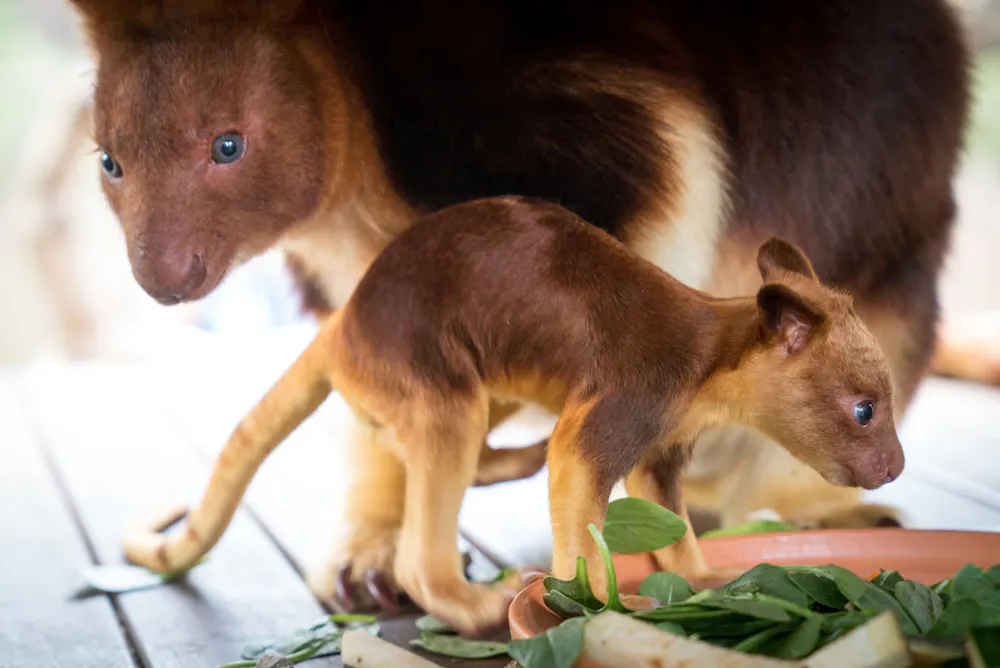
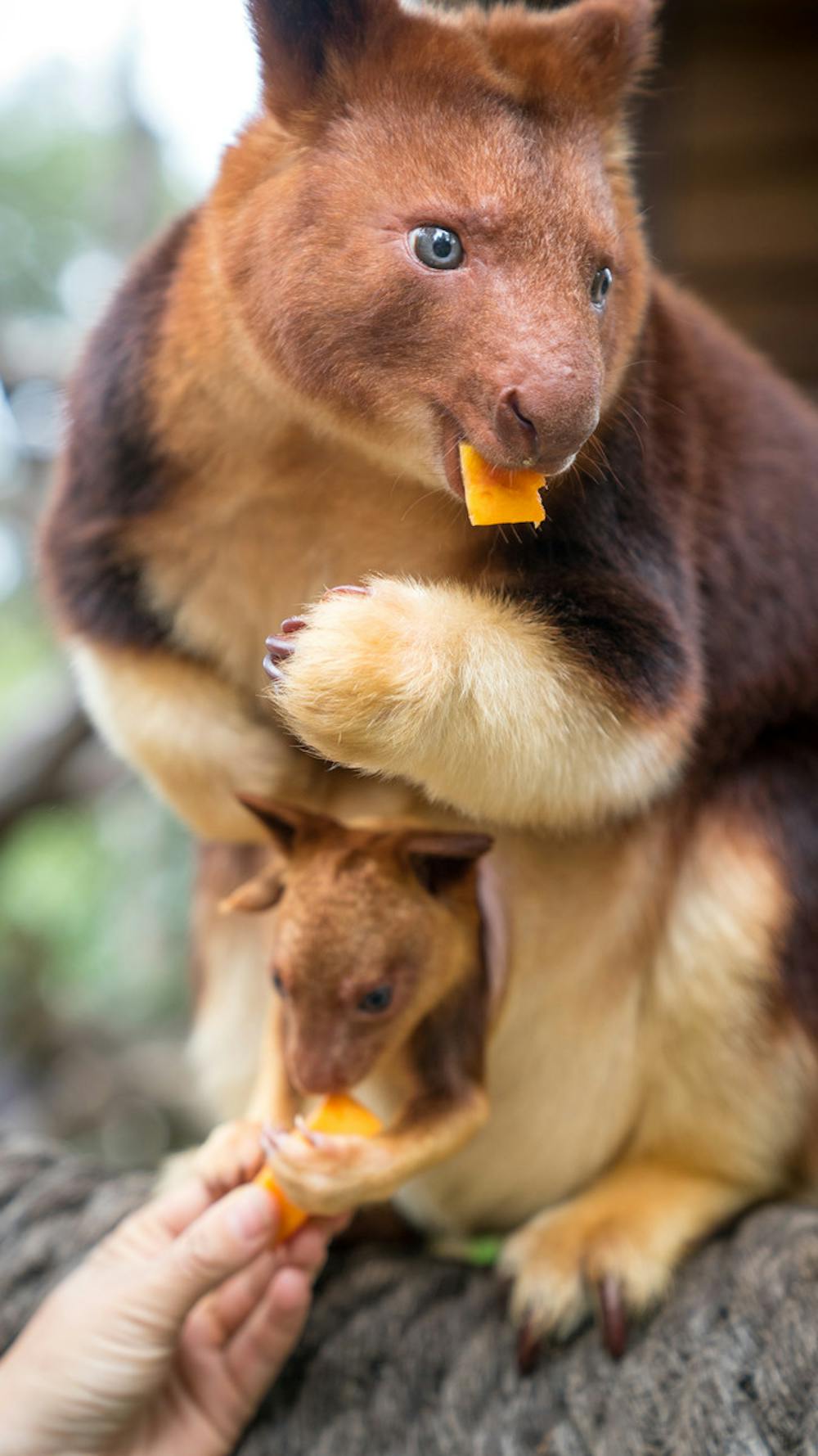
Although the Goodfellow’s tree kangaroos are officially endangered, we don’t know much about them in the wild. Right now, the Wildlife Conservation Society is working out how many are in the wild and where, so scientists can develop a detailed conservation program.
Written by Marissa Parrott, Reproductive Biologist, Wildlife Conservation & Science, Zoos Victoria, and Honorary Research Associate, BioSciences, The University of Melbourne. This article is republished from The Conversation under a Creative Commons license. Read the original article.
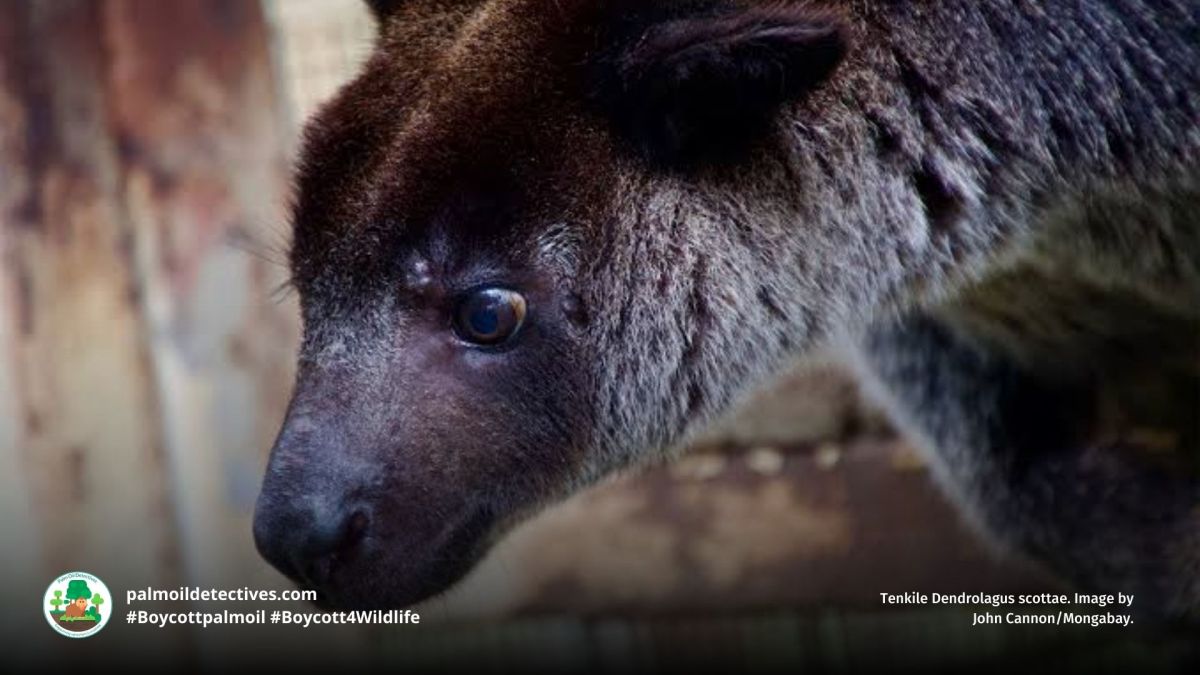
Read about other endangered tree kangaroos from Papua New Guinea on Palm Oil Detectives
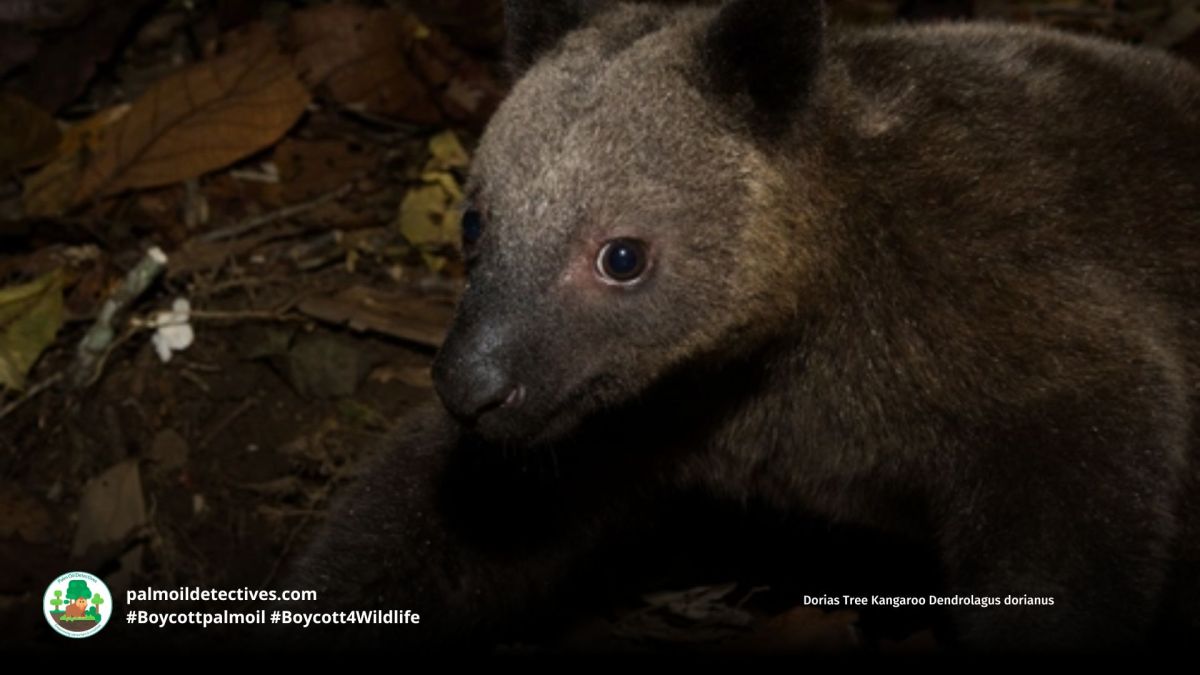
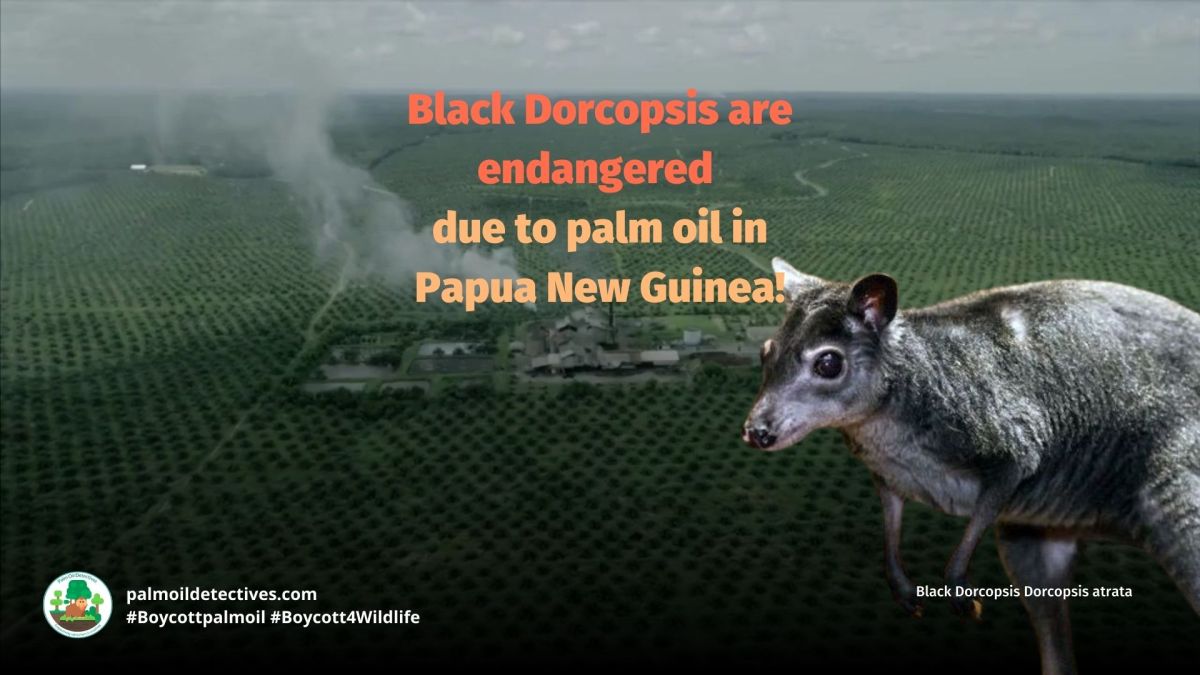
These animals face threats including palm oil and coffee deforestation and hunting. Never fear – there are ways you can help.

How can I help the #Boycott4Wildlife?
Take Action in Five Ways
1. Join the #Boycott4Wildlife on social media and subscribe to stay in the loop: Share posts from this website to your own network on Twitter, Mastadon, Instagram, Facebook and Youtube using the hashtags #Boycottpalmoil #Boycott4Wildlife.
2. Contribute stories: Academics, conservationists, scientists, indigenous rights advocates and animal rights advocates working to expose the corruption of the palm oil industry or to save animals can contribute stories to the website.



3. Supermarket sleuthing: Next time you’re in the supermarket, take photos of products containing palm oil. Share these to social media along with the hashtags to call out the greenwashing and ecocide of the brands who use palm oil. You can also take photos of palm oil free products and congratulate brands when they go palm oil free.
4. Take to the streets: Get in touch with Palm Oil Detectives to find out more.
5. Donate: Make a one-off or monthly donation to Palm Oil Detectives as a way of saying thank you and to help pay for ongoing running costs of the website and social media campaigns. Donate here
Discover more from Palm Oil Detectives
Subscribe to get the latest posts sent to your email.
 Palm Oil Detectives
One thought on “Meet Chimbu, the blue-eyed, bear-eared tree kangaroo”