

Jerdon’s Courser Rhinoptilus bitorquatus
Critically Endangered
Extant
Eastern Ghats (Andhra Pradesh), India.
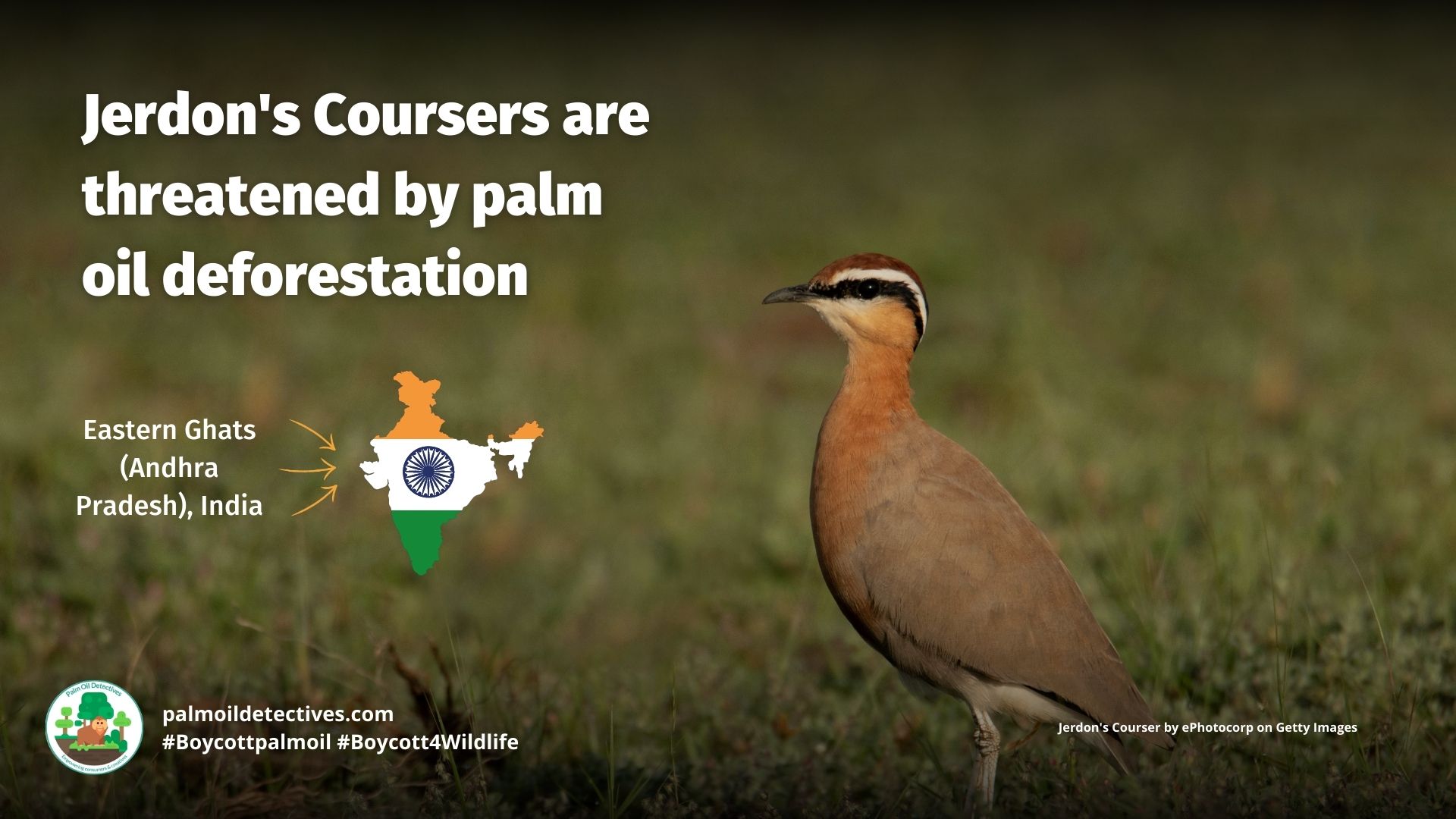
The Jerdon’s Courser is a rare and captivating nocturnal #songbird belonging to the pratincole and courser family Glareolidae. These #birds are endemic to #India in the Eastern Ghats region of Andhra Pradesh. Currently they are only known to live in the Sri Lankamalleswara Wildlife Sanctuary, where they reside in sparse scrub forest with patches of bare ground and are threatened by #palmoil #deforestation, help them to survive and #Boycottpalmoil #Boycott4Wildlife
One of the world’s rarest #songbirds has the sweetest song 🎶🎵🪇 the Jerdon’s Courser 🪿 is critically endangered in #India 🇮🇳 due to #palmoil #deforestation. Help them when you shop! #Boycottpalmoil 🌴🪔🤮🔥⛔️ #Boycott4Wildlife @palmoildetect https://palmoildetectives.com/2024/03/10/jerdons-courser-rhinoptilus-bitorquatus/
Jerdon’s Coursers are #birds with a sweet melodic song🕊️ 🎶🥁 and are fighting for survival, critically endangered from #palmoil #deforestation in #India 🇮🇳 Help them when you #BoycottPalmOil 🌴🧐🚫 #Boycott4Wildlife in the supermarket @palmoildetect https://palmoildetectives.com/2024/03/10/jerdons-courser-rhinoptilus-bitorquatus/
Appearance & Behaviour
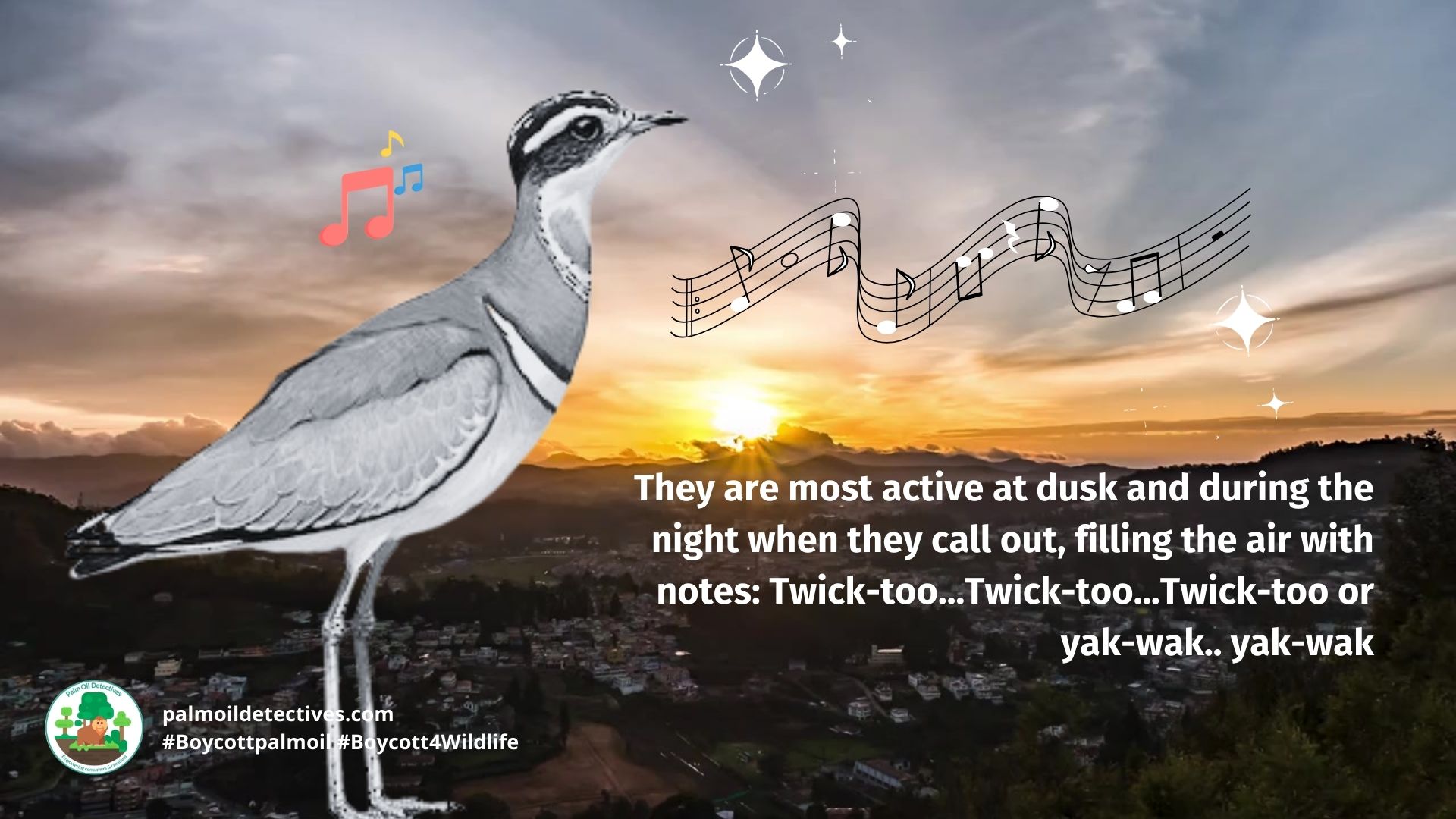
They are most active at dusk and during the night when they call out, filling the air with a melodious series of staccato notes: Twick-too…Twick-too…Twick-too or yak-wak.. yak-wak. These captivating sounds, repeated at a rapid pace of about one per second, may be uttered 2 to 16 times, attracting the participation of fellow birds in the vicinity.
The Jerdon’s Courser sports two striking brown breast-bands, they possess an unmistakable compact form. Their bill boasts a captivating blend of yellow and black, while their crown is adorned with a dark hue. A broad buff supercilium and an enchanting orange-chestnut throat patch add to their allure. A slender white stripe gracefully adorns the top of their head. During flight, their predominantly black tail and prominent white wing bar make a stunning display. Currently, they thrive solely within the enchanting Sri Lankamalleswara Wildlife Sanctuary, finding their home in sparse scrub forests adorned with patches of bare ground.
Threats
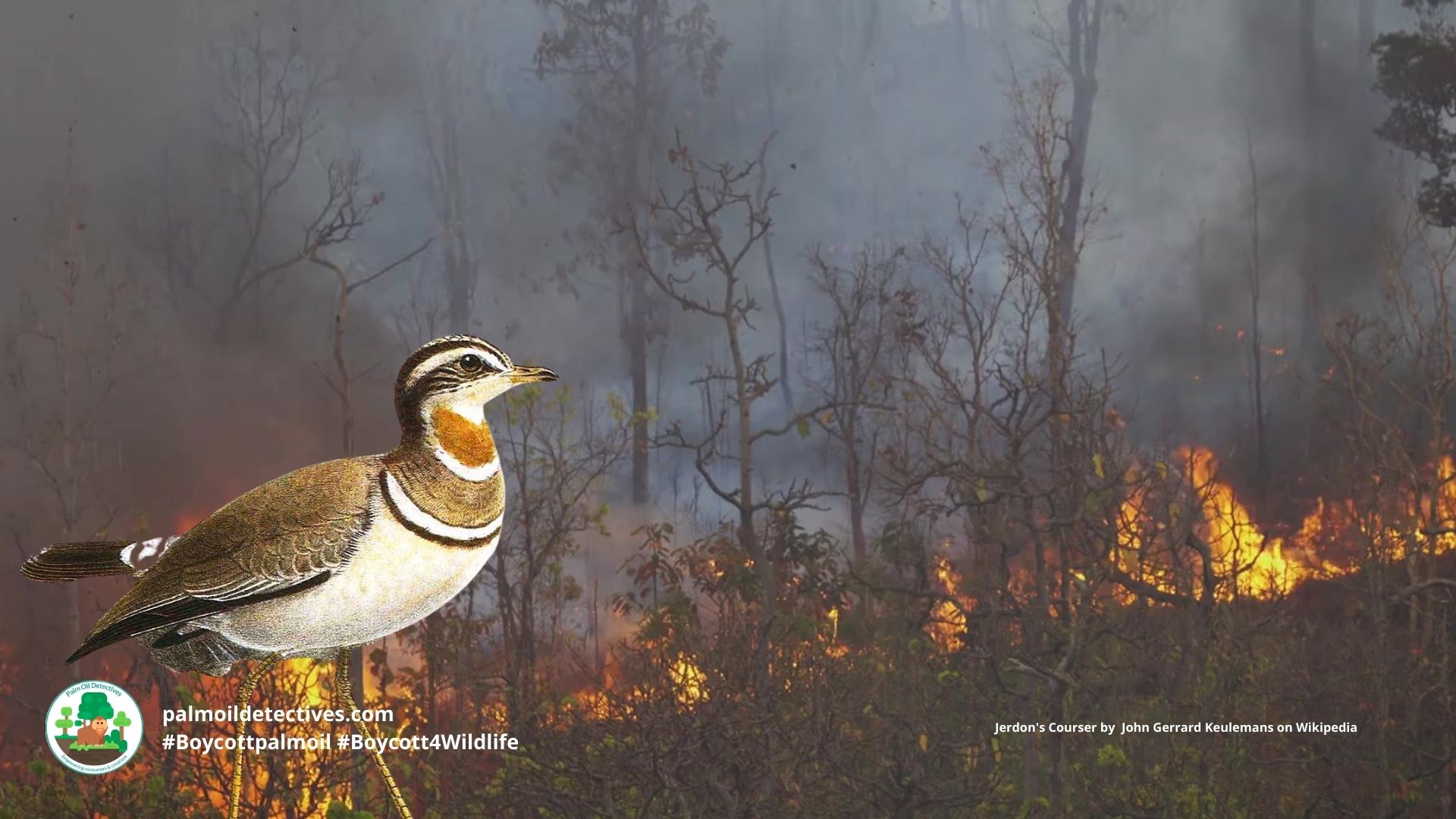
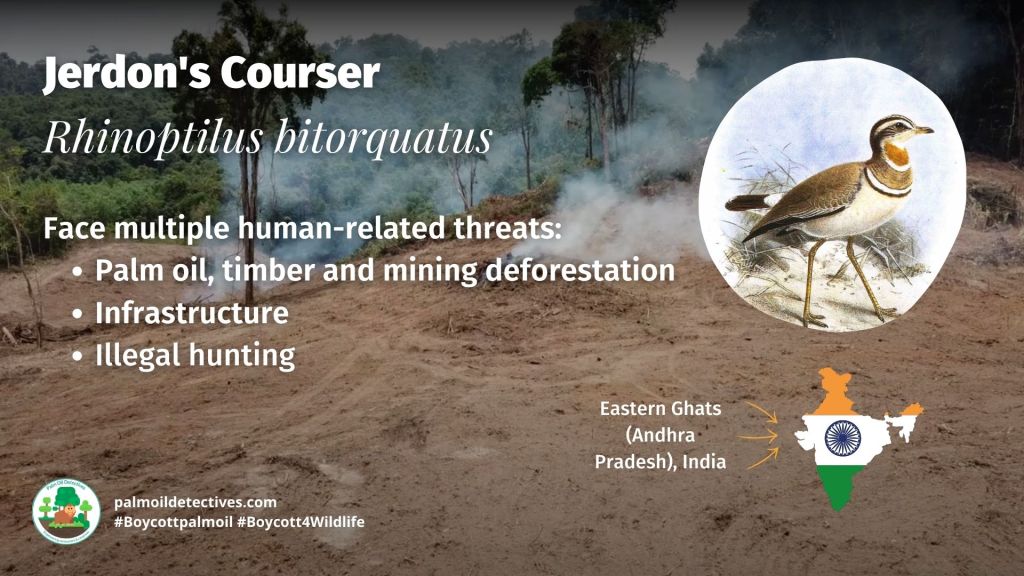
The Jerdon’s Courser’s habitat is becoming scarcer and more fragmented. They are threatened by human disturbance in the Eastern Ghats region of India including:
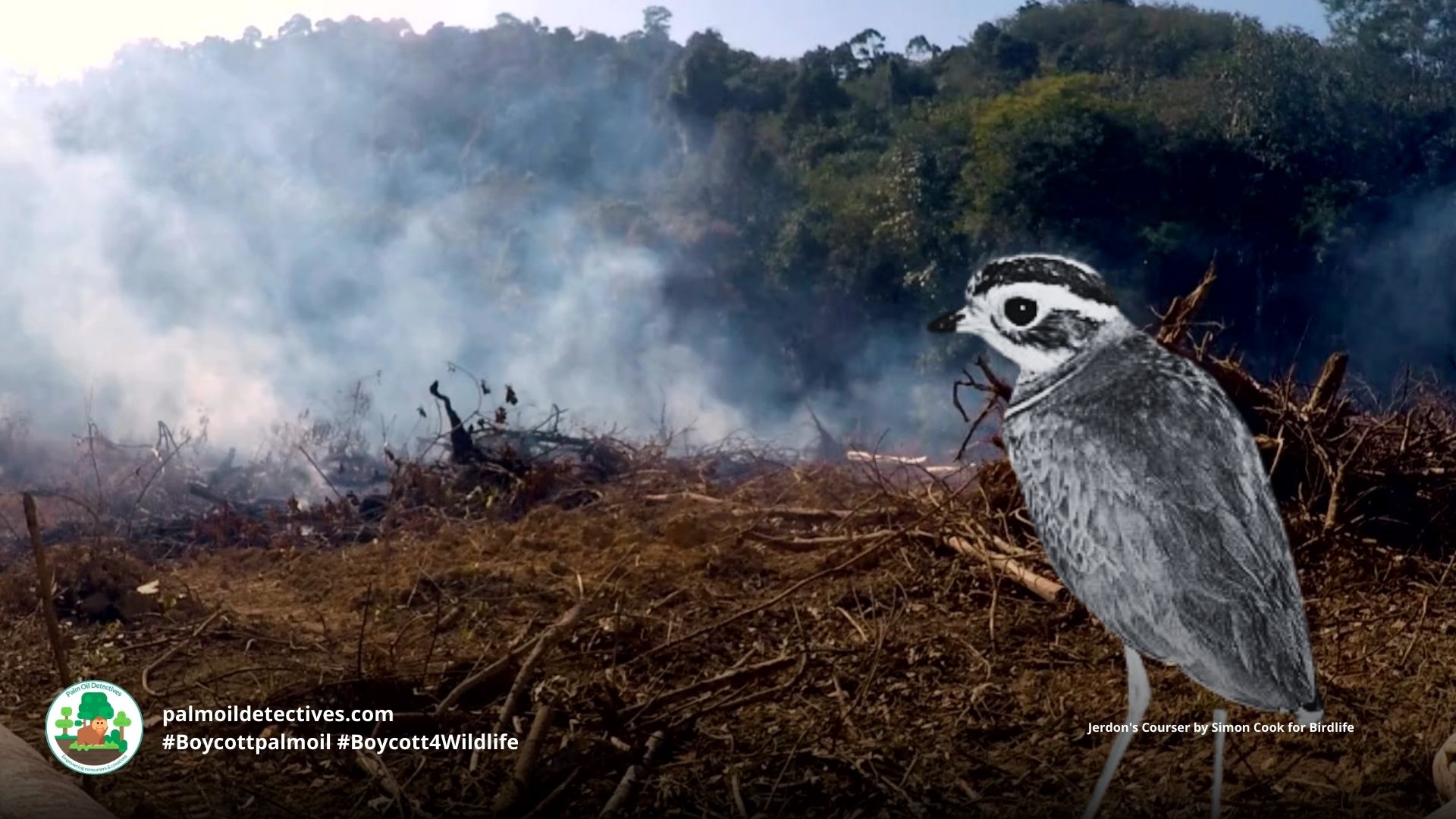
- Palm oil deforestation
- Timber deforestation
- Mining deforestation
- Hunting: the risk of accidental and opportunistic trapping of the animal.
- Infrastructure: The construction of the Telugu-Ganga Canal initially threatened suitable habitat outside Sri Lankamaleswara Wildlife Sanctuary. However, the construction was halted, and a new route was approved to avoid the remaining suitable habitat.
Despite these efforts, their remaining habitat is still under threat because of expected increased palm oil agriculture around the reserve resulting from the canal construction. Along with an increase in palm oil deforestation in this area.
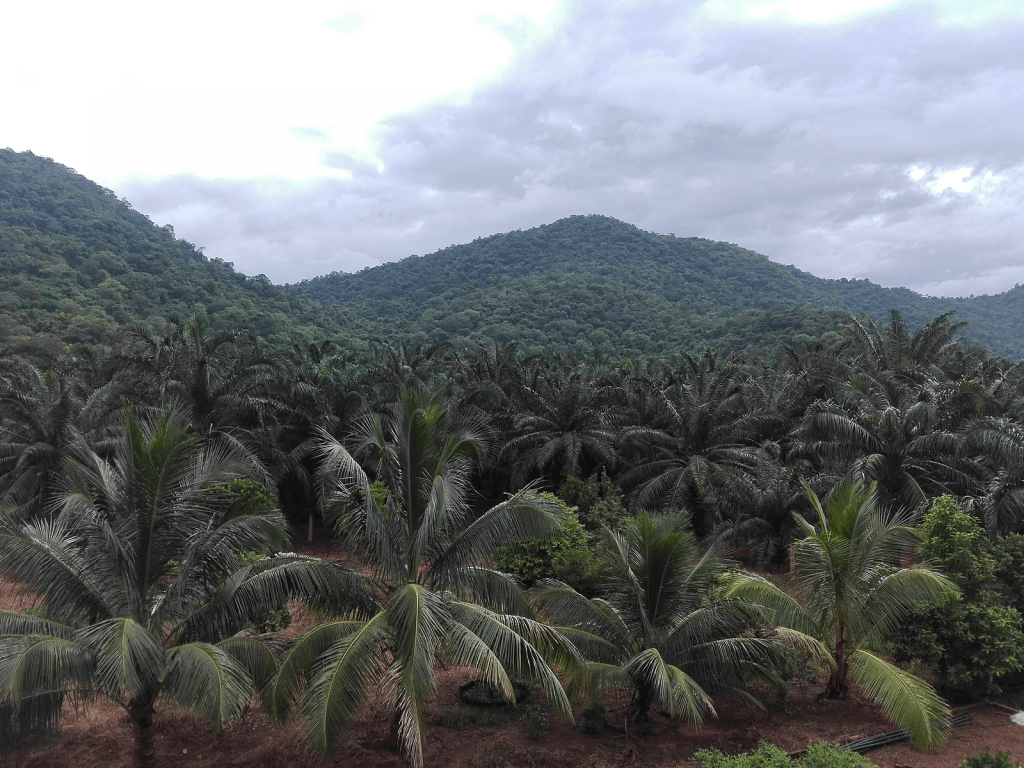
Palm oil plantations at the foothills of Eastern Ghats near Srungavarapukota
Until their rediscovery in 1986, this #bird was believed to be #extinct and was only known from a few historical records. The credit for rediscovering them goes to Bharat Bhushan, an ornithologist from the Bombay Natural History Society, who collaborated with local trappers to capture a specimen. Prior to their rediscovery, they were thought to be a diurnal bird. They remain critically endangered due to loss of habitat. They have nocturnal habits and are presumed to be insectivorous. Being a rare bird, nothing is known yet about their behavior and nesting habits.
Habitat
Studies in this region using sand strips to detect footprints suggest that these birds prefer habitats with tall bushes, ranging from 300 to 700 per hectare in density.
These birds are extremely rare and are endemic to southern India, primarily found in southern Andhra Pradesh. Their geographical range is extremely limited, known from the Godaveri river valley near Sironcha and Bhadrachalam, as well as the Cuddapah and Anantpur areas in the Pennar River valley.
An egg, likely collected within a 100 km radius of Kolar in 1917, was positively identified as belonging to this species through DNA analysis. Initially recorded in the mid-19th century, they were considered extinct for over 80 years until their rediscovery in 1986 in Cuddapah District, Andhra Pradesh.
Diet
The diet of Jerdon’s courser primarily consists of insects. As an insectivorous species, they feed on a variety of small insects such as beetles, grasshoppers, crickets, ants, and termites. Being a nocturnal bird, they are adapted to hunt for their prey during the dark hours of the night. However, due to limited information about their behaviour and feeding habits, further research may be required to obtain a more comprehensive understanding of their diet.
Mating and breeding
Jerdon’s courser (Rhinoptilus bitorquatus) is a species with limited information available about its mating habits and reproduction. However, based on general knowledge about bird reproduction, we can make some assumptions.
Jerdon’s courser is believed to form monogamous breeding pairs, where a male and a female come together to reproduce. Courtship behaviors such as displays of plumage, vocalisations, and courtship flights may be involved in the mating process. These behaviors help to attract a mate and establish pair bonds.
Once a pair is formed, they will likely engage in nest building. The nest is usually a scrape on the ground, often located in sparse scrub forest areas with patches of bare ground. The female is typically responsible for incubating the eggs while the male may assist in providing food for the female during this period.
The clutch size, or the number of eggs laid in a nest, is not well-documented for Jerdon’s courser. However, related species within the same family generally lay one to two eggs per clutch. The incubation period is also not well-known, but it is expected to be similar to other ground-nesting birds, which ranges from a few weeks to a month.
Once the eggs hatch, both parents are likely to participate in feeding and caring for the chicks. They will bring food, usually insects, to the nest to nourish the growing chicks. The duration of parental care and the fledging period, when the chicks are capable of leaving the nest, are not specifically known for Jerdon’s courser.
It’s important to note that more research and observations are needed to gather detailed information about the mating habits and reproductive biology of Jerdon’s courser.
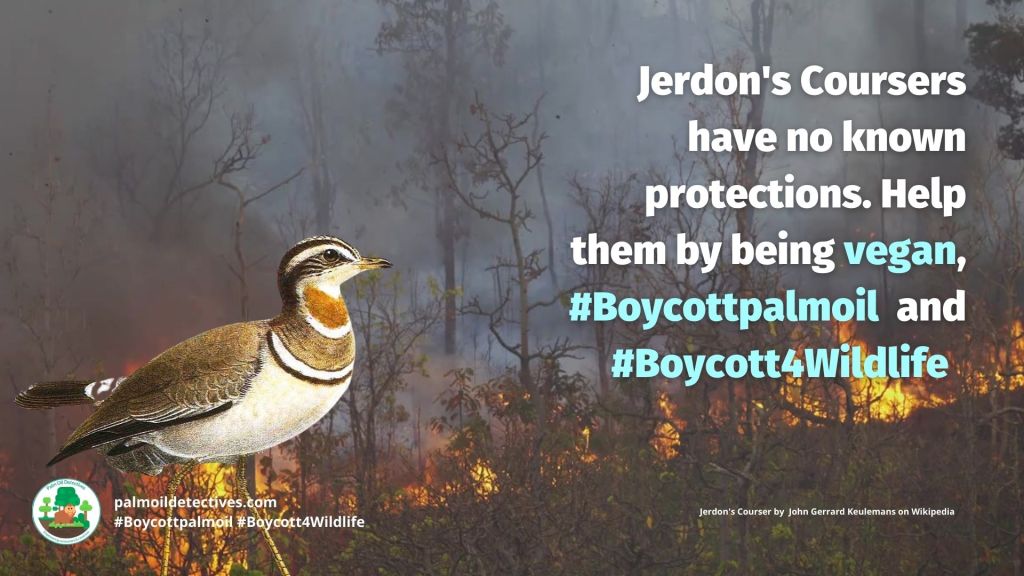
Support the Jerdon’s Courser by going vegan and boycotting palm oil in the supermarket, it’s the #BoycottPalmOil #Boycott4Wildlife
Support the conservation of this species
This animal has no protections in place. Read about other forgotten species here. Create art to support this forgotten animal or raise awareness about them by sharing this post and using the #Boycottpalmoil #Boycott4Wildlife hashtags on social media. Also you can boycott palm oil in the supermarket.
Further Information
BirdLife International. 2017. Rhinoptilus bitorquatus (amended version of 2016 assessment). The IUCN Red List of Threatened Species 2017: e.T22694103A117189206. https://dx.doi.org/10.2305/IUCN.UK.2017-3.RLTS.T22694103A117189206.en. Accessed on 02 June 2023.
Jerdon’s courser Wikipedia article – https://en.wikipedia.org/wiki/Jerdon’s_courser
Xeno-canto bird call – https://xeno-canto.org/294415

How can I help the #Boycott4Wildlife?
Take Action in Five Ways
1. Join the #Boycott4Wildlife on social media and subscribe to stay in the loop: Share posts from this website to your own network on Twitter, Mastadon, Instagram, Facebook and Youtube using the hashtags #Boycottpalmoil #Boycott4Wildlife.
2. Contribute stories: Academics, conservationists, scientists, indigenous rights advocates and animal rights advocates working to expose the corruption of the palm oil industry or to save animals can contribute stories to the website.






3. Supermarket sleuthing: Next time you’re in the supermarket, take photos of products containing palm oil. Share these to social media along with the hashtags to call out the greenwashing and ecocide of the brands who use palm oil. You can also take photos of palm oil free products and congratulate brands when they go palm oil free.
4. Take to the streets: Get in touch with Palm Oil Detectives to find out more.
5. Donate: Make a one-off or monthly donation to Palm Oil Detectives as a way of saying thank you and to help pay for ongoing running costs of the website and social media campaigns. Donate here
Discover more from Palm Oil Detectives
Subscribe to get the latest posts sent to your email.
 Palm Oil Detectives