
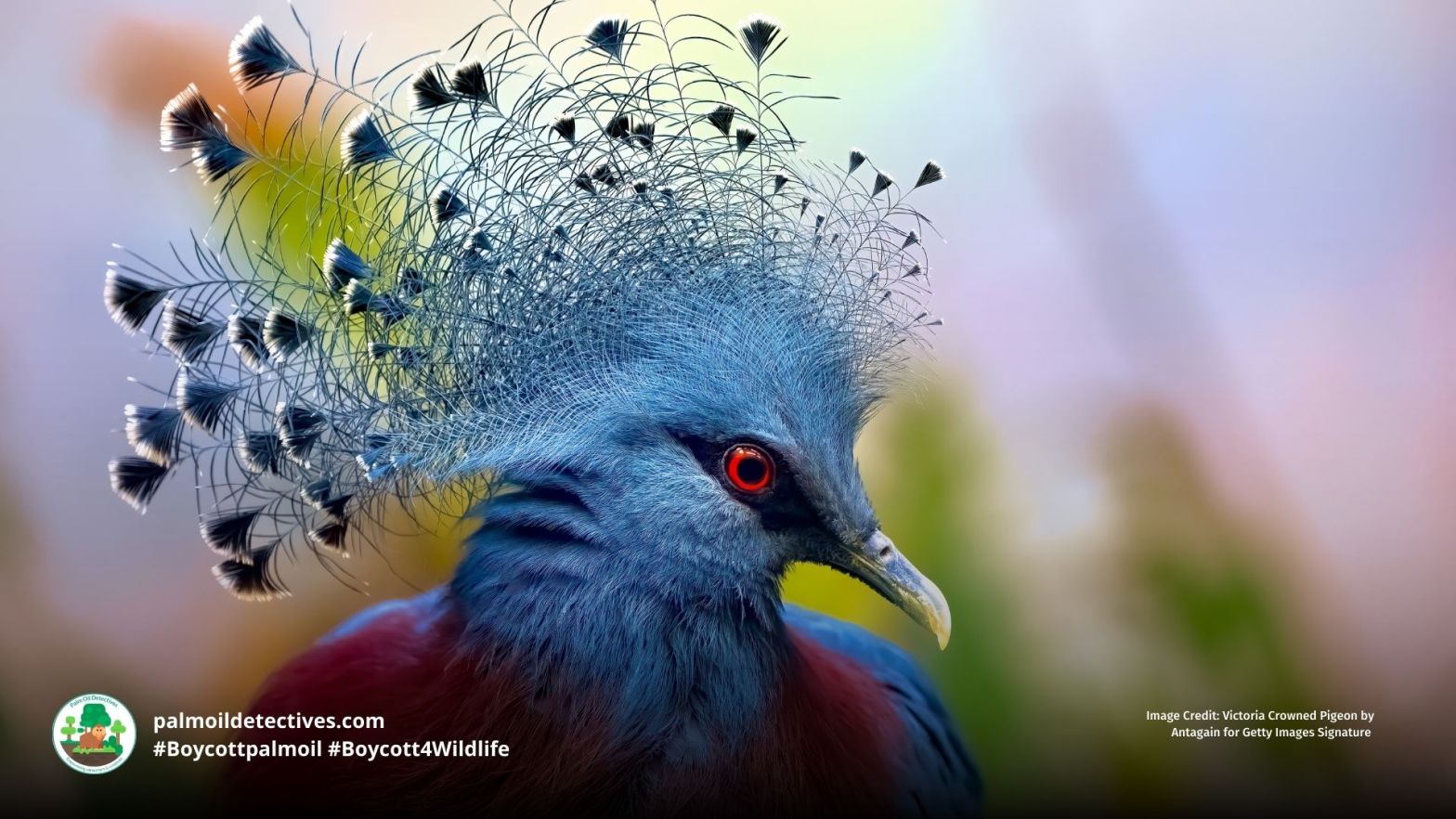
Victoria crowned pigeon Victoria goura
Near threatened
Extant (resident)
Papua New Guinea and surrounding Pacific islands
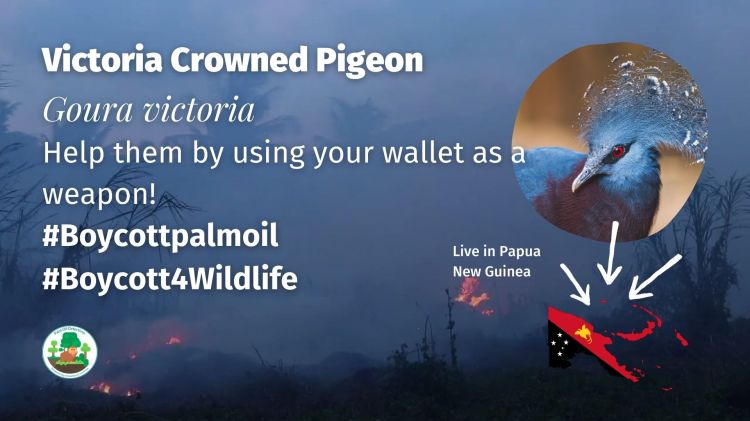
Meet the Victoria crowned pigeon, the world’s largest pigeon species with royal roots and some unique quirks. Not only are they named after Queen Victoria, but they’re also close relatives to the extinct dodo. These lovebirds mate for life and share parenting duties in the most adorable ways—from dancing displays to feeding their chicks a special ‘crop milk.’ Despite their fascinating traits and tight-knit families, these majestic birds face dire threats. Their forest homes are disappearing due to palm oil and timber deforestation, and they’re being hunted. Help keep their love story alive: #BoycottPalmOil and support #Boycott4Wildlife to protect these incredible creatures.
The world’s largest and most spectacular looking #pigeon is the Victoria crowned pigeon of #Papua 🪿🪽 🌈 😻They are declining due to #palmoil and #hunting 👎 Help them to survive! be #vegan #Boycottpalmoil #Boycott4Wildlife @palmoildetect https://palmoildetectives.com/2024/05/12/victoria-crowned-pigeon-victoria-goura/
Victoria crown #pigeons of #NewGuinea 🕊️🦜have stunning lilac and maroon feathers that mesmerise admirers. Don’t let these #birds die out like their cousin the #dodo, help them survive. #Boycottpalmoil #Boycott4Wildlife 🌴⛔️ when you shop! @palmoildetect https://palmoildetectives.com/2024/05/12/victoria-crowned-pigeon-victoria-goura/
Appearance & Behaviour
A close cousin of the extinct dodo, regal Victoria crowned pigeons are stunning to behold.
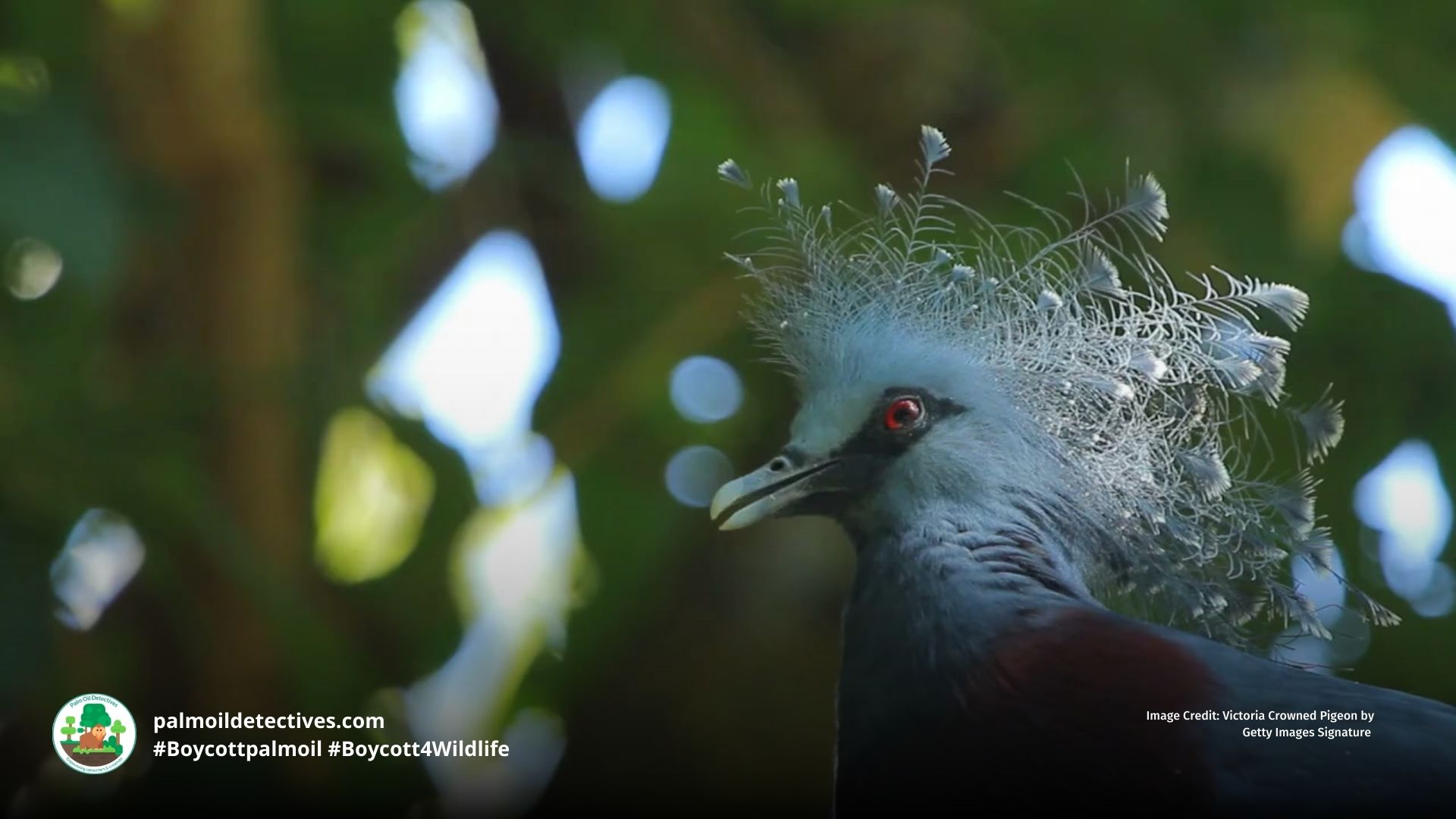
The Victoria crowned pigeon is no ordinary bird; they are the world’s largest pigeon, named in honour of Queen Victoria and a close cousin to the extinct dodo.
Unlike most birds, both parents produce a special ‘crop milk’ to nourish their chicks. They also stand out for not having a gall bladder or oil gland.
These monogamous lovebirds have a unique courtship dance where the male rhythmically swings his head and fans his tail.
When it comes to parenting, they’re true team players, sharing duties from gathering nesting materials to raising their helpless, blind chicks. These birds are full of unique traits that make them truly one-of-a-kind in the avian world.
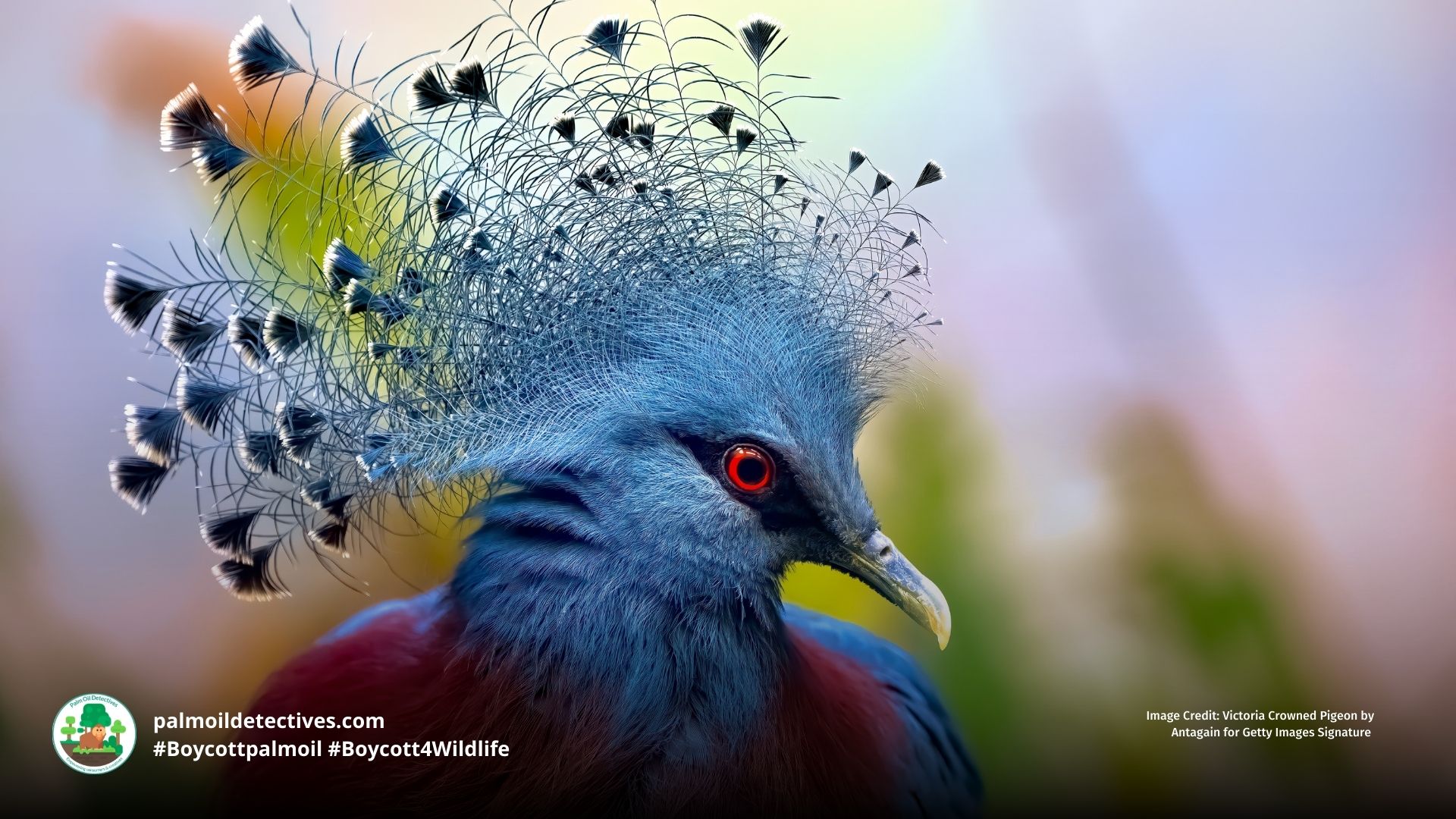
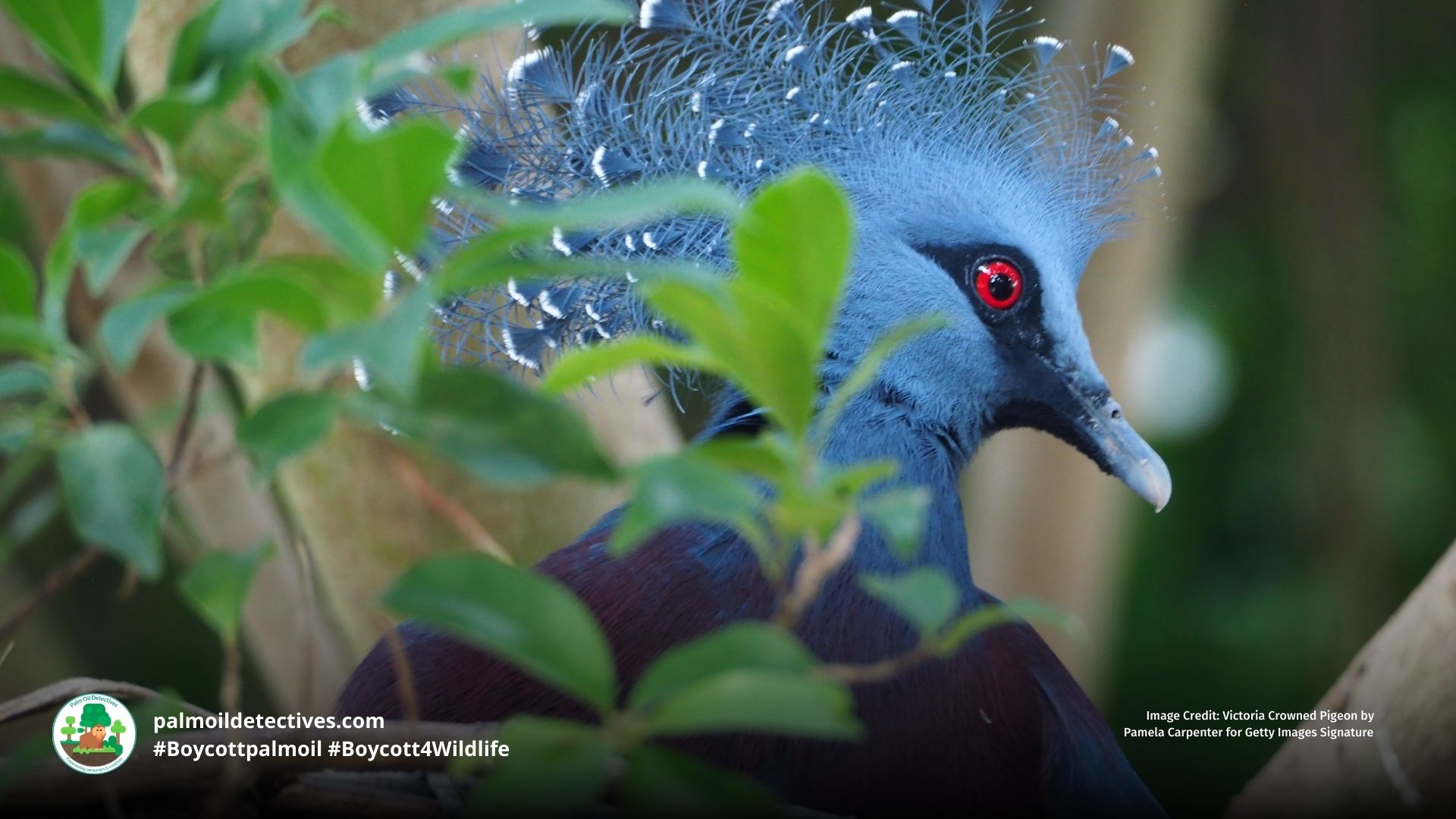
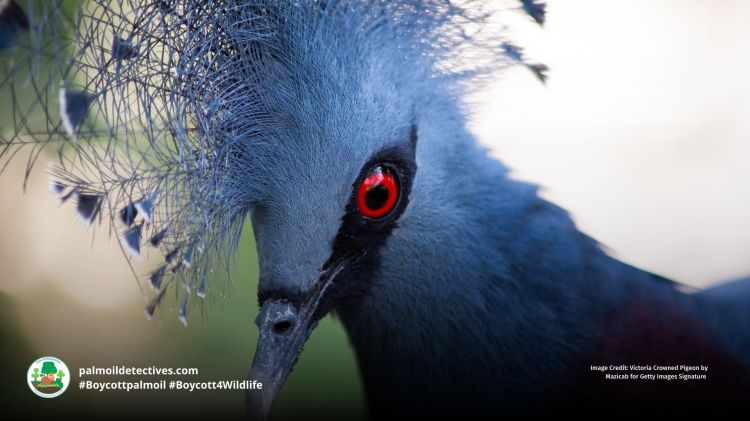
Victoria crowned pigeons are showstoppers with their deep blue-grey feathers. What really sets them apart is their signature white-tipped feather crest and a row of paler blue-gray feathers with maroon tips on their wings.
This bird has a deep, resonant “hoota-hoota” call and an even deeper purple-maroon chest, distinguishing them from their more common western cousins, who sport more uniform blue or gray chests.
Aside from their astonishing feathers, this bird is also a heavyweight champ. They average 73 to 75 cm in length making them the planet’s largest surviving pigeon species.



Threats
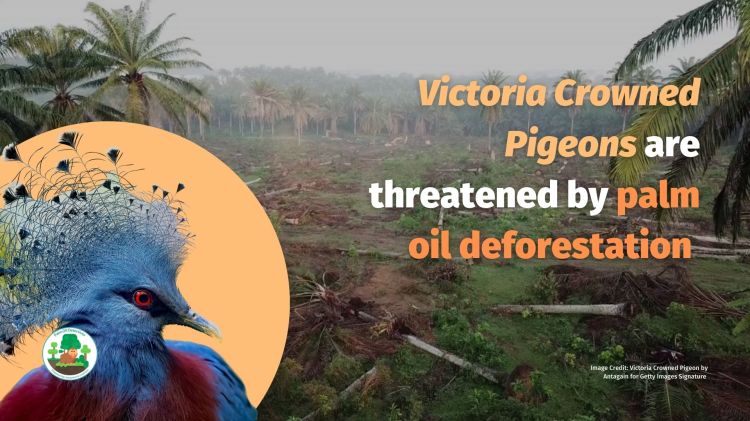
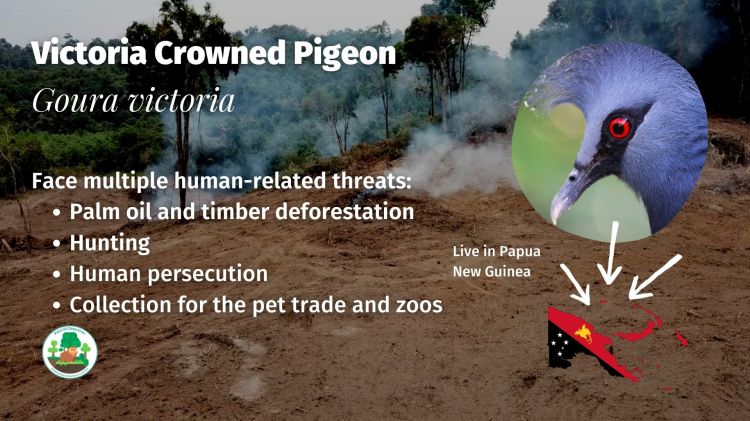
- Deforestation for palm oil and timber: Victoria crowned pigeons face a major threat from logging and oil palm plantations. The clearing of rainforests also makes it easier for hunters to find them.
- Hunting for Meat and Feathers: A major threat to these beautiful pigeons is hunting for their meat and pretty feathers.
- Baby pigeons are hunted for food and profit: People take the baby pigeons from nests to raise them for food or to sell them. As a result they are disappearing from areas where they used to be common due to hunting.
- Capture for the illegal pet trade: These pigeons are popular in zoos and safari parks in Southeast Asia, which encourages capturing them from the wild.
Take Action!
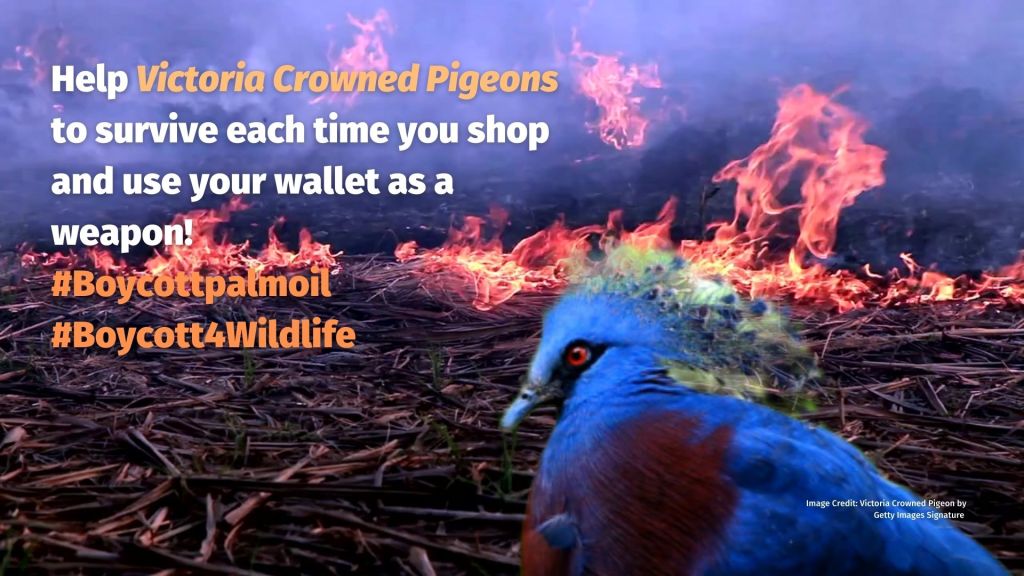
Help protect these beautiful birds by supporting the #Boycottpalmoil #Boycott4Wildlife. Stop buying products that contribute to their harm and raise awareness to save them!
Habitat
The Victoria crowned pigeon prefers lowland forests, including swampy and sago palm areas, sometimes venturing up to 600 meters. They usually forage in small groups, feasting on fallen fruit, berries, and seeds scattered on the ground. At night, they roost in trees. When it comes to family, these birds start breeding at just 15 months old and usually lay a single egg. Interestingly, they’re found only in continuous forests, avoiding fragmented ones. These birds have a pretty focused lifestyle, making them an intriguing part of their forest homes.
Diet
Victoria crowned pigeons primarily eat a plant-based diet, focusing on fallen fruits. They also munch on berries and seeds, and sometimes they’ll consume small invertebrates.
Mating and breeding
The breeding season for Victoria crowned pigeons hits its peak toward the end of the wet season and continues into the dry season. To woo a mate, the male performs a unique dance, lowering and stretching his head before swinging it up and down, all while shaking his fanned tail. While the female takes on most of the brooding duties, both parents play a role in raising their offspring. The nesting process begins with the male collecting stems, sticks, and palm leaves, which the female then uses to build a nest in a tree. There, she lays a single white egg, which is incubated for about a month. Even after the young pigeons leave the nest, they receive attentive care from both parents for an additional 13 weeks.
Support Victoria crowned pigeons by going vegan and boycotting palm oil in the supermarket, it’s the #Boycott4Wildlife
Support the conservation of this species
This animal has no protections in place. Read about other forgotten species here. Create art to support this forgotten animal or raise awareness about them by sharing this post and using the #Boycottpalmoil #Boycott4Wildlife hashtags on social media. Also you can boycott palm oil in the supermarket.
Further Information
BirdLife International. 2016. Goura victoria. The IUCN Red List of Threatened Species 2016: e.T22691874A93326799. https://dx.doi.org/10.2305/IUCN.UK.2016-3.RLTS.T22691874A93326799.en. Accessed on 30 August 2023.
Victoria crowned pigeon Wikipedia article – https://en.wikipedia.org/wiki/Victoria_crowned_pigeon
Victoria crowned pigeon on Animalia.bio – https://animalia.bio/victoria-crowned-pigeon

How can I help the #Boycott4Wildlife?
Take Action in Five Ways
1. Join the #Boycott4Wildlife on social media and subscribe to stay in the loop: Share posts from this website to your own network on Twitter, Mastadon, Instagram, Facebook and Youtube using the hashtags #Boycottpalmoil #Boycott4Wildlife.
2. Contribute stories: Academics, conservationists, scientists, indigenous rights advocates and animal rights advocates working to expose the corruption of the palm oil industry or to save animals can contribute stories to the website.






3. Supermarket sleuthing: Next time you’re in the supermarket, take photos of products containing palm oil. Share these to social media along with the hashtags to call out the greenwashing and ecocide of the brands who use palm oil. You can also take photos of palm oil free products and congratulate brands when they go palm oil free.
4. Take to the streets: Get in touch with Palm Oil Detectives to find out more.
5. Donate: Make a one-off or monthly donation to Palm Oil Detectives as a way of saying thank you and to help pay for ongoing running costs of the website and social media campaigns. Donate here
Learn about other animals endangered by palm oil and other agriculture
Learn about “sustainable” palm oil greenwashing
Read more about RSPO greenwashing
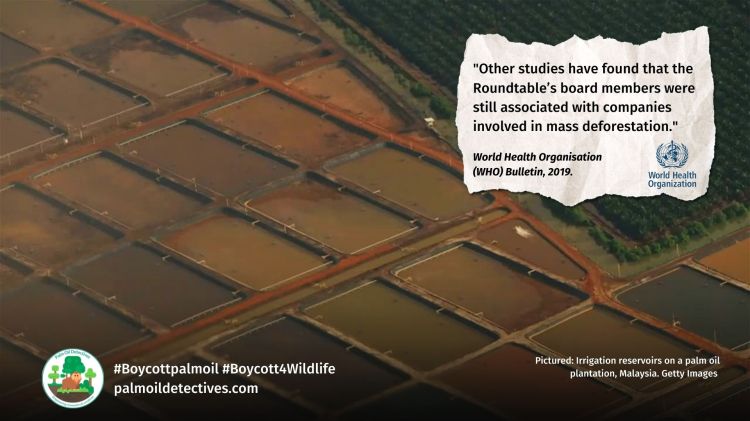
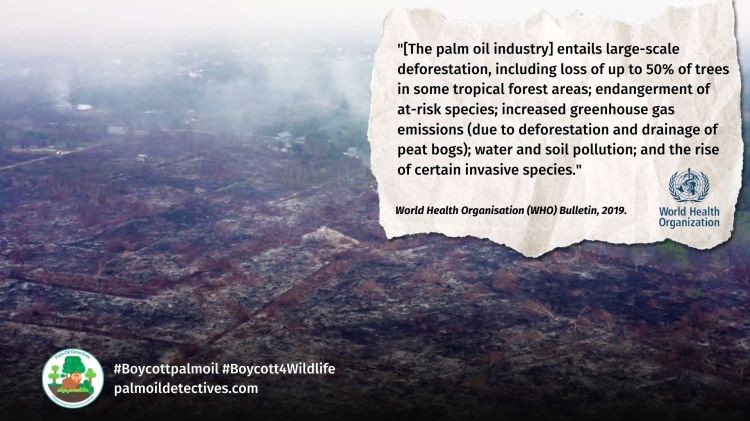
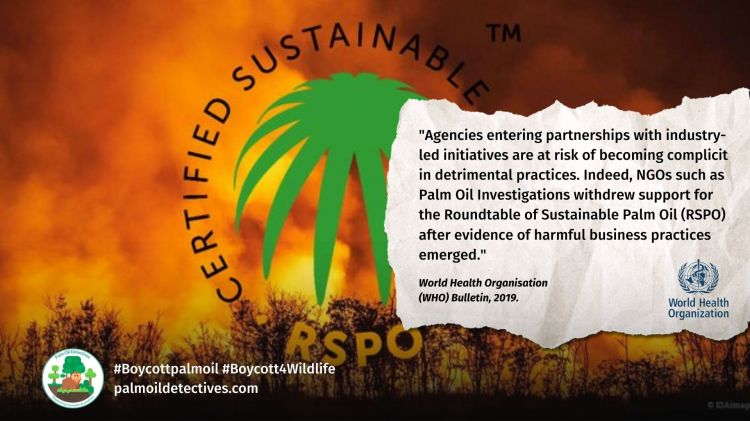
A 2019 World Health Organisation (WHO) report into the palm oil industry and RSPO finds extensive greenwashing of palm oil deforestation and the murder of endangered animals (i.e. biodiversity loss)


Discover more from Palm Oil Detectives
Subscribe to get the latest posts sent to your email.
 Palm Oil Detectives
One thought on “Victoria crowned pigeon Victoria goura”