

New research reveals that African savannah #elephants use unique, ‘names’ to call one another, showcasing their incredible intelligence and deep social bonds. Unlike other animals, these majestic creatures communicate with non-imitative calls, highlighting their advanced cognitive abilities. This discovery opens new doors to understanding the evolution of language and cognition in animals. Dive into the fascinating world of elephant communication! 🐘🌍✨ They face many threats to their survival, help them to survive when you #Boycottpalmoil #Boycott4Wildlife
🐘✨ Elephants know each other by name! Exciting new #research reveals African savannah #elephants use unique name-like calls to communicate, showcasing their incredible intelligence, deep social bonds. @palmoildetect #Boycottpalmoil #Boycott4Wildlife 🌍💚 https://wp.me/pcFhgU-8we
🐘🔍 Groundbreaking #research #study shows #elephants don’t just trumpet—they call each other by name! These majestic creatures have complex social lives and advanced #cognition. Help them to survive when you #Boycottpalmoil #Boycott4Wildlife 🐾🌿https://wp.me/pcFhgU-8we
In a groundbreaking 2024 study, researchers have discovered that African savannah elephants Loxodonta africana communicate with each other using unique name-like calls, similar to how humans use personal names. This discovery, published in Nature Ecology & Evolution, places elephants among a rare group of animals known to use individual-specific vocalisations.
The Study and Its Findings
A team of international researchers employed artificial intelligence to analyse 469 rumbles—deep, low-frequency sounds—made by two herds of wild elephants in Kenya’s Amboseli National Park and Samburu National Reserve between 1986 and 2022. The AI model successfully identified the intended recipient of these calls 27.5% of the time, a rate significantly higher than random chance. This finding suggests that the elephants’ calls contain individual-specific information akin to names.
The study also involved playback experiments where recordings of these rumbles were played to the elephants. The subjects responded more rapidly and vocally to calls originally addressed to them compared to those directed at other elephants. This indicates that elephants can recognise and respond to their own ‘names’ even when the call is out of context.

Implications for Animal Communication and Cognition
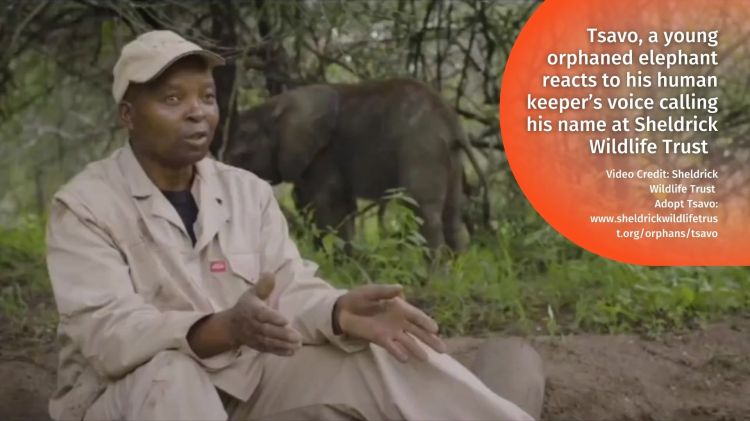
Unlike dolphins and parrots, who call to each other by mimicking their sounds, elephants use unique, non-imitative calls. This discovery is significant as it suggests that elephants have a capacity for abstract thought and complex social cognition. The ability to use arbitrary sounds to label individuals is a trait shared with humans, highlighting the advanced cognitive abilities of elephants. In a fascinating example of interspecies communication (unrelated to the study) an orphaned baby elephant named Tsavo responds to his keeper calling his name at Sheldrick Wildlife Trust in Kenya.
The findings also underscore the importance of social bonds among elephants. The need to call each other by name implies a sophisticated social structure and communication system. Understanding these communication patterns gives deeper insights into the evolution of language and cognition in both humans and animals.
Further Reading
- Pardo, M. A., Fristrup, K., Lolchuragi, D. S., Poole, J. H., Granli, P., Moss, C., Douglas-Hamilton, I., & Wittemyer, G. (2024). African elephants address one another with individually specific name-like calls. Nature Ecology & Evolution. https://www.nature.com/articles/s41559-024-02420-w
- Agence France-Presse. (2024, June 11). Elephants call each other by name, study finds. The Guardian. https://www.theguardian.com/science/article/2024/jun/10/elephant-names-study-ai
- Perfetto, I. (2024, June 11). Elephants talk to each other using name-like calls! Cosmos Magazine. https://cosmosmagazine.com/nature/animals/hello-elephants-talk-to-each-other-using-name-like-calls/
- Pardo, M. (2024, June 12). African elephants address one another with name-like calls − similar to humans. The Conversation. https://theconversation.com/african-elephants-address-one-another-with-name-like-calls-similar-to-humans-232096
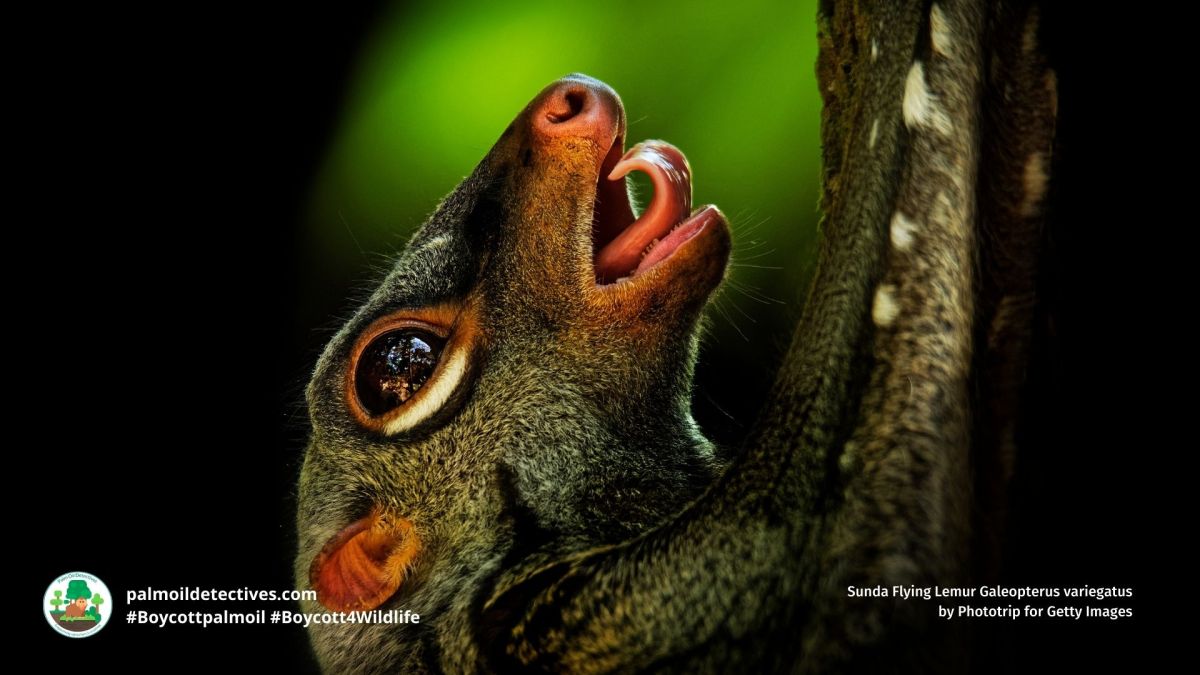
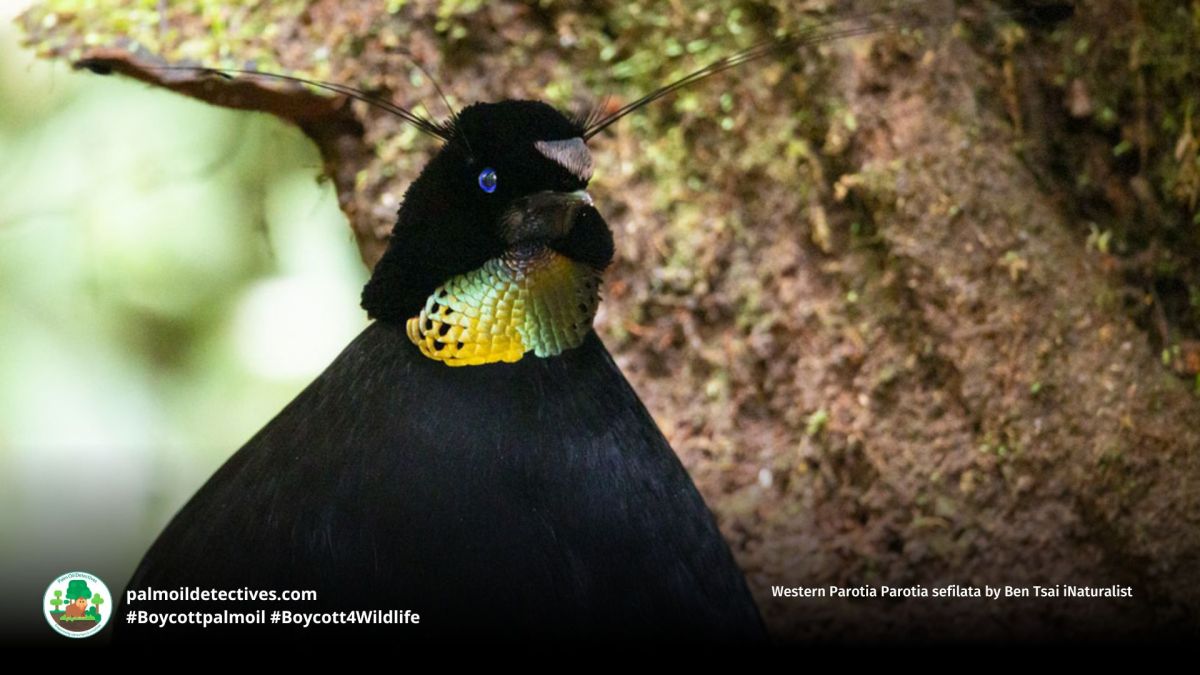
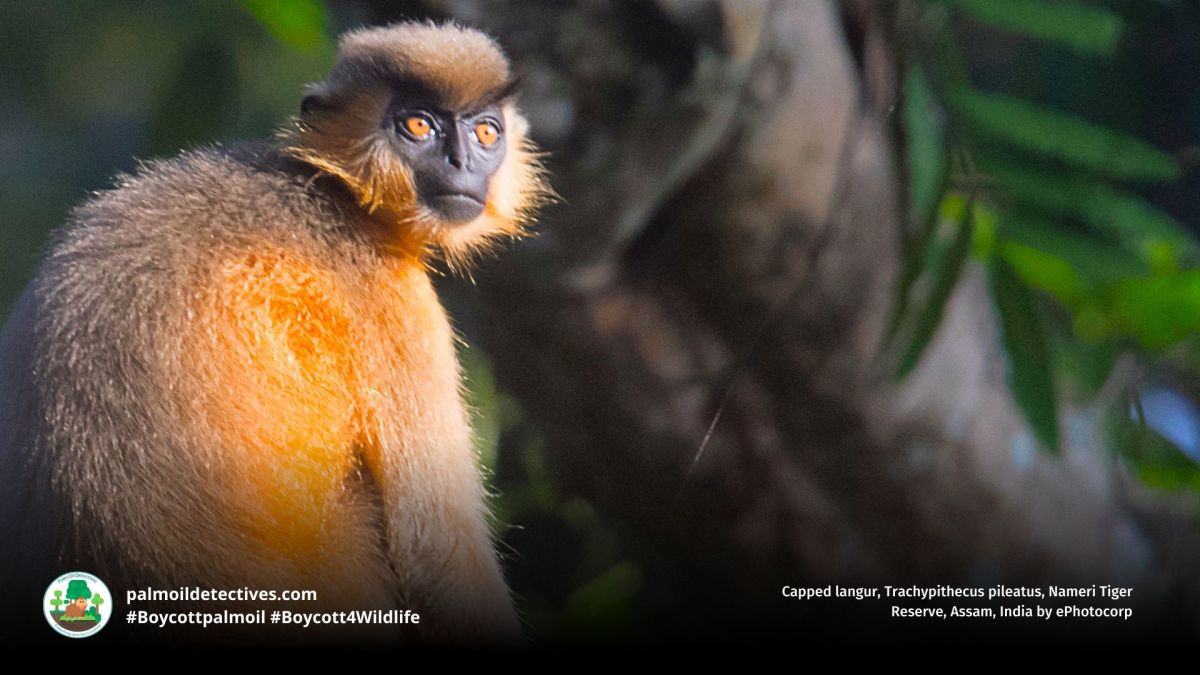
Learn about other animals endangered by palm oil and other agriculture
Learn about “sustainable” palm oil greenwashing
Read more about RSPO greenwashing
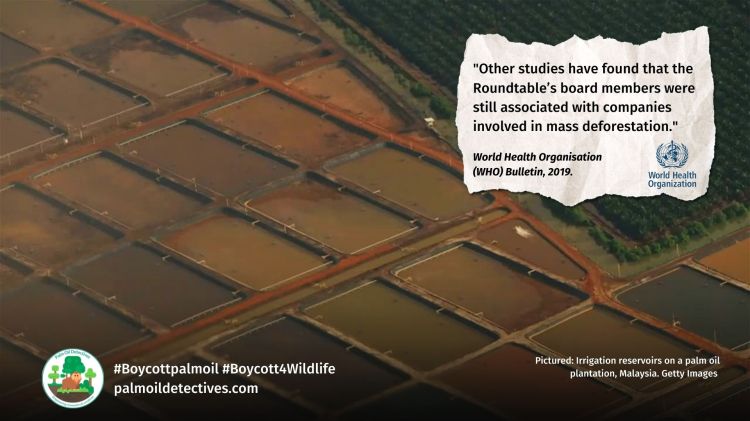
A 2019 World Health Organisation (WHO) report into the palm oil industry and RSPO finds extensive greenwashing of palm oil deforestation and the murder of endangered animals (i.e. biodiversity loss)


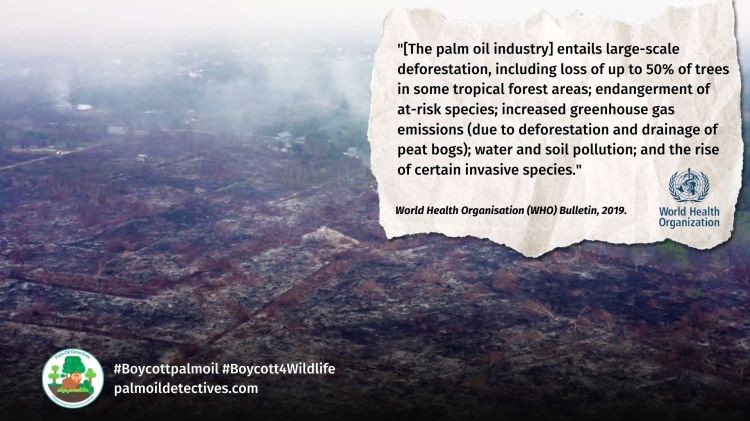

Take Action in Five Ways
1. Join the #Boycott4Wildlife on social media and subscribe to stay in the loop: Share posts from this website to your own network on Twitter, Mastadon, Instagram, Facebook and Youtube using the hashtags #Boycottpalmoil #Boycott4Wildlife.
2. Contribute stories: Academics, conservationists, scientists, indigenous rights advocates and animal rights advocates working to expose the corruption of the palm oil industry or to save animals can contribute stories to the website.




3. Supermarket sleuthing: Next time you’re in the supermarket, take photos of products containing palm oil. Share these to social media along with the hashtags to call out the greenwashing and ecocide of the brands who use palm oil. You can also take photos of palm oil free products and congratulate brands when they go palm oil free.
4. Take to the streets: Get in touch with Palm Oil Detectives to find out more.
5. Donate: Make a one-off or monthly donation to Palm Oil Detectives as a way of saying thank you and to help pay for ongoing running costs of the website and social media campaigns. Donate here
Discover more from Palm Oil Detectives
Subscribe to get the latest posts sent to your email.
 Palm Oil Detectives
2 thoughts on “African Savannah Elephants Use ‘Names’ to Communicate”