

A recent study has identified five new species of soft-furred hedgehogs (also known as Lesser Gymnures) from #SoutheastAsia. The study used DNA analysis and physical characteristics to describe two entirely new species of soft-furred hedgehogs and to elevate three subspecies to the level of species.
These tiny tree-dwelling creatures are soft and furry with a mouse-like appearance, yet they are not rodents – they are hedgehogs. Help them to survive the destruction of their natural home for #palmoil – make sure you #Boycottpalmoil #Boycott4Wildlife in the supermarket!
#News: Five new species of soft-furred #hedgehogs AKA lesser Gymnures discovered deep within the Leuser Ecosystem in #Indonesia and also southern #Vietnam. Help them to survive when you shop #Boycottpalmoil #Boycott4Wildlife #biodiversity @palmoildetect https://wp.me/pcFhgU-7dg
Research paper: Arlo Hinckley et al. An integrative taxonomic revision of lesser gymnures (Eulipotyphla: Hylomys) reveals five new species and emerging patterns of local endemism in Tropical East Asia. , 2023 DOI: 10.1093/zoolinnean/zlad177. Media release: “Five new species of soft-furred hedgehogs from Southeast Asia.” published in ScienceDaily, 21 December 2023.
The two new species, named Hylomys vorax and H. macarong, are endemic to the endangered Leuser ecosystem, a tropical rainforest in North Sumatra and Southern Vietnam, respectively. The museum specimens that were vital to describing these two new species came from the natural history collections of the Smithsonian and the Academy of Natural Sciences of Drexel University in Philadelphia where they had remained in drawers for 84 and 62 years, respectively, prior to identification.
Soft-furred hedgehogs or gymnures are small mammals that are members of the hedgehog family, but as their common name suggests they are furry rather than spiny.
Like spiny hedgehogs, they are not rodents and they have a pointy snout. Without the spines of their more well-known cousins, soft-furred hedgehogs superficially look a bit like a mixture of a mouse and a shrew with a short tail, said Arlo Hinckley, the study’s lead author and a Margarita Salas Postdoctoral Fellow at the National Museum of Natural History and University of Seville. The five new species belong to a group of soft-furred hedgehogs called lesser gymnures (Hylomys) that live in Southeast Asia and previously was only recognized to have been represented by two known species.
“We were only able to identify these new hedgehogs thanks to museum staff that curated these specimens across countless decades and their original field collectors,” Hinckley said. “By applying modern genomic techniques like we did many years after these hedgehogs were first collected, the next generation will be able to identify even more new species.”
Hinckley said these small mammals are active during the day and night and are omnivorous, likely eating a diversity of insects and other invertebrates as well as some fruits as opportunities present themselves.
“Based on the lifestyles of their close relatives and field observations, these hedgehogs likely nest in hollows and take cover while foraging among tree roots, fallen logs, rocks, grassy areas, undergrowth and leaf litter,” Hinckley said. “But, because they’re so understudied, we are limited to speculate about the details of their natural history.”
Hinckley first became intrigued with the gymnure group Hylomys in 2016 during his doctoral studies, especially after he sampled them in Borneo with co-author Miguel Camacho Sánchez. Preliminary genetic data and studies of several known populations of Hylomys in Southeast Asia suggested to them there might be more species in the group than were currently recognized. This sent Hinckley combing through natural history collections searching for specimens assigned to the group, many of which were only preserved skins and skulls.
When he began his research at the Smithsonian in 2022, Hinckley leveraged the National Museum of Natural History’s collections to fill in geographic gaps in the specimens he had already studied with the help of Melissa Hawkins, the museum’s curator of mammals.
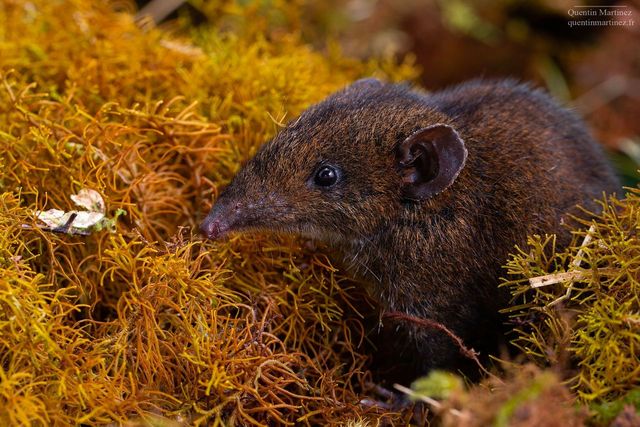
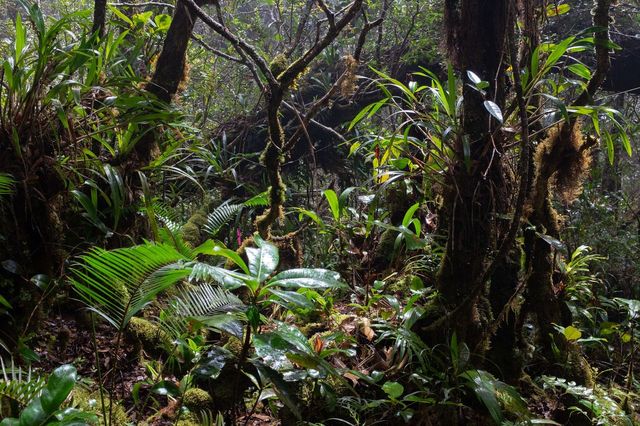
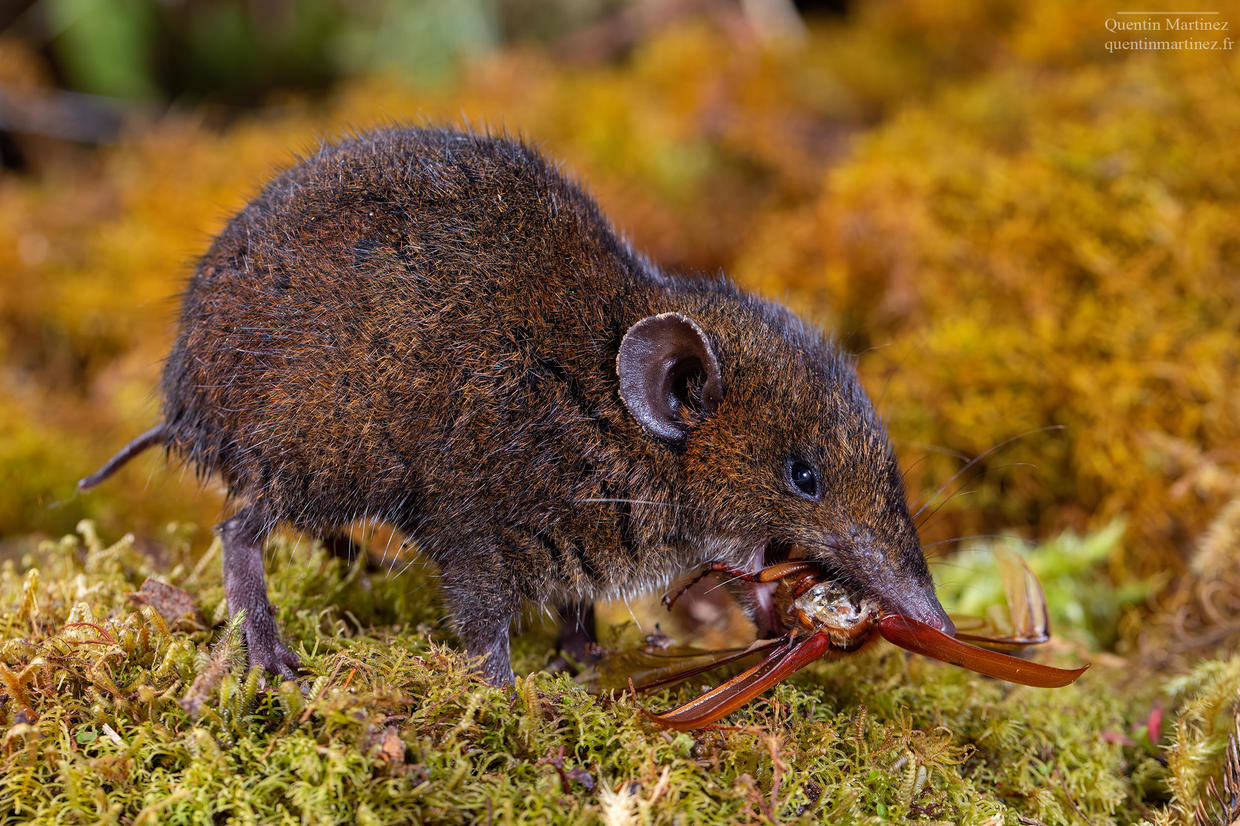
In the end, Hinckley, Hawkins and their collaborators assembled 232 physical specimens and 85 tissue samples for genetic analysis from across the entire Hylomys group from a combination of Hinckley and Hawkins’ own field collecting, as well as modern and historical museum specimens from no less than 14 natural history collections across Asia, Europe and the U.S.
Then Hinckley and his co-authors set about the lengthy process of conducting genetic analysis on the 85 tissue samples in Doñana Biological Station’s ancient DNA laboratory and the museum’s Laboratories of Analytical Biology. They also made rigorous physical observations and collected measurements to examine differences in the size and shape of skulls, teeth and fur on the 232 specimens.
The genetic results identified seven distinct genetic lineages in Hylomys, suggesting the number of recognized species in the group was about to increase by five, later confirmed by the team’s physical observations of the specimens.
“It might be surprising for people to hear that there are still undiscovered mammals out there,” Hawkins said. “But there is a lot we don’t know—especially the smaller nocturnal animals that can be difficult to tell apart from one another.”
H. macarong, which has dark brown fur and measures about 14 centimeters (5.5 inches) in length, was named after a Vietnamese word for vampire (Ma cà rồng) because males of the species possess long, fang-like incisors. Hinckley said more field study would be required to figure out what purpose the fangs might serve, but that their larger size in males suggests they could have some role in sexual selection. Males also have rust-colored chest markings that Hawkins said could have been stained by scent glands.
H. vorax also has dark brown fur but is slightly smaller than H. macarong at 12 centimeters (4.7 inches) long; it has a completely black tail, a very narrow snout and is found only on the slopes of Mount Leuser in Northern Sumatra. Hinckley and Hawkins gave the species the Latin name H. vorax after a striking description of their behavior from mammologist Frederick Ulmer, who collected the specimens that led to the species description on an expedition to Sumatra in 1939. Ulmer described the creature in his field notes, incorrectly identifying it as a type of shrew: “They were voracious beasts often devouring the whole bait before springing the trap. Ham rind, coconut, meat, and walnuts were eaten. One shrew partially devoured the chicken head bait of a steel trap before getting caught in a nearby Schuyler trap baited with ham rind.”
The other three new species were all formerly considered to be subspecies of Hylomys suillus, but all showed sufficient genetic and physical divergence to merit the upgrade to species in their own right. They are named H. dorsalis, H. maxi and H. peguensis.
H. dorsalis hails from the mountains of Northern Borneo and features a conspicuous dark stripe that begins atop their heads and bisects their back before fading around mid-body. It is about the same size as H. macarong. H. maxi is also on the larger end of the new species of soft-furred hedgehogs at 14 centimeters (5.5 inches).
The species is found in mountainous regions on the Malay Peninsula and in Sumatra. H. peguensis is smaller, measuring 13 centimeters (5.1 inches), and is found in numerous countries in mainland Southeast Asia, especially Thailand, Laos and Myanmar. Their fur is a bit more yellow colored than that of the other new species, Hawkins said.
Describing new species expands humanity’s scientific understanding of the natural world can be a tool for boosting conservation in threatened habitats such as Northern Sumatra’s Leuser ecosystem.
“This kind of study can help governments and organizations make hard choices about where to prioritize conservation funding to maximize biodiversity,” Hinckley said.
Research paper: Arlo Hinckley et al. An integrative taxonomic revision of lesser gymnures (Eulipotyphla: Hylomys) reveals five new species and emerging patterns of local endemism in Tropical East Asia. , 2023 DOI: 10.1093/zoolinnean/zlad177. Media release: “Five new species of soft-furred hedgehogs from Southeast Asia.” published in ScienceDaily, 21 December 2023.
ENDS
Learn about other animals endangered by palm oil and other agriculture
Learn about “sustainable” palm oil greenwashing
Read more about RSPO greenwashing
A 2019 World Health Organisation (WHO) report into the palm oil industry and RSPO finds extensive greenwashing of palm oil deforestation and the murder of endangered animals (i.e. biodiversity loss)





Take Action in Five Ways
1. Join the #Boycott4Wildlife on social media and subscribe to stay in the loop: Share posts from this website to your own network on Twitter, Mastadon, Instagram, Facebook and Youtube using the hashtags #Boycottpalmoil #Boycott4Wildlife.
2. Contribute stories: Academics, conservationists, scientists, indigenous rights advocates and animal rights advocates working to expose the corruption of the palm oil industry or to save animals can contribute stories to the website.






3. Supermarket sleuthing: Next time you’re in the supermarket, take photos of products containing palm oil. Share these to social media along with the hashtags to call out the greenwashing and ecocide of the brands who use palm oil. You can also take photos of palm oil free products and congratulate brands when they go palm oil free.
4. Take to the streets: Get in touch with Palm Oil Detectives to find out more.
5. Donate: Make a one-off or monthly donation to Palm Oil Detectives as a way of saying thank you and to help pay for ongoing running costs of the website and social media campaigns. Donate here
Discover more from Palm Oil Detectives
Subscribe to get the latest posts sent to your email.
 Palm Oil Detectives
One thought on “Five New Hedgehog Species Found in Southeast Asia”