

Orange-breasted Falcon Falco deiroleucus
Near Threatened
Extant (resident)
Belize; Venezuela, Bolivia
Extant (possibly breeding)
Argentina; Bolivia, Brazil; Colombia; Ecuador; Guatemala; Guyana; Honduras; Mexico; Nicaragua; Panama; Paraguay; Peru; Suriname; Trinidad and Tobago.
Possibly extinct
Costa Rica
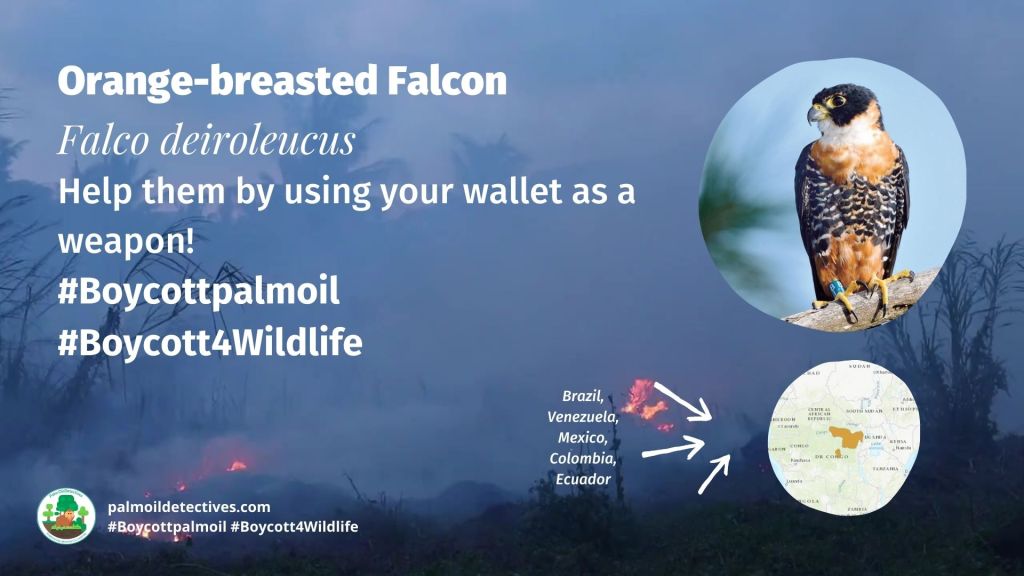
The vibrant Orange-breasted #Falcon Falco deiroleucus soars through the skies of Central and #SouthAmerica. With their striking orange and black plumage and powerful and agile hunting skills, these falcons are truly a marvel to behold. Sadly, these #birds face significant threats from #palmoil, #goldmining, #soy and #meat deforestation. You can help protect these magnificent birds every time you shop. Make sure that you #BoycottPalmOil #BoycottGold and #BoycottMeat to help them survive! It’s the #Boycott4Wildlife.
Powerful rulers of the skies in #Colombia #Brazil and #Ecuador, Orange-breasted Falcons 🦅 face threats from #palmoil #meat #soy and #gold #deforestation across their range. Fight for them when you shop #Boycottpalmoil 🚫#BoycottGold 🪙 #Boycott4Wildlife🌳 https://wp.me/pcFhgU-8tM
DYK Orange-breasted 🦅 Falcon’s striking orange 🧡 and black 🖤 plumage helps their courtship displays? 💕Sadly, these beautiful #birds are under threat from #palmoil #soy and #gold #deforestation. Help them and #BoycottPalmOil #Boycott4Wildlife 🌍✨ https://wp.me/pcFhgU-8tM
Appearance & Behaviour
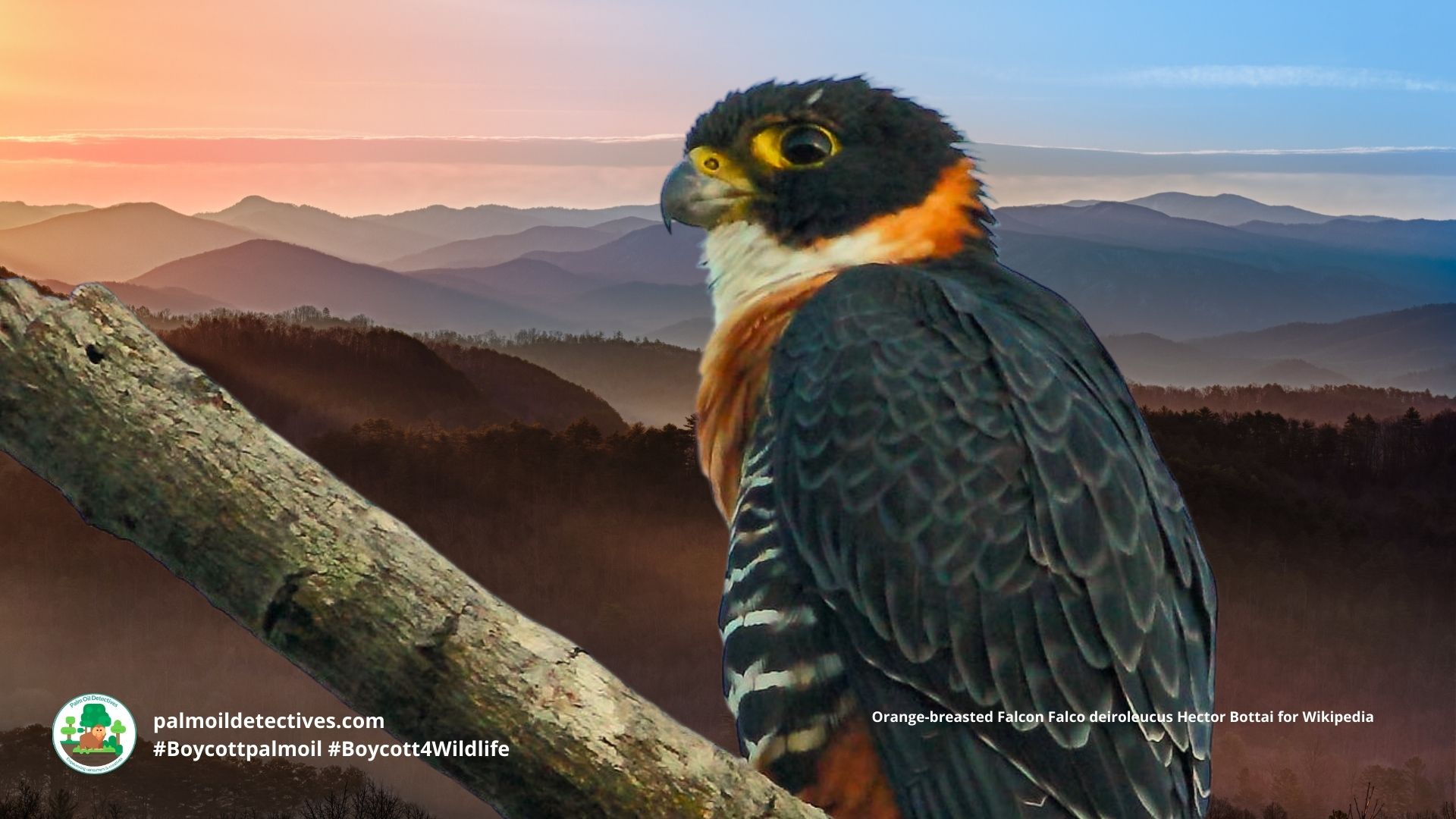
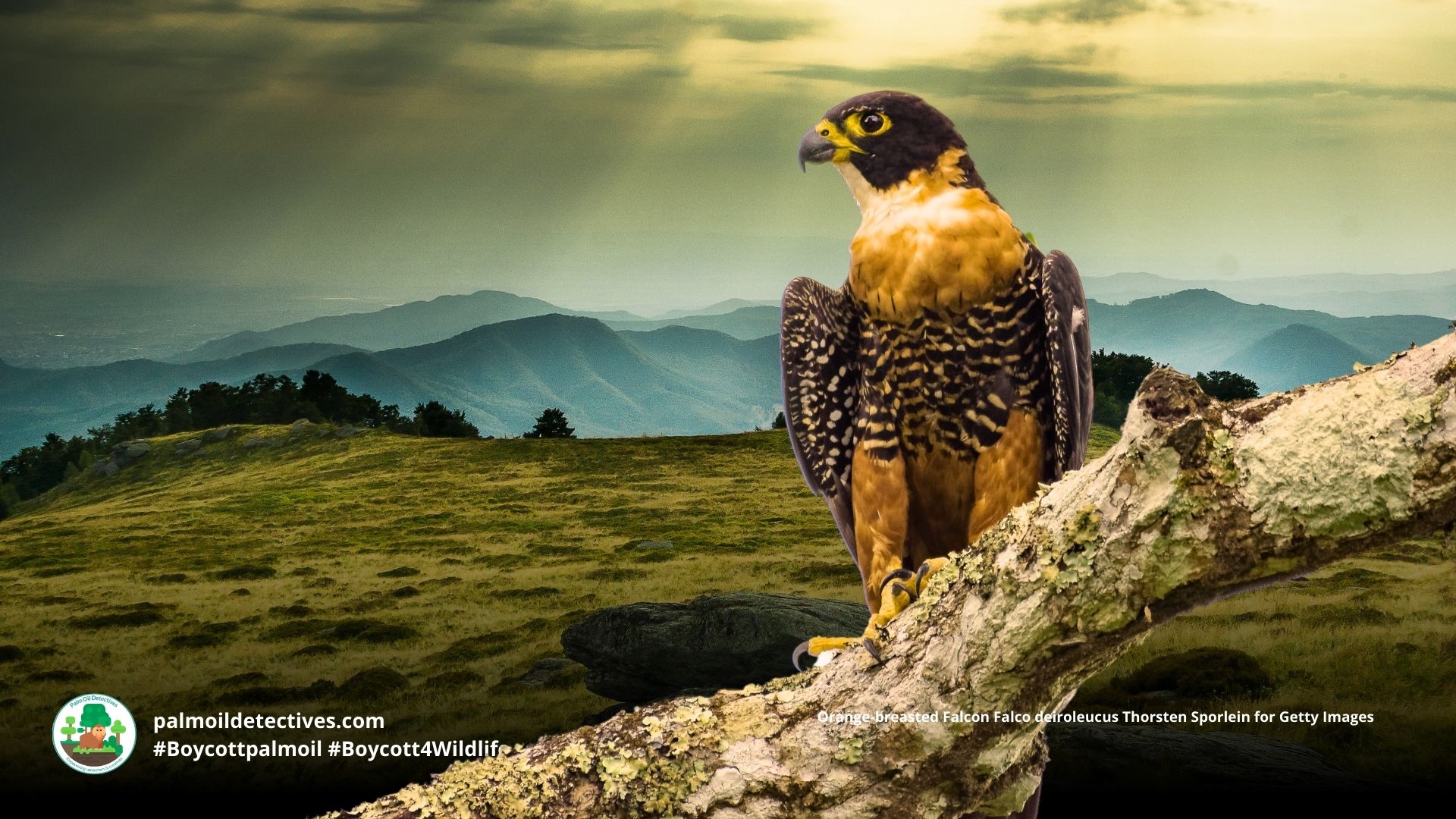
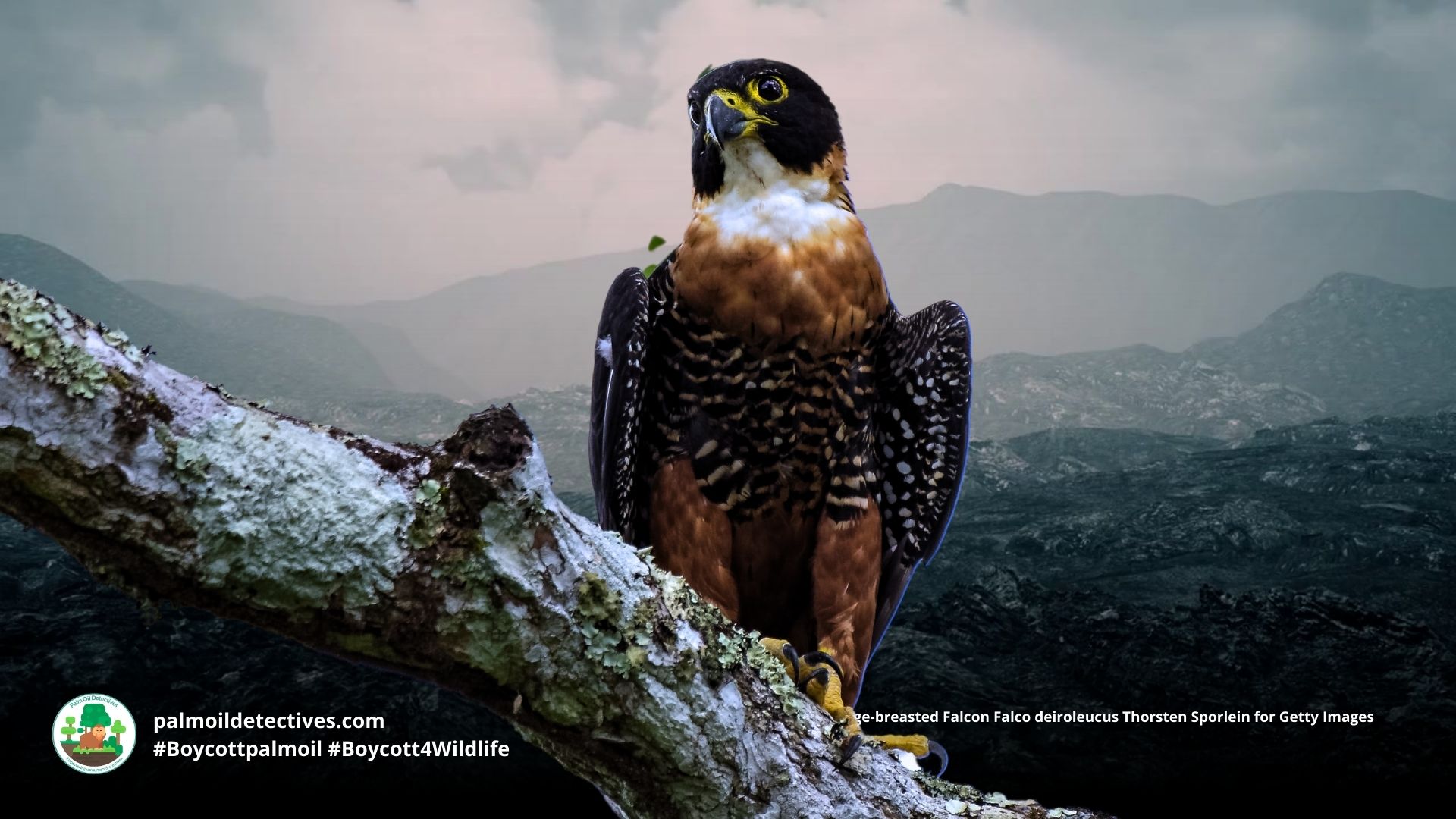
These falcons are known for their incredible hunting prowess. They are agile fliers, capable of high-speed pursuits and sudden, sharp turns to catch their prey. Their striking orange and black plumage not only serves as a visual treat but also plays a role in their courtship displays.
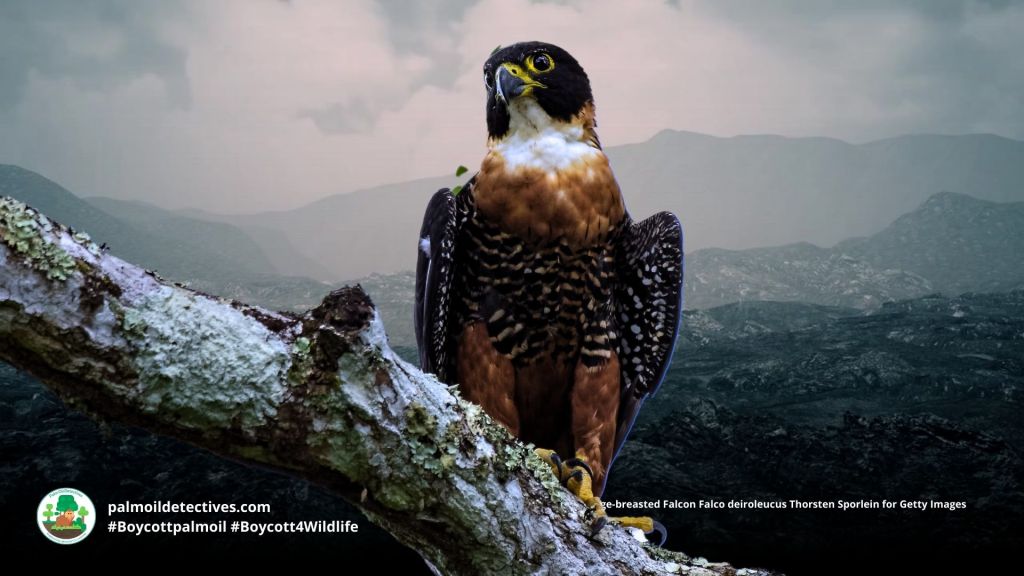
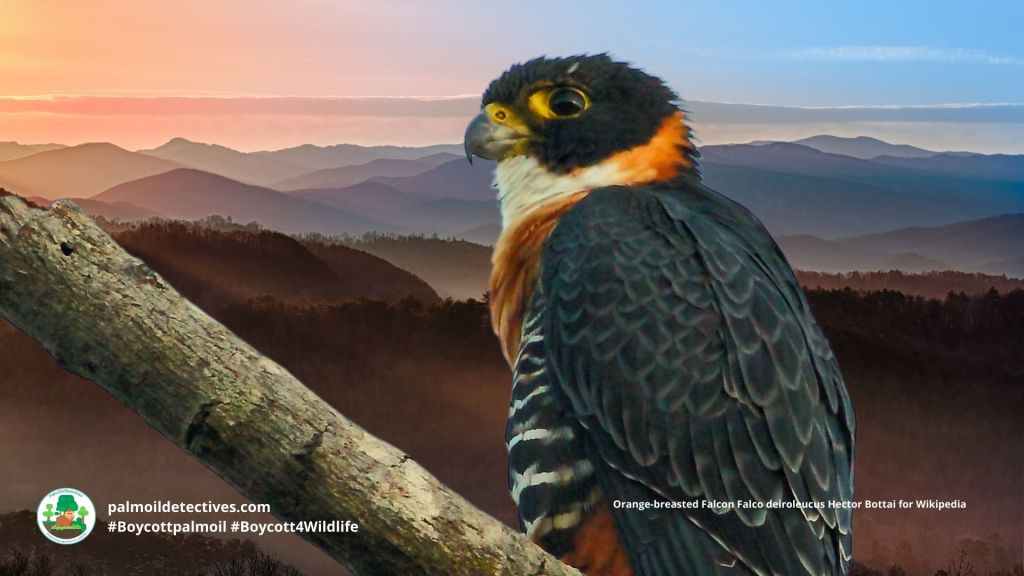
The Orange-breasted Falcon is a medium-sized bird of prey, measuring about 35-40 cm (14-16 inches) in length. Males weigh between 325-425 grams (11-15 ounces), while females are larger, weighing between 550-700 grams (19-25 ounces). Their distinctive plumage features a rich and vibrant coloured orange breast that contrasts to their black wings and back. Both sexes have similar plumage, but females are larger. These falcons are known for their robust and stocky build and large heads and talons, which make them powerful hunters stalking the skies.
Threats
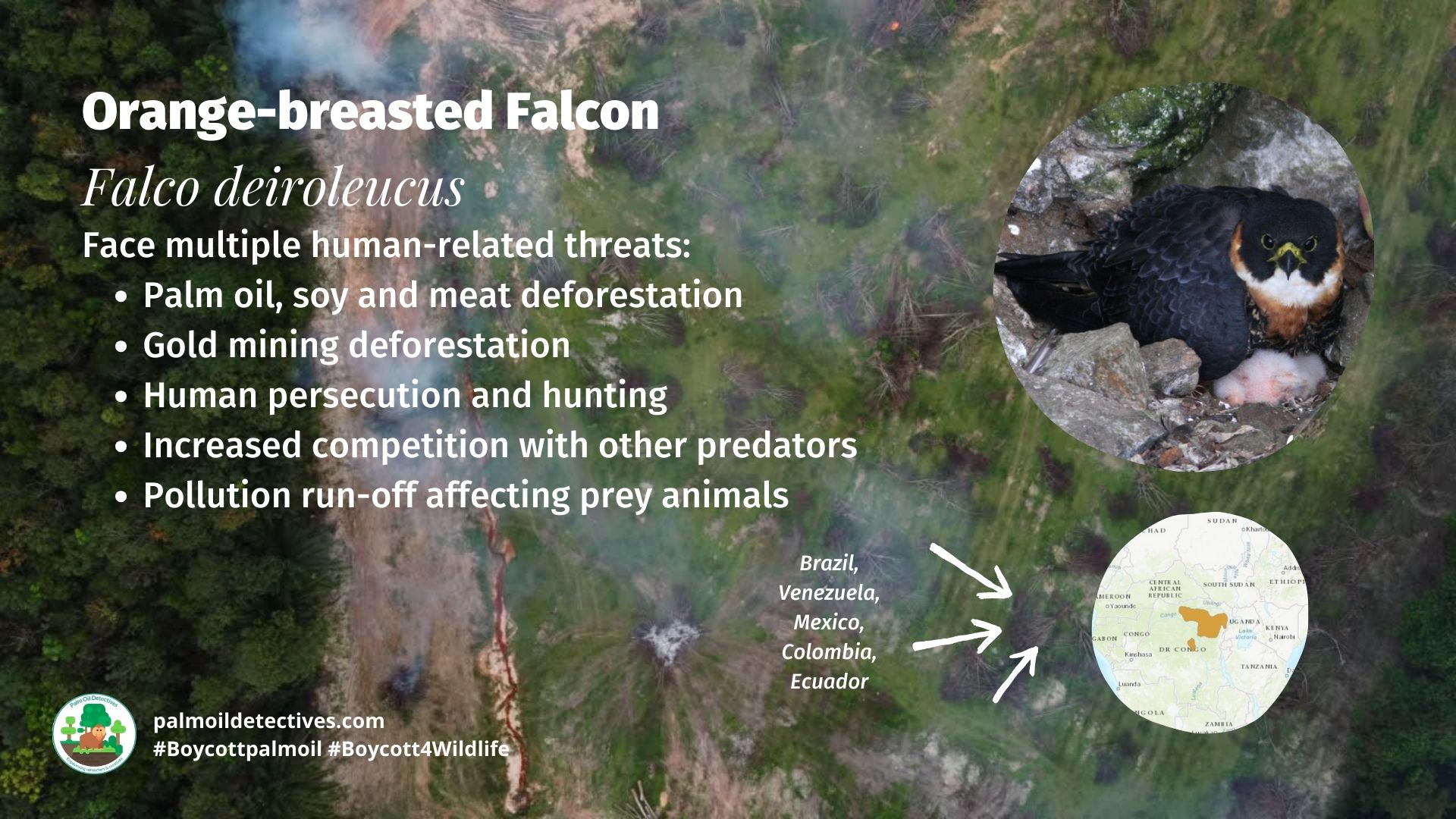
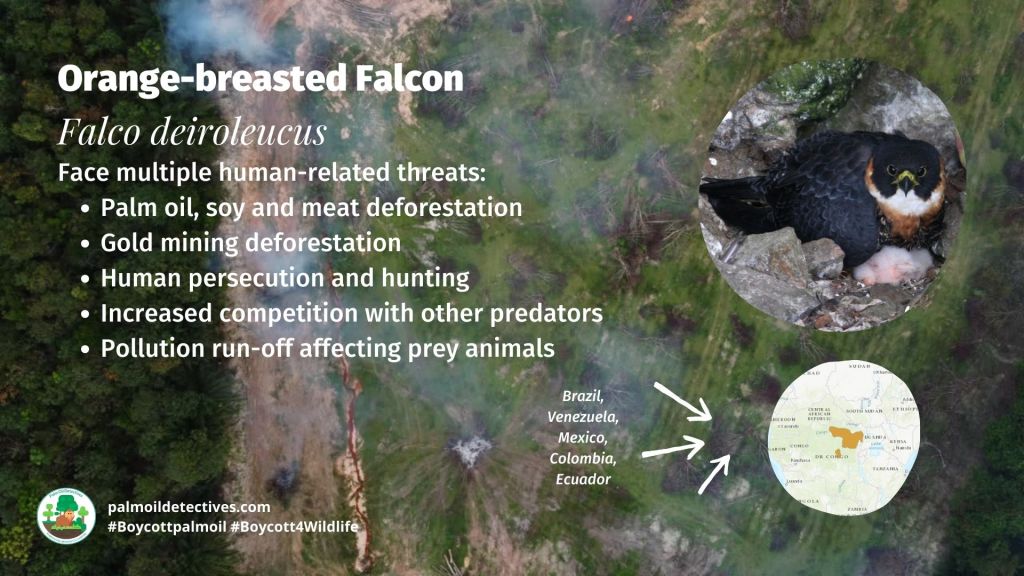
- Deforestation for palm oil, soy, gold mining and cattle ranching
- Human persecution and hunting
- Pesticide use in agriculture, which affects their prey base
- Competition for nest sites with Black Vultures
- Impact of Africanised bees on nesting sites
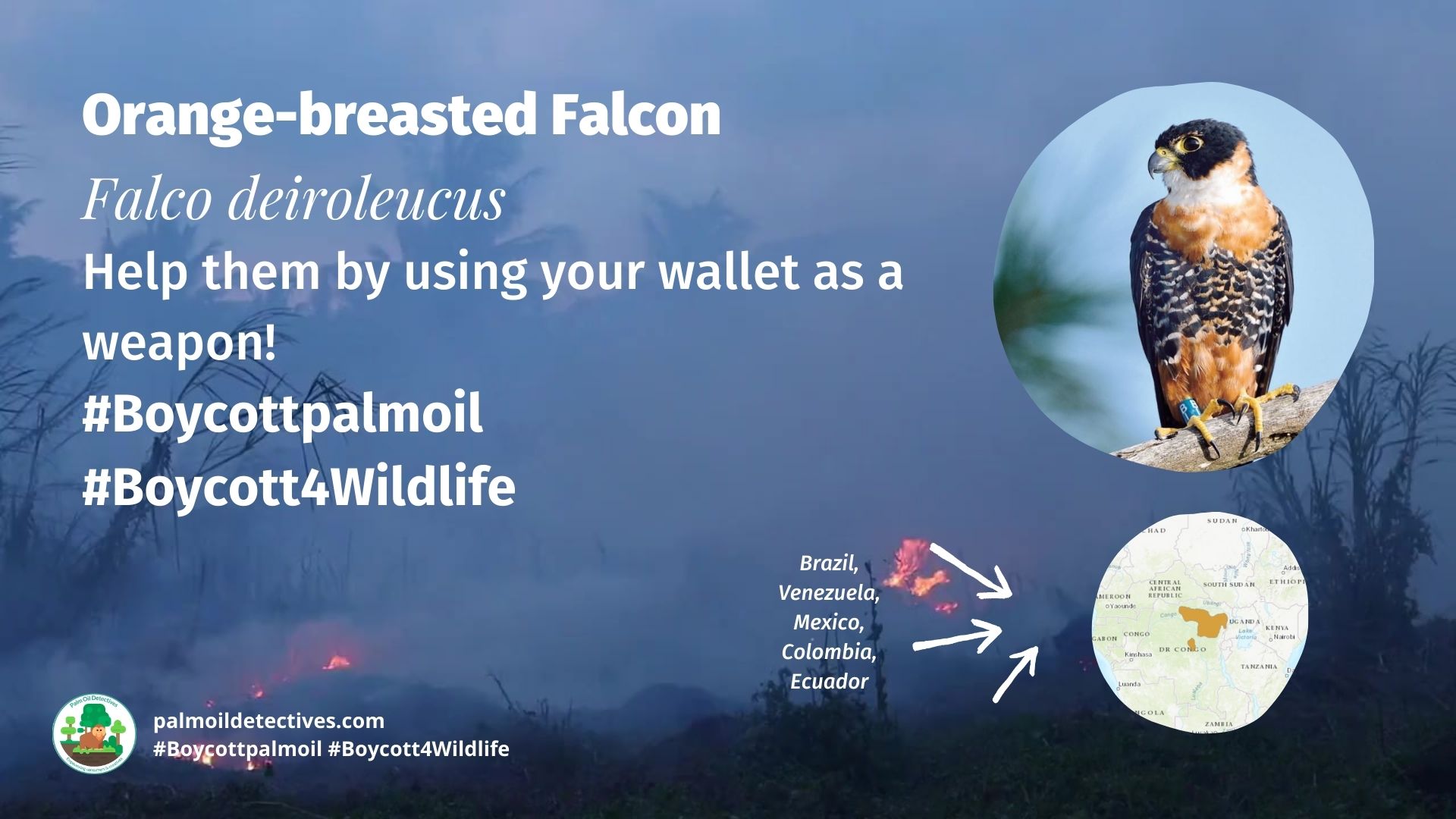
Empower yourself to make a difference. Together, we can fight for the survival of the Orange-breasted Falcon by making mindful choices. #BoycottPalmOil and support wildlife-friendly products. Share this page and join the movement to protect our precious wildlife. #BoycottPalmOil #Boycott4Wildlife
Habitat
The Orange-breasted Falcon is found in tropical forests and savannas across Central and South America, from southern Mexico to northern Argentina. They prefer habitats with tall trees and open spaces that allow for their high-speed hunting. They are most commonly found in Belize, Guatemala, and Panama, though their range has significantly reduced over time.
Diet
These falcons are carnivorous, primarily feeding on other birds and small mammals. They are skilled hunters, often capturing prey mid-flight with their sharp talons. Their diet includes a wide variety of birds and occasionally bats.
Mating and breeding
Orange-breasted Falcons typically nest in tall trees or on cliff ledges. They lay 2-3 eggs, which are incubated by the female for about 30-34 days. Both parents are involved in feeding and caring for the chicks until they are ready to fledge, approximately 40-45 days after hatching.
Support Orange-breasted Falcon by going vegan and boycotting palm oil, gold and meat when you shop, it’s the #Boycott4Wildlife
Support the conservation of this species
This animal has no protections in place. Read about other forgotten species here. Create art to support this forgotten animal or raise awareness about them by sharing this post and using the #Boycottpalmoil #Boycott4Wildlife hashtags on social media. Also you can boycott palm oil in the supermarket.
Further Information
BirdLife International. 2016. Falco deiroleucus. The IUCN Red List of Threatened Species 2016: e.T22696516A93569126. https://dx.doi.org/10.2305/IUCN.UK.2016-3.RLTS.T22696516A93569126.en. Accessed on 05 June 2024.
Orange-breasted Falcon. (2024). In Wikipedia. Retrieved June 5, 2024, from https://en.wikipedia.org/wiki/Orange-breasted_falcon


How can I help the #Boycott4Wildlife?
Take Action in Five Ways
1. Join the #Boycott4Wildlife on social media and subscribe to stay in the loop: Share posts from this website to your own network on Twitter, Mastadon, Instagram, Facebook and Youtube using the hashtags #Boycottpalmoil #Boycott4Wildlife.
2. Contribute stories: Academics, conservationists, scientists, indigenous rights advocates and animal rights advocates working to expose the corruption of the palm oil industry or to save animals can contribute stories to the website.



3. Supermarket sleuthing: Next time you’re in the supermarket, take photos of products containing palm oil. Share these to social media along with the hashtags to call out the greenwashing and ecocide of the brands who use palm oil. You can also take photos of palm oil free products and congratulate brands when they go palm oil free.
4. Take to the streets: Get in touch with Palm Oil Detectives to find out more.
5. Donate: Make a one-off or monthly donation to Palm Oil Detectives as a way of saying thank you and to help pay for ongoing running costs of the website and social media campaigns. Donate here
Learn about other animals endangered by palm oil and other agriculture
Learn about “sustainable” palm oil greenwashing
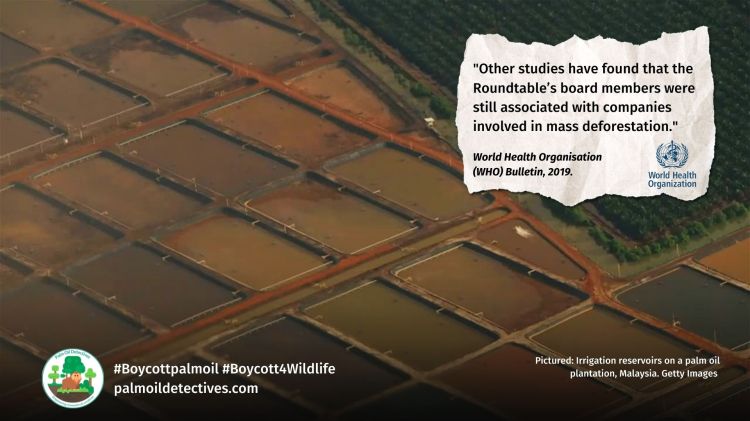
Read more about RSPO greenwashing
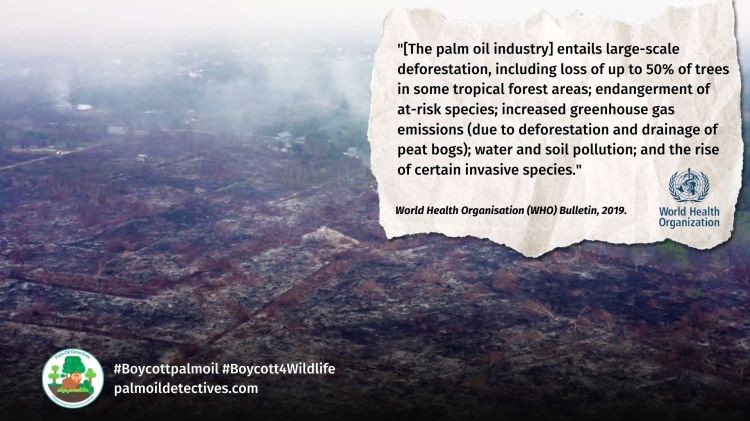
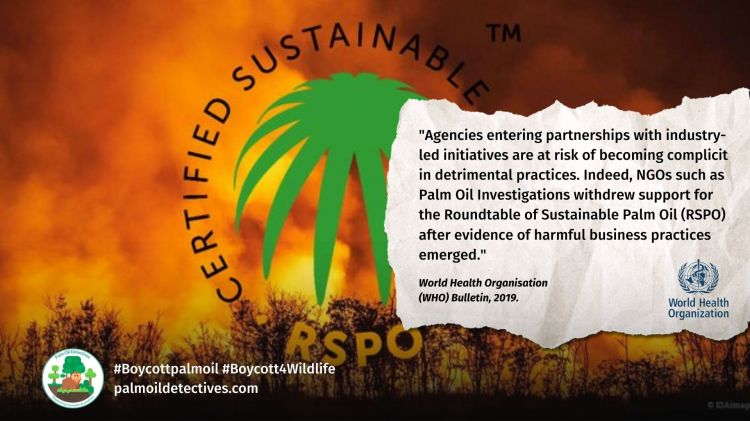
A 2019 World Health Organisation (WHO) report into the palm oil industry and RSPO finds extensive greenwashing of palm oil deforestation and the murder of endangered animals (i.e. biodiversity loss)


Discover more from Palm Oil Detectives
Subscribe to get the latest posts sent to your email.
 Palm Oil Detectives