

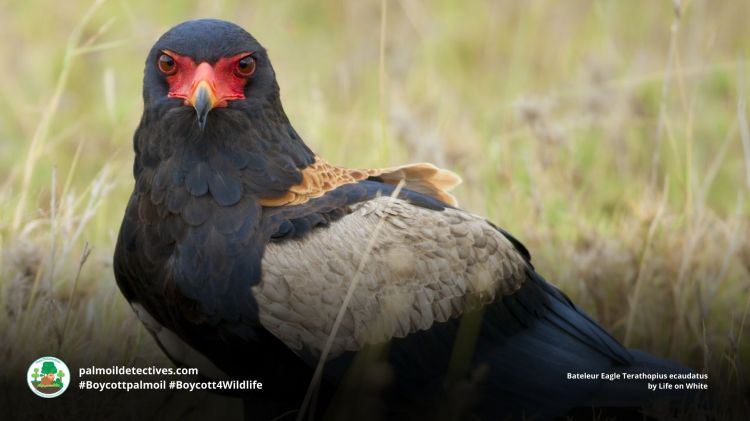
Bateleur Eagle Terathopius ecaudatus
Endangered
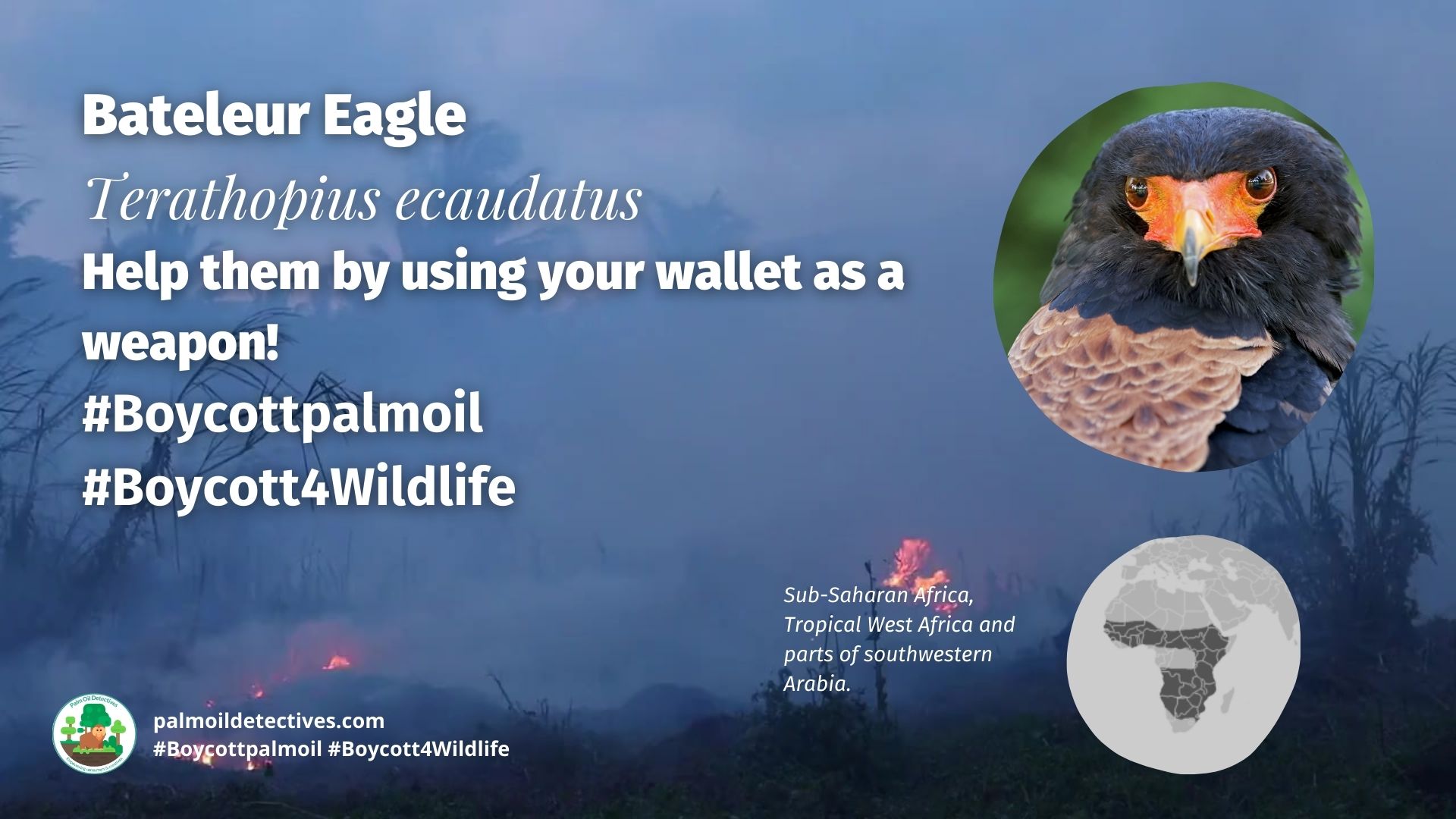
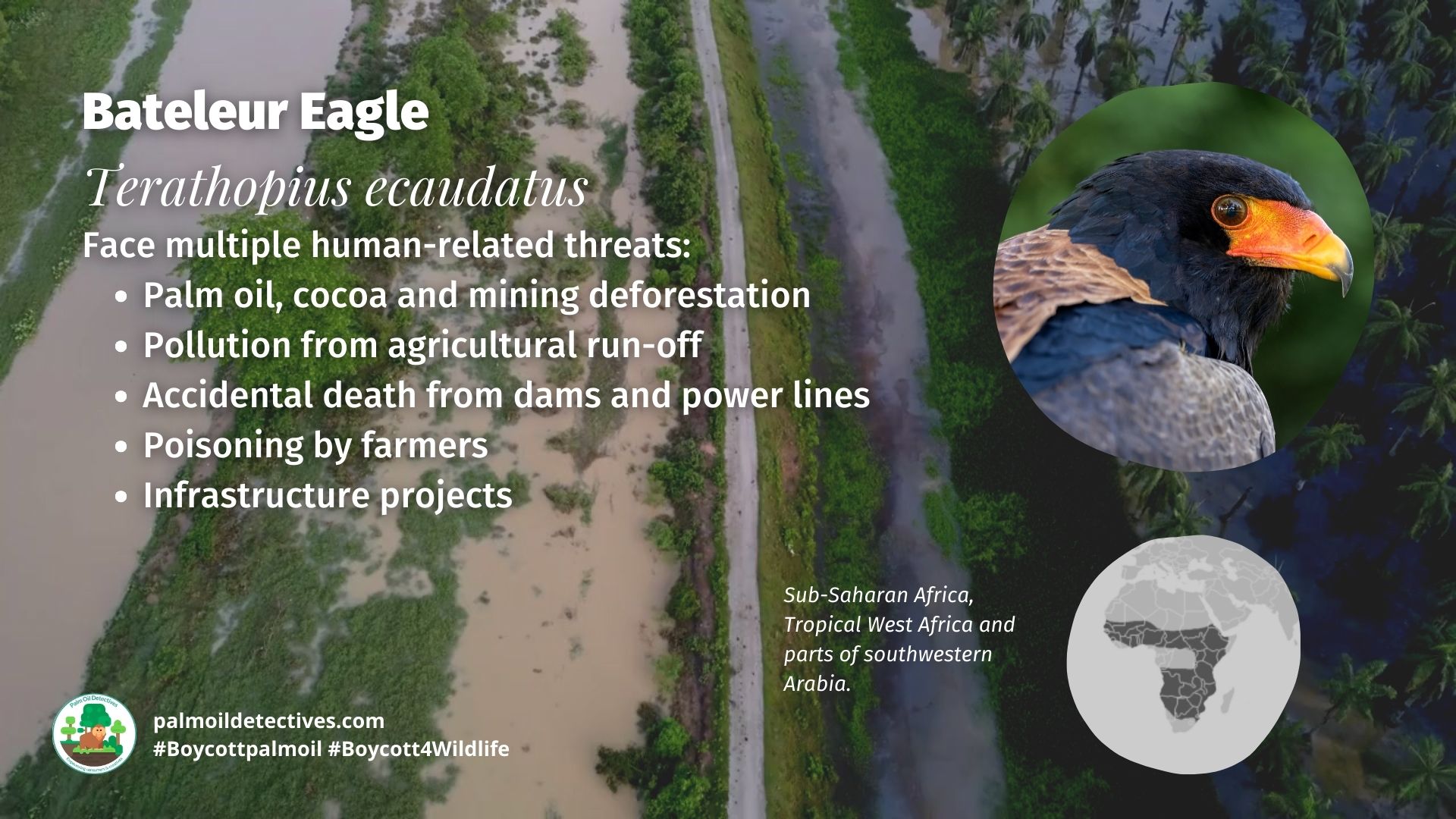
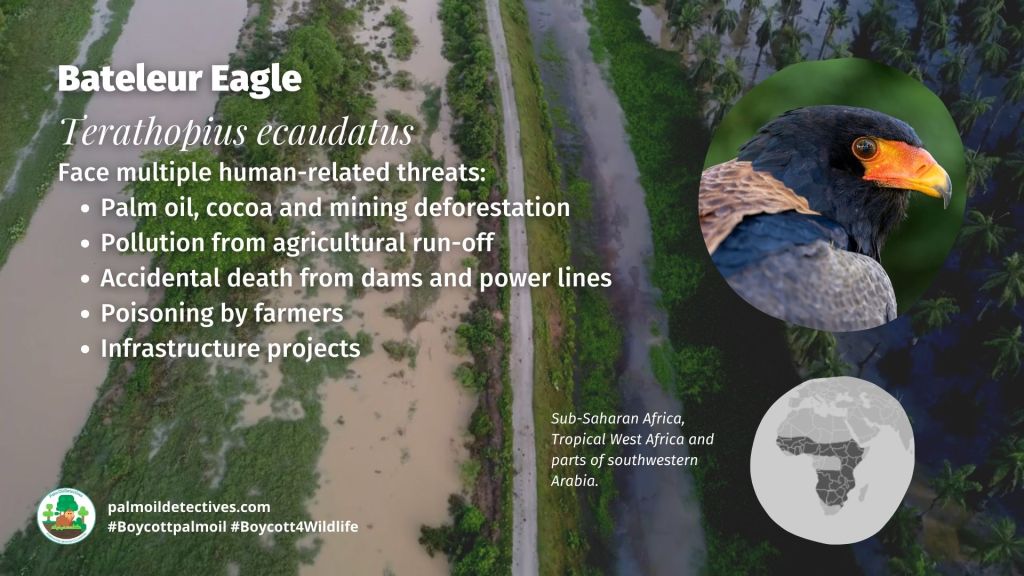
Extant (resident): Sub-Saharan Africa, Tropical West Africa and parts of southwestern Arabia.
Striking raptor Bateleur #Eagle Terathopius ecaudatus soars through #Africa’s skies with powerful red legs, a bright intelligent face and intense eyes. They are famous for their distinctive aerial and soaring skills such as a rocking flight, similar to a tightrope walker. These eagles are known to travel over 300 kilometres a day in search of food. Sadly, their numbers are plummeting due to deforestation, poisoning, and habitat destruction. The loss of their habitat to #palmoil, #mining and #meat #deforestation are some of the biggest threats they face. Help them every time you shop and boycott palm oil and go plant-based. #BoycottPalmOil and #Boycott4Wildlife!
Bateleur #Eagles 🦅🪂 are soaring #birds of prey of #Africa featuring exquisite plumage and regal stature. Fall under their spell and help them when you shop #BoycottPalmOil for their survival 🔥🌴🚫 #Boycott4Wildlife @palmoildetect https://wp.me/pcFhgU-8Qp
Bewitching beauties of #Congo #Guinea and #Nigeria, Bateleur #Eagles 🦅 are #endangered by rampant #palmoil expansion in #Africa and targeted poisoning by farmers. Help them survive! #Boycottpalmoil #Boycott4Wildlife when you shop @palmoildetect https://wp.me/pcFhgU-8Qp
Appearance & Behaviour
- Bateleurs are large birds of prey named after their unique flight pattern, which resembles a tightrope walker’s balancing act.
- Juveniles have longer wings and tails, giving them extra stability as they learn to fly.
- These eagles can travel over 300 km in a single day while searching for food.
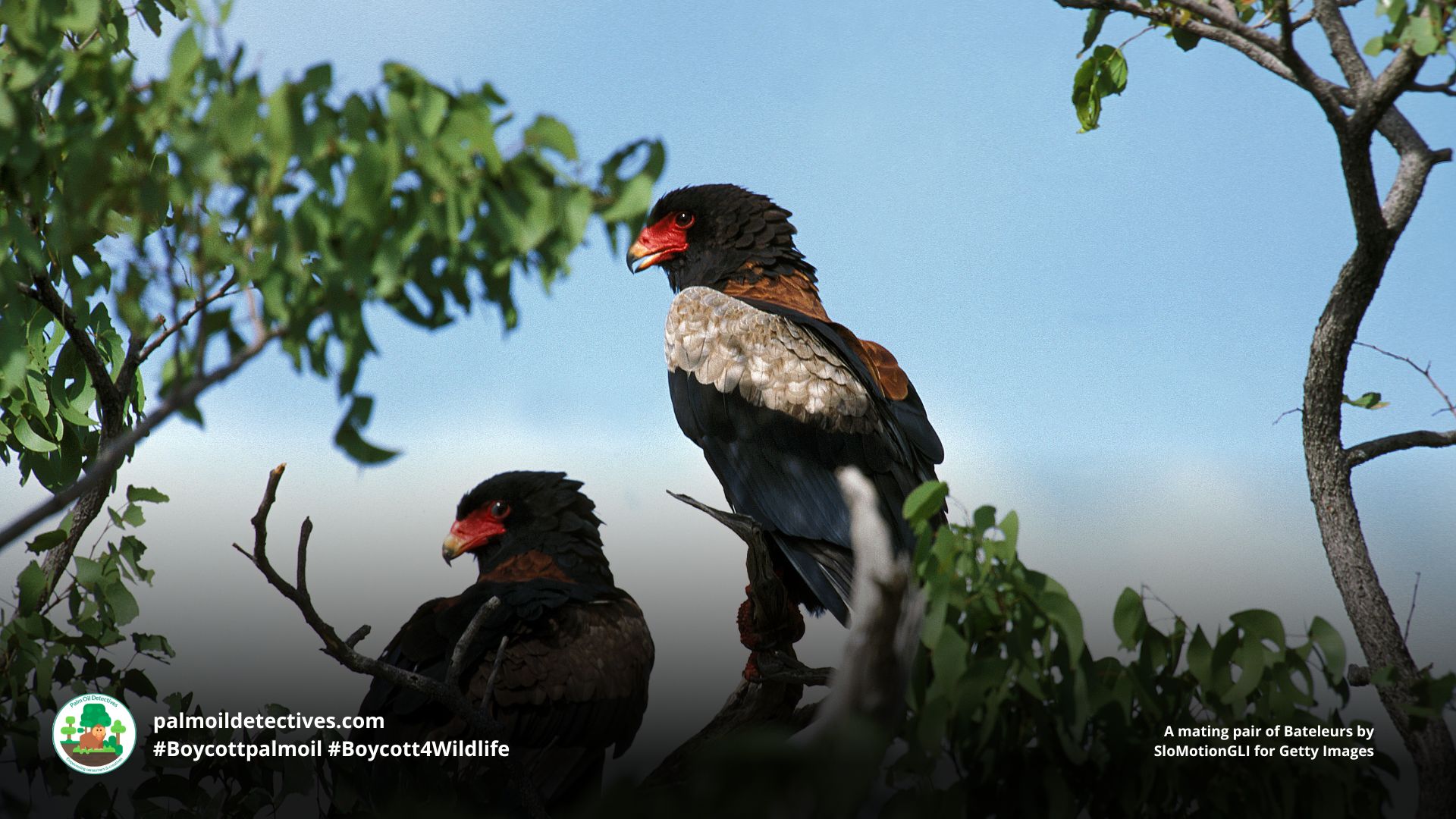
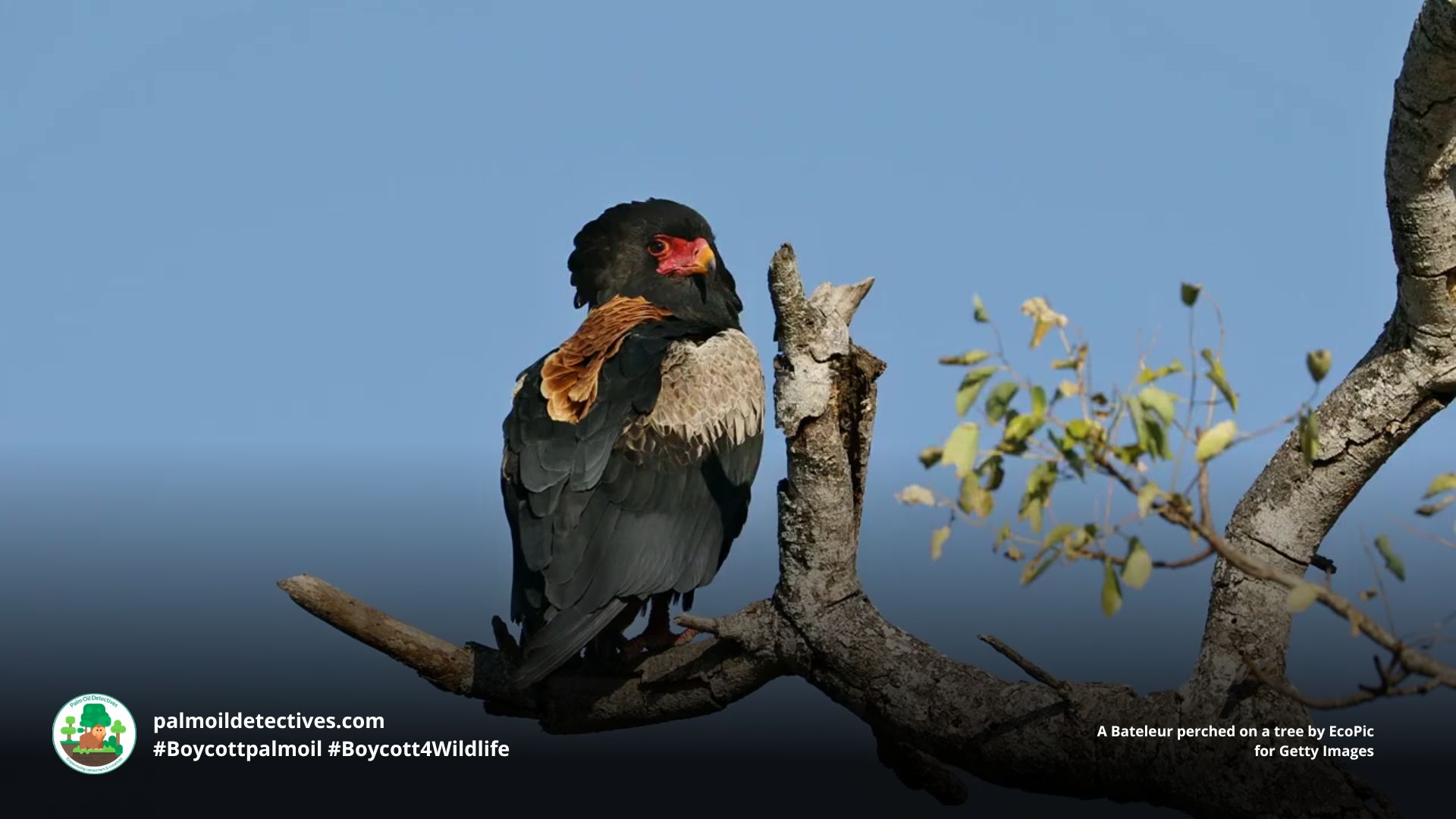
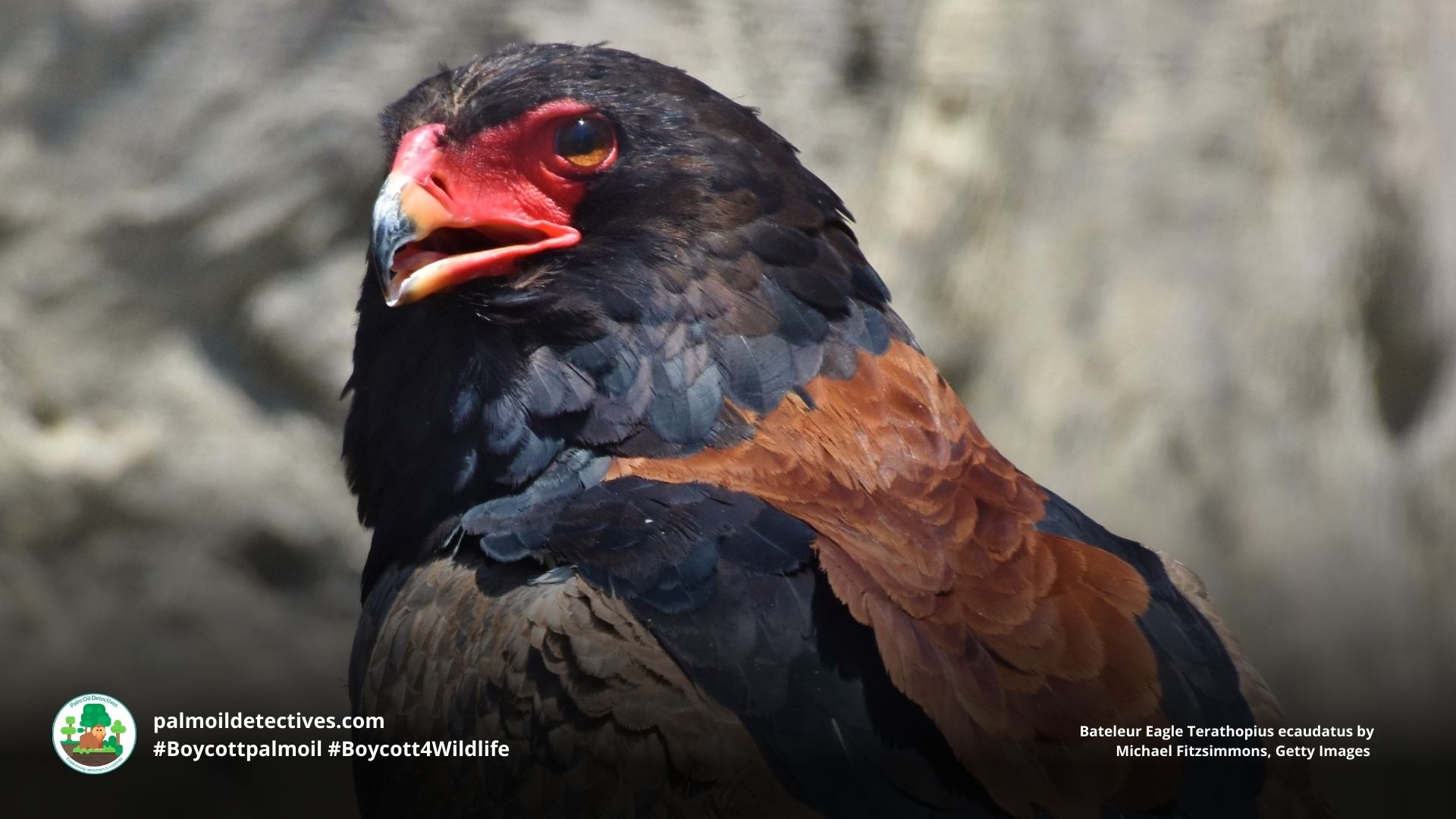
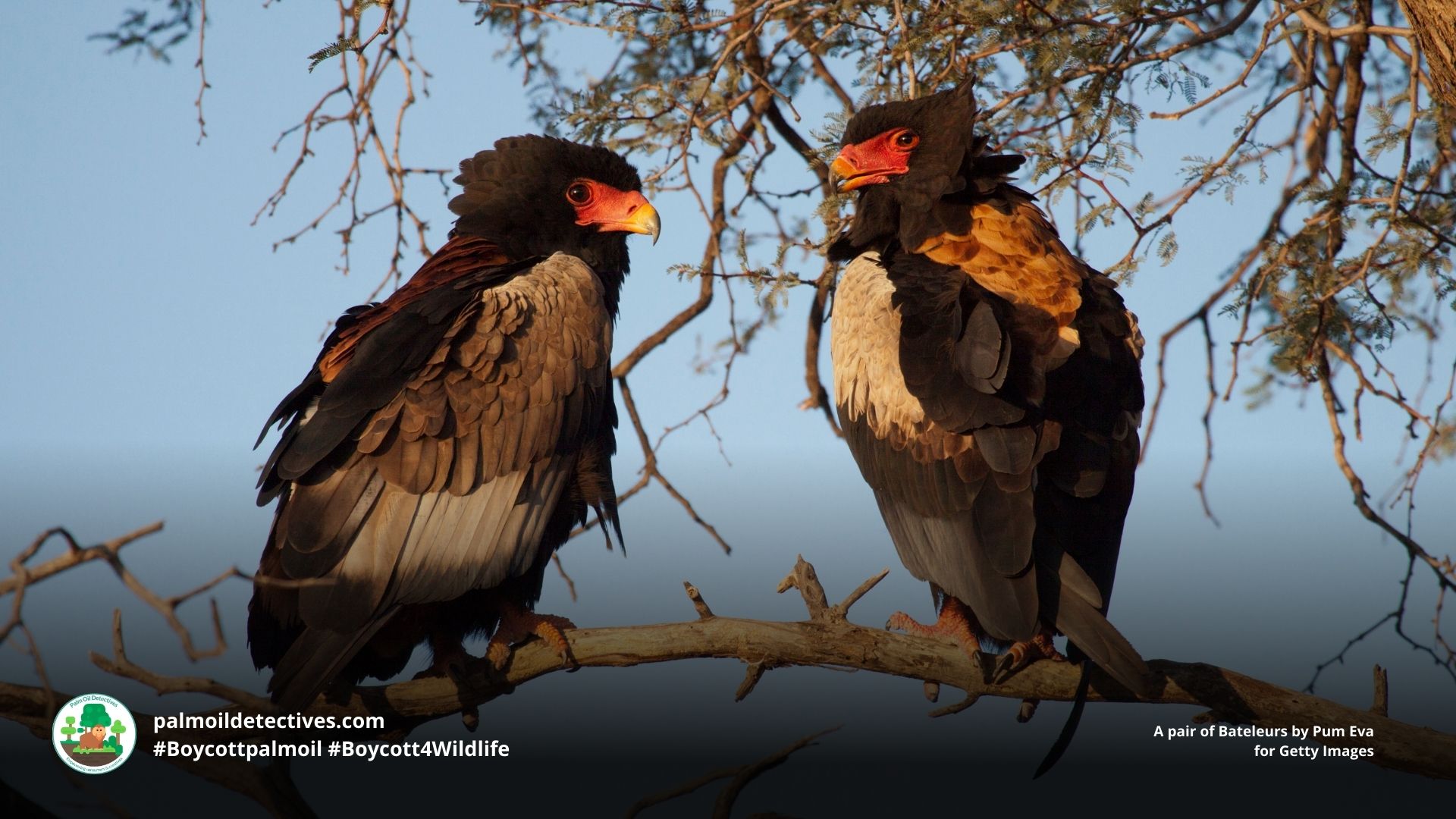
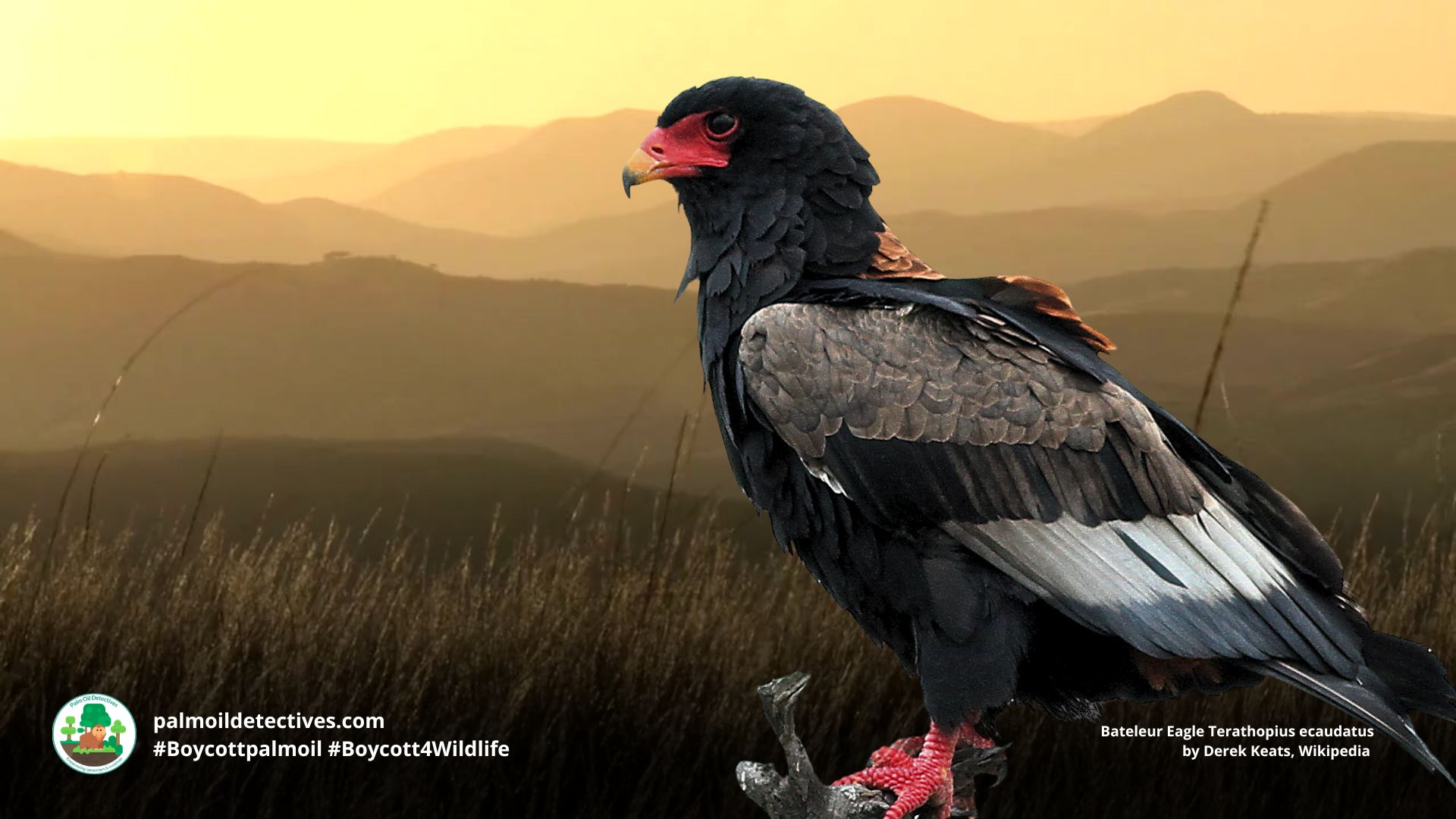
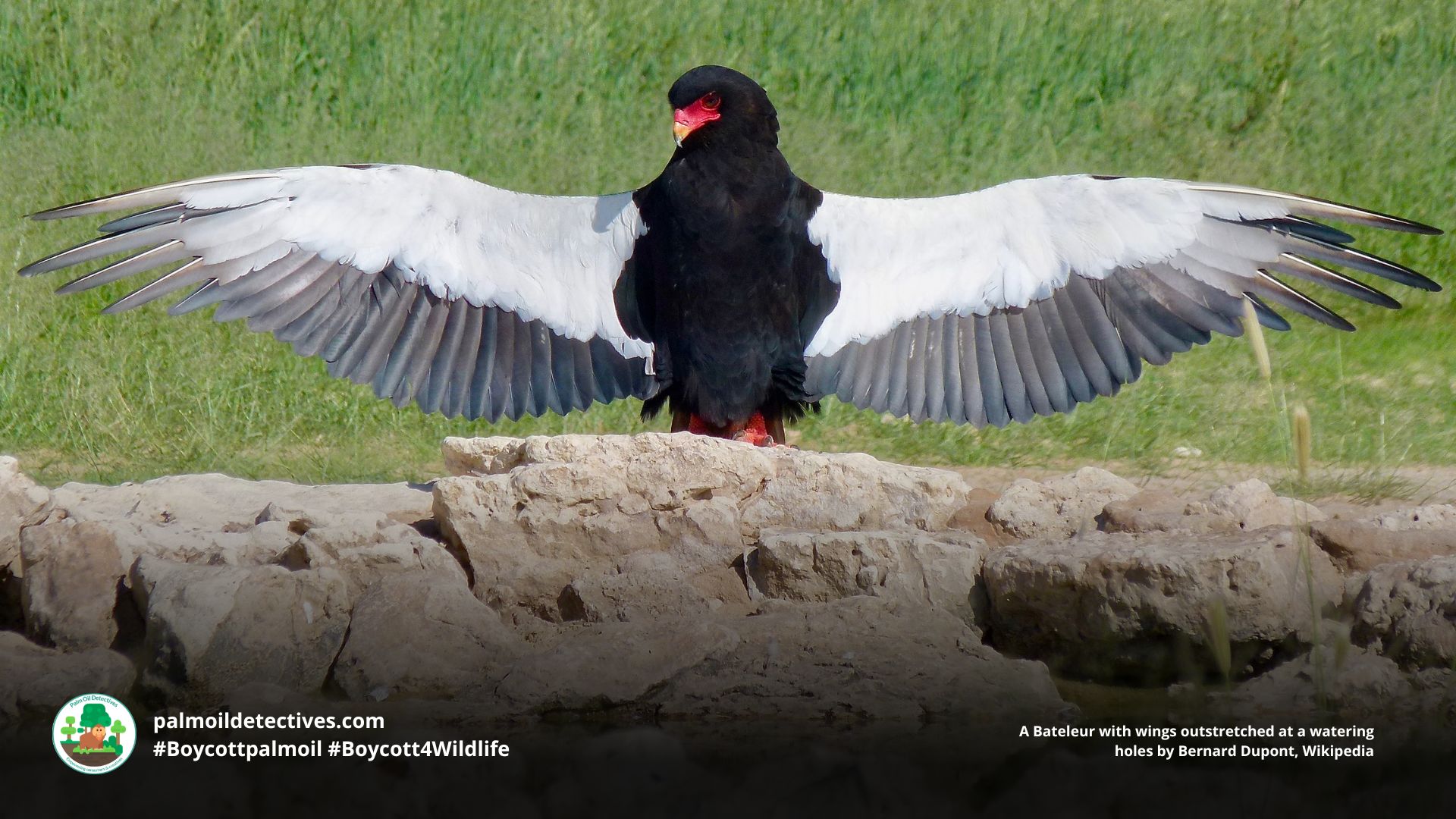
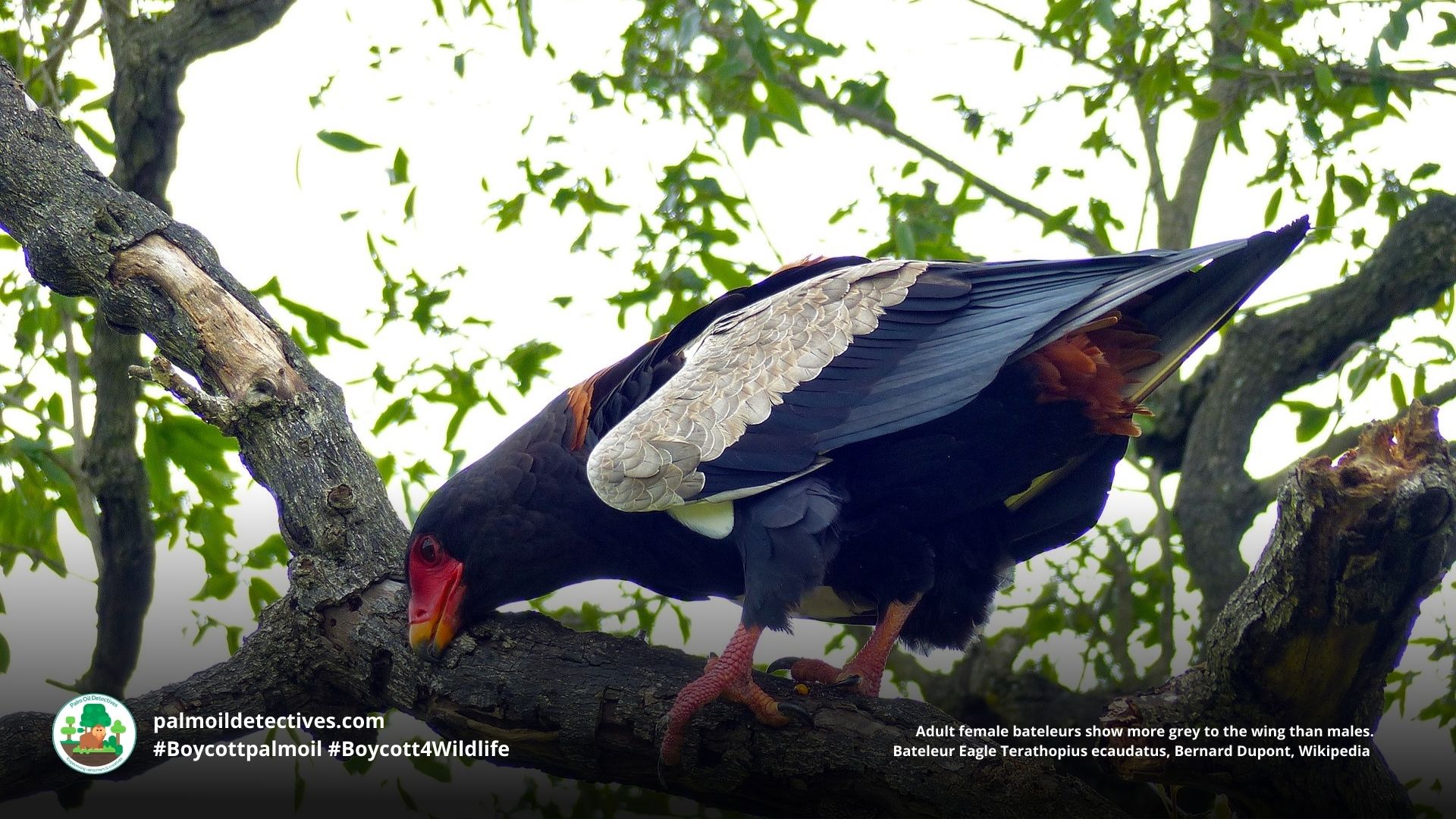
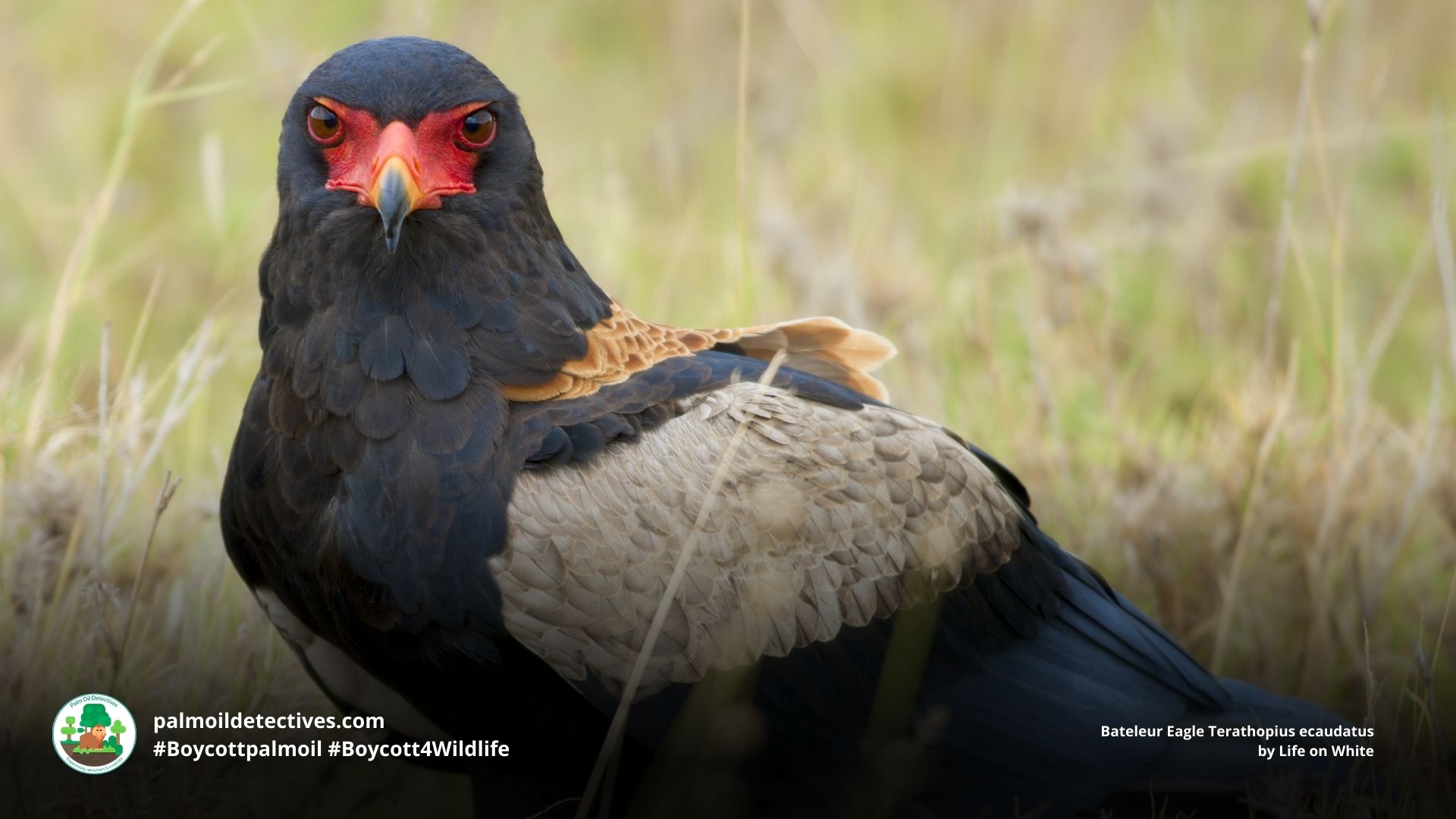
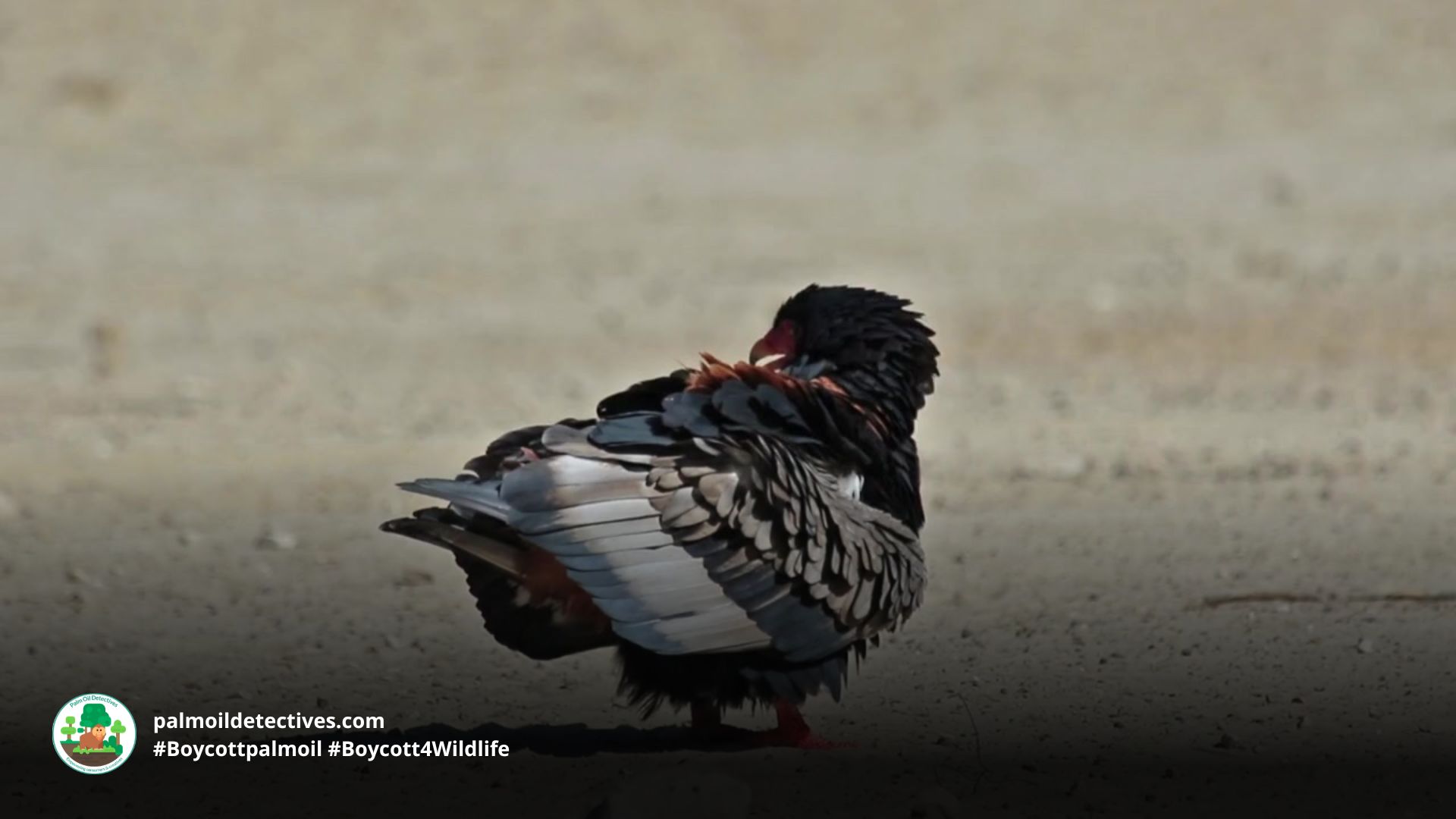
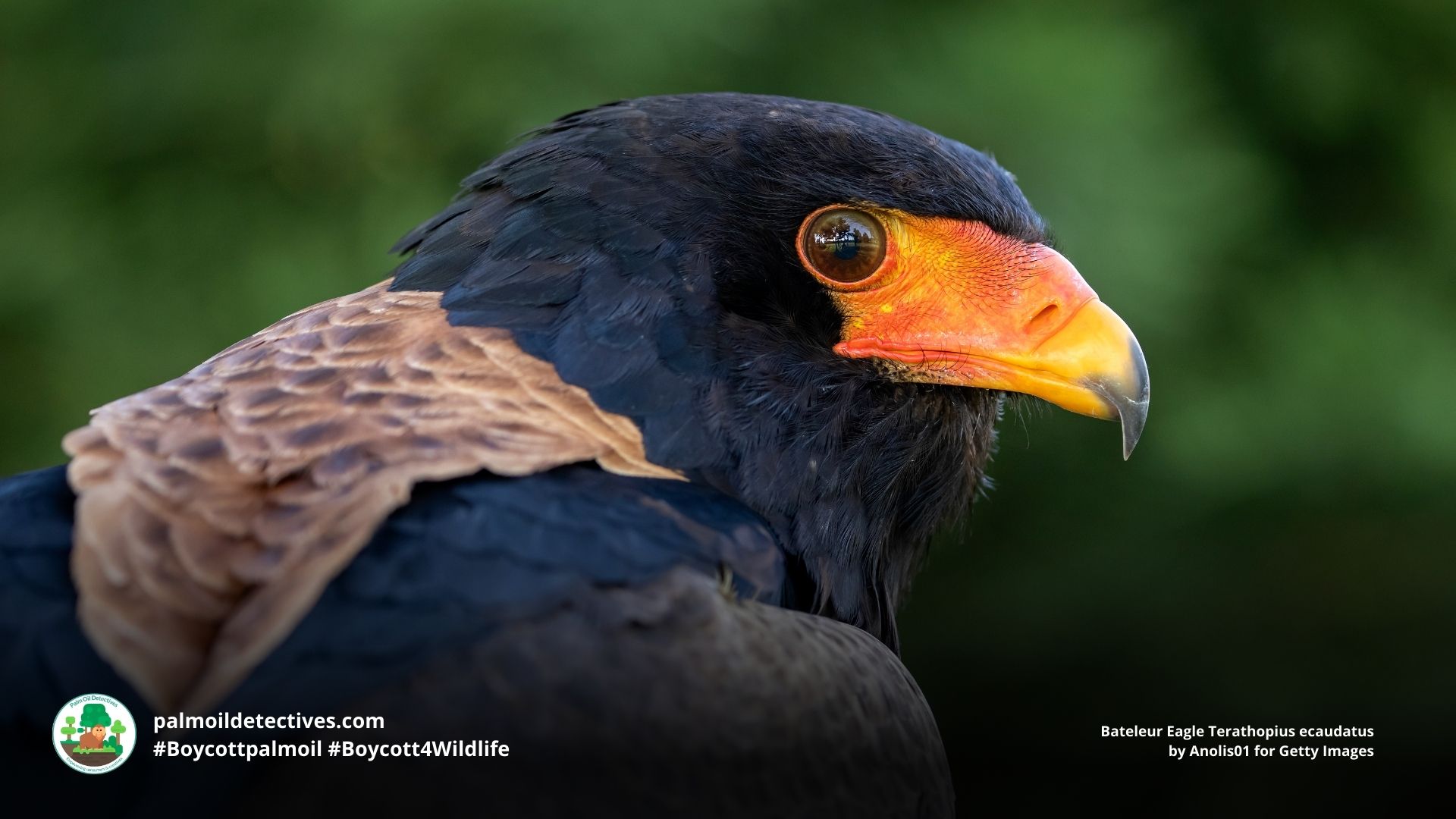
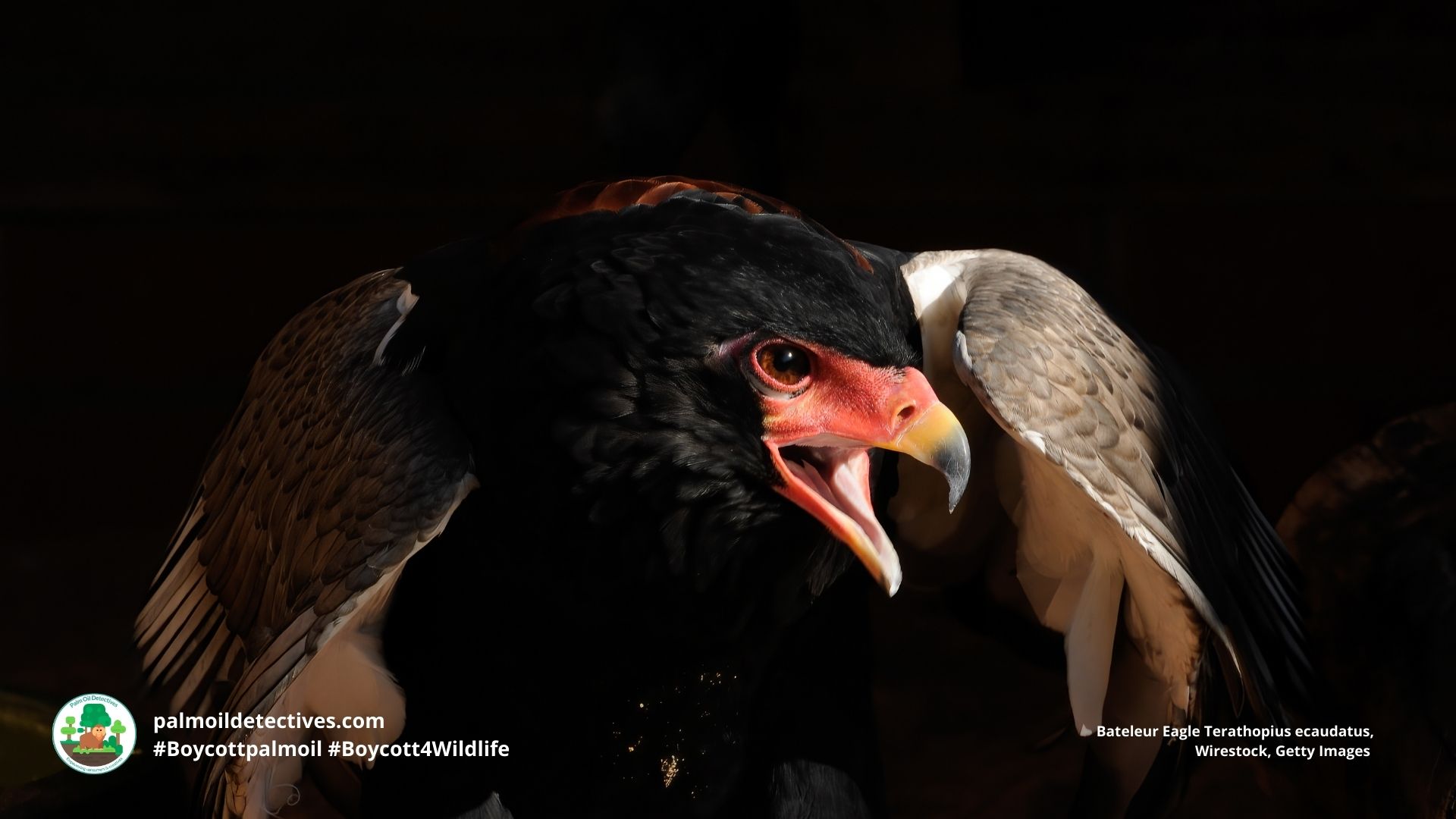
Bateleurs are medium-sized eagles with striking red facial skin, legs, and bold plumage. Their bold appearance and manner has made them the stuff of folklore and legend across many cultures. Their feathers are mainly black with chestnut on the back and tail, while the females display grey patches on their wings. Short tails give them a distinctive look in flight, making them easy to identify even from a distance. Bateleur Eagles are masterful flyers, gliding effortlessly with very few wing beats. These birds of prey often perch in tall trees and spend long periods scanning their surroundings. They are usually solitary but may form small groups when food is plentiful. If threatened, they raise their crest feathers, making themselves appear larger and more intimidating.
Threats
Palm oil deforestation:
Palm oil plantations are expanding rapidly throughout their forest range in tropical West Africa, destroying the Bateleur’s natural habitat. As forests are cleared for tobacco, mining, palm oil and cocoa agriculture, these eagles lose their nesting and hunting grounds. The removal of trees means fewer places to build nests and fewer sources of food. Without dense tree cover, Bateleurs struggle to thrive.
Poisoning:
In many parts of Africa, farmers lace animal carcasses with poison to kill predators like jackals and lions. Unfortunately, Bateleurs, as scavengers, are often accidental victims of these poisons. The toxins can spread quickly through the food chain, causing mass deaths of scavenging birds, including Bateleurs.
Habitat destruction:
Besides palm oil plantations, the Bateleur’s habitat is being destroyed for agriculture and livestock grazing. As savannas and woodlands are cleared for farming, these eagles are forced into smaller and more fragmented areas. This destruction also leads to a decline in their prey, making it harder for them to find food.
Hunting and poaching:
Bateleurs are sometimes hunted for their bright feathers, which are used in traditional rituals and ceremonies. The illegal wildlife trade puts further pressure on their already declining population. Their shy nature and vulnerability at nests make them easy targets for poachers.
Accidental deaths:
These eagles are also at risk of being electrocuted by power lines or drowning in man-made reservoirs. With more human infrastructure encroaching on their habitat, Bateleurs face a growing number of hazards in their daily lives.
Diet
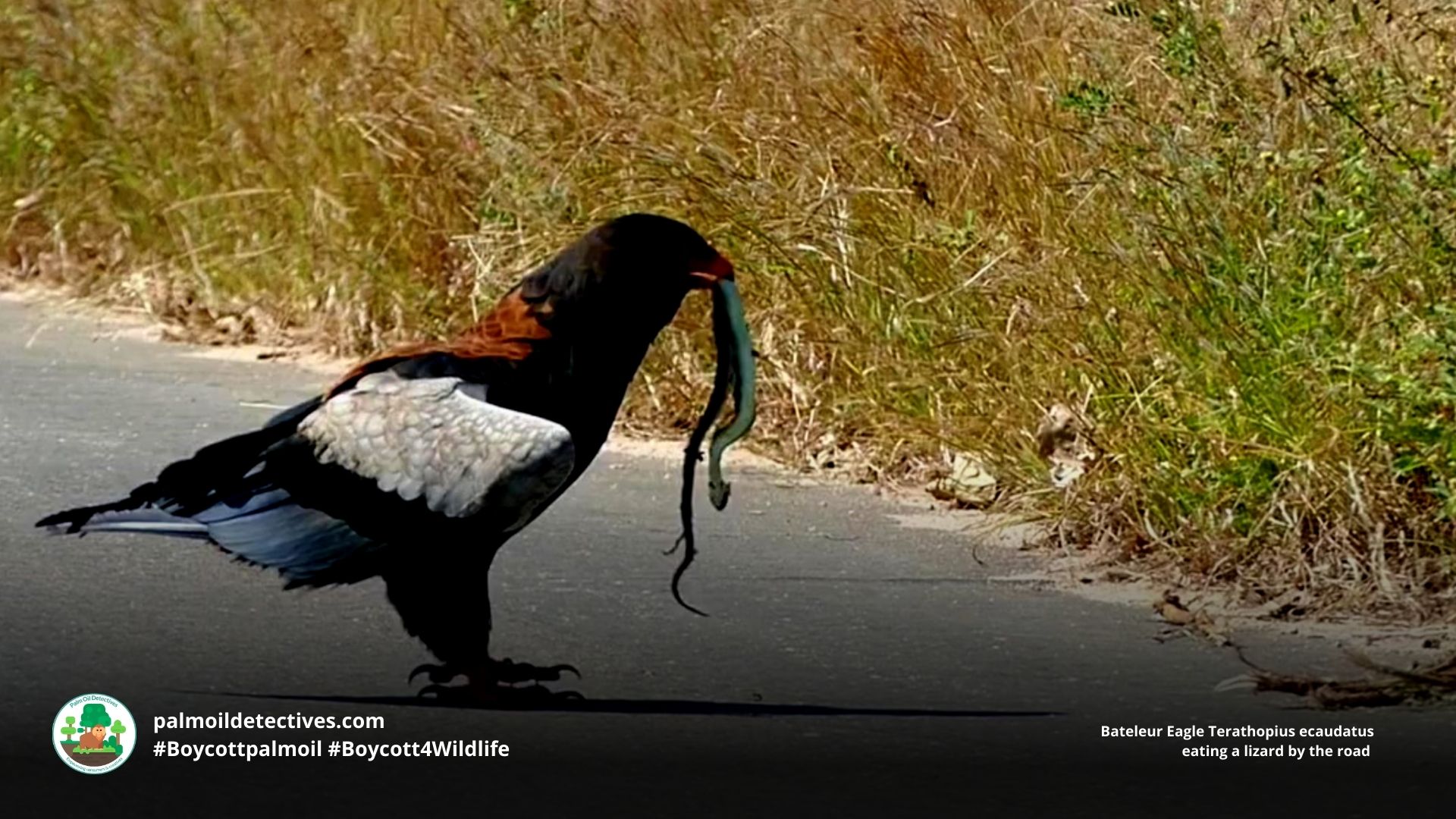
Bateleurs are opportunistic feeders, hunting live prey and scavenging from carcasses. They eat small mammals, birds, reptiles, and insects. Snakes are a particular favourite, and they are known to take down venomous species like puff adders. Bateleurs are often the first to find fresh carcasses and will also feed on roadkill. Their diet includes doves, hornbills, and termites, along with small mammals such as hares and rodents.
Mating and breeding
Bateleurs are monogamous and often mate for life. Their courtship involves impressive aerial displays, with the male diving towards the female in mid-air. They build small, sturdy nests in tall trees, usually near water sources. The female lays a single egg, which both parents incubate for around 55 days. After hatching, the chick is dependent on their parents for several months and will remain close to the nest until they are strong enough to fly. Juveniles can take up to 7 years to develop their full adult plumage.
Habitat & geographic range
Bateleur eagles range across much of sub-Saharan Africa, from Senegal and Ethiopia down to South Africa. They are also found in parts of southwest Arabia. Their preferred habitat includes open savannas, grasslands, and lightly wooded areas, where they have plenty of space to soar in search of prey. Bateleurs avoid dense forests and deserts but can often be found near waterholes and rivers. They are territorial birds and require large areas to hunt and find food.
Conservation
Several organisations are working to protect Bateleur Eagles, including The Peregrine Fund, which focuses on preventing poisoning and protecting habitats. In many national parks across Africa, Bateleurs are thriving in protected environments. However, once they leave these safe zones, they face numerous threats. Continued education of farmers about the dangers of poisoning and habitat destruction is vital to their survival.
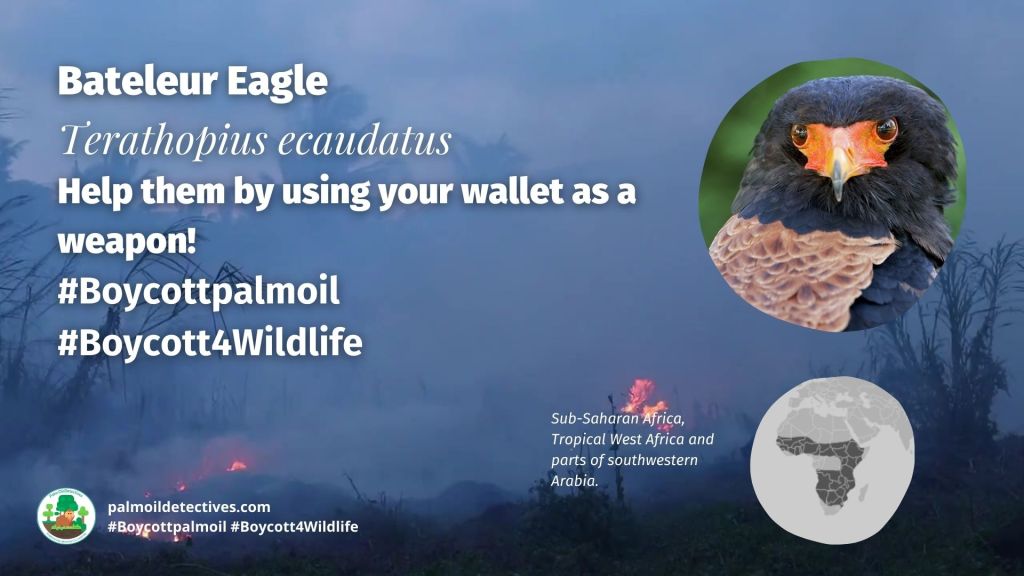
Support Bateleurs by going vegan and boycotting palm oil in the supermarket, it’s the #Boycott4Wildlife
Support the conservation of this species
This animal has no protections in place. Read about other forgotten species here. Create art to support this forgotten animal or raise awareness about them by sharing this post and using the #Boycottpalmoil #Boycott4Wildlife hashtags on social media. Also you can boycott palm oil in the supermarket.
Further Information
BirdLife International. (2020). Terathopius ecaudatus. The IUCN Red List of Threatened Species 2020: e.T22695289A174413323. https://dx.doi.org/10.2305/IUCN.UK.2020-3.RLTS.T22695289A174413323.en
The Peregrine Fund. (2024). Bateleur Eagle. https://peregrinefund.org/explore-raptors-species/eagles/bateleur-eagle
Wikipedia contributors. (2024, September 15). Bateleur. Wikipedia, The Free Encyclopedia. https://en.wikipedia.org/wiki/Bateleur

How can I help the #Boycott4Wildlife?
Take Action in Five Ways
1. Join the #Boycott4Wildlife on social media and subscribe to stay in the loop: Share posts from this website to your own network on Twitter, Mastadon, Instagram, Facebook and Youtube using the hashtags #Boycottpalmoil #Boycott4Wildlife.
2. Contribute stories: Academics, conservationists, scientists, indigenous rights advocates and animal rights advocates working to expose the corruption of the palm oil industry or to save animals can contribute stories to the website.






3. Supermarket sleuthing: Next time you’re in the supermarket, take photos of products containing palm oil. Share these to social media along with the hashtags to call out the greenwashing and ecocide of the brands who use palm oil. You can also take photos of palm oil free products and congratulate brands when they go palm oil free.
4. Take to the streets: Get in touch with Palm Oil Detectives to find out more.
5. Donate: Make a one-off or monthly donation to Palm Oil Detectives as a way of saying thank you and to help pay for ongoing running costs of the website and social media campaigns. Donate here
Learn about other animals endangered by palm oil and other agriculture
Learn about “sustainable” palm oil greenwashing
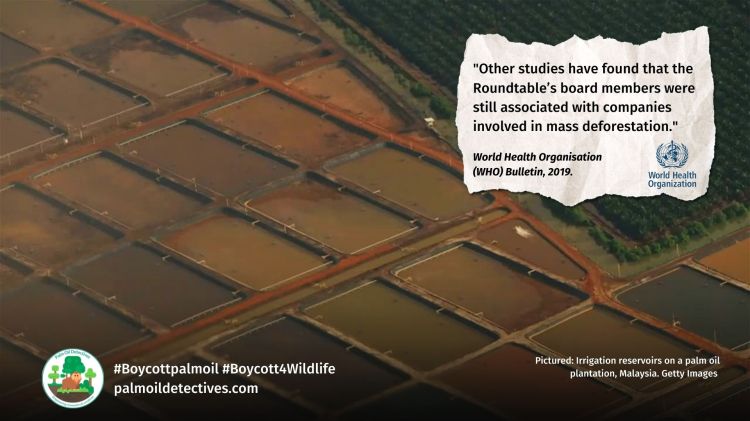
Read more about RSPO greenwashing
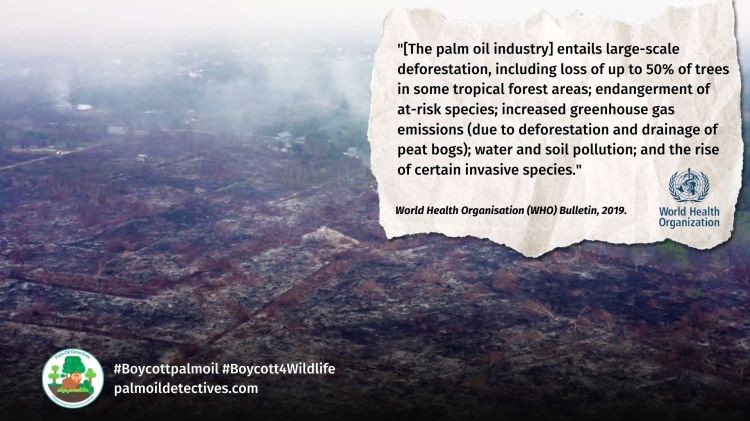
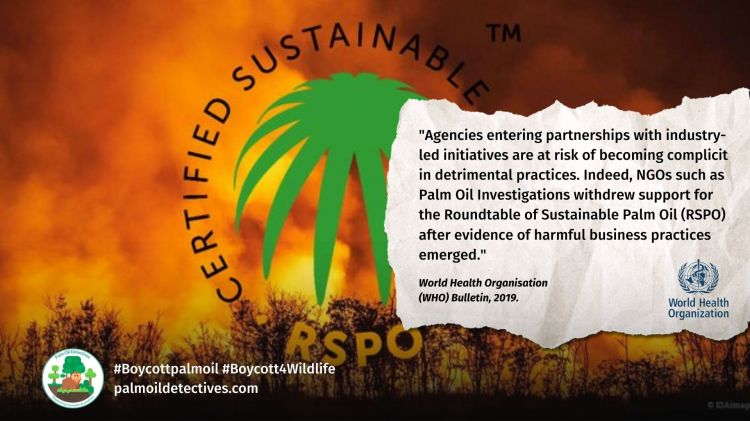
A 2019 World Health Organisation (WHO) report into the palm oil industry and RSPO finds extensive greenwashing of palm oil deforestation and the murder of endangered animals (i.e. biodiversity loss)


Discover more from Palm Oil Detectives
Subscribe to get the latest posts sent to your email.
 Palm Oil Detectives