
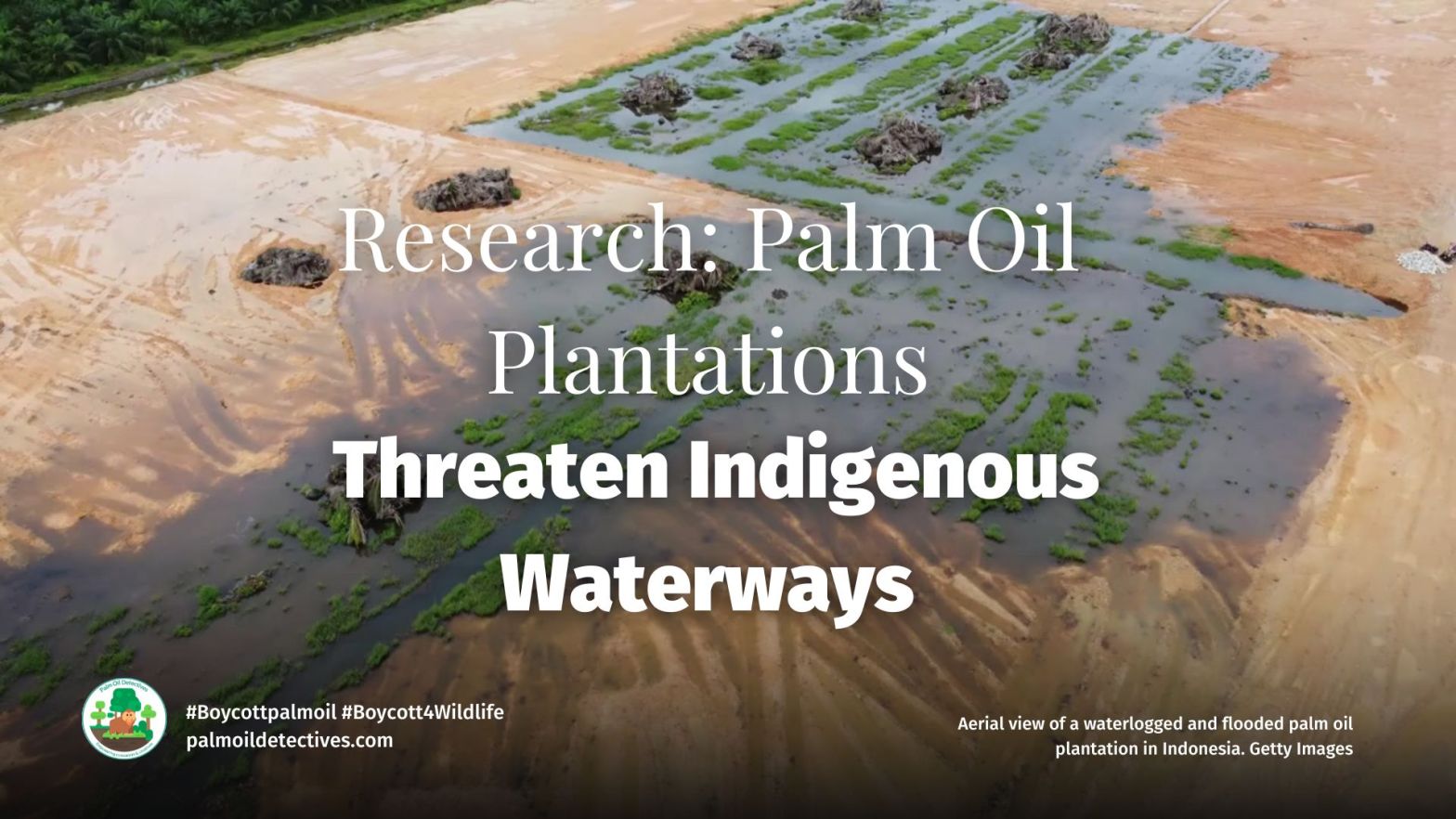
Research: Palm Oil Plantations Threaten Indigenous Waterways | A study by the University of Massachusetts Amherst reveals that the expansion of oil palm plantations in West Papua’s Kais River watershed has significantly degraded water quality, increasing sedimentation and nutrient pollution. This environmental harm disproportionately affects downstream Indigenous communities reliant on these waters, highlighting the urgent need for sustainable land management practices and the protection of Indigenous rights.
🌴 #News: #Research reveals #palmoil plantations in #WestPapua are degrading water quality, harming #Indigenous communities relying on the waters. Researchers call for urgent #landrights #humanrights protections #BoycottPalmOil 🌴🪔🔥⛔️ https://wp.me/pcFhgU-9Om @palmoildetect
University of Massachusetts Amherst. (2024, May 2). Oil palm plantations are driving massive downstream impact to watershed. ScienceDaily. Retrieved January 16, 2025, from https://www.sciencedaily.com/releases/2024/05/240502153115.htm
The global demand for palm oil, prevalent in products from instant noodles to cosmetics, is driving extensive tropical deforestation. Beyond biodiversity loss, new research from the University of Massachusetts Amherst uncovers significant disturbances to watersheds caused by oil palm plantations, particularly affecting Indigenous populations.
Focusing on the Kais River watershed in West Papua—a region covering over 1,000 square miles where approximately 25% has been converted into oil palm plantations—the study highlights the environmental repercussions of such land-use changes. This area is also home to various Indigenous Papuan groups who depend on the watershed for their daily water needs.
Lead author Briantama Asmara, during his graduate studies at UMass Amherst, and senior author Professor Timothy Randhir employed an enhanced Soil and Water Assessment Tool (SWAT+) to simulate the watershed’s hydrological responses under different land-use scenarios. They analyzed historical data (2010-2015), current conditions with extensive oil palm plantations (2015-2021), and projected future scenarios up to 2034, considering ongoing plantation expansion and climate change.
Findings indicate that the shift from tropical rainforest to oil palm plantations has led to increased precipitation, runoff, and soil moisture. Notably, water quality has deteriorated, with sedimentation rising by 16.9%, nitrogen levels by 78.1%, and phosphorus by 144%. Although future projections suggest a slight moderation in these effects, water quality is expected to remain significantly compromised compared to pre-plantation conditions.
Professor Randhir emphasizes the disproportionate impact on downstream Indigenous communities, stating, “They are bearing all the environmental and public health costs, while the international palm oil companies are reaping the rewards.” Asmara adds that the research aims to provide accessible data to those most affected, enabling informed decision-making.
The study advocates for regulatory measures, including limiting pesticide use during flood periods, continuous water quality monitoring, maintaining riparian buffers, and, critically, ensuring that downstream communities are informed and involved in land management decisions.
This research underscores the pressing need for sustainable land-use practices that protect both environmental integrity and Indigenous rights. As the demand for palm oil continues to rise, balancing economic interests with ecological and social responsibilities becomes increasingly vital.
For a detailed exploration of the study, read more.
University of Massachusetts Amherst. (2024, May 2). Oil palm plantations are driving massive downstream impact to watershed. ScienceDaily. Retrieved January 16, 2025, from https://www.sciencedaily.com/releases/2024/05/240502153115.htm
ENDS
Read more about human rights abuses and child slavery in the palm oil industry
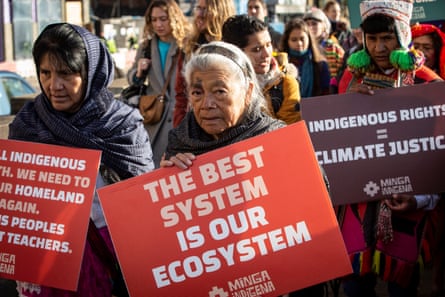
Oil palm in Latin America: monoculture and violence
The rapid expansion of oil palm plantations across #SouthAmerica is causing significant environmental, economic and social problems. This growth is leading to #deforestation, #landgrabbing displacement of #indigenous and farming communities, and increased militarised…
Read more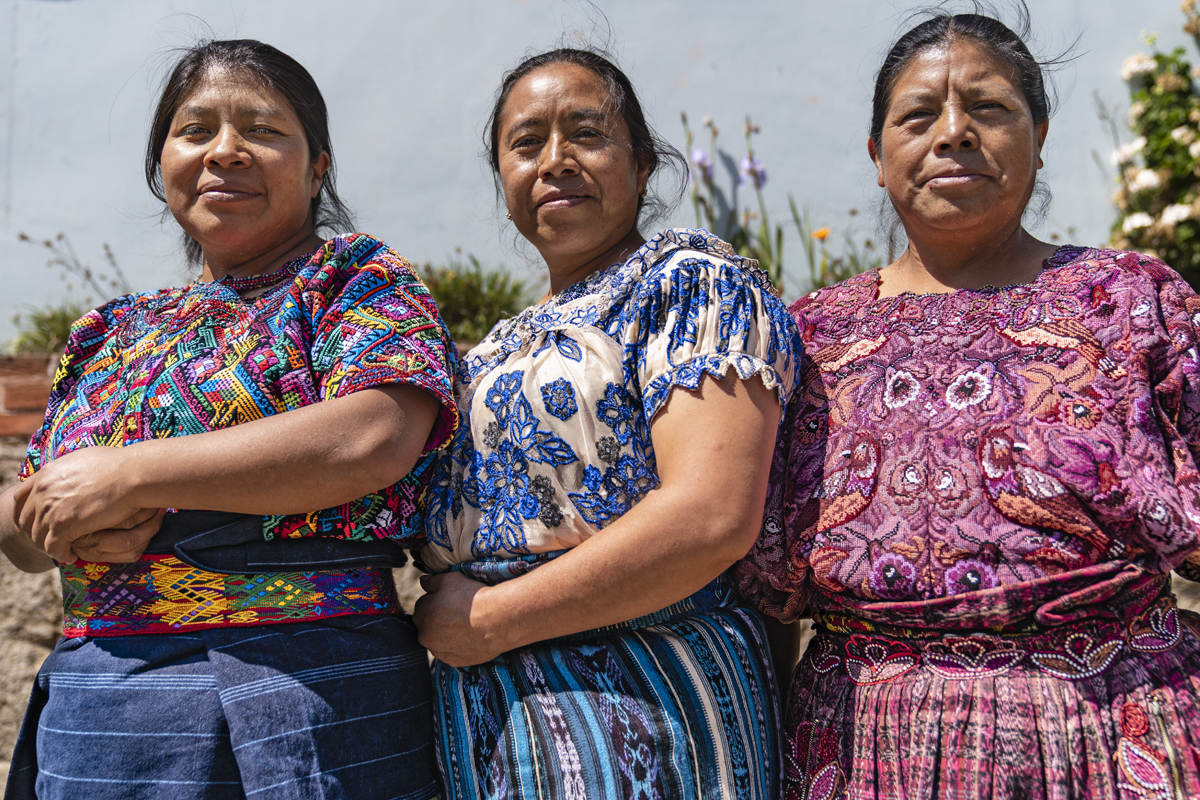
Indigenous Peoples Fight Climate Change
After wildfires, Belize’s indigenous people rebuild stronger based on “se’ komonil”: reciprocity, solidarity, gender equity, togetherness and community.
Read more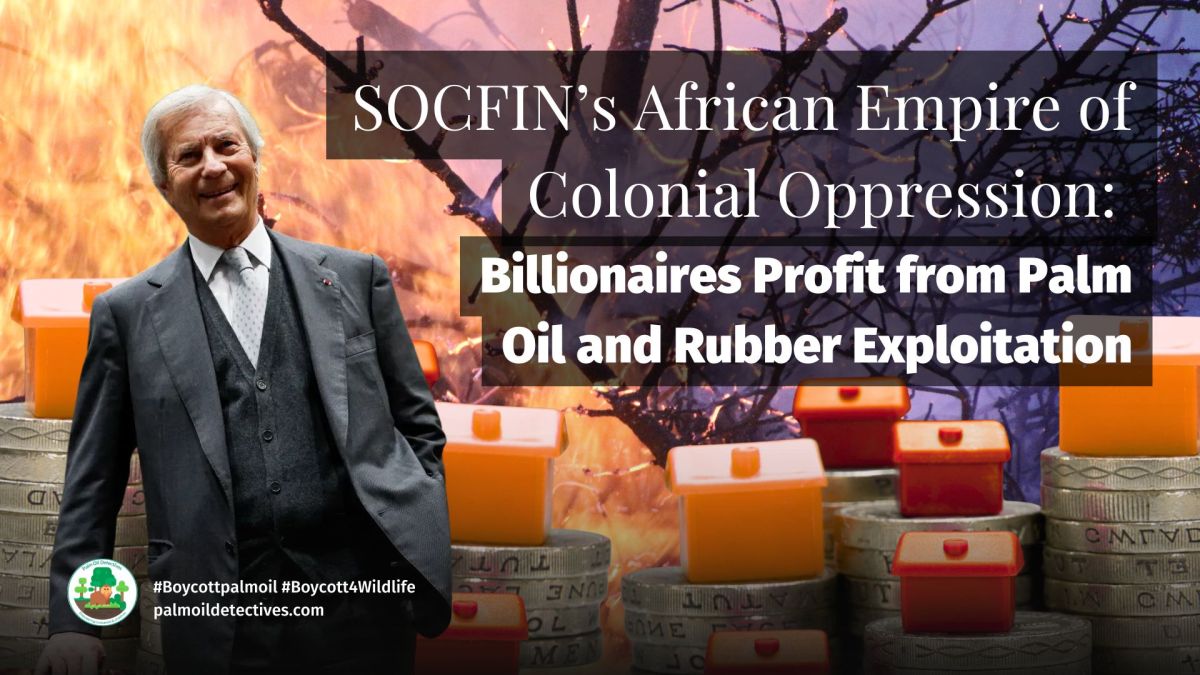
SOCFIN’s African Empire of Colonial Oppression: Billionaires Profit from Palm Oil and Rubber Exploitation
Investigation by Bloomberg exposes that despite being RSPO members, #SOCFIN plantations in #WestAfrica are the epicentre of #humanrights abuses, sexual coercion, environmental destruction, and #landgrabbing. Operating in #Liberia, #Ghana, #Nigeria, and beyond, SOCFIN’s…
Read more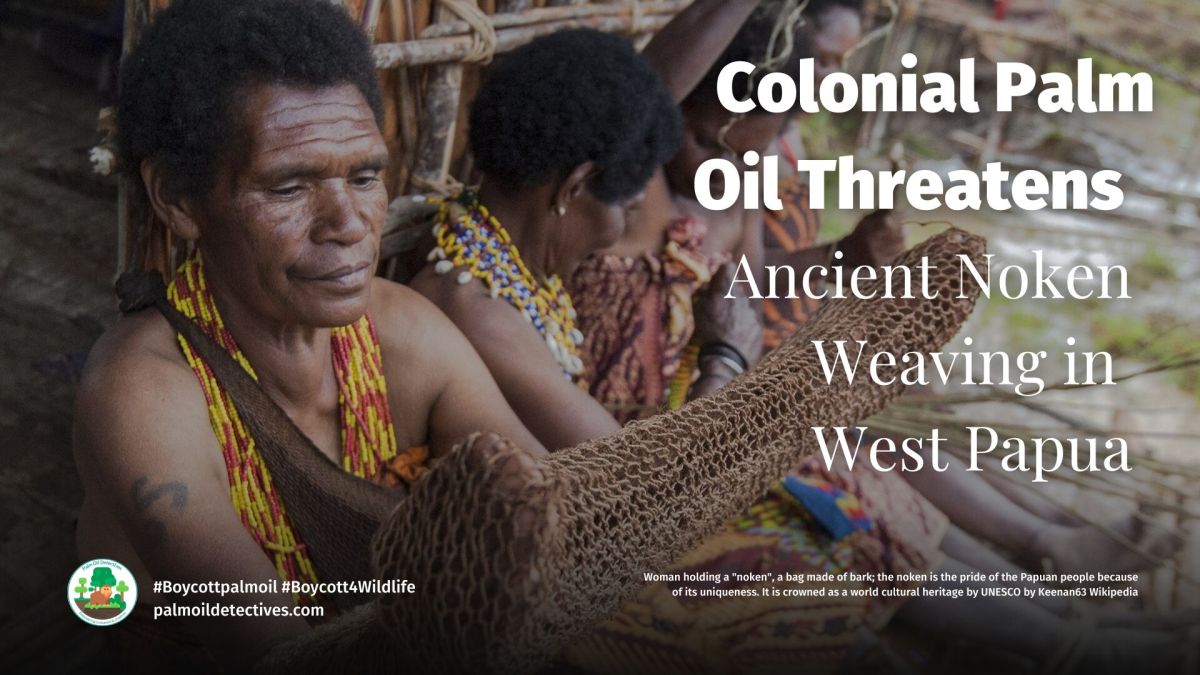
Palm Oil Threatens Ancient Noken Weaving in West Papua
Colonial palm oil and sugarcane causing the loss of West Papuans’ cultural identity. Land grabs force communities from forests, threatening Noken weaving
Read more
Family Ties Expose Deforestation and Rights Violations in Indonesian Palm Oil
An explosive report by the Environment Investigation Agency (EIA) details how Indonesia’s Fangiono family, through a wide corporate web, is linked to ongoing #deforestation, #corruption, and #indigenousrights abuses for #palmoil. Calls mount for…
Read moreSomething went wrong. Please refresh the page and/or try again.
Take Action in Five Ways
1. Join the #Boycott4Wildlife on social media and subscribe to stay in the loop: Share posts from this website to your own network on Twitter, Mastadon, Instagram, Facebook and Youtube using the hashtags #Boycottpalmoil #Boycott4Wildlife.
2. Contribute stories: Academics, conservationists, scientists, indigenous rights advocates and animal rights advocates working to expose the corruption of the palm oil industry or to save animals can contribute stories to the website.



3. Supermarket sleuthing: Next time you’re in the supermarket, take photos of products containing palm oil. Share these to social media along with the hashtags to call out the greenwashing and ecocide of the brands who use palm oil. You can also take photos of palm oil free products and congratulate brands when they go palm oil free.
4. Take to the streets: Get in touch with Palm Oil Detectives to find out more.
5. Donate: Make a one-off or monthly donation to Palm Oil Detectives as a way of saying thank you and to help pay for ongoing running costs of the website and social media campaigns. Donate here
Discover more from Palm Oil Detectives
Subscribe to get the latest posts sent to your email.
 Palm Oil Detectives