
Illegal #mining for minerals like #gold and cassiterite, the latter used for renewable energy, is driving #deforestation in Indigenous #Amazonia. Countries like #Brazil, #Suriname and #Guyana face the challenge of conserving forests, protecting #indigenous peoples, biodiversity whilst also meeting international resource demands. Empowering indigenous peoples to care for biodiversity rich areas of Amazonia is key to saving them for future generations. Act now to protect Indigenous lands and wildlife. #BoycottGold4Yanomami #Boycott4Wildlife.
The drive for #mineral #mining in #Amazonia is driving #indigenous peoples and endangered #animals towards #extinction. Help and fight for them when you #BoycottGold4Yanomami #Boycott4Wildlife @palmoildetect @barbaranavarro https://wp.me/pcFhgU-8TF
Key to tempering #Amazonia’s mineral #mining demand for #gold and other metals is prioritising #Indigenous #empowerment #landrights and indigenous sovereignty #BoycottGold4Yanomami #Boycott4Wildlife @barbaranavarro @palmoildetect https://wp.me/pcFhgU-8TF
Written by Yolanda Ariadne Collins, Lecturer, International Relations, University of St Andrews. This article is republished from The Conversation under a Creative Commons license. Read the original article.
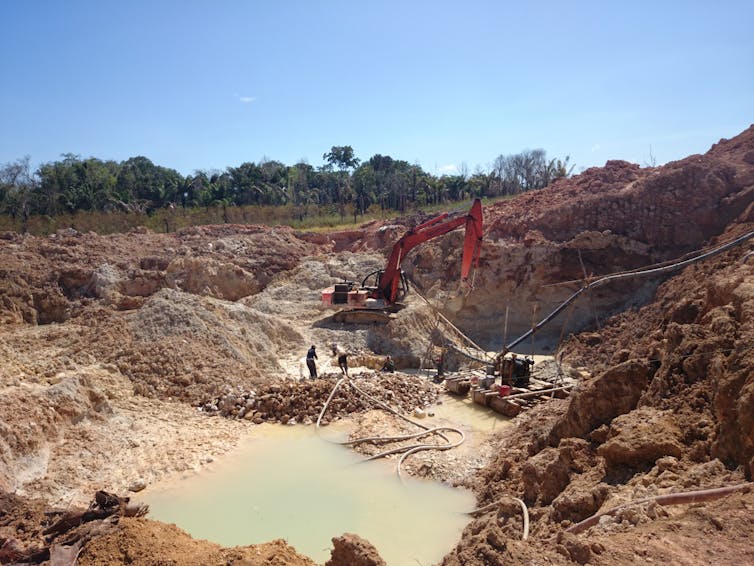
Illegal mining for critical minerals needed for the global renewable energy transition is increasingly driving deforestation in Indigenous lands in the Amazon.
In recent years, these illegal miners, who are often self-employed, mobile and working covertly, have expanded their gold mining operations to include cassiterite or “black gold”, a critical mineral essential for the renewable energy transition. Cassiterite is used to make coatings for solar panels, wind turbines and other electronic devices. Brazil, one of the world’s largest exporters of this mineral, is now scrambling to manage this new threat to its Amazon forests.
The need for developing countries such as Brazil to conserve their forests for the collective global good conflicts with the increasing demand for their resources from international markets. To complicate matters further, both the renewable energy transition and the conservation of the Amazon are urgent priorities in the global effort to arrest climate change.
But escalating deforestation puts these forests at risk of moving from a carbon sink – with trees absorbing more carbon dioxide from the atmosphere than they release – to a carbon source, whereby trees release more carbon dioxide than they absorb as they degrade or are burnt.
Indigenous and other forest-dwelling communities are central to forest conservation. In 2014, I spent a year living in Guyana and Suriname, two of the nine countries that share the Amazon basin. I studied the effectiveness of international policies that aim to pay these countries to avoid deforestation.
I met with members of communities who were bearing the brunt of the negative effects of small-scale gold mining, such as mercury poisoning and loss of hunting grounds. For decades, mining for gold, which threatens communities’ food supply and traditional ways of life, has been the main driver of deforestation in both countries.
Small-scale mining operations can damage both communities and the natural world. Gold mining, which generates gold for export used for jewellery and electronics, usually begins with the removal of trees and vegetation from the topsoil, facilitated by mechanical equipment such as excavators. Next, the miners dig up sediment, which gets washed with water to extract any loose flecks of gold.
Miners usually then add mercury, a substance that’s known to be toxic and incredibly damaging to human health, to washing pans to bind the gold together and separate it from the sediment. They then burn the mercury away, using lighters and welding gear. During this process, mercury is inhaled by miners and washed into nearby waterways, where it can enter the food chain and poison fish and other species, including humans.
My new book, Forests of Refuge: Decolonizing Environmental Governance in the Amazonian Guiana Shield, highlights the colonial histories through which these countries were created. These histories continue to inform the land-use practices of people and forest users there. Having seen the dynamics firsthand, I argue that these unaddressed histories limit the effectiveness of international policies aimed at reducing deforestation.
Some of the policies’ limitations are rooted in their inattentiveness to the roughly five centuries of colonialism through which these countries were formed. These histories had seen forests act as places of refuge and resistance for Indigenous and Afro-descendant communities. I believe that power structures created by these histories need to be tackled through processes of decolonisation, which includes removing markets from their central place in processes of valuing nature, and taking seriously the worldviews of Indigenous and other forest-dependent communities.
But since 2014, small-scale mining-led deforestation in the Amazon has persisted, and even increased. The increase in mining worldwide, driven partly by the renewable energy transition, indicates that these power structures might be harder to shift than ever before.
Added pressure
When crackdowns on illegal gold mining took place in Brazil in the 1970s and ’80s, miners moved en masse to nearby Guyana and Suriname, taking their environmentally destructive technologies with them. Illegal miners of cassiterite are now following a similar pattern, showing that the global effort to reduce deforestation cannot simply focus on a single commodity as a driver of deforestation on the ground.
My work shows that the challenge of mining-led deforestation in the Amazon is rooted in historically informed, global power structures that position the Amazon and its resources as available for extraction by industries and governments in wealthier countries. These groups of people are now seeking to reduce their disproportionately high emissions through technological solutions and not through behavioural change.
These tensions also have roots in the readiness of governments and forest users in postcolonial countries, like Brazil and Guyana, to respond positively and unquestioningly to international demand for these resources.
In the Amazon, outcomes are affected by whether different groups of people have access to livelihoods that do not drive deforestation, such as those based on non-timber forest products. The situation is further shaped by the extent to which governments can work together to ensure that crackdowns in one part of the Amazon, such as Brazil, do not just drive deforestation elsewhere to Suriname, for example.
Until the power structure that disadvantages Indigenous and other historically marginalised groups changes, the negative effects of developing technologies to “save” the planet will continue to disproportionately burden these groups, even as their current way of life remains critical to supporting sustainable development outcomes.
Written by Yolanda Ariadne Collins, Lecturer, International Relations, University of St Andrews. This article is republished from The Conversation under a Creative Commons license. Read the original article.
ENDS
Read more about gold mining, indigenous rights and its cost to animals

Western Parotia Parotia sefilata
Western Parotias AKA Arfak Parotias are stunning bird-of-paradise of West Papua known for their mesmerising dances. Palm oil and mining ecocide are threats
Read more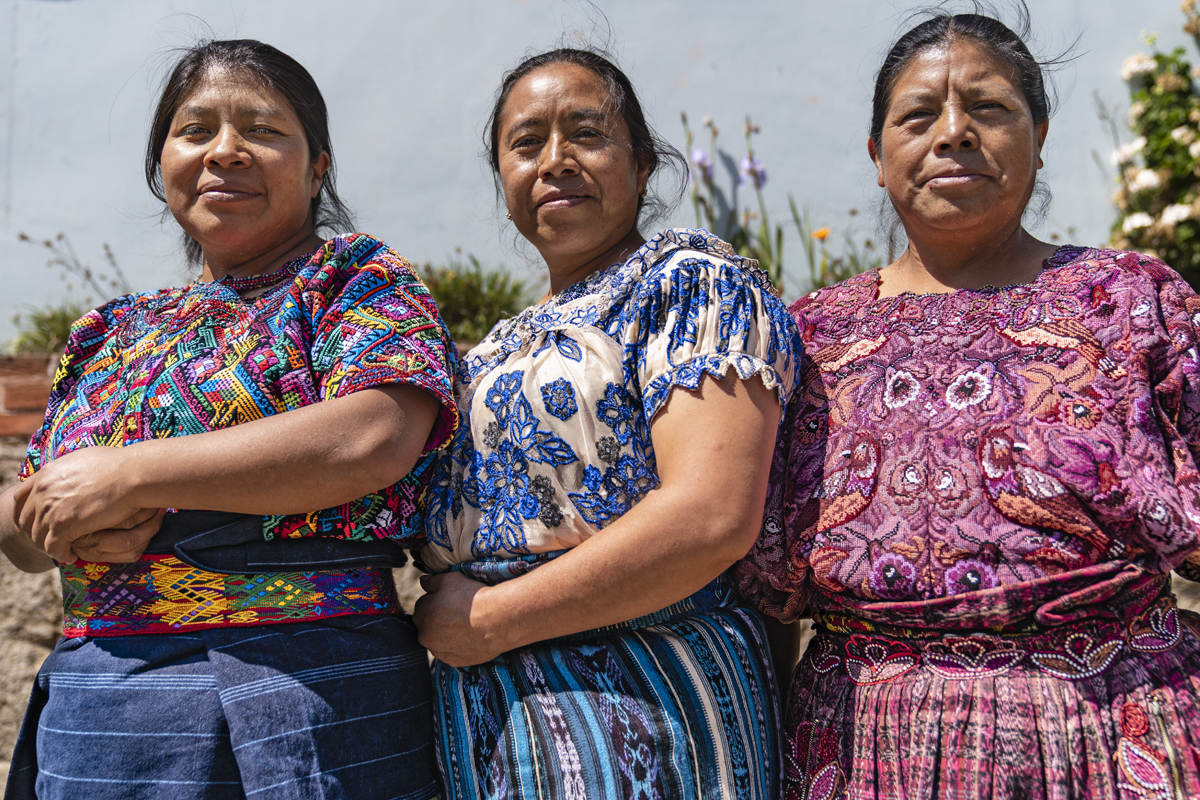
Indigenous Peoples Fight Climate Change
After wildfires, Belize’s indigenous people rebuild stronger based on “se’ komonil”: reciprocity, solidarity, gender equity, togetherness and community.
Read more
Tucuxi Sotalia fluviatilis
Tucuxi, small freshwater dolphins of Peru Ecuador Colombia and Brazil are Endangered due to fishing nets, deforestation, mercury poisoning from gold mining.
Read more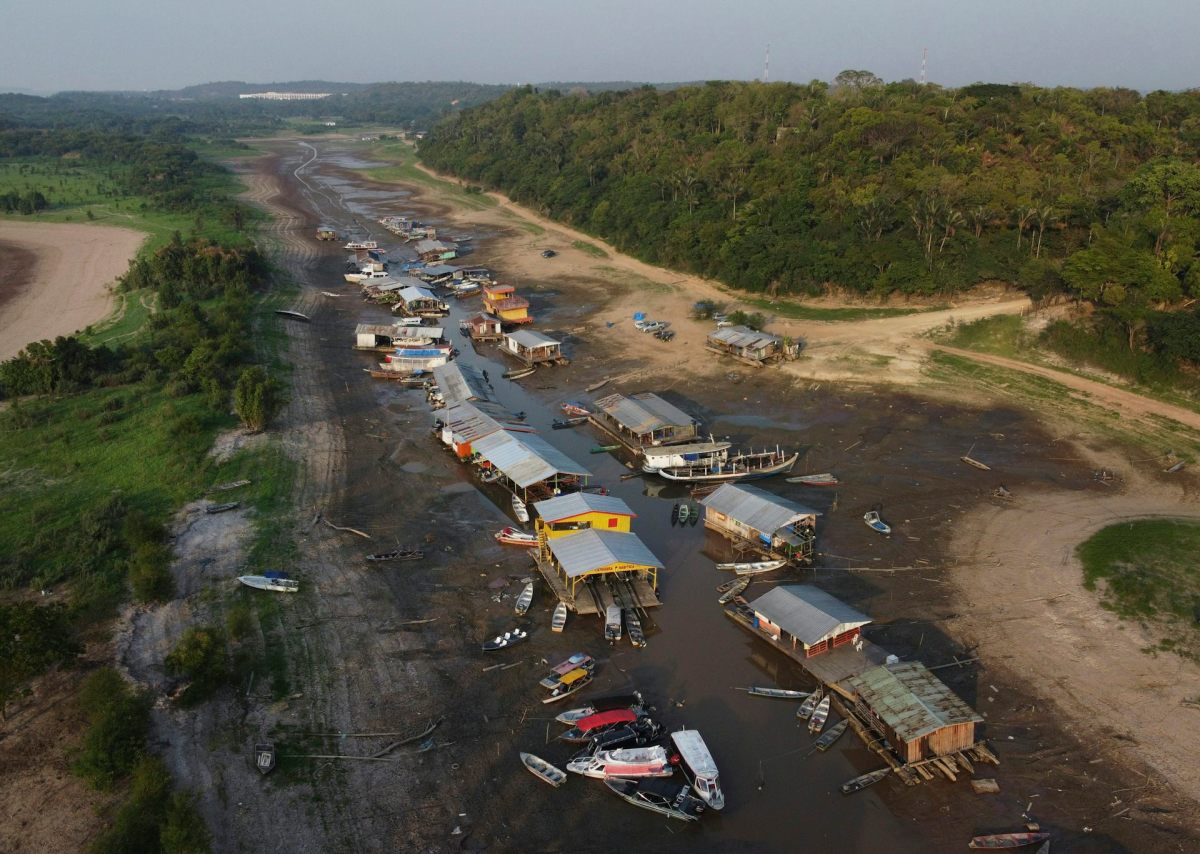
An Action Plan for Amazon Droughts: The Time is Now!
The fertile lungs of our planet, the Amazon jungle faces severe drought due to El Niño, climate change, and deforestation for agriculture like palm oil, soy and meat. This along with gold mining,…
Read more
Brazilian three-banded armadillo Tolypeutes tricinctus
The Brazilian three-banded #armadillo Tolypeutes tricinctus, known as “tatu-bola” in Portuguese, is a rare and unique species native to #Brazil. With the ability to roll into a near-impenetrable ball, this endearing behaviour has…
Read moreSomething went wrong. Please refresh the page and/or try again.
Take Action in Five Ways
1. Join the #Boycott4Wildlife on social media and subscribe to stay in the loop: Share posts from this website to your own network on Twitter, Mastadon, Instagram, Facebook and Youtube using the hashtags #Boycottpalmoil #Boycott4Wildlife.
2. Contribute stories: Academics, conservationists, scientists, indigenous rights advocates and animal rights advocates working to expose the corruption of the palm oil industry or to save animals can contribute stories to the website.



3. Supermarket sleuthing: Next time you’re in the supermarket, take photos of products containing palm oil. Share these to social media along with the hashtags to call out the greenwashing and ecocide of the brands who use palm oil. You can also take photos of palm oil free products and congratulate brands when they go palm oil free.
4. Take to the streets: Get in touch with Palm Oil Detectives to find out more.
5. Donate: Make a one-off or monthly donation to Palm Oil Detectives as a way of saying thank you and to help pay for ongoing running costs of the website and social media campaigns. Donate here
Discover more from Palm Oil Detectives
Subscribe to get the latest posts sent to your email.
 Palm Oil Detectives