
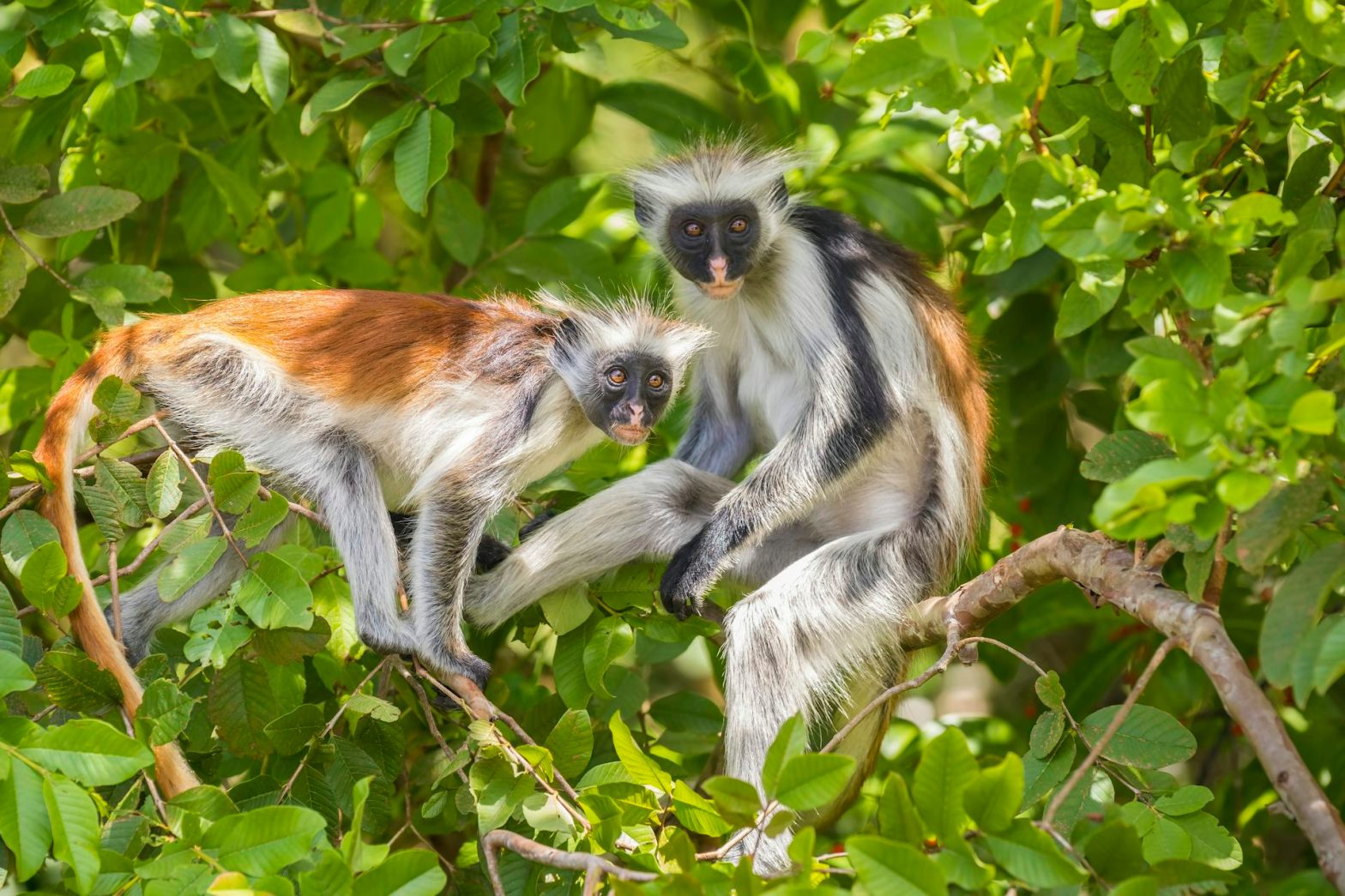
Very few people have heard of the rarest primate in #Africa – The Red Colobus. Featuring funky hairstyles and expressive faces they daringly leap between trees to search for food. Every species of red #colobus is under threat from hunting and rainforest clearing for #palmoil, #cocoa and #meat agriculture. Their disappearance from forests heralds the beginning of the vanishing of other animals: gorillas, chimpanzees and elephants. Another successful conservation effort for the Zanzibar red colobus led to a national park being created to protect this species. Conservationists hope that the same can be done for the Red Colobus species in the form of funding and greater protections. #BoycottPalmOil #Boycott4Wildlife
You’ve likely never heard of the curious Red #Colobus, #WestAfrica’s rarest #primate 🐒🐵🙉 Researchers now know that protecting them and the #rainforest will protect all other rare #species. Fight for their survival! #Boycott4Wildlife @palmoildetect https://palmoildetectives.com/2025/07/27/protecting-the-rare-precious-red-colobus-will-safeguard-africas-forests/
Written by Joshua M. Linder, Professor of Anthropology, James Madison University and Nelson Ting, Professor of Anthropology, University of Oregon. This article is republished from The Conversation under a Creative Commons license. Read the original article.
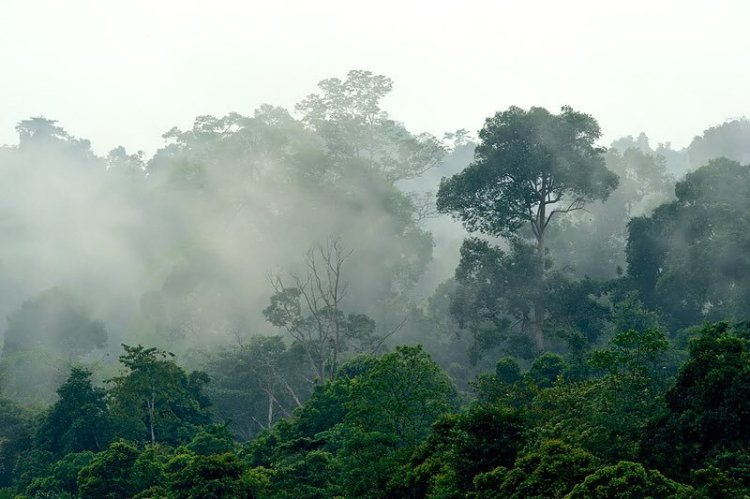
Evidence from several sites shows that red colobus are among the first large mammals to disappear from a hunted forest. They vanish before more well-known species such as gorilla, chimpanzee, and elephant die out in forests from hunting.
Many people have never heard of a red colobus, yet they are Africa’s most imperilled group of monkeys.
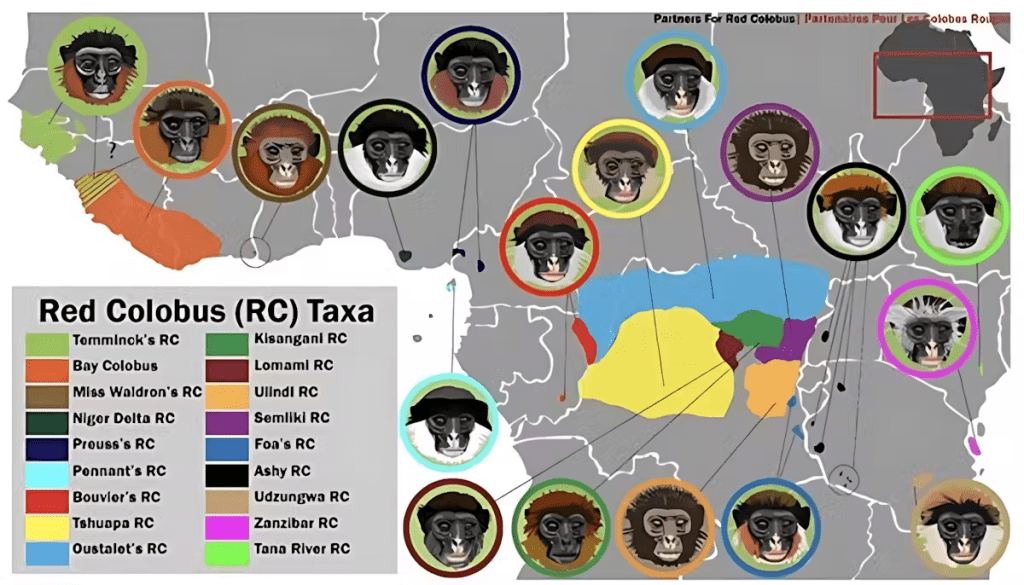
There are 17 species of red colobus found in tropical forests from Senegal in west Africa to the Zanzibar archipelago in east Africa. These photogenic monkeys have aesthetically appealing hairdos, coat colours and colour patterns. They weigh, on average, between 5kg and 12kg and take daring, long-distance leaps between trees to find foods that other primates find difficult to digest, like leaves and unripe fruit.
We are primate experts who specialise in studying how to conserve red colobus and other primates. With experts from Africa, Europe and the United States, we drew up the International Union for the Conservation of Nature’s Red Colobus Conservation Action Plan. This five year plan, which runs from 2021 to 2026, aims to make the red colobus a high priority animal for conservation purposes.
In the action plan and our latest published research, we argue that conserving the red colobus will benefit African tropical forests.
This is because evidence from several sites shows that red colobus are among the first large mammals to disappear from a hunted forest. They vanish before more well-known species such as gorilla, chimpanzee, and elephant die out in forests from hunting. Therefore, the absence of red colobus, or a declining population, is an early warning indicator of emptying forests and eroding ecosystems.
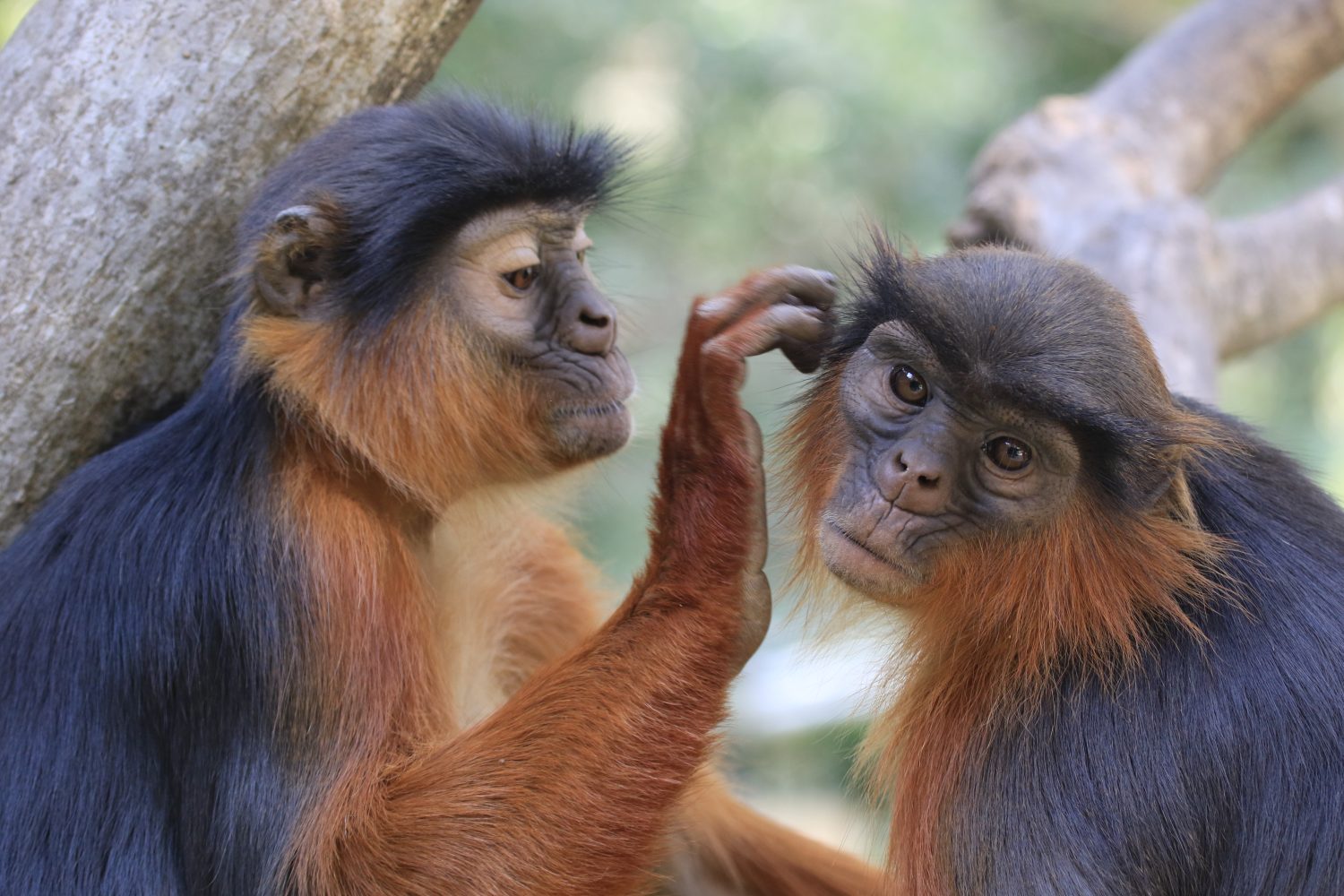
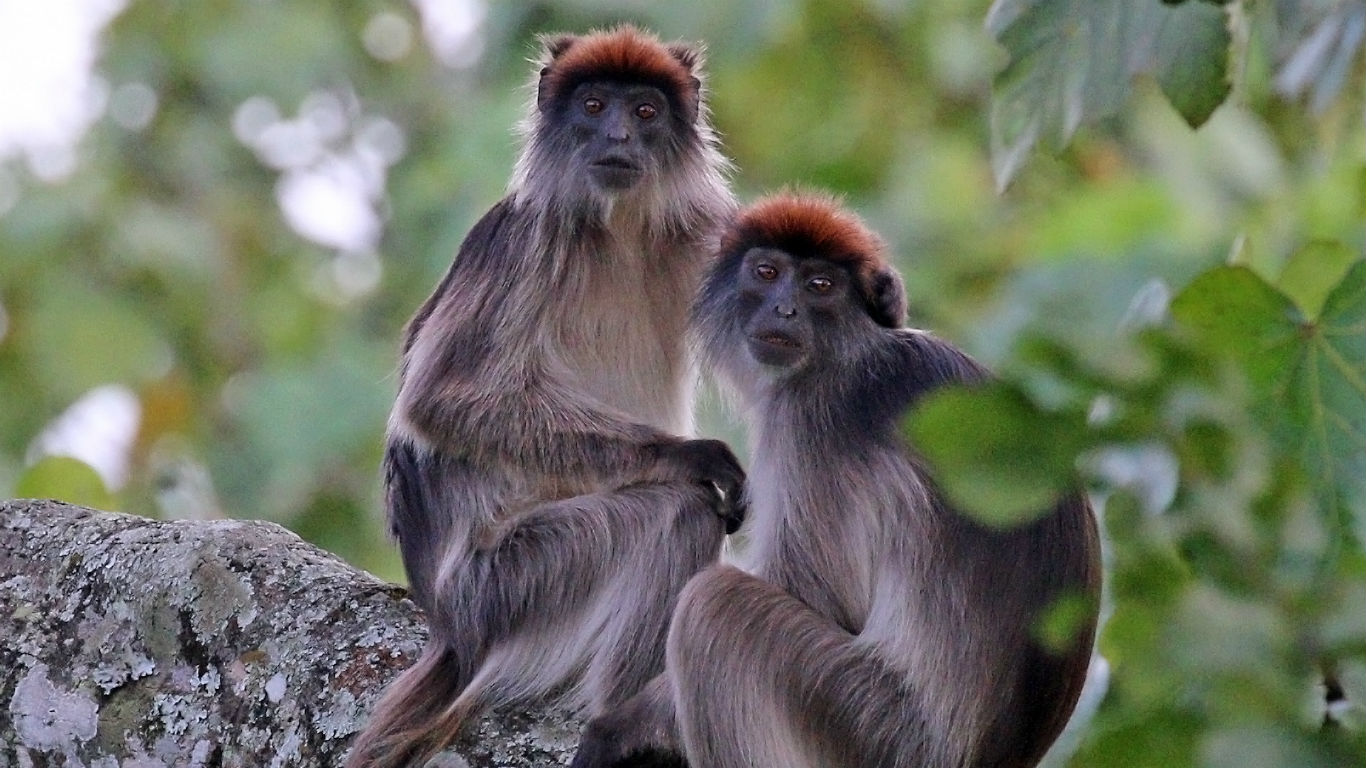
Red colobus conservation will also help to train and employ the next generation of African conservationists and improve human food security and public health.
Why are red colobus in danger?
According to the IUCN Red List of Threatened Species, every species of red colobus is threatened with extinction. Hunting by humans for meat is a leading cause of their decline. Red colobus live in large, noisy social groups. They tend not to flee like other mammals do in the presence of a hunter. This makes them easy targets.
Hunting has caused the probable extinction of Miss Waldron’s red colobus from Ghana and Côte d’Ivoire. This monkey was last seen alive by scientists in 1978, making it the first primate to likely have gone extinct in the last 300-500 years. Forest loss and degradation from logging, agriculture, mining, wood fuel production and infrastructure development also threaten red colobus because they rely so heavily on the oldest and tallest trees in a forest.
Why invest in conserving red colobus monkeys?
It is important to protect the red colobus from extinction. When funds and resources are directed at conserving red colobus, this helps safeguard and restore some of Africa’s most important forest habitats that the red colobus live in. These include the largest remaining forest blocks in west Africa, the Gulf of Guinea forests and large swathes of the Congo Basin forest. These forests are key for mitigating the impacts of global climate change.
Making red colobus a high conservation priority has already proven to be a successful strategy for conserving African tropical forests. The protection of Zanzibar red colobus, for example, was a key impetus in the creation of Zanzibar’s only national park, Jozani–Chwaka Bay and the Kidikotundu–Nongwe–Vundwe Reserve. Both of these areas protect large areas of indigenous forest on the island.
The forests in which red colobus live also support the livelihoods and health of millions of indigenous and local human populations in Africa. This is why conserving the red colobus needs to happen in partnership with forest-dependent communities. In Nigeria’s Niger Delta, for example, a Memorandum of Understanding has been signed by a local community to establish a red colobus community conservation area.
In the Sambel Kunda area in The Gambia, international scientists work with communities to support red colobus monitoring, forest restoration, and conservation education. This community-led project protects one of the largest remaining populations of Temminck’s red colobus.
What needs to be done?
The IUCN Red Colobus Conservation Action Plan is the first of its kind for any group of African monkeys. It recommends these actions to conserve the red colobus and preserve Africa’s tropical forests:
- grant proper international and national legal protections for all red colobus species
- conduct forest surveys to improve people’s understanding of where red colobus live and what they need from the environment to survive
- invest in and expand protected area networks
- support local communities to move away from unsustainable forest harvesting and take up more active roles in preserving their forests and endangered species
- improve links between conservation and public health by strengthening access to family health services and implementing measures to prevent potential zoonotic disease transmission between monkeys and humans.
- invest in local and global education and outreach programs focused on red colobus and their habitats.
We also formed a Red Colobus Working Group to guide the plan’s implementation and promote collaboration with other conservation initiatives. We’ve founded the Red Colobus Conservation Network to connect people interested in red colobus conservation.
Since the action plan’s publication in 2021, over US$500,000 has been directed to projects aimed at conserving red colobus and their habitats. But much more is needed. We conservatively estimate that a modest US$20 million is required over a five year period for strategies to prevent red colobus extinctions and preserve African tropical forests.
We call on scientists, conservation practitioners, civil society organisations, local communities, and governments to recognise red colobus as a priority conservation target and a flagship for catalysing broader African tropical forest conservation efforts.
(This article is based on the work of those who contributed directly to the Red Colobus Conservation Action Plan and the many individuals who have contributed to the conservation of red colobus and their habitats for many years. Drew T. Cronin, associate curator of International Conservation at the North Carolina Zoo in the US, was a co-author of this article and the original research. If you are interested in learning more about red colobus conservation or are interested in getting involved, please contact one of us or the coordinator of the Red Colobus Conservation Network, Florence Aghomo, at info@redcolobusnetwork.org.)
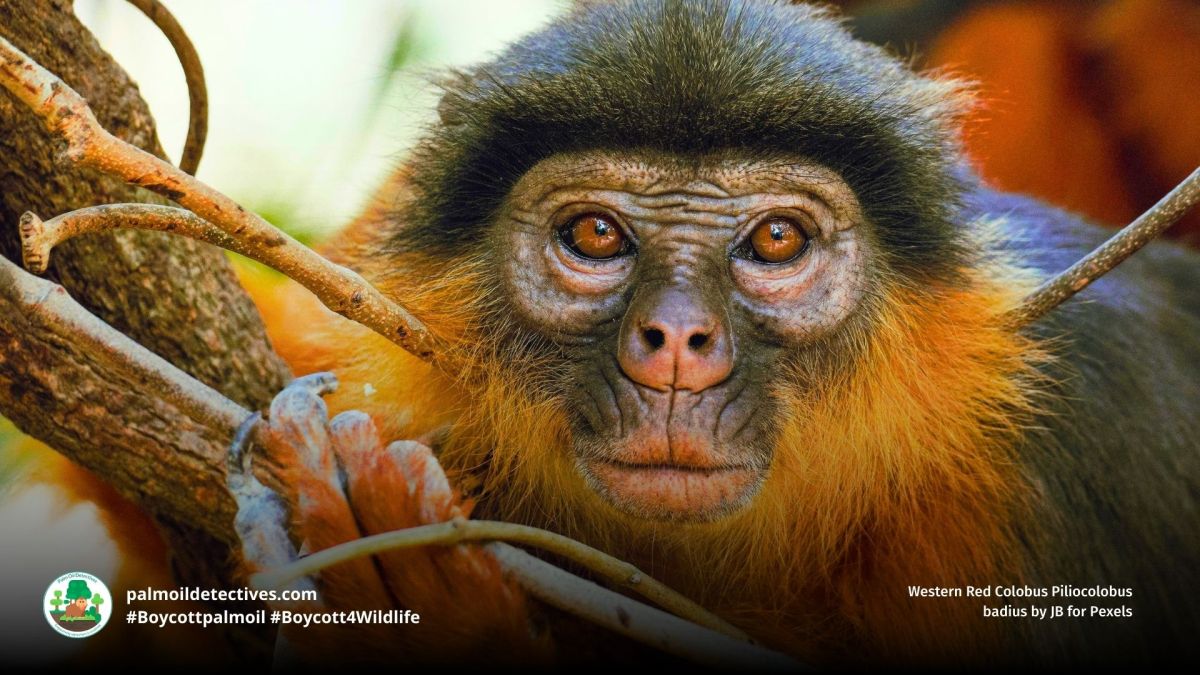
Western Red Colobus Piliocolobus badius
The Western Red Colobus Piliocolobus badius is one of West Africa’s most #endangered #primates, facing an escalating crisis of habitat loss and overhunting. Once abundant in mature forests across the region, they have been driven to the brink of #extinction by rampant deforestation for charcoal, palm oil and mining and the increasing demand for #bushmeat.…
Keep reading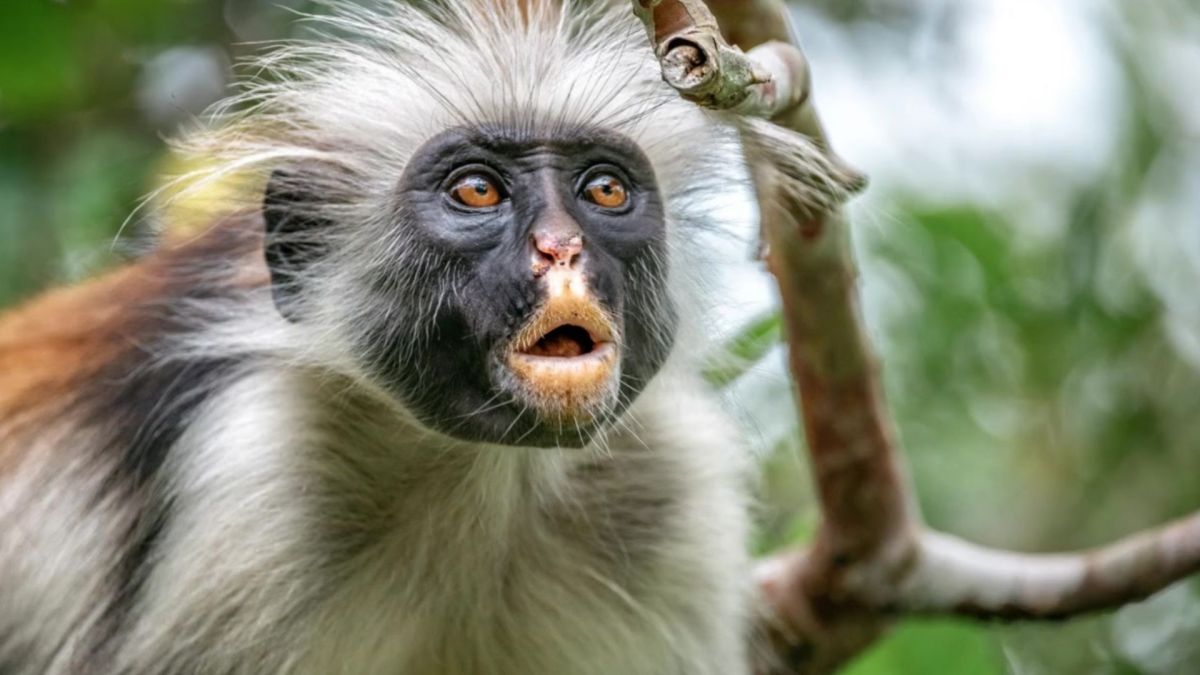
Miss Waldron’s Red Colobus Piliocolobus waldroni
xMiss Waldron’s Red Colobus, a secretive old world primate sport chestnut, black, and white white fur that surrounds their expressive faces. They live in the dense canopies of West Africa’s dwindling forests. Their story is one of ever-increasing fragility, on the edge of survival. Sightings of these magnificent primates have faded away since 1978. The…
Keep readingWritten by Joshua M. Linder, Professor of Anthropology, James Madison University and Nelson Ting, Professor of Anthropology, University of Oregon. This article is republished from The Conversation under a Creative Commons license. Read the original article.
ENDS
Learn about other animals endangered by palm oil and other agriculture
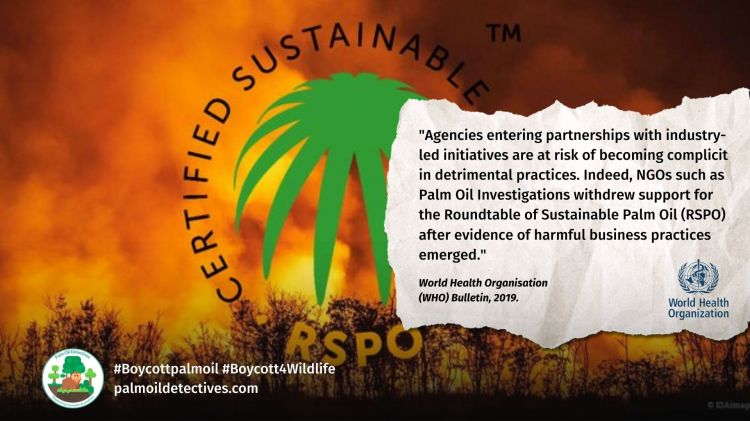
Learn about “sustainable” palm oil greenwashing
Read more about RSPO greenwashing
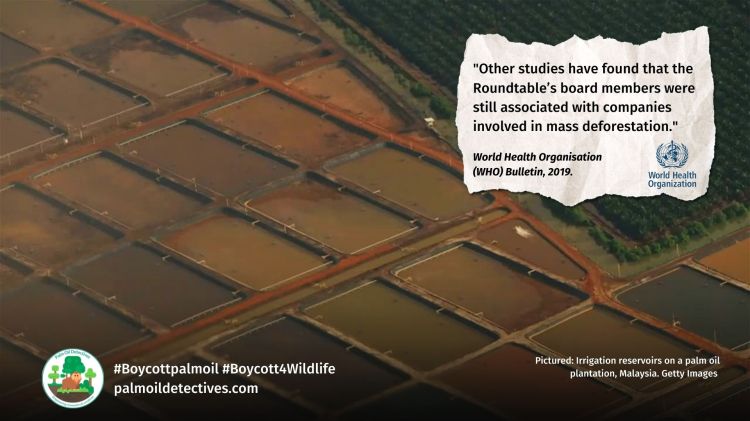
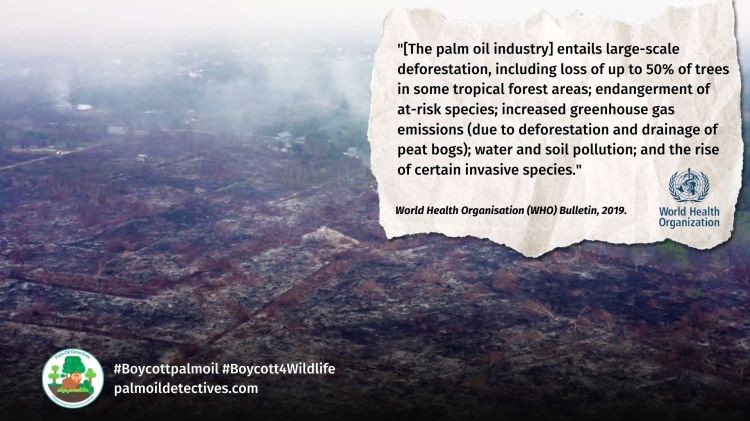
A 2019 World Health Organisation (WHO) report into the palm oil industry and RSPO finds extensive greenwashing of palm oil deforestation and the murder of endangered animals (i.e. biodiversity loss)


Take Action in Five Ways
1. Join the #Boycott4Wildlife on social media and subscribe to stay in the loop: Share posts from this website to your own network on Twitter, Mastadon, Instagram, Facebook and Youtube using the hashtags #Boycottpalmoil #Boycott4Wildlife.
2. Contribute stories: Academics, conservationists, scientists, indigenous rights advocates and animal rights advocates working to expose the corruption of the palm oil industry or to save animals can contribute stories to the website.



3. Supermarket sleuthing: Next time you’re in the supermarket, take photos of products containing palm oil. Share these to social media along with the hashtags to call out the greenwashing and ecocide of the brands who use palm oil. You can also take photos of palm oil free products and congratulate brands when they go palm oil free.
4. Take to the streets: Get in touch with Palm Oil Detectives to find out more.
5. Donate: Make a one-off or monthly donation to Palm Oil Detectives as a way of saying thank you and to help pay for ongoing running costs of the website and social media campaigns. Donate here
Discover more from Palm Oil Detectives
Subscribe to get the latest posts sent to your email.
 Palm Oil Detectives