
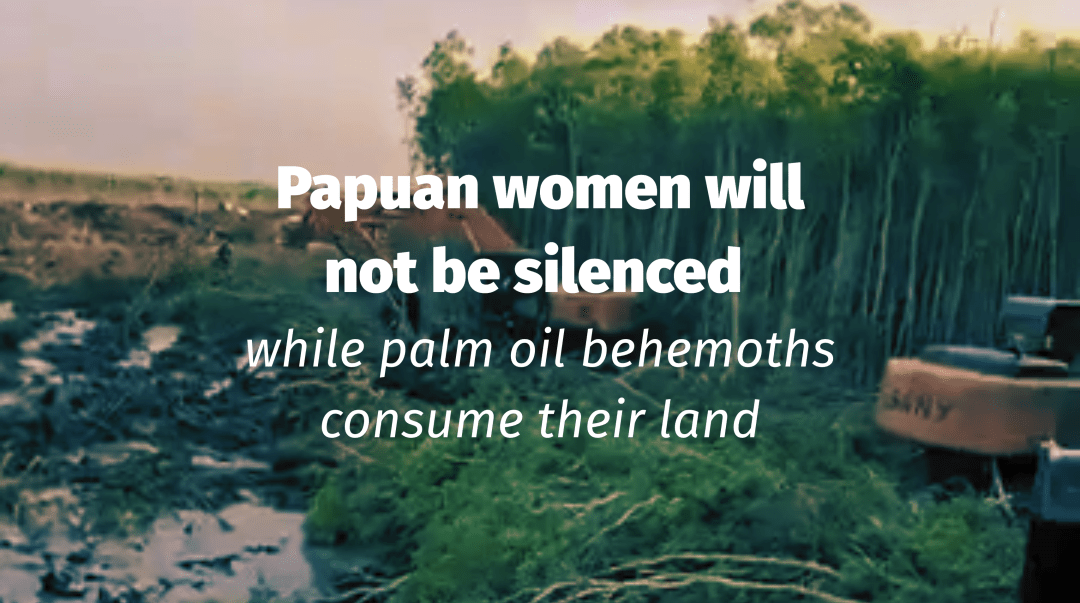
In the colonised region of #WestPapua, Indigenous Melanesian women’s rights are being forgotten as companies and the Indonesian government seizes ancestral land for palm oil and sugar cane plantations — without owners’ consent. These women are fighting to protect customary lands for future generations. The following is a summarised version of a story published by Human Rights Watch, read the original ‘There will be nowhere left.’
#News: #Indigenous women’s #landrights trampled in #Papua as #palmoil giants seize forests and jostle for power —the women will not be silenced! 🚫🌴☠️ #BoycottPalmOil #Boycott4Wildlife @palmoildetect via @HRW https://palmoildetectives.com/2025/09/10/papuan-women-will-not-be-silenced-while-palm-oil-behemoths-consume-their-land/
Human Rights Watch. (2025, August 20). “There Will be Nowhere Left: Government, Companies Take Indigenous Lands Without Women’s Consent in Indonesia’s South Papua. https://www.hrw.org/feature/2025/08/20/there-will-be-nowhere-left/government-companies-take-indigenous-lands-without
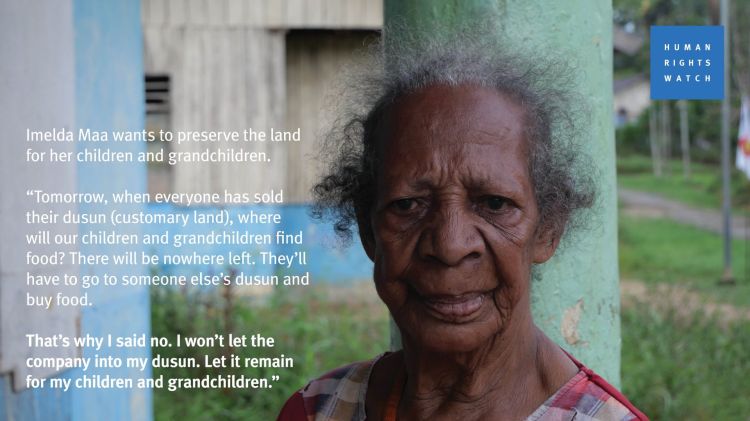
“Tomorrow, when everyone has sold their dusun (customary land), where will our children and grandchildren find food? There will be nowhere left. They’ll have to go to someone else’s dusun and buy food. That’s why I said no. I won’t let the company into my dusun. Let it remain for my children and grandchildren.”
Imelda Maa via Human Rights Watch
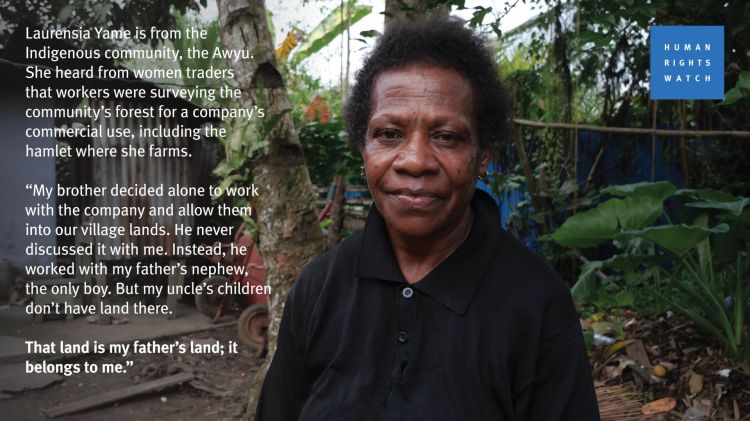
Laurensia Yame is from the Indigenous community, the Awyu. She heard from women traders that workers were surveying the community’s forest for a company’s commercial use, including the hamlet where she farms.
“My brother decided alone to work with the company and allow them into our village lands. He never discussed it with me. Instead, he worked with my father’s nephew, the only boy. But my uncle’s children don’t have land there. That land is my father’s land; it belongs to me.”
Laurensia Yame via Human Rights Watch
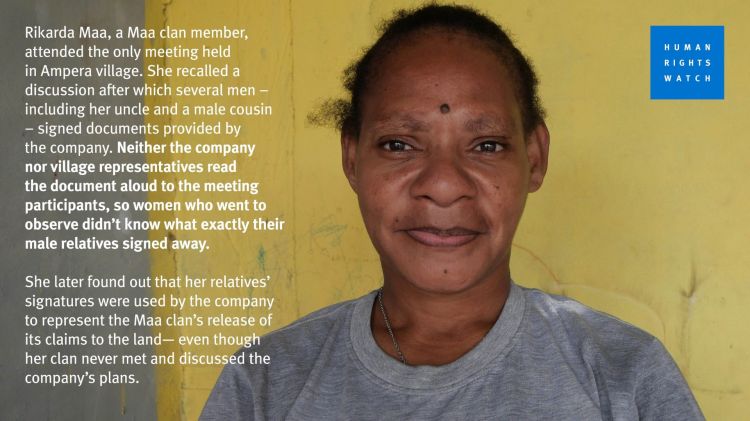
Rikarda Maa, a Maa clan member, attended the only meeting held in Ampera village. She recalled a discussion after which several men – including her uncle and a male cousin – signed documents provided by the company. Neither the company nor village representatives read the document aloud to the meeting participants, so women who went to observe didn’t know what exactly their male relatives signed away.
Rikarda Maa via Human Rights Watch
She later found out that her relatives’ signatures were used by the company to represent the Maa clan’s release of its claims to the land—even though her clan never met and discussed the company’s plans.
A new investigation by Human Rights Watch finds that the world’s leading palm oil producer, Indonesia is rapidly expanding agricultural frontiers into Papua, especially the western New Guinea region. This aggressive and unrestrained expansion is driving mass deforestation and loss of Indigenous lands, as government and private companies move in—often without the consent of local women.
Customary lands known as dusun are central to the livelihoods and cultural identity of Indigenous Papuans. Women like Imelda Maa warn of the implications: “Tomorrow, when everyone has sold their dusun (customary land), where will our children and grandchildren find food? There will be nowhere left. They’ll have to go to someone else’s dusun and buy food. That’s why I said no. I won’t let the company into my dusun. Let it remain for my children and grandchildren.”
Despite Indonesian law requiring companies to obtain community consent—including through environmental and social impact assessments—the reality is different. Permits are granted after so-called consultations that routinely exclude women, even though under national law they possess equal land rights. As Laurensia Yame, from the Awyu community, explains: “My brother decided alone to work with the company and allow them into our village lands. He never discussed it with me. Instead, he worked with my father’s nephew, the only boy. But my uncle’s children don’t have land there. That land is my father’s land; it belongs to me.”
Corporate strategies to acquire land have included meetings involving only male representatives, leaving women’s voices ignored—even though both women and men inherit and use community lands. These decisions jeopardise food security, traditional livelihoods, and the ability of Indigenous families to sustain themselves.
While legally companies must engage with the whole affected community, testimonies highlight the persistent exclusion of women across South Papua. As the government authorises clearance of old-growth forests for palm oil, rice, and sugar cane, these vital lands are vanishing, sparking fears articulated by many Papuan women: there will be nowhere left for their descendants to survive.
The struggle continues as the Awyu and others campaign for the rights to their lands and forests—advocating for legal recognition and genuine, inclusive consultation, not just box-ticking exercises. The HRW report highlights the urgent need for indigenous-led land management and respect for women’s voices in decision-making.
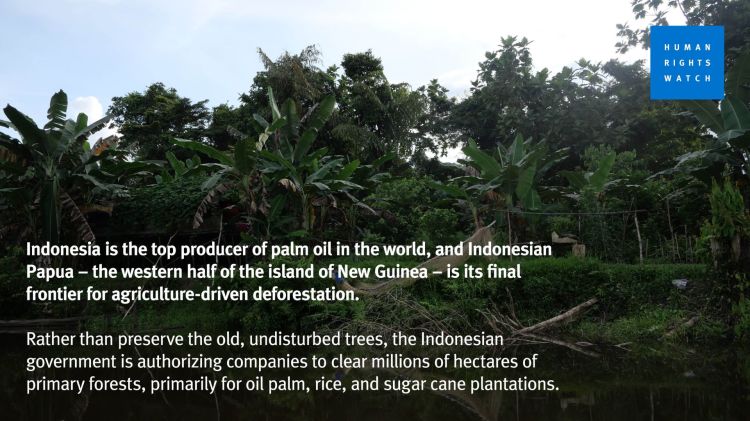
Indonesia is the top producer of palm oil in the world, and Indonesian Papua – the western half of the island of New Guinea – is its final frontier for agriculture-driven deforestation.
Rather than preserve the old, undisturbed trees, the Indonesian government is authorising companies to clear millions of hectares of primary forests, primarily for oil palm, rice, and sugar cane plantations.
Via Human Rights Watch
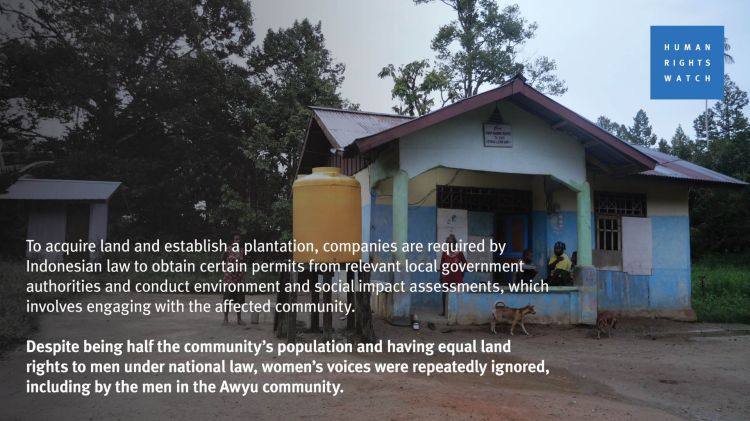
To acquire land and establish a plantation, companies are required by Indonesian law to obtain certain permits from relevant local government authorities and conduct environment and social impact assessments, which involves engaging with the affected community.
Despite being half the community’s population and having equal land rights to men under national law, women’s voices were repeatedly ignored, including by the men in the Awyu community.
Via Human Rights Watch
Read more: “There Will be Nowhere Left: Government, Companies Take Indigenous Lands Without Women’s Consent in Indonesia’s South Papua,” by Human Rights Watch.
Original article was written by Juliana Nnoko, women’s rights senior researcher. Edited by a senior program editor, and Amy Braunschweiger, former communications associate director. James Ross, legal and policy director, and Joseph Saunders, deputy program director, provided legal and programmatic review, respectively.
Human Rights Watch. (2025, August 20). “There Will be Nowhere Left: Government, Companies Take Indigenous Lands Without Women’s Consent in Indonesia’s South Papua.” Human Rights Watch. https://www.hrw.org/feature/2025/08/20/there-will-be-nowhere-left/government-companies-take-indigenous-lands-without
ENDS
Read more about human rights abuses and child slavery in the palm oil industry
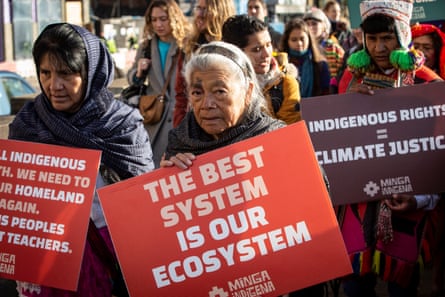
Oil palm in Latin America: monoculture and violence
The rapid expansion of oil palm plantations across #SouthAmerica is causing significant environmental, economic and social problems. This growth is leading to #deforestation, #landgrabbing displacement of #indigenous and farming communities, and increased militarised…
Read more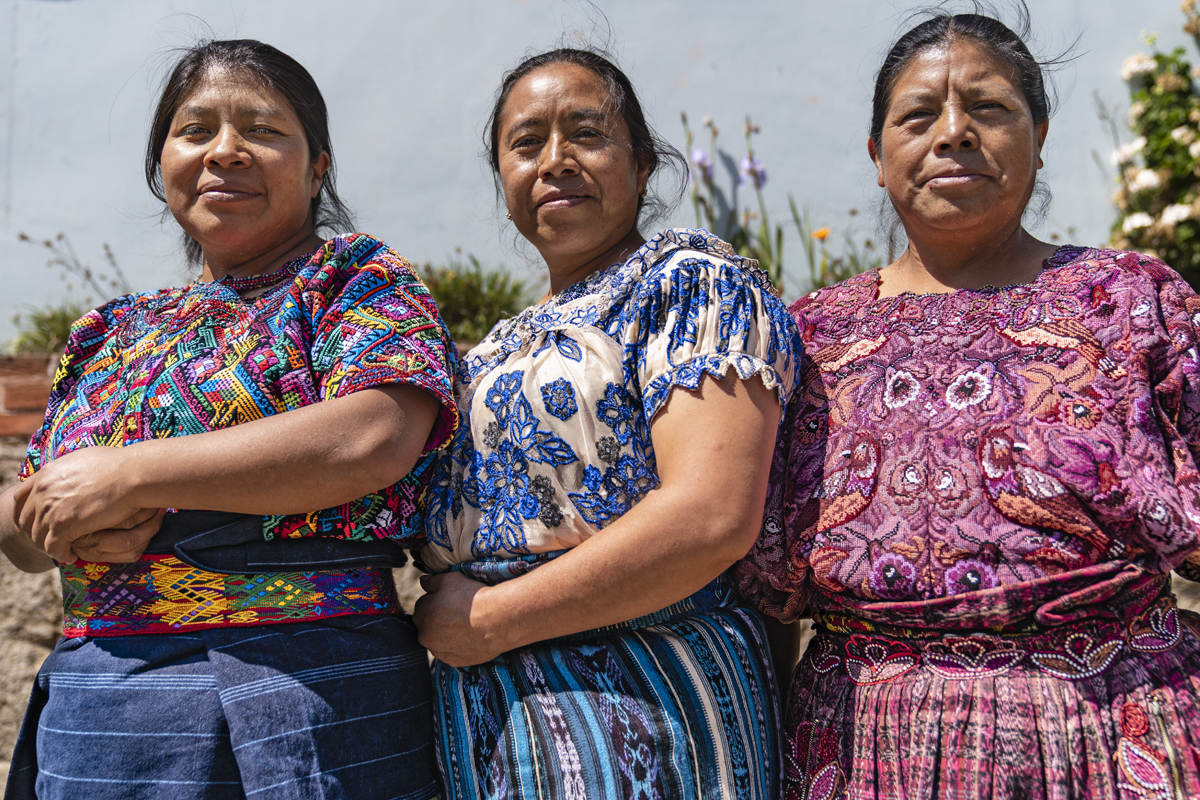
Indigenous Peoples Fight Climate Change
After wildfires, Belize’s indigenous people rebuild stronger based on “se’ komonil”: reciprocity, solidarity, gender equity, togetherness and community.
Read more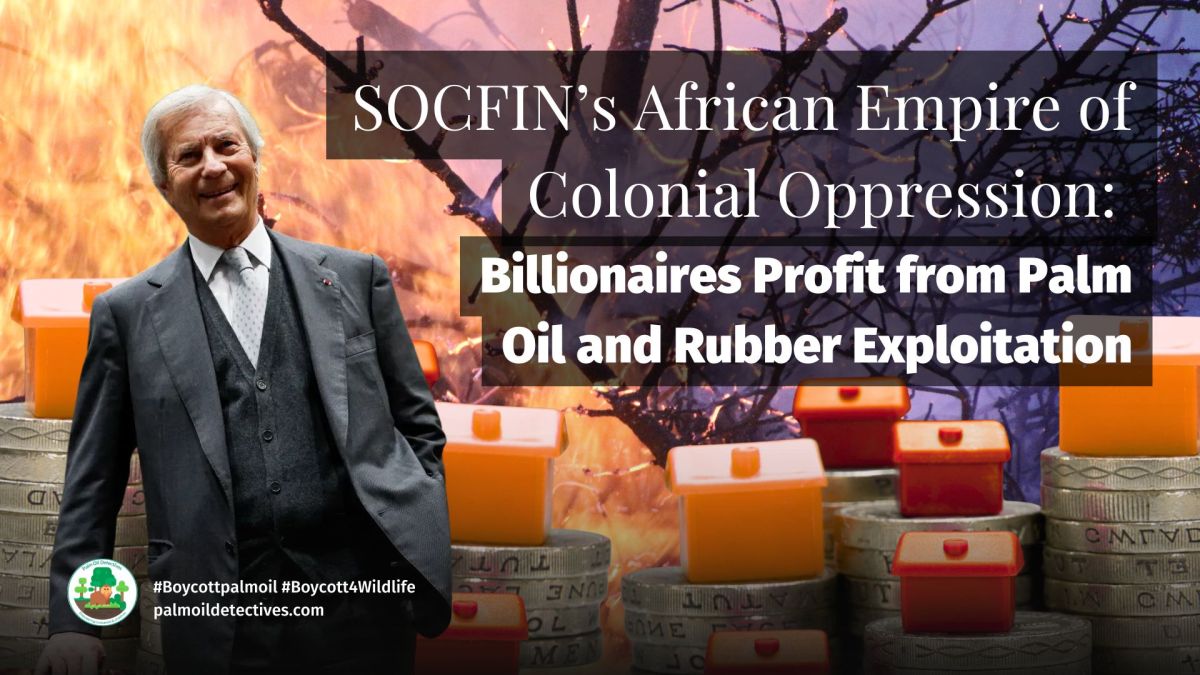
SOCFIN’s African Empire of Colonial Oppression: Billionaires Profit from Palm Oil and Rubber Exploitation
Investigation by Bloomberg exposes that despite being RSPO members, #SOCFIN plantations in #WestAfrica are the epicentre of #humanrights abuses, sexual coercion, environmental destruction, and #landgrabbing. Operating in #Liberia, #Ghana, #Nigeria, and beyond, SOCFIN’s…
Read more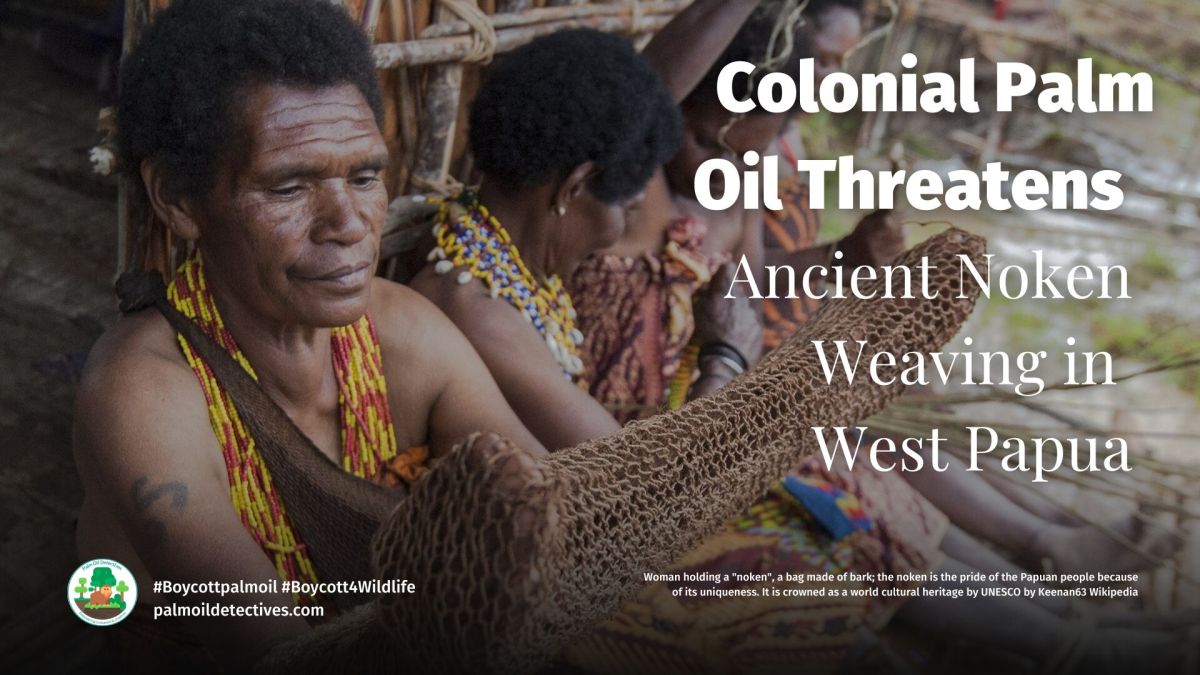
Palm Oil Threatens Ancient Noken Weaving in West Papua
Colonial palm oil and sugarcane causing the loss of West Papuans’ cultural identity. Land grabs force communities from forests, threatening Noken weaving
Read more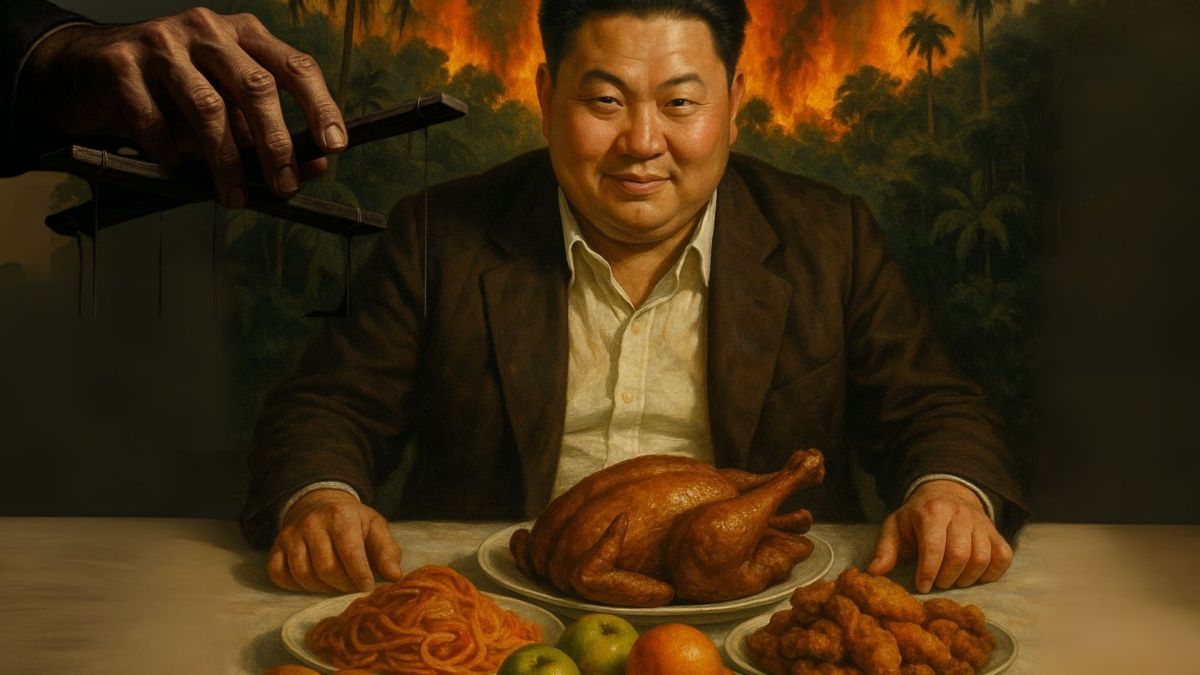
Family Ties Expose Deforestation and Rights Violations in Indonesian Palm Oil
An explosive report by the Environment Investigation Agency (EIA) details how Indonesia’s Fangiono family, through a wide corporate web, is linked to ongoing #deforestation, #corruption, and #indigenousrights abuses for #palmoil. Calls mount for…
Read moreSomething went wrong. Please refresh the page and/or try again.
Take Action in Five Ways
1. Join the #Boycott4Wildlife on social media and subscribe to stay in the loop: Share posts from this website to your own network on Twitter, Mastadon, Instagram, Facebook and Youtube using the hashtags #Boycottpalmoil #Boycott4Wildlife.
2. Contribute stories: Academics, conservationists, scientists, indigenous rights advocates and animal rights advocates working to expose the corruption of the palm oil industry or to save animals can contribute stories to the website.



3. Supermarket sleuthing: Next time you’re in the supermarket, take photos of products containing palm oil. Share these to social media along with the hashtags to call out the greenwashing and ecocide of the brands who use palm oil. You can also take photos of palm oil free products and congratulate brands when they go palm oil free.
4. Take to the streets: Get in touch with Palm Oil Detectives to find out more.
5. Donate: Make a one-off or monthly donation to Palm Oil Detectives as a way of saying thank you and to help pay for ongoing running costs of the website and social media campaigns. Donate here
Discover more from Palm Oil Detectives
Subscribe to get the latest posts sent to your email.
 Palm Oil Detectives