
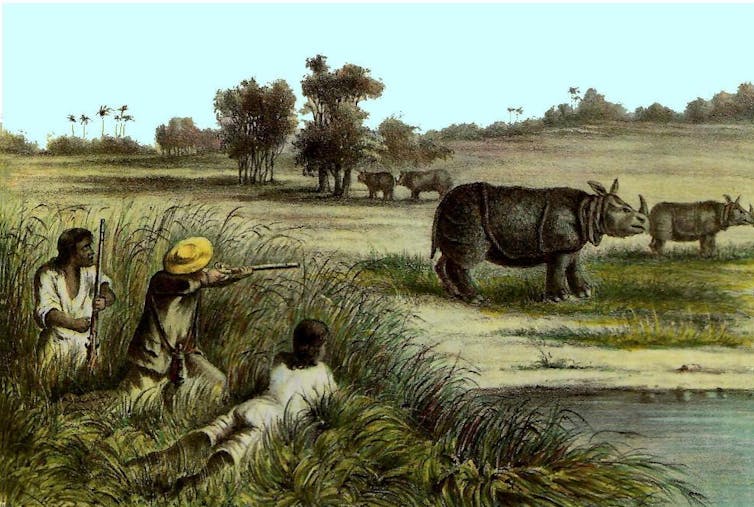
Recent testimony by arrested illegal poachers in #Indonesia finds 26 of the estimated remaining 72 living Javan #Rhinos were slaughtered for their horns over the past five years. In the so-called “protected” Ujung Kulon National Park in the western tip of the island of Java. This must spark a national emergency to protect these beings before they are gone for good! End the wildlife trade and #BoycottPalmOil #Boycott4Wildlife
Shocking news: 26 of the 72 remaining #Javan #Rhinos 🦏 were poached recently from Ujung Kulon National Park, #Indonesia making their protection even more serious. End disgusting #poaching! Help them survive when you #Boycott4Wildlife @palmoildetect https://wp.me/pcFhgU-91C
Testimony by arrested #poachers in #Indonesia finds 26 of the remaining 72 #Javan #Rhino 🦏 are still alive 😭 We must scramble to protect these beautiful and unique #animals urgently! #Boycottmeat #BoycottPalmOil #Boycott4Wildlife @palmoildetect https://wp.me/pcFhgU-91C
Written by Jason Gilchrist, Lecturer in the School of Applied Sciences, Edinburgh Napier University. This article is republished from The Conversation under a Creative Commons license. Read the original article.
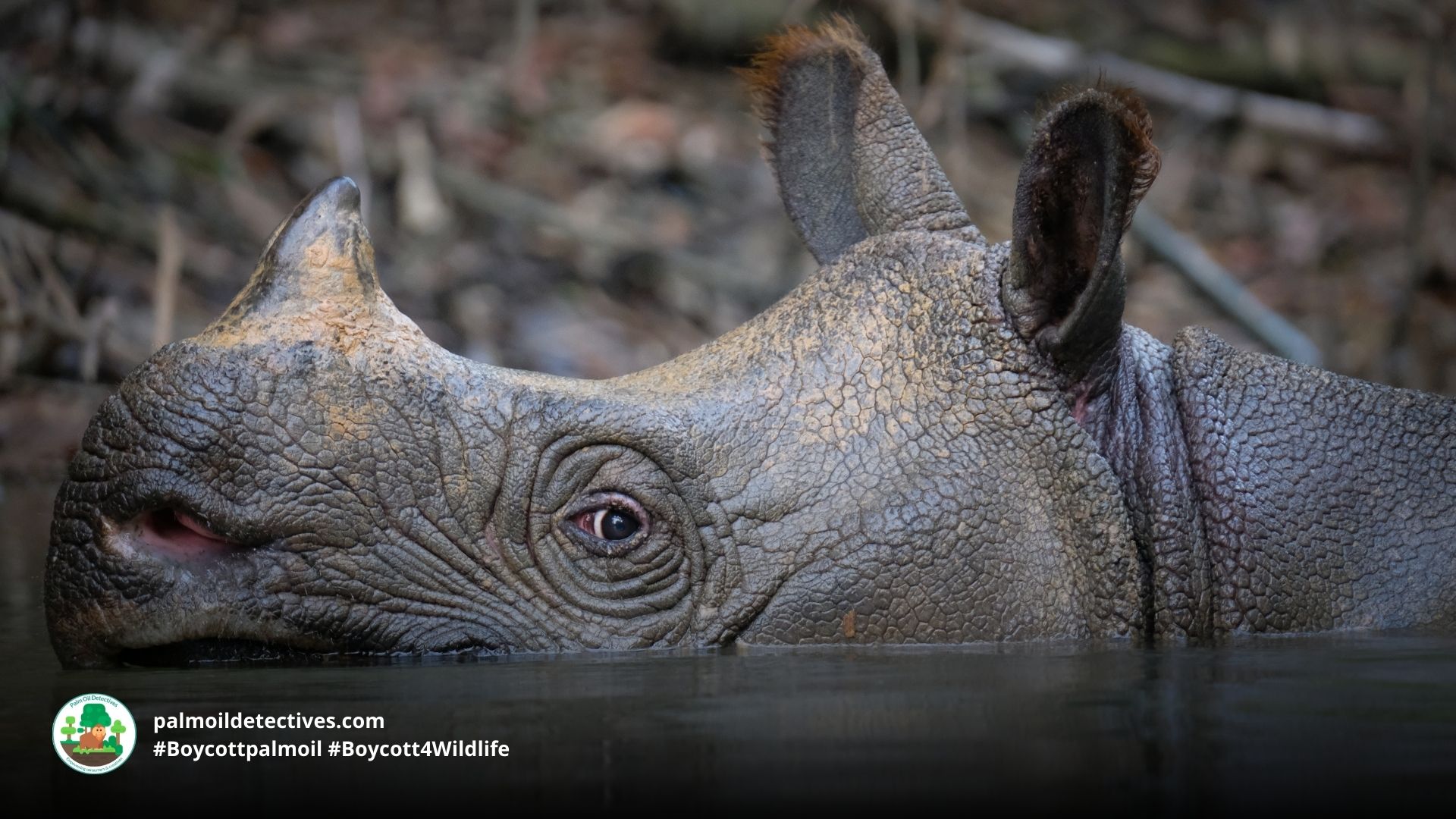
26 of the estimated maximum 72 Javan rhino have been poached by two gangs in the last five years. Absolutely shocking news!
I am an ecologist, and I have been lucky to work with white rhino in Africa. This work has involved capturing rhino, dehorning and moving them – methods used to try to save rhino from poachers.
Poachers target these large, plant-eating mammals for the illegal trade in rhino horn, fuelled by demand from Asia, principally China and Vietnam, where the horn is perceived as a status symbol, a cure for illness and an aphrodisiac.
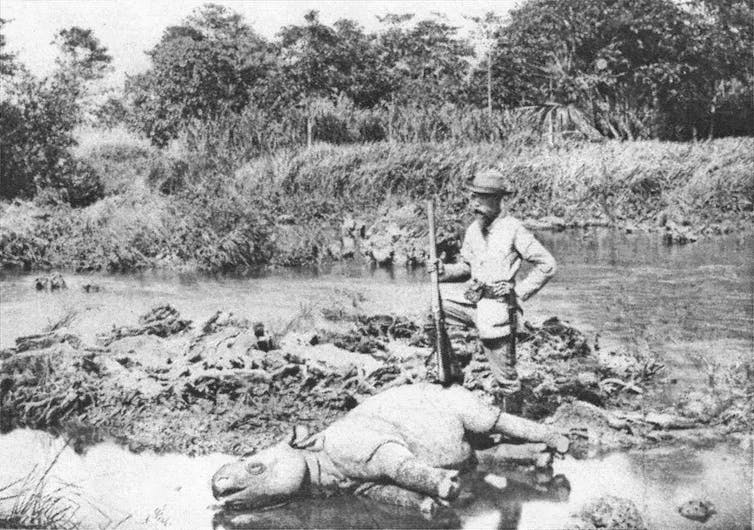
Poaching is the main threat to the African rhino, but it was not considered a risk for the critically endangered Javan rhino in Asia. So rare and difficult to detect are Javan rhino, which live in dense jungle, that it was thought poachers would not be able to find them.
However, recent testimony from poachers arrested in Indonesia has indicated that 26 of the estimated maximum 72 Javan rhino have been poached by two gangs in the last five years. That is shocking news.
This revelation turns a worrying situation into an emergency – and demands increased efforts to save the Javan rhino from extinction.
How many Javan rhino are there?
Indonesian police arrested 13 members of two poaching gangs who revealed the otherwise undetected loss of rhino from Ujung Kulon National Park, the home of the world’s only remaining Javan rhino population, on the island of Java in the Indonesian archipelago.
Javan rhino were once widespread in southeast Asia. The last one outside of Indonesia was poached in Vietnam in 2010.
The actual number of rhino killed by the poaching gangs cannot be verified. It’s possible that sources within the government or conservation teams are passing information to poachers.
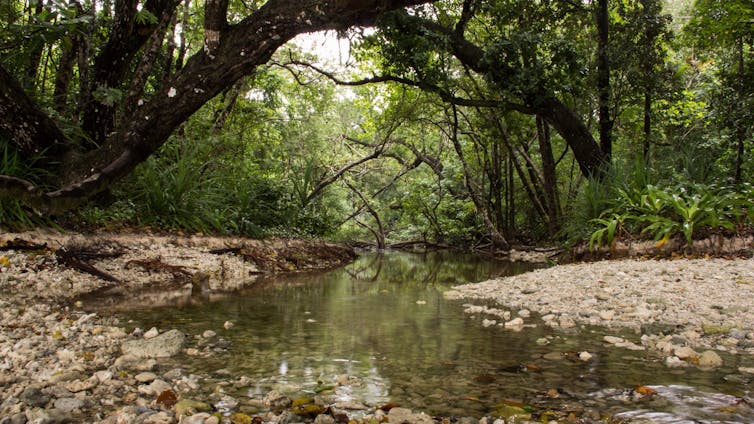
Indonesia’s forests are home to 10-15% of the planet’s plants, birds and mammals. While Indonesia harbours the greatest amount of rainforest in Asia, over 74 million hectares (three times the land area of the UK) have been lost in the past 50 years to palm oil extraction and paper mills.
Indonesia’s forest cover has fallen from 80% to less than 50% amid one of the fastest deforestation rates in the world. Pandeglang, the Javan region containing the national park, has lost nearly 10% of its rainforest since 2000.
All scientists know about the abundance of Javan rhino is gleaned from camera traps, remote cameras that are triggered to take photos by passing animals. The last government population estimate was released in 2019.
A report published in 2023 criticised this estimate because 18 of the rhino counted had not been detected by a camera trap for three years, and three of the rhino counted were known to be dead.
Saving the Javan rhino from extinction
Indonesian conservationists have focused on habitat loss as the leading threat to Javan rhino, as it deprives the species of breeding opportunities. Scattered across separate fragments of jungle, rhino are unlikely to find each other during the brief window when females are receptive to mating.
There is also evidence of inbreeding, exacerbated by there being more adult males than females. Some biologists have called for Javan rhino to be taken into captive breeding programmes.
With just 46 Javan rhino in the wild (perhaps even less), poaching could wipe out the species or reduce it to such a low number that low breeding success deals the final blow.
So, what now? It is likely that the Javan rhino cannot afford to lose any further animals to poaching, and vital that further poaching is prevented. The Indonesian government has now increased security in the national park with police and military combining forces.
Allowing forests to naturally regenerate and planting corridors of trees between jungle patches will help the remaining rhino find suitable habitat and each other. Conservationists have also called for cutting down trees in some locations to allow fresh, young trees with more accessible leaves to grow.
Research has also shown that removing an invasive palm boosts the availability of rhino food plants. Livestock must be excluded from the park too, as domestic cattle can transmit disease.
As far back as 1986, conservationists called for some rhino to be moved out of the park (perhaps to the neighbouring island of Sumatra). Splitting an already limited population is risky, but not establishing the safety net of at least one other population elsewhere is riskier still.
What if a tsunami hit the park? And the park may already be near capacity, as it is estimated to be able to support only 68 rhino.
Bringing Javan rhino into captivity and using reproductive technologies on stored eggs and sperm (techniques in development for the more common white rhino) may also need to be considered. Although, it is still possible that captive breeding may not be required: camera traps have photographed newborn Javan rhino, as well as adults, as recently as March 2024.
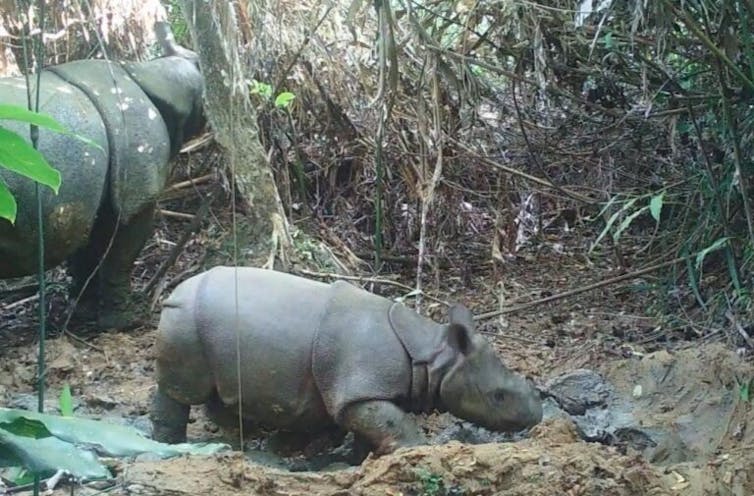
Scientists don’t know much about Javan rhino biology. There have been few studies of wild rhino and only 22 have ever been kept in captivity, the last of which died more than 100 years ago. More research is needed to understand as much as possible about Javan rhino ecology and reproduction – in the wild and from museum specimens.
More effective habitat and wildlife conservation across Indonesia will benefit other Indonesian species, including the Sumatran tiger, Sumatran elephant, all three species of orangutan, and the Sumatran rhino (estimated population of 24-47, making it the world’s most endangered rhino).
If effective conservation action is not taken now, the remaining Javan rhino population will go the same way as that in Vietnam.
Written by Jason Gilchrist, Lecturer in the School of Applied Sciences, Edinburgh Napier University. This article is republished from The Conversation under a Creative Commons license. Read the original article.
ENDS
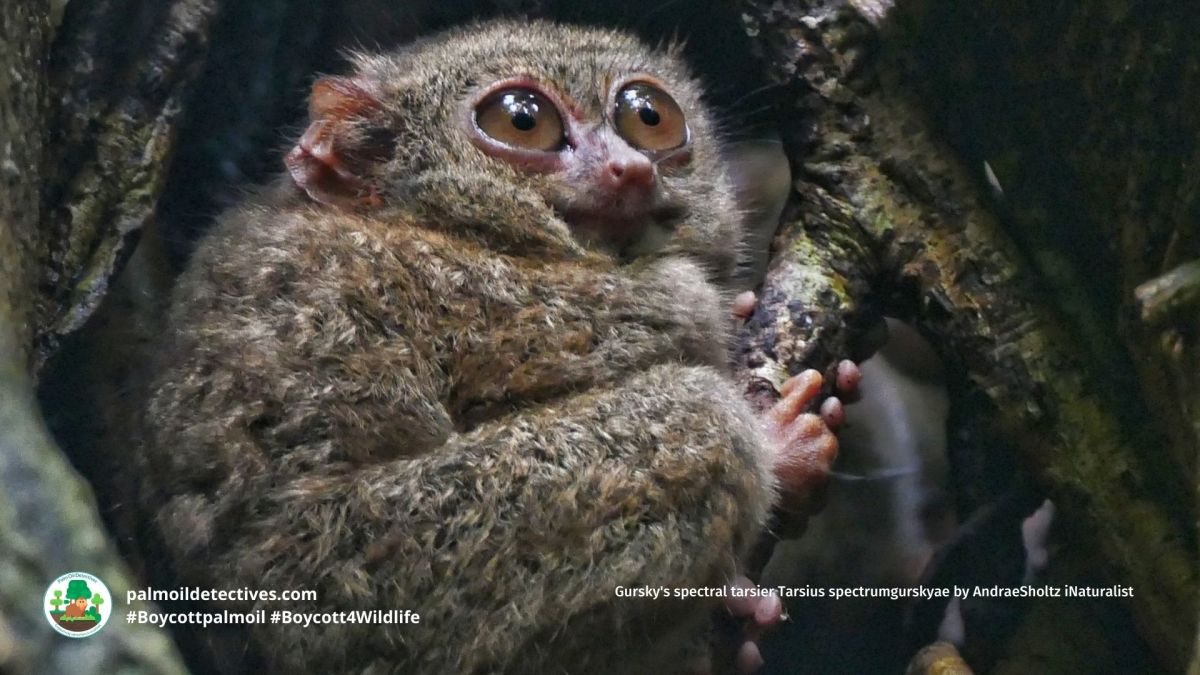
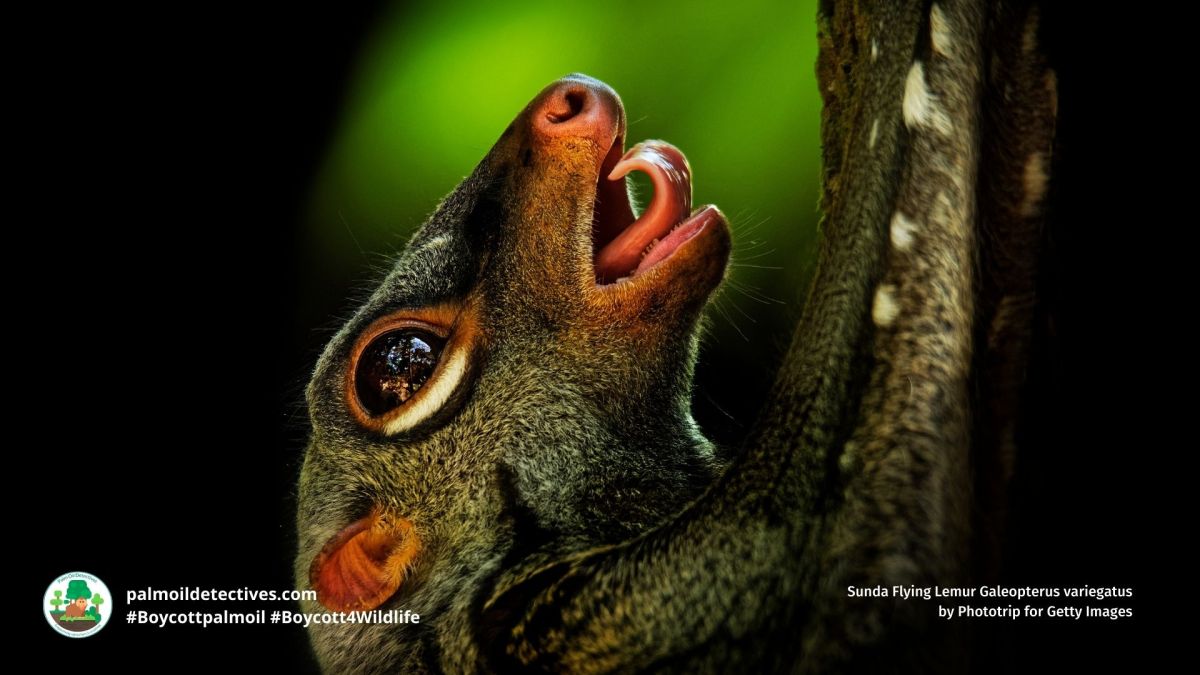
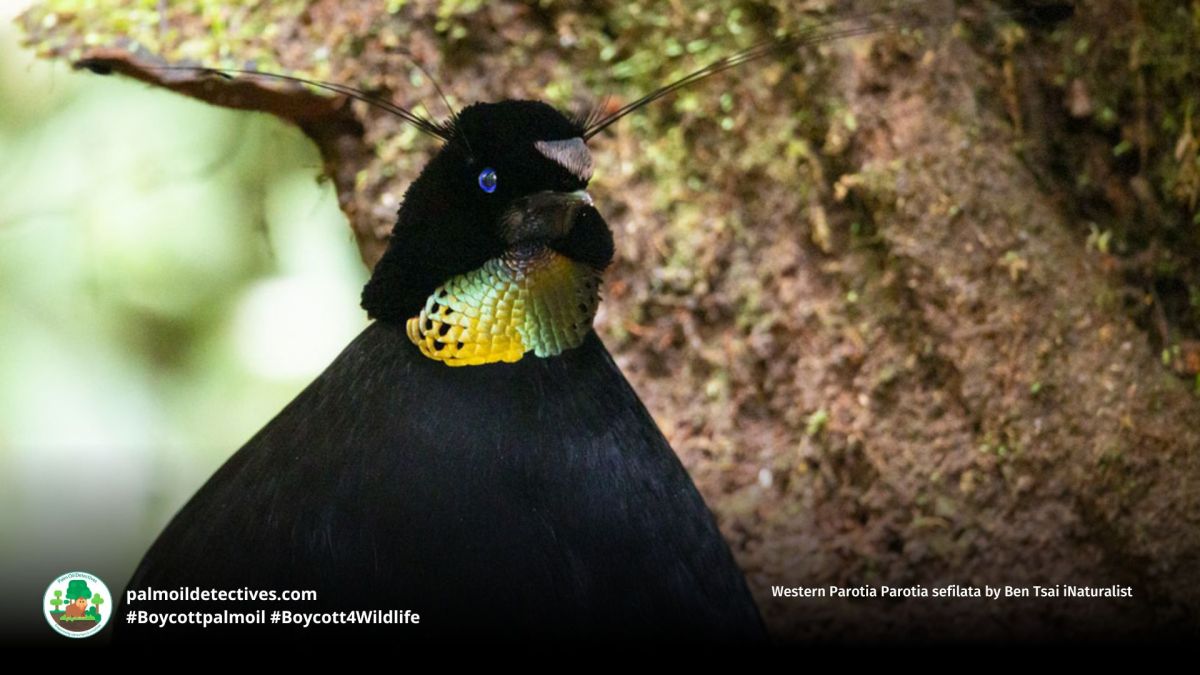
Learn about other animals endangered by palm oil and other agriculture
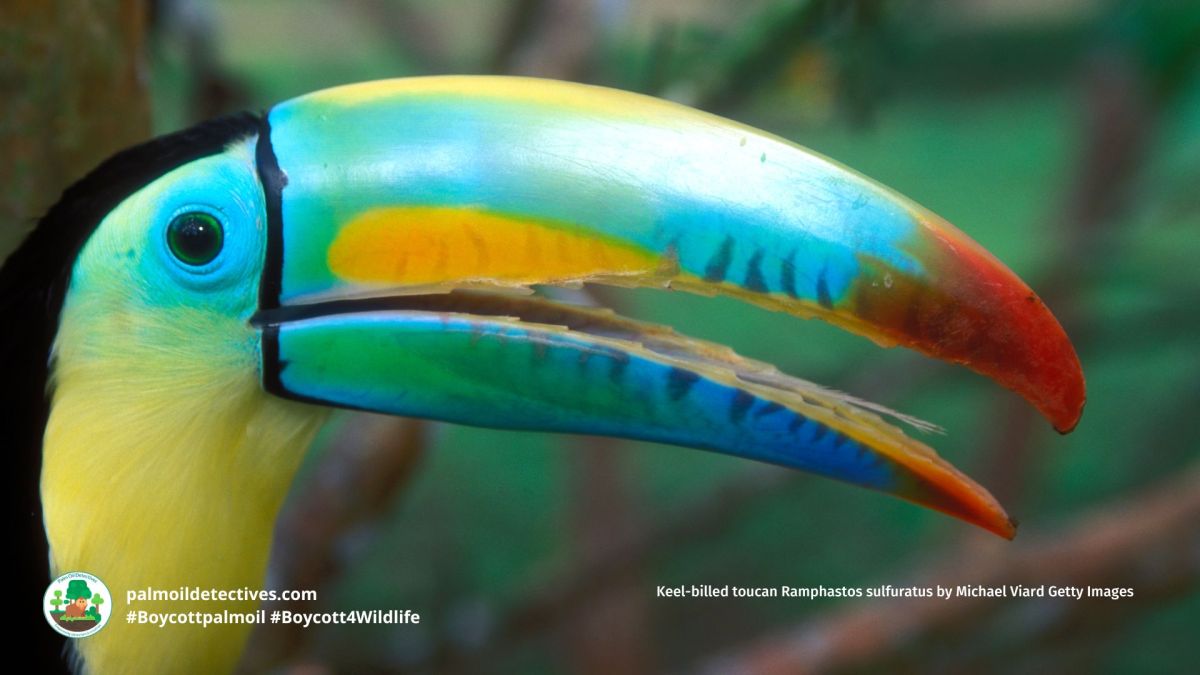
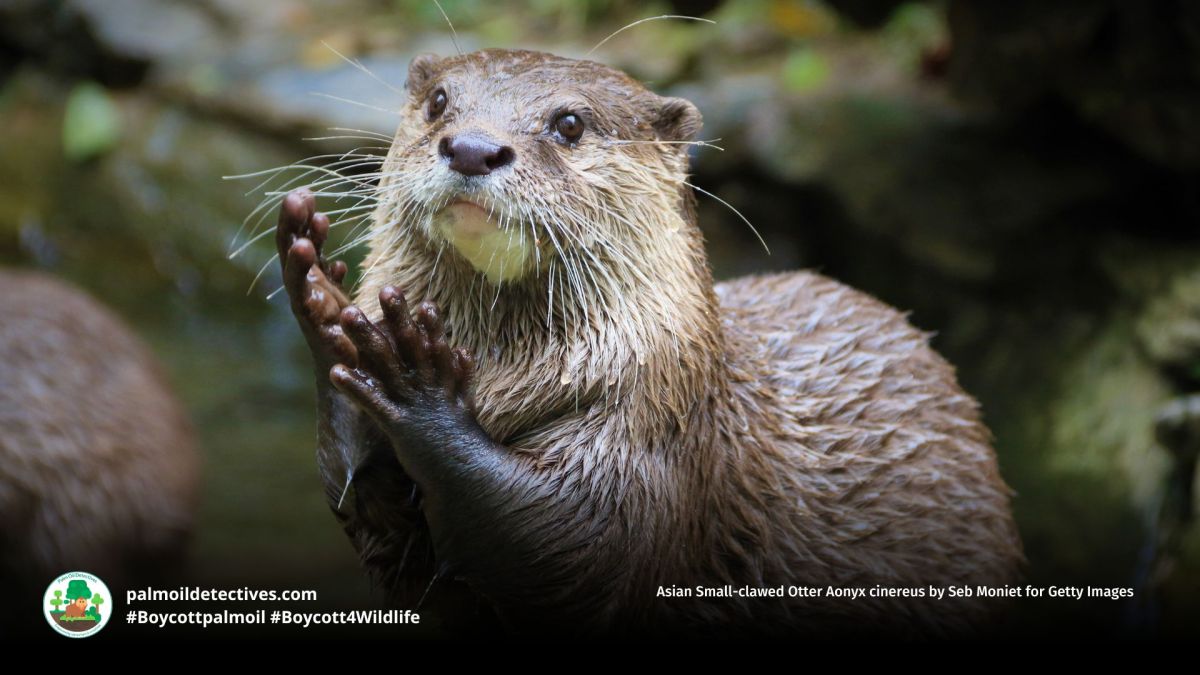
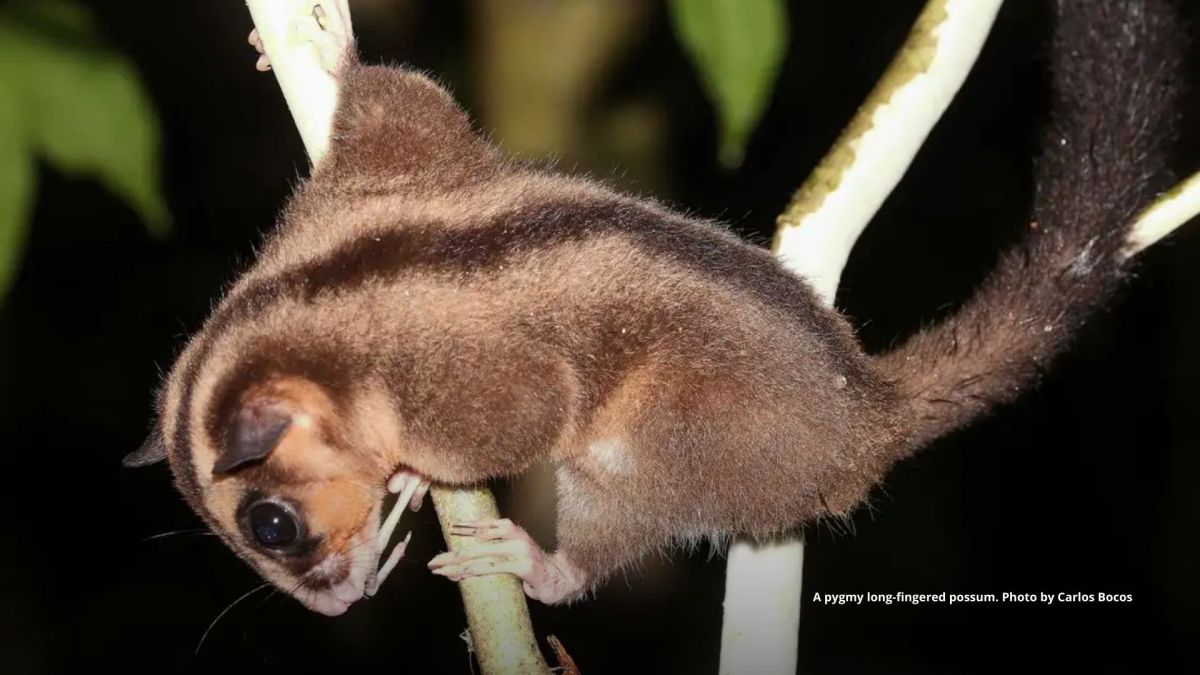
Learn about “sustainable” palm oil greenwashing
Read more about RSPO greenwashing
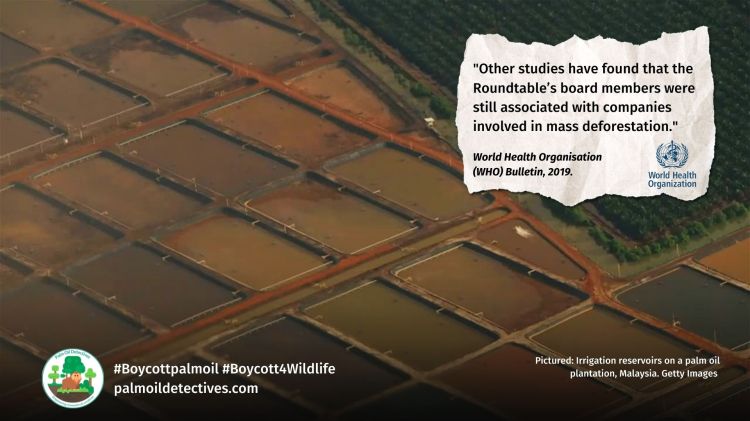
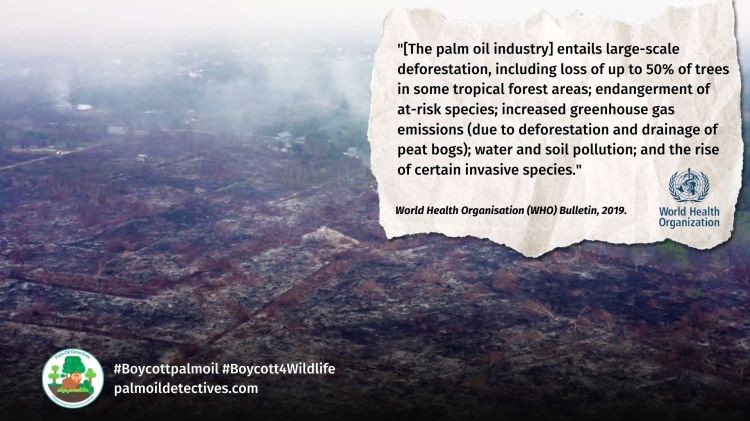
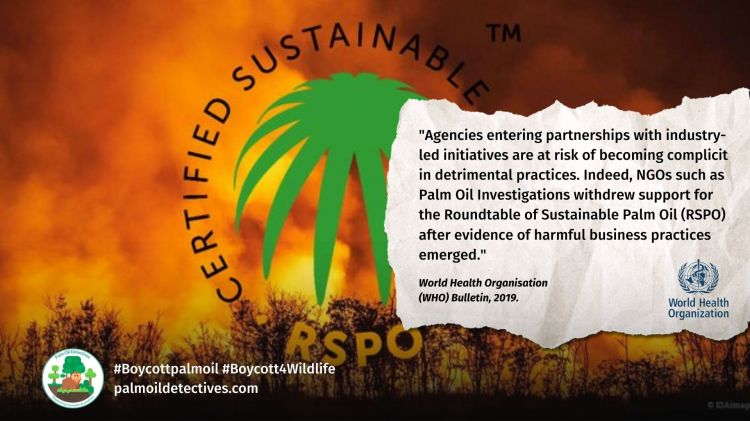
A 2019 World Health Organisation (WHO) report into the palm oil industry and RSPO finds extensive greenwashing of palm oil deforestation and the murder of endangered animals (i.e. biodiversity loss)


Take Action in Five Ways
1. Join the #Boycott4Wildlife on social media and subscribe to stay in the loop: Share posts from this website to your own network on Twitter, Mastadon, Instagram, Facebook and Youtube using the hashtags #Boycottpalmoil #Boycott4Wildlife.
2. Contribute stories: Academics, conservationists, scientists, indigenous rights advocates and animal rights advocates working to expose the corruption of the palm oil industry or to save animals can contribute stories to the website.






3. Supermarket sleuthing: Next time you’re in the supermarket, take photos of products containing palm oil. Share these to social media along with the hashtags to call out the greenwashing and ecocide of the brands who use palm oil. You can also take photos of palm oil free products and congratulate brands when they go palm oil free.
4. Take to the streets: Get in touch with Palm Oil Detectives to find out more.
5. Donate: Make a one-off or monthly donation to Palm Oil Detectives as a way of saying thank you and to help pay for ongoing running costs of the website and social media campaigns. Donate here
Discover more from Palm Oil Detectives
Subscribe to get the latest posts sent to your email.
 Palm Oil Detectives