
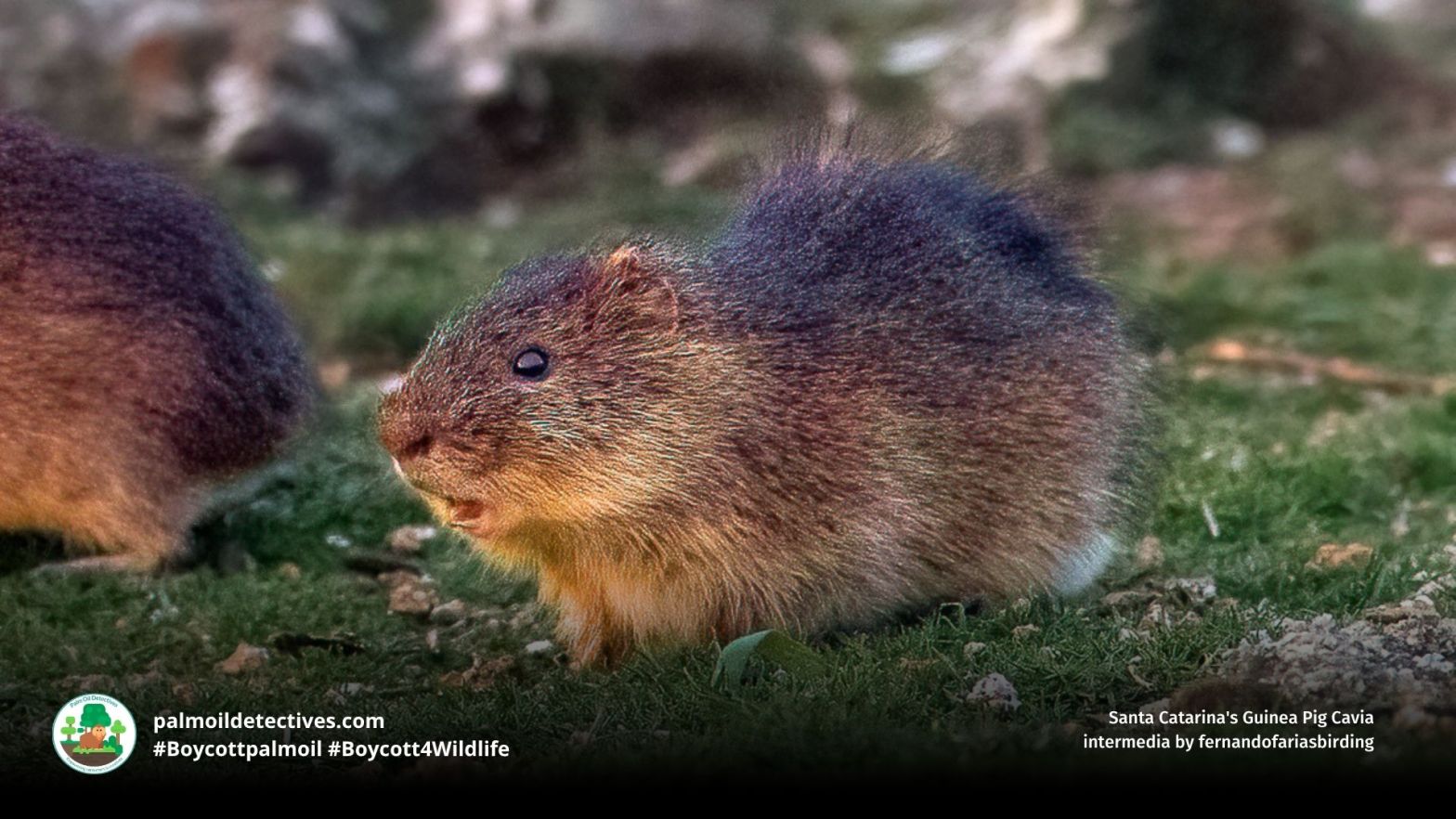
Santa Catarina’s Guinea Pig Cavia intermedia
Red List Status:
Locations: Santa Catarina’s guinea pig is found exclusively on Moleques do Sul Island, part of the Moleques do Sul Archipelago in the state of Santa Catarina, Brazil. The archipelago consists of three small islands with a total surface area of only 10.5 hectares (26 acres). The species is confined to this tiny habitat, making it one of the most geographically restricted mammals in the world.
Hidden away on a tiny, rocky island off the coast of southern Brazil, Santa Catarina’s guinea pigs hold the precarious title of being one of the rarest mammals on Earth. Separated from the mainland over 8,000 years ago by rising sea levels, these robust little rodents have evolved in complete isolation. Today, their entire global population fluctuates around a mere 40 to 50 individuals, restricted to a grazing patch no larger than a football pitch. While they live far from the bulldozers of the mainland, the global fallout of industrial agriculture, driven by the clearing of forests for meat, soy, and palm oil, fuels the climate crisis that threatens to swallow their tiny island home. Stand up for the world’s most vulnerable species and take #ClimateActionNow #Boycott4Wildlife.
Santa Catarina’s #GuineaPig 🐀🐇 of #Brazil 🇧🇷 are enchanting critically endangered #rodents. #ClimateChange ☠️🌊😾 is their biggest threat. Take #ClimateActionNow for these cuties #Boycott4Wildlife @palmoildetect https://wp.me/pcFhgU-dXN
Living on a tiny island off #Brazil, Just a few dozen Santa Catarina’s #GuineaPigs 🐖🩷😻 remain alive. #ClimateChange is their main threat 🔥🌴💀🚫🙊 Fight for them and boycott #FossilFuel insanity! #Boycott4Wildlife @palmoildetect https://wp.me/pcFhgU-dXN
Appearance & behaviour
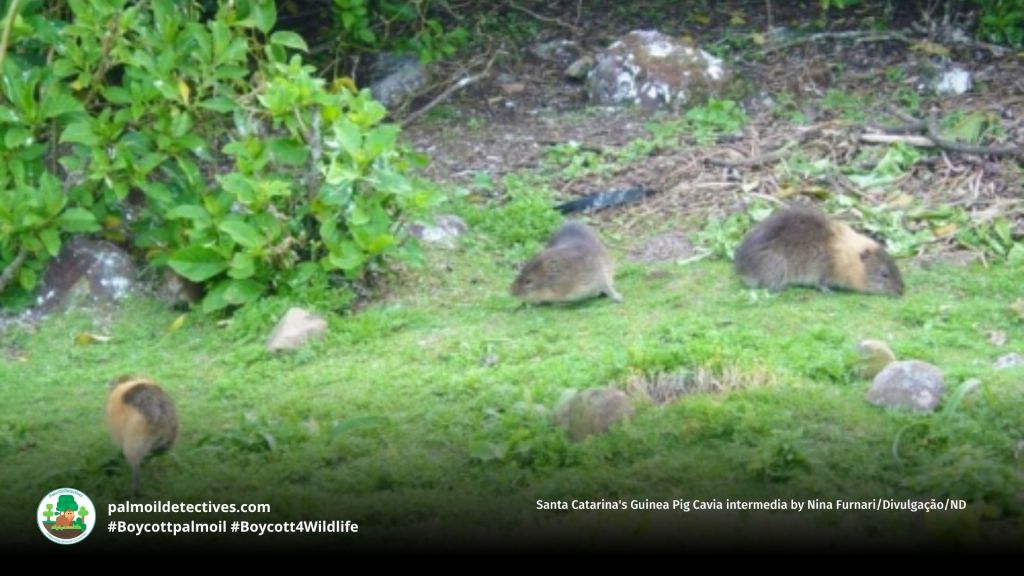
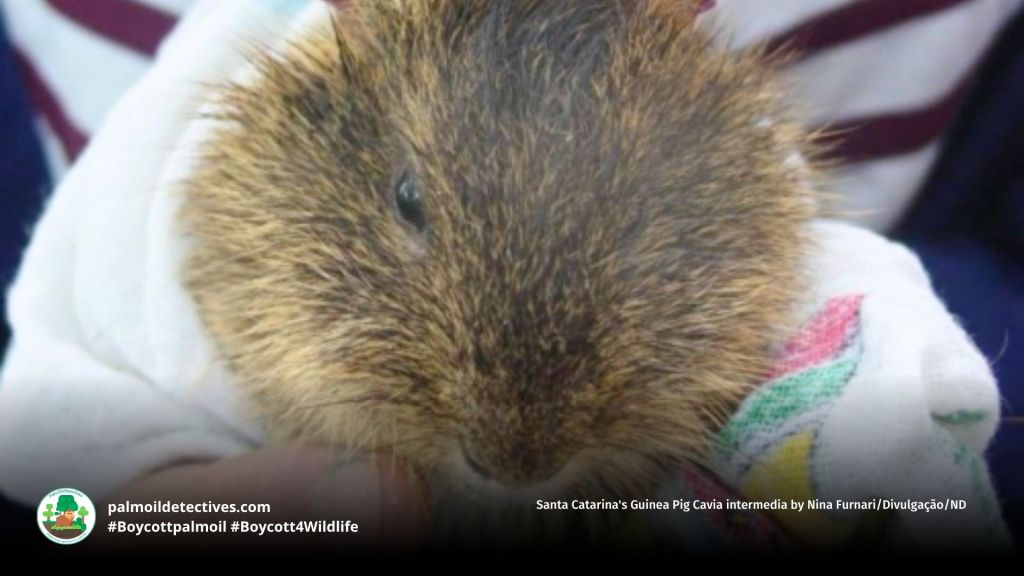
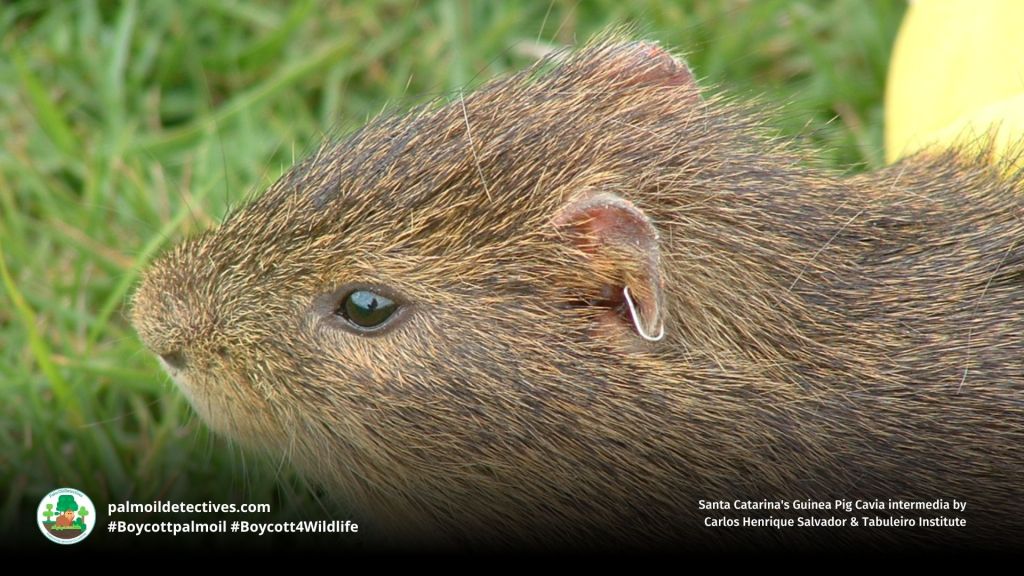
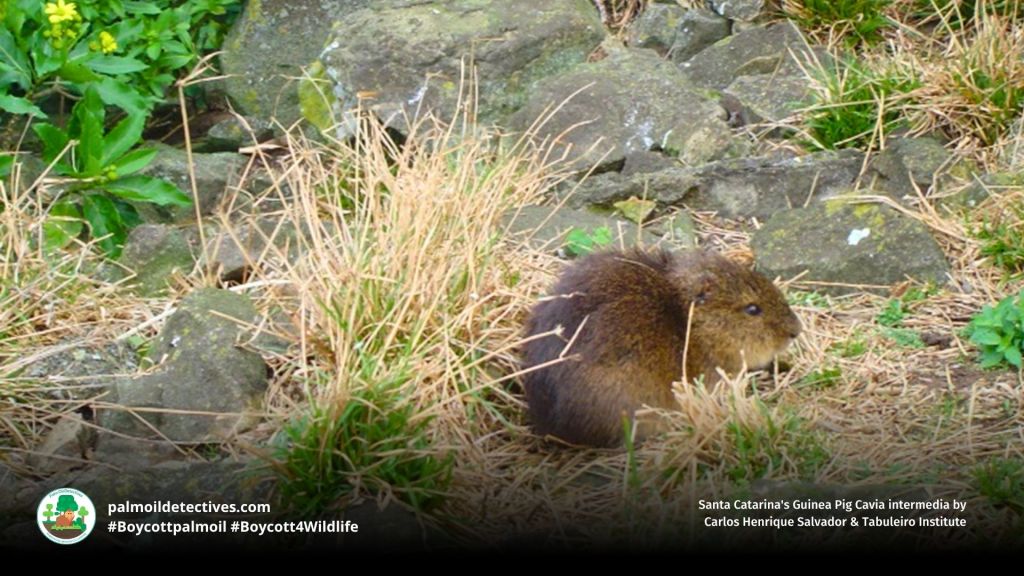
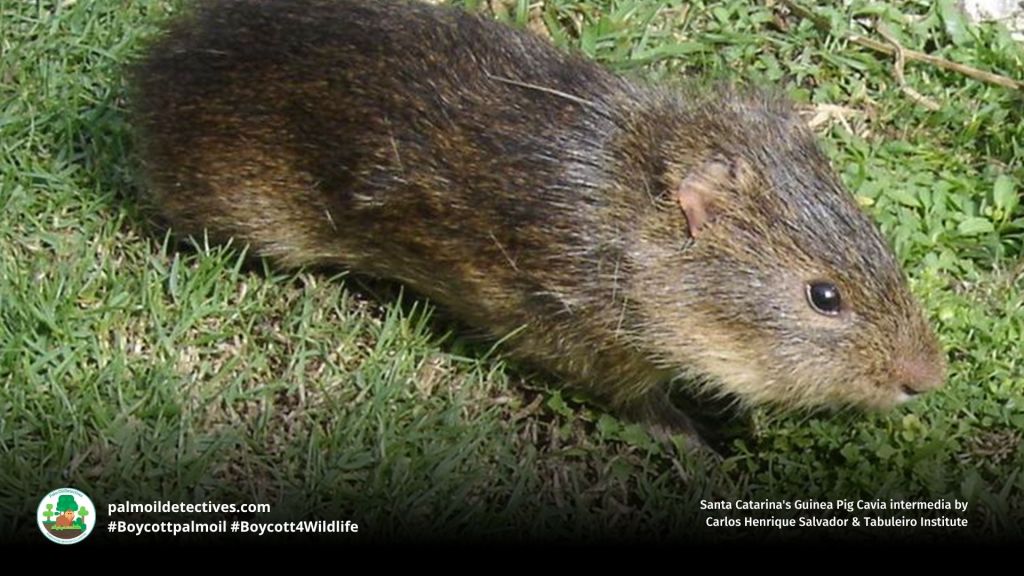
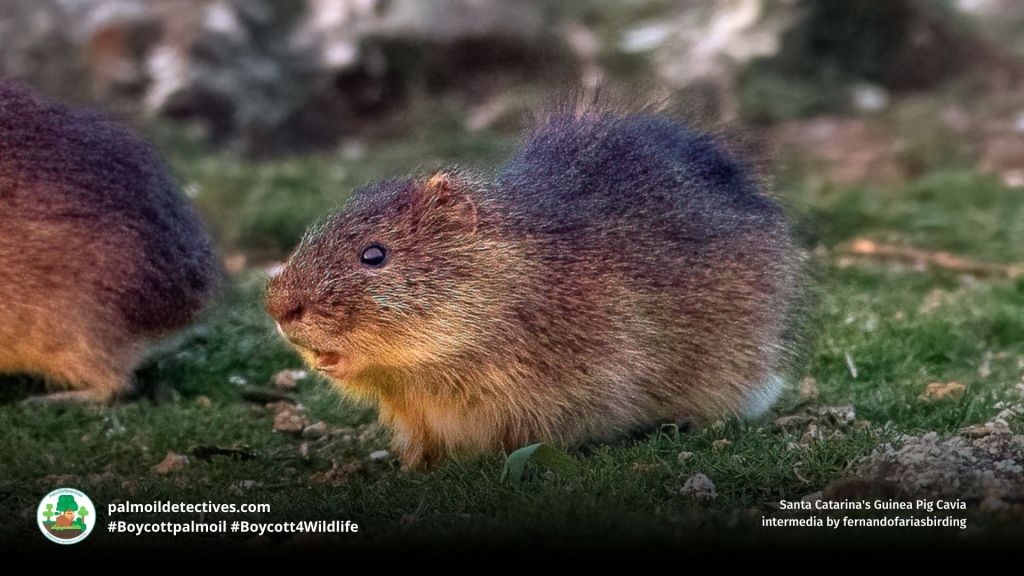
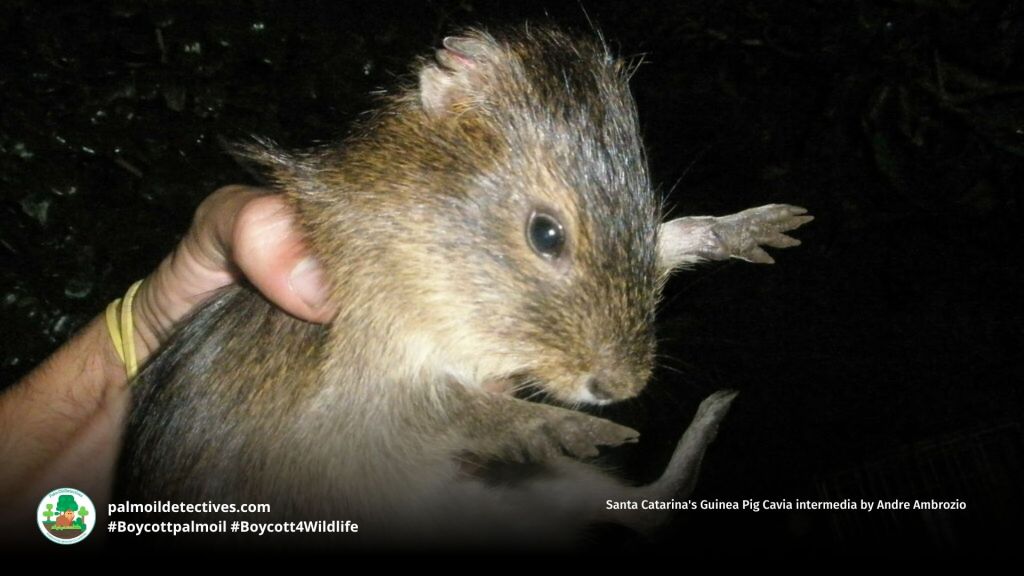
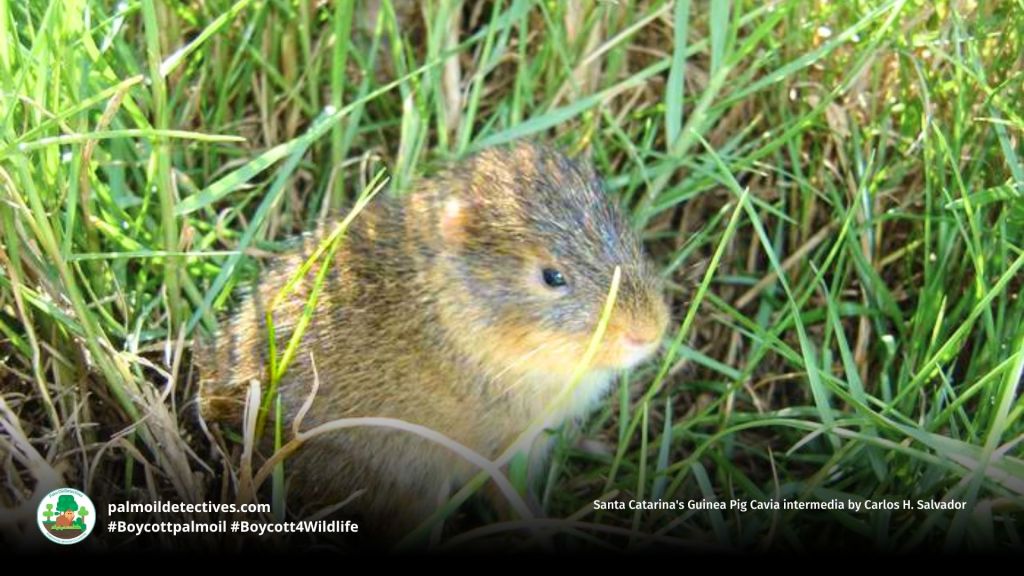
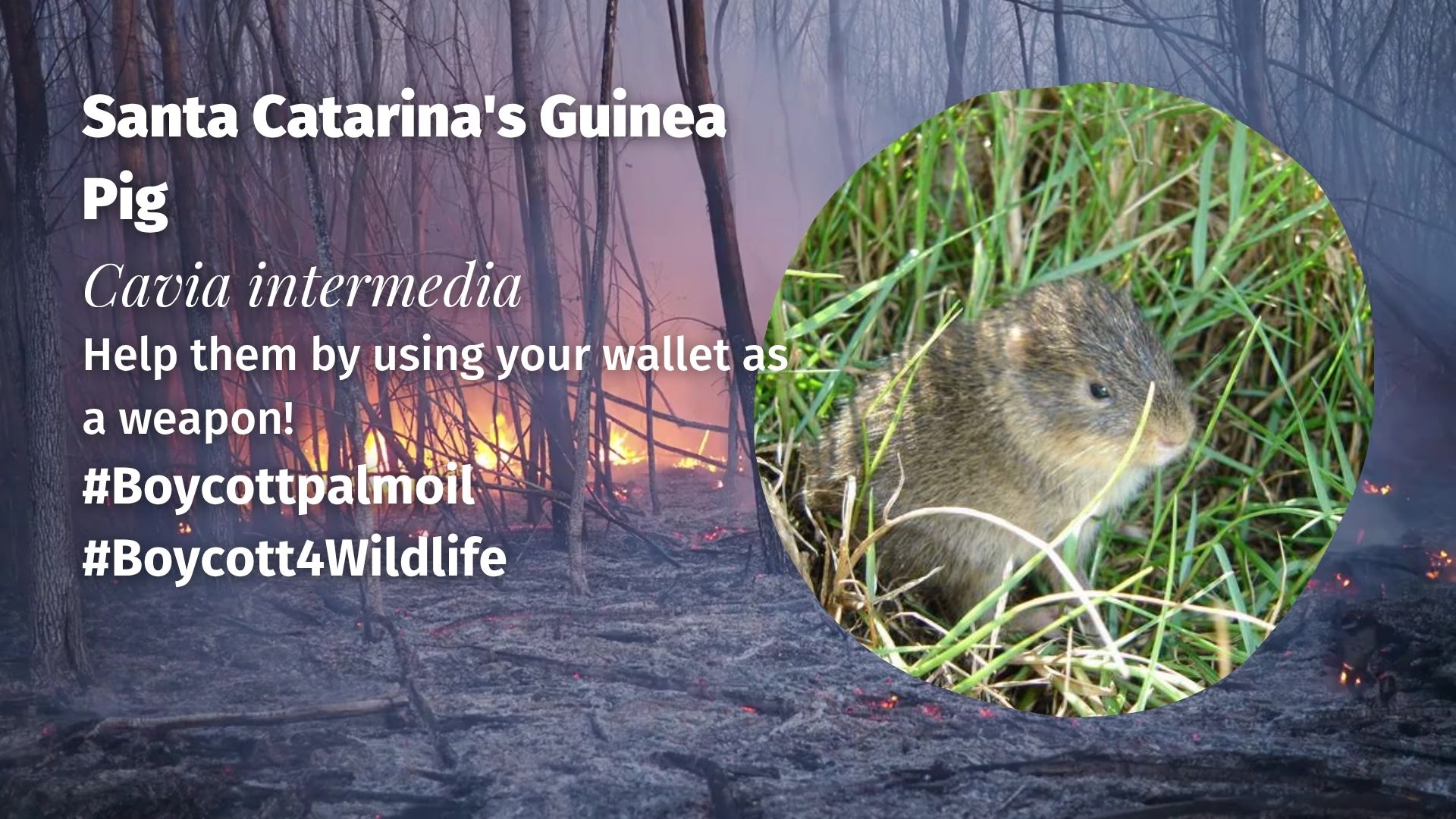
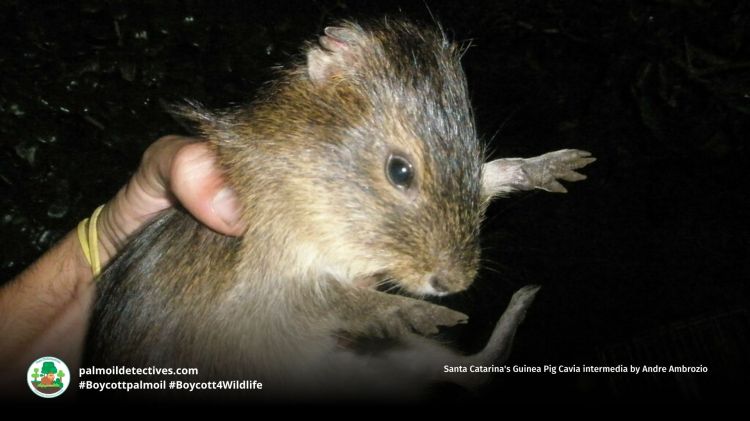
Santa Catarina’s guinea pigs possess robust, cylindrical bodies covered in coarse, greyish fur, featuring a distinct dark stripe running down the middle of their backs. Their underbellies are a paler yellowish-grey, and they sport a characteristic white patch of fur on their throats. Like their mainland cousins, they have short legs, but they exhibit slight webbing between their toes, an adaptation to their rugged island environment. Because they lack burrowing claws, they do not dig underground warrens; instead, they ingeniously form complex networks of surface tunnels and runways through the thick island grasses to navigate and hide from airborne threats. They have relatively short lifespans, living between two and four years in the wild.
Threats
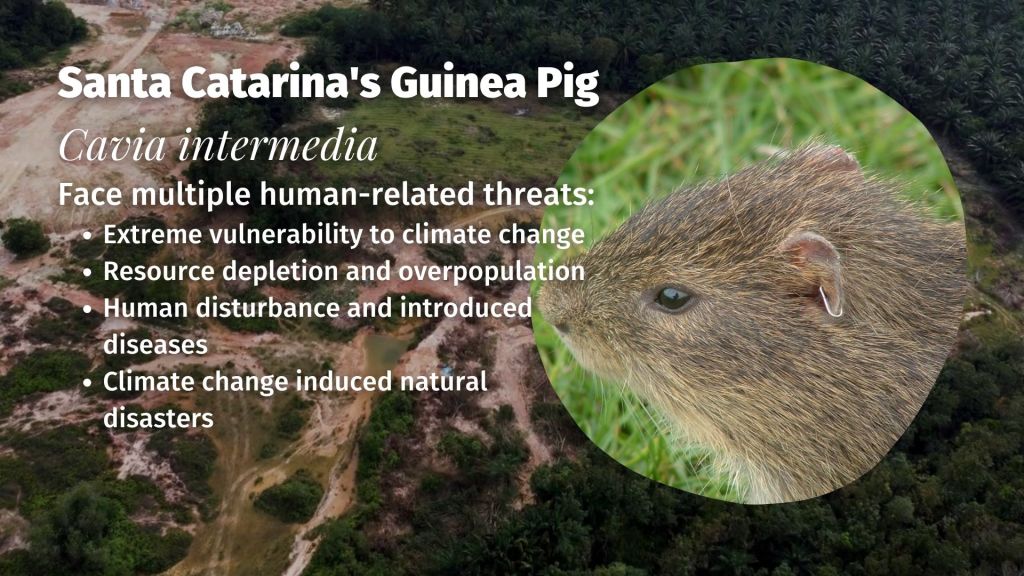
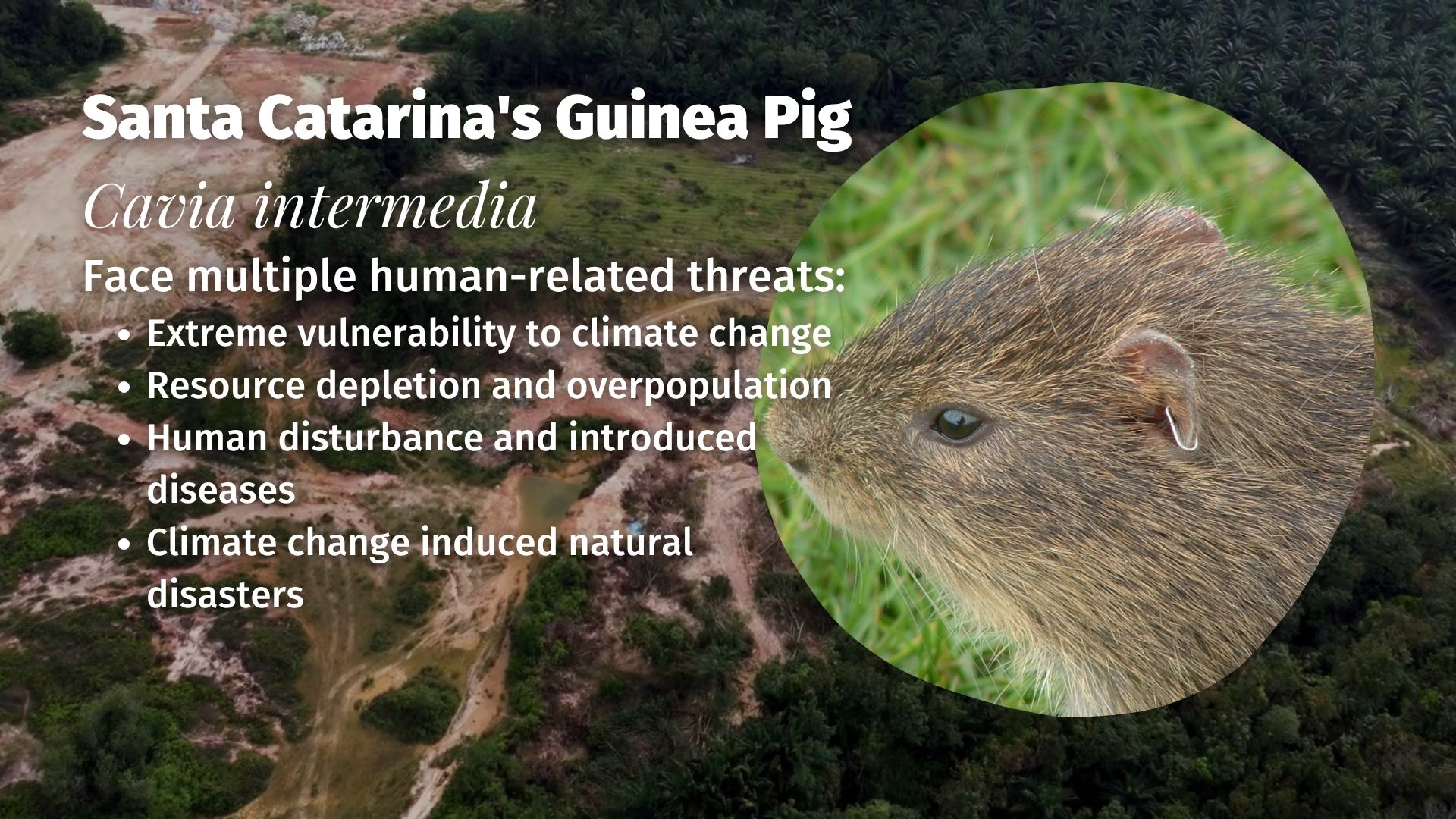
The IUCN Red List classifies Santa Catarina’s guinea pigs as Critically Endangered. Their incredibly small population sizes and highly restricted geographic range make them exceptionally vulnerable to extinction
Extreme vulnerability to climate change
Because their entire world is a single 10.5-hectare island, global climate change is a looming catastrophe for these guinea pigs. Rising sea levels and the increasing frequency of extreme weather events, such as severe storms or prolonged droughts, could wipe out their only food sources or wash their habitats away entirely. This climate instability is heavily driven by the global deforestation caused by industrial agriculture, including the palm oil and meat industries.
Resource depletion and overpopulation
Despite their tiny numbers, Santa Catarina’s guinea pigs are confined to a grazing area of just 0.77 hectares. When their populations naturally peak, they overexploit their limited food sources, leading to cyclical periods of starvation and high mortality. Their island simply cannot support a larger population, leaving no margin for error.
Human disturbance and introduced diseases
The Moleques do Sul archipelago is strictly protected as a no-take zone within the Serra do Tabuleiro State Park. However, unauthorised human landings pose a massive threat. Because these cavies have evolved in isolation, their immune systems are completely naïve to mainland pathogens. A single human visitor could accidentally introduce a virus, bacteria, or invasive parasite that could decimate the entire species in a matter of days.
Diet
Santa Catarina’s guinea pigs are strict herbivores with incredibly limited menus. Their diets consist almost entirely of just two species of grass: Paspalum vaginatum and Stenotaphrum secundatum. They forage within tiny, specific patches of the island, relying on surrounding bushes and taller grasses like Cortaderia selloana to provide cover while they eat.
Mating and reproduction
As rodents, Santa Catarina’s guinea pigs are capable of rapid reproduction, a trait that has allowed them to persist in such a harsh, resource-limited environment. They breed year-round, giving birth to small litters of well-developed pups that are born with their eyes open and fully furred. Their fast reproductive cycles are essential for bouncing back from the frequent population crashes caused by food scarcity on their island.
Geographic range
Their geographic range is among the smallest of any mammal in the world. They are found exclusively on the Moleques do Sul Island, a 10.5-hectare rocky outcrop located just off the coast of Santa Catarina state in southern Brazil. They do not exist anywhere else on Earth.
FAQs
What is the ecosystem function of Santa Catarina’s guinea pigs?
As the only mammalian herbivores on the island, Santa Catarina’s guinea pigs act as vital “lawnmowers” for their ecosystems. In areas where they do not graze, the island grasses grow up to 50 centimetres tall. However, within their specific 0.77-hectare feeding grounds, they keep the vegetation cropped down to just 5 centimetres. This constant grazing dictates the structure of the island’s plant life and shapes the micro-habitat.
Do Santa Catarina’s guinea pigs have any natural predators?
Because of their extreme isolation, there are absolutely no predatory mammals on their island. Their only natural predators come from the sky. Santa Catarina’s guinea pigs are hunted by birds of prey, specifically raptors such as southern caracaras, yellow-headed caracaras, and chimango caracaras. To survive these aerial attacks, the guinea pigs rely on the dense vegetation and their intricate surface tunnels for cover.
Is palm oil or meat agriculture a threat to Santa Catarina’s guinea pigs?
No not directly. These crops are not cultivated on the island. However, palm oil, soy and meat agriculture are destructive and extractive industries involving the clearing millions of hectares of primary rainforests. This global deforestation is a primary driver of the climate crisis, which accelerates rising sea levels and triggers extreme weather events. For an island species with a total global range of just 10.5 hectares, a single climate-driven super-storm or a rise in sea level could permanently submerge their home and cause their immediate extinction.
How do Santa Catarina’s guinea pigs contribute to their ecosystem?
The Santa Catarina’s guinea pig acts as a grazer, host for invertebrate parasites, and food for scavengers. They keep the grass biomass at a low level in the areas where they concentrate, contributing to soil fertilisation and biomass recycling. Their pellets are abundant and contribute to the nutrient cycle of the island. The species’ high and stable density, stable age structure, and high survival rates are characteristic of the insular syndrome, where species adapt to their isolated environments. However, these adaptations also make them vulnerable to sudden changes in their habitat.
How did Santa Catarina’s guinea pigs end up on the island, and what species are they related to?
Santa Catarina’s guinea pigs did not swim or migrate to their island. Around 8,000 years ago, at the end of the last ice age, rising global sea levels flooded the land bridge connecting the Moleques do Sul hills to the South American mainland. The guinea pigs living on those hills were abruptly stranded. Isolated from the mainland populations, they evolved into a completely unique species. Genetically and physically, they are most closely related to greater guinea pigs (Cavia magna), which still inhabit the coastal wetlands on the adjacent mainland today.
What large-scale systemic changes are needed to prevent their extinction?
While local protections like prohibiting island access or establishing captive breeding programmes are necessary, these are merely short-term, sticking-plaster solutions if the island itself is destroyed by climate change. To genuinely secure their future, we must tackle the root causes of global warming and rising sea levels. This requires an immediate, global halt to deforestation, particularly the clearing of tropical rainforests for meat agriculture, soy, and palm oil. Transitioning to plant-based food systems and rapidly cutting greenhouse gas emissions are the only structural, big-picture changes capable of stabilising the climate and saving fragile island ecosystems from being swallowed by the sea.
How do climate-related natural disasters impact Santa Catarina’s guinea pigs?
The coast of southern Brazil is increasingly battered by extreme meteorological events, including extratropical cyclones (often referred to as “bomb cyclones”), severe rainstorms, and prolonged droughts. Driven by accelerating climate change, these disasters are shifting from rare anomalies to alarming, near-annual occurrences. For a species confined to an exposed rocky outcrop, these events are apocalyptic. A direct hit from a cyclone or storm surge could easily wash the guinea pigs out to sea, completely flood their protective surface tunnels, and induce mass drowning or hypothermia. Conversely, intense periods of drought can quickly wither the mere 0.77 hectares of grass they rely on for survival, triggering immediate, starvation across their entire population.
Take Action!
Santa Catarina’s guinea pigs are balancing on the absolute edge of extinction, threatened by climate change-driven natural disasters and an ever shrinking range. You can help protect one of the world’s rarest mammals by refusing to support the industries destroying the Earth’s natural balance. Choose a #vegan lifestyle to drastically reduce the demand for land-clearing meat agriculture, and avoid all products containing palm oil. Stand up for these incredibly rare island survivors and #Boycott4Wildlife.
Further Information
Furnari, N., Silva, H. F., & Paula, T. A. R. (2024). Seasonality in reproduction and reproductive physiology of the critically endangered Santa Catarina’s guinea pig (Cavia intermedia). Mammal Review, 54(1), 1-15. https://doi.org/10.1111/mam.12383
Roach, N. 2016. Cavia intermedia. The IUCN Red List of Threatened Species 2016: e.T136520A22189125. https://dx.doi.org/10.2305/IUCN.UK.2016-2.RLTS.T136520A22189125.en. Accessed on 09 April 2026.
Salvador, C. H., & Fernandez, F. A. S. (2008). Population dynamics and conservation status of the insular cavy Cavia intermedia (Rodentia: Caviidae). Journal of Mammalogy, 89(3), 721–729. https://doi.org/10.1644/07-MAMM-A-056.1
Verzola-Olivio, P., & Monticelli, P. F. (2017). The acoustic repertoire of Cavia intermedia as a contribution to the understanding of the Caviidae communication system. Ethology Ecology & Evolution, 29(2), 285-304. https://doi.org/10.1080/09524622.2016.1278401
Wikipedia. (n.d.). Santa Catarina’s guinea pig. https://en.wikipedia.org/wiki/Santa_Catarina%27s_guinea_pig
Support Santa Catarina’s Guinea Pig by going vegan and boycotting palm oil in the supermarket, it’s the #Boycott4Wildlife
Support the conservation of this species
This animal has no protections in place. Read about other forgotten species here. Create art to support this forgotten animal or raise awareness about them by sharing this post and using the #Boycottpalmoil #Boycott4Wildlife hashtags on social media. Also you can boycott palm oil in the supermarket.
Further Information

How can I help the #Boycott4Wildlife?
Take Action in Five Ways
1. Join the #Boycott4Wildlife on social media and subscribe to stay in the loop: Share posts from this website to your own network on Twitter, Mastadon, Instagram, Facebook and Youtube using the hashtags #Boycottpalmoil #Boycott4Wildlife.
2. Contribute stories: Academics, conservationists, scientists, indigenous rights advocates and animal rights advocates working to expose the corruption of the palm oil industry or to save animals can contribute stories to the website.


3. Supermarket sleuthing: Next time you’re in the supermarket, take photos of products containing palm oil. Share these to social media along with the hashtags to call out the greenwashing and ecocide of the brands who use palm oil. You can also take photos of palm oil free products and congratulate brands when they go palm oil free.
4. Take to the streets: Get in touch with Palm Oil Detectives to find out more.
5. Donate: Make a one-off or monthly donation to Palm Oil Detectives as a way of saying thank you and to help pay for ongoing running costs of the website and social media campaigns. Donate here
Learn about other animals endangered by palm oil and other agriculture
Learn about “sustainable” palm oil greenwashing
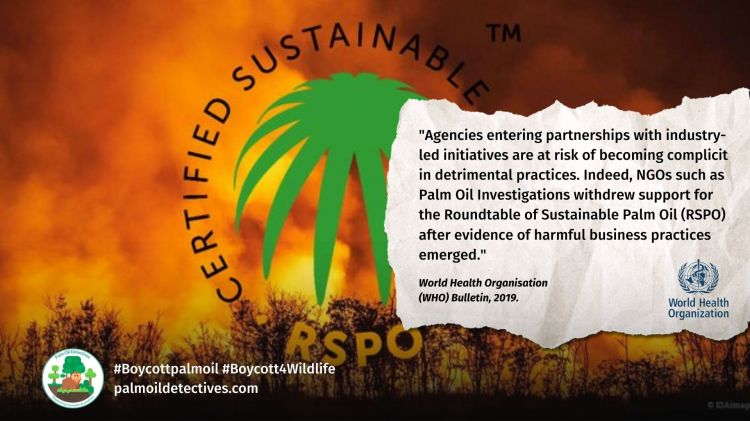
Read more about RSPO greenwashing
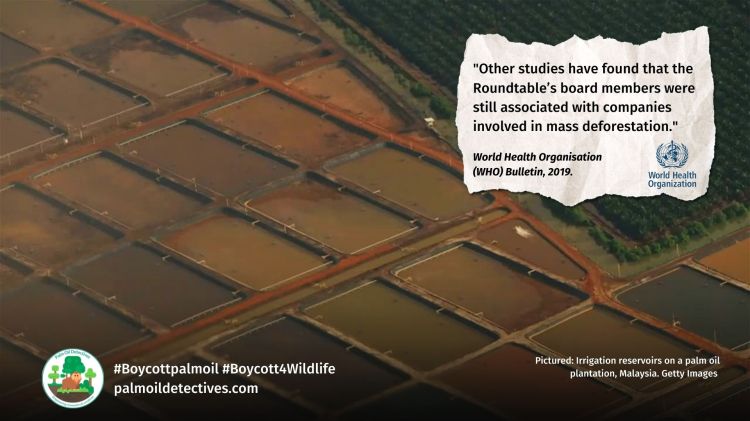
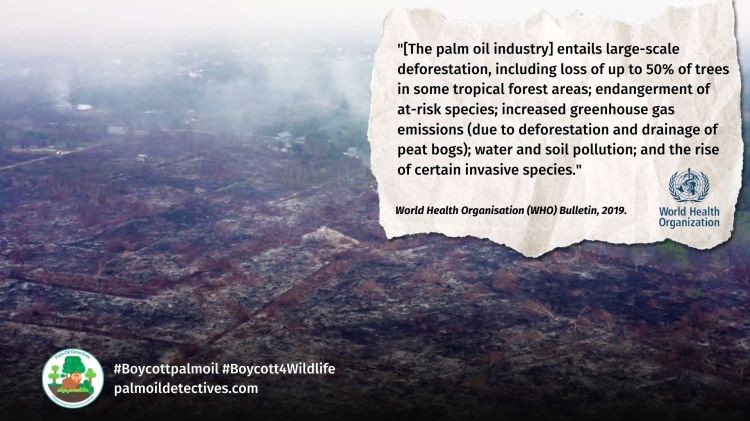
A 2019 World Health Organisation (WHO) report into the palm oil industry and RSPO finds extensive greenwashing of palm oil deforestation and the murder of endangered animals (i.e. biodiversity loss)


Discover more from Palm Oil Detectives
Subscribe to get the latest posts sent to your email.
 Palm Oil Detectives