
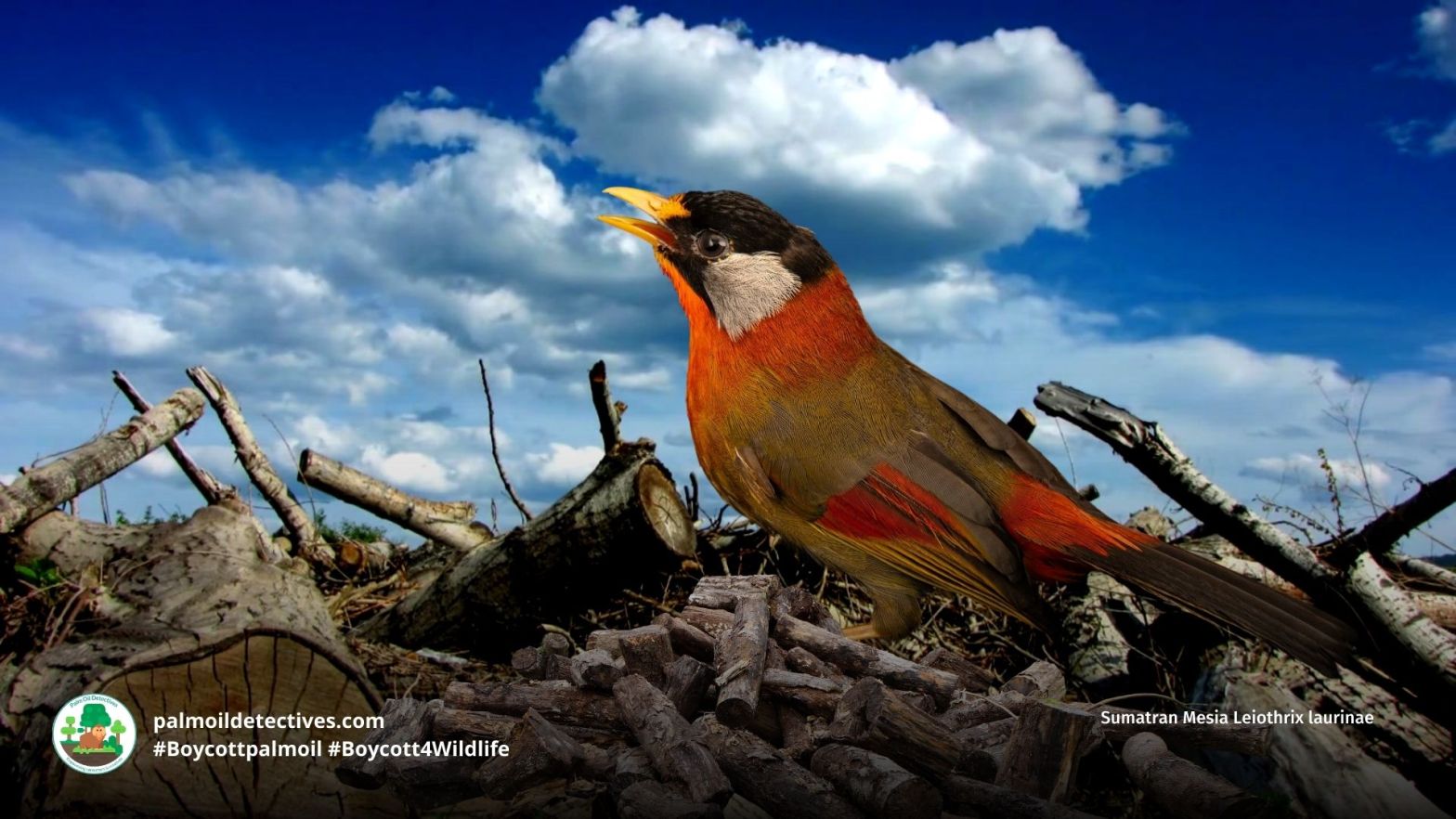
Sumatran Mesia Leiothrix laurinae
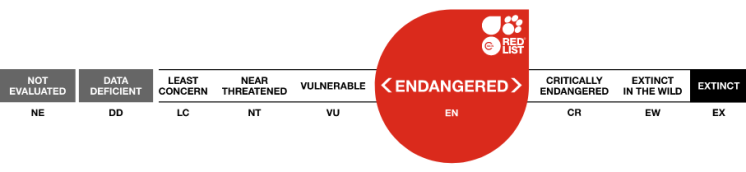
IUCN Status: Endangered
Locations: Indonesia – Endemic to Sumatra, found in the montane forests of the Barisan Mountains.
The Sumatran Mesia, also known as Leiothrix laurinae, is an exquisite song #bird endemic to the misty montane forests of #Sumatra, #Indonesia. With their striking plumage of yellow, red, and black and their enchanting, melodious calls, they are an integral part of Sumatra’s rich avian #biodiversity. This species, however, is rapidly declining due to extensive habitat destruction for #palmoil and the devastating illegal songbird #pettrade, which sees thousands of individuals snatched from the wild each year. If these birds are to survive, urgent action is needed to protect their forests and end their capture for the caged bird industry. Use your voice to demand change, campaign against the illegal wildlife trade and #BoycottPalmOil #Boycott4Wildlife every time you shop!
The vivid Sumatran Mesia is an exquisite #songbird 🦜🪶🪹 of #Sumatra #Indonesia 🇮🇩 facing massive decline and now #endangered due to the illegal #pet trade and #palmoil. Support their survival and #BoycottPalmOil 🌴⛔️ #Boycott4Wildlife @palmoildetect https://palmoildetectives.com/2021/01/20/sumatran-mesia-leiothrix-laurinae/
Appearance and Behaviour
The species is now absent from sites at which they were described as being one of the most common species less than 15 years ago.
IUCN Red List
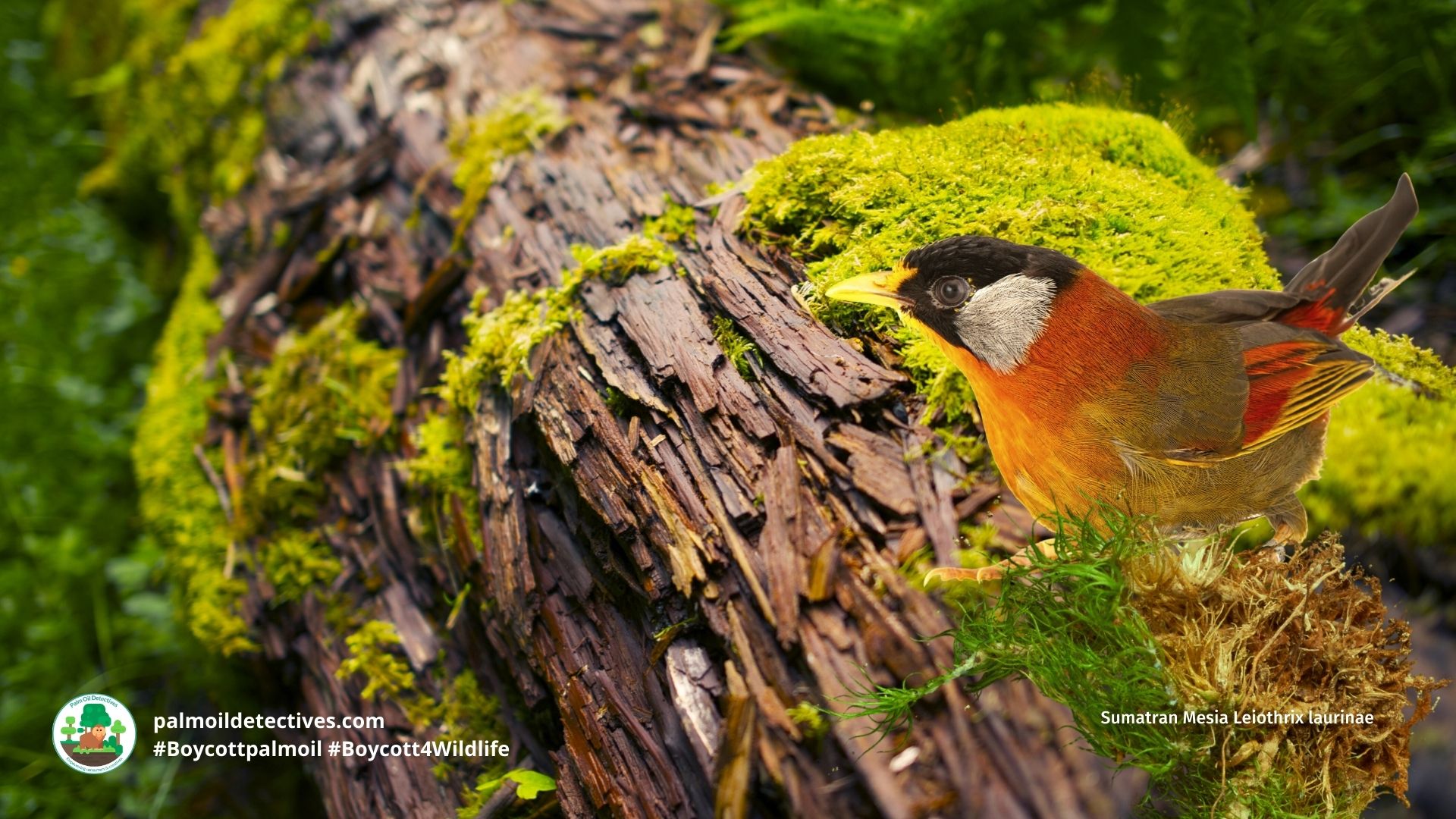
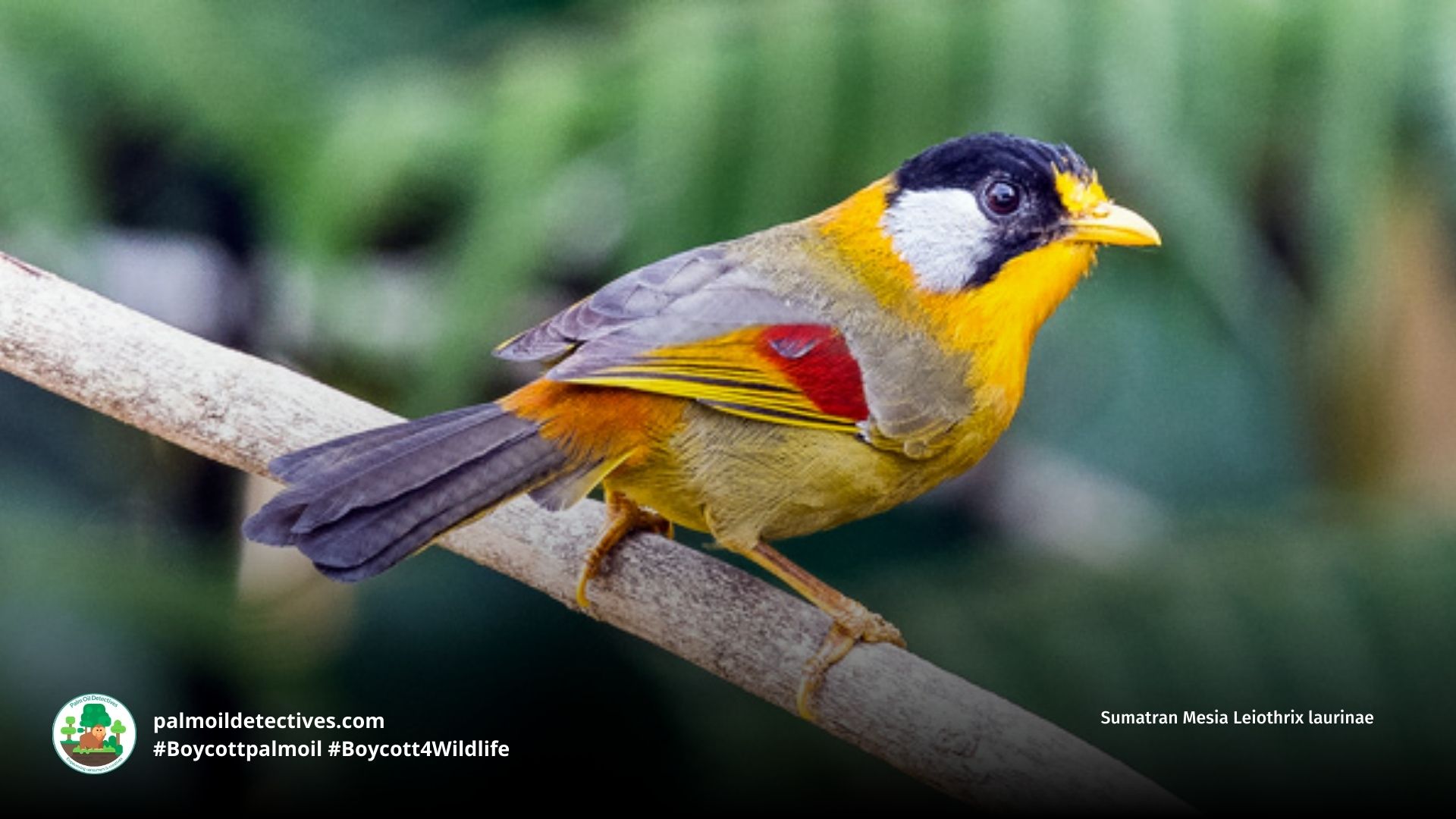
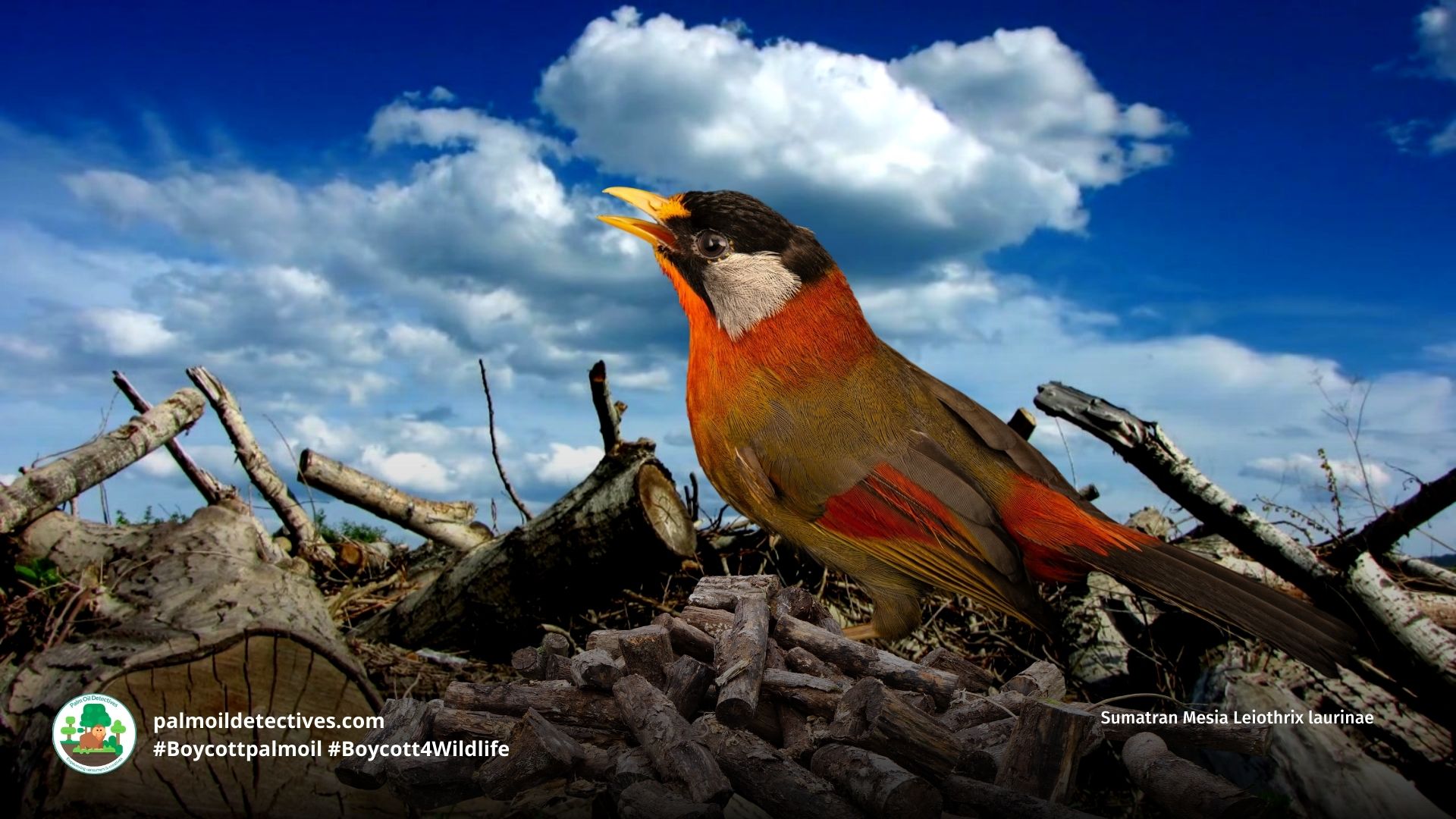
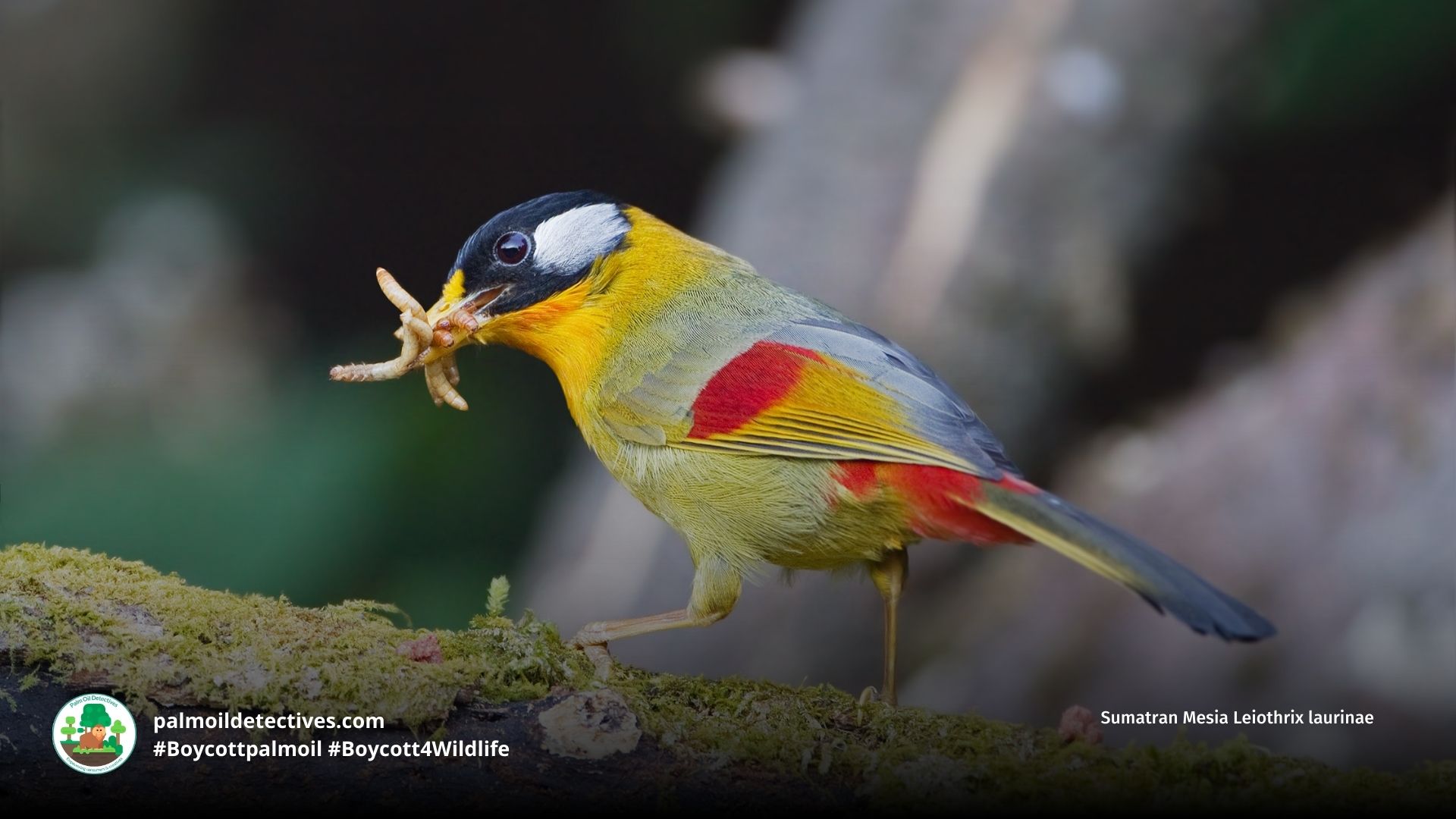
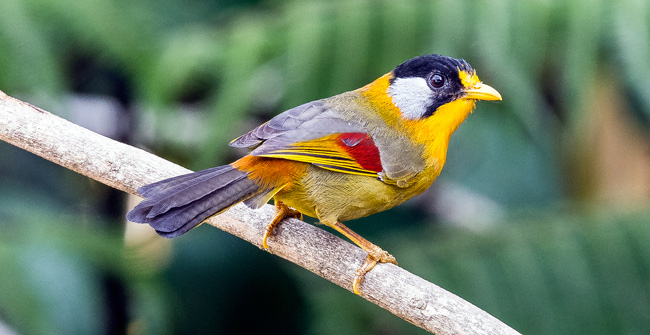
The Sumatran Mesia is a striking bird with bright golden-yellow plumage, accented by deep crimson and black markings. Their eyes are ringed with white, giving them a sharp, alert expression. Their wings flash vibrant orange and red in flight, while their slender, slightly curved beak is perfectly adapted for plucking insects and berries from dense foliage. These birds are highly social, often forming tight-knit flocks that dart through the undergrowth in search of food, communicating with an array of whistles and trills that echo through the forest canopy.
Threats
Illegal Cage Bird Trade
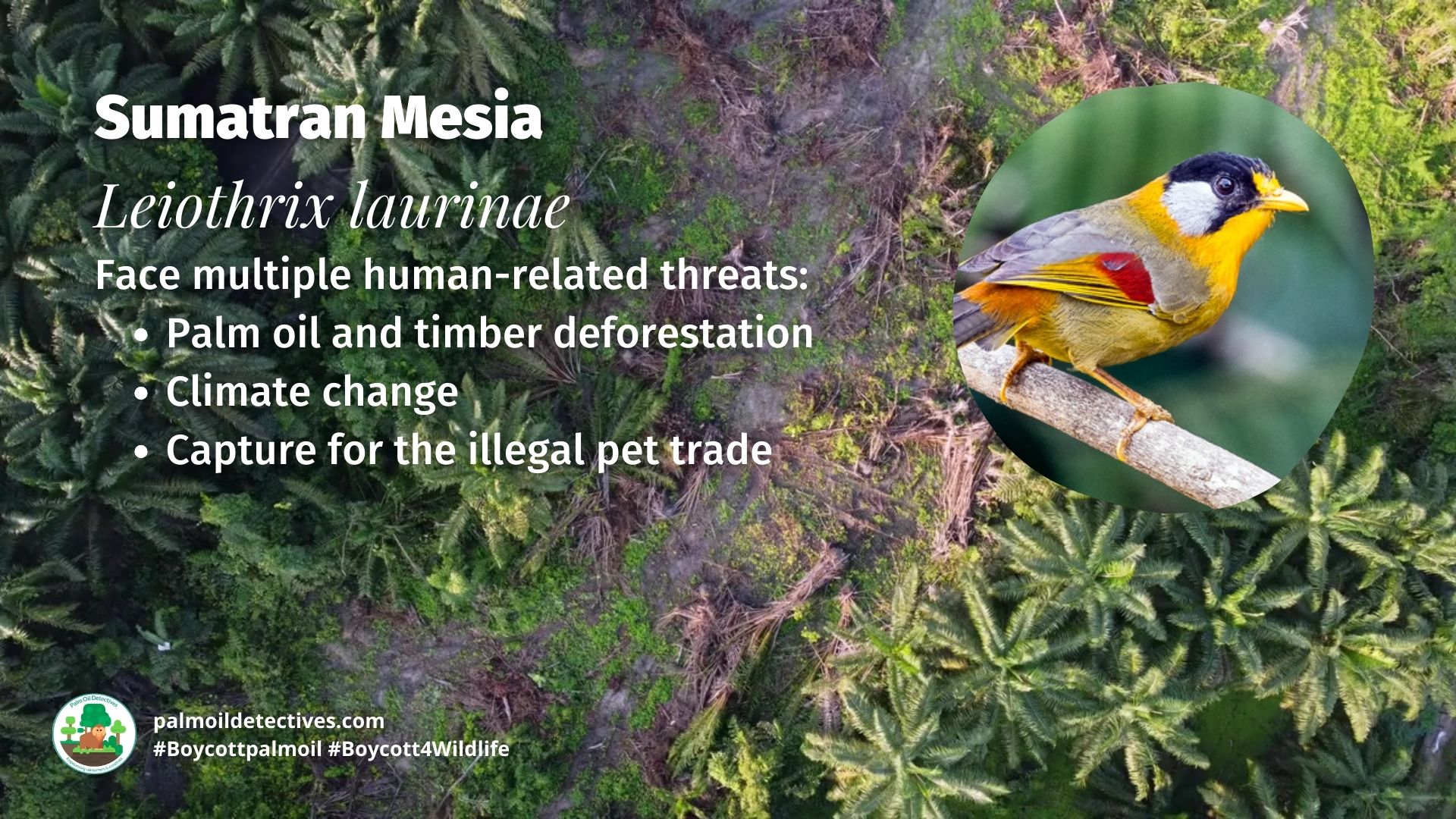
The Sumatran Mesia is one of the most sought-after songbirds in Southeast Asia. Thousands are captured every year to be sold in the kicau bird markets of Indonesia, where they are forced into tiny cages for entertainment. This relentless trapping has decimated wild populations and continues to drive this bird species closer to extinction (IUCN Red List, 2024).
Deforestation for Palm Oil Agriculture
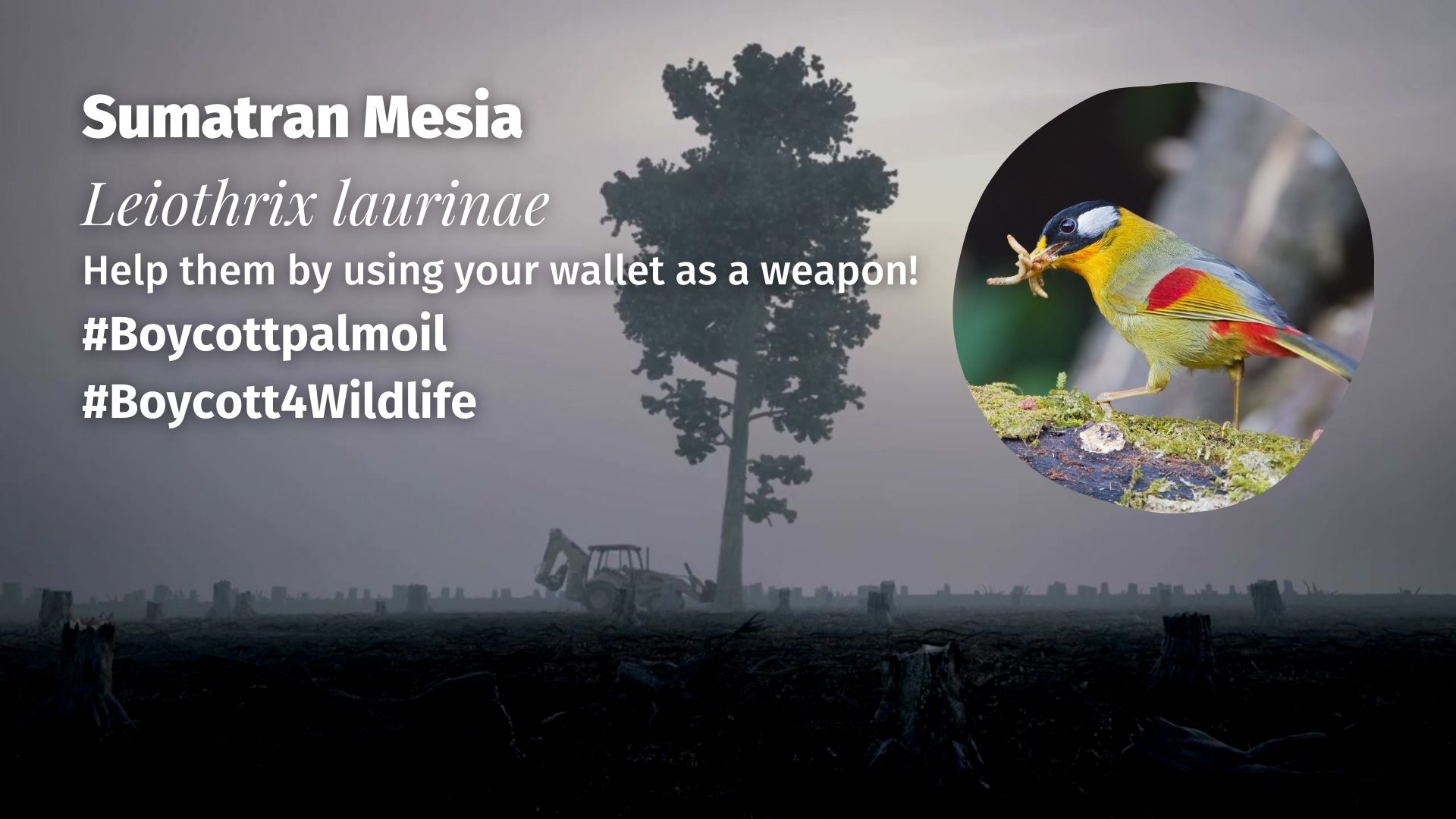
Sumatra’s once-unbroken forests are being felled at an alarming rate, primarily for industrial-scale palm oil plantations. These monocultures replace the diverse forests that birds like the Sumatran Mesia depend on, leaving them with no refuge (IUCN Red List, 2024). Expanding agriculture and infrastructure projects further fragment their habitat, pushing the species into smaller, more vulnerable populations.
Diet
Sumatran Mesias are omnivorous birds, feeding on a variety of insects, berries, and nectar. They are especially fond of soft fruits and forage in mixed-species flocks, using their sharp beaks to pluck food from dense vegetation (BirdLife International, 2024).
Reproduction and Mating
These birds build delicate cup-shaped nests hidden among the thick foliage of Sumatra’s mountain forests. Females lay small clutches of eggs, which both parents take turns incubating. Once hatched, the chicks are cared for with insects and fruit until they fledge (BirdLife International, 2024).
Geographic Range
The Sumatran Mesia is found exclusively in the high-altitude montane forests of the Barisan Mountains, where they inhabit dense, moss-covered woodlands above 1,000 metres elevation (IUCN Red List, 2024). Their distribution is severely fragmented due to ongoing deforestation.
FAQ
Why is the Sumatran Mesia endangered?
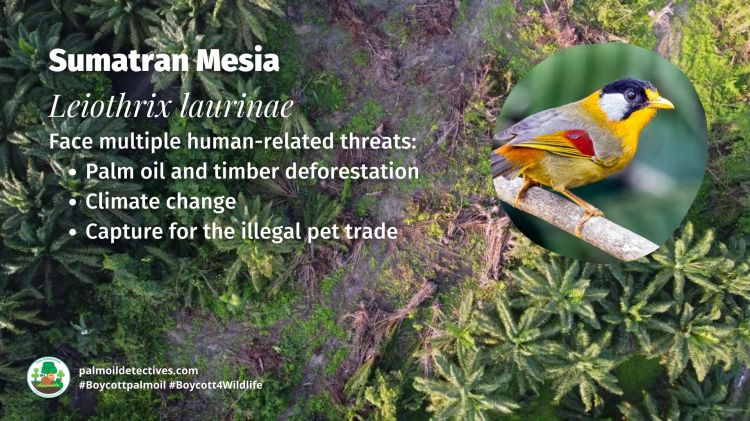
The species is critically threatened by habitat destruction for timber and palm oil along with the illegal pet trade. Thousands of these birds are poached from the wild every year to be sold in bird markets, and their rainforest home is disappearing due to logging and palm oil plantations (IUCN Red List, 2024).
How can I help protect the Sumatran Mesia?
To help save this species, never buy caged birds, support conservation organisations working to protect their habitat, and demand an end to the palm oil-driven deforestation that is wiping out their forests. Use your power as a consumer to boycott palm oil products and call for stricter wildlife trade regulations. Every purchase you make has an impact – #BoycottPalmOil #Boycott4Wildlife.
Where do Sumatran Mesias live?
They are found only in the highland forests of Sumatra, particularly in the Barisan Mountains. These forests are crucial to their survival, yet they are being destroyed at an alarming rate (BirdLife International, 2024).
Are Sumatran Mesias good pets?
Absolutely not. These birds belong in the wild, not in cages. The pet trade is driving them to extinction, and every captured bird represents a stolen life from the forest. If you love these birds, do not support their captivity – instead you must fight to keep them free.
Take Action!
The Sumatran Mesia is on the brink, but there is still time to save them. You can help by:
• Boycott the illegal pet trade – never buy animals online.
• Refuse to purchase products containing palm oil that destroy their rainforest home
• Support conservation efforts to protect Sumatra’s forests
• Raising awareness about the cruel bird trade and its devastating impact
Use your wallet as a weapon and stand up for wildlife – #BoycottPalmOil #Boycott4Wildlife.
Further Information
BirdLife International. 2017. Leiothrix laurinae (amended version of 2016 assessment). The IUCN Red List of Threatened Species 2017: e.T103878509A119434401. https://dx.doi.org/10.2305/IUCN.UK.2017-3.RLTS.T103878509A119434401.en. Downloaded on 24 January 2021.
BirdLife International. (2024). Sumatran Mesia (Leiothrix laurinae). Retrieved from BirdLife Data Zone
Chng, S. C. L., Shepherd, C. R., & Nijman, V. (2007). Market for extinction: The bird trade in Jakarta, Indonesia. TRAFFIC Southeast Asia. Retrieved from https://www.traffic.org/site/assets/files/2466/market_for_extinction_jakarta.pdf

How can I help the #Boycott4Wildlife?
Take Action in Five Ways
1. Join the #Boycott4Wildlife on social media and subscribe to stay in the loop: Share posts from this website to your own network on Twitter, Mastadon, Instagram, Facebook and Youtube using the hashtags #Boycottpalmoil #Boycott4Wildlife.
2. Contribute stories: Academics, conservationists, scientists, indigenous rights advocates and animal rights advocates working to expose the corruption of the palm oil industry or to save animals can contribute stories to the website.





3. Supermarket sleuthing: Next time you’re in the supermarket, take photos of products containing palm oil. Share these to social media along with the hashtags to call out the greenwashing and ecocide of the brands who use palm oil. You can also take photos of palm oil free products and congratulate brands when they go palm oil free.
4. Take to the streets: Get in touch with Palm Oil Detectives to find out more.
5. Donate: Make a one-off or monthly donation to Palm Oil Detectives as a way of saying thank you and to help pay for ongoing running costs of the website and social media campaigns. Donate here
Discover more from Palm Oil Detectives
Subscribe to get the latest posts sent to your email.
 Palm Oil Detectives