

Sumatran Slow Loris Nycticebus hilleri
Endangered
Sumatra, Indonesia
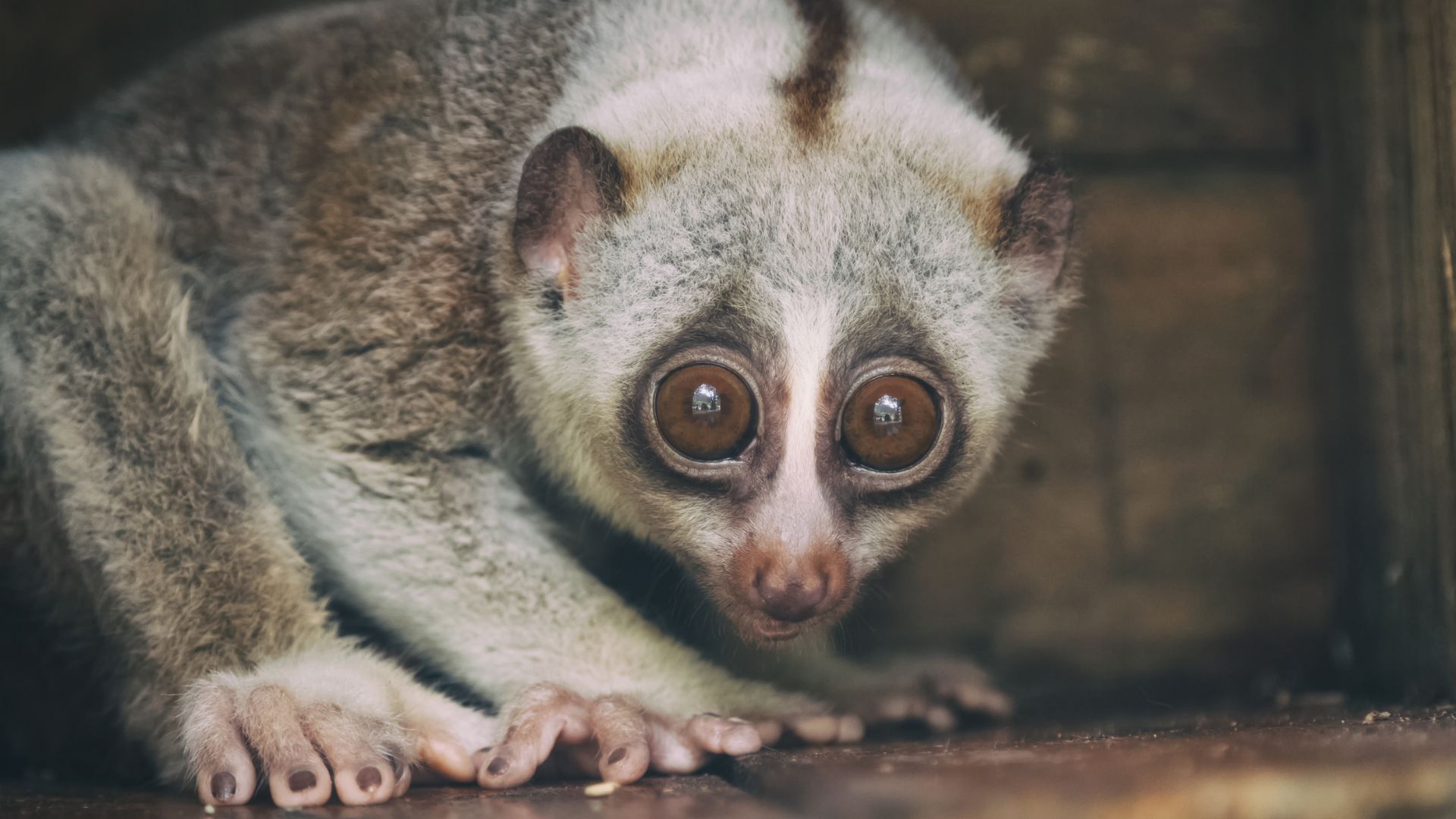
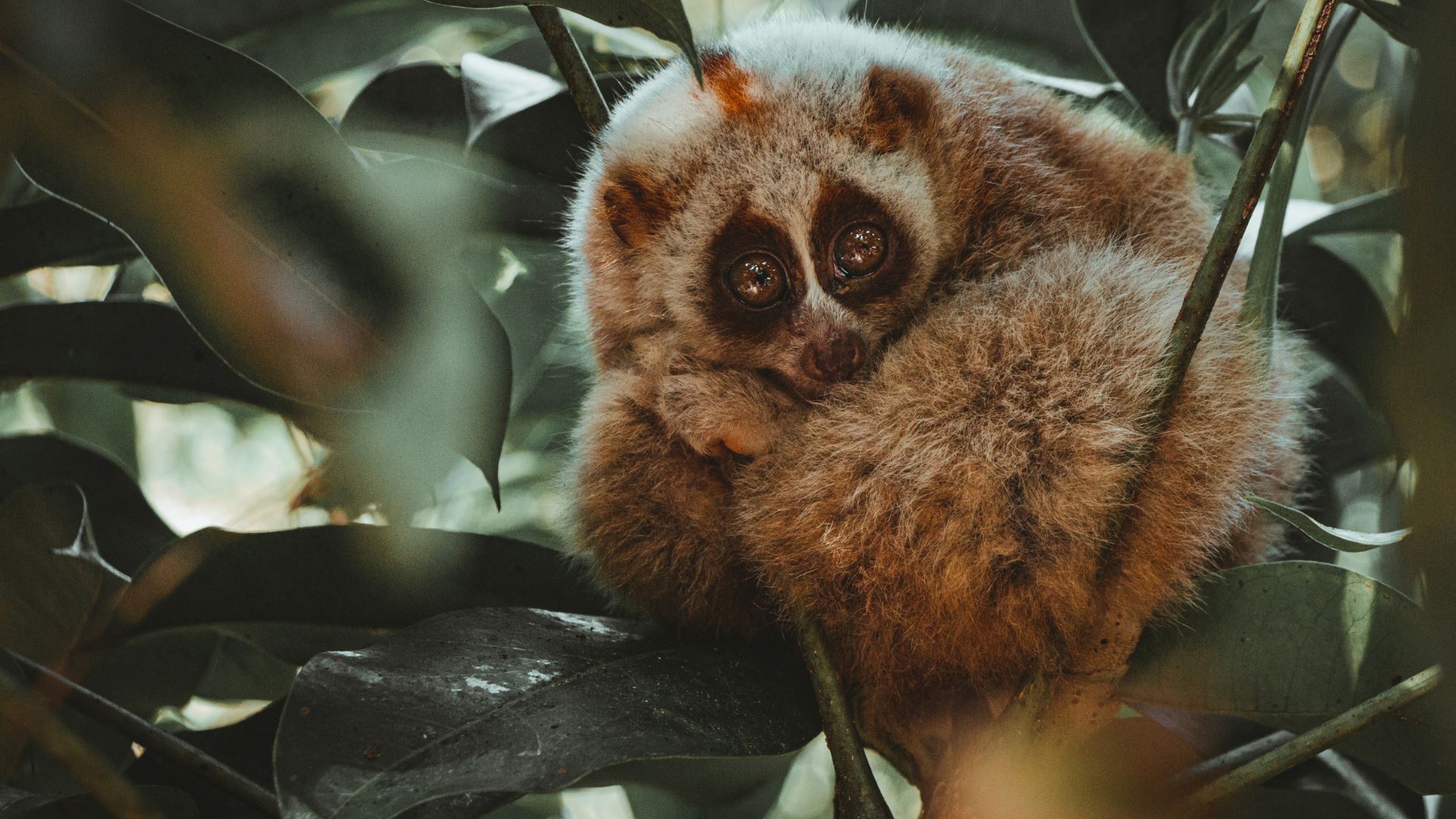
The Sumatran slow loris is a shy and placid smll primate endemic to the lush rainforests of Sumatra. They are famous for their large, expressive eyes, deliberate movements and tiny hands. This elusive creature possesses a unique trait among primates; despite their endearing and sweet appearance, they have a toxic bite.
This nocturnal tree-dwelling wonder faces significant threats from palm oil and mining deforestation and illegal wildlife trade in Sumatra. To protect the Sumatran slow loris take action and use your wallet as a weapon to fight for their survival each time you shop. #BoycottPalmOil #Boycott4Wildlife.
Sweet and meek Sumatran Slow Lorises are #endangered #primates, at risk from the illegal #pet trade and #palmoil #deforestation throughout their range. Help them survive and #Boycottpalmoil #Boycott4Wildlife every time you shop! @palmoildetect https://wp.me/pcFhgU-gQ
With inquisitive eyes and sweet moon-like faces, Sumatran Slow Lorises are tiny #primates on the edge of #extinction from #palmoil #ecocide in #Indonesia Fight for them stop them disappearing when you #Boycottpalmoil #Boycott4Wildlife @palmoildetect https://wp.me/pcFhgU-gQ
Sumatran Slow Loris is listed as Endangered as there has probably been a more than 50% reduction in population over three generations (approximately 21-24 years), based on their past and predicted future abundance in the pet trade and extensive habitat loss throughout Sumatra.
IUCN Red List
Appearance and Behaviour
Measuring between 20 to 37 centimeters in length and weighing approximately 600 to 685 grams, the Sumatran slow loris is a petite primate with a dense, woolly coat. Their fur coloration varies, often exhibiting a reddish or chestnut hue. A distinctive feature is the dark stripe running from the top of the head down the back, accompanied by large, forward-facing eyes adapted for nocturnal vision. Unlike many primates, they lack a tail.
This species exhibits a unique form of locomotion, moving slowly and deliberately, which aids in stealth and energy conservation. They have a specialised circulatory system that allows them to remain immobile for extended periods without compromising blood flow. The Sumatran slow loris is also known for their ability to produce a toxin from glands on the inside of their elbows. When threatened, they can lick these glands, mixing the secretion with saliva to deliver a venomous bite, a rare trait among mammals.
Geographic Range
Endemic to the island of Sumatra in Indonesia, the Sumatran slow loris inhabits primary and secondary forests, including lowland and montane rainforests. They can also be found in bamboo groves and mangrove forests. However, habitat loss due to logging, agricultural expansion, and human encroachment has led to a significant reduction in their range.
Diet
The Sumatran slow loris is omnivorous, with a diet comprising fruits, tree gum, nectar, insects, and small vertebrates. Specialised dentition allows them to gouge tree bark to access sap and gum, while its slow, deliberate movements enable them to stealthily capture prey. This varied diet plays a role in seed dispersal and pest control within their ecosystem.
Reproduction and Mating
Sumatran slow lorises have a polygynous mating system, where one male mates with multiple females. Breeding can occur year-round, with a gestation period of approximately six months, resulting in the birth of a single offspring. Infants are initially carried by the mother and later left in nests or on branches while she forages. Parental care is primarily provided by the mother, with weaning occurring around six to nine months of age. Sexual maturity is reached at about 18 months.
Threats
The Sumatran slow loris is listed as Endangered on the IUCN Red List, with populations declining due to ongoing threats. Conservation efforts include habitat protection, anti-poaching measures, and rescue and rehabilitation programs aimed at reintroducing individuals into the wild. Public awareness campaigns are also crucial to reduce demand in the illegal pet trade.
IUCN Status: Endangered
- Palm oil and timber deforestation: Deforestation for agriculture, particularly palm oil plantations, and logging activities have led to significant habitat fragmentation and loss.
- Illegal Wildlife Trade: The Sumatran slow loris is heavily targeted for the pet trade and traditional medicine. Trafficked individuals often suffer from the painful removal of their teeth to prevent bites, leading to severe health issues and mortality.
- Keeping lorises as pets: Misconceptions about the loris being a good pet due to their cute appearance contribute to their extirpation from the wild and exploitation. In reality, their specialised needs and venomous bite make them highly unsuitable for pet domestication.
Take Action!
Protect the Sumatran slow loris by boycotting products linked to deforestation, such as palm oil. Use your wallet as a weapon to support ethical and eco-friendly choices. Share their story and fight for their survival with #BoycottPalmOil and #Boycott4Wildlife.






Further Information

New England Primate Conservancy. (n.d.). Sumatran Slow Loris. Retrieved from NE Primate Conservancy
Nekaris, K.A.I. & Poindexter, S. 2020. Nycticebus hilleri. The IUCN Red List of Threatened Species 2020: e.T163019804A163020000. https://dx.doi.org/10.2305/IUCN.UK.2020-2.RLTS.T163019804A163020000.en. Downloaded on 21 January 2021.
Wikipedia contributors. (n.d.). Sumatran Slow Loris. Retrieved from Wikipedia
Nekaris, K.A.I., & Jaffe, S. (2007). Unexpected diversity of slow lorises (Nycticebus spp.) within the Javan pet trade: Implications for slow loris taxonomy. Contributions to Zoology, 76(3), 187-196. Retrieved from ResearchGate

How can I help the #Boycott4Wildlife?
Take Action in Five Ways
1. Join the #Boycott4Wildlife on social media and subscribe to stay in the loop: Share posts from this website to your own network on Twitter, Mastadon, Instagram, Facebook and Youtube using the hashtags #Boycottpalmoil #Boycott4Wildlife.
2. Contribute stories: Academics, conservationists, scientists, indigenous rights advocates and animal rights advocates working to expose the corruption of the palm oil industry or to save animals can contribute stories to the website.





3. Supermarket sleuthing: Next time you’re in the supermarket, take photos of products containing palm oil. Share these to social media along with the hashtags to call out the greenwashing and ecocide of the brands who use palm oil. You can also take photos of palm oil free products and congratulate brands when they go palm oil free.
4. Take to the streets: Get in touch with Palm Oil Detectives to find out more.
5. Donate: Make a one-off or monthly donation to Palm Oil Detectives as a way of saying thank you and to help pay for ongoing running costs of the website and social media campaigns. Donate here
Discover more from Palm Oil Detectives
Subscribe to get the latest posts sent to your email.
 Palm Oil Detectives