
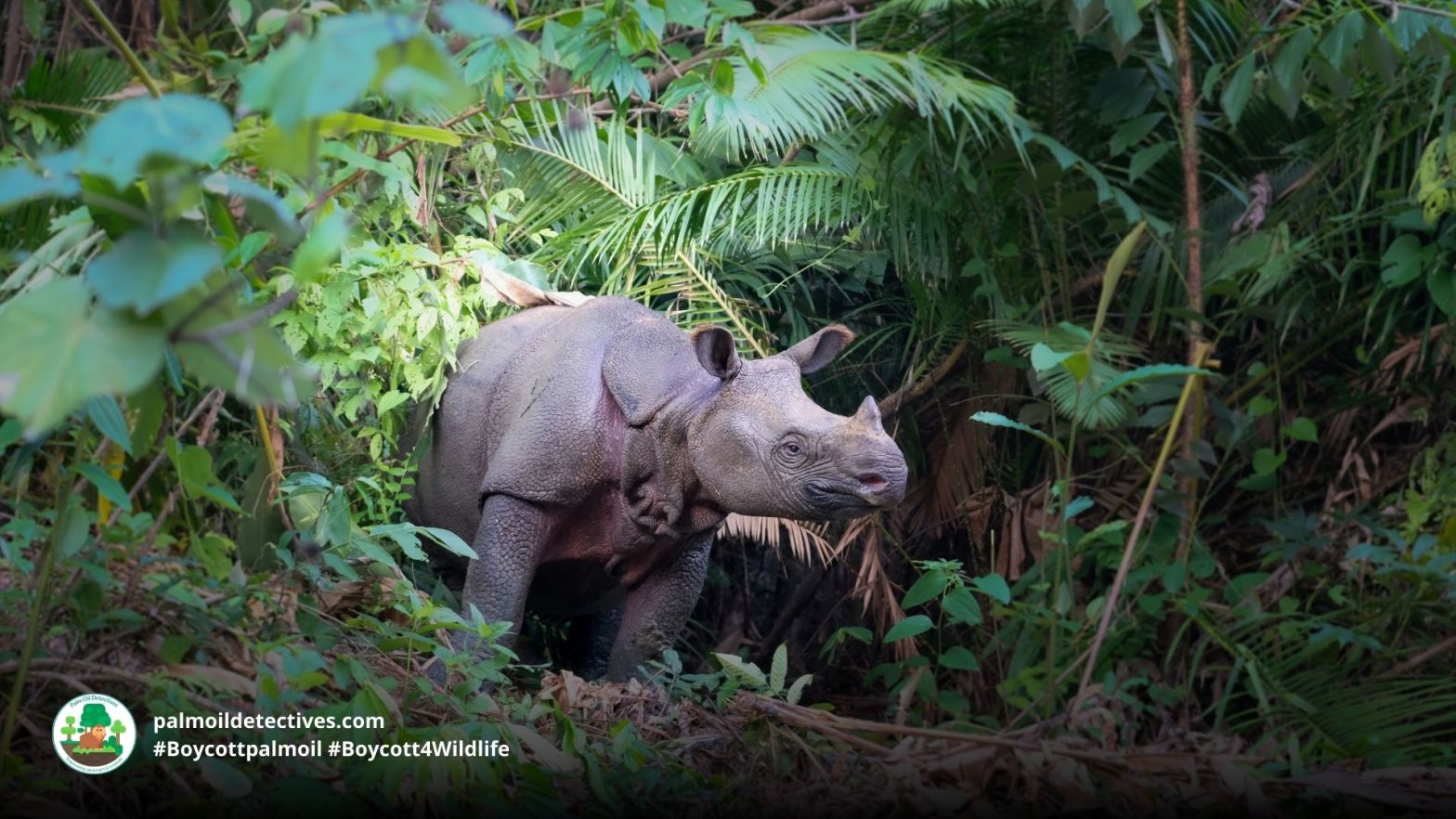
Javan Rhinoceros Rhinoceros sondaicus
Critically Endangered
Javan Rhinoceros (Rhinoceros sondaicus)
Critically Endangered
Location: Ujung Kulon National Park, Java, Indonesia
The Javan rhinoceros, also called the Sunda rhinoceros, is a critically endangered species and one of the world’s rarest large mammals. There are only a few dozen left alive in Ujung Kulon National Park in Java, Indonesia. Javan rhinos once lived throughout northeast India and Southeast Asia. Vietnam’s last Javan rhino was poached in 2010. they now survive only in Ujung Kulon National Park on the island of Java, with fewer than 75 individuals remaining.
Their decline has been driven by palm oil deforestation, poaching for their horns, and competition with invasive plant species like the Arenga palm, which reduces food availability. Saving the Javan rhinoceros is critical to preserving the biodiversity of their rainforest home. Fight for their survival by boycotting products linked to deforestation. Use your wallet as a weapon. #BoycottPalmOil #Boycott4Wildlife
The Javan #Rhino is the world’s most endangered of the 5 #rhinoceros 🦏🩶 Only a few dozen are left 😟🧐 Threats include #poaching #palmoil expansion and #deforestation. Support them when you #BoycottPalmOil 🌴☠️🩸🙊⛔️ #Boycott4Wildlife @palmoildetect https://palmoildetectives.com/2021/01/24/javan-rhinoceros-rhinoceros-sondaicus/
There’s only a few dozen #Javan #Rhinos left then they’re gone forever- driven to #extinction by #palmoil and timber #deforestation, #poaching and human settlement. Fight back when you #BoycottPalmOil 🌴🪔💀🔥⛔️ #Boycott4Wildlife @palmoildetect https://palmoildetectives.com/2021/01/24/javan-rhinoceros-rhinoceros-sondaicus/
Appearance and Behaviour
Javan rhinoceroses are similar in appearance to Indian rhinoceroses but are smaller and less heavily armoured. They measure approximately 3.1 metres in length, stand 1.4–1.7 metres tall, and weigh between 900–2,300 kg. Males are distinguished by their single small horn, which rarely exceeds 25 cm, while females typically lack horns altogether.
These rhinos are solitary and elusive, relying on dense forest cover to avoid predators. They are known for their wallowing behaviour, which helps regulate body temperature and protect against parasites.
Geographic Range
Historically, Javan rhinos were found from northeast India through Southeast Asia, including Vietnam, Cambodia, and Malaysia, as well as the islands of Sumatra and Java. Today, their range is restricted to Ujung Kulon National Park in Java, Indonesia, where they inhabit lowland rainforests and marshlands. This limited range makes them highly vulnerable to natural disasters, such as tsunamis and volcanic eruptions.
Diet
Javan rhinoceroses are browsers, feeding on a variety of plants, including shoots, leaves, twigs, and fruits. They use their prehensile upper lips to grasp and manipulate vegetation. Their feeding habits play a crucial role in maintaining their habitat’s biodiversity by shaping plant communities and dispersing seeds.
Reproduction and Mating
Due to their elusive nature, detailed information about their reproduction is scarce. Females give birth to a single calf after a gestation period of about 16 months. Calves remain with their mothers for up to two years before becoming independent. The long interval between births and their already low population make recovery efforts challenging.
Threats
The Javan rhinoceros is listed as Critically Endangered on the IUCN Red List. Conservation efforts focus on protecting their remaining habitat, controlling invasive species, and ensuring the population is closely monitored. Genetic studies have highlighted the need for maintaining genetic diversity to improve their chances of survival. Efforts are also underway to explore the feasibility of establishing a second population to reduce the risk of extinction.
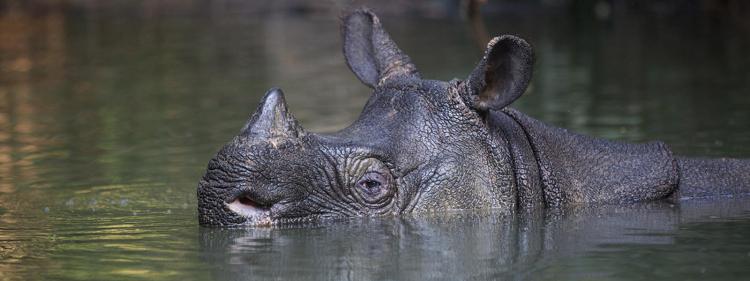
IUCN Status: Critically Endangered
- Palm oil and timber deforestation: Agricultural expansion, particularly for palm oil plantations, timber logging, and human settlement, has significantly reduced their habitat.
- Invasive Species: The Arenga palm has spread across Ujung Kulon National Park, competing with native plants and reducing the availability of food for Javan rhinos.
- Poaching: Although poaching has decreased due to conservation efforts, the demand for rhino horns in traditional medicine remains a threat.
- Natural Disasters: Their restricted range makes the population vulnerable to tsunamis, earthquakes, and disease outbreaks.
- Low Genetic Diversity: With such a small population, Javan rhinos face challenges related to inbreeding and reduced resilience to environmental changes.
Take Action!
Protect the Javan rhinoceros by boycotting products linked to deforestation, such as palm oil. Support conservation organisations working in Ujung Kulon National Park. Use your voice to raise awareness about their plight and advocate for stronger environmental protections. Share their story and fight for their survival with #BoycottPalmOil and #Boycott4Wildlife.

Available rhino habitat is limited by two major factors: (1) the threat of human encroachment and (2) the predominance of a palm species (Arenga obtusifolia), known locally as langkap, which is rampant in Ujung Kulon. Arenga dominates the forest canopy in many locations, and inhibits the growth of rhino food plants.
Arenga palm is problematic for a number of reasons. Where Arenga palm dominates, little else grows. Currently, an estimated 60% (18,000 ha) of the peninsular section of the Park is covered with Arenga palm (B. Talukdar 2009 in litt.), precluding the growth of suitable rhino food. An Arenga palm removal/management effort was initiated in 2010 in the Gunung Honje portion of the park as part of the Javan Rhino Study and Conservation Area. As of December 2018, 150 ha of Arenga have been removed from the area.
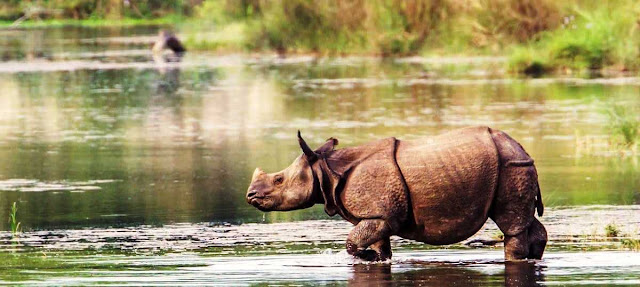
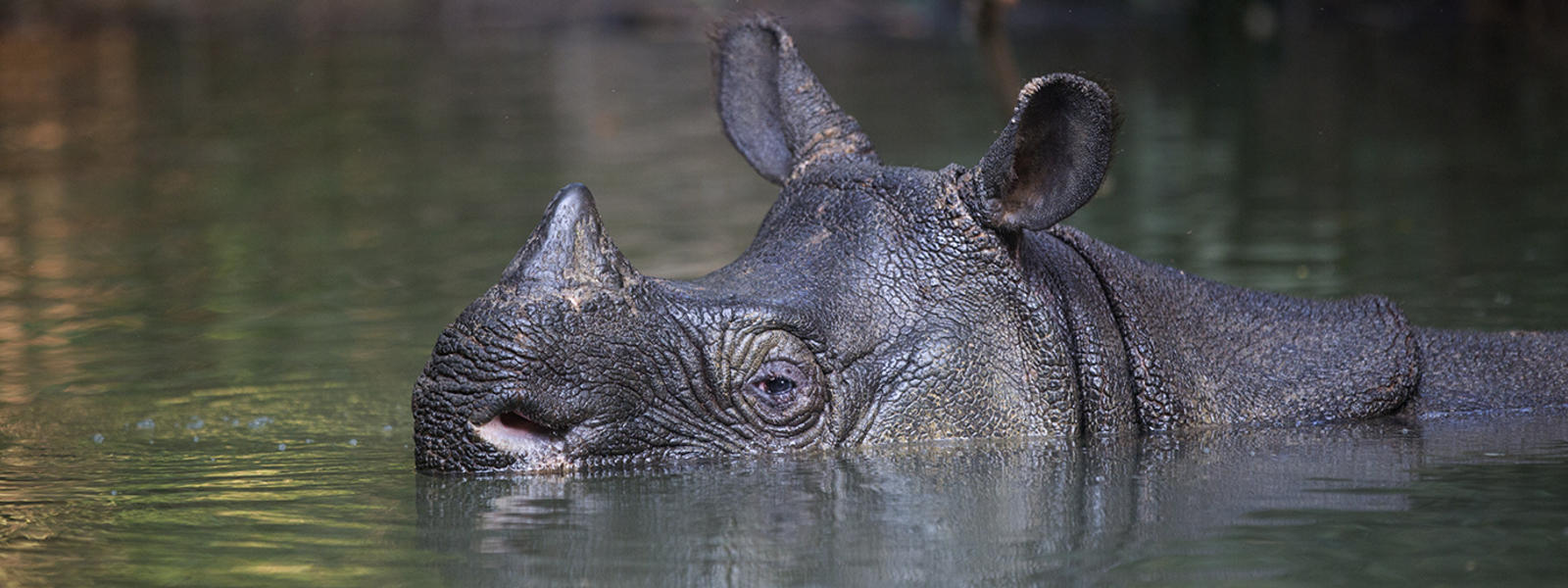

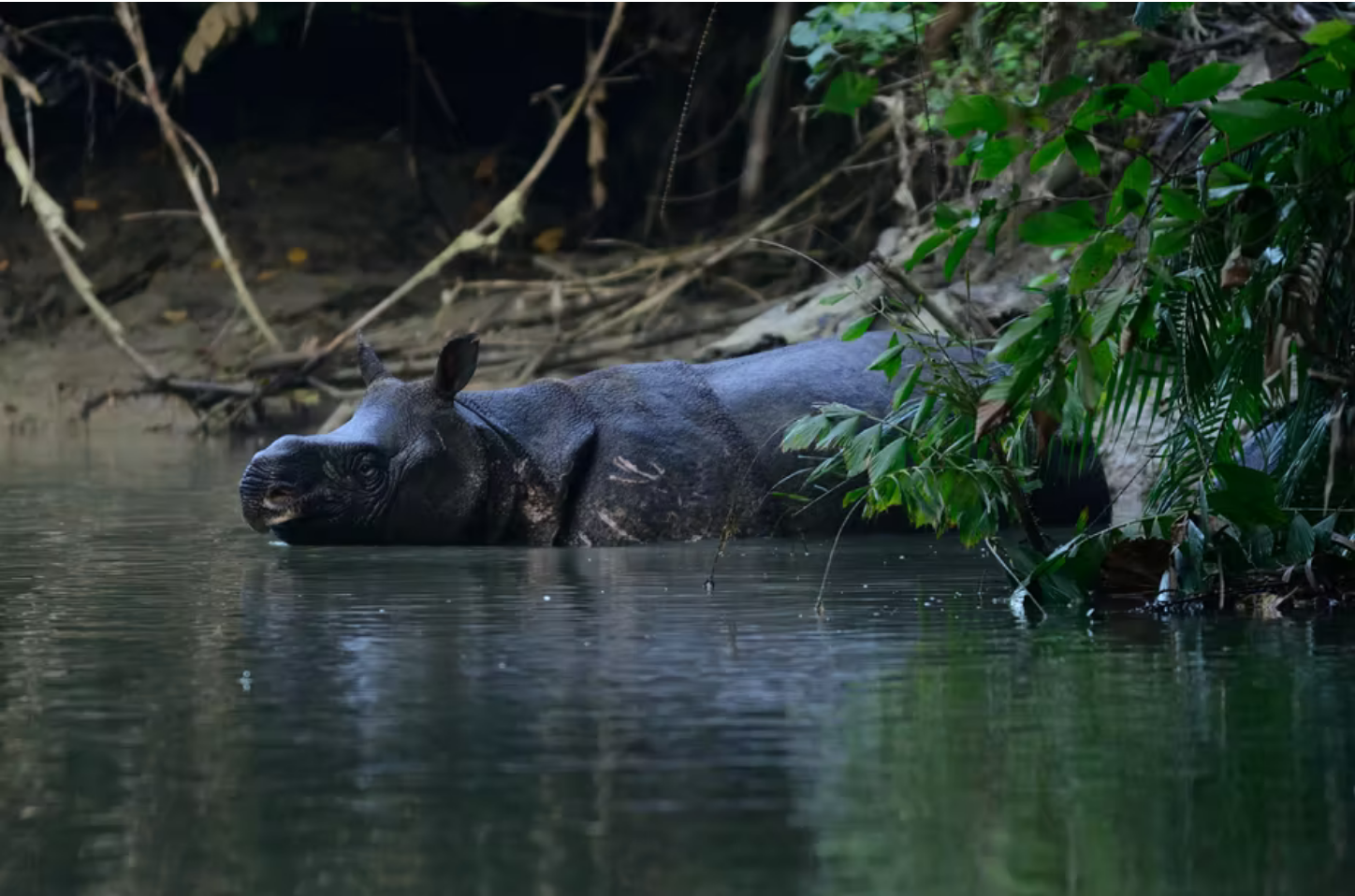
Based on camera trap data, an estimated 68 Javan Rhinos live in Ujung Kulon National Park on the western tip of Java, but only the 33% are inferred to be reproductive individuals. Therefore this species is listed as Critically Endangered.
Further Information
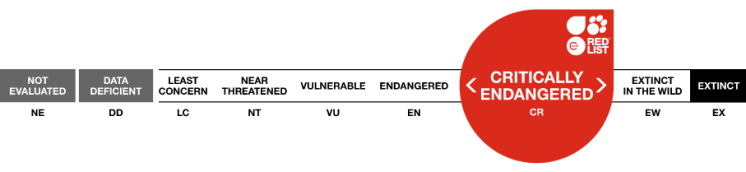
Ellis, S. & Talukdar, B. 2020. Rhinoceros sondaicus. The IUCN Red List of Threatened Species 2020: e.T19495A18493900. https://dx.doi.org/10.2305/IUCN.UK.2020-2.RLTS.T19495A18493900.en. Downloaded on 24 January 2021
Fernando, P., et al. (2006). Genetic Diversity, Phylogeny, and Conservation of the Javan Rhinoceros. Conservation Genetics. ResearchGate
International Fund for Animal Welfare. (n.d.). Javan Rhinos. Retrieved from IFAW
Nardelli, F. (2016). Current Status and Conservation Prospects for the Javan Rhinoceros. Pachyderm. ResearchGate
Wikipedia contributors. (n.d.). Javan rhinoceros. Retrieved from Wikipedia

How can I help the #Boycott4Wildlife?
Take Action in Five Ways
1. Join the #Boycott4Wildlife on social media and subscribe to stay in the loop: Share posts from this website to your own network on Twitter, Mastadon, Instagram, Facebook and Youtube using the hashtags #Boycottpalmoil #Boycott4Wildlife.
2. Contribute stories: Academics, conservationists, scientists, indigenous rights advocates and animal rights advocates working to expose the corruption of the palm oil industry or to save animals can contribute stories to the website.






3. Supermarket sleuthing: Next time you’re in the supermarket, take photos of products containing palm oil. Share these to social media along with the hashtags to call out the greenwashing and ecocide of the brands who use palm oil. You can also take photos of palm oil free products and congratulate brands when they go palm oil free.
4. Take to the streets: Get in touch with Palm Oil Detectives to find out more.
5. Donate: Make a one-off or monthly donation to Palm Oil Detectives as a way of saying thank you and to help pay for ongoing running costs of the website and social media campaigns. Donate here
Discover more from Palm Oil Detectives
Subscribe to get the latest posts sent to your email.
 Palm Oil Detectives
One thought on “Javan Rhinoceros Rhinoceros sondaicus”