
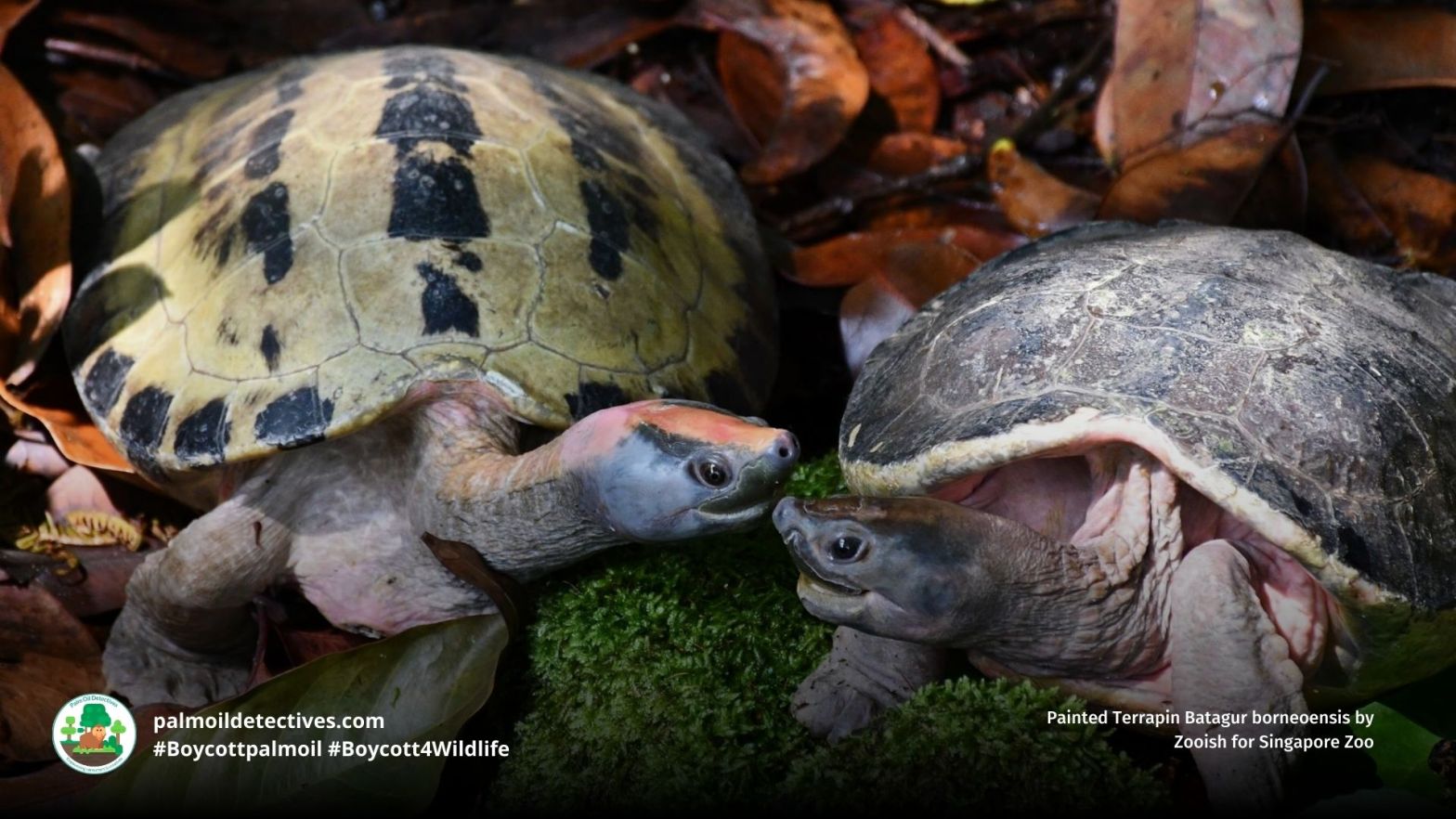
Painted Terrapin Batagur borneoensis
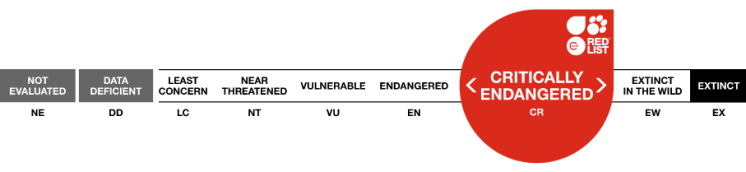
Status: Critically Endangered
Location: Southeast Asia, including Malaysia, Indonesia, and Thailand
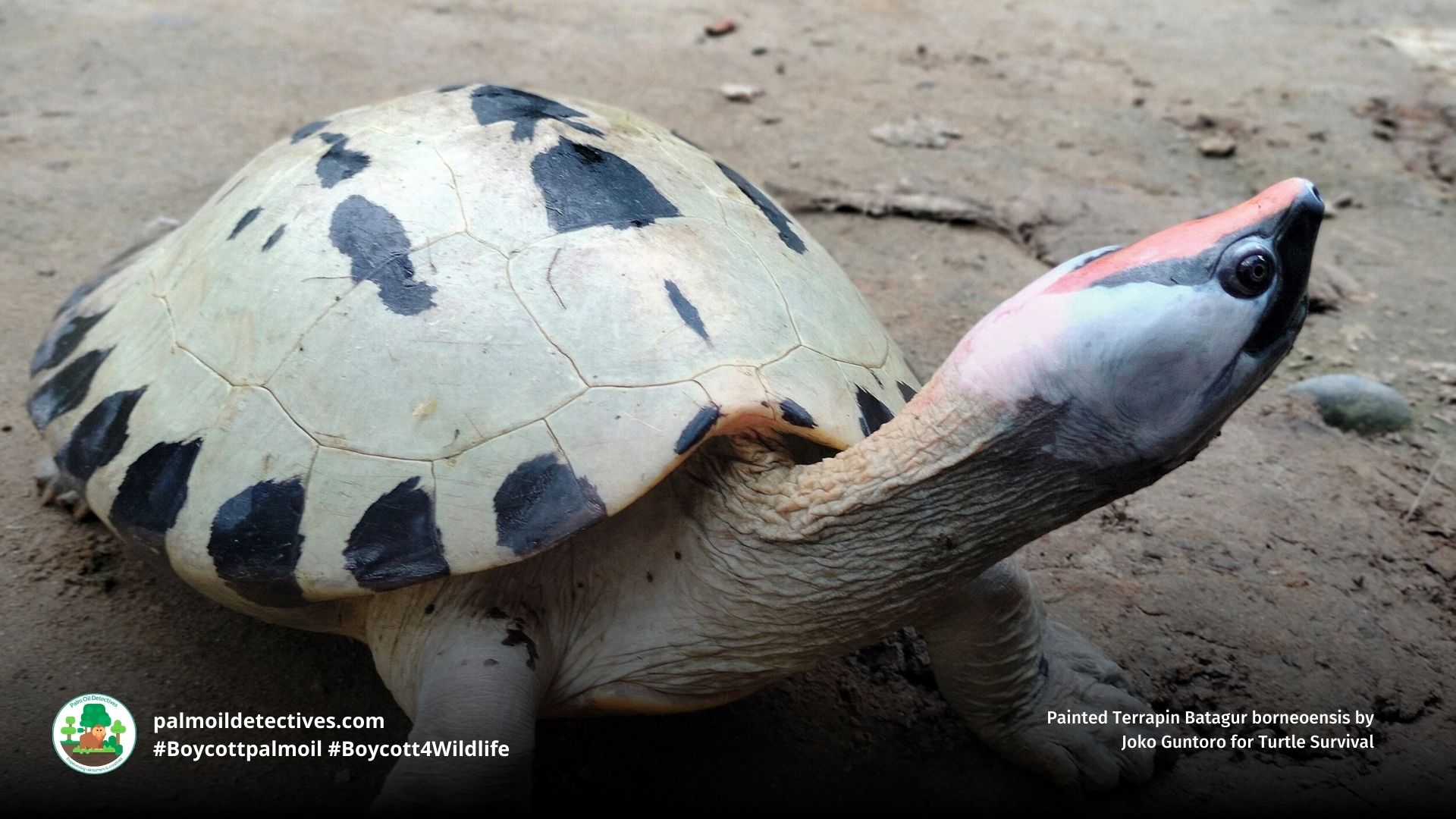
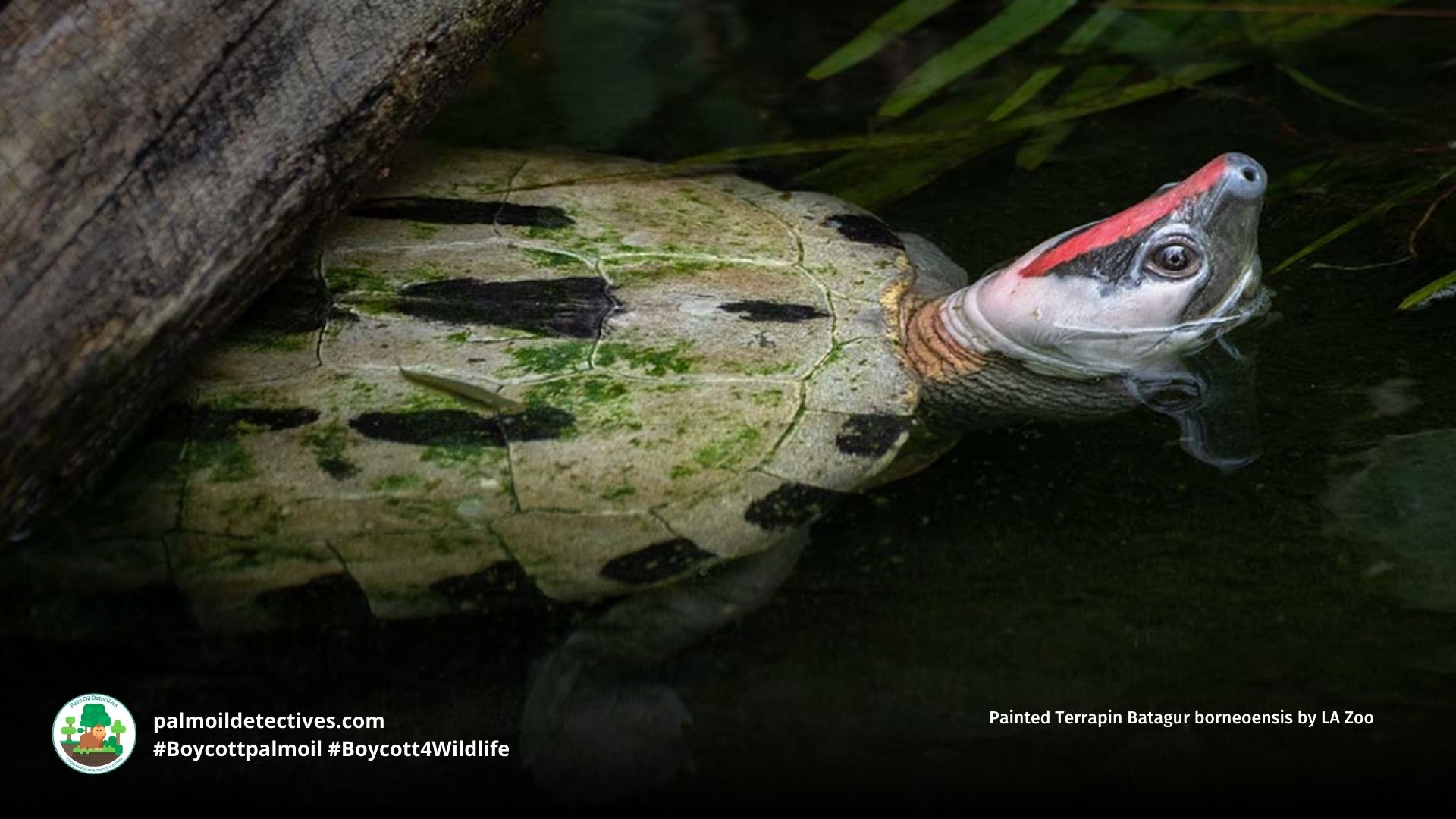
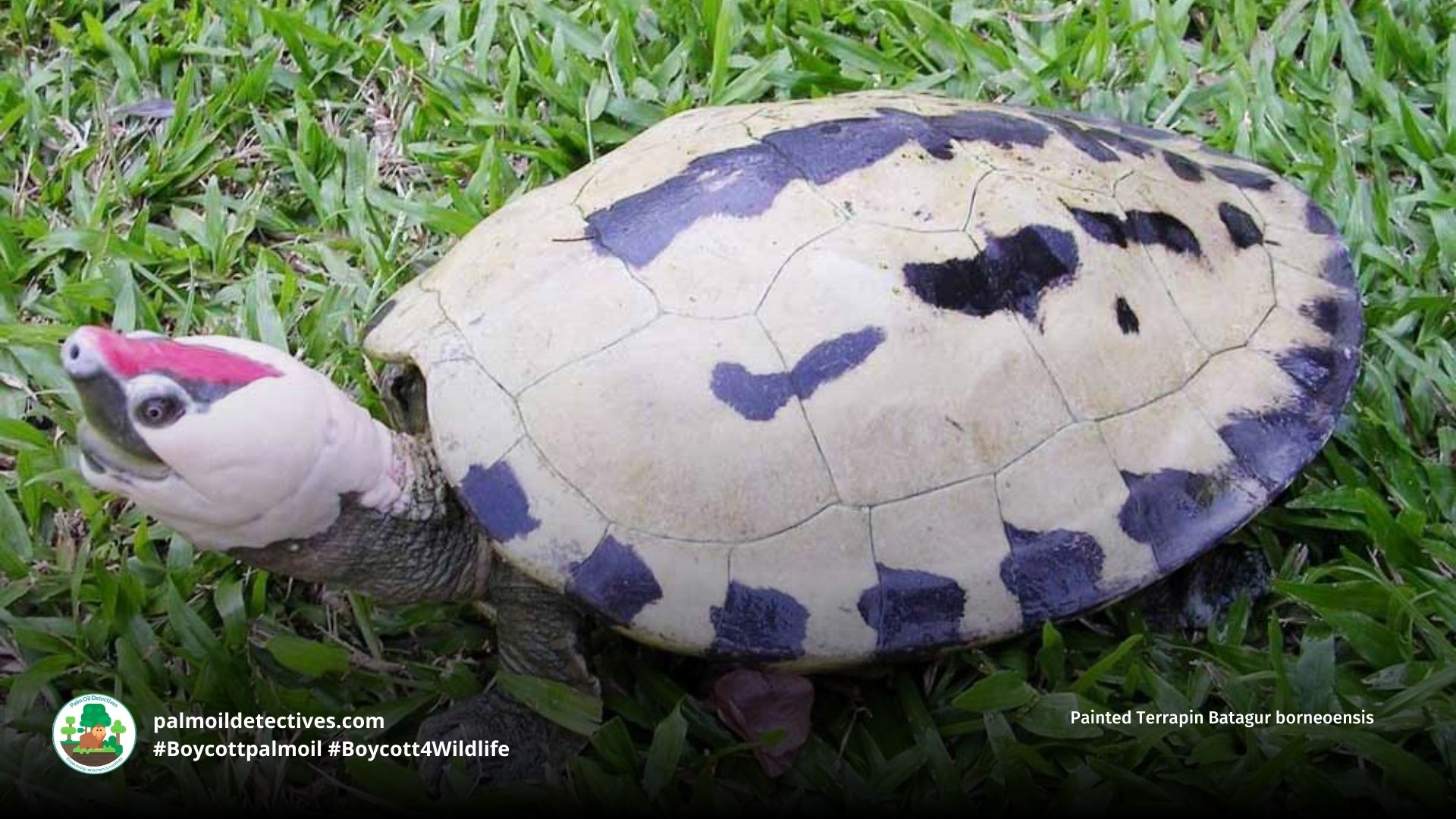
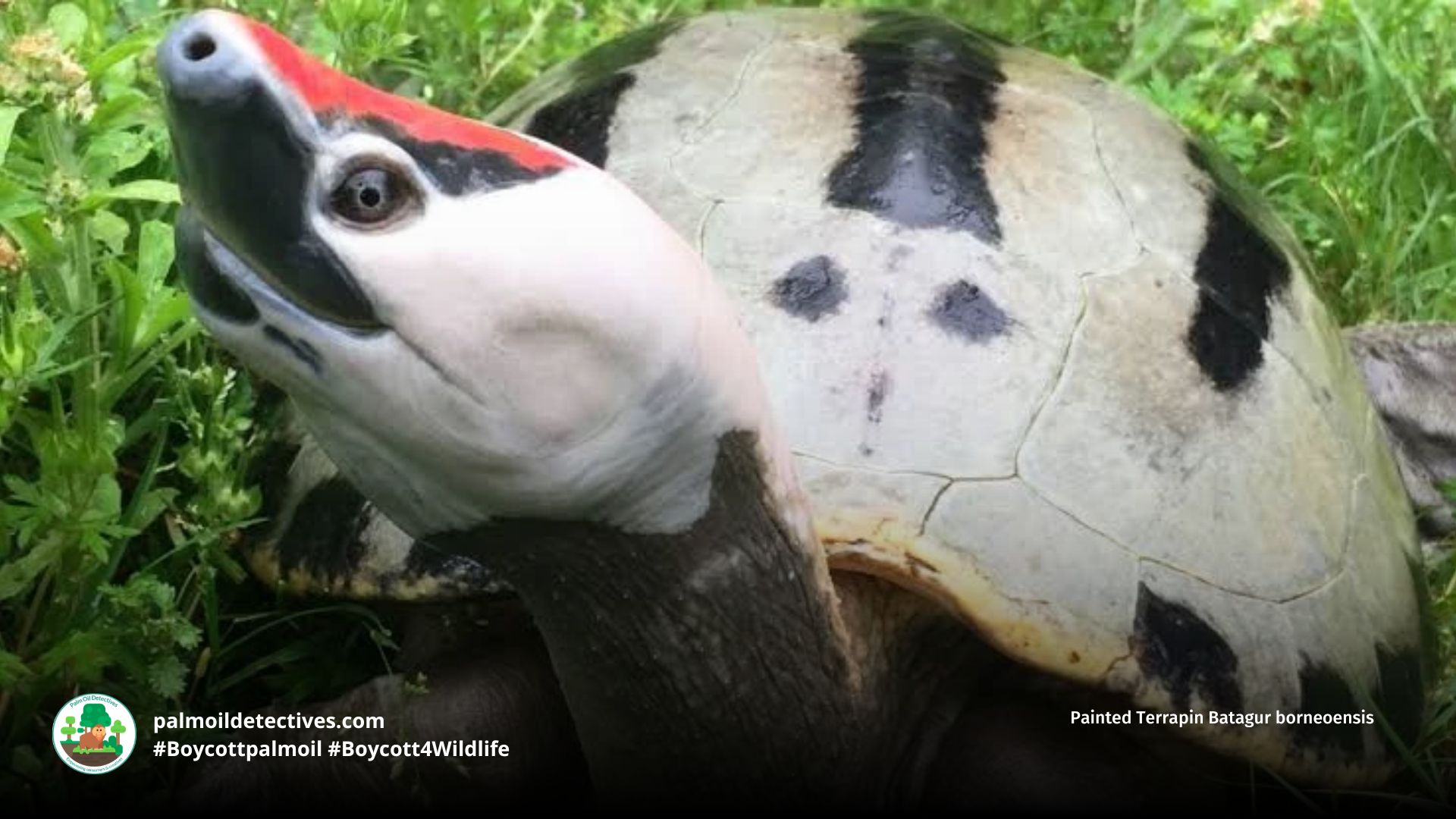
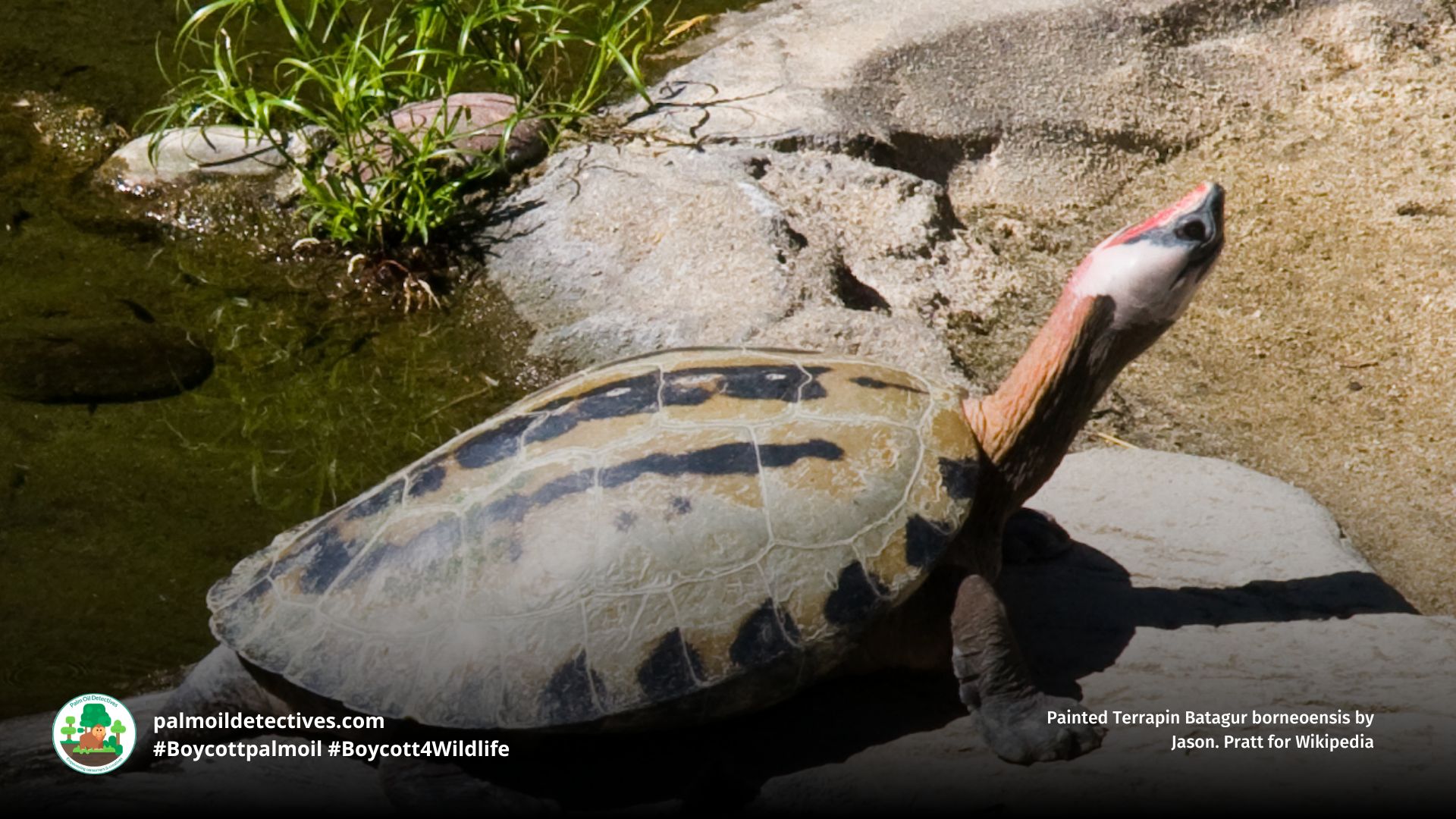
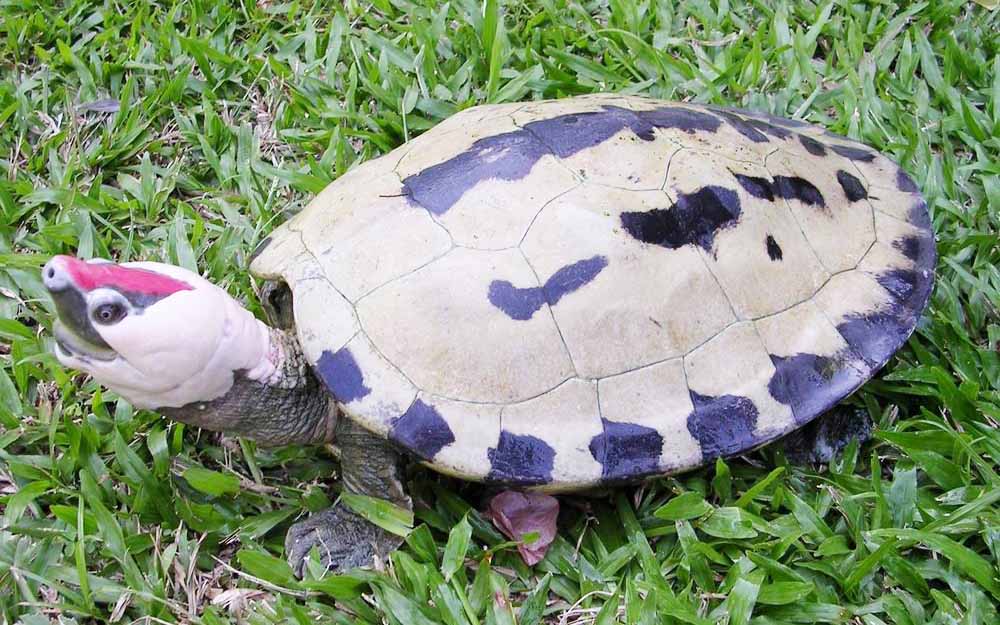
The painted terrapin, or painted river terrapin (Batagur borneoensis), is one of the most beautiful and critically endangered freshwater turtles in the world. Known for the vibrant markings displayed by males during breeding seasons, these terrapins are an integral part of Southeast Asia’s mangrove and river ecosystems.
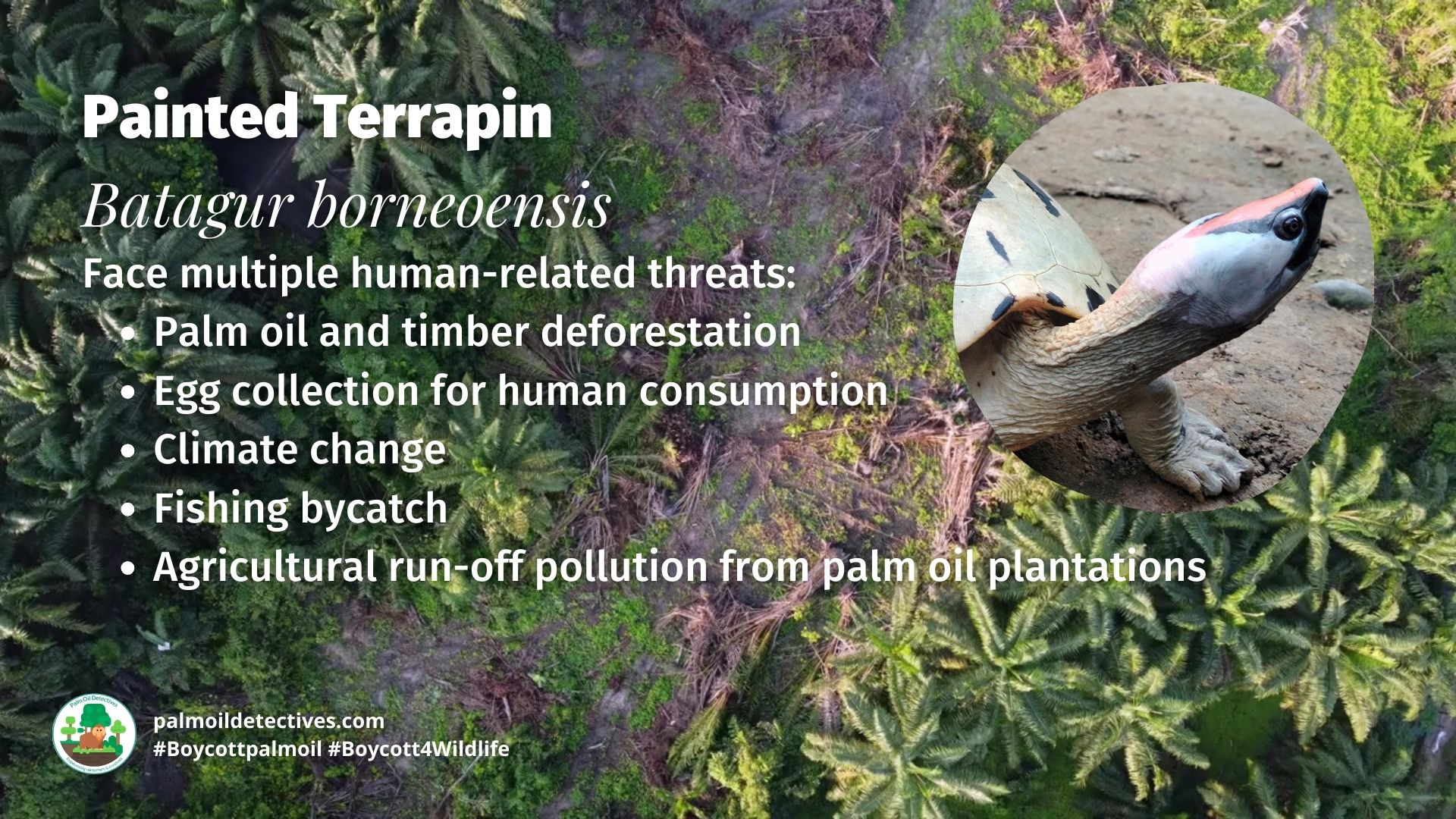
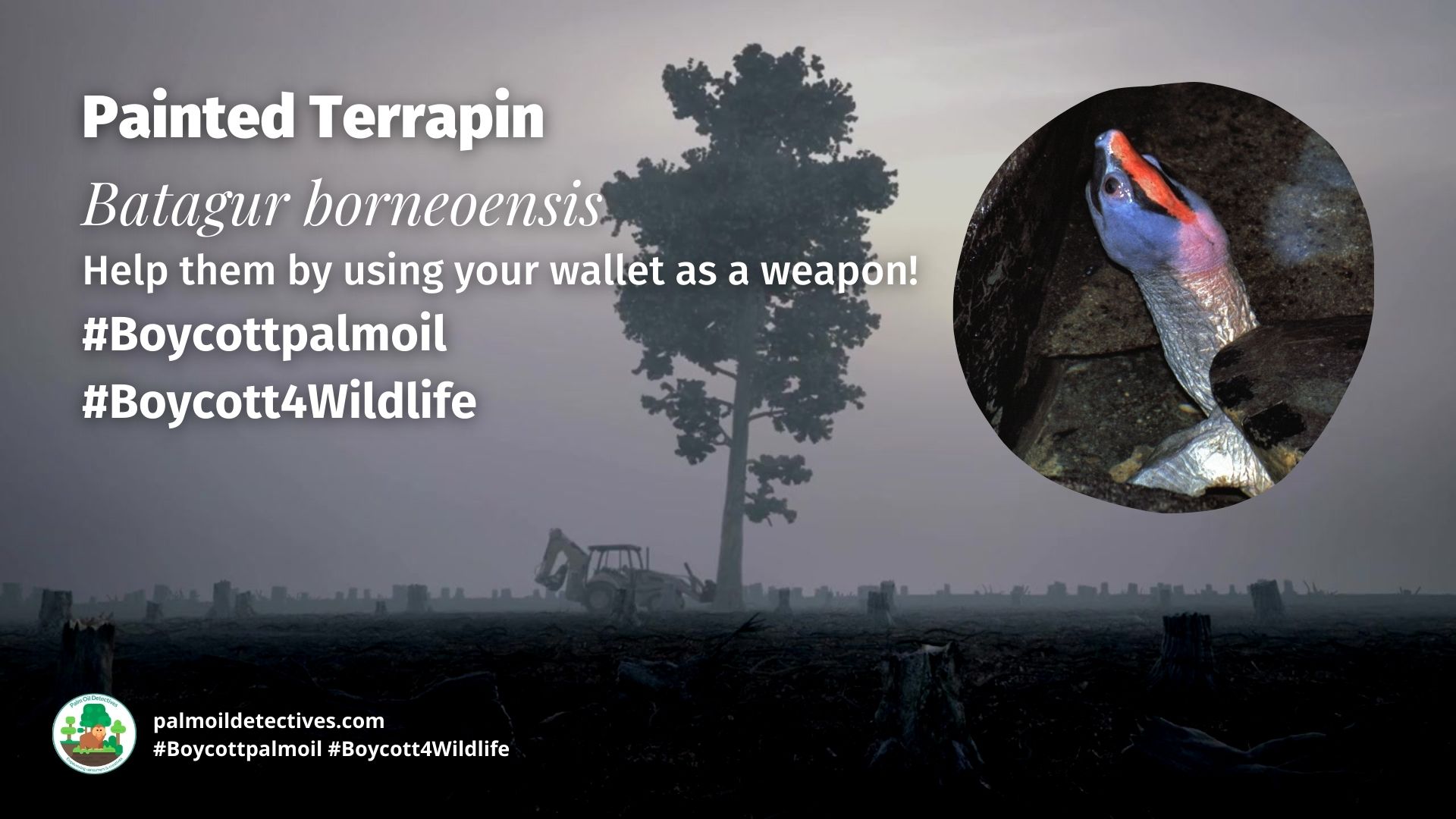
However, their populations are rapidly declining due to habitat destruction, including deforestation for palm oil plantations, sand mining, and coastal development. With fewer than 1,000 mature individuals left in the wild, immediate action is critical to ensure their survival. Protect these majestic reptiles—boycott palm oil and support conservation efforts. #BoycottPalmOil #Boycott4Wildlife
The Painted Terrapin’s shell is a vivid painter’s palette of purple, blue and grey 💜💙🩶 This turtle 🐢 of #Indonesia 🇮🇩 and #Thailand 🇹🇭 is critically endangered by #palmoil 🌴🔥⛔️ Help them and #BoycottPalmOil #Boycott4Wildlife @palmoildetect https://palmoildetectives.com/2021/01/24/painted-terrapin-batagur-borneoensis/
The Painted Terrapin is the most beautiful #turtle in #Asia A colourful shell announces their presence 🖌️🎨💝 This turtle 🐢 of #Indonesia 🇮🇩 and #Thailand 🇹🇭 is critically endangered by #palmoil 🌴🔥⛔️ #BoycottPalmOil #Boycott4Wildlife @palmoildetect https://palmoildetectives.com/2021/01/24/painted-terrapin-batagur-borneoensis/
Harvesting by fishermen to eat, poaching to meet pet and food demand, habitat loss due to land conversion to palm oil, and fish and shrimp farming are major threats.
IUCN Red List
Appearance and Behaviour
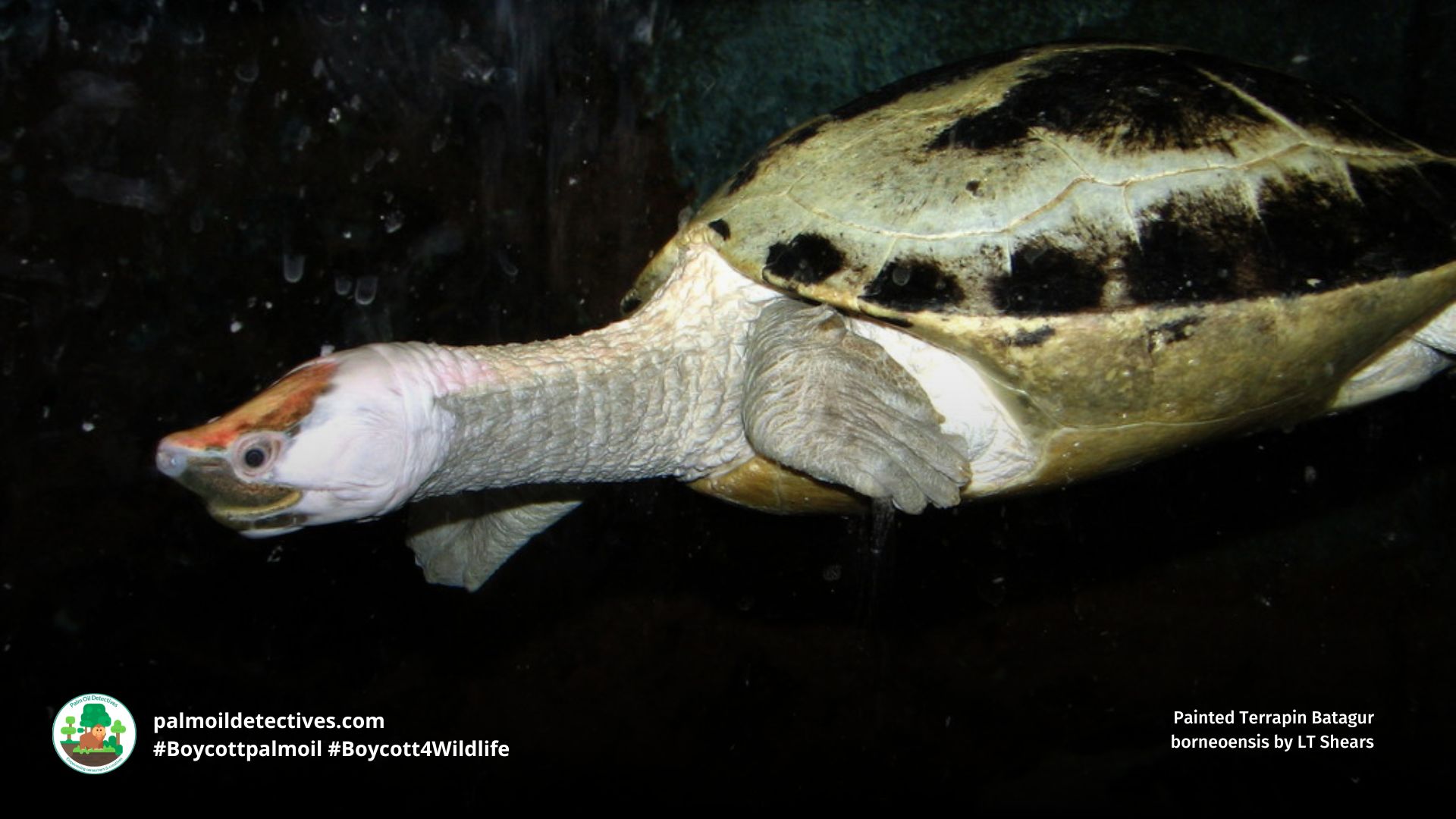
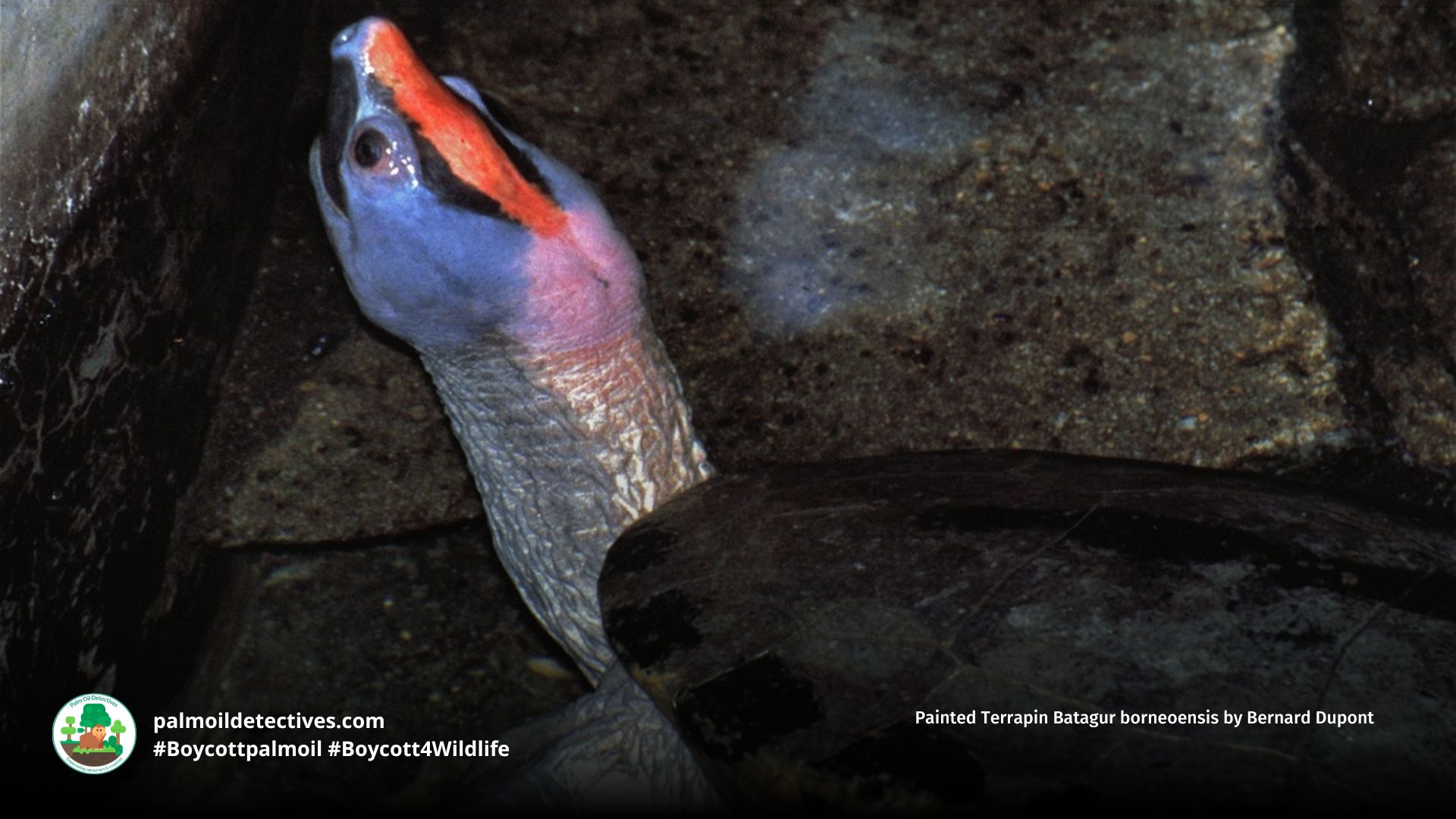
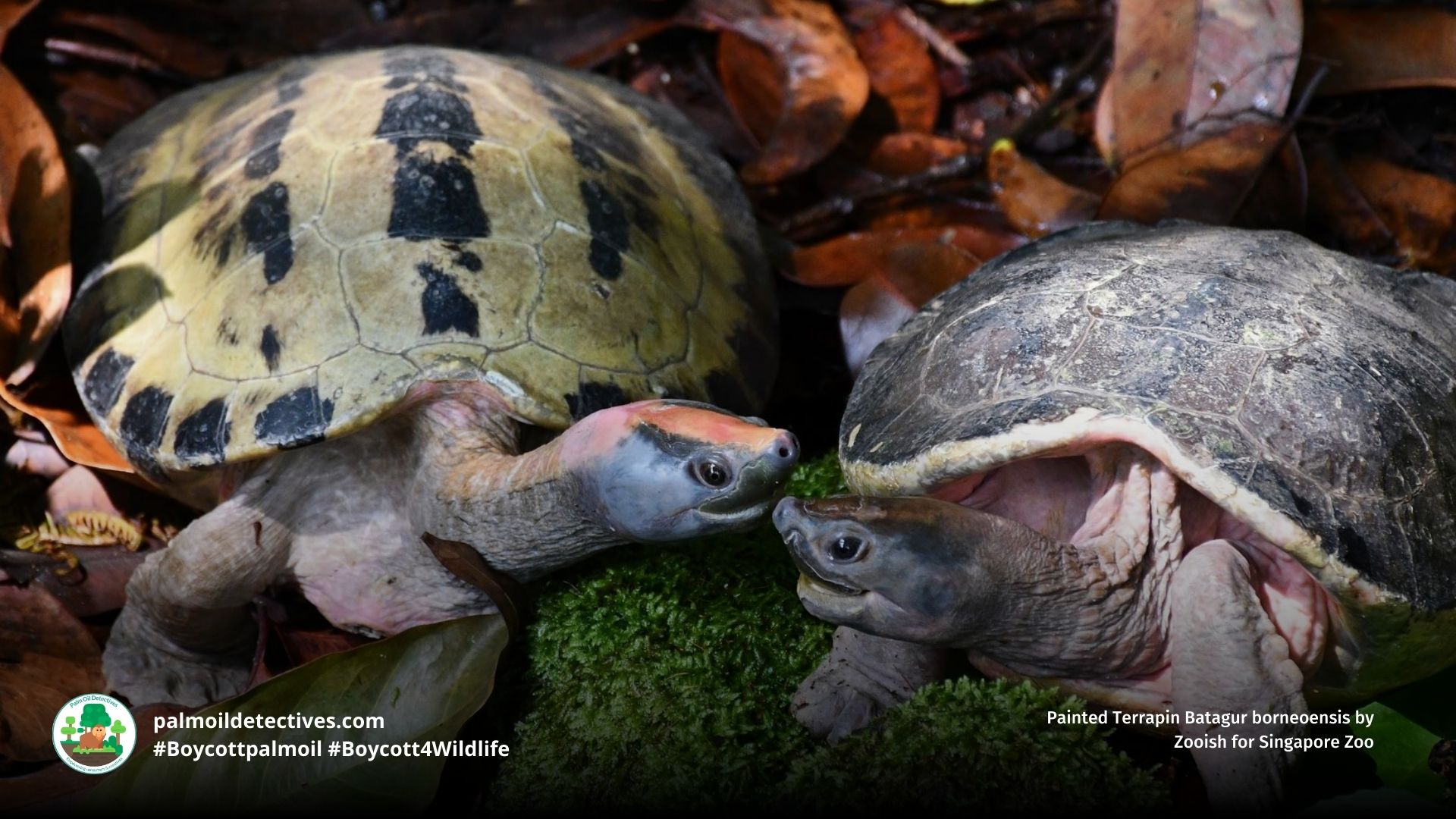
Painted terrapins are medium-sized turtles, with carapaces reaching lengths of 40–60 cm. Males are particularly striking during the breeding season, displaying bright red stripes on their heads and white patches on their shells. Females, though less colourful, possess robust, dome-shaped shells that offer protection against predators.
These terrapins are primarily herbivorous, feeding on mangrove shoots and fallen fruits. They are also excellent swimmers, with webbed feet adapted to life in brackish water environments. Painted terrapins are known for their nesting migrations, where females travel upriver to sandy shores to lay eggs, an extraordinary behaviour that helps sustain their dwindling populations.
Geographic Range
Painted terrapins inhabit the coastal mangrove forests, rivers, and estuaries of Southeast Asia, with key populations found in Malaysia, Sumatra, and southern Thailand. Their preferred habitats are brackish waters and tidal rivers, which offer both feeding grounds and nesting sites.
Recent studies have recorded terrapin nesting activity on Pusung Cium Island in Indonesia, where conservation efforts are underway to protect critical mangrove habitats (ResearchGate, 2024). However, their range is increasingly fragmented, limiting genetic diversity and migration opportunities.
Diet
Primarily herbivorous, painted terrapins consume a diet rich in mangrove shoots, aquatic plants, and fruits that fall into the water. This diet plays a vital role in maintaining mangrove ecosystems, as terrapins aid in seed dispersal and nutrient cycling.
In some cases, their diets may shift to include small invertebrates or molluscs, especially when vegetation is scarce. However, the degradation of mangroves has severely impacted food availability in many parts of their range.
Reproduction and Mating
Painted terrapins exhibit remarkable nesting behaviours. During the breeding season, females migrate upstream to sandy riverbanks, where they dig nests to lay 10–30 eggs per clutch. The incubation period lasts approximately 70–90 days, with hatchlings emerging during the night to avoid predators.
Sex determination in painted terrapins is temperature-dependent, with warmer sand producing more females. This makes climate change a significant threat, as rising temperatures may skew sex ratios, further endangering populations (National Zoo, 2024).
Threats
The painted terrapin is critically endangered, with populations continuing to decline across its range. Conservation efforts include nest protection programs, mangrove restoration projects, and awareness campaigns to reduce egg poaching. In Malaysia, organisations such as the Turtle Conservation Society monitor nesting sites and engage local communities to safeguard these turtles.
However, long-term survival requires stronger enforcement of wildlife laws, expanded protected areas, and global efforts to address habitat destruction driven by industries such as palm oil.
IUCN Status: Critically Endangered
Habitat Destruction:
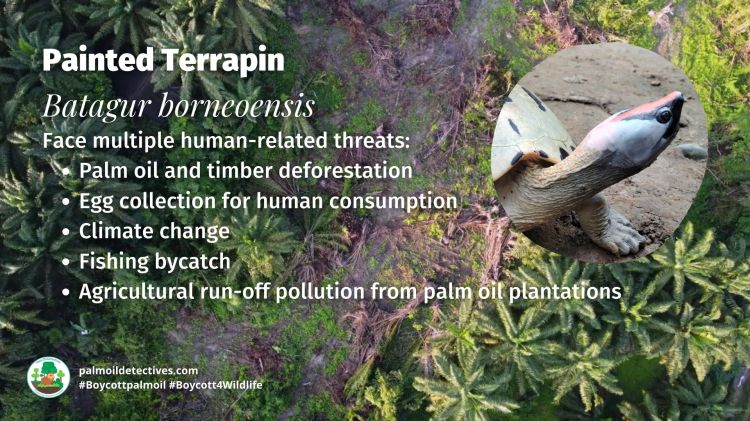
Coastal development, logging, and deforestation for palm oil plantations have decimated critical mangrove habitats.
Egg Collection:
Painted terrapin eggs are collected for human consumption or sold in illegal wildlife markets, severely impacting reproduction rates.
Fishing Bycatch:
Terrapins are frequently caught in fishing nets, leading to unintentional deaths.
Pollution:
• Water pollution from agricultural runoff and industrial waste contaminates their habitats, affecting their health and food sources.
Climate Change:
Rising sea levels and increased temperatures disrupt nesting sites and alter sex ratios in hatchlings.
Take Action!
Help save the painted terrapin by boycotting palm oil and supporting organisations that protect mangrove ecosystems. Share their story and demand stronger conservation measures for Southeast Asia’s freshwater turtles. #BoycottPalmOil #Boycott4Wildlife
Support the conservation of this creature
Further Information
Asian Turtle Trade Working Group. 2000. Batagur borneoensis (errata version published in 2016). The IUCN Red List of Threatened Species 2000: e.T163458A97335363. https://dx.doi.org/10.2305/IUCN.UK.2000.RLTS.T163458A5608163.en. Downloaded on 24 January 2021.
Inaturalist. (2024). Painted terrapin.
National Zoo. (2024). Painted river terrapin.
Turtle Conservation Society. (2024). Painted terrapin (Batagur borneoensis).
ResearchGate. (2024). Painted terrapin characteristics and existence in mangrove ecosystems.
The Edge Malaysia. (2024). Saving Malaysia’s painted terrapins.

How can I help the #Boycott4Wildlife?
Take Action in Five Ways
1. Join the #Boycott4Wildlife on social media and subscribe to stay in the loop: Share posts from this website to your own network on Twitter, Mastadon, Instagram, Facebook and Youtube using the hashtags #Boycottpalmoil #Boycott4Wildlife.
2. Contribute stories: Academics, conservationists, scientists, indigenous rights advocates and animal rights advocates working to expose the corruption of the palm oil industry or to save animals can contribute stories to the website.






3. Supermarket sleuthing: Next time you’re in the supermarket, take photos of products containing palm oil. Share these to social media along with the hashtags to call out the greenwashing and ecocide of the brands who use palm oil. You can also take photos of palm oil free products and congratulate brands when they go palm oil free.
4. Take to the streets: Get in touch with Palm Oil Detectives to find out more.
5. Donate: Make a one-off or monthly donation to Palm Oil Detectives as a way of saying thank you and to help pay for ongoing running costs of the website and social media campaigns. Donate here
Discover more from Palm Oil Detectives
Subscribe to get the latest posts sent to your email.
 Palm Oil Detectives