
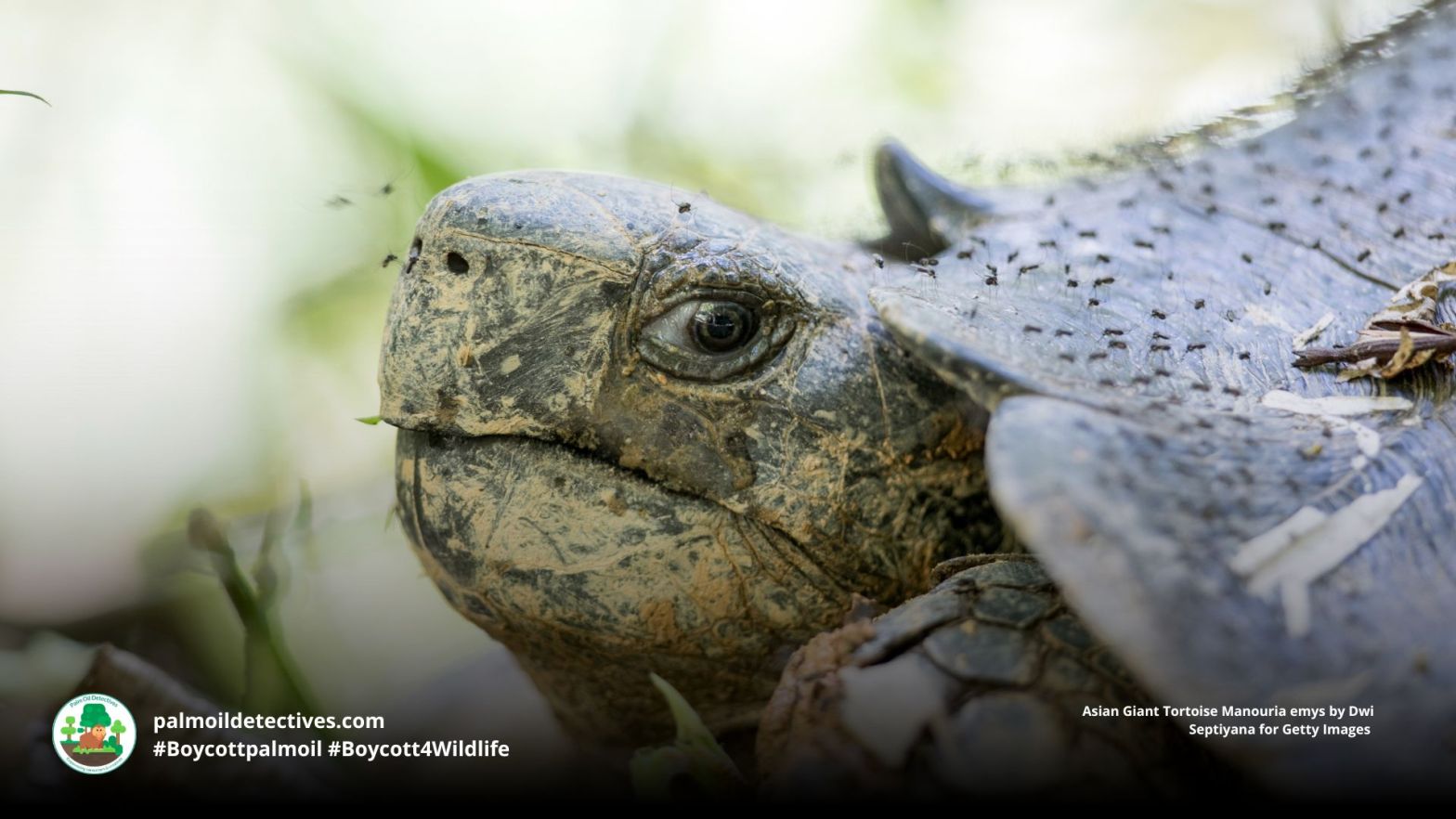
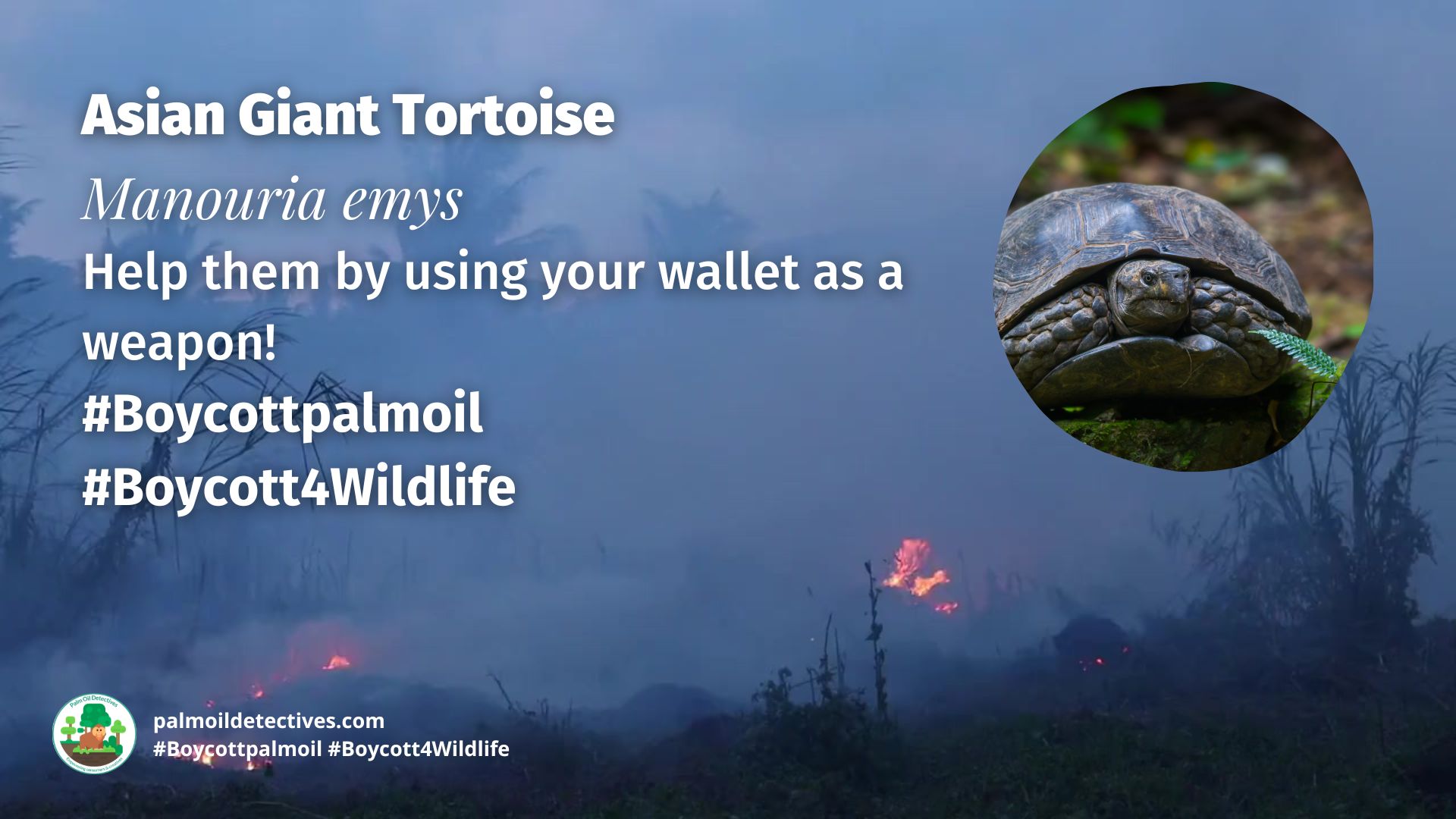
Asian Giant Tortoise Manouria emys
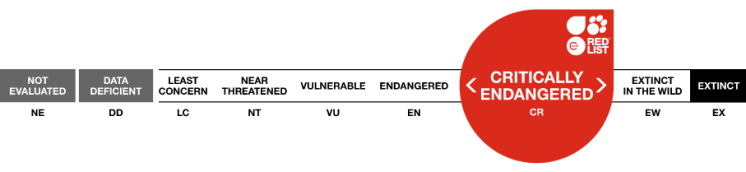
Critically Endangered
Extant (resident): Bangladesh; India; Indonesia; Malaysia; Myanmar; Thailand
Extinct: Singapore
The Asian Giant Tortoise, Asia’s largest tortoise species, is distinguished by their impressive size and unique nesting behaviours. Inhabiting evergreen forests, they play a crucial role in maintaining ecosystem health through seed dispersal. However, their populations are rapidly declining due to habitat destruction, particularly from deforestation for palm oil plantations, and illegal hunting for local consumption and the pet trade.
Protecting the Asian Giant Tortoise is vital for preserving the biodiversity of Southeast Asia’s forests. Fight for their survival by boycotting products linked to deforestation. Use your wallet as a weapon. #BoycottPalmOil #Boycott4Wildlife
Despite being the largest #tortoise in Asia, Asian Giant Tortoises are #extinct in #Singapore 😿 and critically #endangered in #Indonesia 🇮🇩 #Malaysia 🇲🇾 #Thailand 🇹🇭 due to #palmoil #deforestation and the #pet trade. #BoycottPalmOil #Boycott4Wildlife https://palmoildetectives.com/2021/01/25/asian-giant-tortoise-manouria-emys/
Asia’s most majestic and heaviest #tortoise 🐢🐢💚🫶 is the Asian Giant Tortoise averaging 35kgs. They’re critically endangered by #palmoil #deforestation and illegal pet trade. Fight for their survival when you #BoycottPalmOil #Boycott4Wildlife 🌴🙊⛔️☠️ https://palmoildetectives.com/2021/01/25/asian-giant-tortoise-manouria-emys/
Appearance and Behaviour
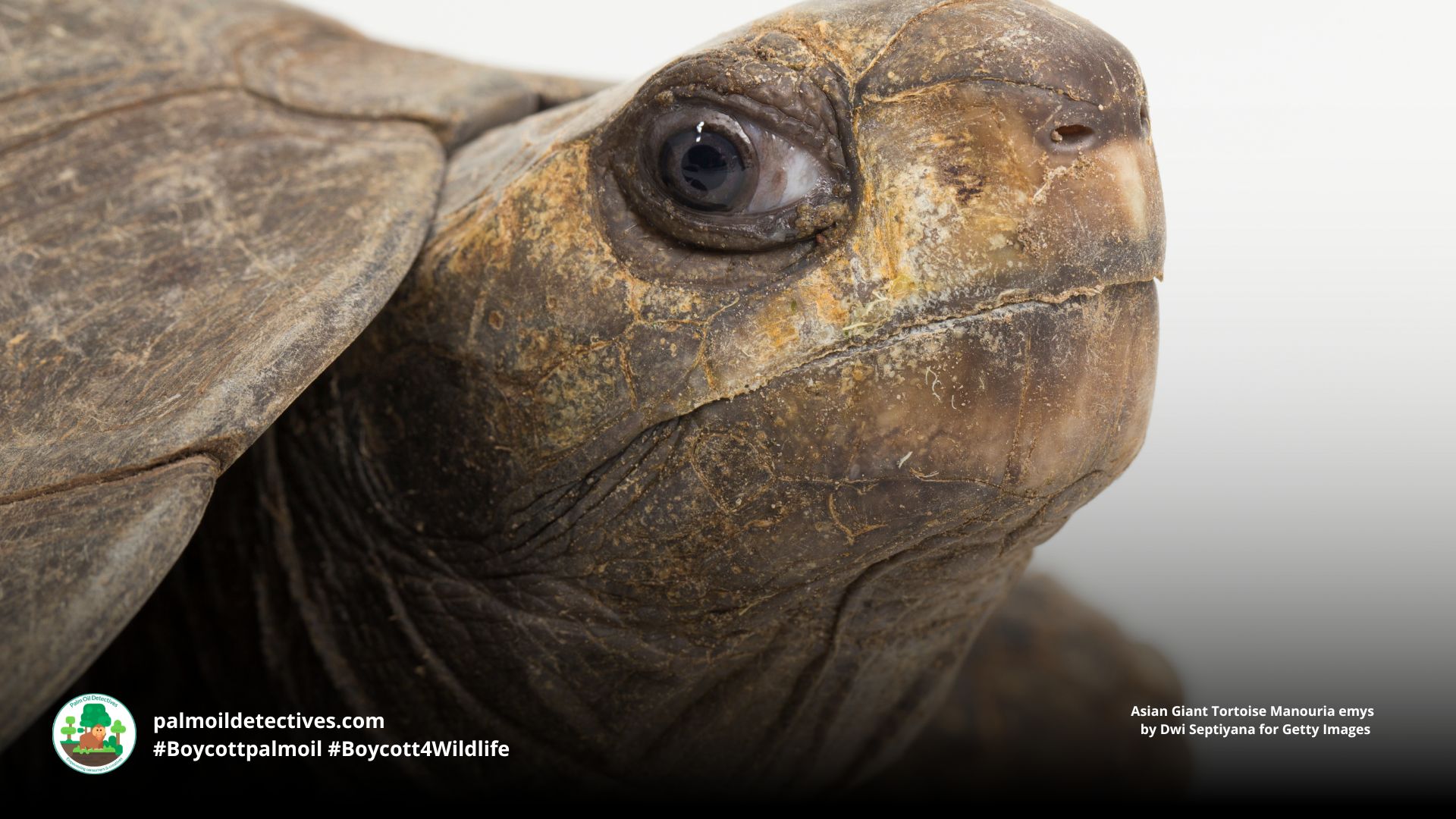
The Asian Giant Tortoise is the largest tortoise in Asia, with adults reaching up to 61 cm (24 inches) in shell length and weighing up to 35 kg (77 lbs). They have a dark brown to black carapace and sturdy limbs covered with rough scales, aiding in navigating dense forest floors.
A unique behaviour of this species is their nesting practice. Females construct nests by gathering leaf litter and decomposing plant material into a mound, where they lay their eggs. This method helps regulate incubation temperatures and protects the eggs from predators.



Geographic Range
Historically, the Asian Giant Tortoise ranged across Bangladesh, India, Indonesia, Malaysia, Myanmar, and Thailand. Due to extensive habitat loss and poaching, their populations have significantly declined, and they are now primarily found in fragmented forested regions within these countries.
Diet
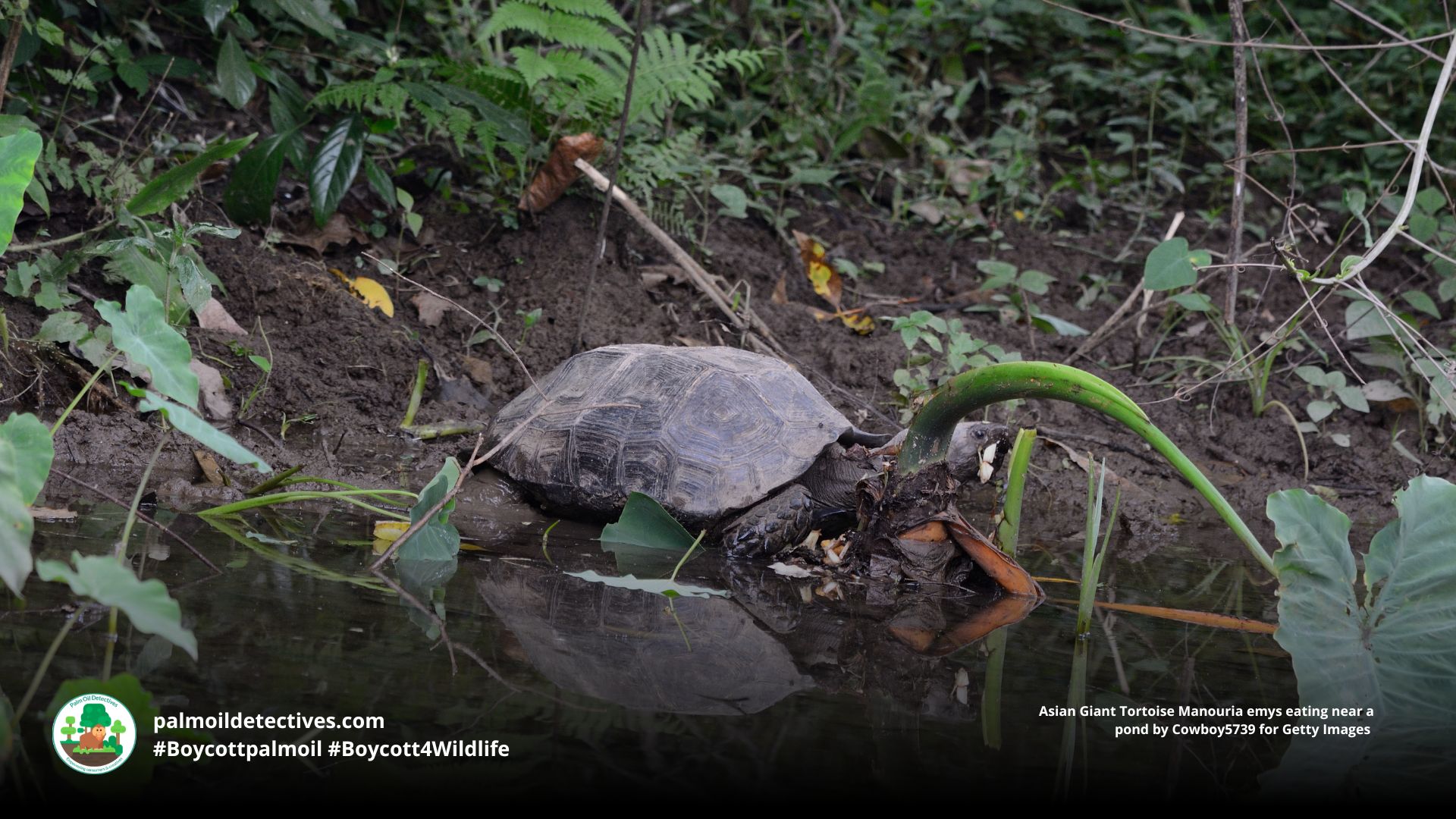
These tortoises are primarily herbivorous, feeding on a variety of vegetation, including leaves, fruits, and grasses. Occasionally, they may consume invertebrates such as worms and snails. Their foraging habits contribute to seed dispersal, playing a vital role in forest regeneration.
Reproduction and Mating
Breeding typically coincides with the monsoon season. Females build large nests from leaf litter to lay clutches of 20–50 eggs. Interestingly, studies have shown that mimicking rainfall and thunder can stimulate egg-laying in captive individuals, highlighting the species’ sensitivity to environmental cues.
Threats
The Asian Giant Tortoise is listed as Critically Endangered on the IUCN Red List, with populations continuing to decline. Conservation efforts focus on habitat protection, anti-poaching measures, and captive breeding programs aimed at reintroducing individuals into the wild. Organisations such as the Turtle Survival Alliance are actively involved in these initiatives.

IUCN Status: Critically Endangered
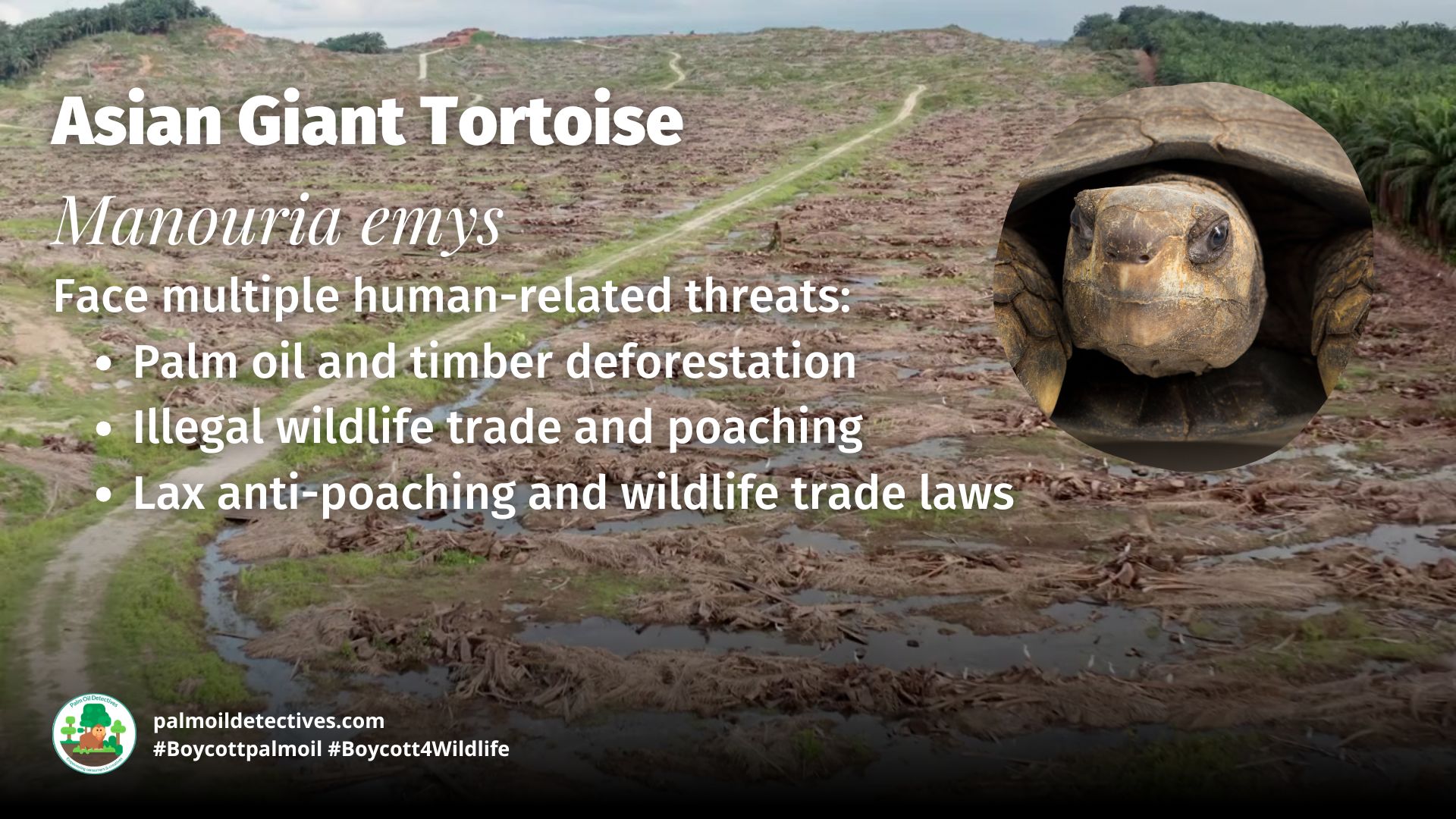
Habitat Destruction for palm oil and timber: Deforestation for agriculture, particularly palm oil plantations, logging, and human settlement, has led to significant habitat loss for the Asian Giant Tortoise.
Illegal Hunting: They are poached for local consumption and the international pet trade, further driving population declines.
Climate Change: Alterations in monsoon patterns can disrupt their breeding cycles, affecting reproductive success.
Take Action!
Protect the Asian Giant Tortoise by boycotting products linked to deforestation, such as palm oil. Support conservation organisations working to preserve their habitats and enforce anti-poaching laws. Share their story and advocate for their survival with #BoycottPalmOil and #Boycott4Wildlife.
Further Information
Choudhury, B.C., Cota, M., McCormack, T., Platt, K., Das, I., Ahmed, M.F., Timmins, R.J., Rahman, S. & Singh, S. 2019. Manouria emys (errata version published in 2019). The IUCN Red List of Threatened Species 2019: e.T12774A152052098. https://dx.doi.org/10.2305/IUCN.UK.2019-1.RLTS.T12774A152052098.en. Downloaded on 25 January 2021
Orangutan Foundation International. (2022). Asia’s Largest Tortoise. Retrieved from Orangutan Foundation International
Reptiles Magazine. (2024). Echoes of Rain: How Mimicking Rainfall and Thunder Caused Asian Giant Tortoises to Lay Eggs. Retrieved from Reptiles Magazine
Turtle Survival Alliance. (2023). Species Spotlight: Asian Giant Tortoise. Retrieved from Turtle Survival Alliance


How can I help the #Boycott4Wildlife?
Take Action in Five Ways
1. Join the #Boycott4Wildlife on social media and subscribe to stay in the loop: Share posts from this website to your own network on Twitter, Mastadon, Instagram, Facebook and Youtube using the hashtags #Boycottpalmoil #Boycott4Wildlife.
2. Contribute stories: Academics, conservationists, scientists, indigenous rights advocates and animal rights advocates working to expose the corruption of the palm oil industry or to save animals can contribute stories to the website.





3. Supermarket sleuthing: Next time you’re in the supermarket, take photos of products containing palm oil. Share these to social media along with the hashtags to call out the greenwashing and ecocide of the brands who use palm oil. You can also take photos of palm oil free products and congratulate brands when they go palm oil free.
4. Take to the streets: Get in touch with Palm Oil Detectives to find out more.
5. Donate: Make a one-off or monthly donation to Palm Oil Detectives as a way of saying thank you and to help pay for ongoing running costs of the website and social media campaigns. Donate here
Discover more from Palm Oil Detectives
Subscribe to get the latest posts sent to your email.
 Palm Oil Detectives