
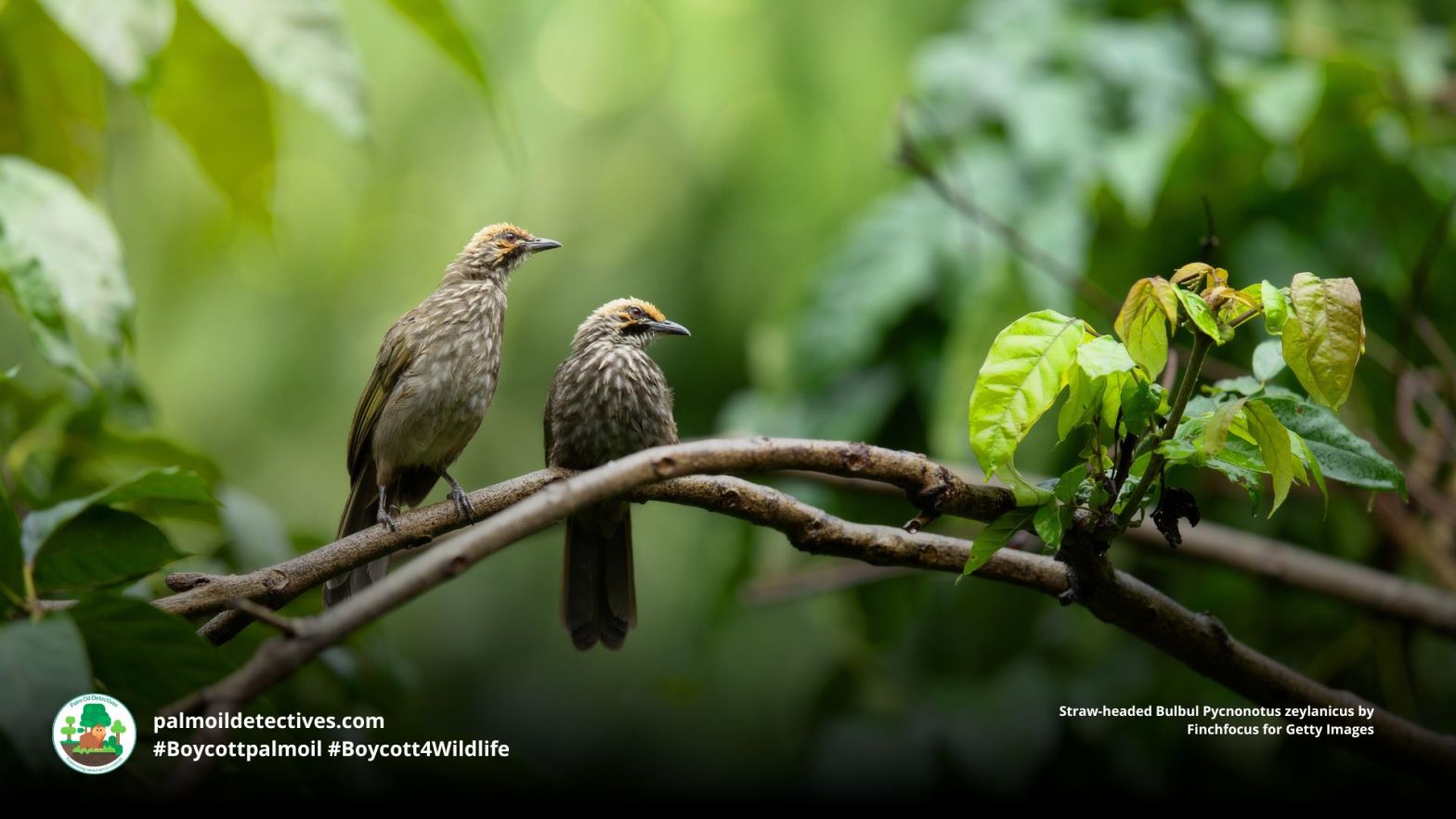
Straw-headed Bulbul Pycnonotus zeylanicus
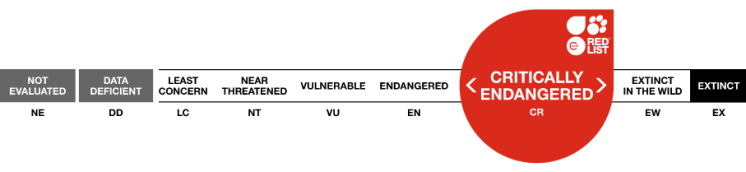
Critically Endangered
Extant (resident): Brunei Darussalam; Indonesia; Malaysia; Myanmar
Extant (breeding): Singapore
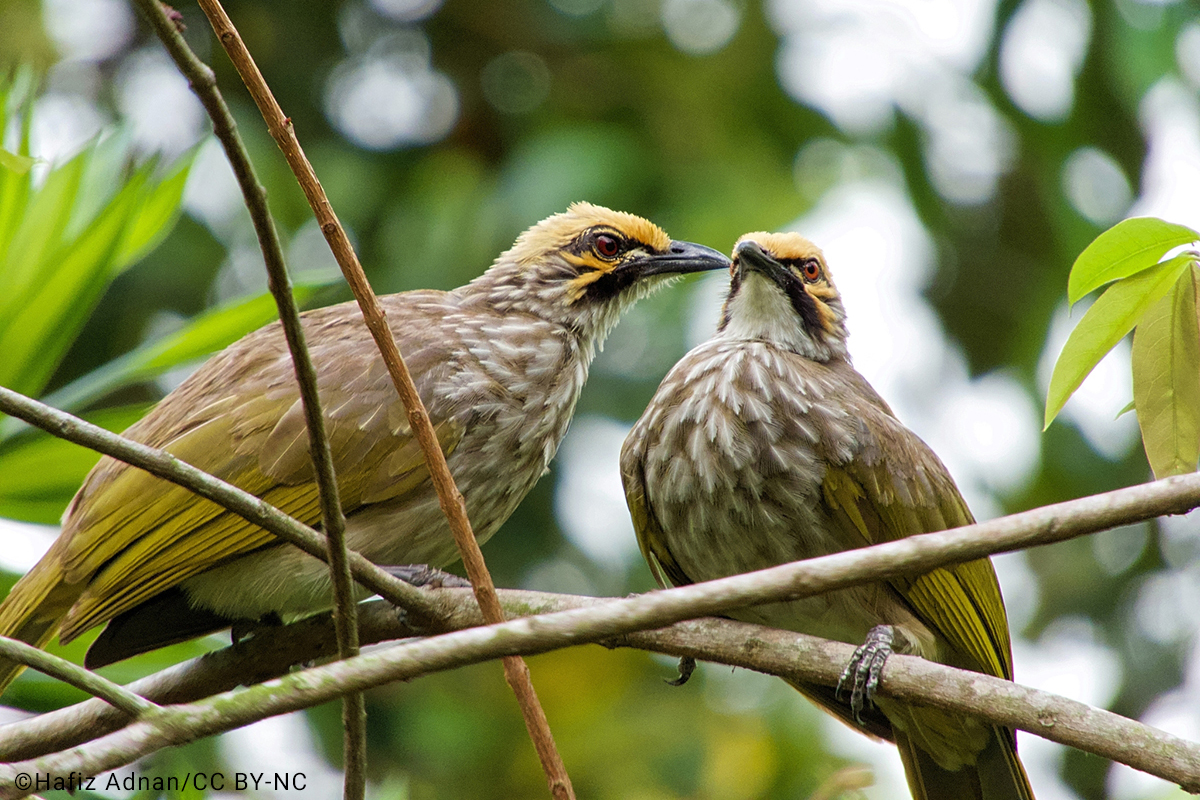
The Straw-headed Bulbul is a striking bright yellow bird known for their vibrant song, often described as one of the most melodious in the bird world. Their powerful calls echo through Southeast Asia’s lowland forests, but these sounds are becoming increasingly rare. They are critically endangered due to illegal trapping for the cage-bird trade and habitat loss driven by deforestation, including the expansion of palm oil plantations.
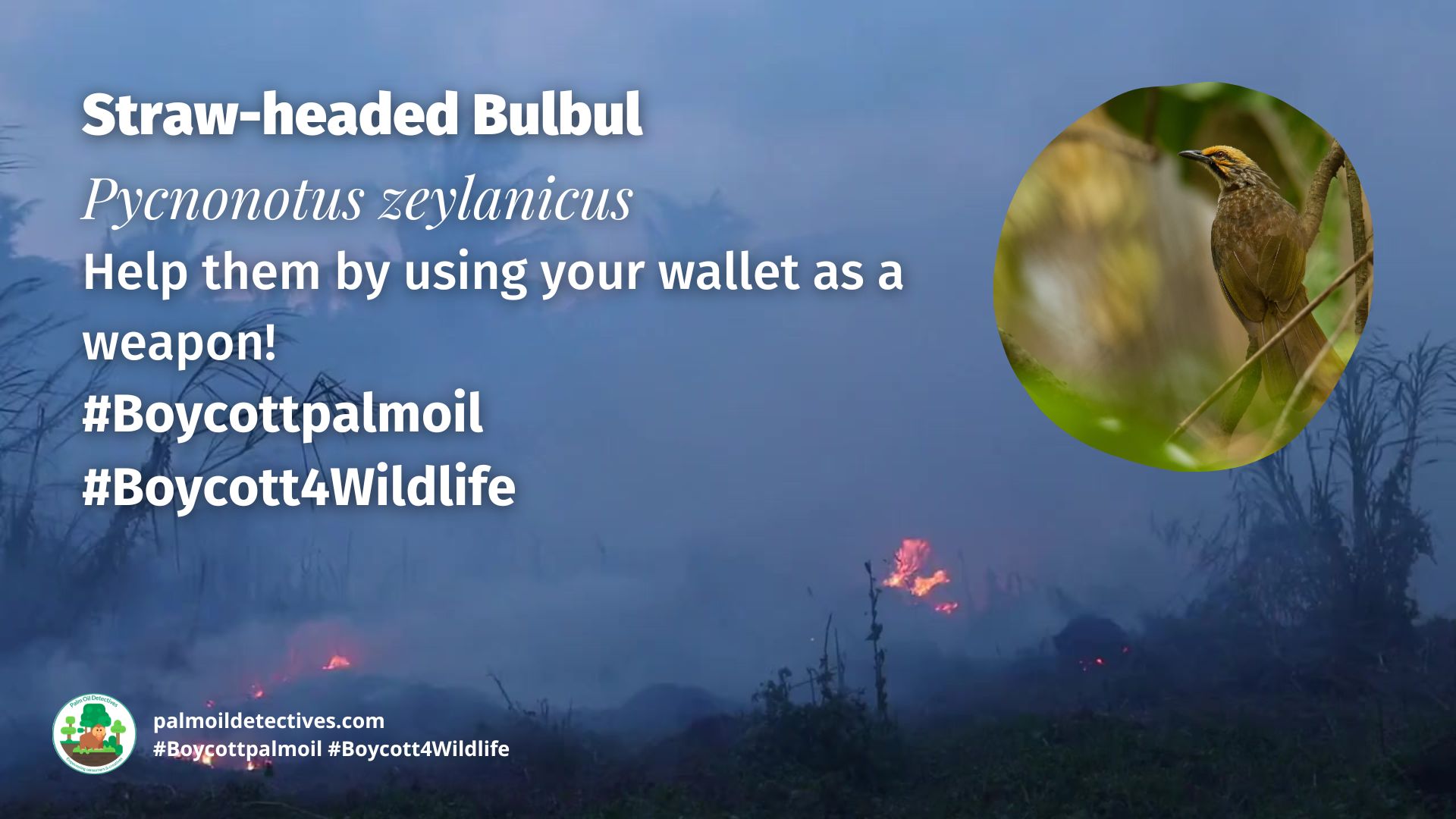
Protecting the Straw-headed Bulbul is vital to preserving their unique contribution to the soundscapes of their natural habitats. Fight for their survival by boycotting products linked to deforestation. Use your wallet as a weapon. #BoycottPalmOil #Boycott4Wildlife
Vibrant yellow #birds and songstresses 🦜💛🎵🎶 of the #rainforest, Straw-headed bulbuls are critically endangered in #Indonesia 🇮🇩 #Malaysia 🇲🇾 due to #palmoil 🌴🚫 #deforestation. Fight for them and #BoycottPalmOil #Boycott4Wildlife @palmoildetect https://palmoildetectives.com/2021/01/25/straw-headed-bulbul-pycnonotus-zeylanicus/
Appearance and Behaviour
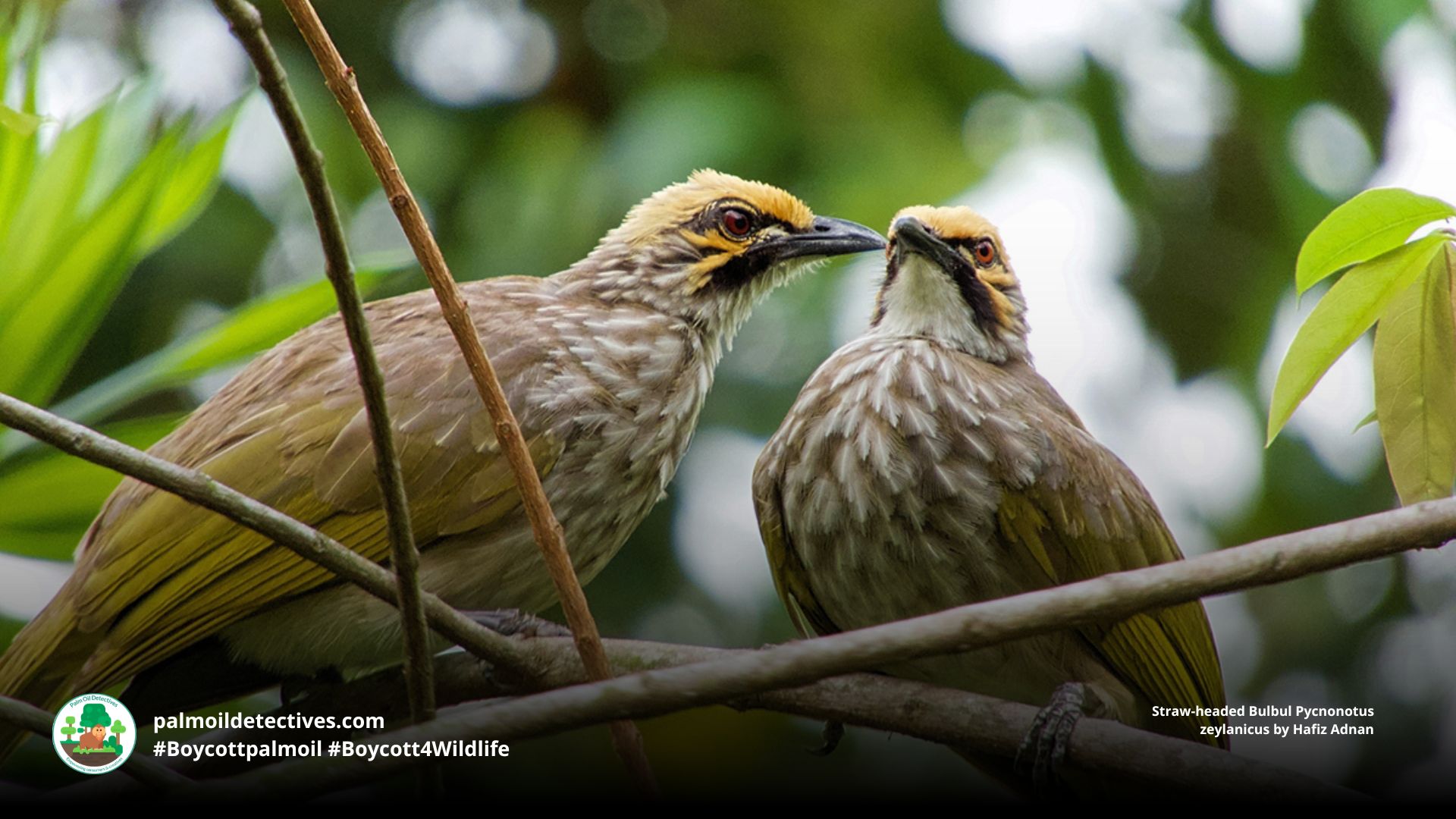
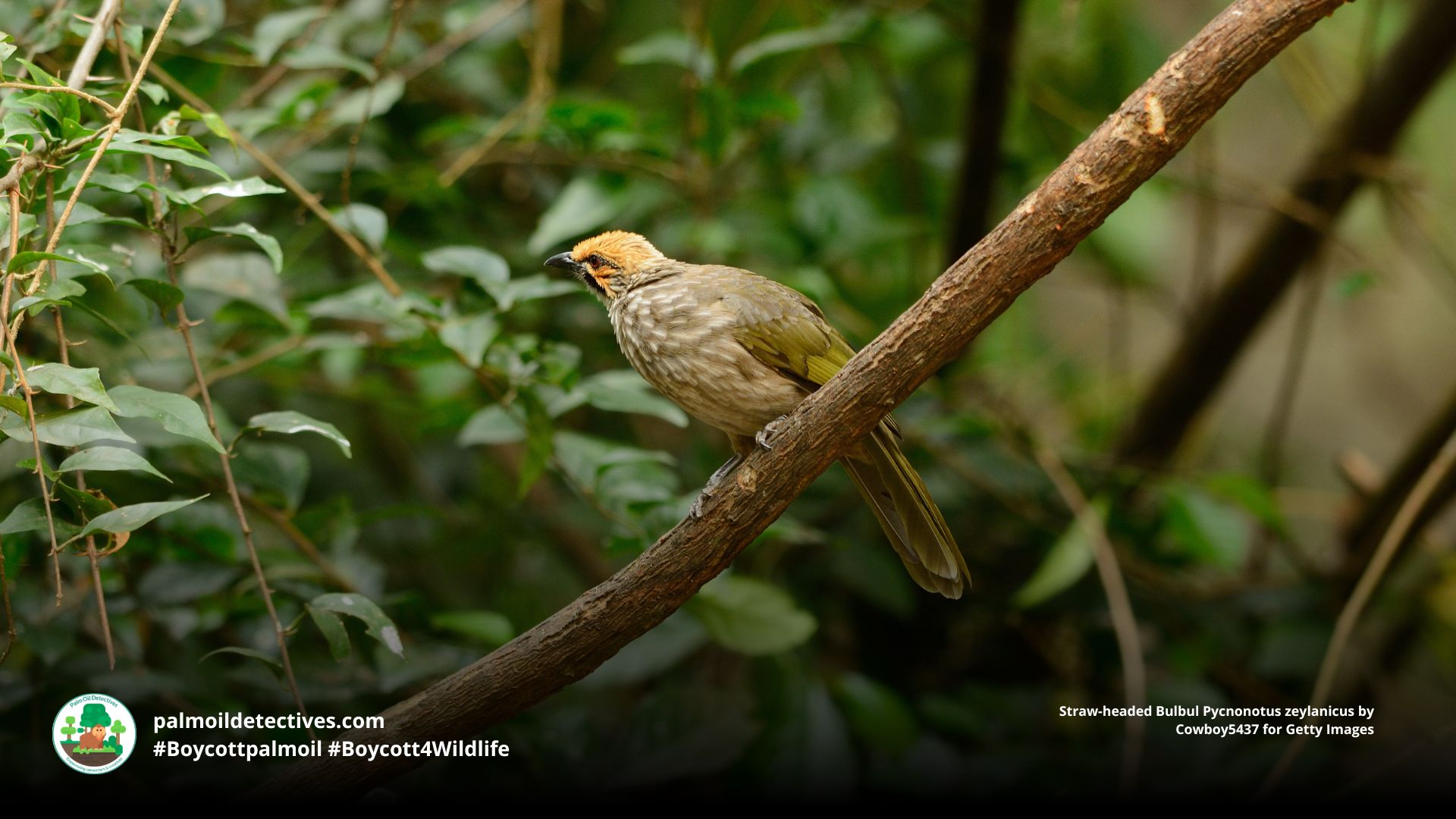
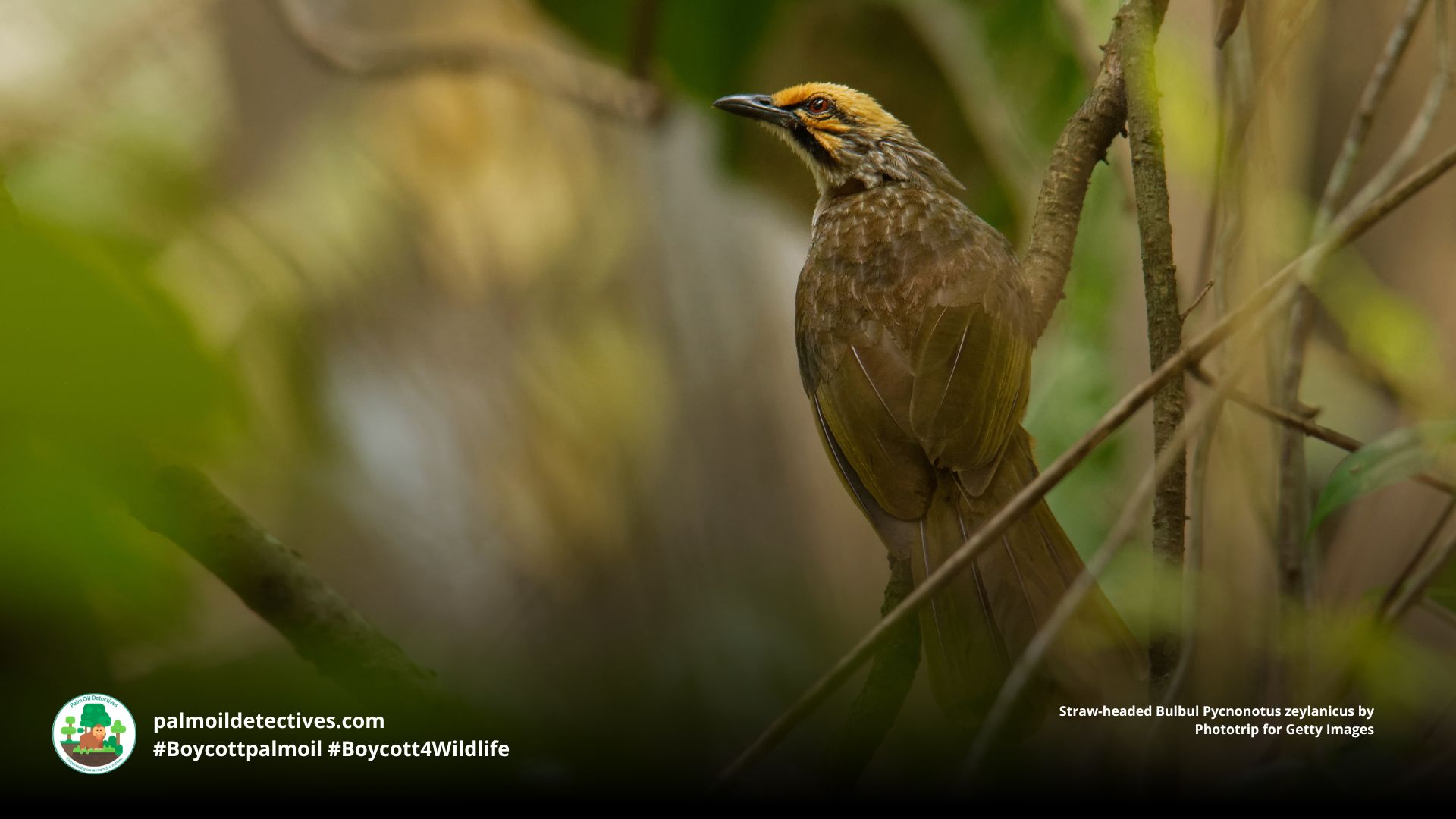
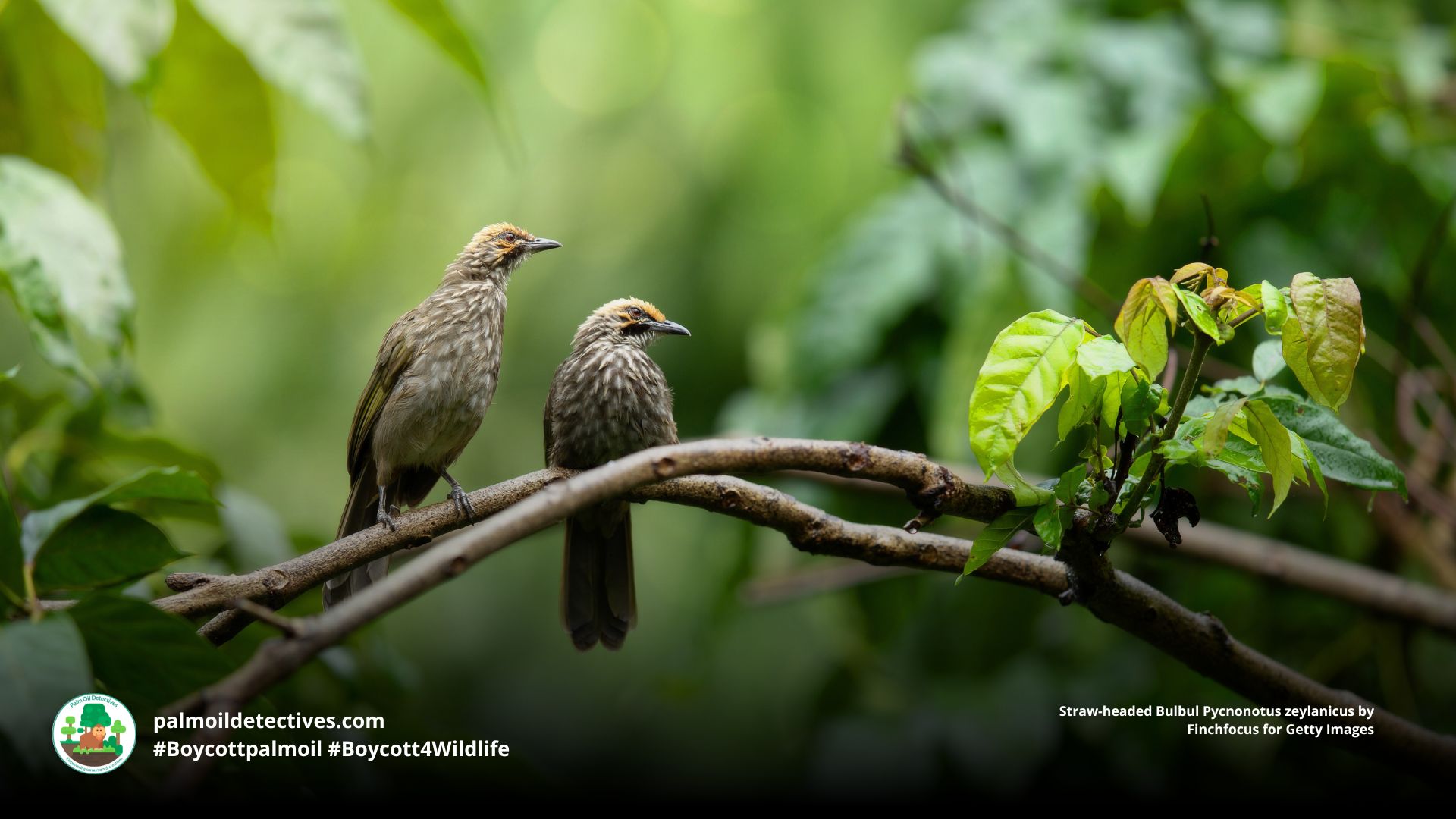
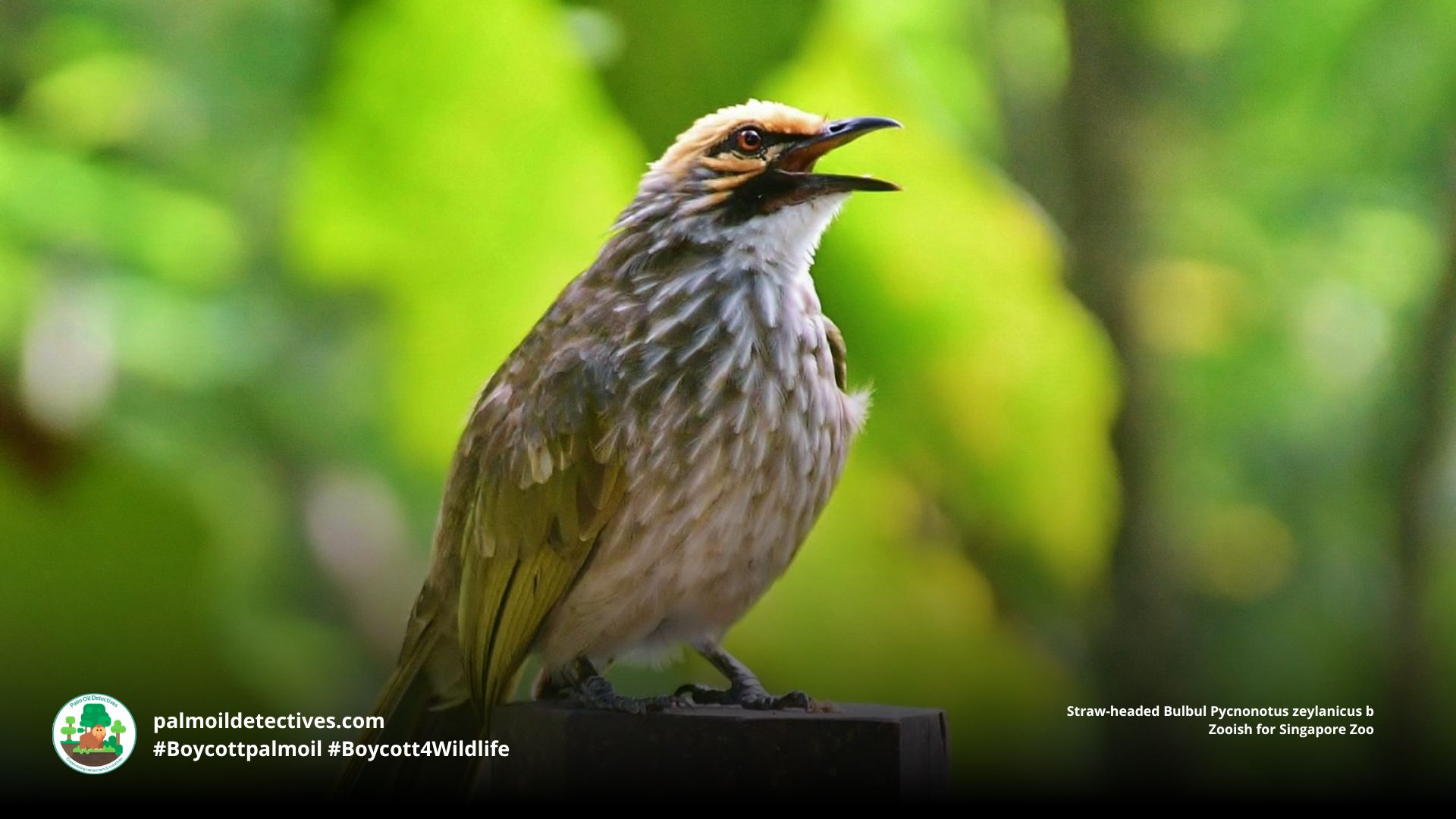
The Straw-headed Bulbul is a medium-sized bird with a bright yellowish-orange head, black facial markings, and a distinctive streaked breast. Their large size and robust build set them apart from other bulbuls.
What makes this bird truly exceptional is their powerful and bubbling song, often likened to a virtuoso performance. This rare talent has made them a coveted species in the cage-bird trade, pushing their wild populations to the brink of extinction. They are often seen in pairs or small groups, foraging in fruiting trees and shrubs near water bodies.
Geographic Range
Historically, the Straw-headed Bulbul was widespread across Southeast Asia, including Myanmar, Thailand, Malaysia, Singapore, and parts of Indonesia. Today, their range has significantly contracted due to trapping and habitat loss. Viable populations remain in Singapore, parts of Malaysia, and Kalimantan in Indonesia. The species is believed to be extinct in Thailand and likely extinct in Myanmar and Java.

Diet
The Straw-headed Bulbul primarily feeds on fruits, particularly figs, but they also consume insects and other small invertebrates. Their diet plays a critical role in seed dispersal, contributing to the regeneration of their forest habitats.The Straw-headed Bulbul primarily feeds on fruits, particularly figs, but they also consume insects and other small invertebrates. Their diet plays a critical role in seed dispersal, contributing to the regeneration of their forest habitats.
Reproduction and Mating
During the breeding season, which usually coincides with wetter months, Straw-headed Bulbuls build nests hidden within dense vegetation. The female typically lays two to three eggs, which are incubated for about two weeks. Both parents work together to feed the chicks until they fledge. Their commitment to parental care underscores their importance in maintaining local populations despite significant threats.
Threats

The Straw-headed Bulbul is listed as Critically Endangered on the IUCN Red List, with populations continuing to decline. However, in Singapore, where conservation measures have been implemented, populations appear to be stable or increasing. Collaborative efforts across Southeast Asia are essential to ensure the species’ survival, focusing on habitat protection and stricter enforcement of anti-poaching laws.
IUCN Status: Critically Endangered
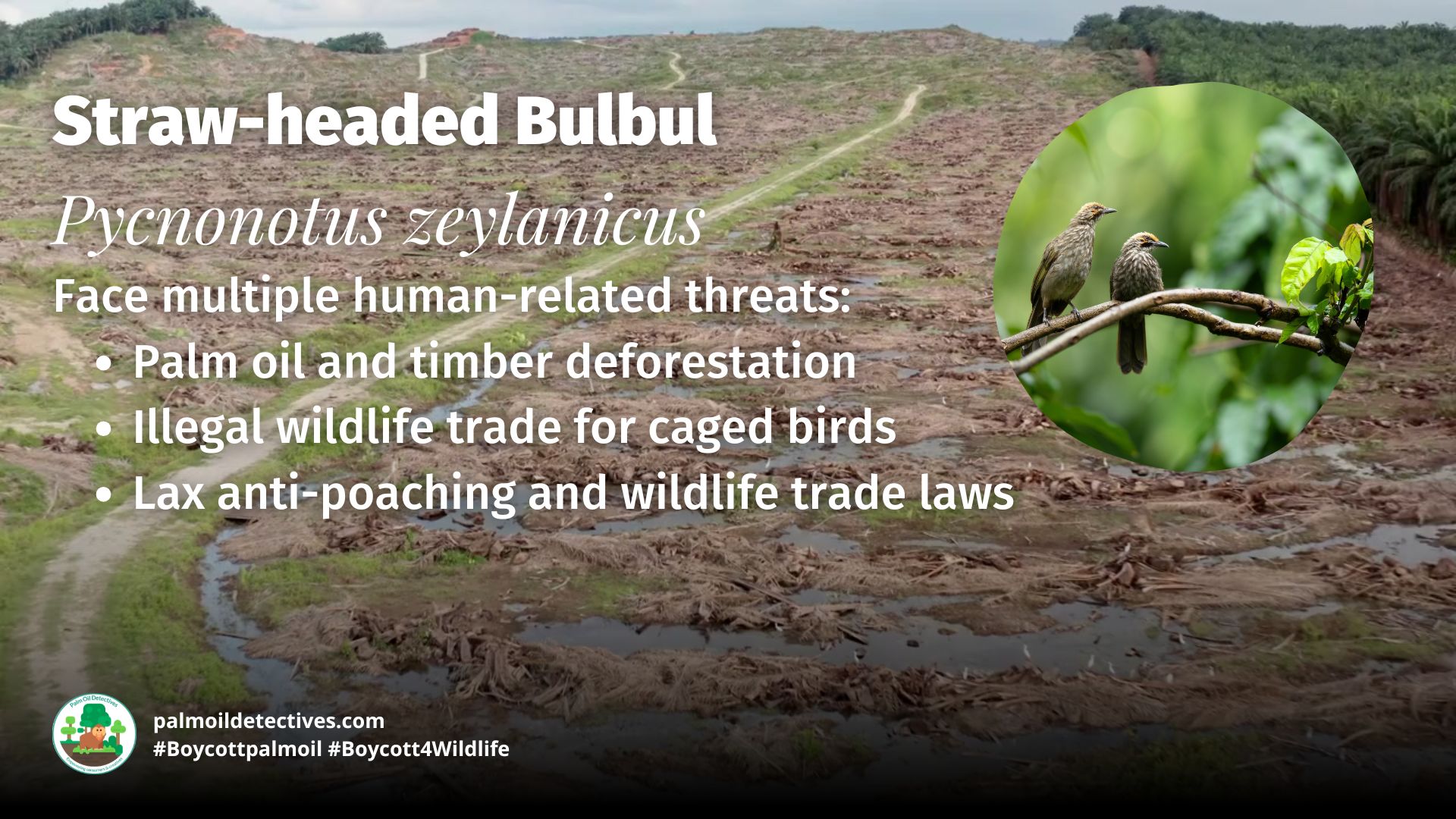
- Palm oil and timber deforestation: Deforestation for agriculture, including palm oil plantations, has destroyed much of their lowland forest habitat.
- Illegal Wildlife Trade: The Straw-headed Bulbul’s melodic song has made them a prime target for the cage-bird trade, decimating their wild populations.
- Lack of Protection: Inadequate enforcement of anti-poaching laws in some regions has allowed the illegal bird trade to persist.
Take Action!
Protect the Straw-headed Bulbul by boycotting products linked to deforestation, such as palm oil. Support organisations working to enforce anti-poaching laws and preserve their habitats. Share their story and advocate for their survival with #BoycottPalmOil and #Boycott4Wildlife.

Further Information
BirdLife International. 2018. Pycnonotus zeylanicus. The IUCN Red List of Threatened Species 2018: e.T22712603A132470468. https://dx.doi.org/10.2305/IUCN.UK.2018-2.RLTS.T22712603A132470468.en. Downloaded on 25 January 2021
Eaton, J. A., Leupen, B. T. C., & Krishnasamy, K. (2017). The Final Straw? An Overview of Straw-headed Bulbul Trade in Indonesia. Retrieved from ResearchGate
eBird. (n.d.). Straw-headed Bulbul. Retrieved from eBird
The Revelator. (2021). Species Spotlight: The Straw-headed Bulbul. Retrieved from The Revelator
You can support this beautiful animal
There are no known conservation activities for this animal. Share out this post to social media and join the #BoycottPalmOil #Boycott4Wildlife on social media to raise awareness

How can I help the #Boycott4Wildlife?
Take Action in Five Ways
1. Join the #Boycott4Wildlife on social media and subscribe to stay in the loop: Share posts from this website to your own network on Twitter, Mastadon, Instagram, Facebook and Youtube using the hashtags #Boycottpalmoil #Boycott4Wildlife.
2. Contribute stories: Academics, conservationists, scientists, indigenous rights advocates and animal rights advocates working to expose the corruption of the palm oil industry or to save animals can contribute stories to the website.





3. Supermarket sleuthing: Next time you’re in the supermarket, take photos of products containing palm oil. Share these to social media along with the hashtags to call out the greenwashing and ecocide of the brands who use palm oil. You can also take photos of palm oil free products and congratulate brands when they go palm oil free.
4. Take to the streets: Get in touch with Palm Oil Detectives to find out more.
5. Donate: Make a one-off or monthly donation to Palm Oil Detectives as a way of saying thank you and to help pay for ongoing running costs of the website and social media campaigns. Donate here
Discover more from Palm Oil Detectives
Subscribe to get the latest posts sent to your email.
 Palm Oil Detectives