
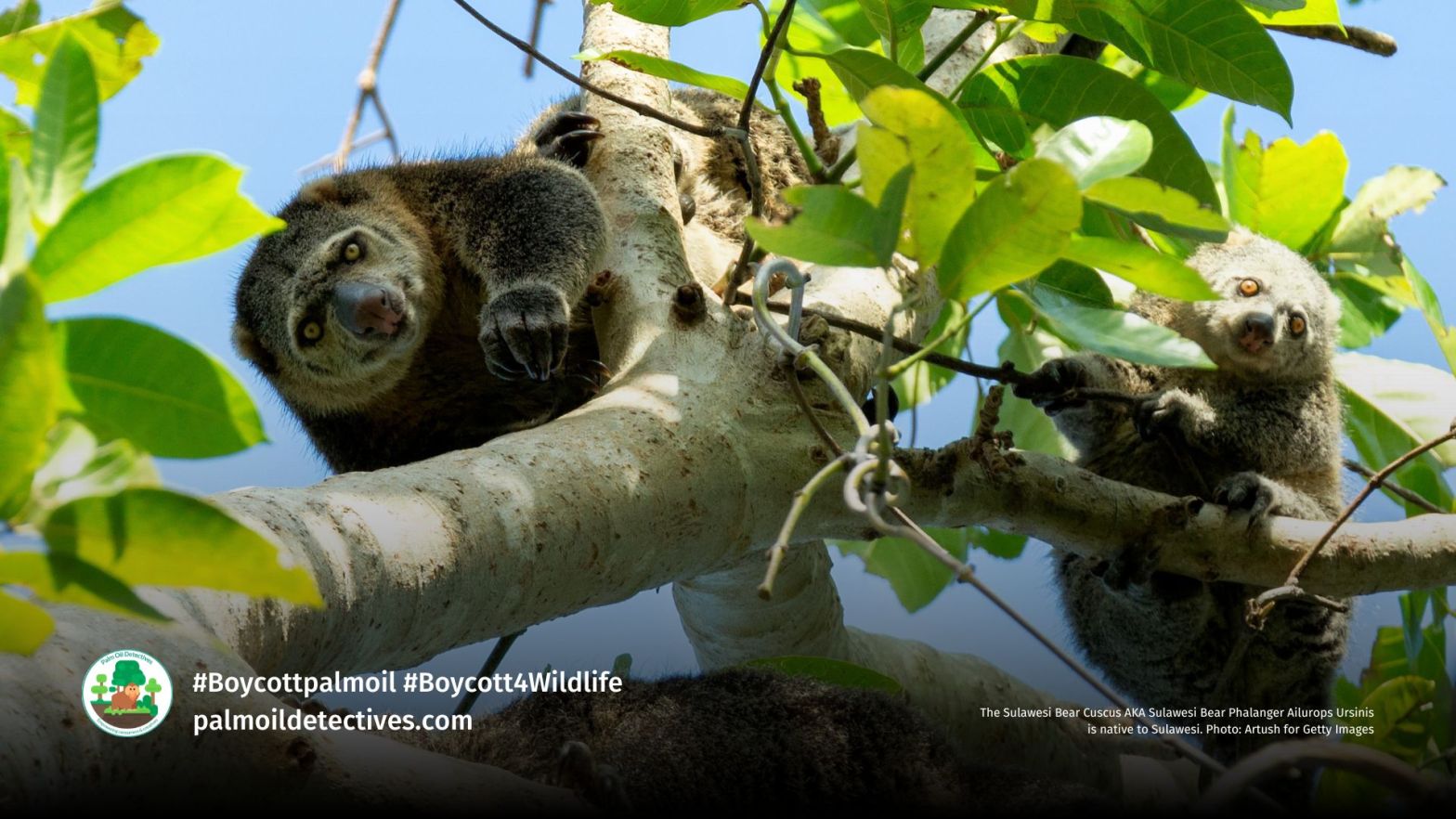
Bear Cuscus Ailurops ursinus
Vulnerable
Location: West Papua
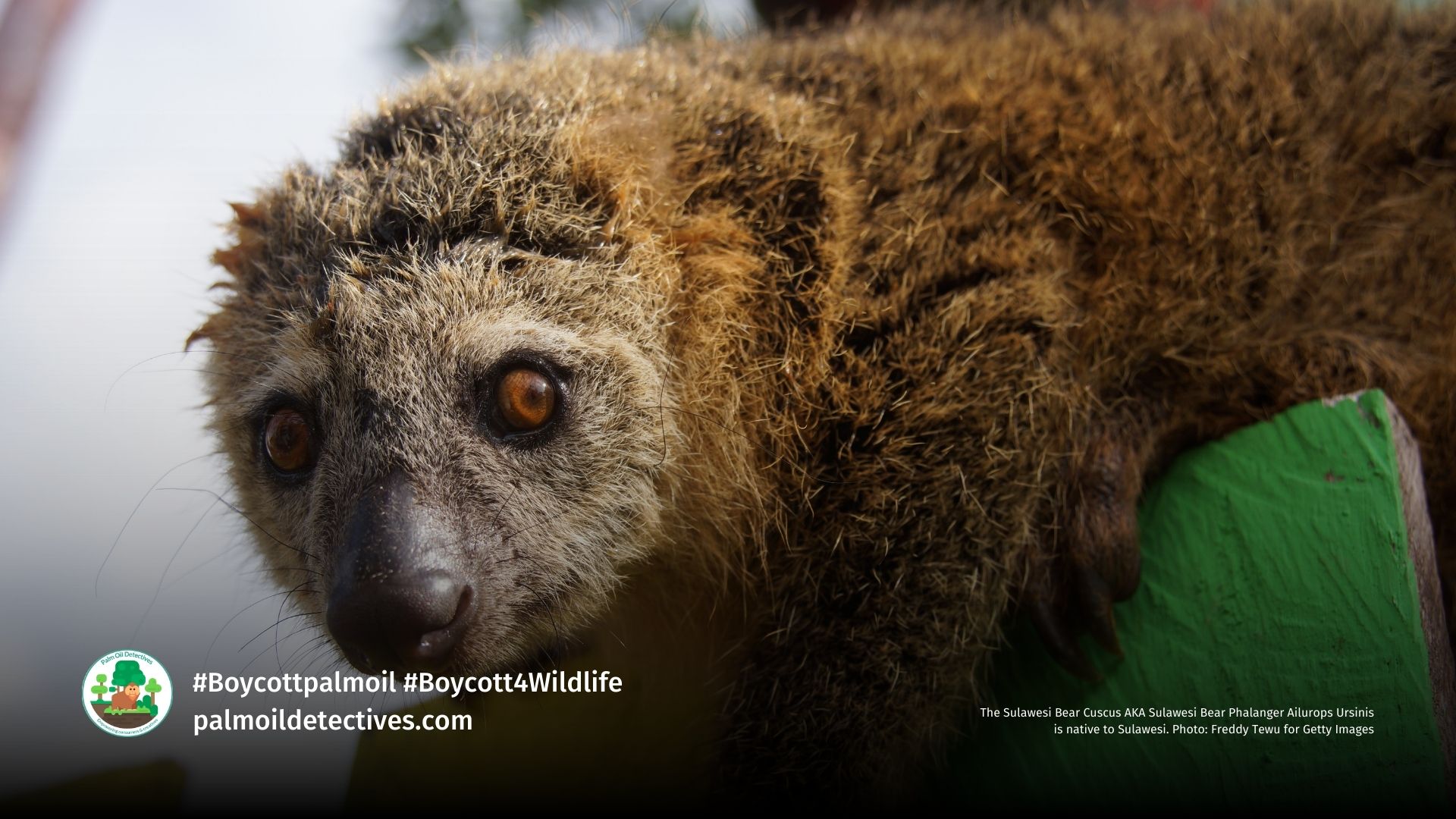
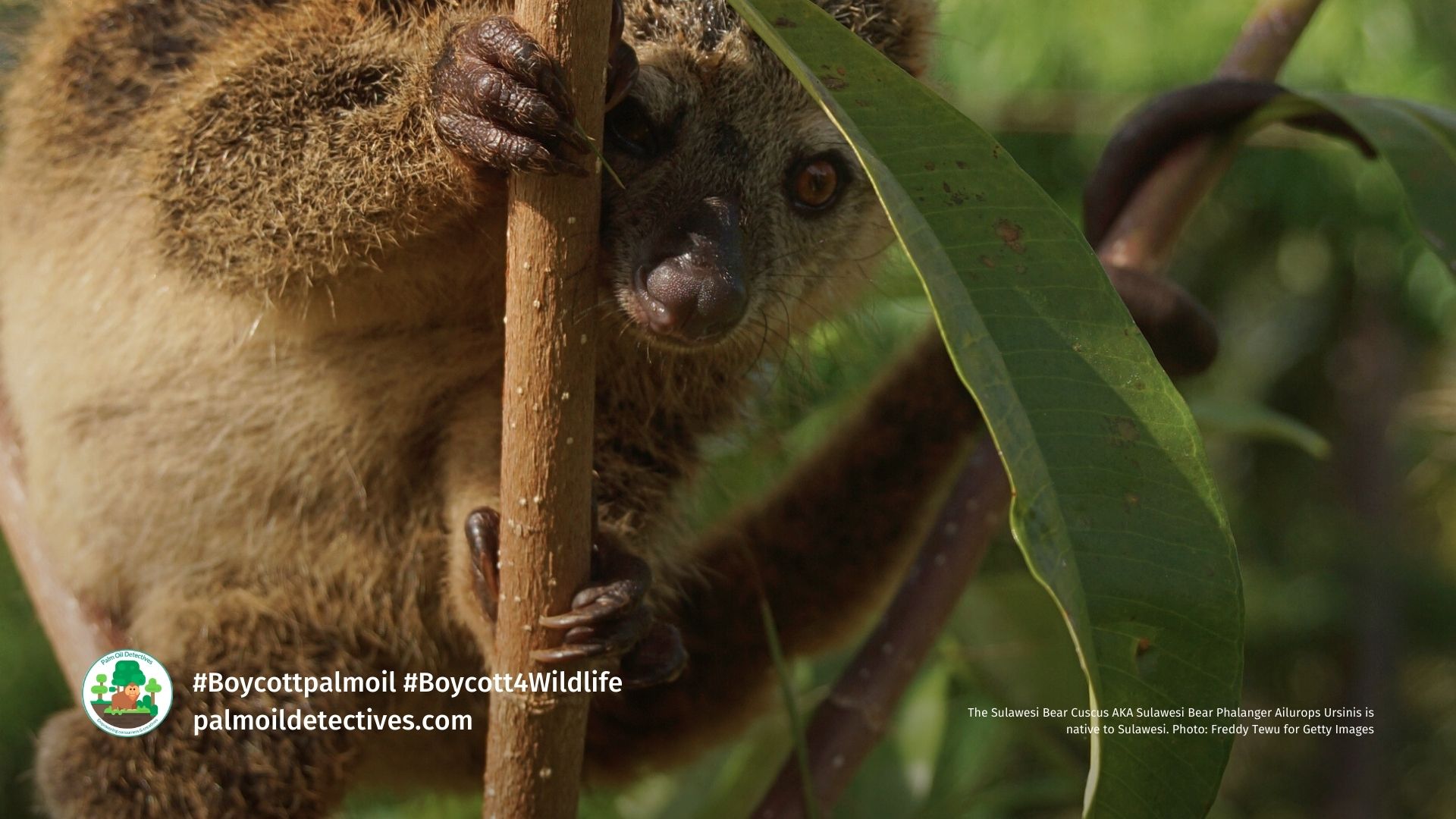
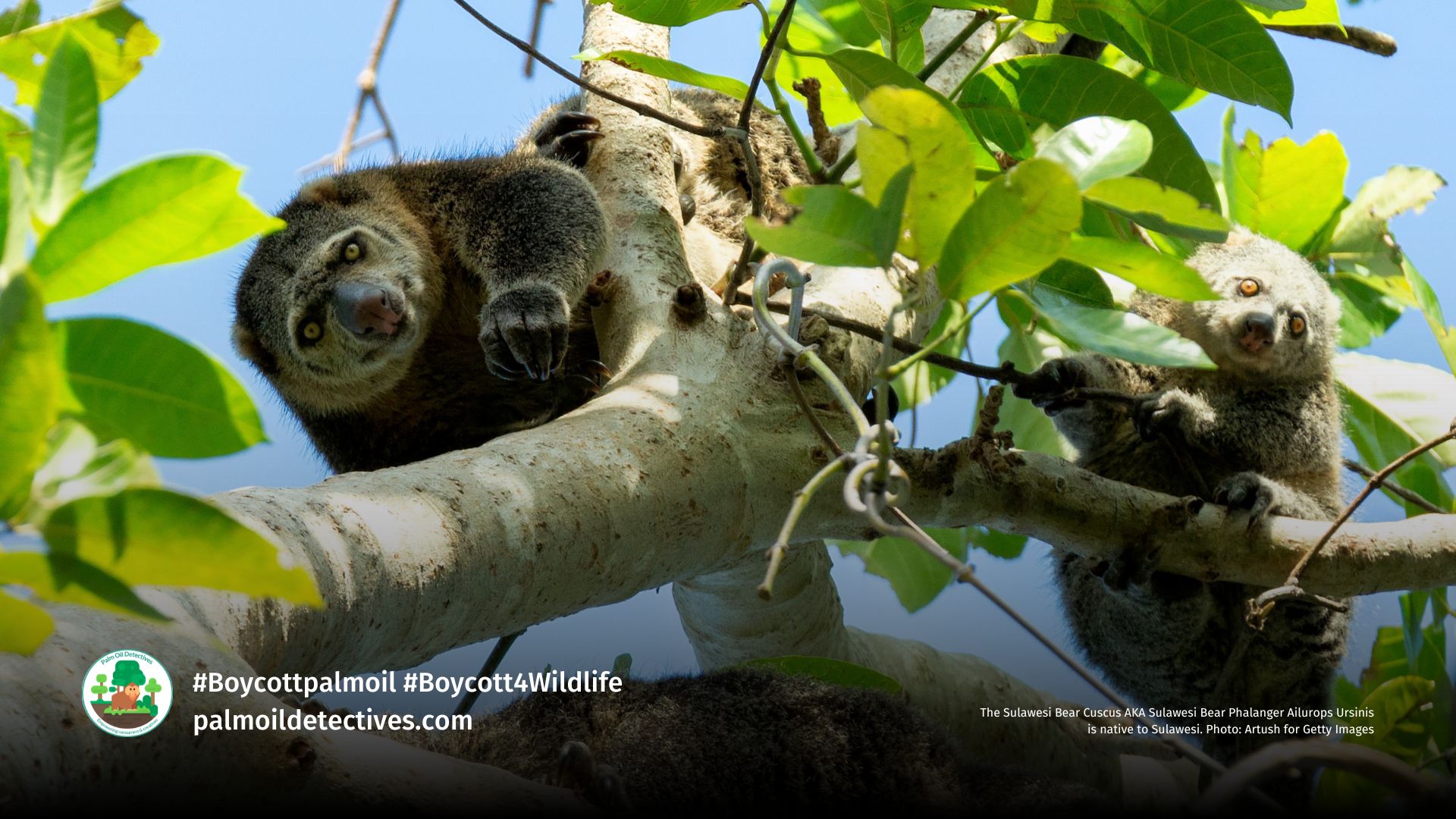
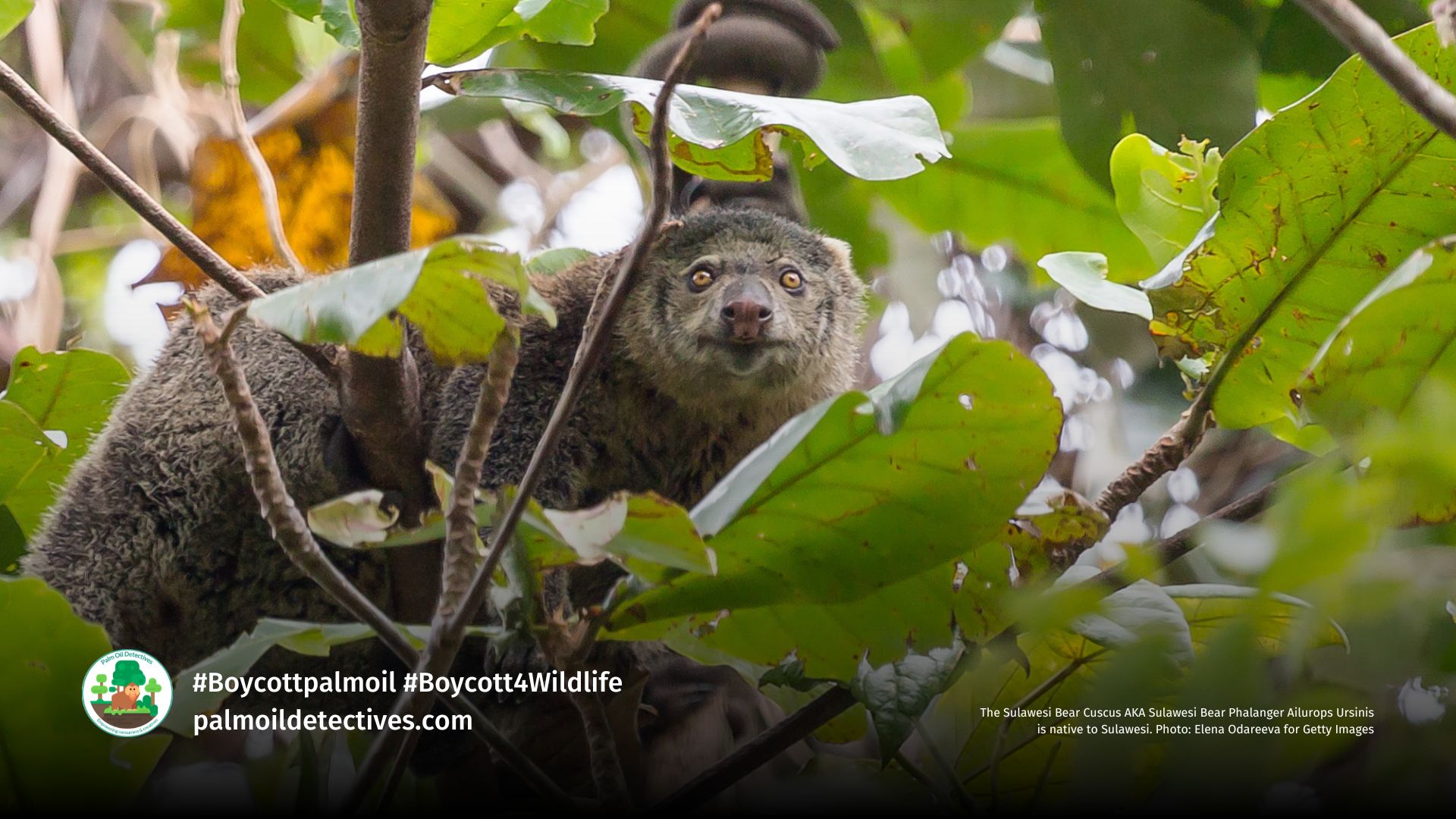
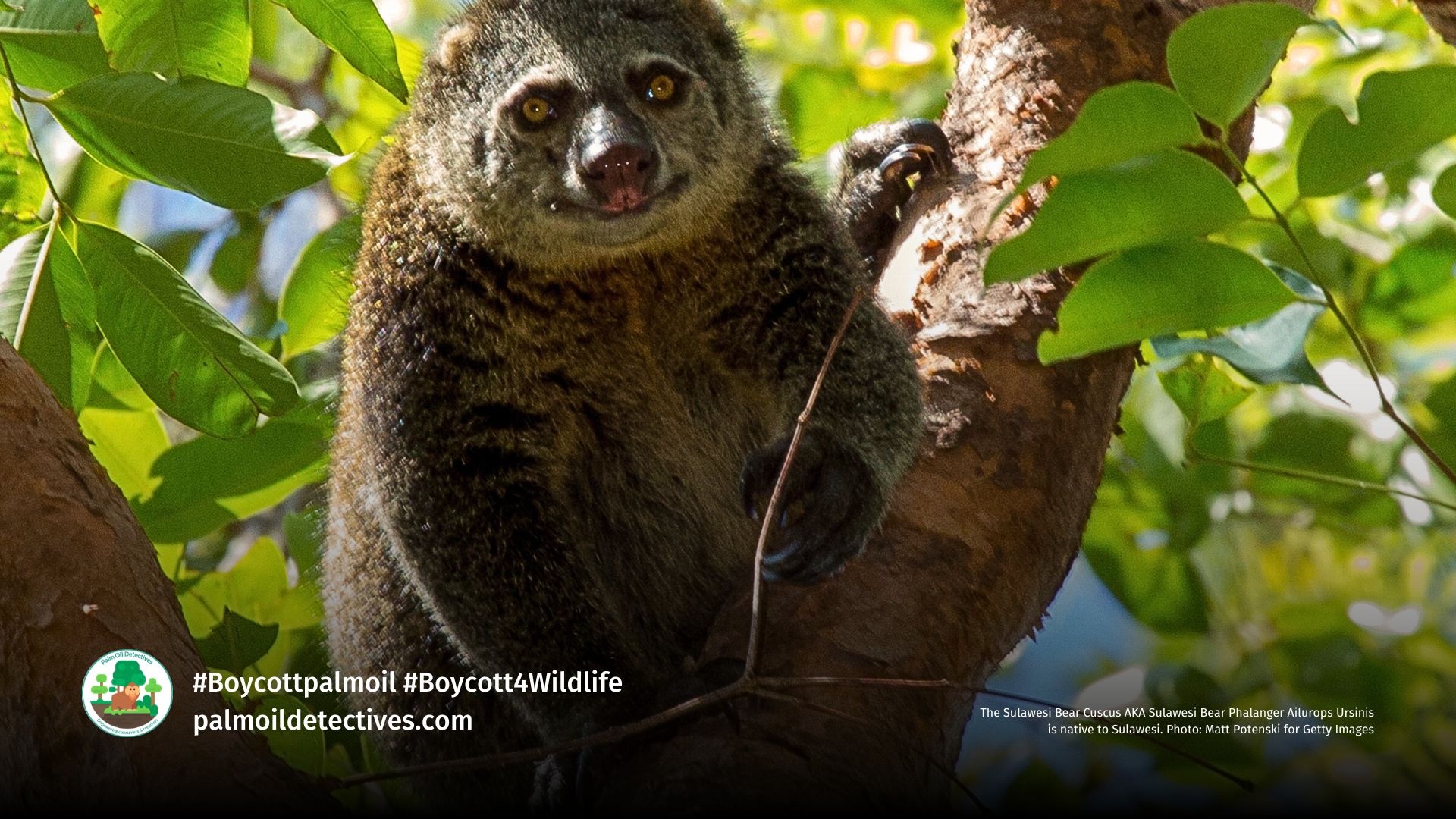
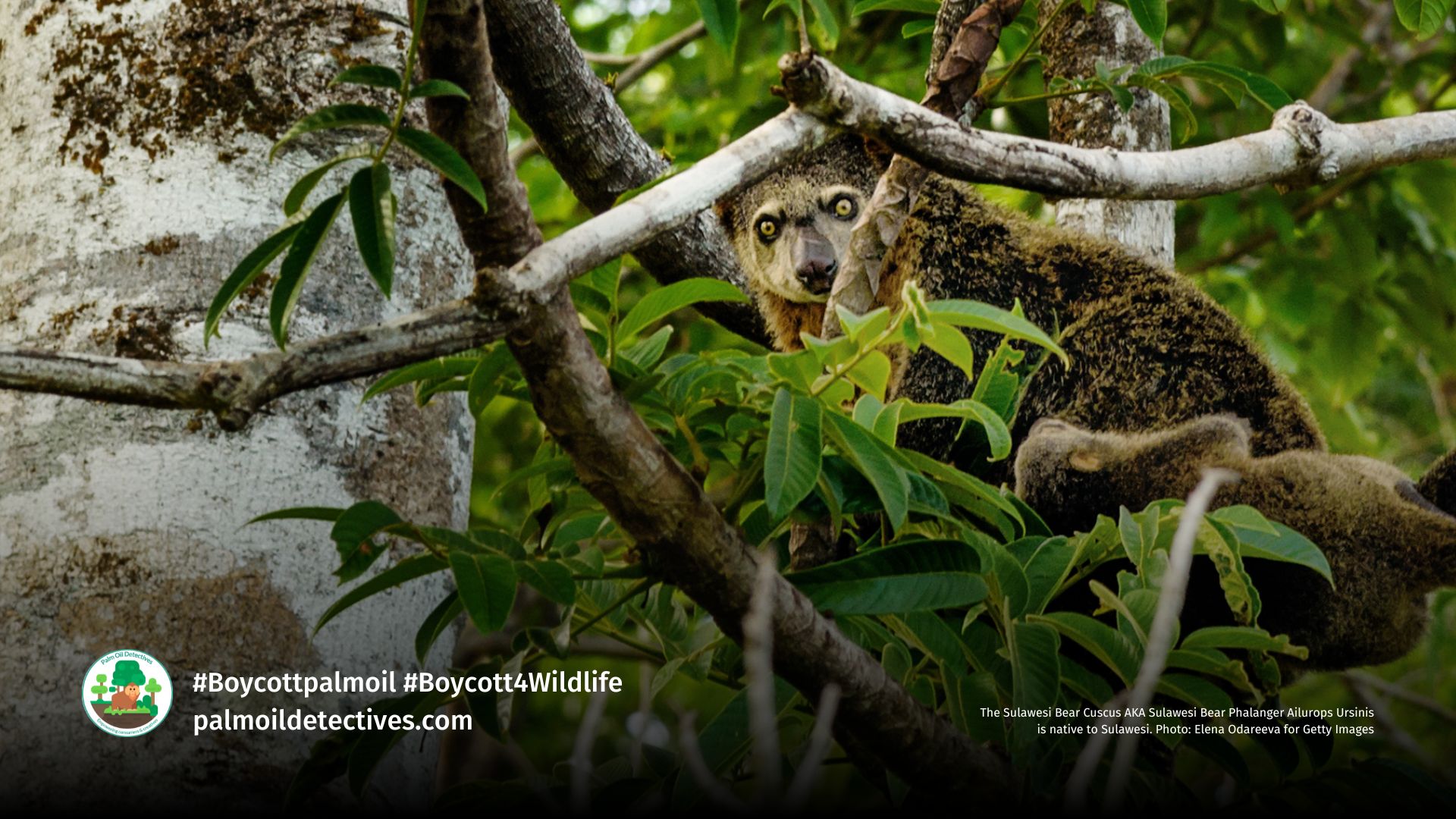
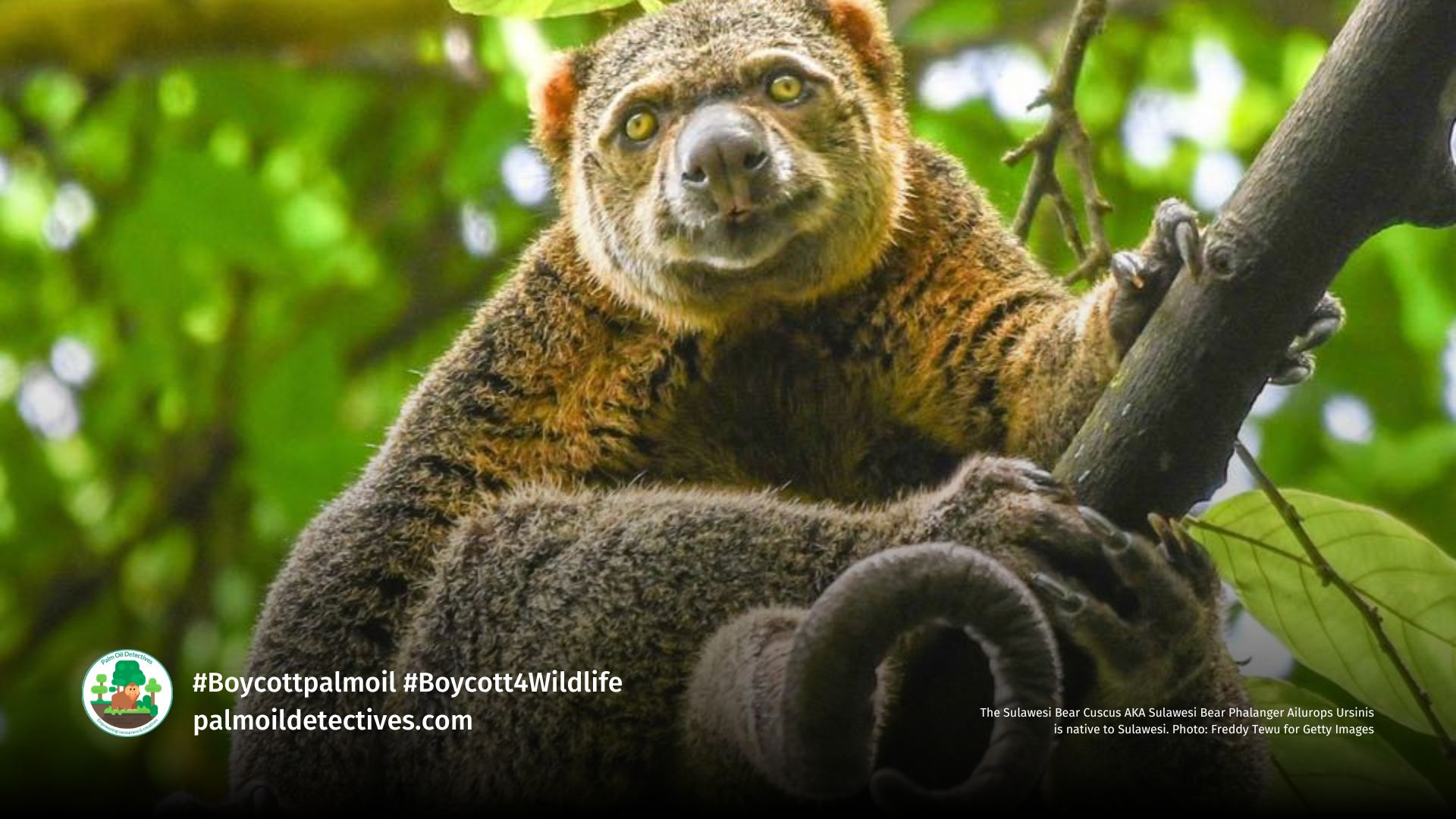
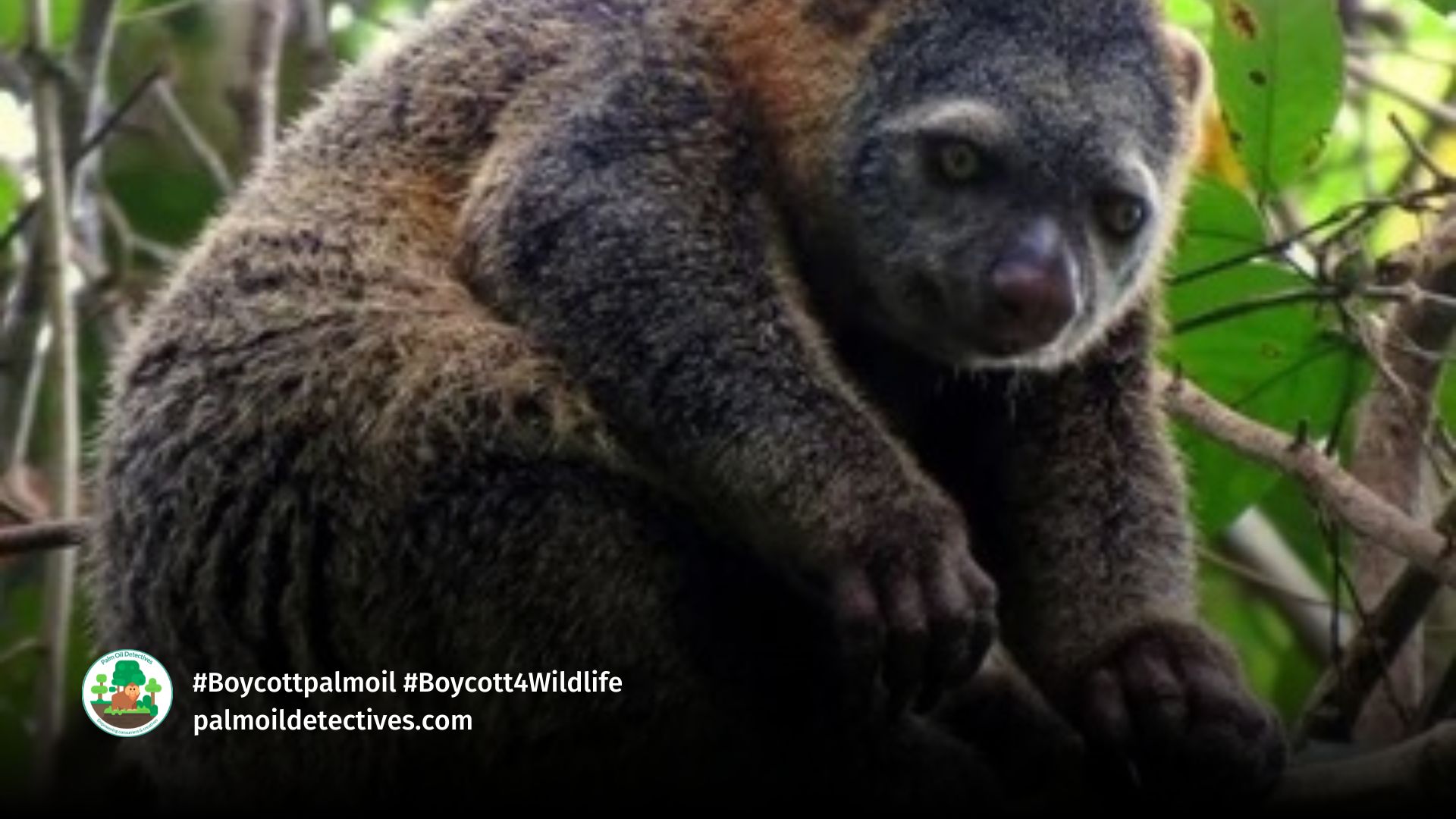
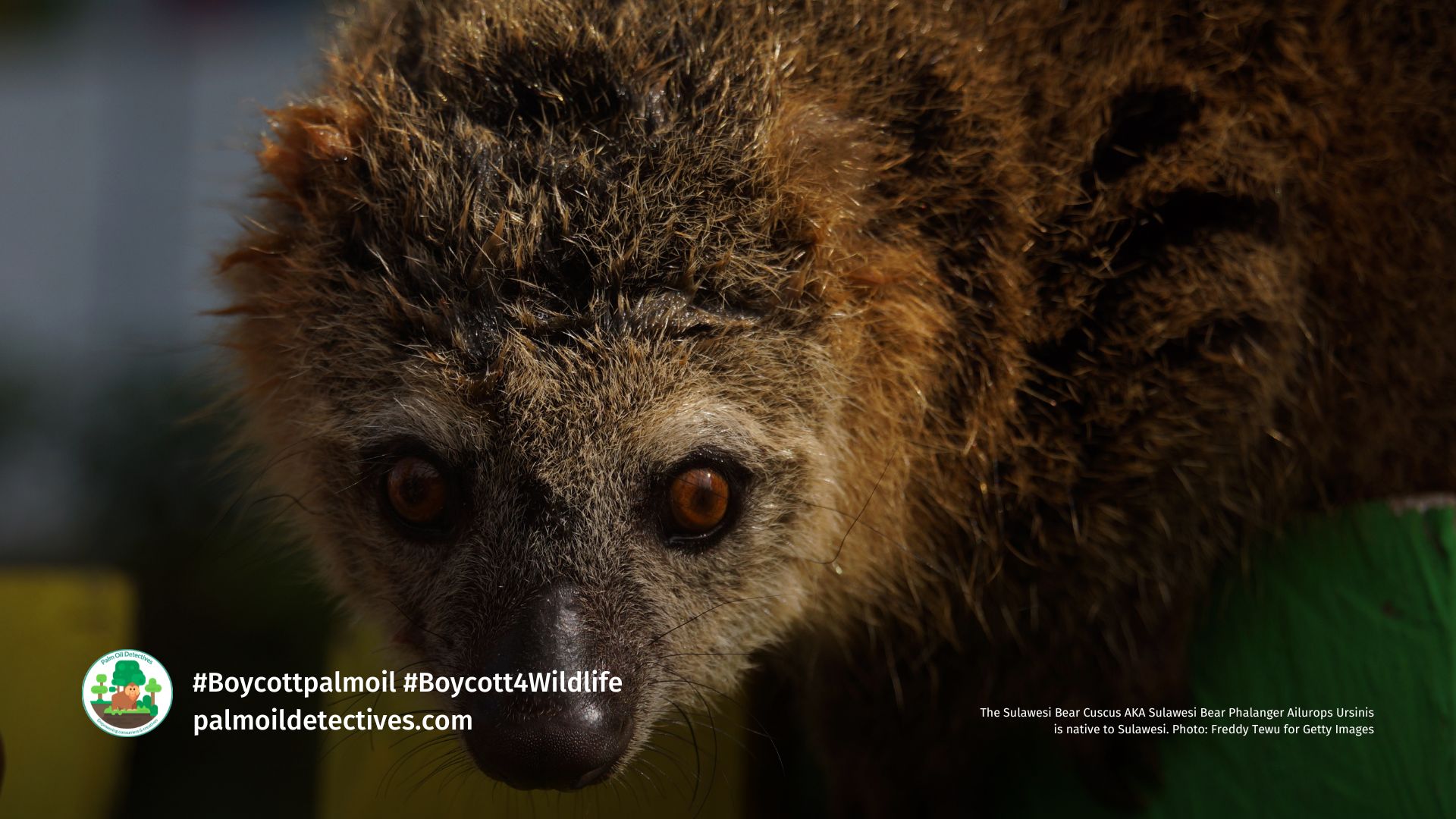
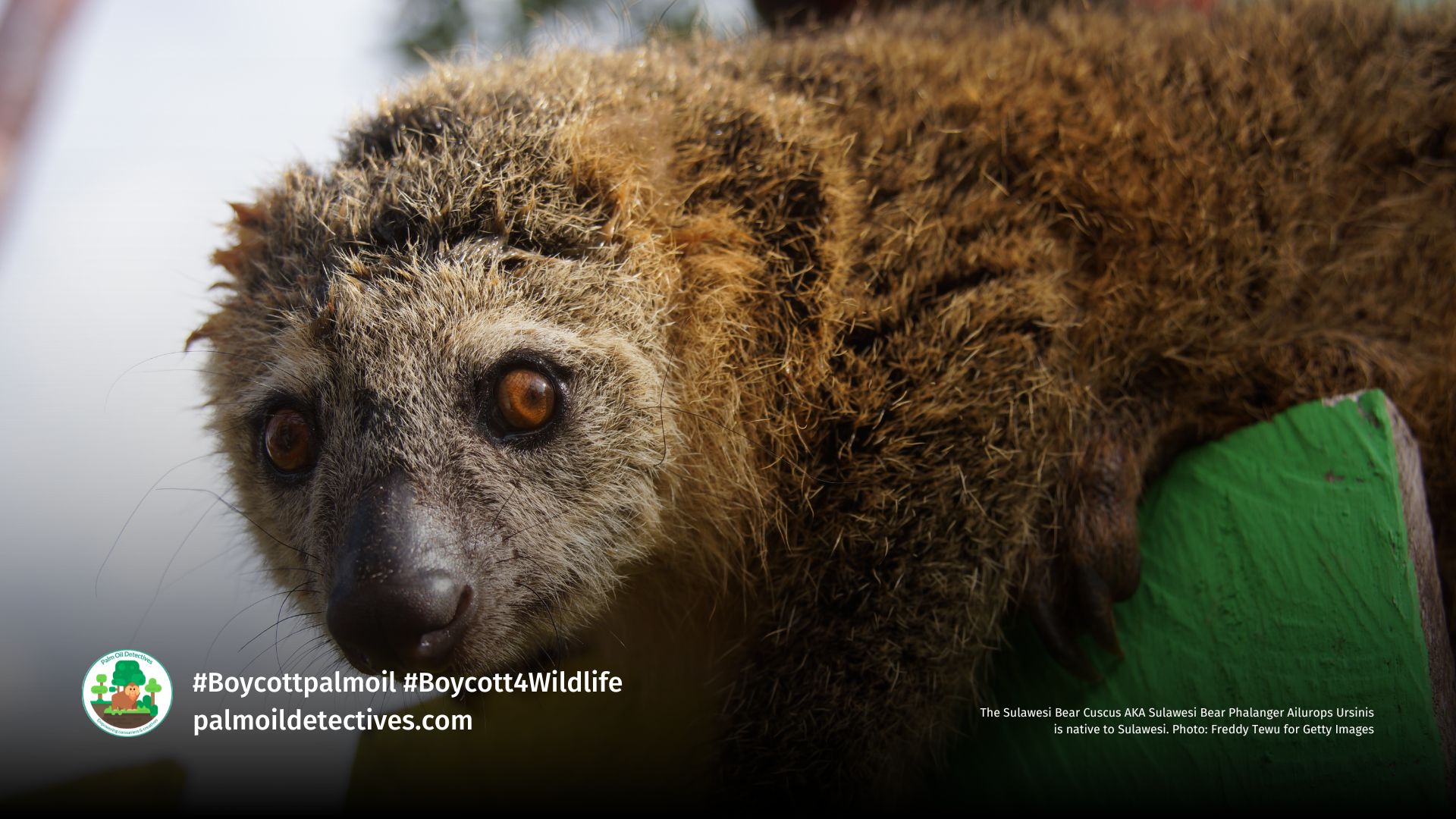
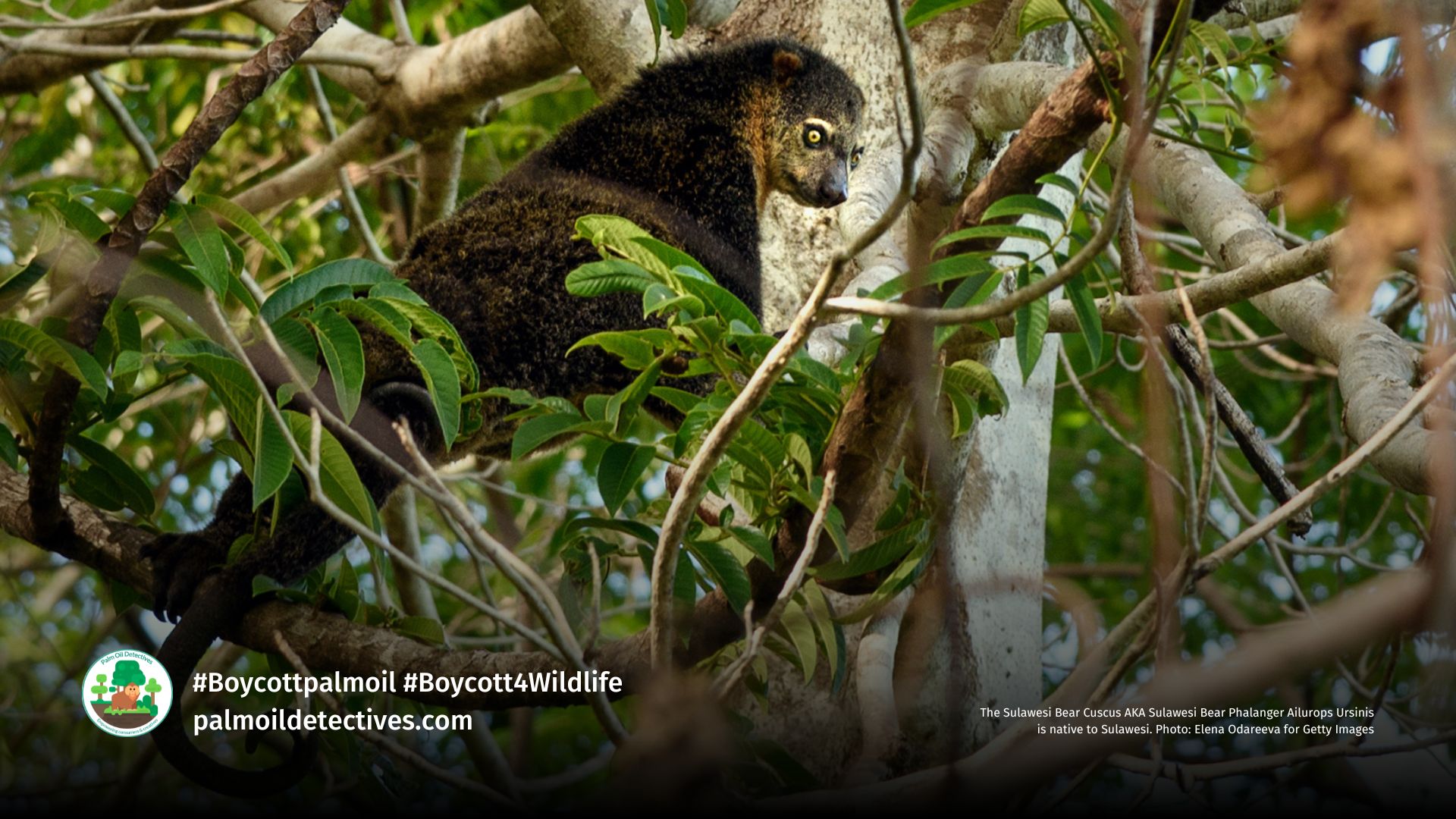
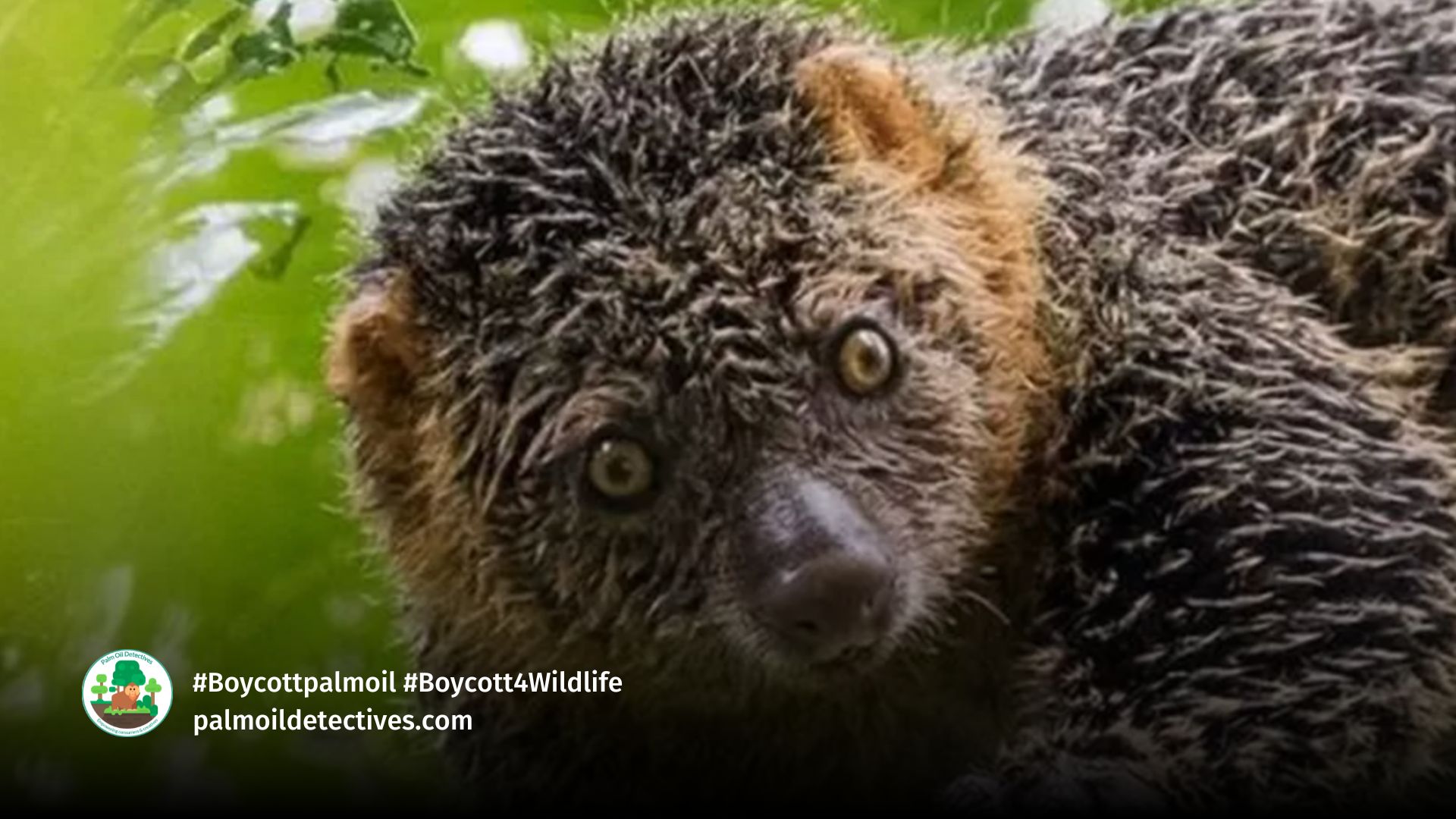
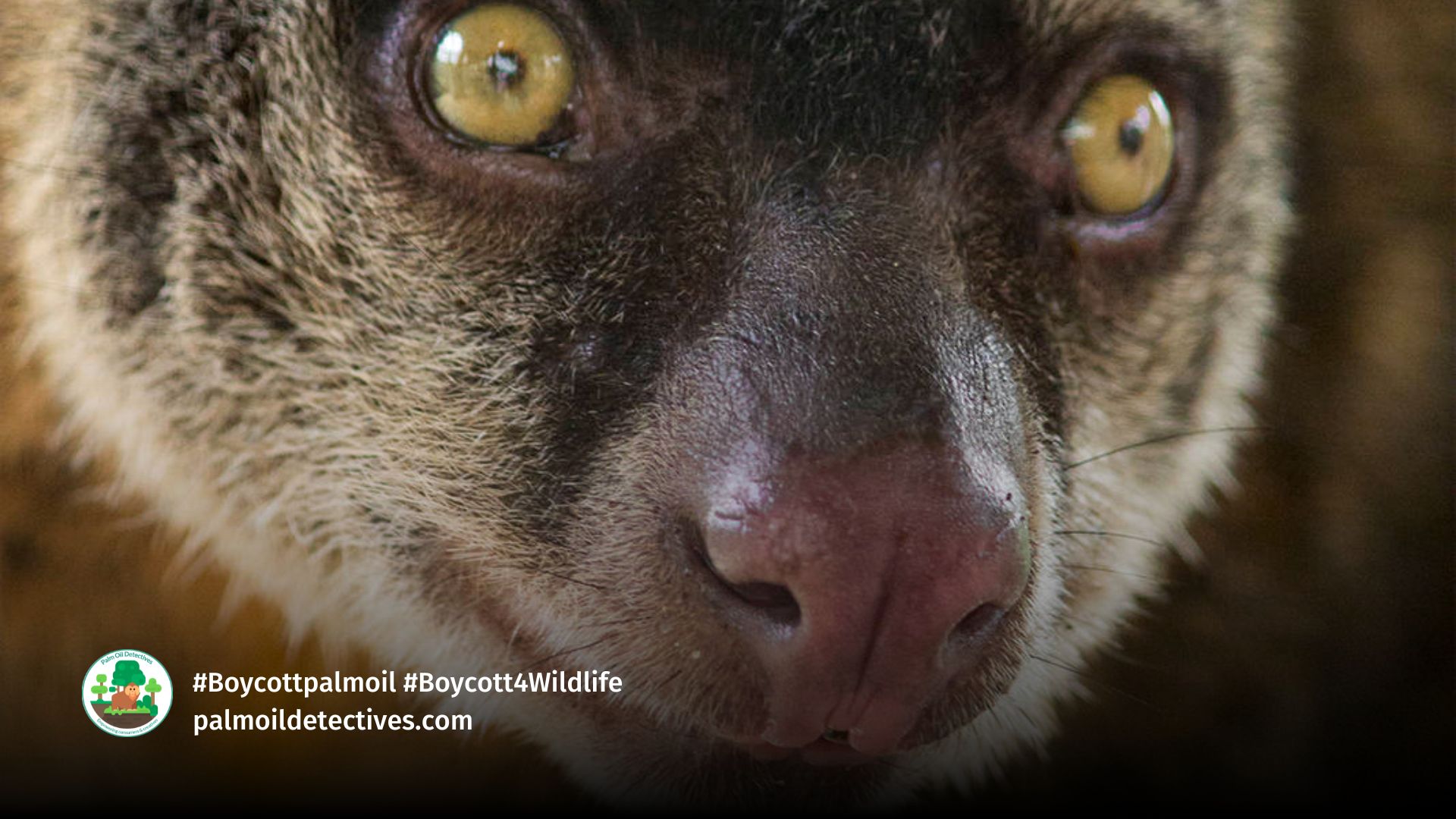
The Bear Cuscus also known as the Sulawesi bear cuscus is an unusual and charming marsupial, named for their thick, dark, bear-like fur. Found only on the island of Sulawesi and nearby islands, this slow-moving, arboreal creature spends much of their day resting in the tropical rainforests of Indonesia. The Sulawesi bear cuscus uses their elongated claws and prehensile tail to navigate the canopy, feeding on a diet of leaves, flowers, and unripe fruit. Sadly, palm oil deforestation and hunting pose serious threats to this species, resulting in a significant decline in their population. Protecting the Sulawesi bear cuscus is essential to preserving the biodiversity of Indonesia’s rainforests. Say no to palm oil and industrial agriculture every time you shop, and use the hashtags #BoycottPalmOil and #Boycott4Wildlife on social media to vocally oppose the greenwashing of “sustainable” palm oil.
Bear Cuscus’ 🐻🩷 are found on #Sulawesi #Indonesia 🇮🇩 they are vulnerable due to #palmoil #deforestation 🌴🪔☠️🧐⛔️ and #hunting. Support this beautiful animal with your weekly shop #Boycottpalmoil #Boycott4Wildlife @palmoildetect https://palmoildetectives.com/2021/01/26/bear-cuscus-ailurops-ursinus/
Tubby and sparkly-eyed tree-dwellers, Bear Cuscus from #Sulawesi #Indonesia face imminent threats from #palmoil #deforestation and #hunting. Fight for their survival in the supermarket #BoycottPalmOil @palmoildetect #Boycott4Wildlife https://palmoildetectives.com/2021/01/26/bear-cuscus-ailurops-ursinus/
Fast Facts
- Known for their intriguing appearance that is likened to a cross between a wombat, possum and bear, these tree dwelling mammals feed on the young leaves of up to 31 different species of plants.
- They spend around 63% of their time resting, allowing them to digest their fibrous diet.
- These animals are known for their distinctive behaviour of wrapping their tail around a branch when approached.
Appearance
The Sulawesi bear cuscus is a medium-sized #marsupial with thick, dark fur resembling that of a fuzzy tree-dwelling bear, which is how they earned their name. They grow to be about 61 cm (24 inches) in length, with a tail nearly as long as their body, and weigh between 7-10 kg (15-22 lbs). This arboreal species is equipped with elongated claws and a strong, prehensile tail, which helps them climb and hang from branches as they move slowly through the treetops. Diurnal and often seen in pairs, Sulawesi bear cuscuses are primarily folivorous, feeding on young leaves from a variety of plant species. They spend most of their day resting to aid in digestion, much like other leaf-eating marsupials.
Threats
Deforestation for palm oil plantations and agriculture: The conversion of Sulawesi’s tropical rainforests into palm oil plantations and other agricultural developments is a major threat to the Sulawesi bear cuscus. As their forest habitat is cleared, these animals lose the trees they depend on for food and shelter. The destruction of forests fragments their habitat, isolating populations and making them more vulnerable to extinction.
Logging and forest degradation: Large-scale logging operations in Sulawesi contribute significantly to the loss of habitat for the bear cuscus. These activities not only remove the trees that provide food and shelter but also degrade the overall forest environment. The impact of logging is especially severe in lowland rainforests, where this species is most commonly found.
Hunting and the pet trade: Sulawesi bear cuscuses are hunted by local people for their thick fur and meat. Additionally, they are captured for the pet trade, further reducing their already declining population. Hunting pressures have caused significant population declines in protected areas such as the Tangkoko-DuaSudara Nature Reserve, highlighting the urgent need for stronger conservation measures.
Palm oil deforestation and pollution: Runoff from palm oil plantations introduces harmful chemicals into the forest ecosystem, affecting the health of the Sulawesi bear cuscus and other species. These pollutants can degrade water and soil quality, leading to a decline in the health of the overall habitat and threatening the survival of this vulnerable marsupial.
Conservation efforts for the Sulawesi bear cuscus are critical to ensuring their survival. The species is listed as #vulnerable on the IUCN Red List due to ongoing population declines caused by deforestation, hunting, and the pet trade. Conservation initiatives include habitat protection, anti-poaching measures, and raising awareness about the importance of preserving Sulawesi’s unique biodiversity. Local and international conservation organisations, such as the Rainforest Alliance, are working to protect the species by educating farmers on sustainable practices that benefit both the environment and the wildlife that depend on it.
Diet
Sulawesi bear cuscuses are #herbivores, primarily feeding on leaves, flowers, buds, and unripe fruit. They prefer young leaves, which provide more nutrients than older foliage. Due to the low nutrient content of their diet, they spend a significant portion of their day resting to aid in digestion.
Geographic Range
The Sulawesi bear cuscus is endemic to the island of Sulawesi and surrounding islands in Indonesia. They inhabit tropical lowland moist forests at elevations of up to 600 metres (2,000 feet). This species prefers undisturbed forest habitats and is rarely found in disturbed areas, such as gardens or plantations. They are most commonly seen in the upper canopy of the rainforest, where they spend their days resting and feeding.
Mating & Reproduction
Like other marsupials, female Sulawesi bear #cuscuses give birth to relatively underdeveloped offspring, which then continue to develop in their mother’s pouch for about eight months. After this period, the young are sufficiently developed to survive outside the pouch but remain dependent on their mothers for some time.
Further Information



Wikipedia contributors. (2024). Sulawesi bear cuscus. In Wikipedia, The Free Encyclopedia. Retrieved from https://en.wikipedia.org/wiki/Sulawesi_bear_cuscus
IUCN Red List of Threatened Species. (2024). Ailurops ursinus. Retrieved from https://www.iucnredlist.org/species/40637/21949654
Dwiyahreni, A. A., Kinnaird, M. F., O’Brien, T. G., Supriatna, J., & Andayani, N. (1999). Diet and activity of the bear cuscus, Ailurops ursinus, in North Sulawesi, Indonesia. Journal of Mammalogy, 80(3), 905-912. Retrieved from https://academic.oup.com/jmammal/article/80/3/905/993712

How can I help the #Boycott4Wildlife?
Take Action in Five Ways
1. Join the #Boycott4Wildlife on social media and subscribe to stay in the loop: Share posts from this website to your own network on Twitter, Mastadon, Instagram, Facebook and Youtube using the hashtags #Boycottpalmoil #Boycott4Wildlife.
2. Contribute stories: Academics, conservationists, scientists, indigenous rights advocates and animal rights advocates working to expose the corruption of the palm oil industry or to save animals can contribute stories to the website.




3. Supermarket sleuthing: Next time you’re in the supermarket, take photos of products containing palm oil. Share these to social media along with the hashtags to call out the greenwashing and ecocide of the brands who use palm oil. You can also take photos of palm oil free products and congratulate brands when they go palm oil free.
4. Take to the streets: Get in touch with Palm Oil Detectives to find out more.
5. Donate: Make a one-off or monthly donation to Palm Oil Detectives as a way of saying thank you and to help pay for ongoing running costs of the website and social media campaigns. Donate here
Discover more from Palm Oil Detectives
Subscribe to get the latest posts sent to your email.
 Palm Oil Detectives