
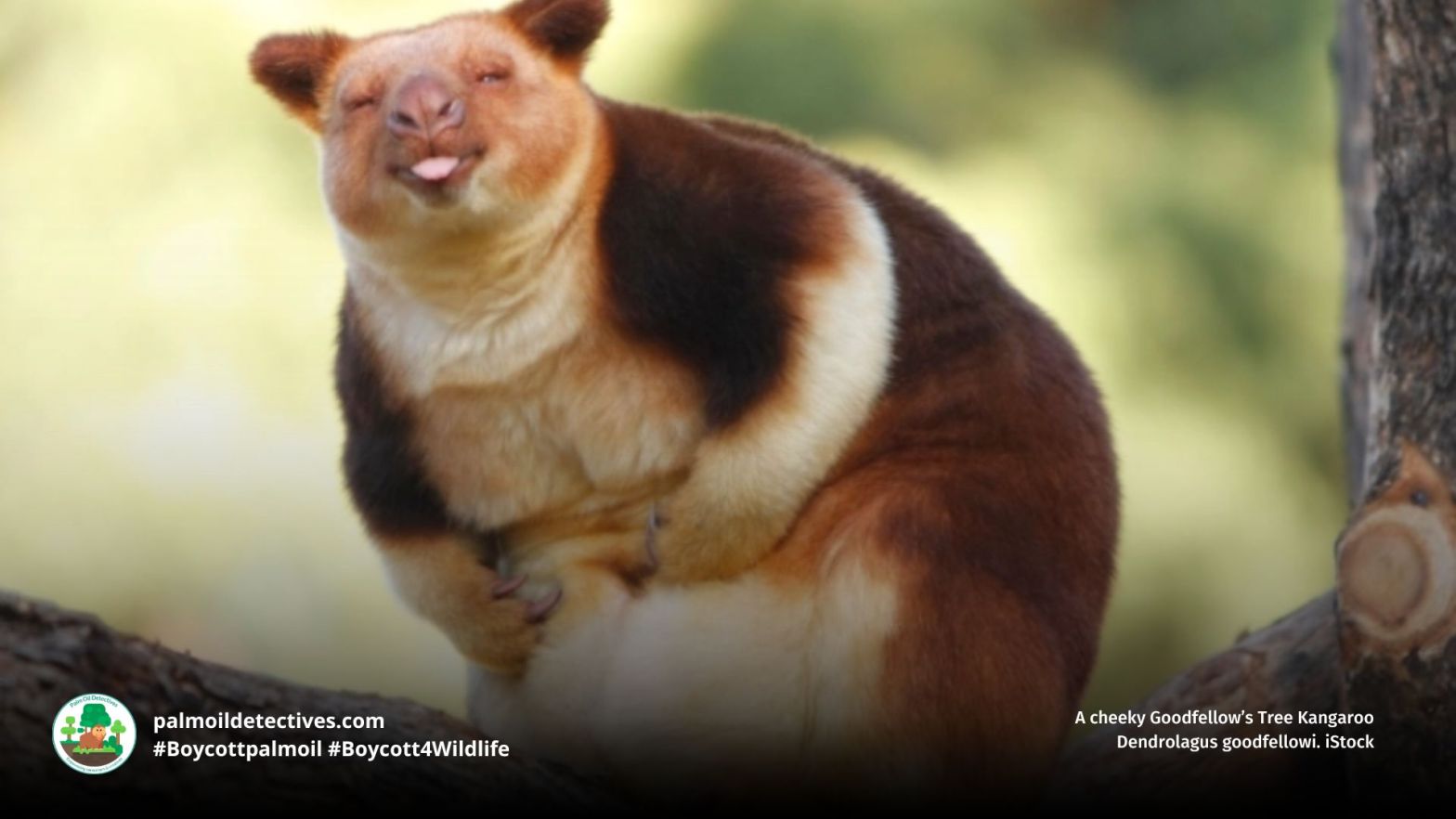
Goodfellow’s Tree Kangaroo Dendrolagus goodfellowi
Endangered
Locations: Endemic to the tropical forests of Papua New Guinea
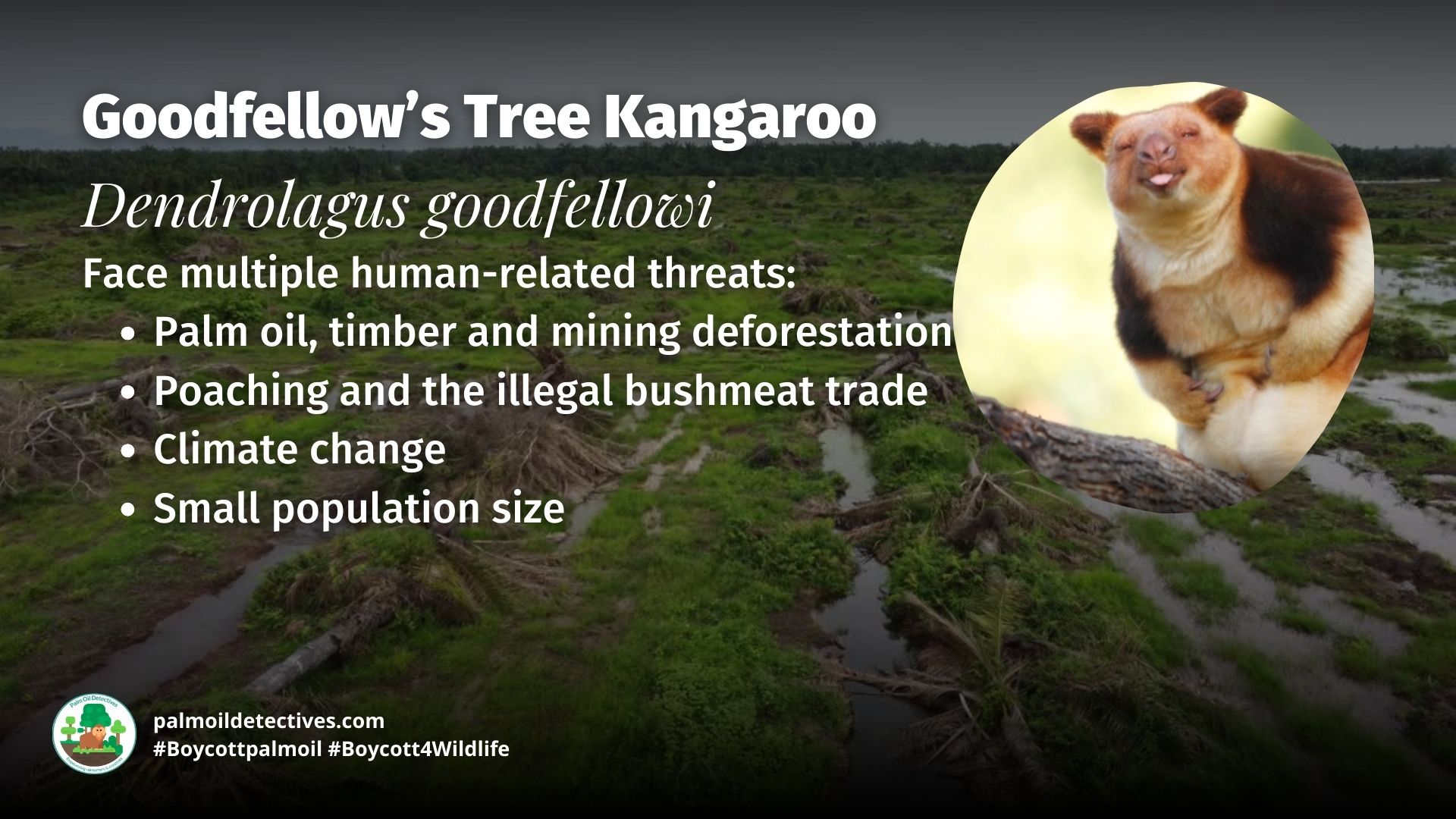
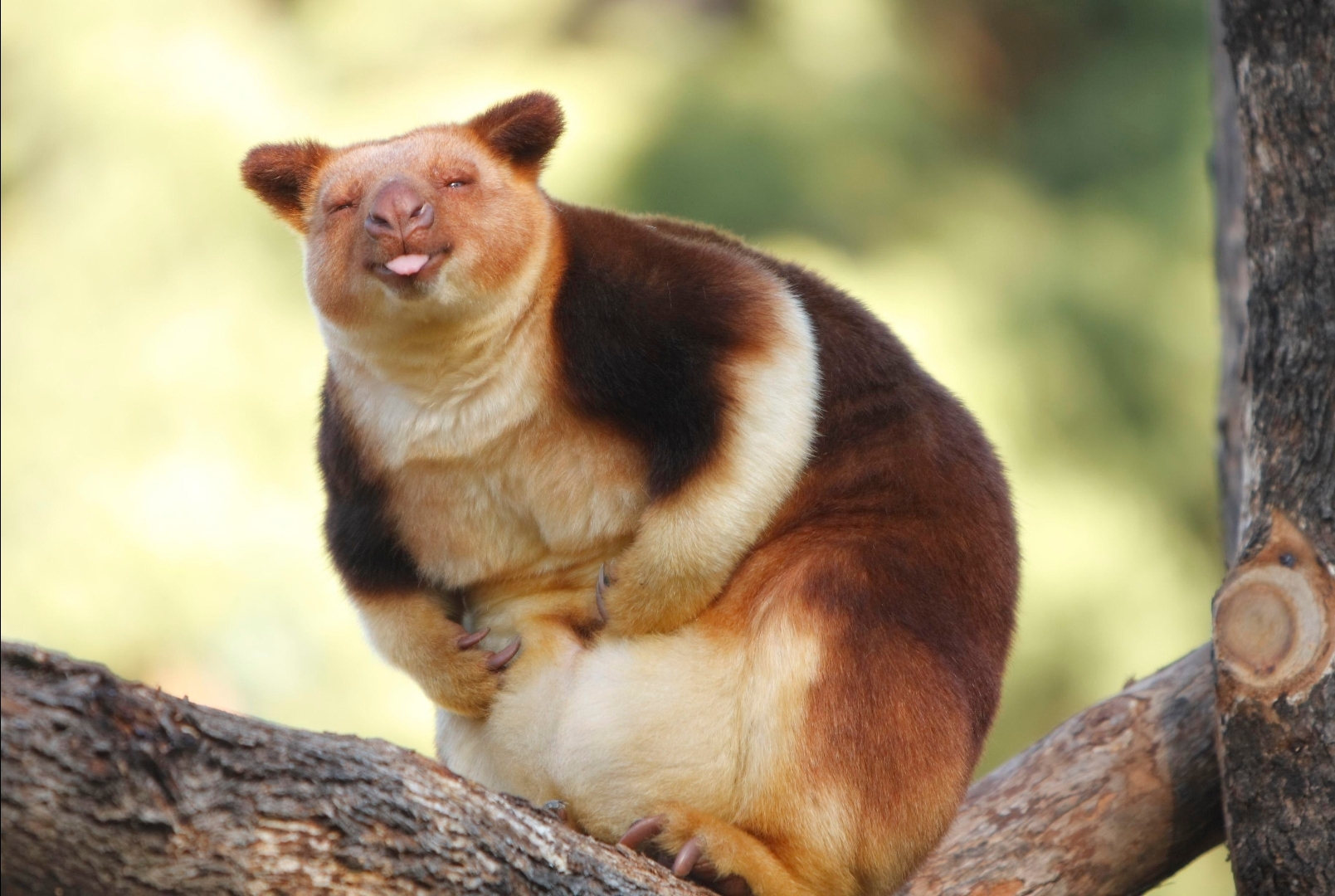
Goodfellow’s tree kangaroo Dendrolagus goodfellowi is an enchanting and rare marsupial that lives high in the treetops of Papua New Guinea’s lush rainforests. With rich, chestnut-brown fur streaked with golden bands and a strikingly long, ringed tail, they are a visual marvel. Known for their acrobatic prowess, these tree kangaroos can leap an astounding 9 metres between branches, embodying both elegance and athleticism.
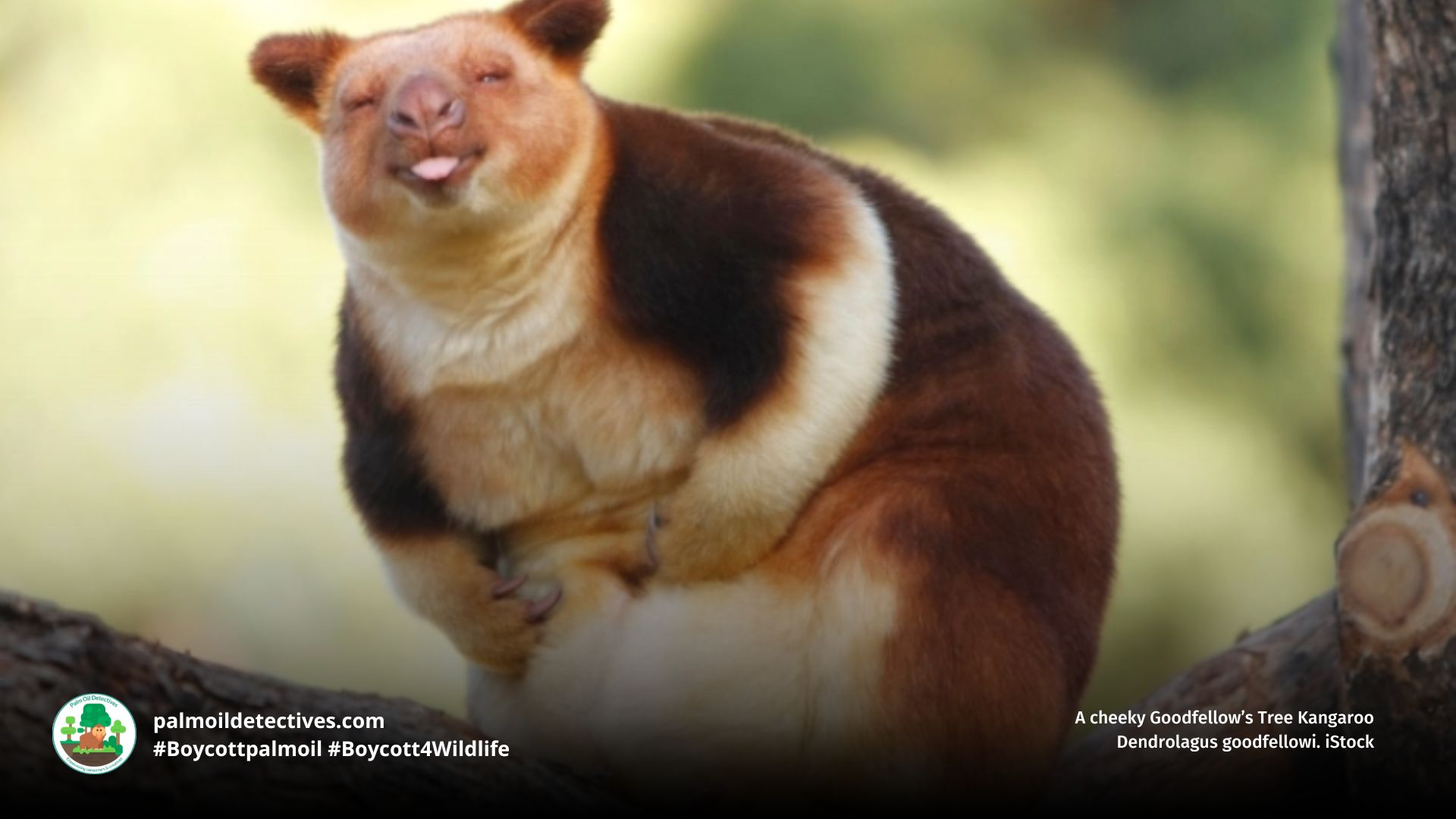
Goodfellow’s tree kangaroos are not only skilled climbers but also exhibit playful and cheeky behaviour, sometimes observed curiously watching humans from their lofty perches. Sadly, their charm and ecological importance are overshadowed by their precarious status. Classified as Endangered, their numbers are dwindling due to palm oil-driven deforestation, habitat fragmentation, and hunting. Supporting indigenous-led conservation efforts is vital to safeguarding their future. Use your wallet as a weapon: #BoycottPalmOil #Boycott4Wildlife
Goodfellow’s Tree Kangaroos are cheeky tree-dwelling #marsupials 🦘🩷 endangered in #PapuaNewGuinea 🇵🇬 by #hunting and #palmoil #deforestation. Support their survival by saying NO to #palmoil #Boycottpalmoil #Boycott4Wildlife @palmoildetect.bsky.social https://palmoildetectives.com/2021/01/26/goodfellows-tree-kangaroo-dendrolagus-goodfellowi/
Goodfellow’s Tree Kangaroos 🦘🧡 can leap 9 metres, descend 18 metres to the ground without injury. These bouncy #marsupials of #PapuaNewGuinea 🇵🇬 deserve safety from #palmoil #mining #deforestation! #Boycottpalmoil 🌴⛔️ #Boycott4Wildlife @palmoildetect https://palmoildetectives.com/2021/01/26/goodfellows-tree-kangaroo-dendrolagus-goodfellowi/
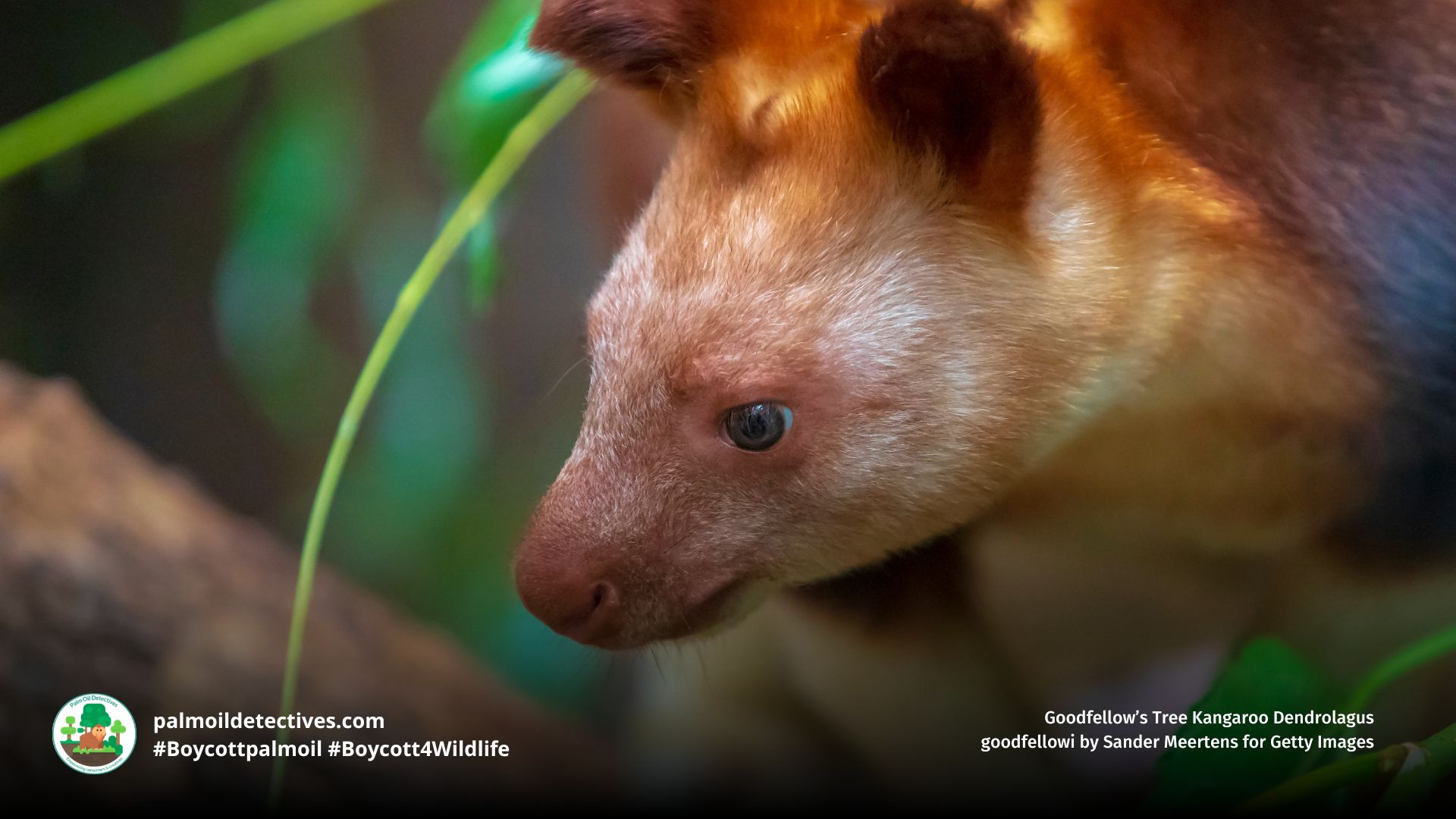
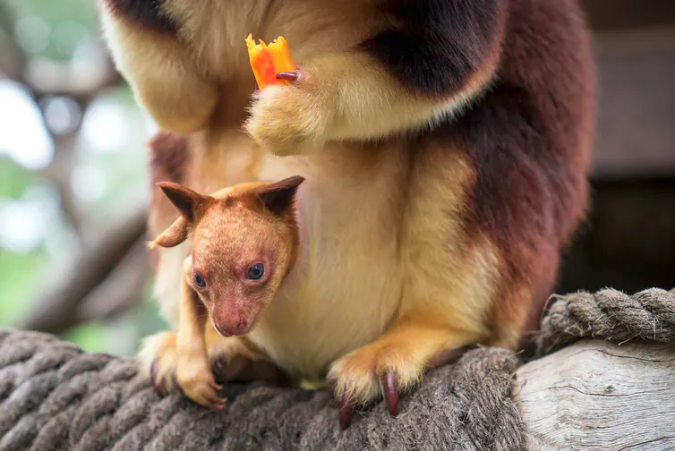
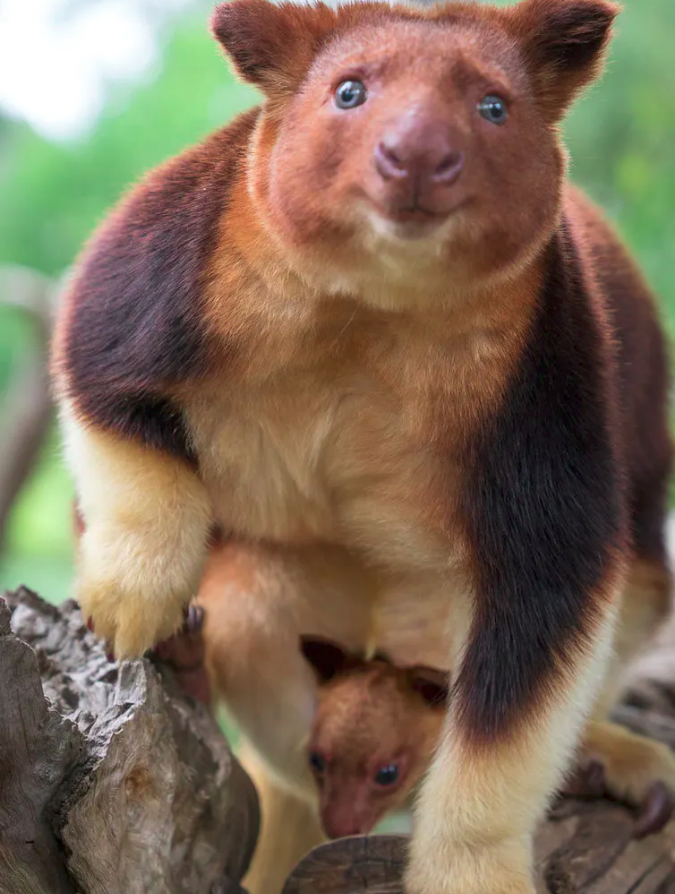

Appearance and Behaviour
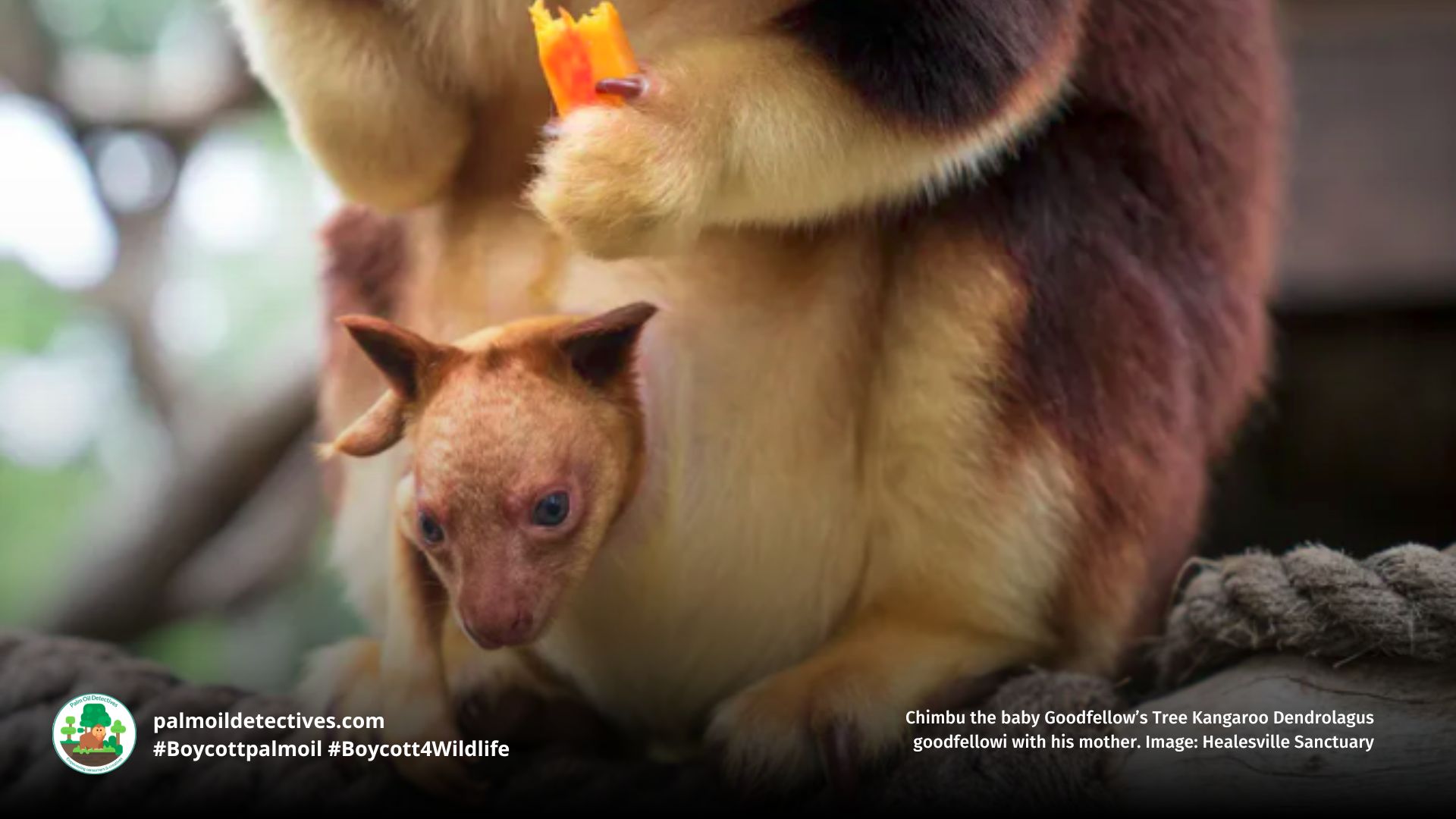
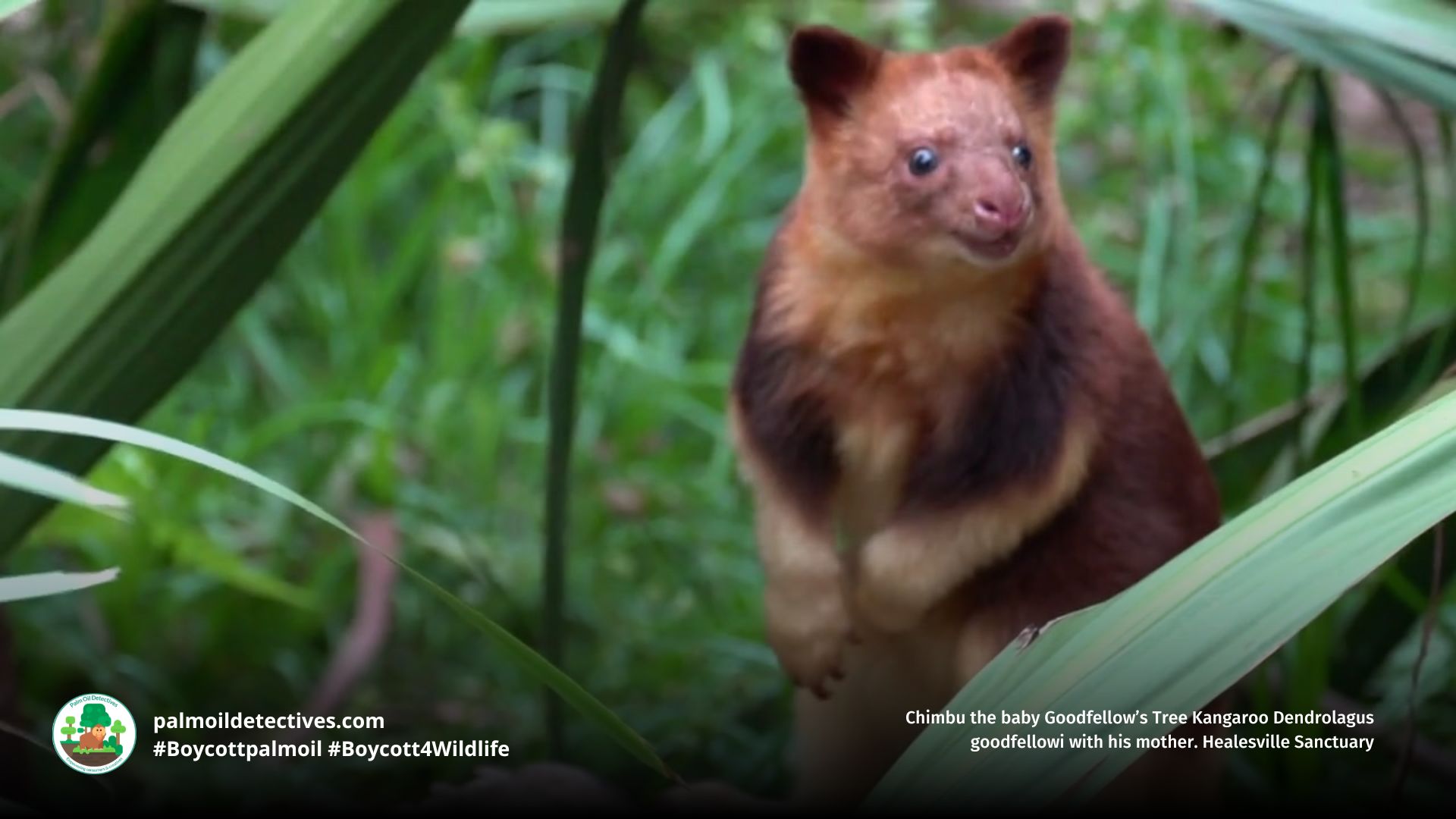
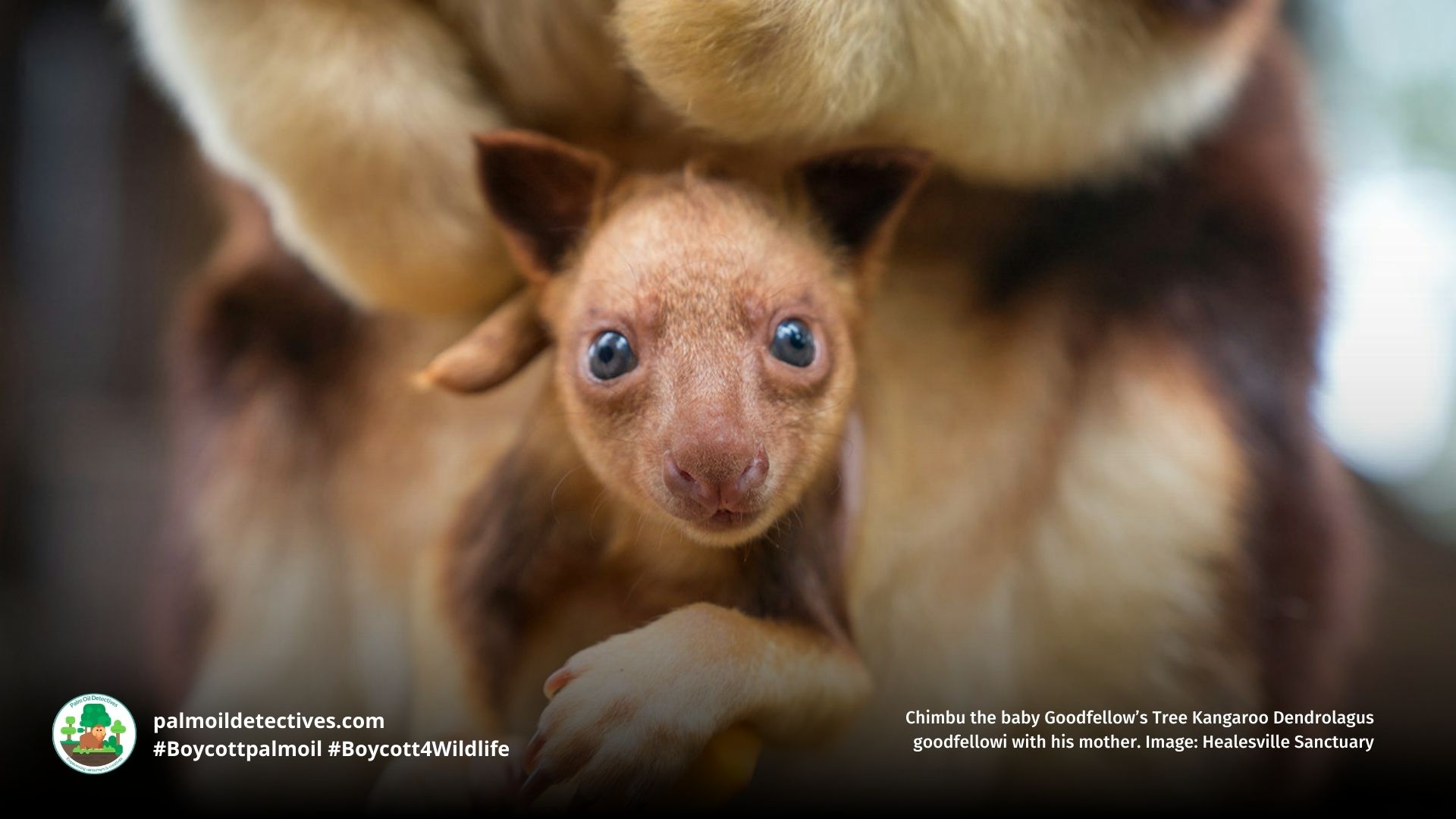
Goodfellow’s tree kangaroos are enchanting and curious medium-sized marsupials, weighing between 7–13 kg and measuring up to 70 cm in body length, with an additional 70 cm for their tail. Their vibrant reddish-brown fur and golden back stripes make them stand out against the verdant rainforest foliage of Papua New Guinea. Their strong limbs and curved claws are perfectly adapted for climbing trees, while their long tail aids in balance.
Unlike their terrestrial kangaroo cousins, these arboreal kangaroos are physiologically adapted to move with ease through the treetops. They are able to leap up to nine metres between branches and are able to comfortably descend 18 metres from tree canopy to ground without injury. They are generally solitary, with minimal social interaction outside of mating. Tree kangaroos are known for their slow and deliberate movements while climbing and foraging. This is a marked contrast to the rapid leaping gait of other related ground-dwelling kangaroos in Australia.
Threats
IUCN Status: Endangered

Palm oil and timber deforestation
Deforestation for palm oil plantations, logging, and agriculture has destroyed large portions of Goodfellow’s tree kangaroo habitats. The fragmentation of rainforests isolates populations, making them more vulnerable to genetic bottlenecks and predators.
Hunting and the illegal bushmeat trade:
Tree kangaroos are often hunted for their meat and fur by local communities. In some areas, they are considered a traditional delicacy, which adds pressure to their declining populations.
Climate Change:
Shifting weather patterns and rising temperatures due to climate change disrupt the delicate balance of their rainforest ecosystems, affecting food availability and habitat quality.
Small Population Size:
Population estimates suggest fewer than 2,500 mature individuals remain in the wild, making recovery efforts increasingly urgent.
Geographic Range
Goodfellow’s tree kangaroos are found exclusively in the lowland and montane rainforests of Papua New Guinea, particularly in the southern and central regions. They thrive in dense forests, where the canopy provides food, shelter, and protection from predators. However, their range is rapidly shrinking due to deforestation and human encroachment.
Diet
Goodfellow’s tree kangaroos are herbivorous, primarily feeding on leaves, fruits, flowers, and occasionally mosses. They have specialised adaptations for digesting tough plant material, including a multi-chambered stomach similar to that of a cow. Their diet also plays a role in forest regeneration, as they disperse seeds through their droppings.
Reproduction and Mating
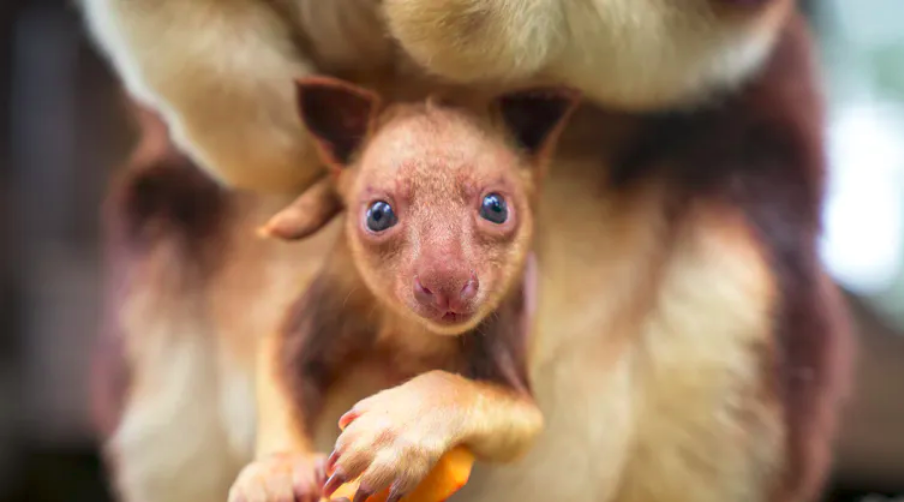
Females give birth to a single joey after a gestation period of approximately 32 days. The tiny, underdeveloped joey crawls into the mother’s pouch, where it nurses and continues to develop for up to 10 months. Once they leaves the pouch, the young kangaroo stays with its mother for another year before becoming independent. Tree kangaroos have a low reproductive rate, which limits population recovery.
Take Action!
Protecting Goodfellow’s tree kangaroos requires urgent action. Support indigenous sovereignty and conservation initiatives, boycott palm oil, and advocate for stronger habitat protections. Together, we can safeguard their future. #BoycottPalmOil #Boycott4Wildlife
FAQ
How many Goodfellow’s tree kangaroos remain alive in the wild?
Fewer than 2,500 mature individuals remain in the wild, making Goodfellow’s tree kangaroos one of the most endangered marsupial species. Habitat destruction, hunting, and climate change are the primary factors driving their decline. Conservation efforts are critical to ensuring their survival, particularly through protecting their rainforest habitats.
Where is the Goodfellow’s tree kangaroo found?
Goodfellow’s tree kangaroos are endemic to Papua New Guinea, where they inhabit the lowland and montane rainforests of the southern and central regions. These arboreal marsupials thrive in dense tropical forests, relying on the canopy for food, shelter, and protection. However, their range is shrinking due to deforestation and human encroachment.
What do Goodfellow’s tree kangaroos eat?
Goodfellow’s tree kangaroos are herbivorous, with a diet consisting of leaves, fruits, flowers, and mosses. They play an important ecological role as seed dispersers, contributing to the regeneration of their rainforest habitats. Their specialised digestive system allows them to extract nutrients from tough plant materials.
What is the behaviour of the Goodfellow’s tree kangaroo?
Goodfellow’s tree kangaroos are solitary and arboreal, spending most of their time in the treetops. They move slowly and deliberately, using their strong limbs and curved claws to climb and leap between branches. Unlike their terrestrial kangaroo relatives, they are not fast hoppers but are adept at navigating the dense canopy.
How far can a Goodfellow’s tree kangaroo leap?
Goodfellow’s tree kangaroos are remarkably agile for their size and arboreal lifestyle. These unique marsupials can leap impressive distances of up to 9 metres between tree branches. This ability allows them to move effortlessly through the dense canopies of Papua New Guinea’s rainforests, navigating their environment in search of food and avoiding predators.
Their strong hind legs, which are adapted for powerful thrusts, and their long, muscular tails, which provide balance and stability during mid-air manoeuvres, contribute to this extraordinary leaping ability. Additionally, they can descend from heights of up to 18 metres to the ground without injury, showcasing their exceptional physical adaptations to life in the trees.
What makes Goodfellow’s tree kangaroos unique?
Goodfellow’s tree kangaroos are unique for their incredible leaping abilities, arboreal lifestyle and striking appearance. Their reddish-brown fur with golden stripes, long tails, and strong climbing abilities set them apart from ground-dwelling kangaroos. They are also known for their solitary nature and deliberate movements, which contrast with the rapid hopping of their terrestrial cousins.
Further Information

Australian Reptile Park. (n.d.). Goodfellow’s Tree Kangaroo. Australian Reptile Park.
Birds of the World. (n.d.). Tree Kangaroo Behaviour. San Diego Zoo Global.
Leary, T., Seri, L., Wright, D., Hamilton, S., Helgen, K., Singadan, R., Menzies, J., Allison, A., James, R., Dickman, C., Aplin, K., Flannery, T., Martin, R. & Salas, L. 2016. Dendrolagus goodfellowi. The IUCN Red List of Threatened Species 2016: e.T6429A21957524. https://dx.doi.org/10.2305/IUCN.UK.2016-2.RLTS.T6429A21957524.en. Downloaded on 26 January 2021.
Tenkile Conservation Alliance. (n.d.). Goodfellow’s Tree Kangaroo. Tenkile Conservation Alliance.
Wikipedia contributors. (n.d.). Goodfellow’s Tree Kangaroo. Wikipedia.
You can support the conservation of this animal:


How can I help the #Boycott4Wildlife?
Take Action in Five Ways
1. Join the #Boycott4Wildlife on social media and subscribe to stay in the loop: Share posts from this website to your own network on Twitter, Mastadon, Instagram, Facebook and Youtube using the hashtags #Boycottpalmoil #Boycott4Wildlife.
2. Contribute stories: Academics, conservationists, scientists, indigenous rights advocates and animal rights advocates working to expose the corruption of the palm oil industry or to save animals can contribute stories to the website.





3. Supermarket sleuthing: Next time you’re in the supermarket, take photos of products containing palm oil. Share these to social media along with the hashtags to call out the greenwashing and ecocide of the brands who use palm oil. You can also take photos of palm oil free products and congratulate brands when they go palm oil free.
4. Take to the streets: Get in touch with Palm Oil Detectives to find out more.
5. Donate: Make a one-off or monthly donation to Palm Oil Detectives as a way of saying thank you and to help pay for ongoing running costs of the website and social media campaigns. Donate here
Discover more from Palm Oil Detectives
Subscribe to get the latest posts sent to your email.
 Palm Oil Detectives
One thought on “Goodfellow’s Tree Kangaroo Dendrolagus goodfellowi”