
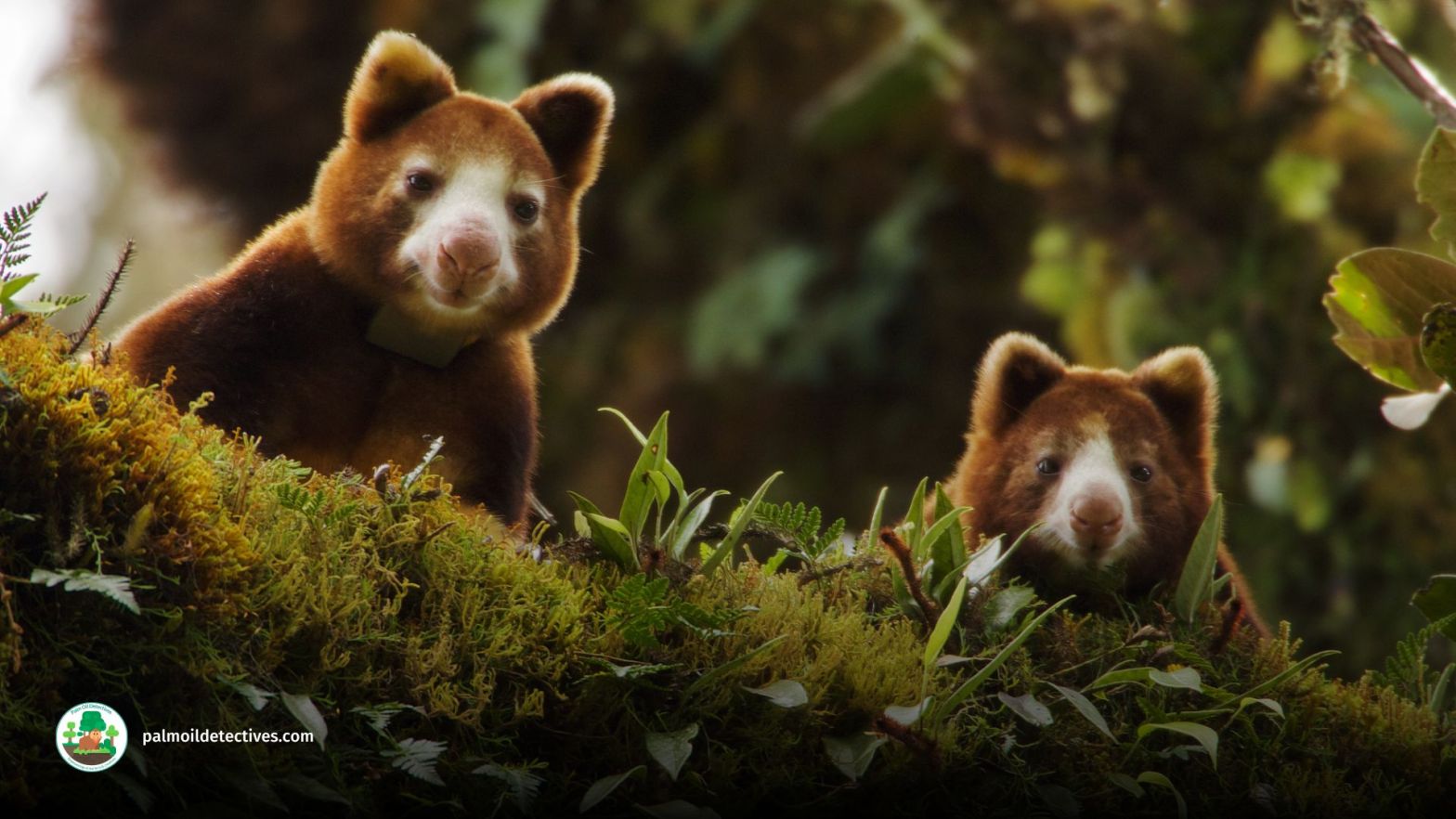
Huon Tree Kangaroo Dendrolagus matschiei
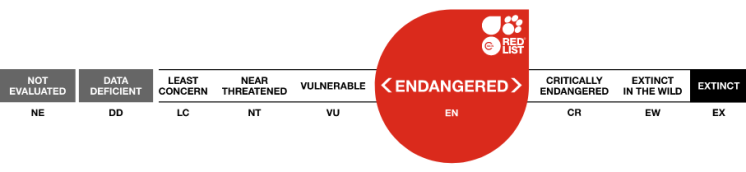
Endangered
Locations: Papua New Guinea (Huon Peninsula and adjacent areas)
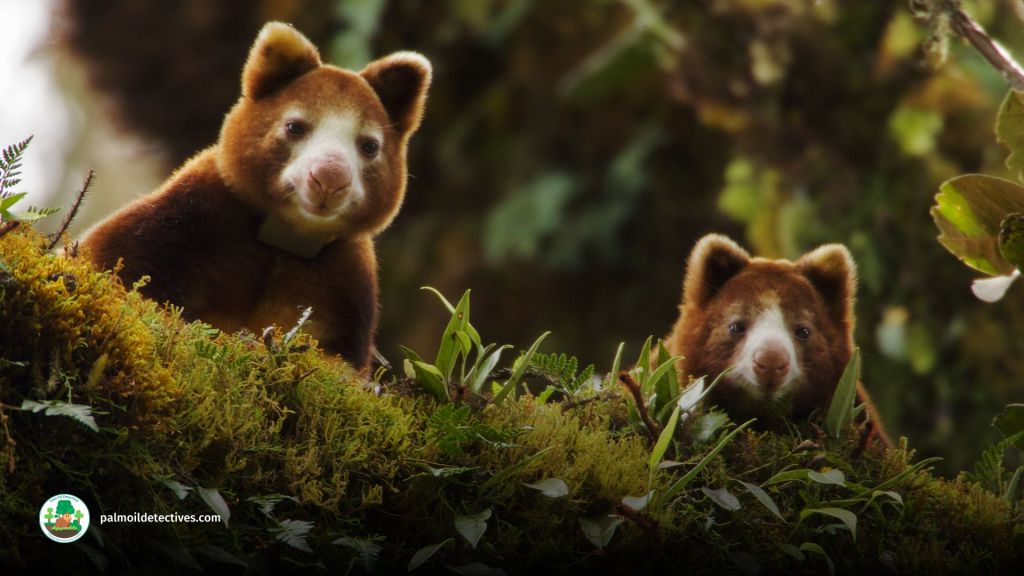
Adorable creatures with a teddy-like face and simian looking tail, Huon Tree Kangaroos live in Papua New Guinea. They are classified as endangered due to ongoing destruction of their natural rainforest home for #palmoil and #mining throughout their range. There are estimated to be <2,500 individual kangaroos left alive. Help them every time you shop and #Boycottpalmoil #Boycott4Wildlife
Huon Tree Kangaroo 🦘🩷 have a cute teddy-like 🧸 face and a monkey-like tail. In #PapuaNewGuinea and #WestPapua they are endangered by #palmoil #deforestation and #mining. Support them every time you #Boycottpalmoil #Boycott4Wildlife @palmoildetect https://palmoildetectives.com/2021/01/26/huon-tree-kangaroo-dendrolagus-matschiei/
Huon AKA Matschie’s Tree #Kangaroos are #endangered, below 2500 individuals remain in the forests of #PapuaNewGuinea and #WestPapua. Mining and #Palmoil #deforestation are major threats! @palmoildetect #Boycottpalmoil #Boycott4Wildlife https://palmoildetectives.com/2021/01/26/huon-tree-kangaroo-dendrolagus-matschiei/
The Huon tree kangaroo Dendrolagus matschiei, also known as Matschie’s tree kangaroo, is an extraordinary and rare marsupial found in the montane and lowland rainforests of Papua New Guinea’s Huon Peninsula. Distinguished by their thick, reddish-brown fur and golden limbs, these arboreal kangaroos are remarkably adept climbers, leaping between trees with impressive agility. Tragically, their population is in rapid decline, threatened by habitat destruction for mining, hunting, and the expansion of agricultural practices for palm oil across their range. It is vital to support immediate conservation efforts and indigenous-led conservation initiatives. Use your wallet as a weapon, and #BoycottPalmOil #Boycott4Wildlife!
Appearance and Behaviour
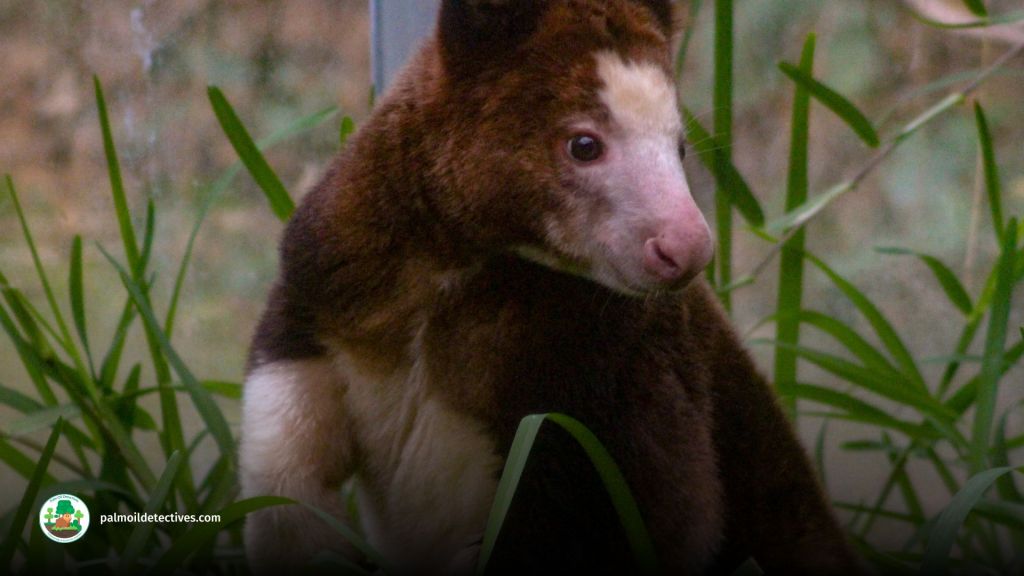
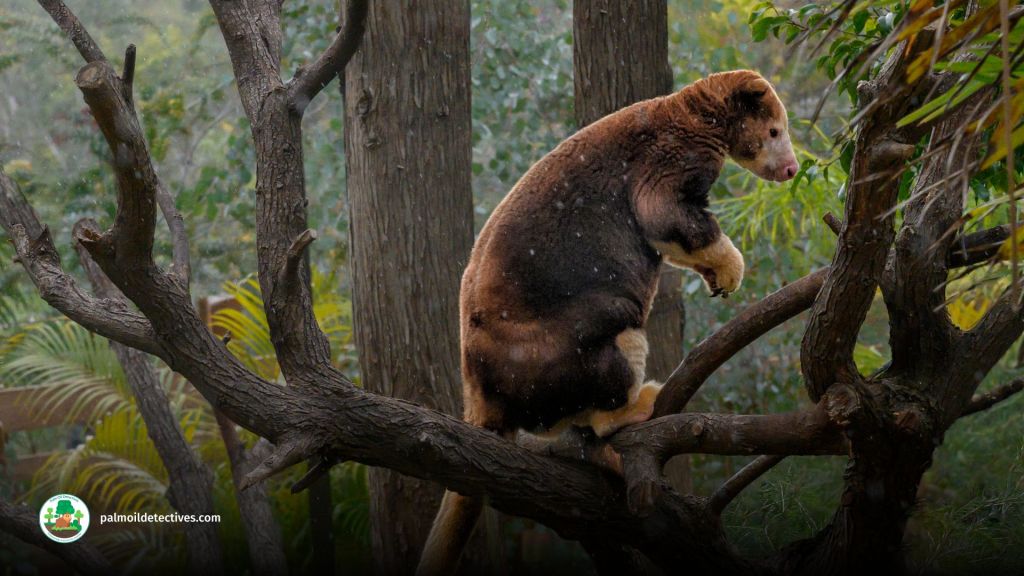
The Huon tree kangaroo AKA Matschie’s tree kangaroo is a medium-sized marsupial of the genus Dendrolagus, weighing between 7–14 kilograms, with a body length of approximately 55–70 centimetres and a tail of equal length. Their vibrant reddish-brown coat, golden limbs, and pale belly make them easily distinguishable among tree kangaroo species. Their broad feet, strong claws, and muscular limbs allow them to climb effortlessly, while their long tails provide balance during leaps of up to 9 metres between tree branches.
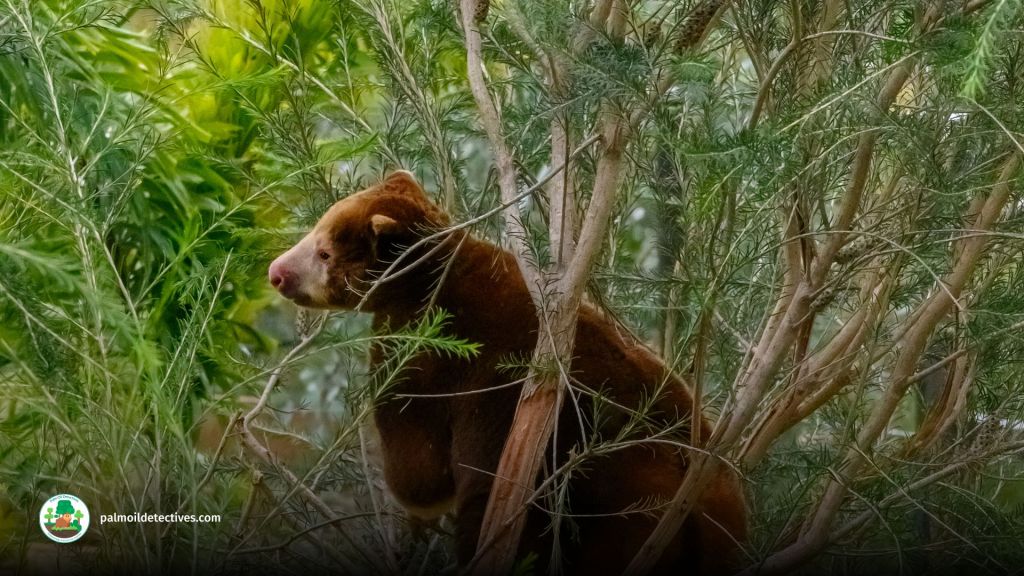
Unlike terrestrial kangaroos, Huon tree kangaroos are primarily arboreal, spending most of their time in the dense rainforest canopy. Their movement is slow and deliberate, making them less conspicuous to predators. Known for their solitary and territorial behaviour, these tree kangaroos are most active during the morning and evening hours, exhibiting unique climbing techniques that differ greatly from their ground-dwelling relatives.
Threats
Listed as Endangered because the number of mature individuals is expected to be less than 2,500 based on their naturally low population density and small extent of occurrence (restricted to high elevations), there is a continuing population decline due to hunting pressures and habitat loss, and all individuals are contained within a single subpopulation.
IUCN REd LIST
Endangered on the IUCN Red List, the Huon tree kangaroo faces severe population declines, primarily due to:
- Deforestation and Habitat Loss: Logging and agricultural expansion, particularly for coffee have caused significant habitat fragmentation (IUCN, 2016).
- Hunting Pressure: They are hunted for their meat. Hunting has intensified as roads expand into previously remote areas (Ziegler et al., 2013).
- Climate Change: Rising temperatures and changes in rainfall patterns as a result of climate change are reducing the availability of suitable montane habitat, forcing populations into increasingly fragmented and isolated areas (Naughton-Treves et al., 2003).
- Palm Oil Plantations: The encroachment of palm oil plantations in Papua New Guinea exacerbates deforestation, putting additional strain on already limited habitats (The Revelator, 2023).
Without coordinated conservation action, including protecting critical habitat and working with indigenous communities, the Huon tree kangaroo’s future remains precarious.
Diet
The Huon tree kangaroo is a folivore, consuming primarily leaves, but their diet also includes fruits, flowers, and bark. In addition to forest foliage, they are known to forage in gardens and cultivated areas, further increasing human-wildlife conflict (Smith et al., 2015). Their slow metabolism is well-adapted to digesting tough, fibrous plant material, making them vital contributors to their ecosystems through seed dispersal.
Reproduction and Mating
Matschie’s tree kangaroos have a long gestation period for marsupials, lasting around 44 days. The female typically gives birth to one joey, which remains in her pouch for approximately 10 months before venturing out (Tenkile Conservation Alliance, 2023). Juveniles stay with their mothers for up to two years, learning survival skills and foraging techniques. Breeding is non-seasonal, with females capable of reproducing every one to two years under optimal conditions.
Geographic Range
The Huon tree kangaroo is endemic to Papua New Guinea’s Huon Peninsula, primarily found in montane rainforests between 1,000 and 3,000 metres above sea level. They are also reported in lower altitudes where forest cover remains intact. Their home ranges can vary widely; recent studies indicate females maintain smaller, overlapping territories compared to males, which have broader and more isolated ranges (Smith et al., 2015).
FAQs
How many Matschie’s tree kangaroos are left?
Fewer than 2,500 mature individuals of Matschie’s tree kangaroos remain in the wild, according to the IUCN (2016). Habitat loss for timber and palm oil and hunting are the primary drivers of their decline. Recent surveys have highlighted their fragmented distribution, making coordinated conservation across different forest patches crucial for their survival (Ziegler et al., 2013).
What is the rarest tree-kangaroo?
The Huon tree kangaroo are among the rarest tree kangaroos, along with exceedingly rare Wondiwoi tree kangaroo Dendrolagus mayri. The Huon tree kangaroo is unique to Papua New Guinea’s Huon Peninsula, with their survival largely dependent on preserving this biodiverse yet increasingly threatened habitat (Tenkile Conservation Alliance, 2023).
How big are Matschie’s tree kangaroos?
Adult Matschie’s tree kangaroos weigh between 7–14 kilograms, with a body length of 55–70 centimetres and an equally long tail. Their robust build and powerful limbs are adaptations for climbing and leaping across tree canopies (Smith et al., 2015).
What does a Matschie’s tree kangaroo eat?
These tree kangaroos primarily consume leaves but supplement their diet with fruits, flowers, and bark. As opportunistic feeders, they forage on a wide range of plant species, contributing significantly to seed dispersal in their forest habitats (Naughton-Treves et al., 2003).
Take Action!
Use your wallet as a weapon! Fight for the survival of Matschie’s tree kangaroos every time you shop by boycotting palm oil and supporting indigenous-led conservation efforts. #BoycottPalmOil #Boycott4Wildlife
Further Information
iNaturalist. (n.d.). Dendrolagus matschiei (Matschie’s Tree Kangaroo). Retrieved from https://www.inaturalist.org/taxa/42901-Dendrolagus-matschiei
International Elephant and Lion Conservation. (n.d.). Buerger & Matschie Tree Kangaroos. Retrieved from https://ielc.libguides.com/sdzg/factsheets/buerger-matschie-treekangaroos
Smith, R., & Naughton-Treves, L. (2015). Matschie’s Tree Kangaroo Ecology and Conservation. Retrieved from https://pmc.ncbi.nlm.nih.gov/articles/PMC3958396/
Tenkile Conservation Alliance. (2023). Tree Kangaroos: Conservation Efforts. Retrieved from https://tenkile.com/tree-kangaroos/
The Revelator. (2023). Species Spotlight: Tree Kangaroo. Retrieved from https://therevelator.org/species-spotlight-tree-kangaroo/
Ziegler, T. (2013). Home ranges of female Huon tree kangaroos (Dendrolagus matschiei) at Wasaunon, Huon Peninsula, Papua New Guinea. Retrieved from https://www.researchgate.net/figure/Home-ranges-of-female-Huon-tree-kangaroos-D-matschiei-at-Wasaunon-Huon-Peninsula_fig2_260915660
Ziembicki, M. & Porolak, G. 2016. Dendrolagus matschiei. The IUCN Red List of Threatened Species 2016: e.T6433A21956650. https://dx.doi.org/10.2305/IUCN.UK.2016-2.RLTS.T6433A21956650.en. Downloaded on 26 January 2021.
You can support the conservation of this animal:


How can I help the #Boycott4Wildlife?
Take Action in Five Ways
1. Join the #Boycott4Wildlife on social media and subscribe to stay in the loop: Share posts from this website to your own network on Twitter, Mastadon, Instagram, Facebook and Youtube using the hashtags #Boycottpalmoil #Boycott4Wildlife.
2. Contribute stories: Academics, conservationists, scientists, indigenous rights advocates and animal rights advocates working to expose the corruption of the palm oil industry or to save animals can contribute stories to the website.



3. Supermarket sleuthing: Next time you’re in the supermarket, take photos of products containing palm oil. Share these to social media along with the hashtags to call out the greenwashing and ecocide of the brands who use palm oil. You can also take photos of palm oil free products and congratulate brands when they go palm oil free.
4. Take to the streets: Get in touch with Palm Oil Detectives to find out more.
5. Donate: Make a one-off or monthly donation to Palm Oil Detectives as a way of saying thank you and to help pay for ongoing running costs of the website and social media campaigns. Donate here
Discover more from Palm Oil Detectives
Subscribe to get the latest posts sent to your email.
 Palm Oil Detectives
One thought on “Huon Tree Kangaroo Dendrolagus matschiei”