
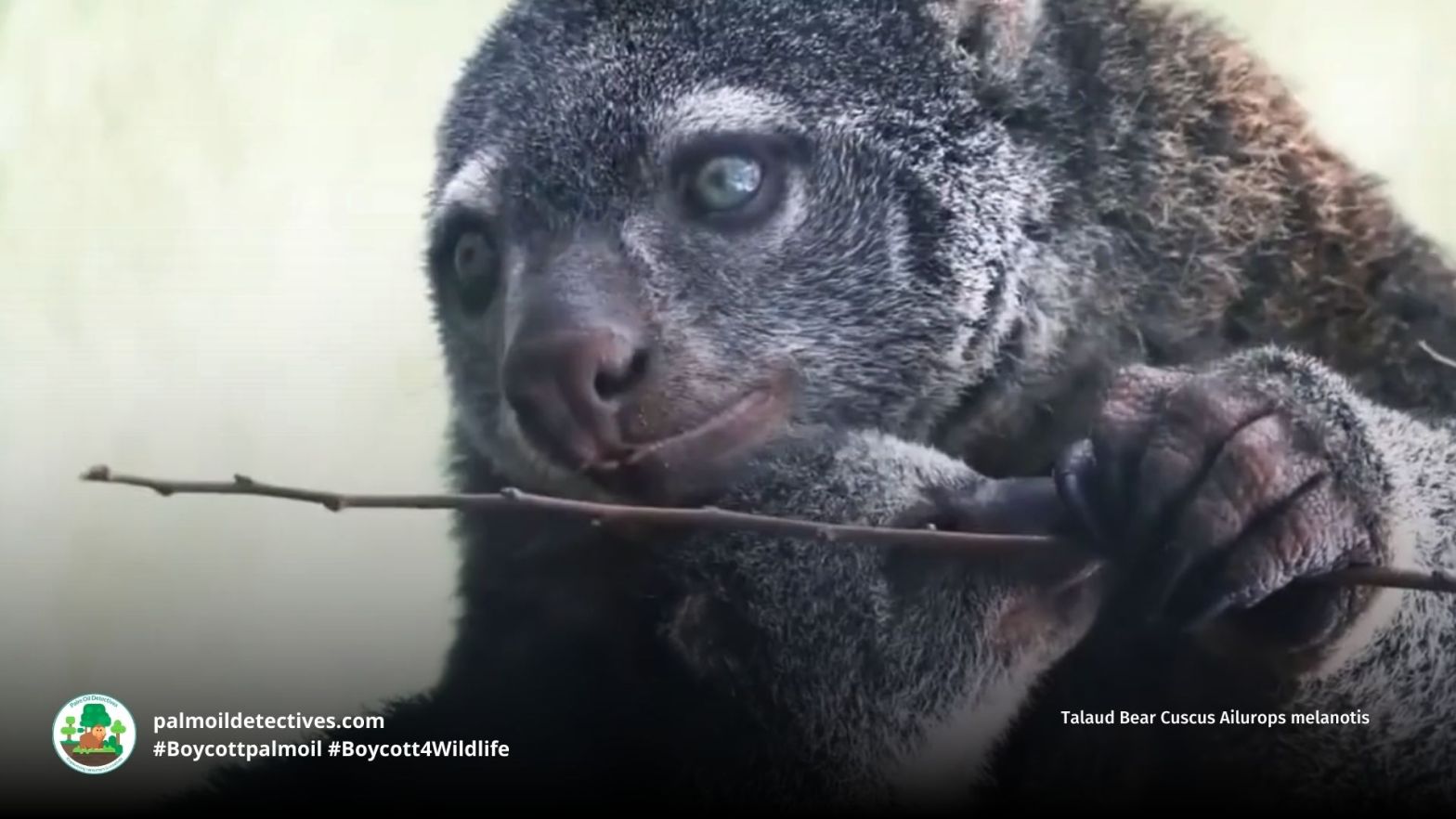
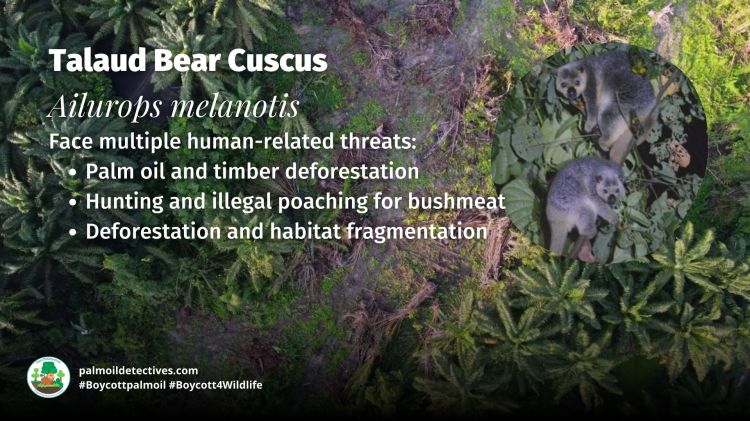
Talaud Bear Cuscus Ailurops melanotis
Location: Indonesia (Salibabu, Nusa, Bukide, and possibly Sangihe Island)
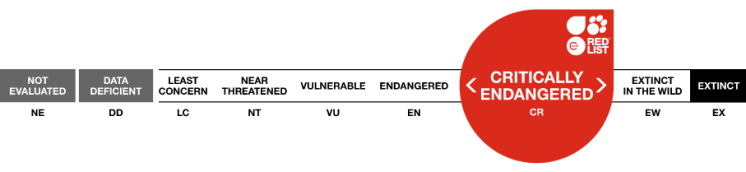
IUCN Status: Critically Endangered
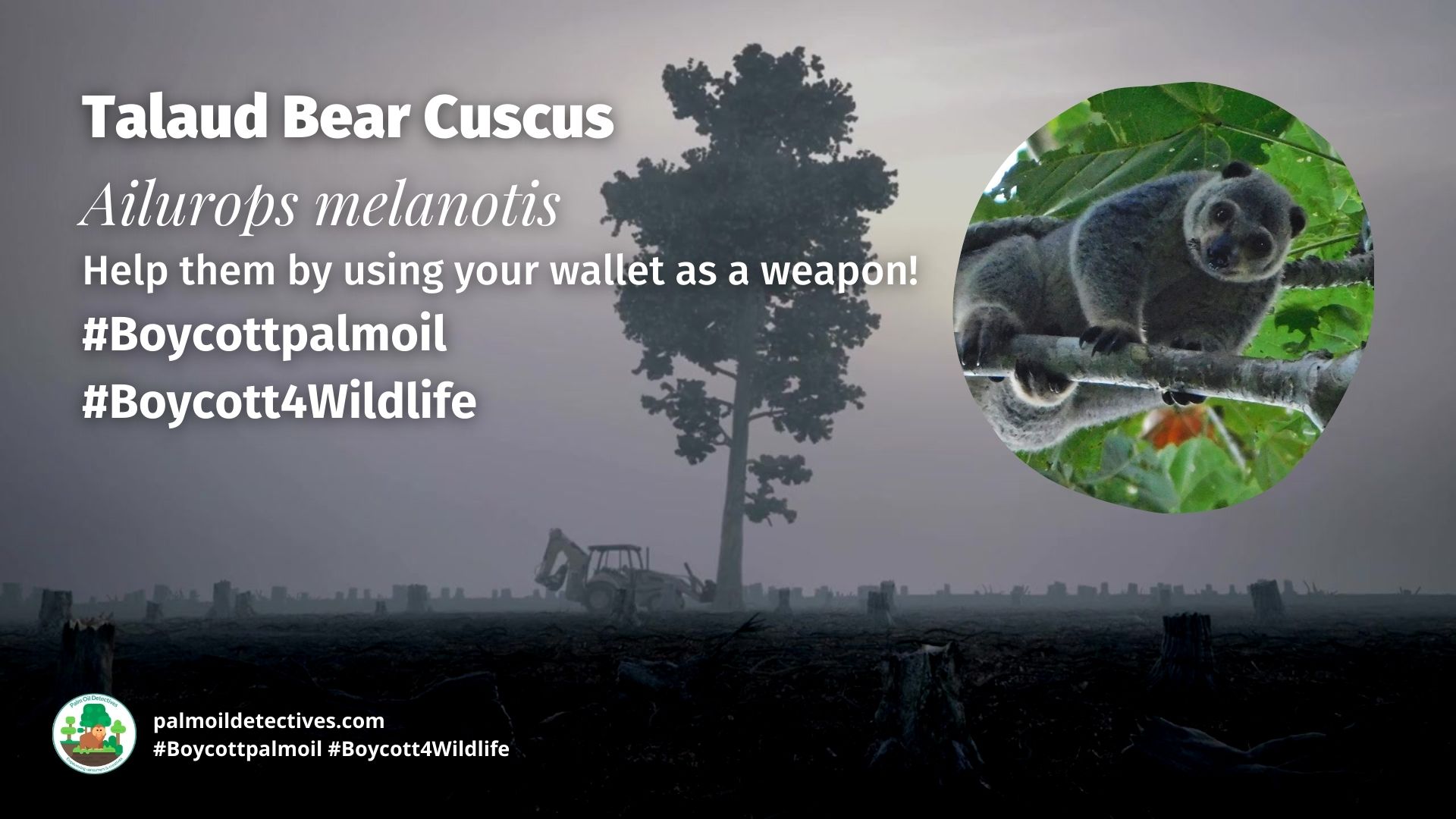
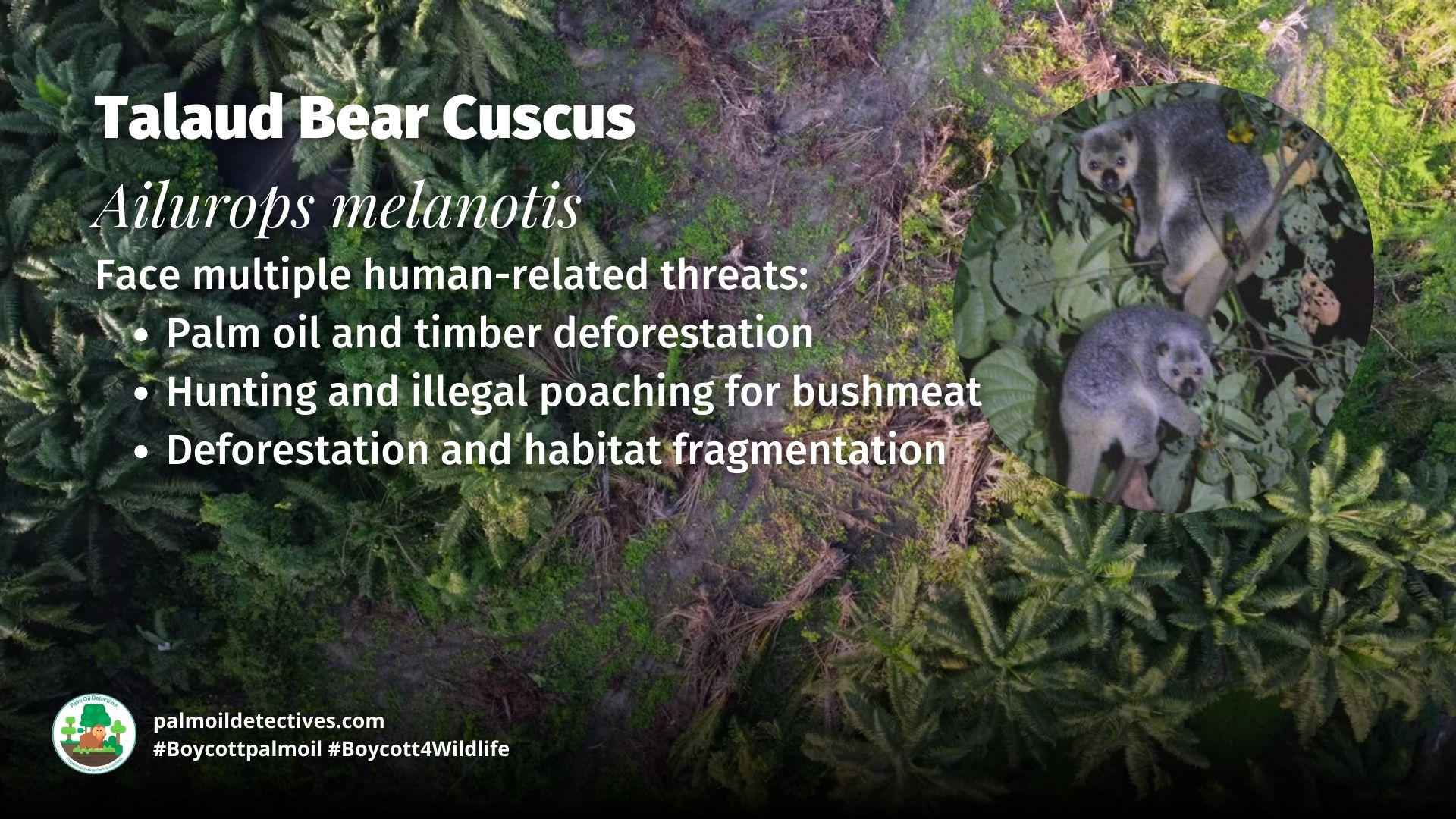
High in the canopies of #Indonesia’s remote northern islands of Salibabu, Nusa, Bukide, and Sangihe, the Talaud Bear #Cuscus Ailurops melanotis moves at a pace so slow they barely disturbs the leaves. With their round, woolly bodies, sleepy expressions, and a temperament as relaxed as a sloth, these tree-dwelling marsupials have long been a mystery to science. Relentless #hunting for #bushmeat along with #palmoil and #timber #deforestation have rendered these gentle marsupials #criticallyendangered and they are nearing #extinction. Conservationists are working alongside local communities to change perceptions of the species, replacing hunting traditions with protection efforts. You can take action every time you shop and shop #PalmOilFree #BoycottPalmOil #Boycott4Wildlife.
The Talaud Bear Cuscus 🐻🇮🇩 is a critically endangered #marsupial from #Salibabu island #Indonesia, rapidly vanishing from #palmoil #deforestation 🌴🔥⛔️ Fight back! #BoycottPalmOil #Boycottpalmoil #Boycott4Wildlife for their survival @palmoildetect.bsky.social https://palmoildetectives.com/2021/01/26/talaud-bear-cuscus/
Appearance and Behaviour
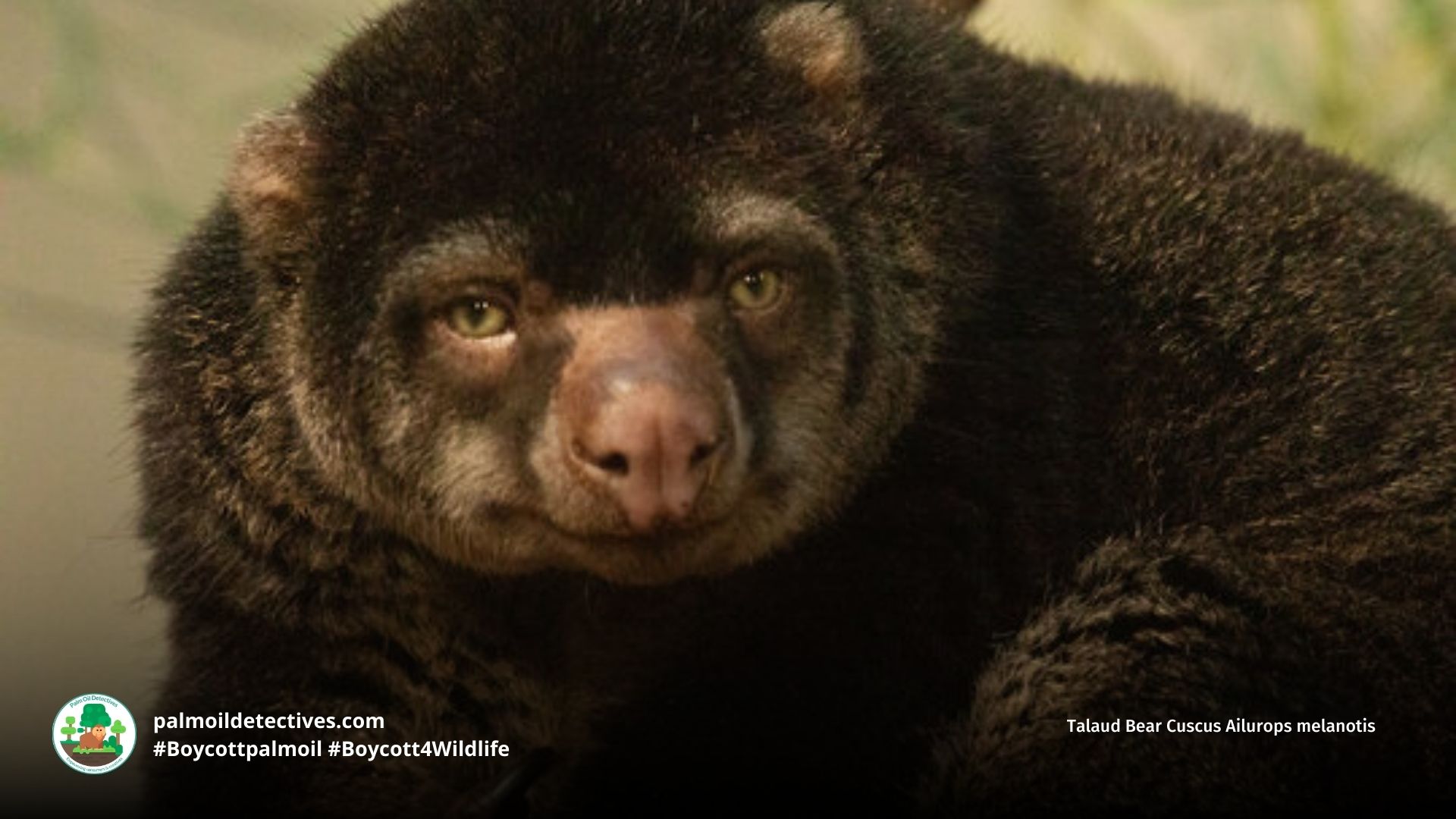
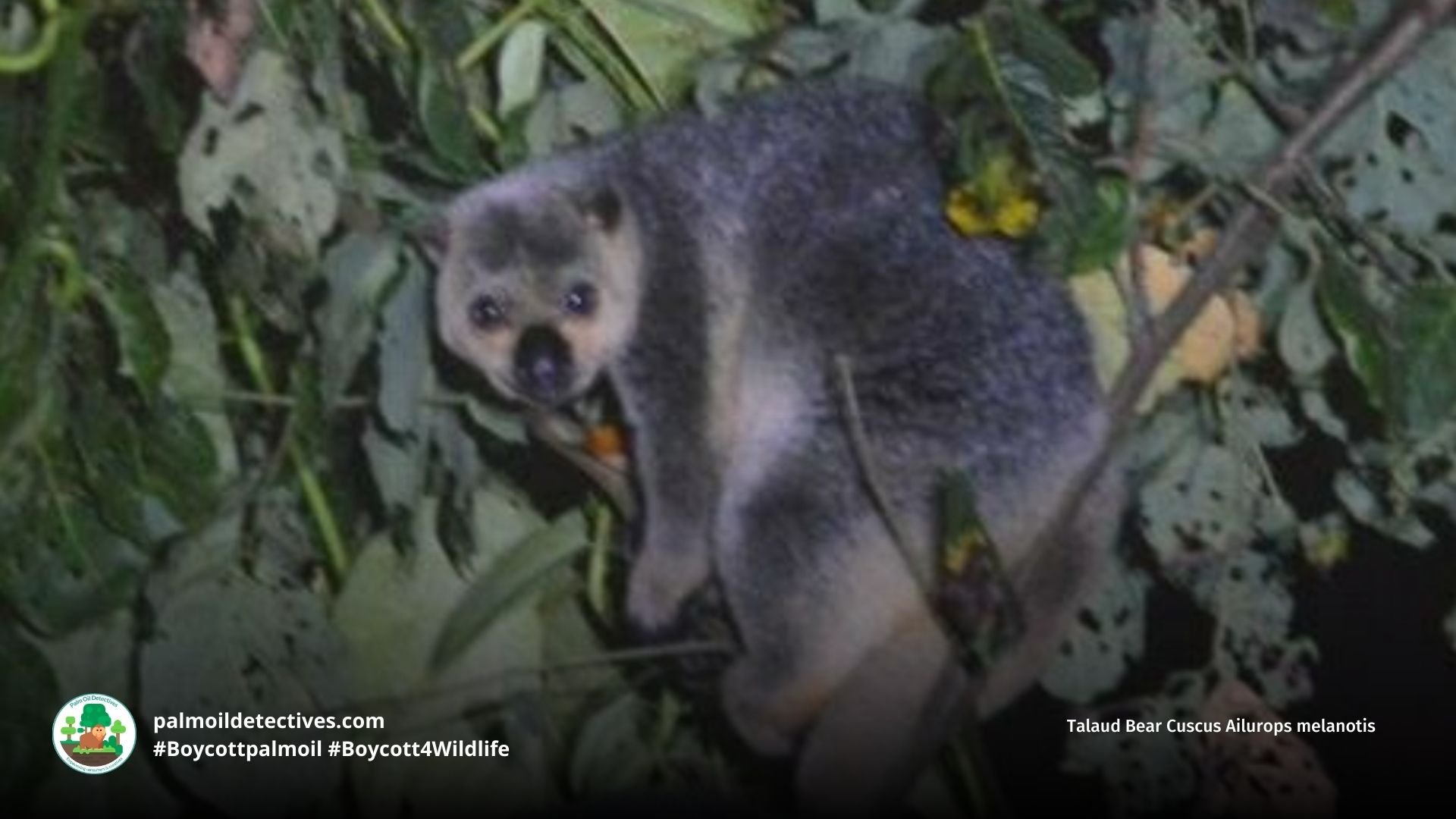
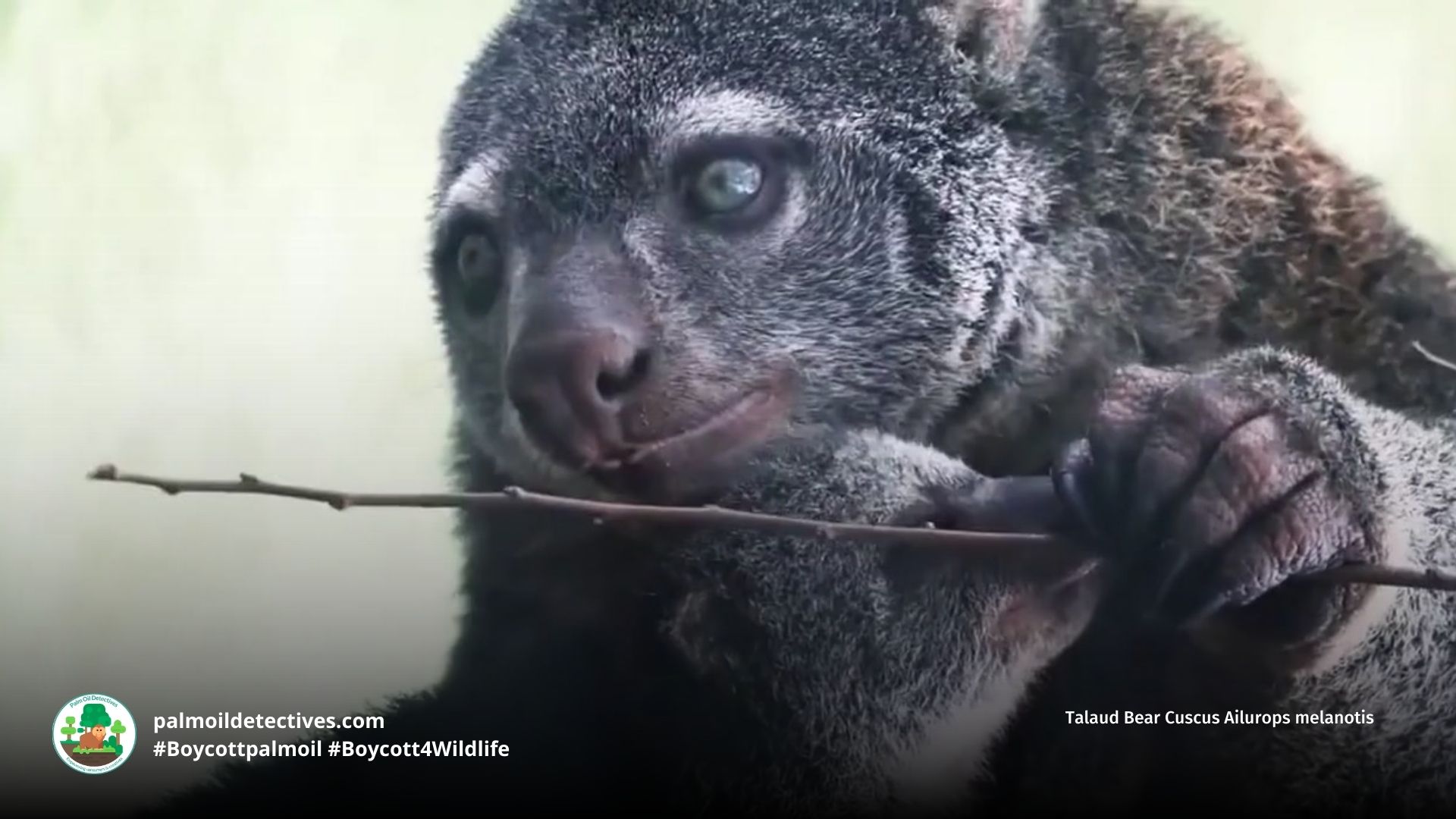
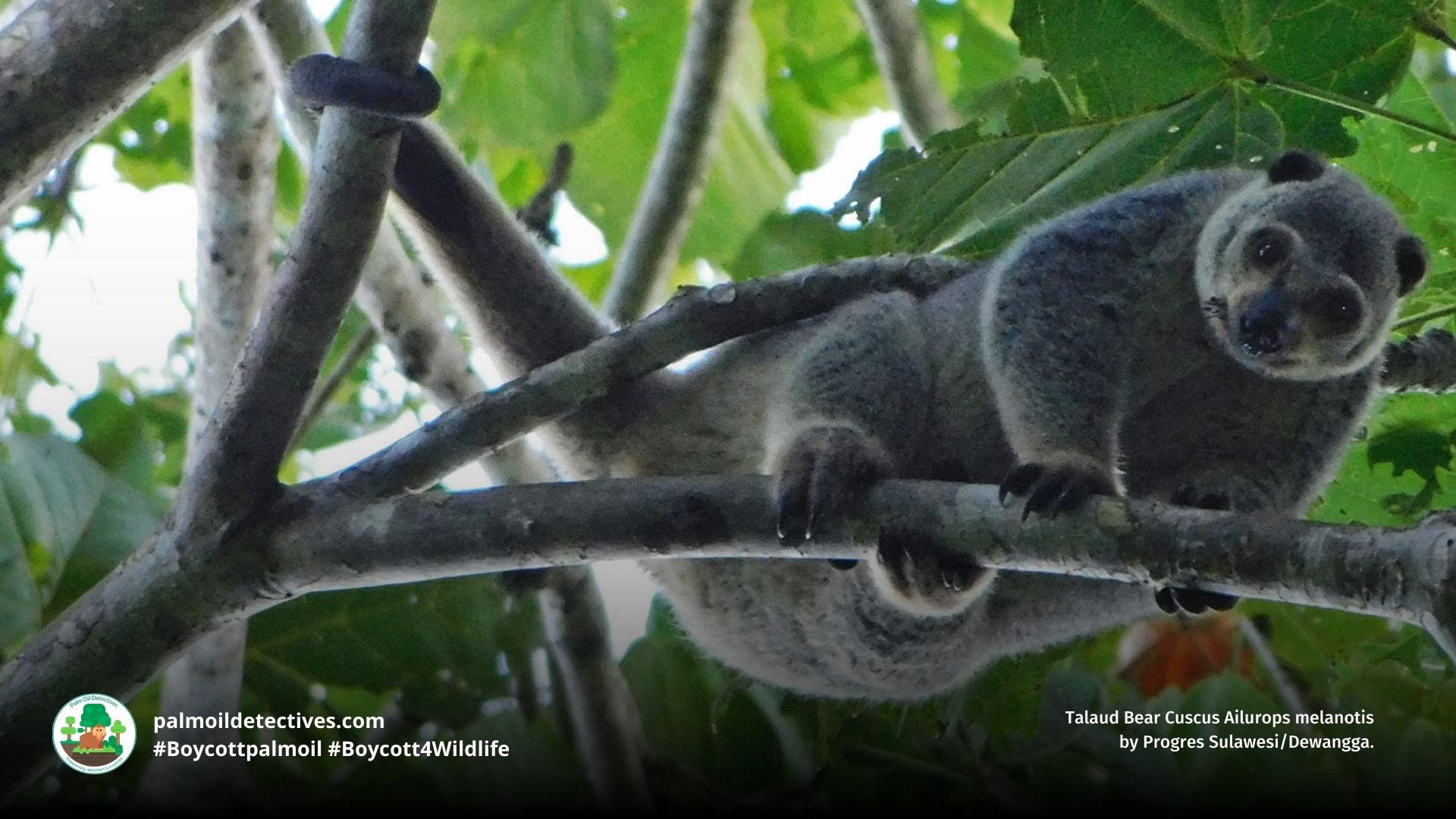
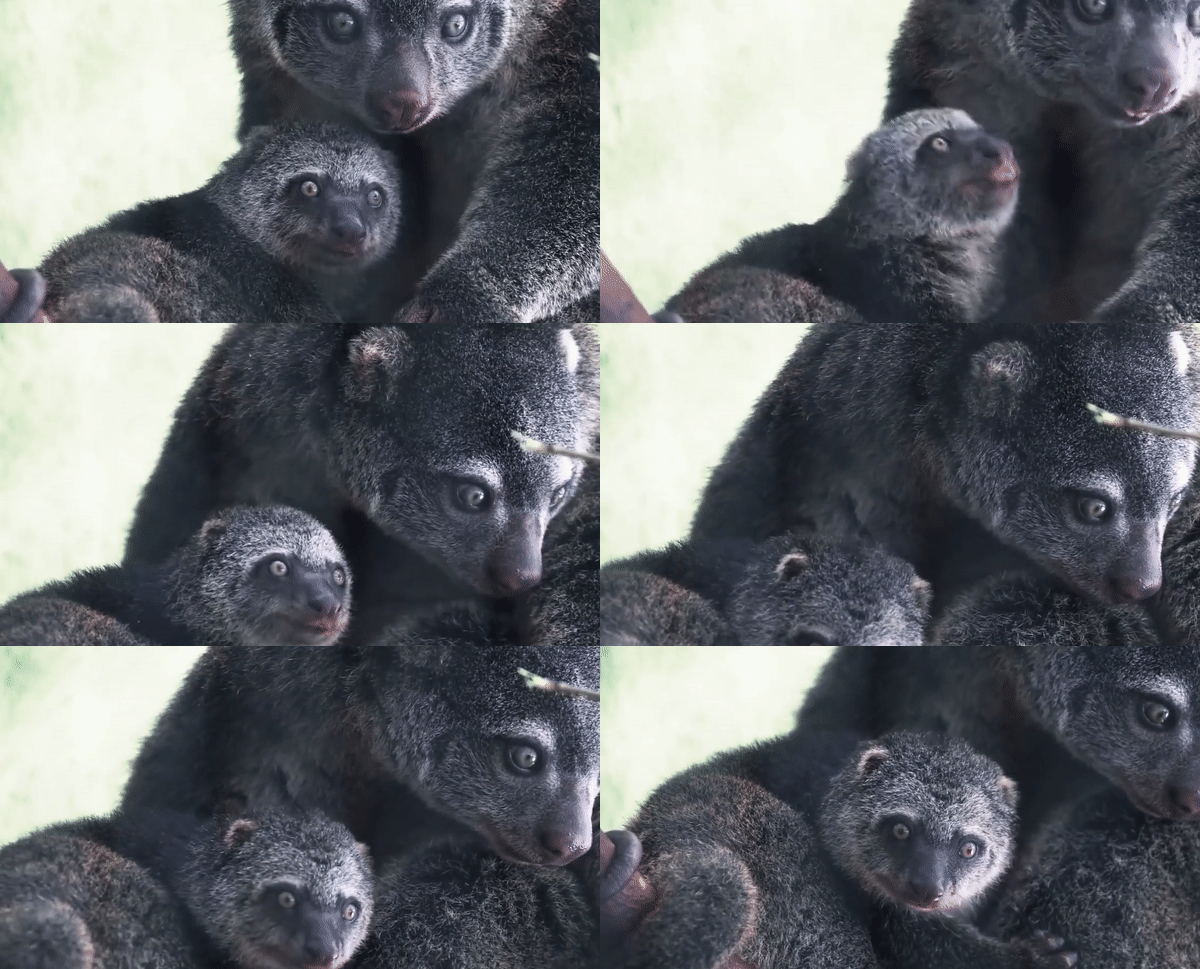
With their thick, plush fur, rotund bodies, and black-tipped ears, Talaud Bear Cuscuses resemble cuddly tree-dwelling teddy bears. Their prehensile tails, nearly as long as their bodies, act as an extra limb, allowing them to grip branches as they navigate the high forest canopy. Talaud Bear Cuscuses are slow-moving and deliberately and slowly clamber from branch to branch. When threatened, they employ a surprisingly effective survival trick— they freeze in place as a camouflage and pull leaves around themselves, disappearing into the foliage.
Despite their calm and gentle nature, centuries of hunting pressure have made them even more elusive, with some individuals rarely venturing into areas frequented by humans.
Diet
True to their lazy nature, Talaud Bear Cuscuses spend their days munching on leaves, fruit, and flowers from the treetops. They prefer nutrient-rich foliage, making them essential for forest regeneration and #pollination, as they help prune overgrown vegetation and disperse seeds. Interestingly, they also control invasive plant species, such as Merremia peltata, a vine that strangles native trees and disrupts local ecosystems.
Reproduction and Mating
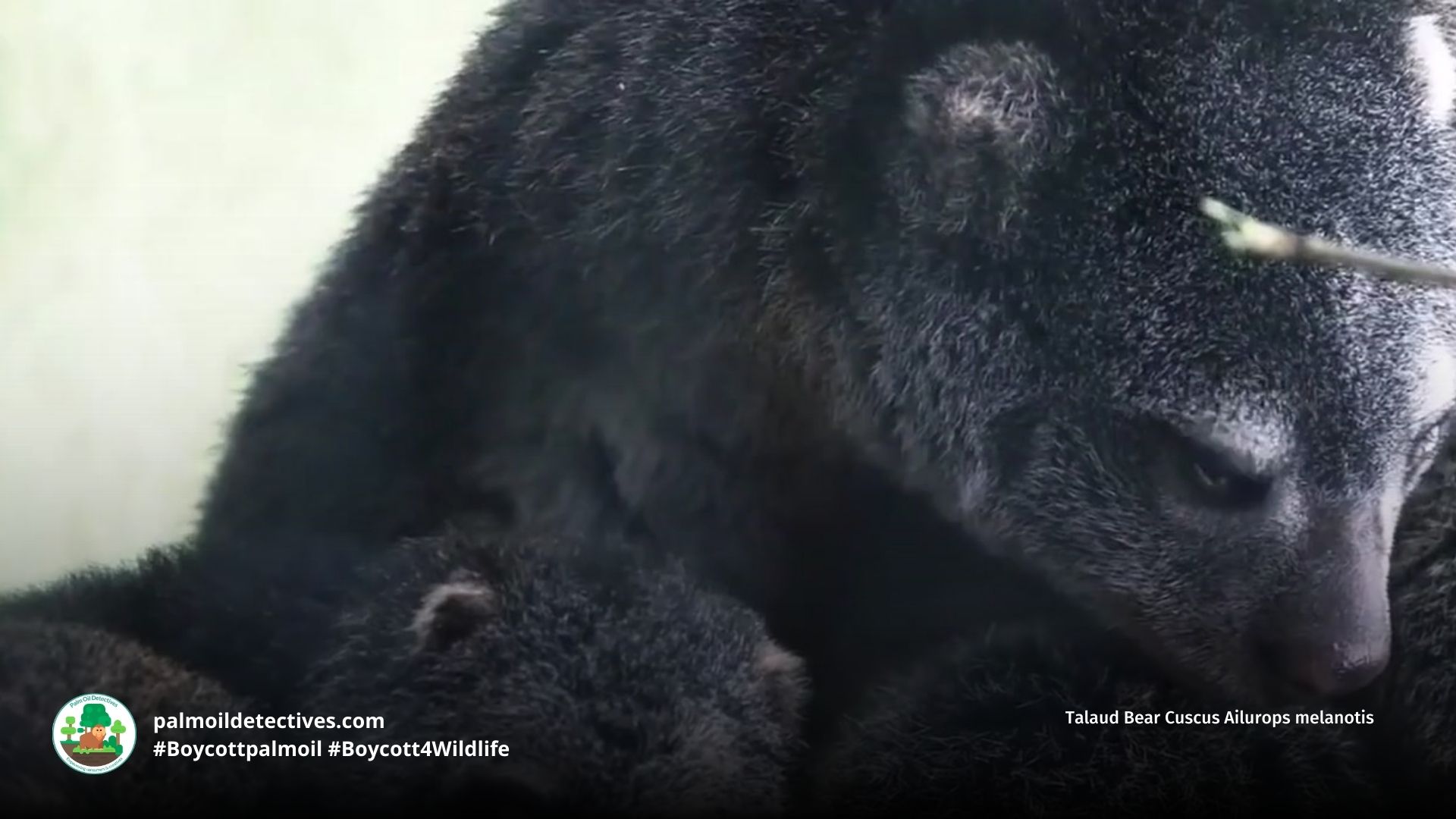
Little is known about their breeding behaviour, but like other cuscuses, they likely give birth to one or two young per year, which develop in the mother’s pouch. Due to their low reproductive rate, their populations struggle to recover from hunting losses.
Threats
Hunting for bushmeat
The biggest threat to Talaud Bear Cuscuses is hunting, particularly on Salibabu Island, where they are a traditional delicacy. Their meat is used in “tola-tola”, a practice where spicy cuscus meat is consumed with alcohol. This has driven them to the brink of extinction. However in recent years, educational efforts have reversed this cultural practise and in its place, a stronger focus on protection of these precious beings.
Palm oil and timber deforestation
Their forest homes are rapidly vanishing due to logging, palm oil agriculture, and human settlement expansion. Many areas once filled with dense canopy have been cleared for farmland, reducing their already tiny habitat range.
Fragmentation and population decline
Surveys indicate a steep decline in their population, with recent fieldwork showing they are now found in fewer areas than before. As their habitat shrinks and hunting pressure persists, their survival is in serious jeopardy.
Take Action!
The Talaud Bear Cuscus is on the verge of extinction, but you can help! Support organisations that protect their last remaining forests, and demand stronger protections against hunting. Resist extinction and fight for their survival every time you shop—#BoycottPalmOil #Boycott4Wildlife.
FAQs
Why is the Talaud Bear Cuscus critically endangered?
The Talaud Bear Cuscus is classified as critically endangered primarily because they are heavily hunted for #bushmeat, and their forests are being rapidly destroyed. With such a tiny habitat range, even small population losses are catastrophic.
Where does the Talaud Bear Cuscus live?
They are found only on Salibabu, Nusa, Bukide, and possibly Sangihe Island in northern Indonesia. Their forest homes are disappearing for palm oil and timber, placing them at extreme risk.
Can the Talaud Bear Cuscus be saved?
Yes! Conservation programs are working to stop hunting and protect their forests. Some villages have already banned cuscus hunting, and efforts are expanding.
Do they really just sit in trees all day?
Yes! Talaud Bear Cuscuses are slow-moving, spending most of their time resting, eating, or clinging to branches. Their sluggish nature makes them easy targets for hunters, but it also means they are perfectly adapted to treetop life.
What can I do to help?
Support community-led conservation efforts, donate to organisations fighting deforestation, and most importantly, boycott palm oil. Use your wallet as a weapon in the supermarket—#BoycottPalmOil #Boycott4Wildlife.
Further Information
Flannery, T. & Helgen, K. 2016. Ailurops melanotis. The IUCN Red List of Threatened Species 2016: e.T136218A21949526. https://dx.doi.org/10.2305/IUCN.UK.2016-2.RLTS.T136218A21949526.en. Downloaded on 26 January 2021.
Mowbray, S. (2022, June 22). To win island-wide conservation, Indonesia’s Talaud bear cuscus needs to win hearts. Mongabay News. https://news.mongabay.com/2022/06/to-win-island-wide-conservation-indonesias-talaud-bear-cuscus-needs-to-win-hearts/
Repi, T., Masy’ud, B., Mustari, A. H., & Prasetyo, L. B. (2020). Population density, geographical distribution and habitat of Talaud bear cuscus (Ailurops melanotis Thomas, 1898). Biodiversitas, 21(12), 5621-5631. https://doi.org/10.13057/biodiv/d211207
Shepherd, C. R., Sy, E. Y., Janssen, J., & Morgan, J. (2018). Protection from exploitation needed for the endemic Sulawesi Bear Cuscus Ailurops ursinus in Indonesia. Journal of Indonesian Natural History, 6(2), 30-35. Retrieved from http://jinh.fmipa.unand.ac.id/index.php/jinh/article/view/128

How can I help the #Boycott4Wildlife?
Take Action in Five Ways
1. Join the #Boycott4Wildlife on social media and subscribe to stay in the loop: Share posts from this website to your own network on Twitter, Mastadon, Instagram, Facebook and Youtube using the hashtags #Boycottpalmoil #Boycott4Wildlife.
2. Contribute stories: Academics, conservationists, scientists, indigenous rights advocates and animal rights advocates working to expose the corruption of the palm oil industry or to save animals can contribute stories to the website.




3. Supermarket sleuthing: Next time you’re in the supermarket, take photos of products containing palm oil. Share these to social media along with the hashtags to call out the greenwashing and ecocide of the brands who use palm oil. You can also take photos of palm oil free products and congratulate brands when they go palm oil free.
4. Take to the streets: Get in touch with Palm Oil Detectives to find out more.
5. Donate: Make a one-off or monthly donation to Palm Oil Detectives as a way of saying thank you and to help pay for ongoing running costs of the website and social media campaigns. Donate here
Discover more from Palm Oil Detectives
Subscribe to get the latest posts sent to your email.
 Palm Oil Detectives