
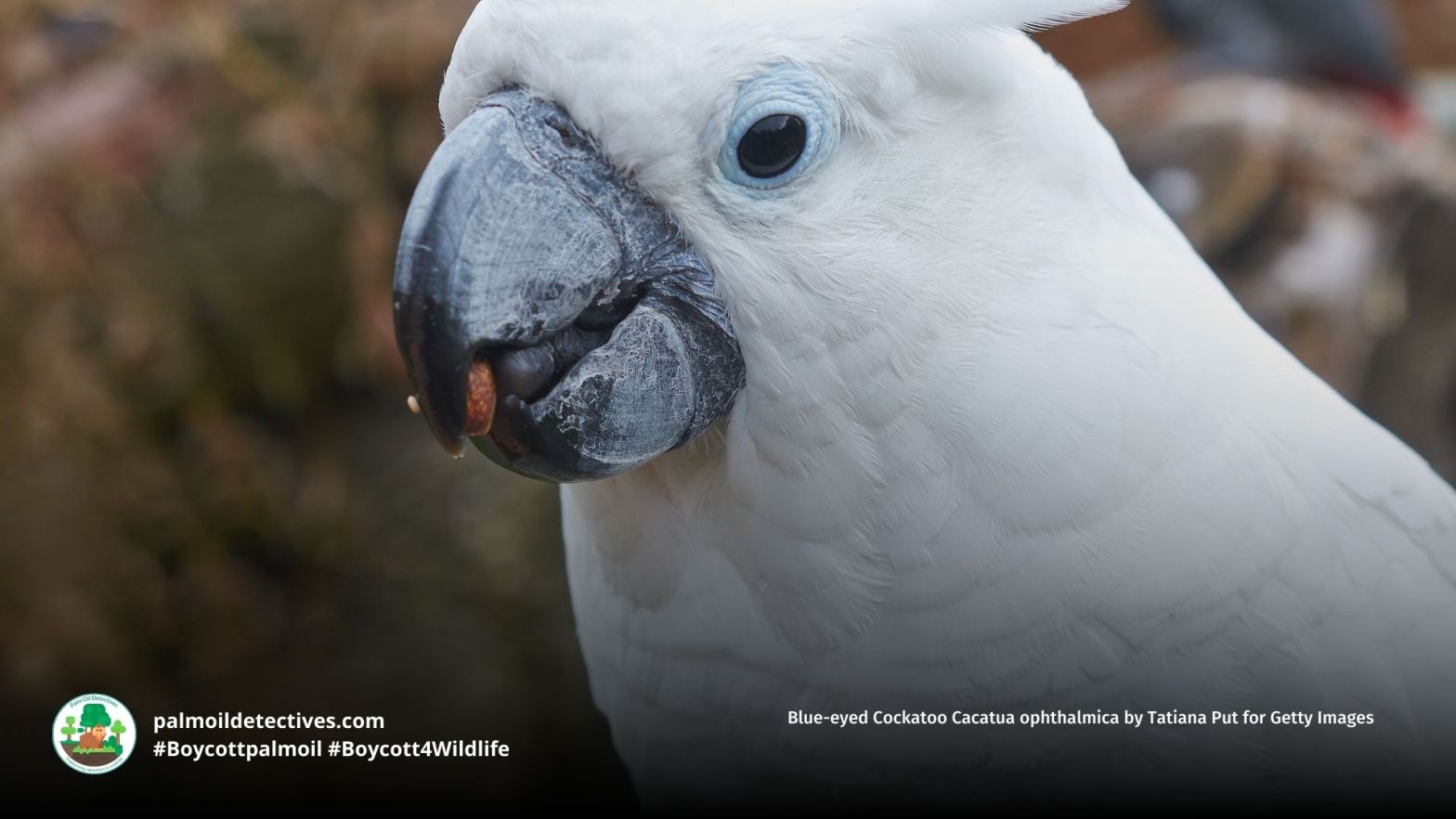
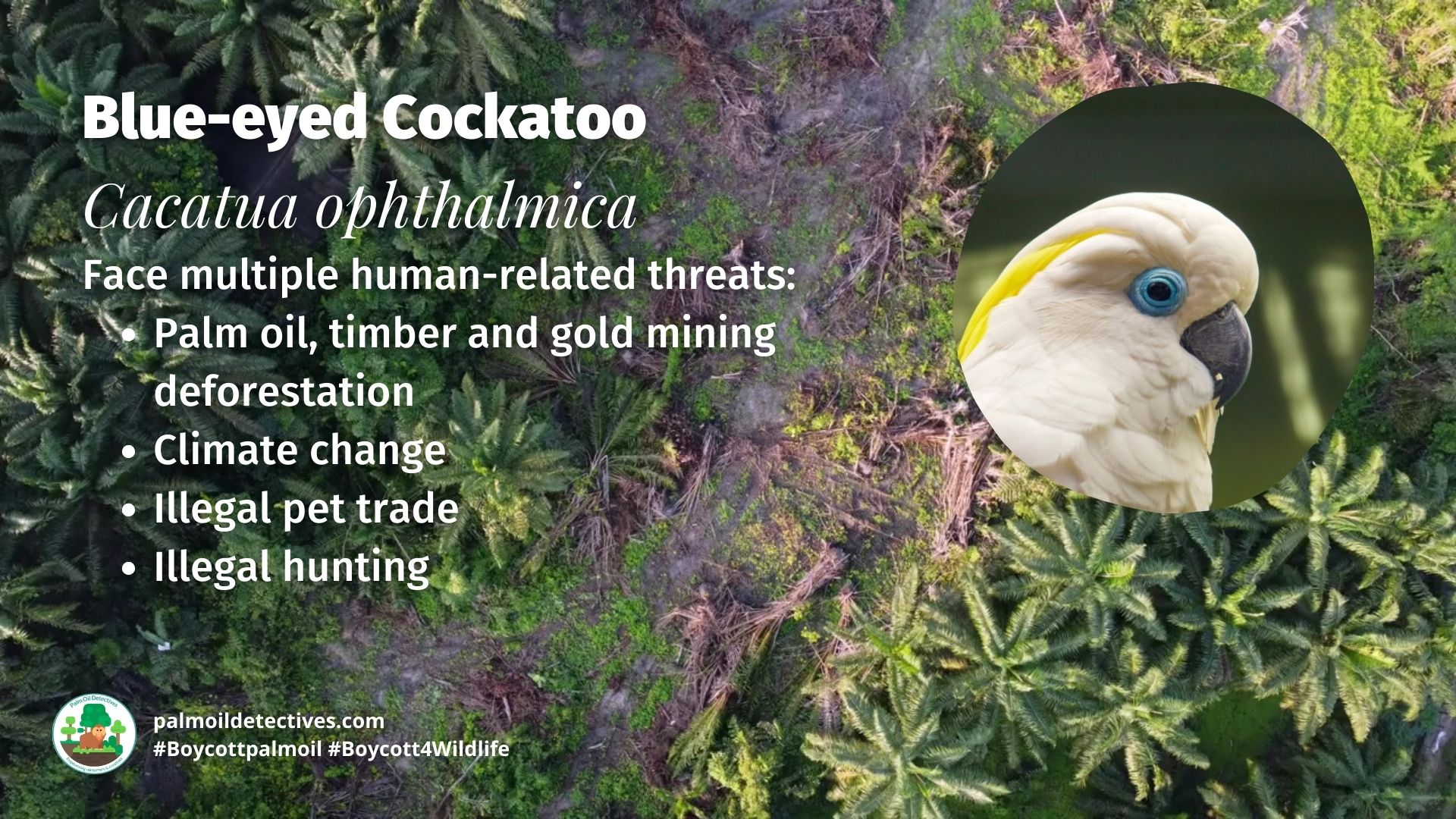
Blue-eyed Cockatoo Cacatua ophthalmica
IUCN Red List Status: Vulnerable
Location: The Blue-eyed Cockatoo is endemic to New Britain, part of Papua New Guinea’s Bismarck Archipelago. They are primarily found in the island’s eastern and central regions, inhabiting lowland and hill forests up to 1,000 metres above sea level.
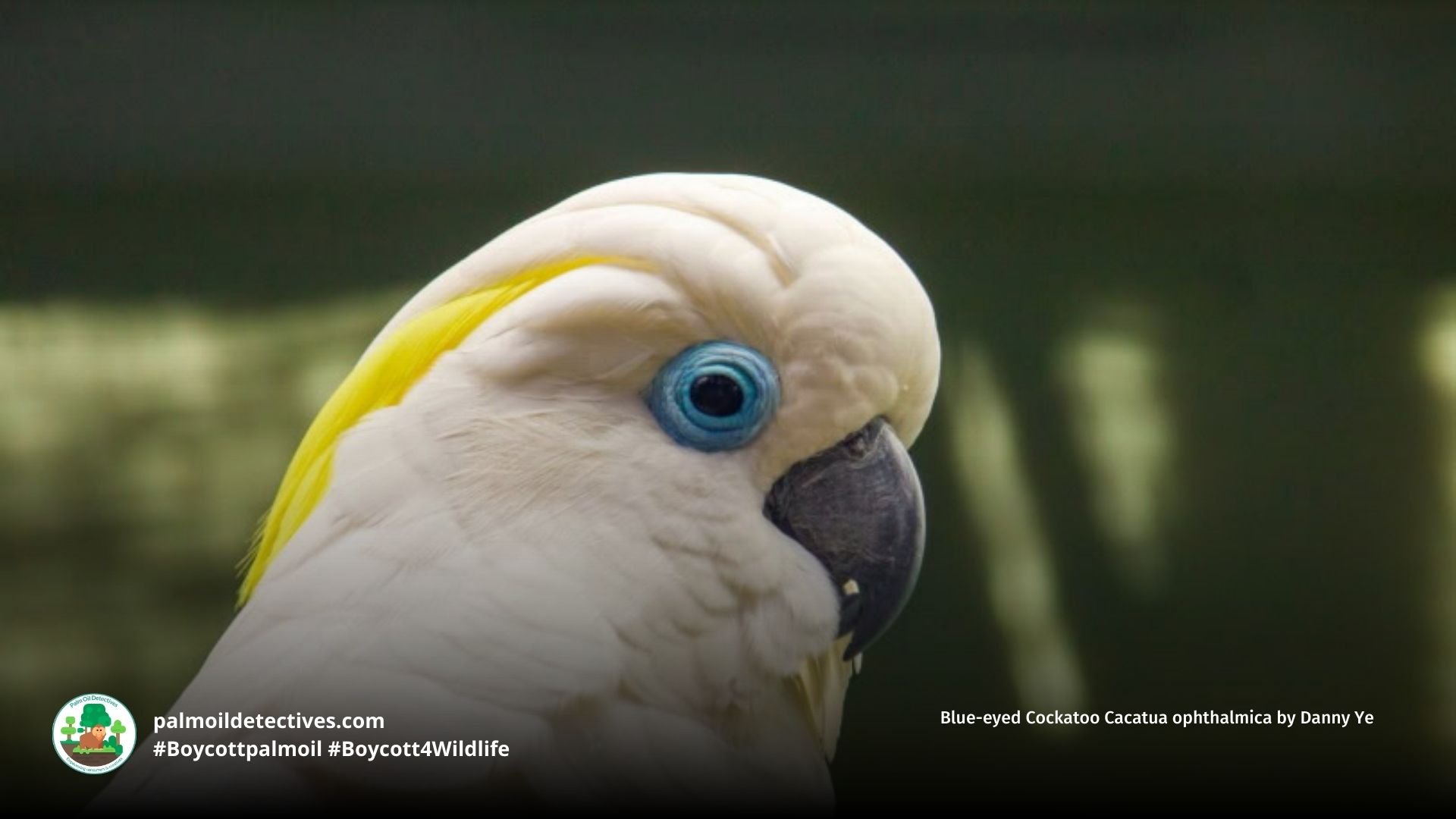
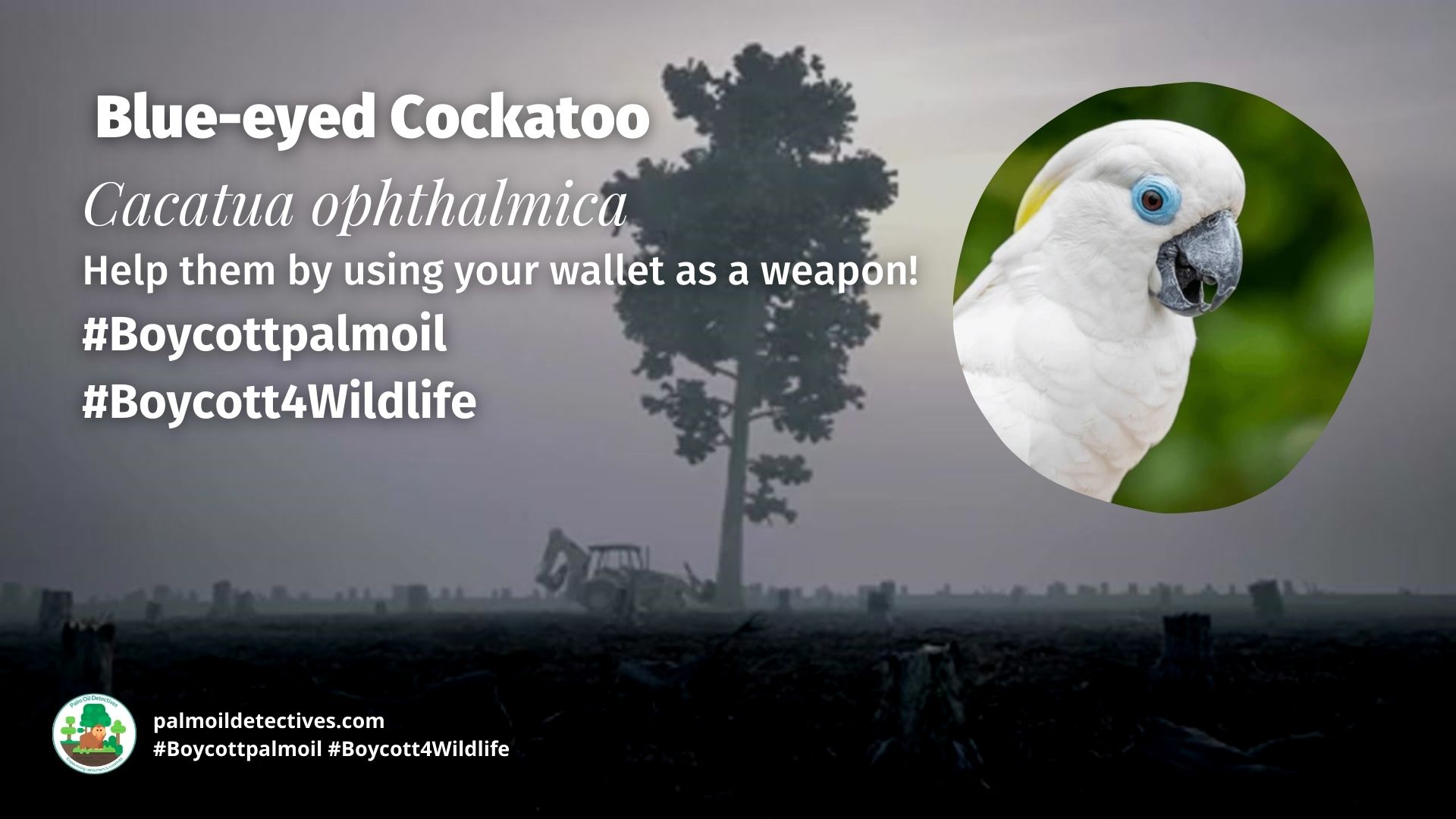
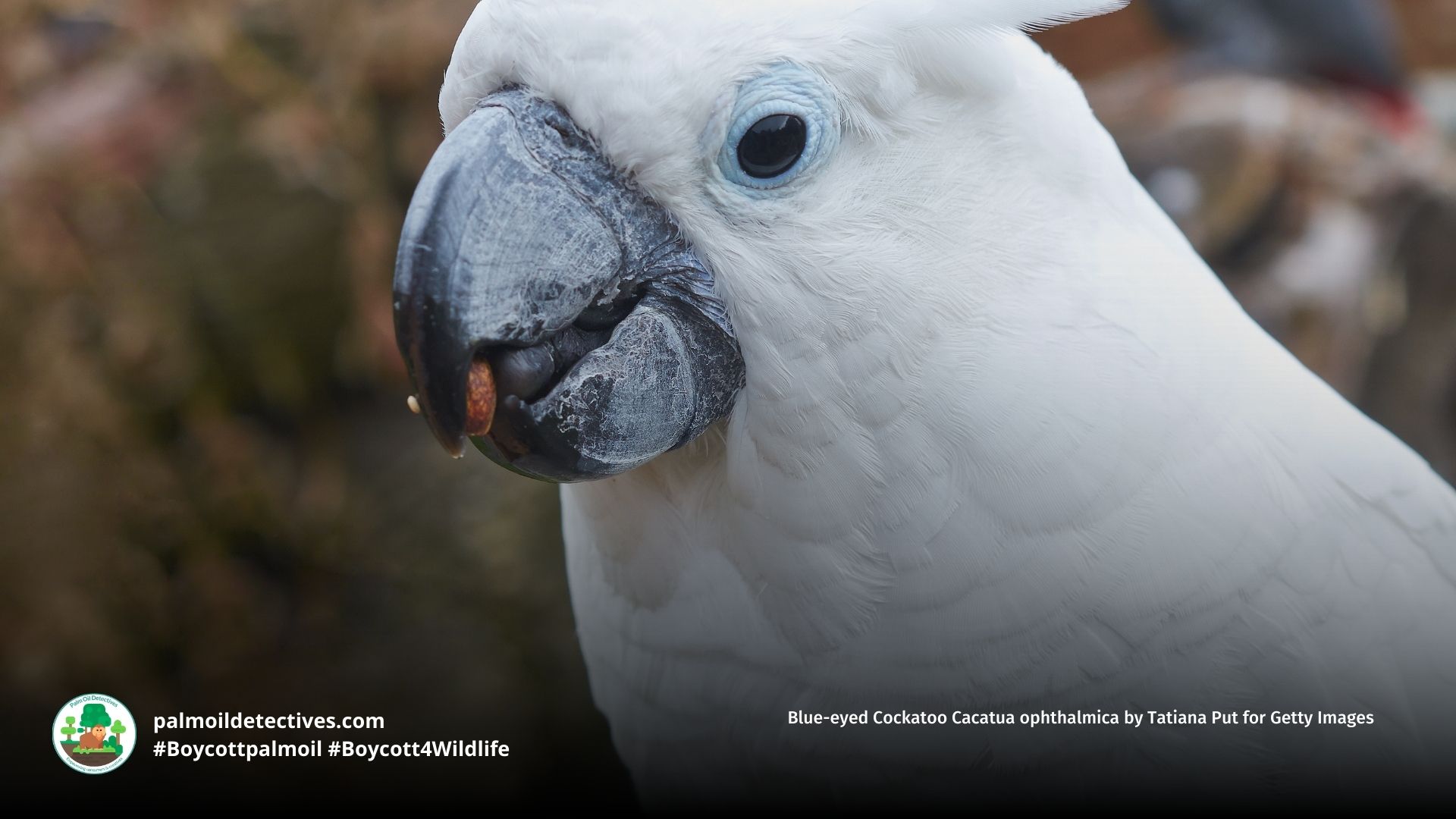
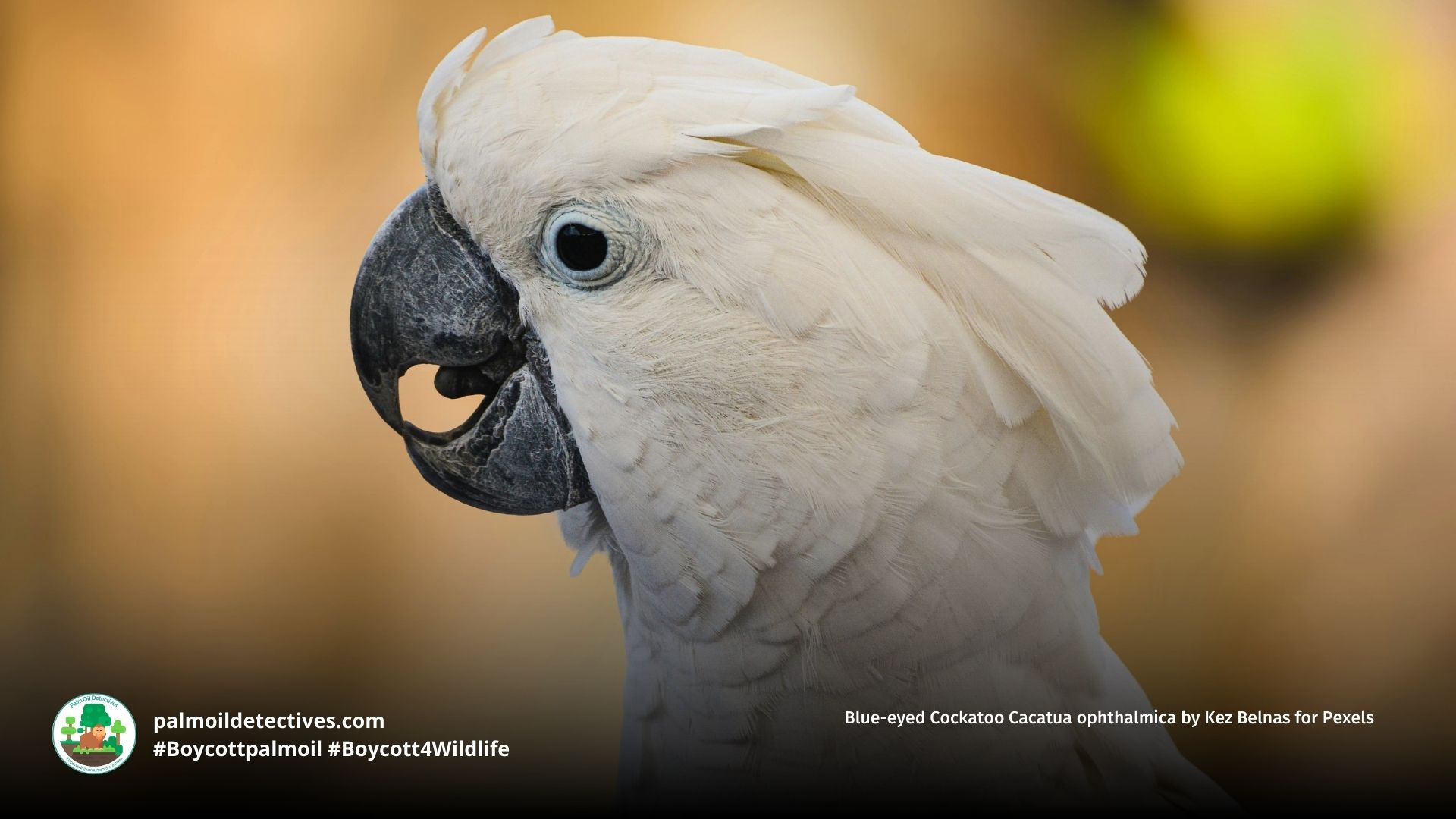
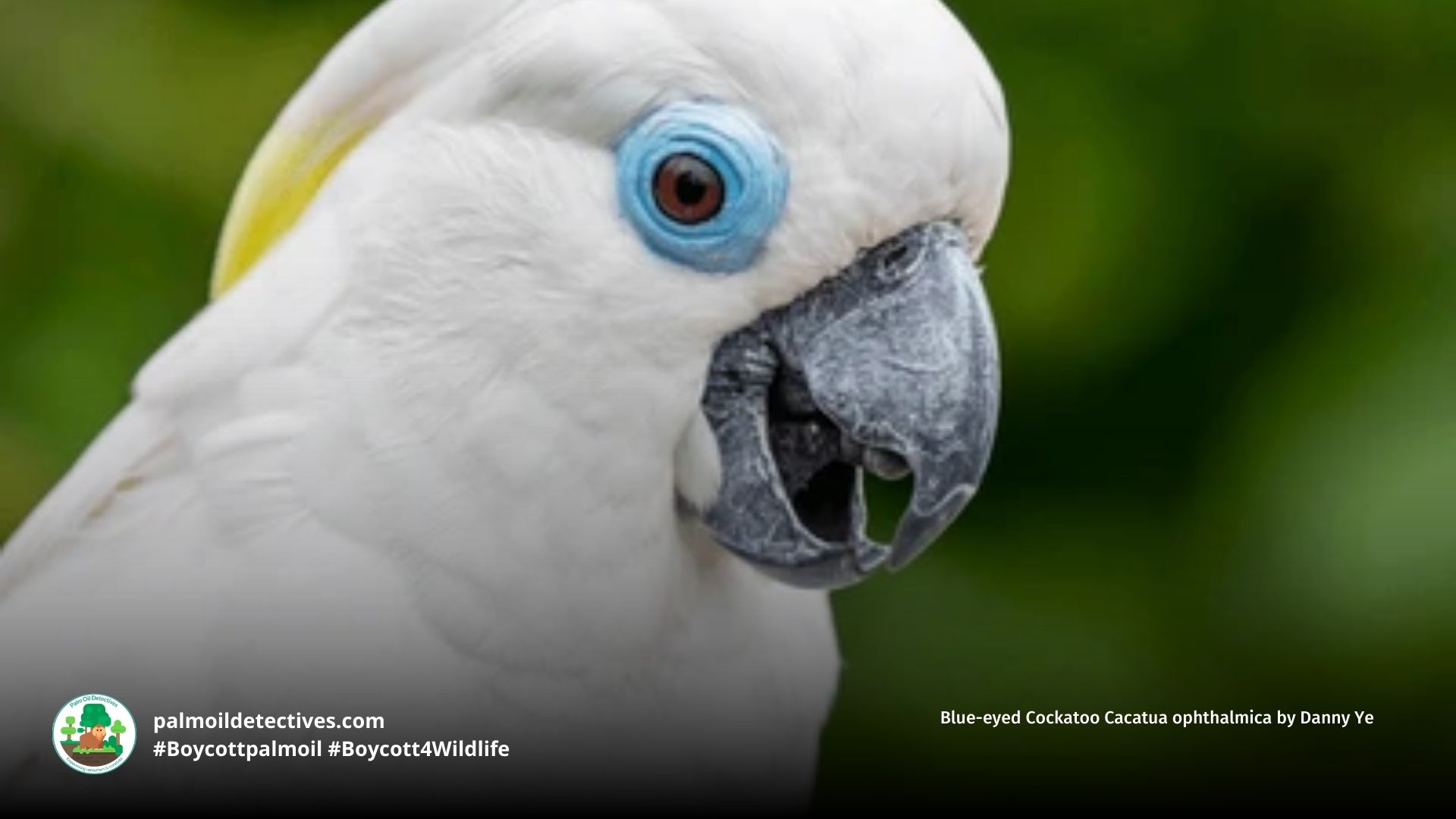
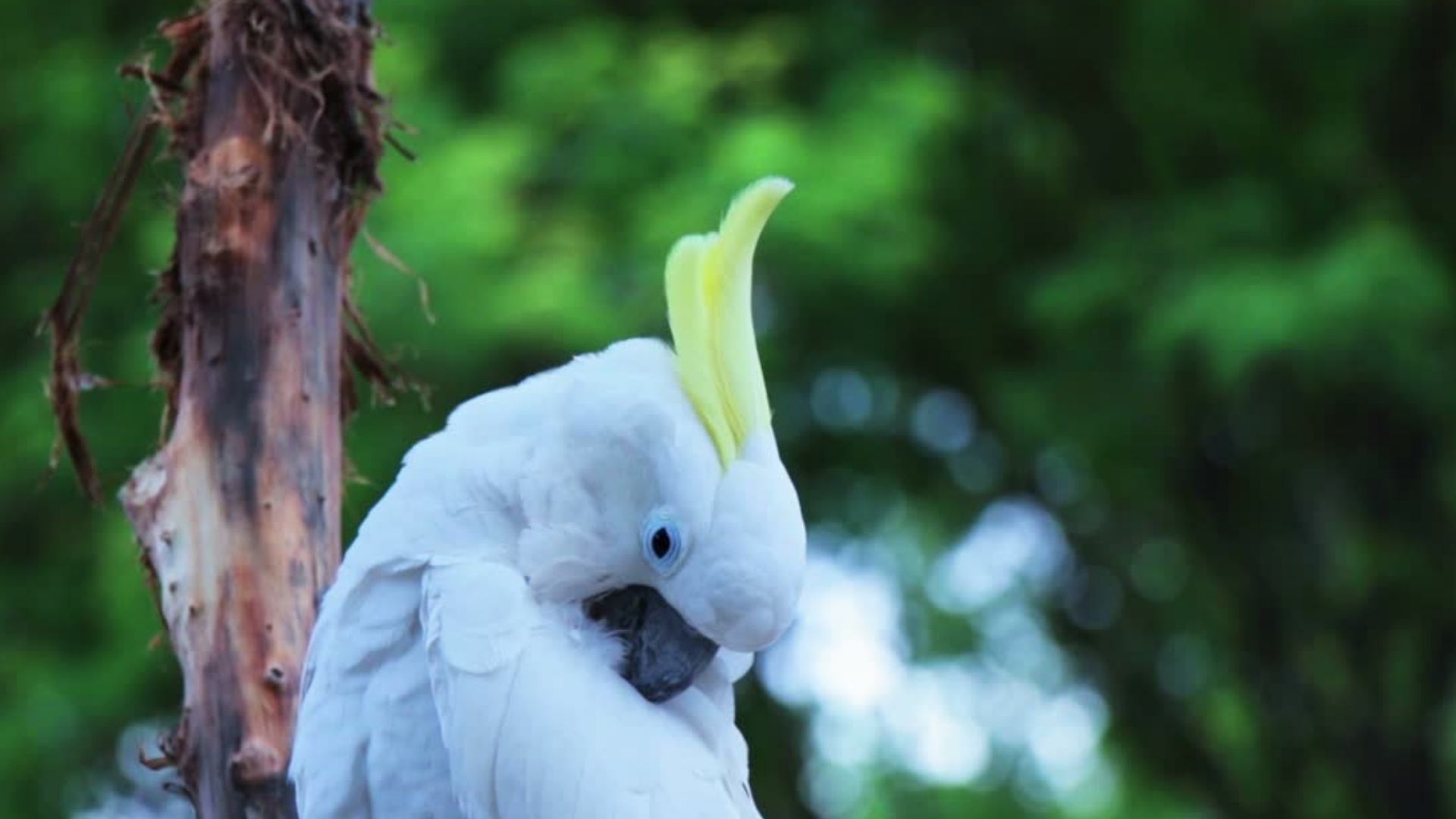
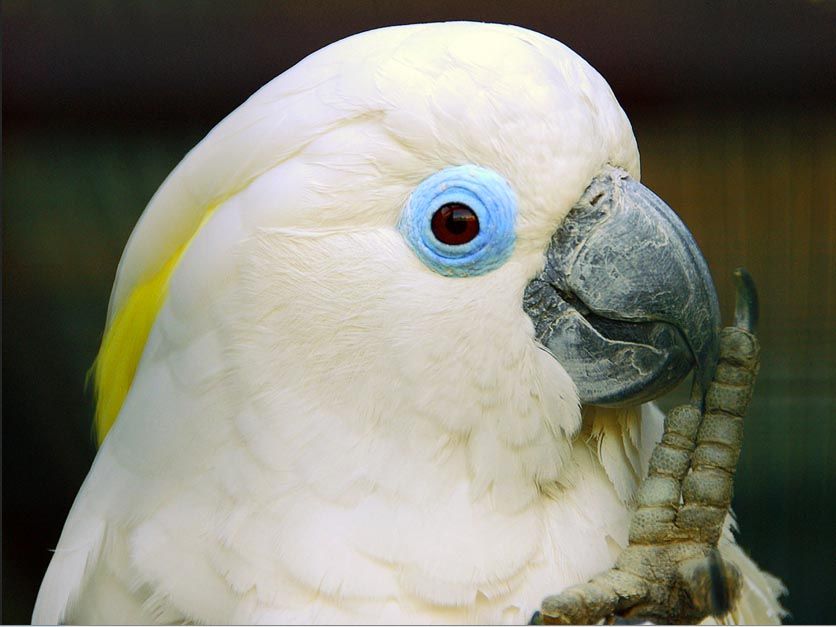
The Blue-eyed Cockatoo is a striking and charismatic bird, known for their vivid blue eye rings and expressive crests. These cockatoos depend on mature forests for nesting and food but face significant threats, including habitat destruction caused by out-of-control palm oil plantations, illegal hunting, and the illegal pet trade. Conservation efforts are critical to ensure the survival of this remarkable species. #BoycottPalmOil #Boycott4Wildlife
Charismatic, cheeky Blue-eyed #cockatoos 🕊️ have vivid blue eye rings and expressive crests. They’re #vulnerable in #PapuaNewGuinea due to #palmoil #deforestation and the illegal #pet trade. Help them #BoycottPalmOil 🌴⛔️#Boycott4Wildlife @palmoildetect https://wp.me/pcFhgU-tz
Extensive logging for #palmoil and #gold #mining in #NewBritain in #PapuaNewGuinea 🇵🇬 has made the delightful Blue-eyed cockatoo #vulnerable 😿 Help them to survive when you #BoycottPalmOil 🌴🤮💀🚫 #BoycottGold 🥇🚫 #Boycott4Wildlife @palmoildetect https://wp.me/pcFhgU-tz
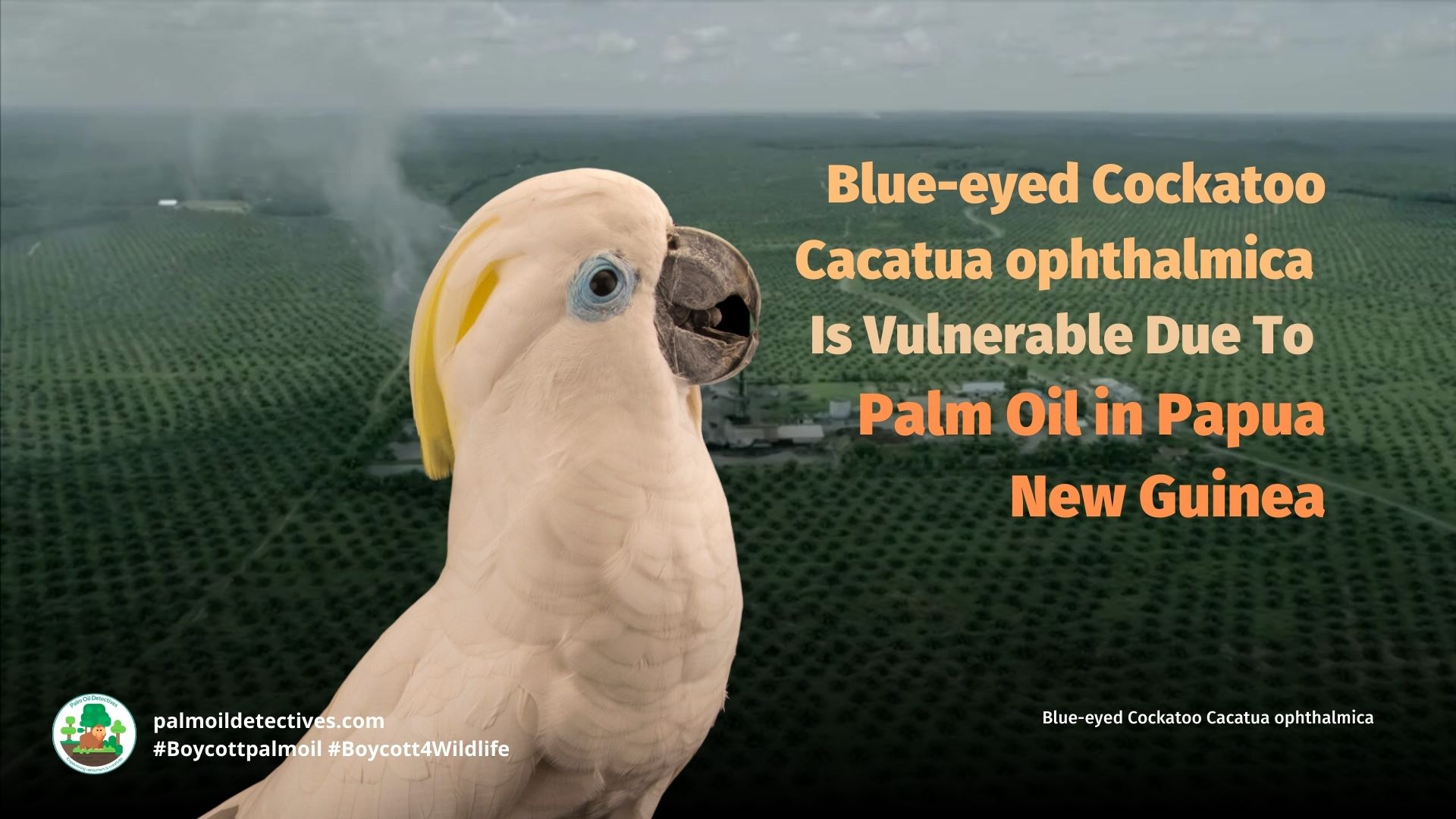
Rapid conversion of lowland forest to oil palm plantations over the last thirty years is likely to have caused a significant loss of breeding habitat to the Blue-Eyed Cockatoo. The major oil palm companies have committed to no further forest clearance but there is a risk that smaller companies will clear forest for oil palm.
IUCN Red List
Appearance and Behaviour
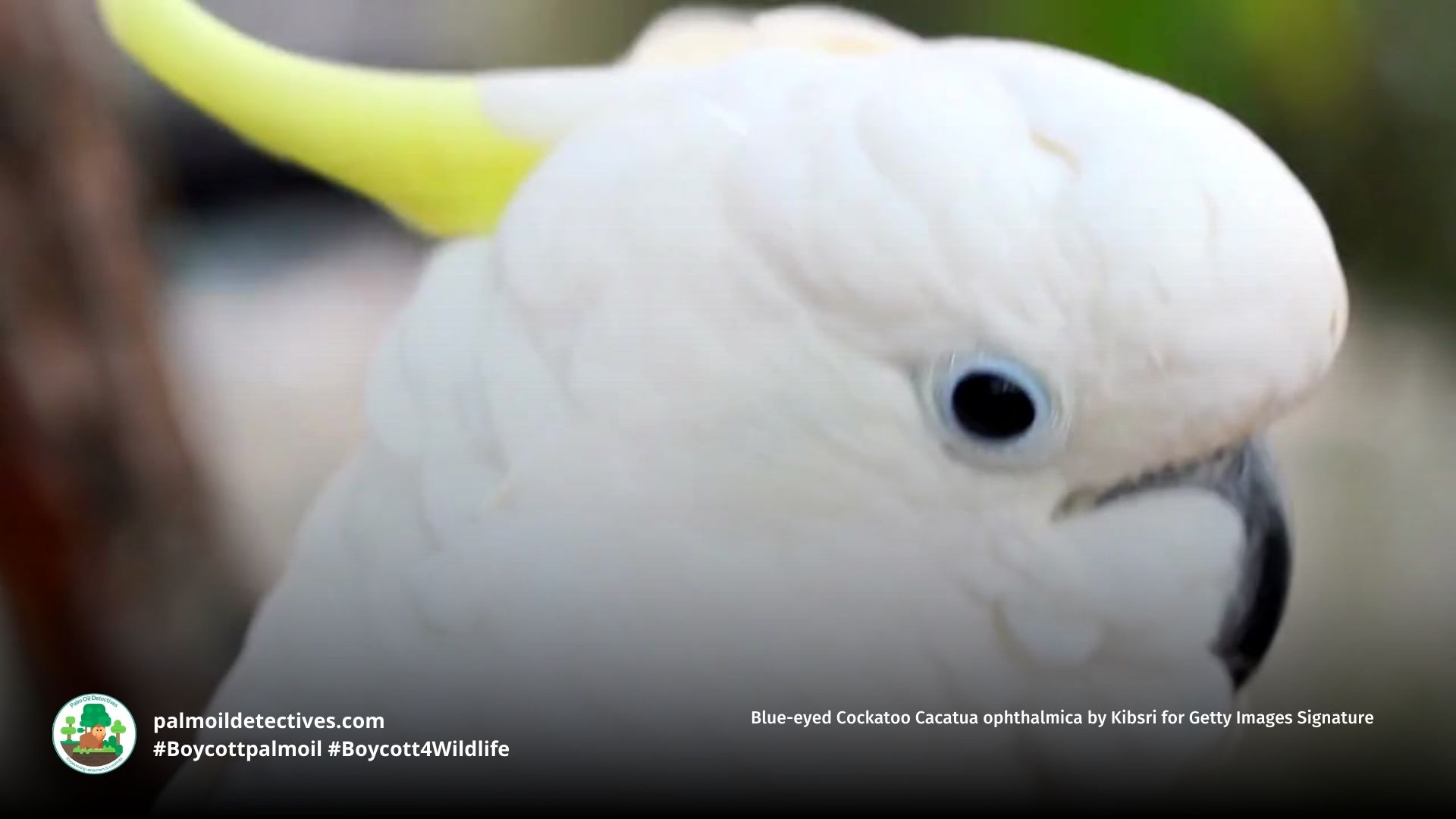
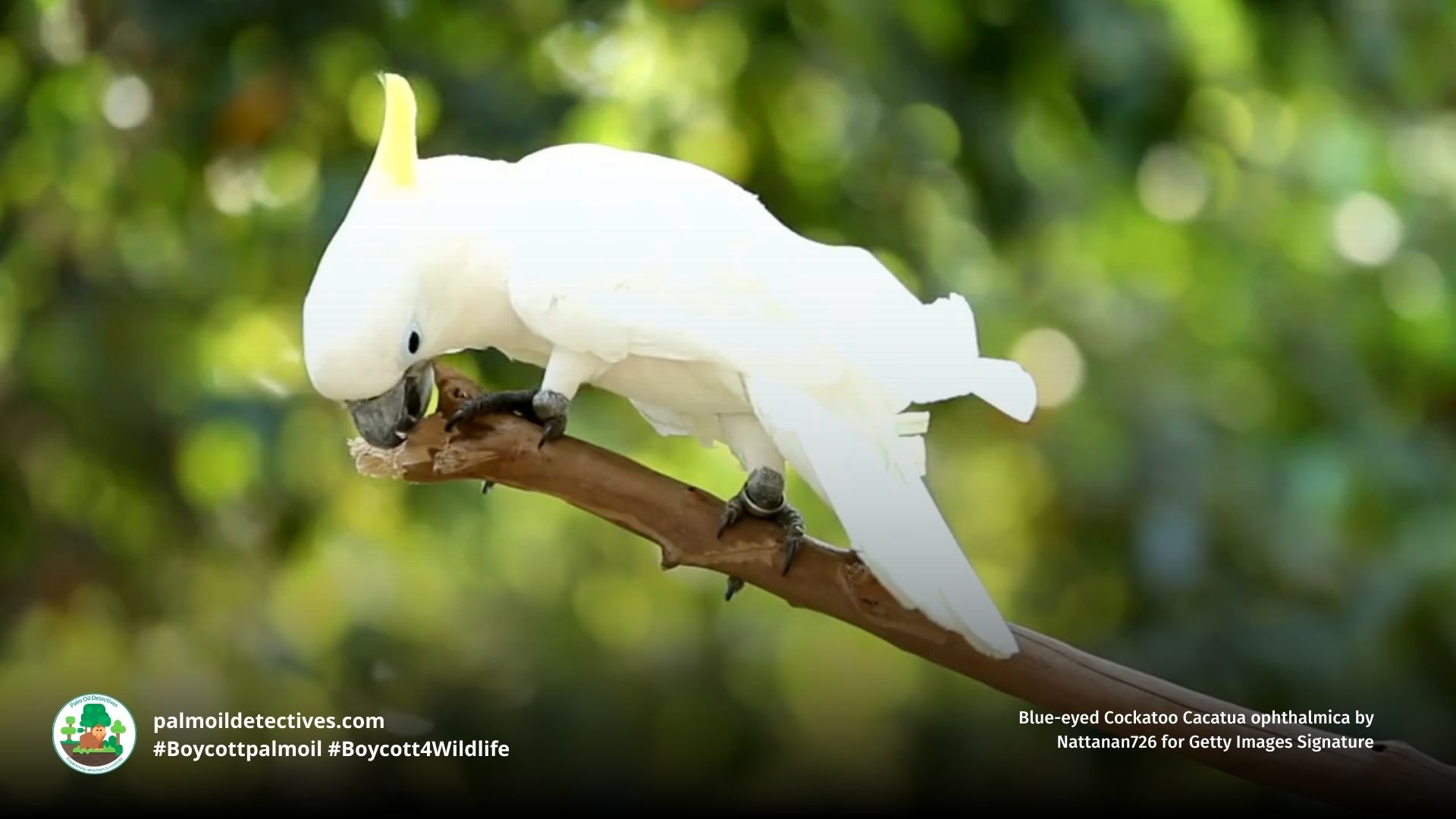
The Blue-eyed Cockatoo is a medium-sized parrot, measuring about 50 centimetres in length. They are easily recognised by their white plumage, bright blue eye rings, and striking yellow-tinged crests. Highly social, they are often seen in pairs or small flocks and communicate with loud, raucous calls (Birds of the World, n.d.; BirdLife International, 2021).
Active and playful, they forage for food in the forest canopy, showcasing remarkable agility as they climb and perch. Their social bonds and intelligent behaviour make them one of the most engaging cockatoo species to observe (Bird Conservation International, 2001).
Diet
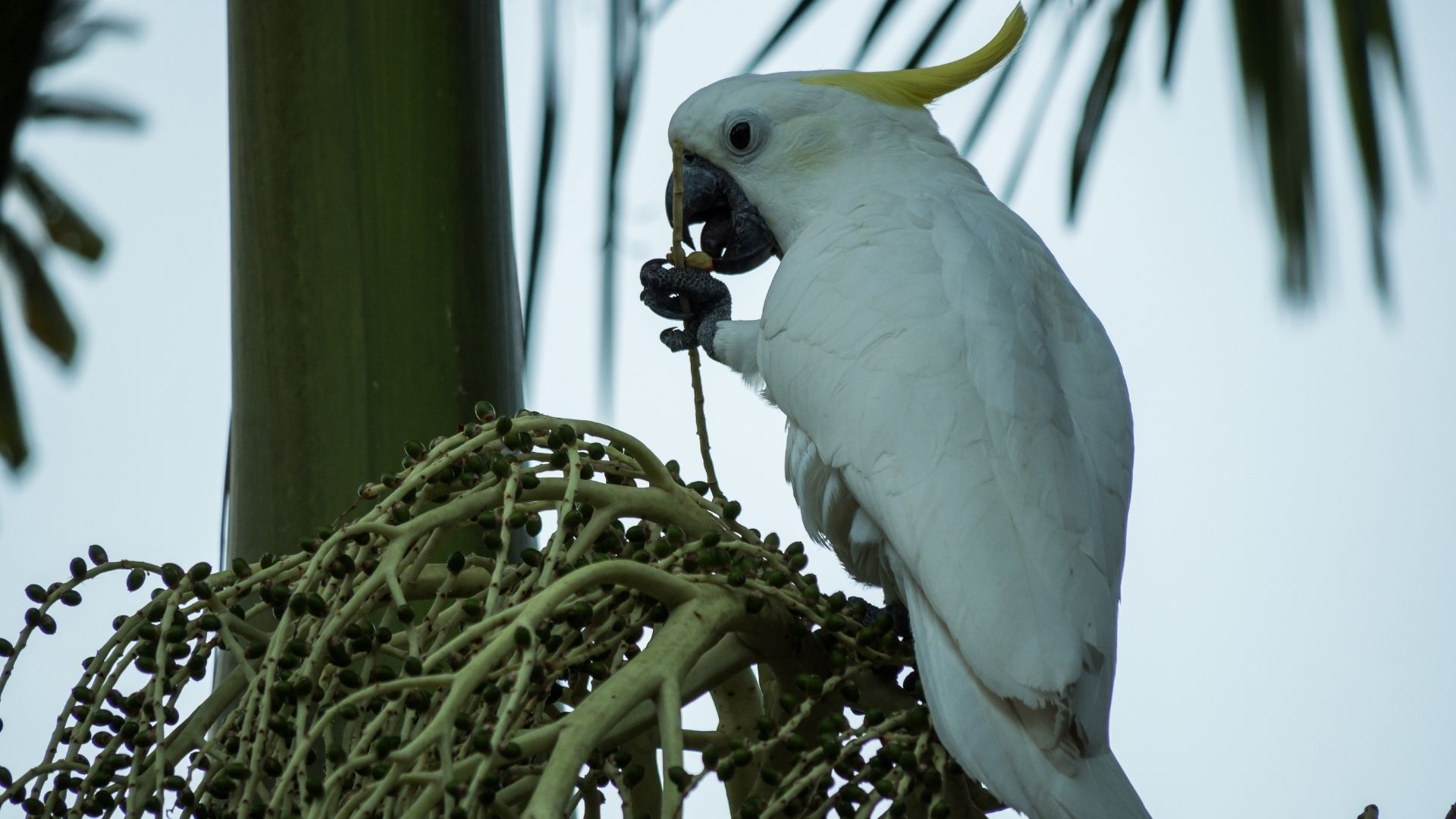
The Blue-eyed Cockatoo feeds primarily on fruits, seeds, nuts, and flowers, often foraging in large, fruiting trees. They play a crucial ecological role as seed dispersers, contributing to forest regeneration. However, deforestation has significantly reduced their access to food sources, increasing their vulnerability (IUCN, 2021; Bird Conservation International, 2001).
Reproduction and Mating
Blue-eyed Cockatoos are cavity nesters, relying on large, mature trees for nesting. They lay one to two eggs per clutch, and both parents participate in incubation and rearing the chicks. Their dependence on old-growth forests highlights the critical need to conserve these habitats (Birds of the World, n.d.; Bird Conservation International, 2001).
Geographic Range
This species is restricted to New Britain in Papua New Guinea’s Bismarck Archipelago. Their range spans the island’s eastern and central regions, where they inhabit lowland and hill forests. While they primarily rely on intact forests, they have been observed in degraded habitats with sufficient canopy cover (Bird Conservation International, 2001; IUCN, 2021).
Threats
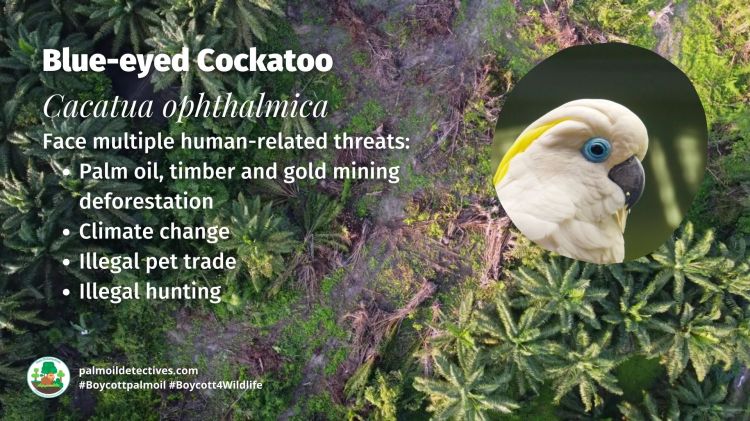
Rapid conversion of lowland forest to palm oil plantations over the last thirty years is likely to have caused a significant loss of breeding habitat. The major oil palm companies have committed to no further forest clearance but there is a risk that smaller companies will clear forest for oil palm. Industrial logging continues, as does clearance for subsistence gardens by the growing local populations. About 35% of habitat thought to be suitable for this species was cleared in 30 years or three generations (Buchanan et al. 2008).
IUCN RED LIST
Palm oil and timber deforestation
The destruction of New Britain’s forests due to out-of-control palm oil plantations, logging, and agricultural activities is the primary threat to this species (IUCN, 2021).
Illegal Hunting
Local communities hunt these cockatoos for food, contributing to population declines (Bird Conservation International, 2001).
Illegal Pet Trade
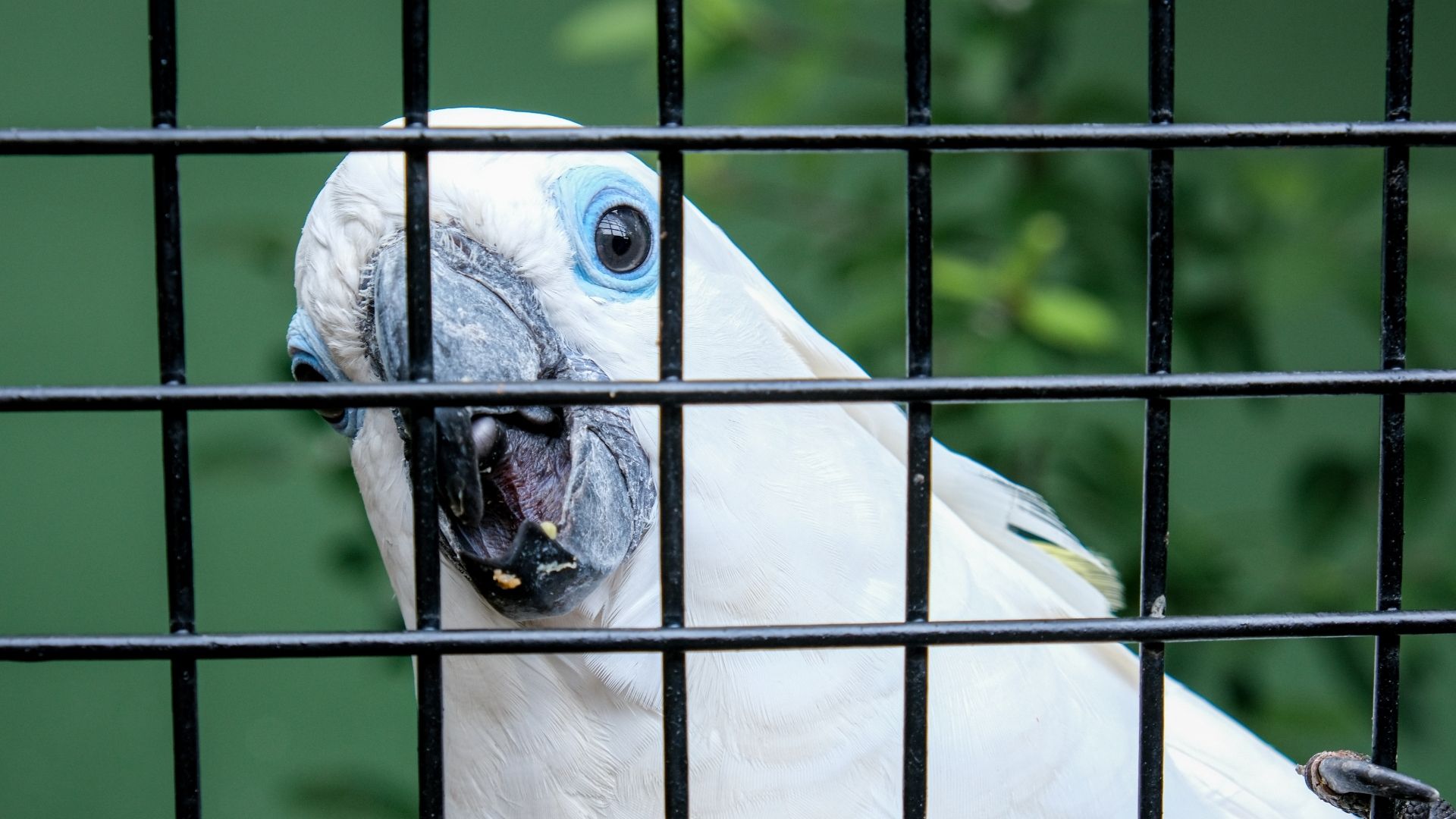
Blue-eyed Cockatoos are highly sought after for the pet trade, where their beauty and intelligence make them valuable targets. Trapping for this trade further depletes their numbers (IUCN, 2021).
Climate Change
Shifting rainfall patterns and rising temperatures due to climate change threaten the delicate forest ecosystems they depend on.
Take Action!
The survival of the Blue-eyed Cockatoo depends on protecting their forest habitats and addressing illegal hunting and trapping. By boycotting products with palm oil, supporting indigenous-led conservation initiatives, and spreading awareness, you can help ensure a future for this species. Every effort matters. #BoycottPalmOil #Boycott4Wildlife #Vegan
Further Information
BirdLife International. 2021. Cacatua ophthalmica (errata version published in 2022). The IUCN Red List of Threatened Species 2021: e.T22728429A216251055. Accessed on 19 January 2025. https://www.iucnredlist.org/species/22728429/216251055
Marsden, S. J., Pilgrim, J., & Wilkinson, R. (2001). Status, abundance and habitat use of Blue-eyed Cockatoo Cacatua ophthalmica on New Britain, Papua New Guinea. Bird Conservation International, 11(3), 213–224. https://www.researchgate.net/publication/259438192
eBird. n.d. Blue-eyed Cockatoo. Retrieved from https://ebird.org/species/blecoc1
Birds of the World. n.d. Blue-eyed Cockatoo. Retrieved from https://birdsoftheworld.org/bow/species/blecoc1/cur/introduction

Support the conservation of this species

How can I help the #Boycott4Wildlife?
Take Action in Five Ways
1. Join the #Boycott4Wildlife on social media and subscribe to stay in the loop: Share posts from this website to your own network on Twitter, Mastadon, Instagram, Facebook and Youtube using the hashtags #Boycottpalmoil #Boycott4Wildlife.
2. Contribute stories: Academics, conservationists, scientists, indigenous rights advocates and animal rights advocates working to expose the corruption of the palm oil industry or to save animals can contribute stories to the website.



3. Supermarket sleuthing: Next time you’re in the supermarket, take photos of products containing palm oil. Share these to social media along with the hashtags to call out the greenwashing and ecocide of the brands who use palm oil. You can also take photos of palm oil free products and congratulate brands when they go palm oil free.
4. Take to the streets: Get in touch with Palm Oil Detectives to find out more.
5. Donate: Make a one-off or monthly donation to Palm Oil Detectives as a way of saying thank you and to help pay for ongoing running costs of the website and social media campaigns. Donate here
Discover more from Palm Oil Detectives
Subscribe to get the latest posts sent to your email.
 Palm Oil Detectives