
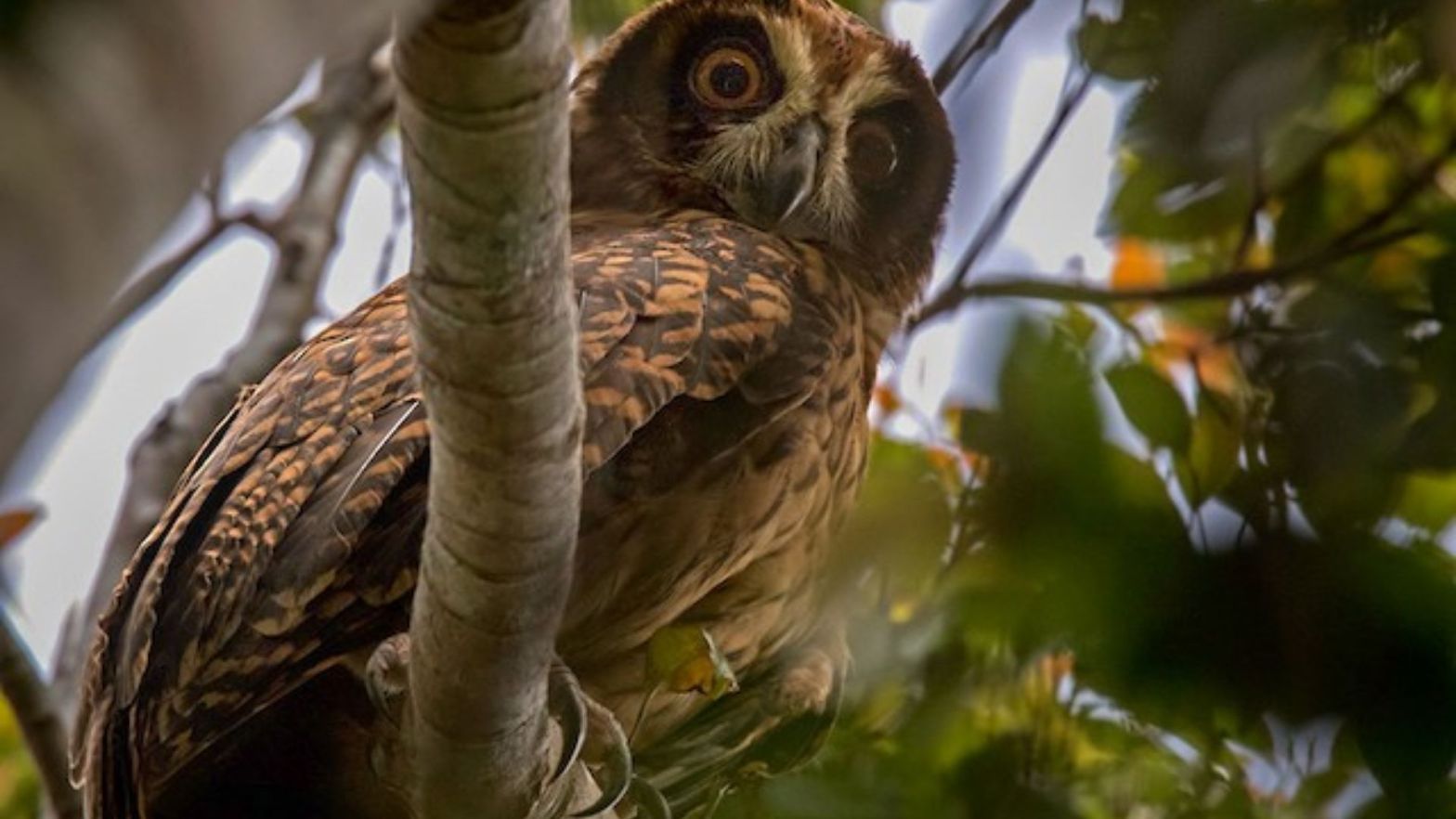
Fearful Owl Nesasio solomonensis
Location: Bougainville (Papua New Guinea), Choiseul and Santa Isabel (Solomon Islands)
IUCN Status: Near Threatened
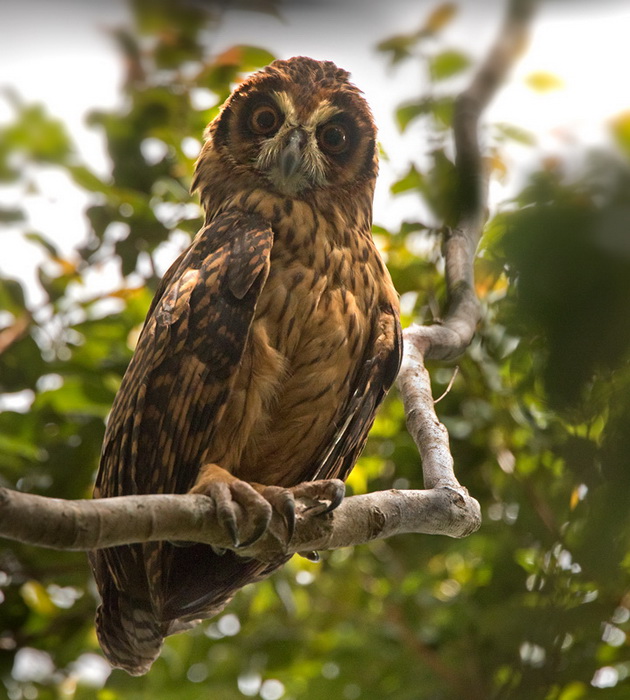
One of the least known and possibly rarest birds of prey in the world, the Fearful #Owl Nesasio solomonensis is an elusive nocturnal predator endemic to the Solomon Islands and Bougainville in Papua New Guinea. With their large size, powerful talons, and striking facial features, this species is closely related to Asio owls but has unique characteristics that set them apart. The Fearful Owl is highly dependent on intact lowland forests, making them vulnerable to habitat destruction. Palm oil deforestation and hunting pressures are putting increasing strain on their population, leading to concerns over their long-term survival. Take action and resist for this species every time you shop—go #BoycottPalmOil #Boycott4Wildlife in the supermarket.
The Fearful #Owl 🦉 of #PapuaNewGuinea 🇵🇬 is ‘Near Threatened’ due to hunting and #palmoil #deforestation. Their wide-eyed intense looks gave them their name. Support these #owls every time you shop #BoycottPalmOil 🌴⛔️ #Boycott4Wildlife @palmoildetect https://palmoildetectives.com/2021/01/31/fearful-owl-nesasio-solomonensis/
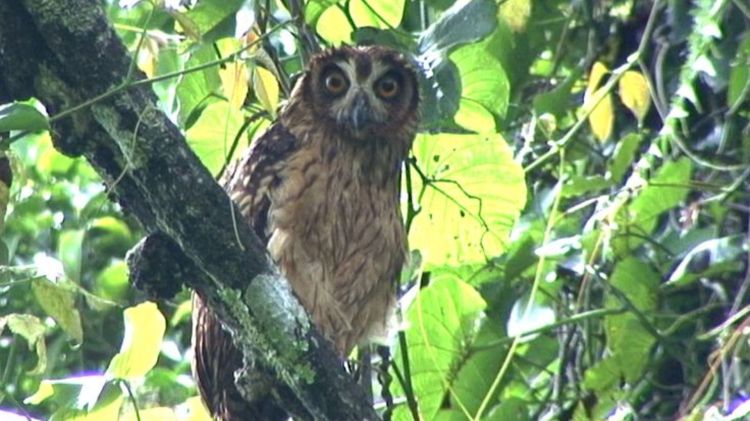
Appearance and Behaviour
The Fearful Owl is a large, robust bird of prey with a wingspan that allows them to glide effortlessly through dense forests. They have a dark facial mask, piercing orange-yellow eyes, and powerful talons suited for catching large prey. Their plumage is a mix of rich browns and mottled patterns, providing excellent camouflage among tree canopies. This species is highly territorial and is known for their low, booming calls that echo through the forest at night.
Juvenile Fearful Owls have a strikingly different appearance, covered in long, fluffy down with barred wing feathers emerging as they mature. Despite their name, they are not known to be aggressive towards humans. Rather their name is a nod to their wide-eyed and intense appearance. Like many other birds of prey, they are solitary hunters, relying on their stealth and acute vision to ambush prey. Reports suggest that they prefer undisturbed primary forests, making them particularly susceptible to habitat destruction.
Diet
Fearful Owls primarily hunt mammals, birds, and large insects. They are known to prey on the Northern Common Cuscus (Phalanger orientalis), which is also targeted by human hunters in their range. This competition for food may be contributing to their decline. While they have been observed hunting near forest edges and clearings, they are most frequently found in dense, untouched forests where prey is abundant.
Studies suggest that their reliance on larger prey makes them highly sensitive to changes in their ecosystem. As human activity disrupts natural food chains, Fearful Owls may struggle to find adequate nutrition, further threatening their population.
Reproduction and Nesting
Little is known about the breeding habits of the Fearful Owl. However, reports suggest that they nest in large tree hollows or sometimes on epiphytes high in the canopy. Nests are often located on the edge of native gardens, indicating some level of adaptability to human-altered landscapes. The only recorded juvenile was found in 1987 after their nest tree was felled. They were taken in by a local village but were not observed calling or exhibiting any signs of distress.
Given their likely slow reproductive rate and the increasing loss of nesting trees due to deforestation, their ability to sustain stable populations is in danger.
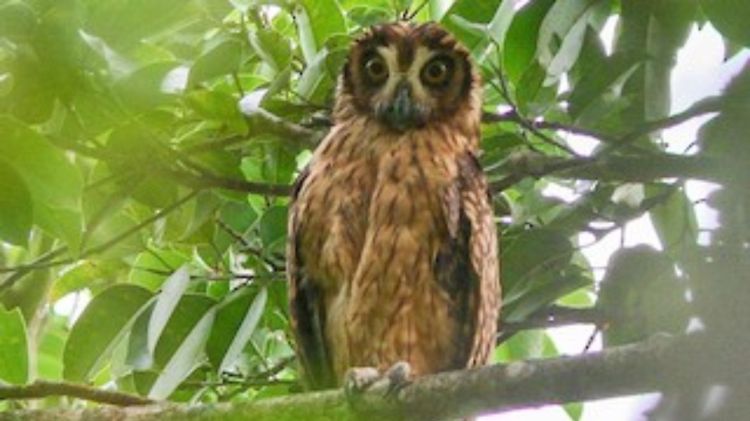
Threats
- Palm Oil Deforestation – Large-scale timber and palm oil operations have devastated lowland forests on Choiseul and Santa Isabel. Most lowland areas have either been logged or are under logging concessions.
- Hunting – The Fearful Owl’s prey species, such as the Northern Common Cuscus (Phalanger orientalis), are heavily hunted, reducing food availability (Dutson, 2011).
- Declining Population – Remote sensing data suggests that forest loss in the species’ range is leading to a steady decline, estimated at 10–19% over three generations. Sightings have become increasingly rare, with reports indicating fewer individuals in formerly well-populated areas (Woxvold & Novera, 2021).
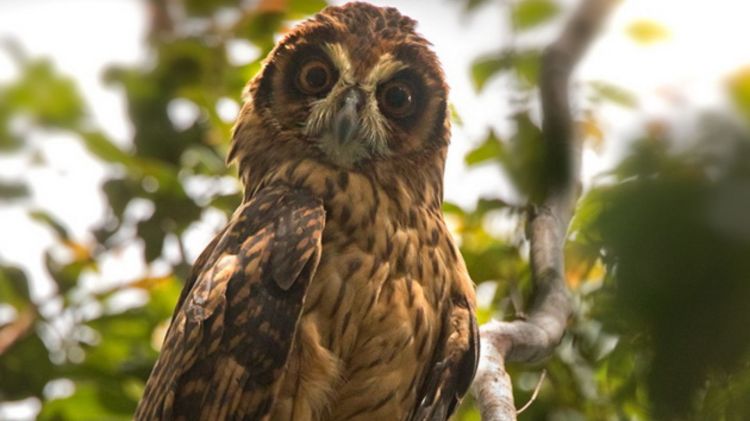
FAQs
Where can Fearful Owls be found?
This species is only found on Bougainville in Papua New Guinea and on Choiseul and Santa Isabel in the Solomon Islands. They require large tracts of intact lowland forest to thrive.
Why are they called ‘fearful’ owl?
Despite their name, Fearful Owls are not aggressive toward humans. Their name likely stems from their intense gaze, large eyes and powerful hunting abilities.
What is threatening their survival?
The biggest threats to Fearful Owls are habitat destruction and hunting pressures. Large-scale logging has removed much of their native forest, and competition with human hunters for food is further straining their population.
Take Action!
The survival of the Fearful Owl depends on protecting their rainforest home from destruction. Use your wallet as a weapon in the supermarket—go #BoycottPalmOil #Boycott4Wildlife every time you shop. Choose products that are 100% palm oil-free Subscribe to Palm Oil Detectives and spread the word, educate others, and stand against the industries that are destroying their forests. Resist and fight for their survival! #BoycottPalmOil #Boycott4Wildlife
The Fearful Owl is threatened by large-scale logging and deforestation in the lowlands, which has increased in intensity in recent years, and most of the lowlands of Choiseul and Santa Isabel have been logged or have logging concessions (Katovai et al. 2015).
IUCN Red List
Further Information
BirdLife International. 2016. Nesasio solomonensis. The IUCN Red List of Threatened Species 2016: e.T22689539A93236256. https://dx.doi.org/10.2305/IUCN.UK.2016-3.RLTS.T22689539A93236256.en. Downloaded on 31 January 2021.
Loyn, R. H., & Debus, S. (2000). Description of juvenile Fearful Owl (Nesasio solomonensis). Australian Field Ornithology, 18(7), 288-289.

Support the conservation of this species
There are no known conservation efforts in place for this species. Make art to support this forgotten creature.

How can I help the #Boycott4Wildlife?
Take Action in Five Ways
1. Join the #Boycott4Wildlife on social media and subscribe to stay in the loop: Share posts from this website to your own network on Twitter, Mastadon, Instagram, Facebook and Youtube using the hashtags #Boycottpalmoil #Boycott4Wildlife.
2. Contribute stories: Academics, conservationists, scientists, indigenous rights advocates and animal rights advocates working to expose the corruption of the palm oil industry or to save animals can contribute stories to the website.




3. Supermarket sleuthing: Next time you’re in the supermarket, take photos of products containing palm oil. Share these to social media along with the hashtags to call out the greenwashing and ecocide of the brands who use palm oil. You can also take photos of palm oil free products and congratulate brands when they go palm oil free.
4. Take to the streets: Get in touch with Palm Oil Detectives to find out more.
5. Donate: Make a one-off or monthly donation to Palm Oil Detectives as a way of saying thank you and to help pay for ongoing running costs of the website and social media campaigns. Donate here
Discover more from Palm Oil Detectives
Subscribe to get the latest posts sent to your email.
 Palm Oil Detectives