
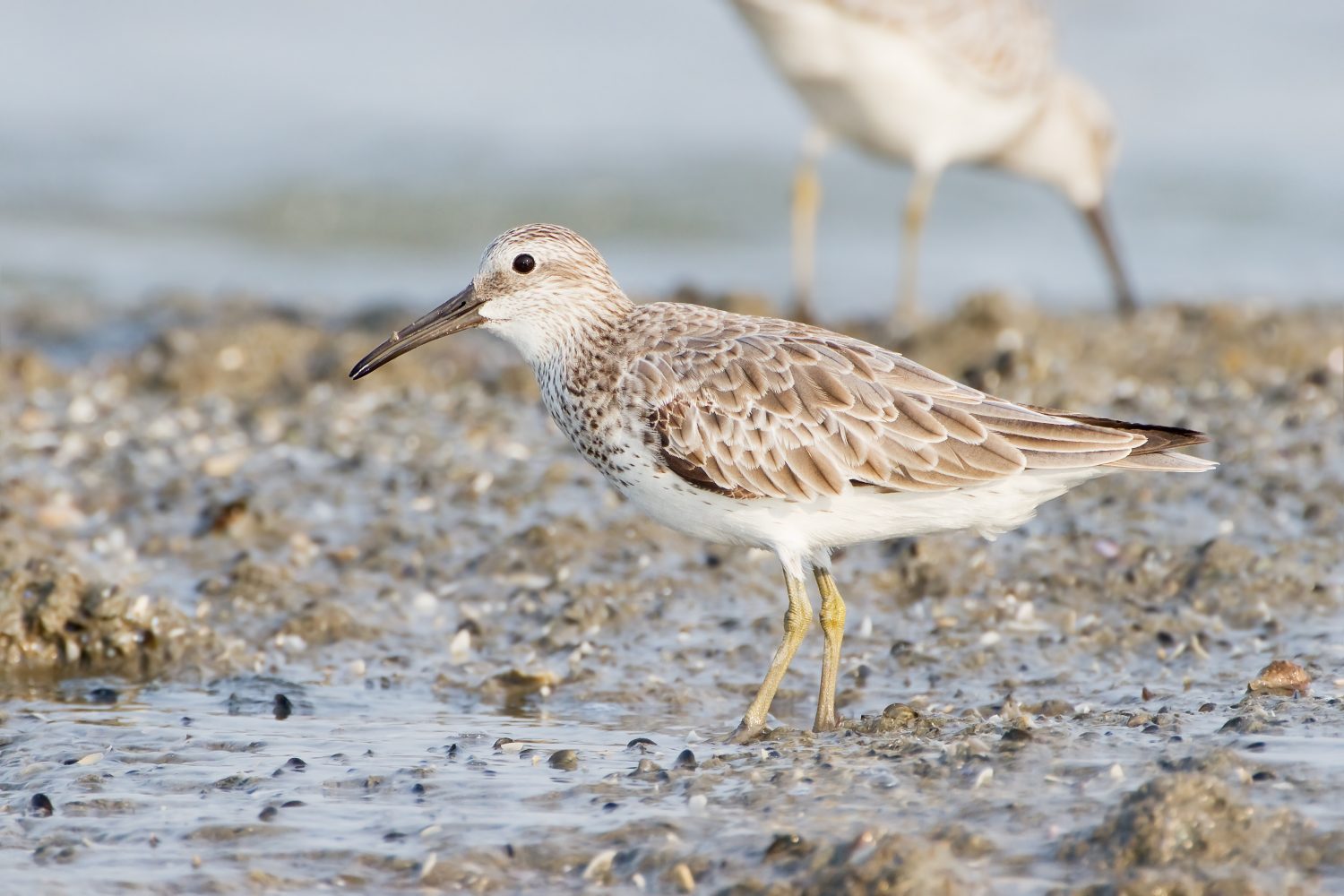
Great Knot Calidris tenuirostris
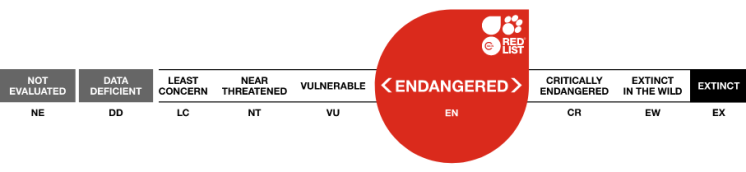
Endangered
Location: Papua New Guinea, Australia
The Great Knot breeds on gravelly areas covered with lichen and patches of herbs, heather (del Hoyo et al. 1996), Empetrum spp., Dryas spp. and Vaccinium spp.(Johnsgard 1981), or alternatively on areas with a continuous layer of lichen and scattered stunted larch Larix spp. or dwarf pine Pinus pumila (del Hoyo et al. 1996).
The breeding grounds of the Great Knot have been decimated by #agriculture and #palmoil plantations in #PapuaNewGuinea. They are now endangered with no known conservation in place. Support them with a brand #Boycott4Wildlife
Tweet
The Great Knot has been uplisted to Endangered owing to recent evidence showing a very rapid population decline caused by reclamation of non-breeding stopover grounds, and under the assumption that further proposed reclamation projects will cause additional declines in the future.
IUCN Red List
Further Information
BirdLife International. 2019. Calidris tenuirostris (amended version of 2016 assessment). The IUCN Red List of Threatened Species 2019: e.T22693359A155482913. https://dx.doi.org/10.2305/IUCN.UK.2016-3.RLTS.T22693359A155482913.en. Downloaded on 31 January 2021.
Support the conservation of this species

How can I help the #Boycott4Wildlife?
Take Action in Five Ways
1. Join the #Boycott4Wildlife on social media and subscribe to stay in the loop: Share posts from this website to your own network on Twitter, Mastadon, Instagram, Facebook and Youtube using the hashtags #Boycottpalmoil #Boycott4Wildlife.
2. Contribute stories: Academics, conservationists, scientists, indigenous rights advocates and animal rights advocates working to expose the corruption of the palm oil industry or to save animals can contribute stories to the website.






3. Supermarket sleuthing: Next time you’re in the supermarket, take photos of products containing palm oil. Share these to social media along with the hashtags to call out the greenwashing and ecocide of the brands who use palm oil. You can also take photos of palm oil free products and congratulate brands when they go palm oil free.
4. Take to the streets: Get in touch with Palm Oil Detectives to find out more.
5. Donate: Make a one-off or monthly donation to Palm Oil Detectives as a way of saying thank you and to help pay for ongoing running costs of the website and social media campaigns. Donate here
Discover more from Palm Oil Detectives
Subscribe to get the latest posts sent to your email.
 Palm Oil Detectives