
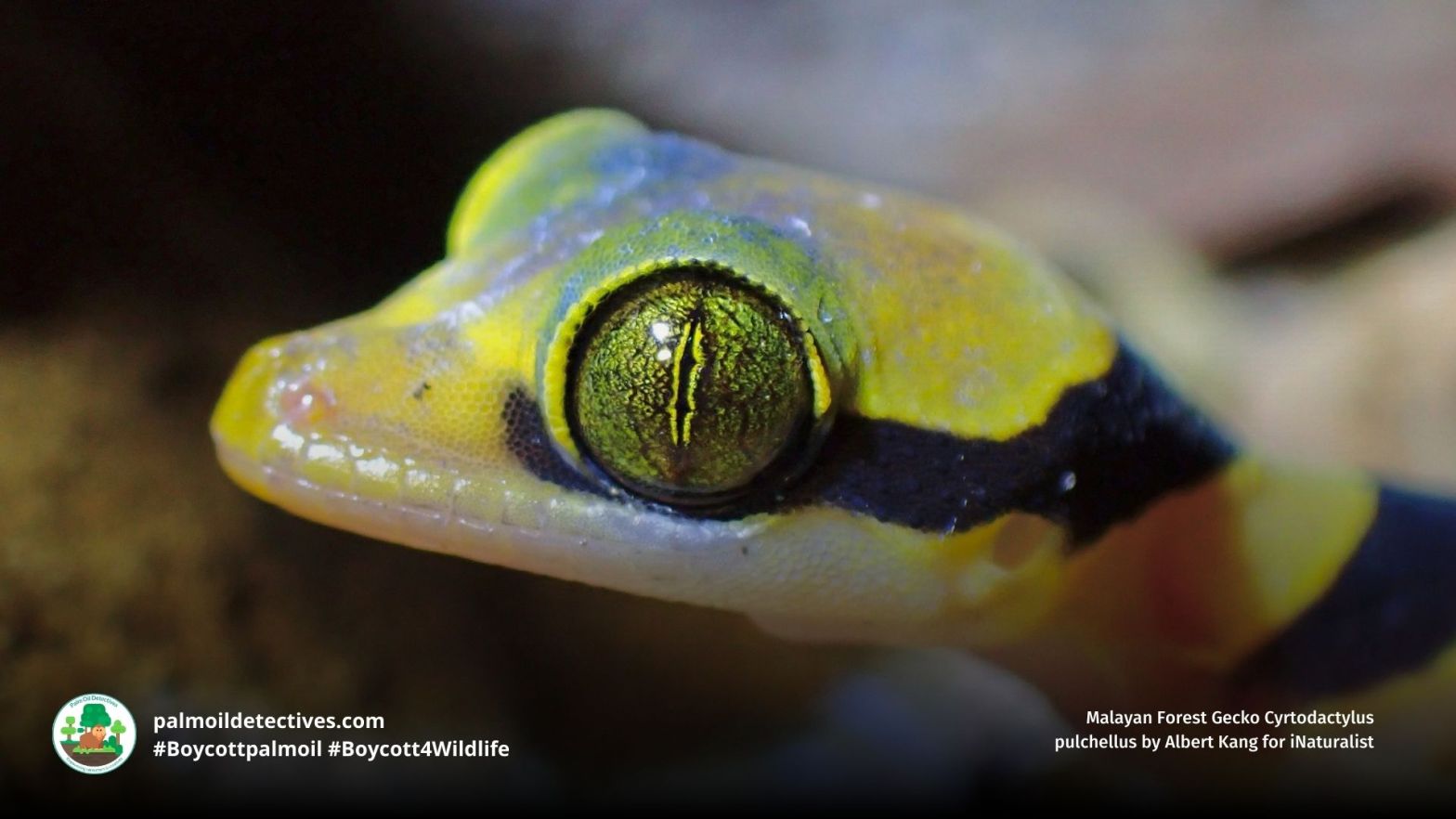
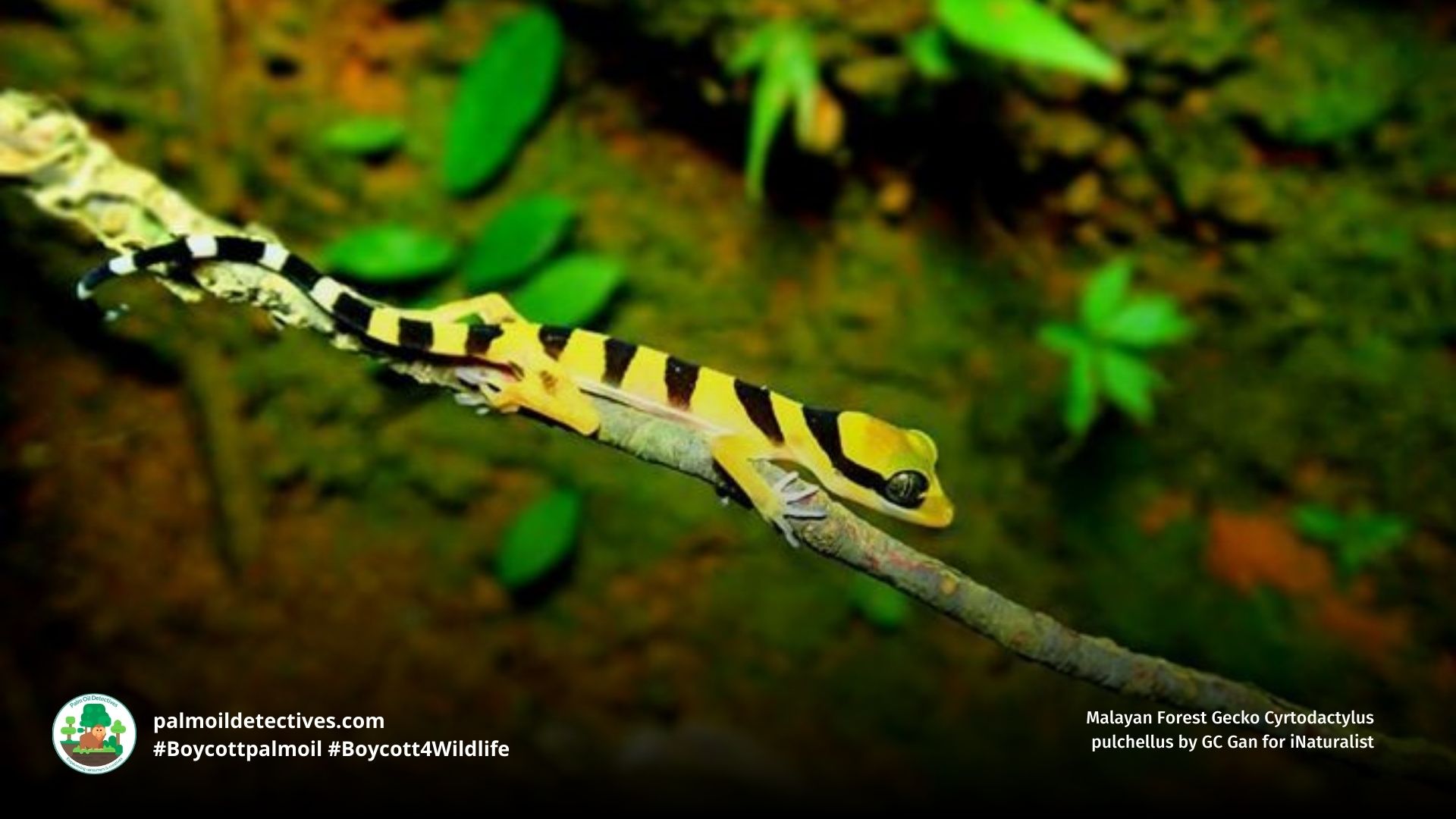
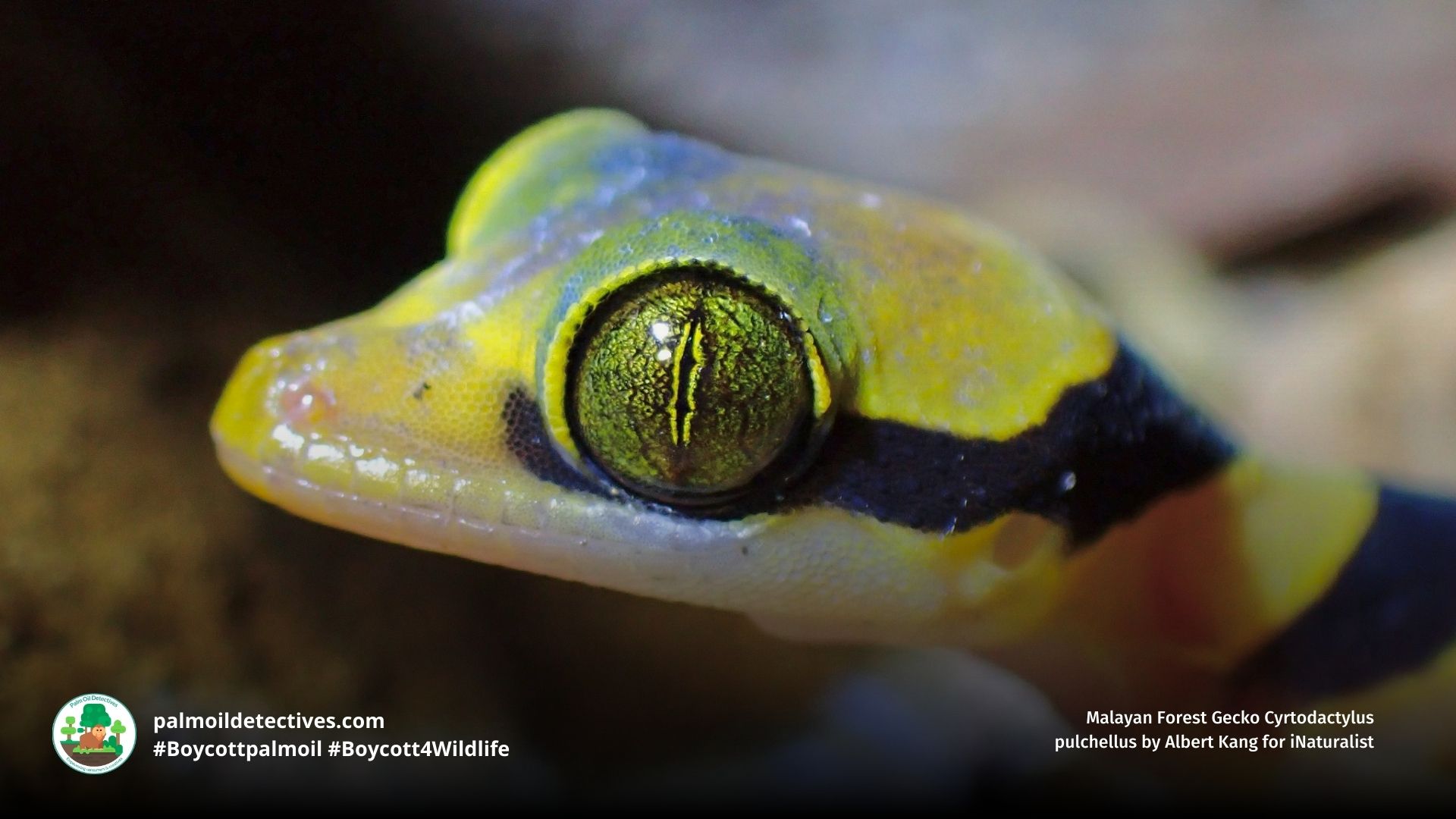
Malayan Forest Gecko Cyrtodactylus pulchellus
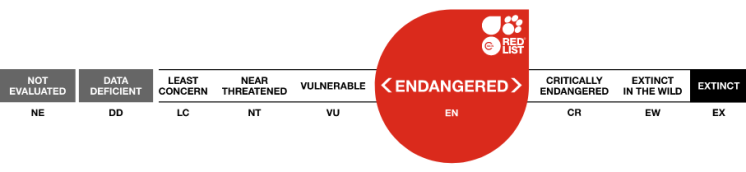
IUCN Status: Endangered
Locations: Malaysia (Peninsular Malaysia, including Penang Island)
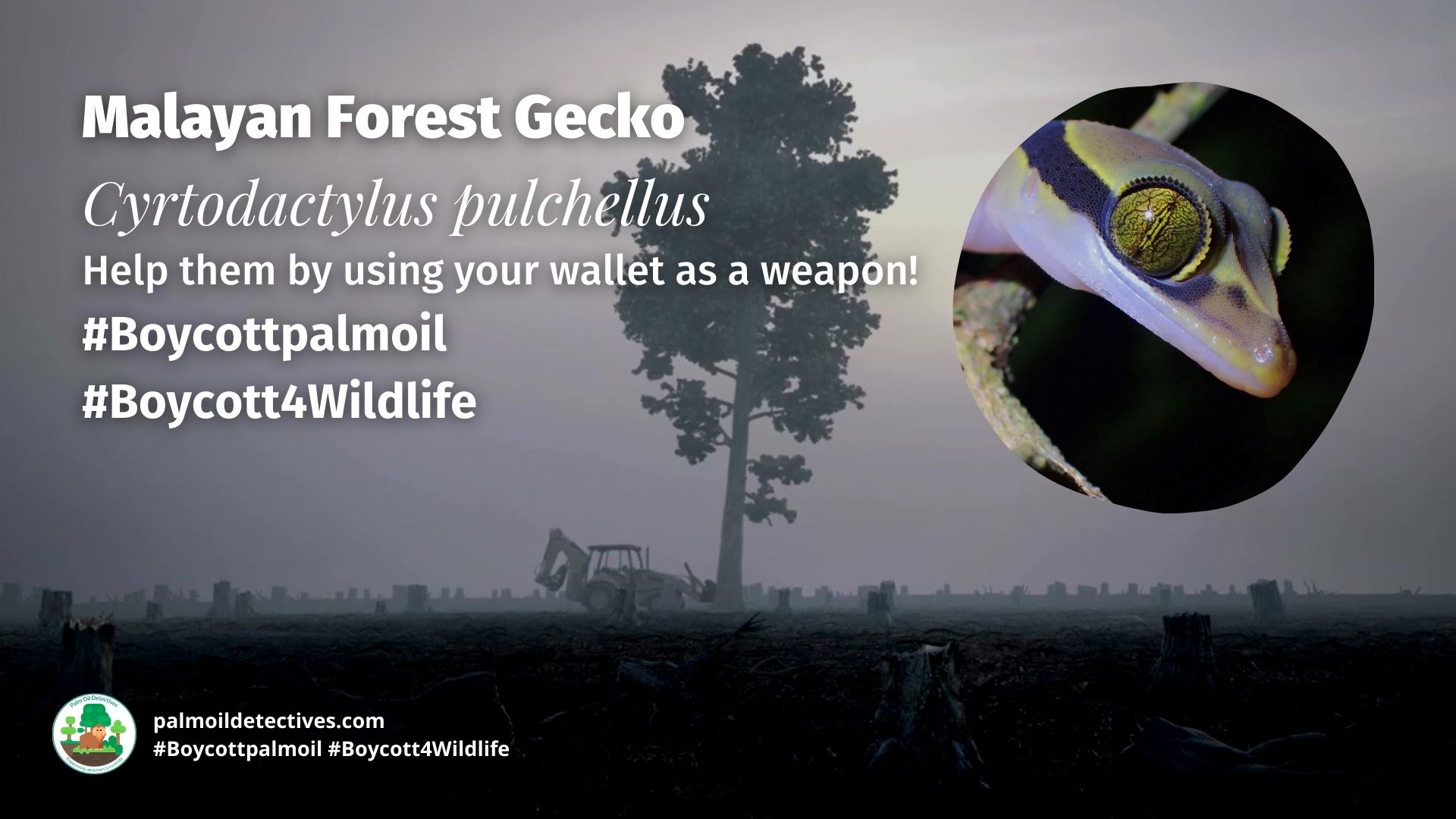
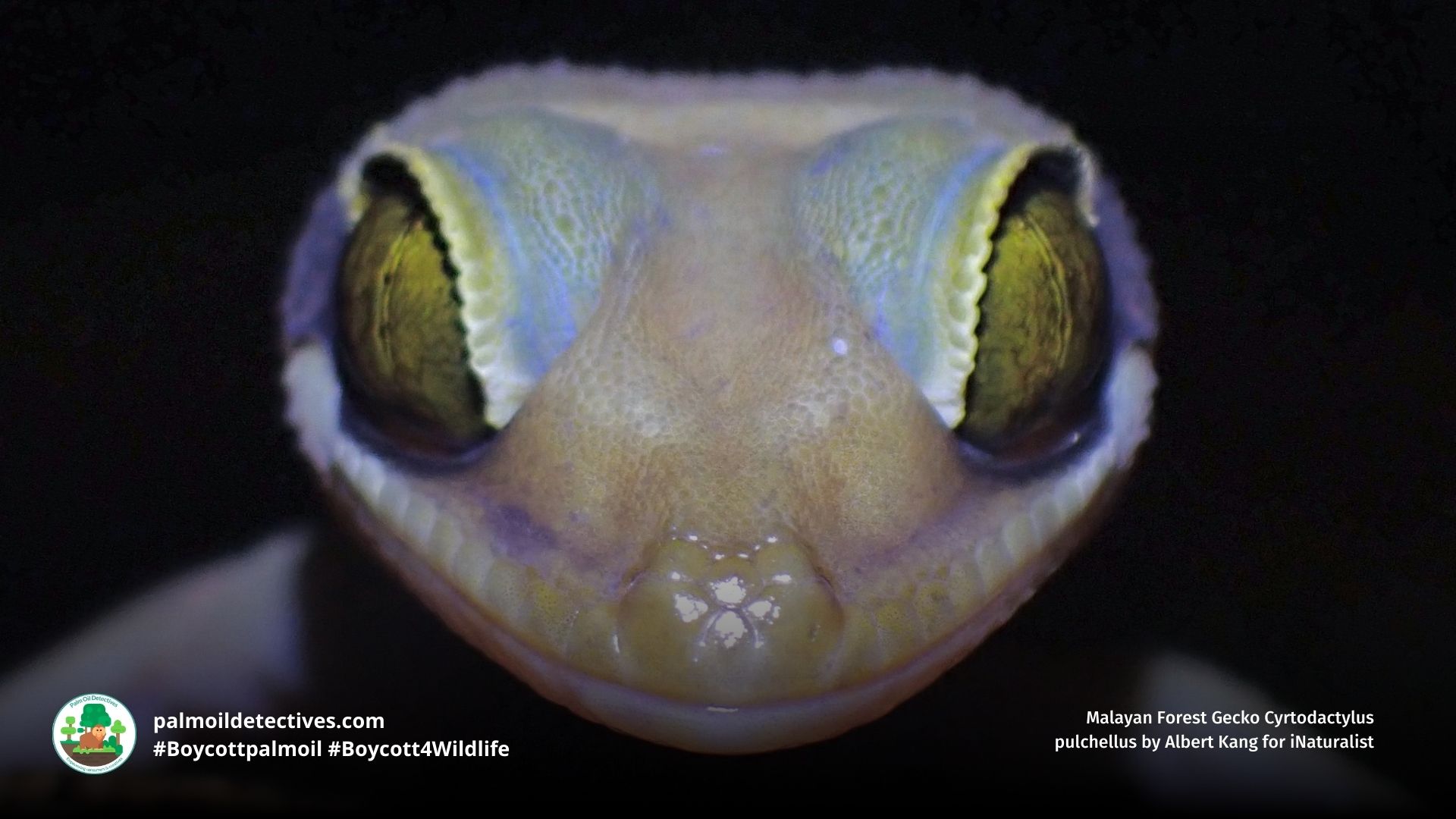
The Malayan Forest #Gecko Cyrtodactylus pulchellus, also known as the Pulchella Bent-toed Gecko, is a rare and highly specialised #reptile endemic to the dense rainforests of Peninsular #Malaysia. They thrive in the cool, humid understory, relying on pristine environments to survive. However, their future is in grave danger. Widespread deforestation for agriculture, including #palmoil plantations, #timber logging, and urban expansion, is tearing apart their habitat. As they vanish from the forests, so too does a crucial link in Malaysia’s delicate ecosystem. Every time you shop, use your wallet as a weapon #BoycottPalmOil #Boycott4Wildlife.
With glassy skin in vivid colours and large alien-like eyes, Malayan Forest #Geckos look striking 🦎😻 These #reptiles long for peace in the understory of #Malaysia’s #forests. Help them survive and #BoycottPalmOil 🌴🧐⛔️#Boycott4Wildlife @palmoildetect https://palmoildetectives.com/2021/02/05/malayan-forest-gecko-cyrtodactylus-pulchellus/
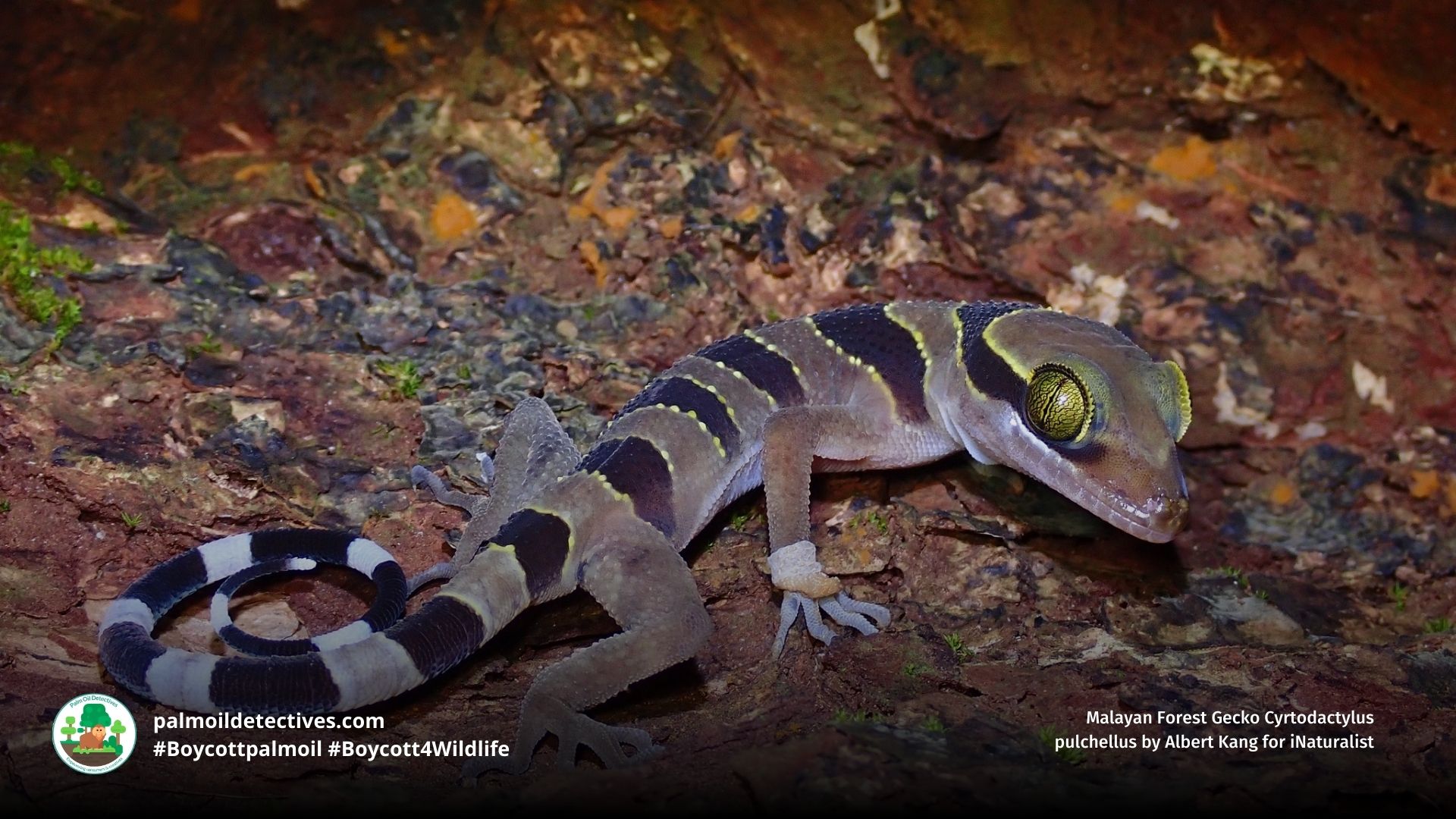
When threatened Malayan Forest #Geckos shed their tails to escape predators 🦎 They’re #endangered by the illegal #pet trade and #palmoil #deforestation in #Malaysia 🇲🇾 Campaign for their survival #BoycottPalmOil 🌴💀⛔️🙊 #Boycott4Wildlife @palmoildetect https://palmoildetectives.com/2021/02/05/malayan-forest-gecko-cyrtodactylus-pulchellus/
Appearance and Behaviour
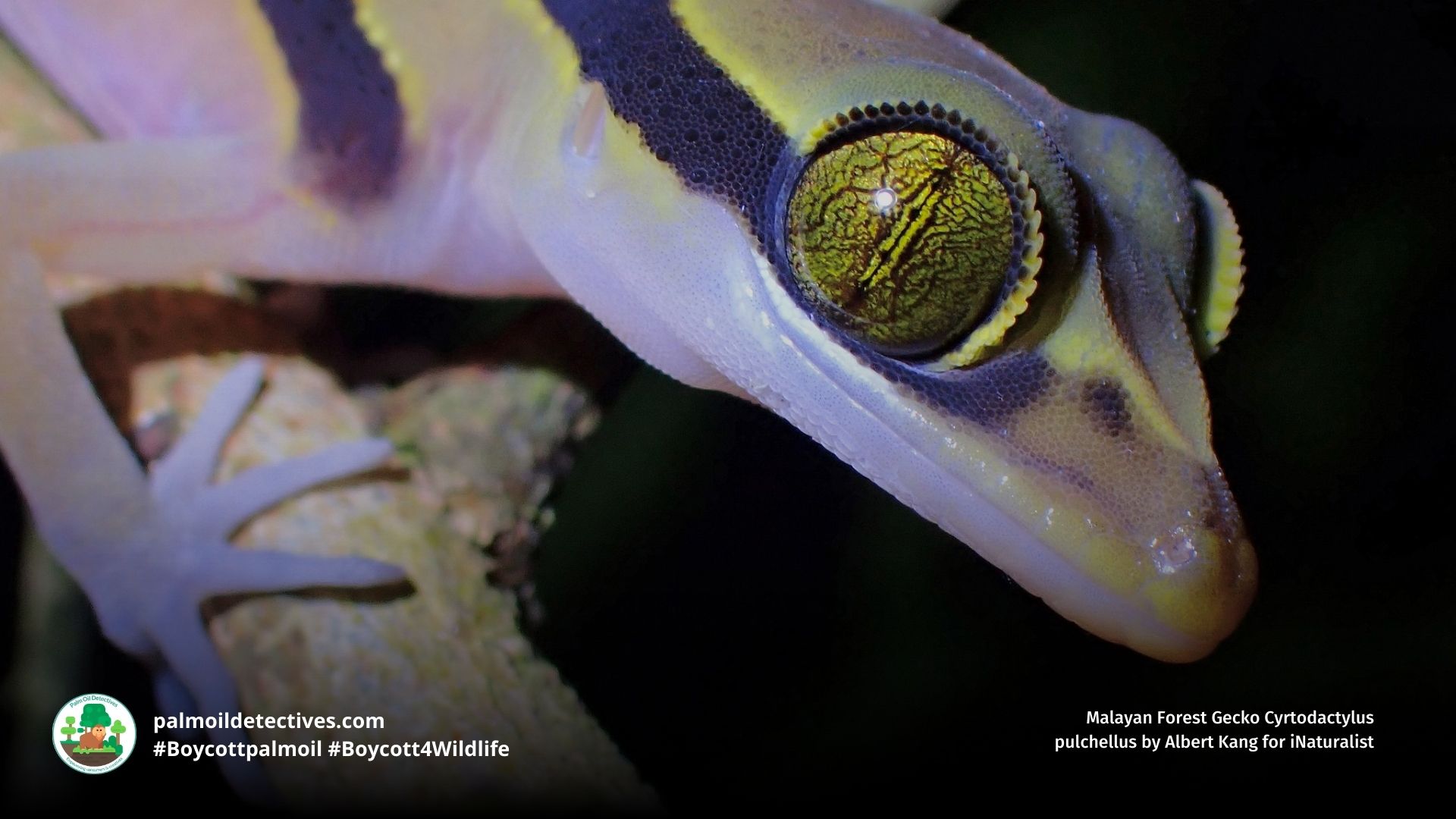
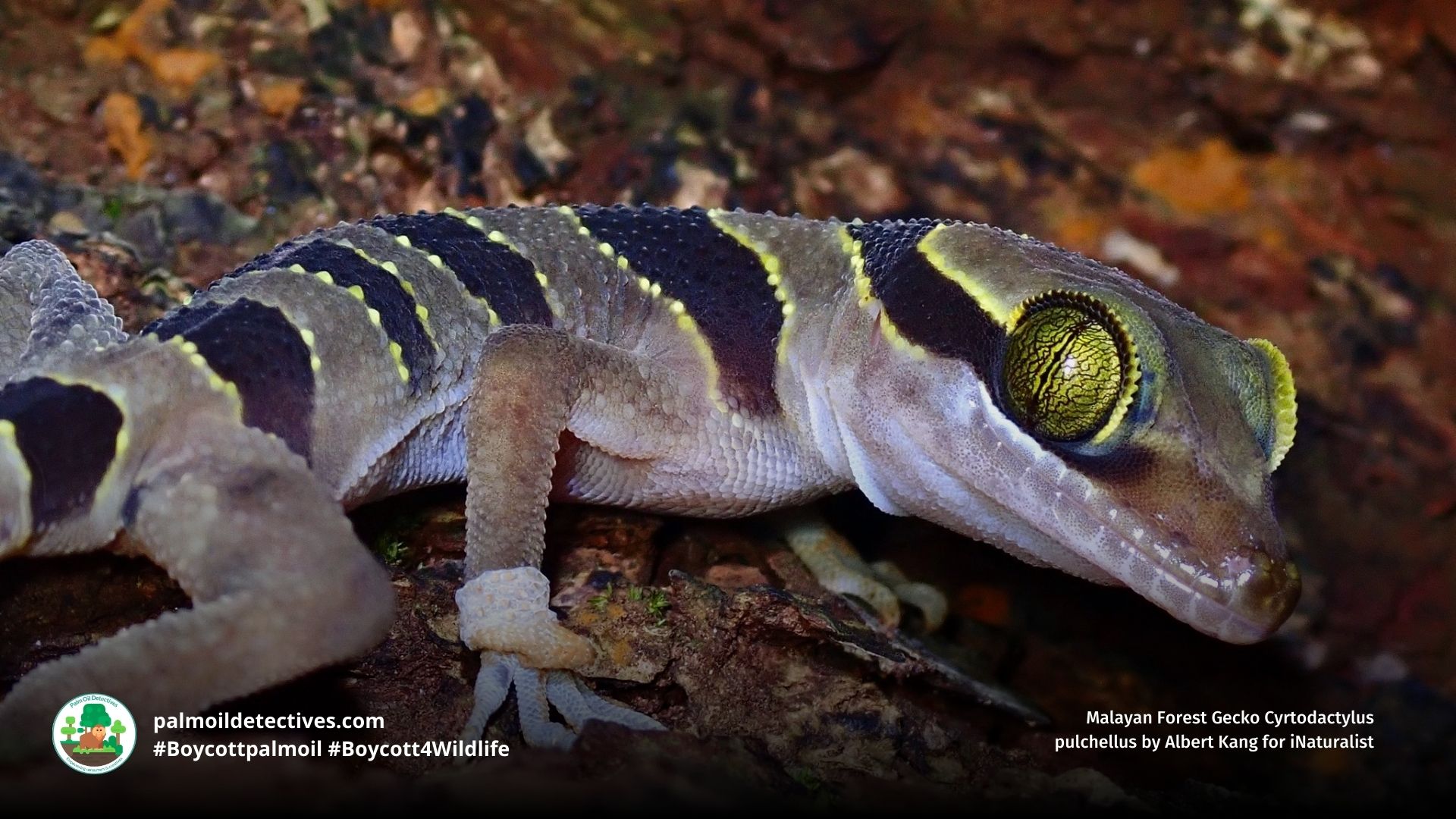
This nocturnal gecko is a vision of elegance, with an elongated body cloaked in intricate patterns of earthy browns and blacks. Their skin is smooth, almost glassy in texture, with delicate markings that shift under dim moonlight. Their striking, vertical-pupilled eyes glow a deep amber, allowing them to hunt efficiently in darkness. Unlike many other geckos, they lack the sticky toe pads that enable climbing on glass; instead, they rely on sheer muscle control and strong curved claws to scale tree trunks and rocky outcrops. When threatened, they can detach their tails in a last-ditch escape effort, leaving behind a writhing distraction while they disappear into the undergrowth.

Threats
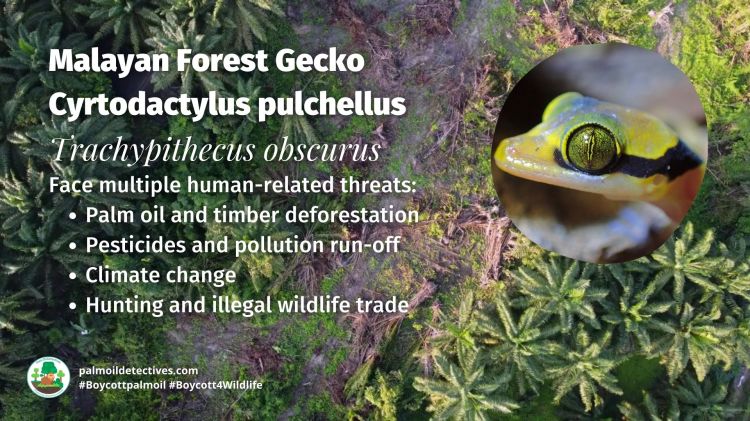
Continued collection of the Malaysian Forest Gecko for the pet trade poses a threat to their survival, as does continued hill side development for housing and agriculture on this heavily-developed island (L. Grismer and E. Quah pers. comm. 2017).
IUCN Red list
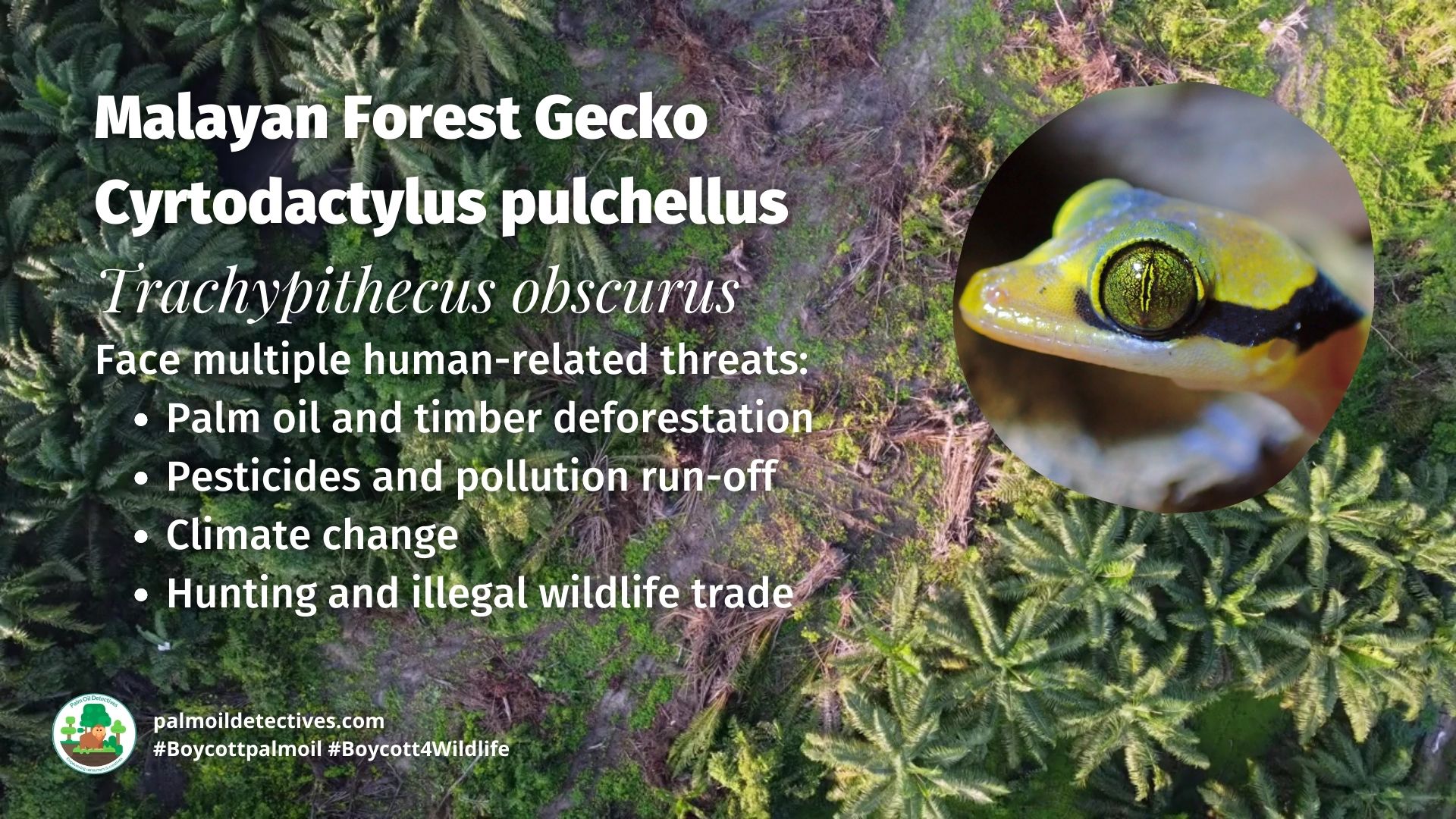
- Palm Oil Deforestation and Habitat Destruction: Malaysia’s rainforests are rapidly disappearing under the pressure of industrial agriculture, including vast oil palm and durian plantations. Logging for timber and urban expansion have left their populations fragmented, forcing them into smaller, less suitable habitats.
- Agricultural Encroachment and Pesticide Use: The spread of monoculture crops such as rubber and fruit plantations leads to pesticide contamination, which devastates insect populations and, in turn, threatens insectivorous species like the Malayan Forest Gecko.
- Illegal Wildlife and Pet Trade: Although not as widely targeted as other reptiles, some Cyrtodactylus species are captured for the exotic pet trade, which can decimate local populations. It is important to not participate in collecting these animals as pets in the wild so that their species survives.
- Climate Change: Increasing temperatures and altered rainfall patterns disrupt their microhabitats, making it harder for them to find shelter and food.
Diet
The Malayan Forest Gecko is a voracious insectivore, feeding on moths, crickets, beetles, spiders, and other small invertebrates. These lizards rely on ambush tactics, using their sharp vision to track movement before striking with lightning speed. Their diet plays an essential role in maintaining insect populations in their ecosystems.
Reproduction and Mating
Little is known about their exact breeding patterns, but like most Cyrtodactylus species, they are oviparous, laying small clutches of eggs in hidden crevices, under leaf litter, or within tree hollows. The humid rainforest climate helps incubate their eggs, which hatch after several weeks into fully formed miniature replicas of the adults.
Geographic Range
Endemic to Peninsular Malaysia, including Penang Island, this gecko has an extremely limited and fragmented range. They are mostly found in primary rainforests and undisturbed hill slopes, avoiding urban and agricultural areas.
FAQs
Why is the Malayan Forest Gecko endangered?
Their primary threat is habitat loss due to deforestation for agriculture, particularly palm oil, timber and durian plantations. Fragmentation of their habitat isolates populations, making survival increasingly difficult. Climate change and the illegal pet trade are also contributing to their decline.
Do Malayan Forest Geckos make good pets?
Absolutely not. Keeping wild-caught geckos as pets is harmful and unethical for the long term survival of this species. Many reptiles in the pet trade are illegally captured, leading to population declines and immense suffering. If you truly care about these geckos, actively campaign against their capture and protect their rainforest homes instead.
How can I help protect them?
• Boycott products containing palm oil, which drives deforestation.
• Support organisations working to protect Malaysia’s forests.
• Avoid keeping exotic pets and educate others about the dangers of wildlife trafficking.
• Demand stronger environmental protections from governments and corporations.
Take Action!
Use your purchasing power to protect rainforest species like the Malayan Forest Gecko. Every time you shop, choose ethical products and say no to deforestation—#BoycottPalmOil #Boycott4Wildlife.
Further Information
Grismer, L. L., Wood, P. L., Jr., Le, M. D., Quah, E. S. H., & Grismer, J. L. (2020). Evolution of habitat preference in 243 species of Bent-toed geckos (Genus Cyrtodactylus Gray, 1827) with a discussion of karst habitat conservation. Ecology and Evolution, 10(24), 13717–13730. https://doi.org/10.1002/ece3.6961
Grismer, L. L., Wood, P. L. Jr., Quah, E., & Anuar, S. (2012). A phylogeny and taxonomy of the Thai-Malay Peninsula bent-toed geckos of the Cyrtodactylus pulchellus complex (Squamata: Gekkonidae): Combined morphological and molecular analyses with descriptions of seven new species. Zootaxa, 3520(1), 1–55. https://doi.org/10.11646/zootaxa.3520.1.1
Kathriner, A., Bauer, A. M., O’Shea, M., & Sanchez, C. (2014). Hiding in plain sight: A new species of bent-toed gecko (Squamata: Gekkonidae: Cyrtodactylus) from West Timor, collected by Malcolm Smith in 1924. Zootaxa, 3900(4), 555–568. https://doi.org/10.11646/zootaxa.3900.4.6
Quah, E. & Grismer, L. 2018. Cyrtodactylus pulchellus. The IUCN Red List of Threatened Species 2018: e.T101949746A101949754. https://dx.doi.org/10.2305/IUCN.UK.2018-2.RLTS.T101949746A101949754.en. Downloaded on 05 February 2021.
Wikipedia contributors. (n.d.). Malayan forest gecko. Wikipedia, retrieved from https://en.wikipedia.org/wiki/Malayan_forest_gecko
Support the conservation of this species
This animal has no protections in place. Read about other forgotten species here. Create art to support this forgotten animal or raise awareness about them by sharing this post and using the #Boycottpalmoil #Boycott4Wildlife hashtags on social media. Also you can boycott palm oil in the supermarket.
Further Information

How can I help the #Boycott4Wildlife?
Take Action in Five Ways
1. Join the #Boycott4Wildlife on social media and subscribe to stay in the loop: Share posts from this website to your own network on Twitter, Mastadon, Instagram, Facebook and Youtube using the hashtags #Boycottpalmoil #Boycott4Wildlife.
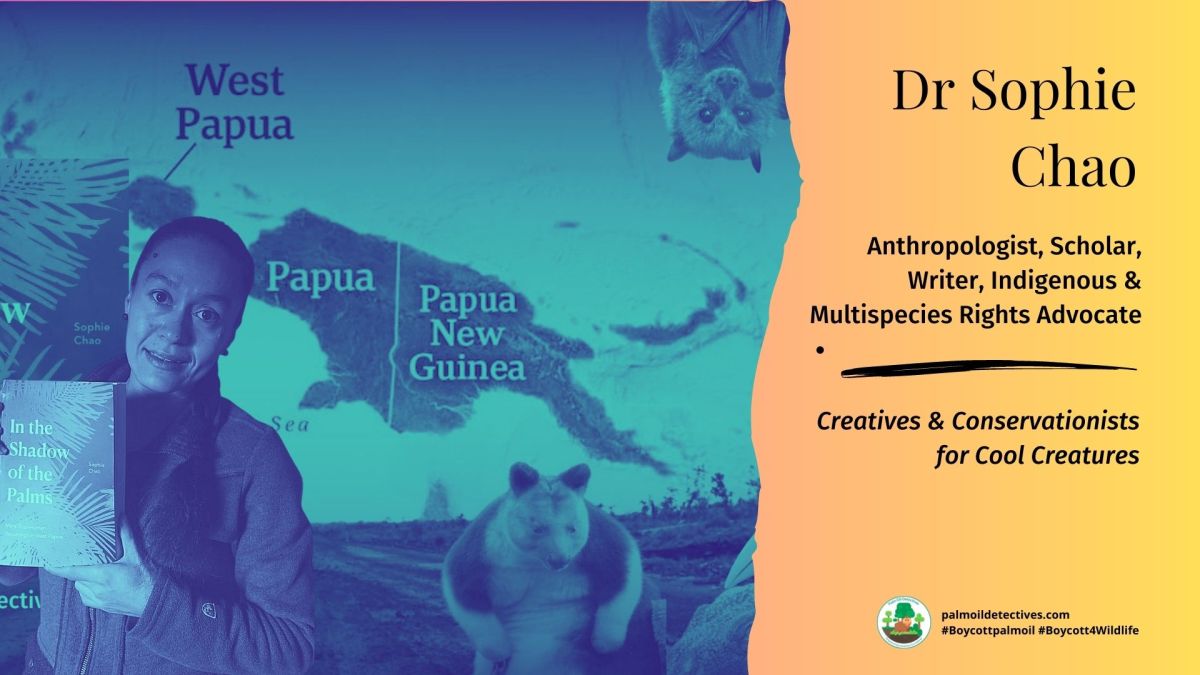
2. Contribute stories: Academics, conservationists, scientists, indigenous rights advocates and animal rights advocates working to expose the corruption of the palm oil industry or to save animals can contribute stories to the website.



3. Supermarket sleuthing: Next time you’re in the supermarket, take photos of products containing palm oil. Share these to social media along with the hashtags to call out the greenwashing and ecocide of the brands who use palm oil. You can also take photos of palm oil free products and congratulate brands when they go palm oil free.
4. Take to the streets: Get in touch with Palm Oil Detectives to find out more.
5. Donate: Make a one-off or monthly donation to Palm Oil Detectives as a way of saying thank you and to help pay for ongoing running costs of the website and social media campaigns. Donate here
Discover more from Palm Oil Detectives
Subscribe to get the latest posts sent to your email.
 Palm Oil Detectives