
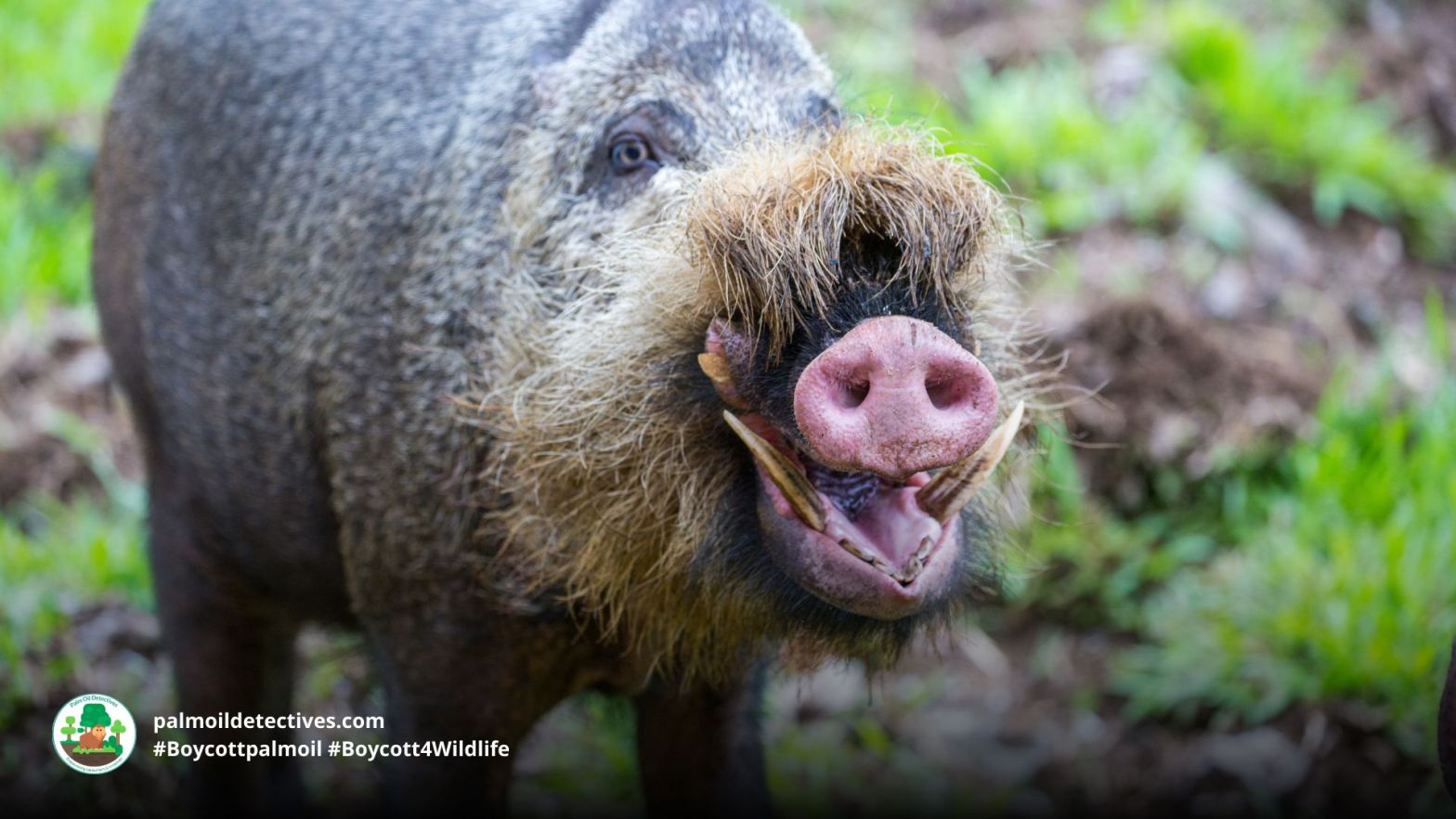
Bearded Pig Sus barbatus
IUCN Red List Status: Vulnerable
Location: Bearded Pigs are found across Borneo, the Malay Peninsula, Sumatra, and the Philippines, including Palawan. They inhabit tropical rainforests, mangroves, peat swamps, and logged forests, sometimes venturing into agricultural areas.
Extant (resident): Brunei Darussalam; Indonesia (Kalimantan, Sumatera); Malaysia (Peninsular Malaysia, Sarawak, Sabah)
Possibly Extinct: Philippines
Extinct: Singapore
A gardener of the forests in #Asia the Bearded Pig is a vital part of many ecosystems. #Extinct in some countries, they are #Vulnerable due to #deforestation for #palmoil and #rubber. Help them and #Boycottpalmoil #Boycott4Wildlife @palmoildetect https://palmoildetectives.com/2021/02/15/bearded-pig-sus-barbatus/
Gentle gardeners of #Borneo, Bearded #Pigs 🐷🩷 have distinguished and cheeky whiskers that set them apart from others. They’re #vulnerable due to #palmoil #deforestation, fight for their survival #Boycottpalmoil 🌴⛔️ #Boycott4Wildlife @palmoildetect https://palmoildetectives.com/2021/02/15/bearded-pig-sus-barbatus/
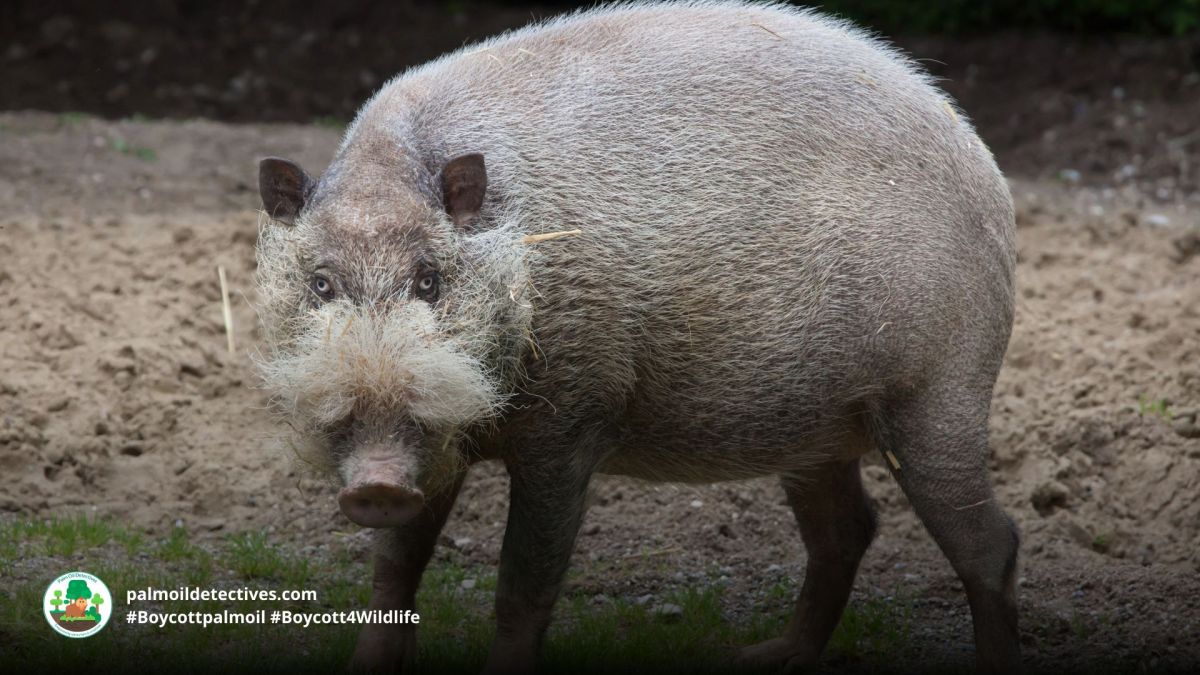
Bearded Pigs have hair which grows along their lower jaws that resembles a beard – giving them their distinctive whiskery appearance and their name. The Bearded Pig is an integral part of Southeast Asia’s tropical ecosystems, known for their unique appearance and critical role as seed dipersers in forest health. They are the only pig species known to migrate, moving in synchrony with fruiting seasons. However, they face mounting threats from habitat loss for palm oil and timber, along with illegal hunting, and disease. Help them to survive and use your wallet as a weapon in the supermarket #BoycottPalmOil #Boycott4Wildlife
Appearance and Behaviour
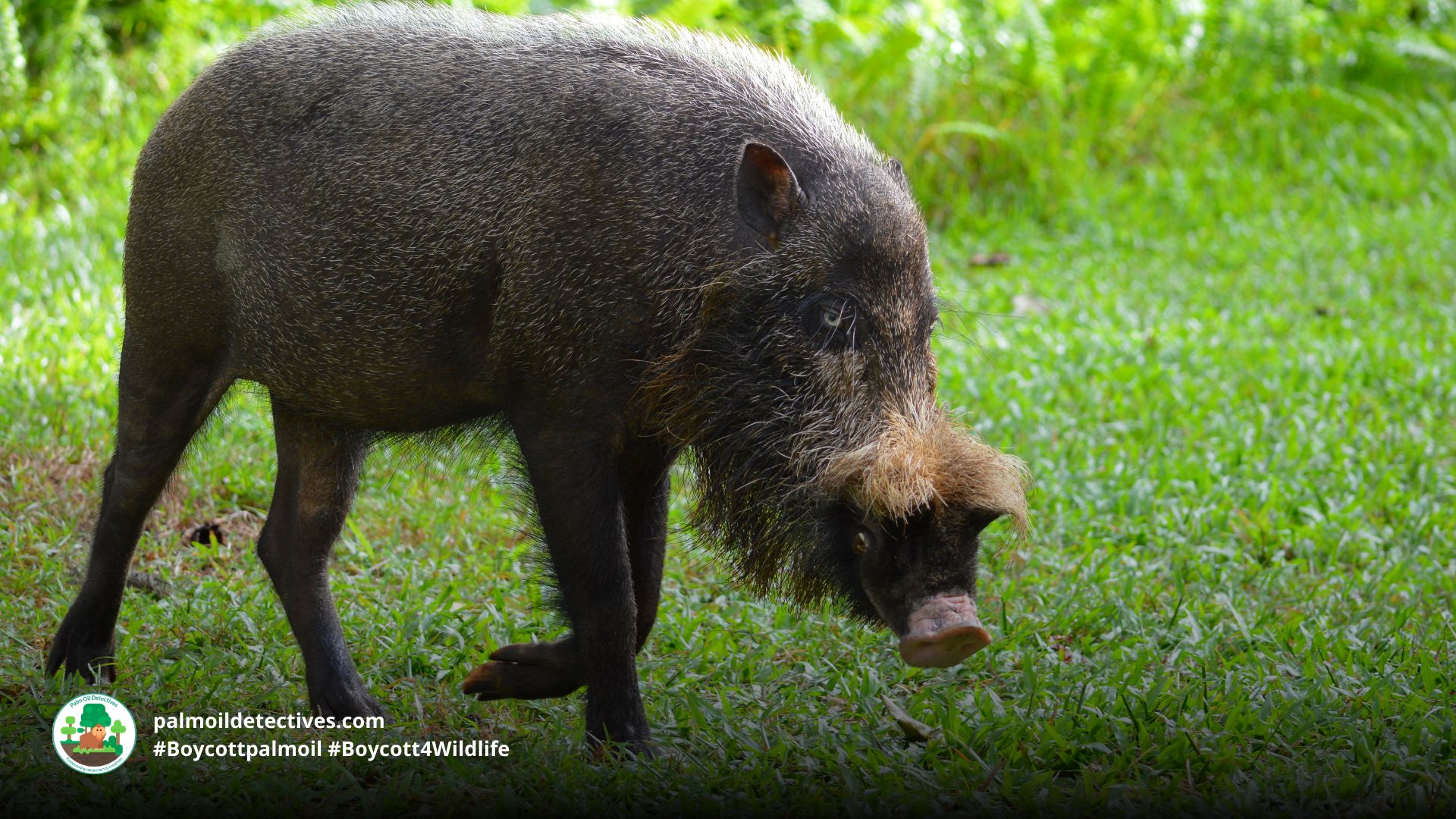
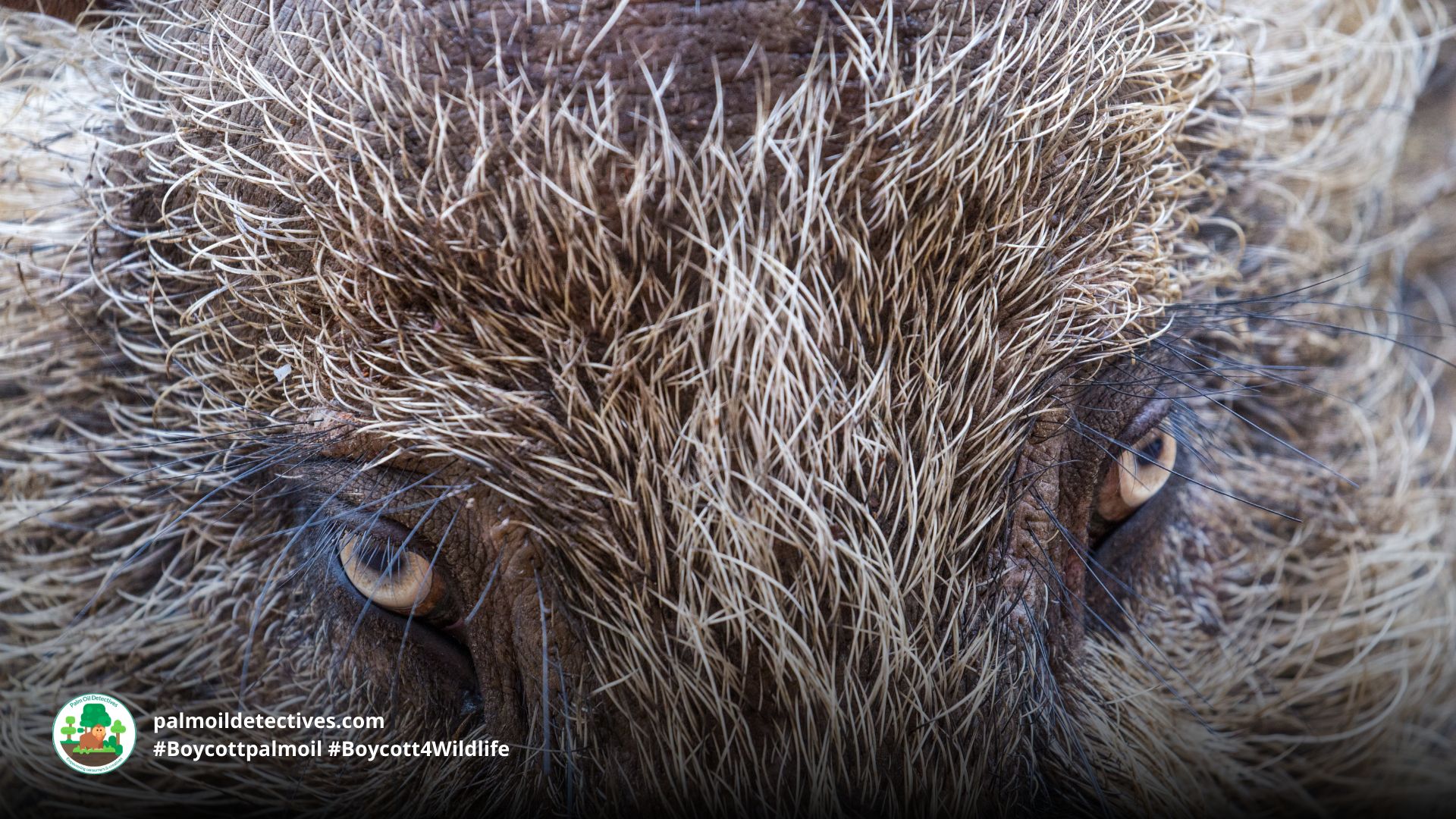
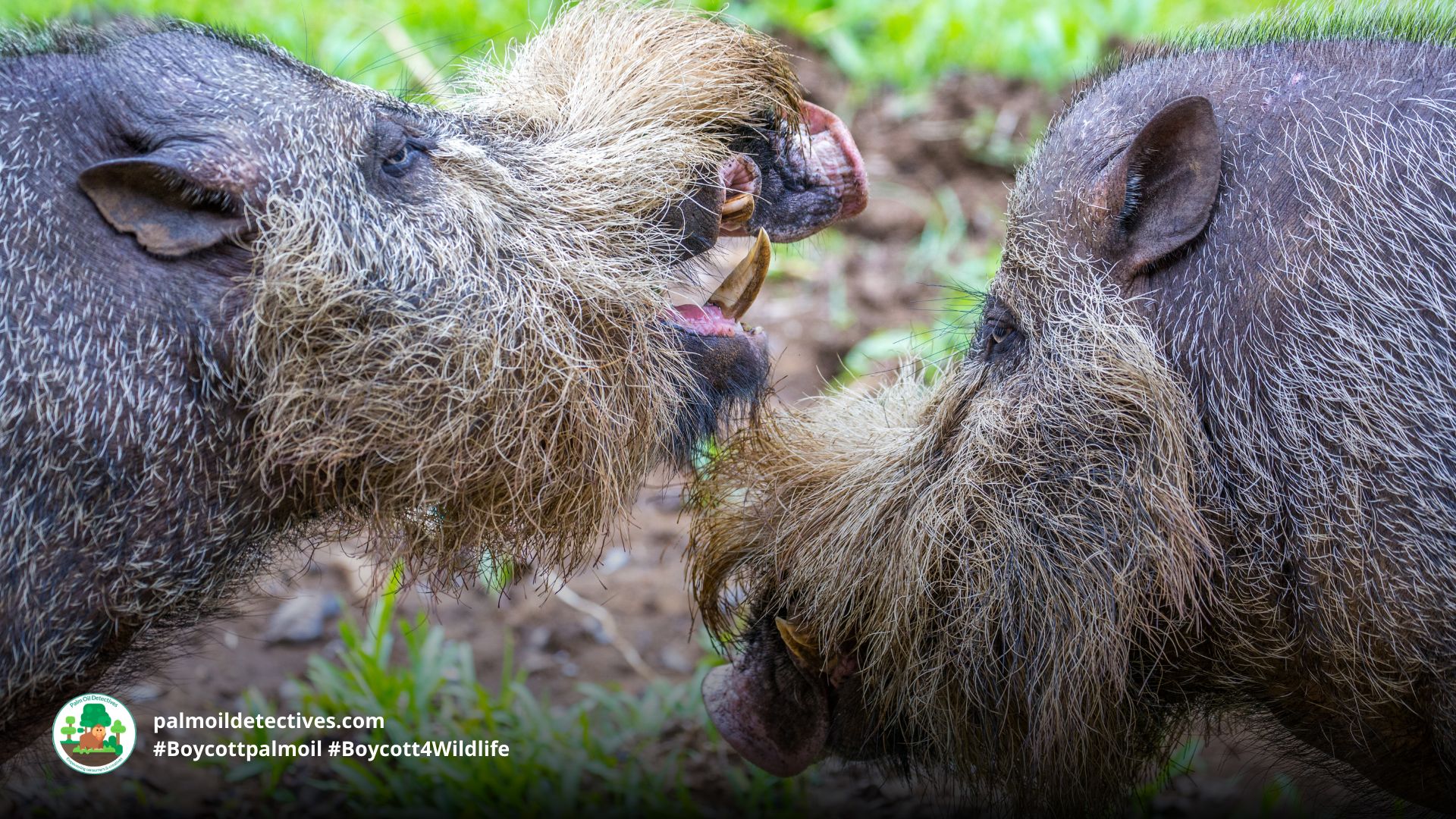
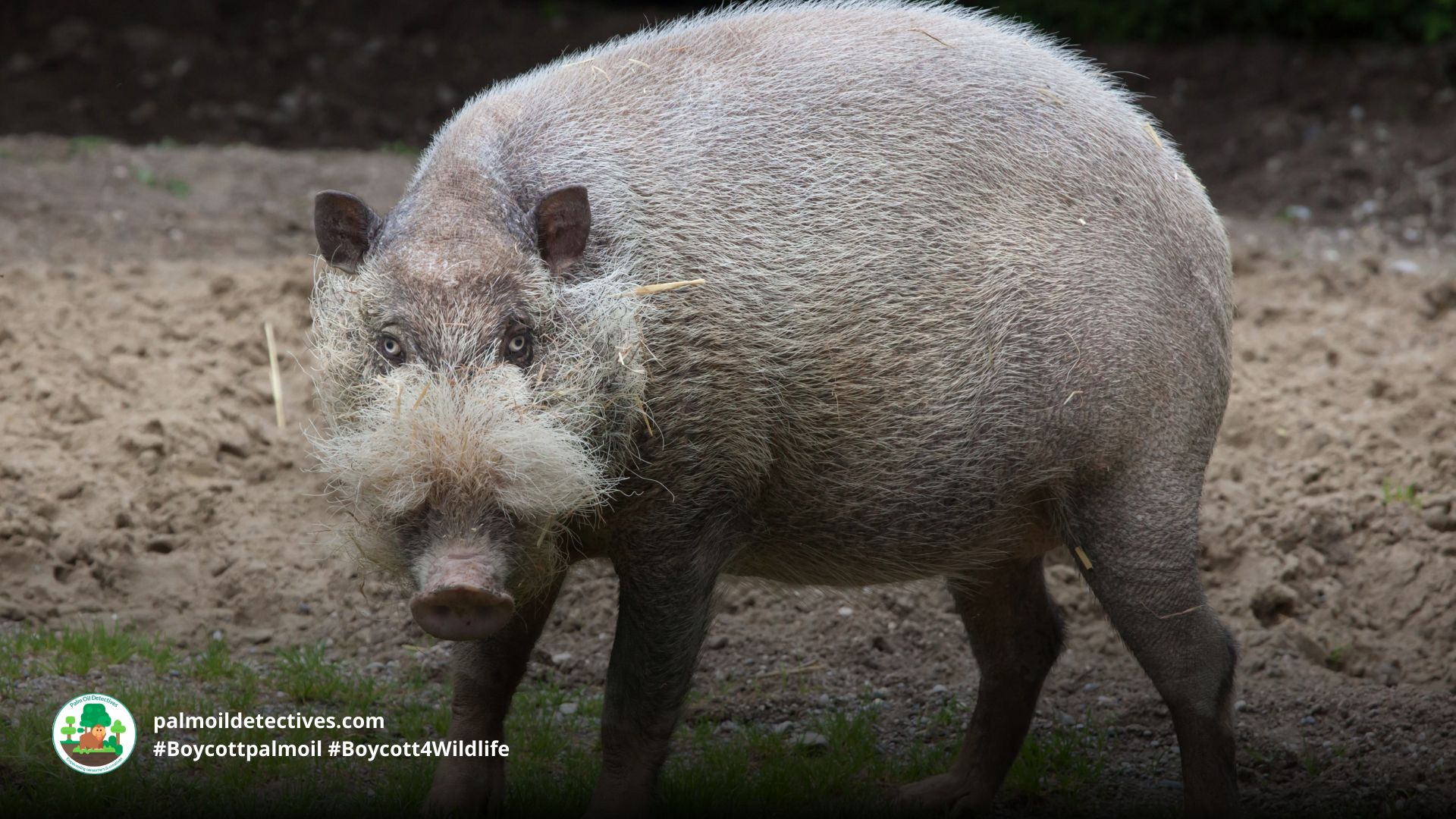
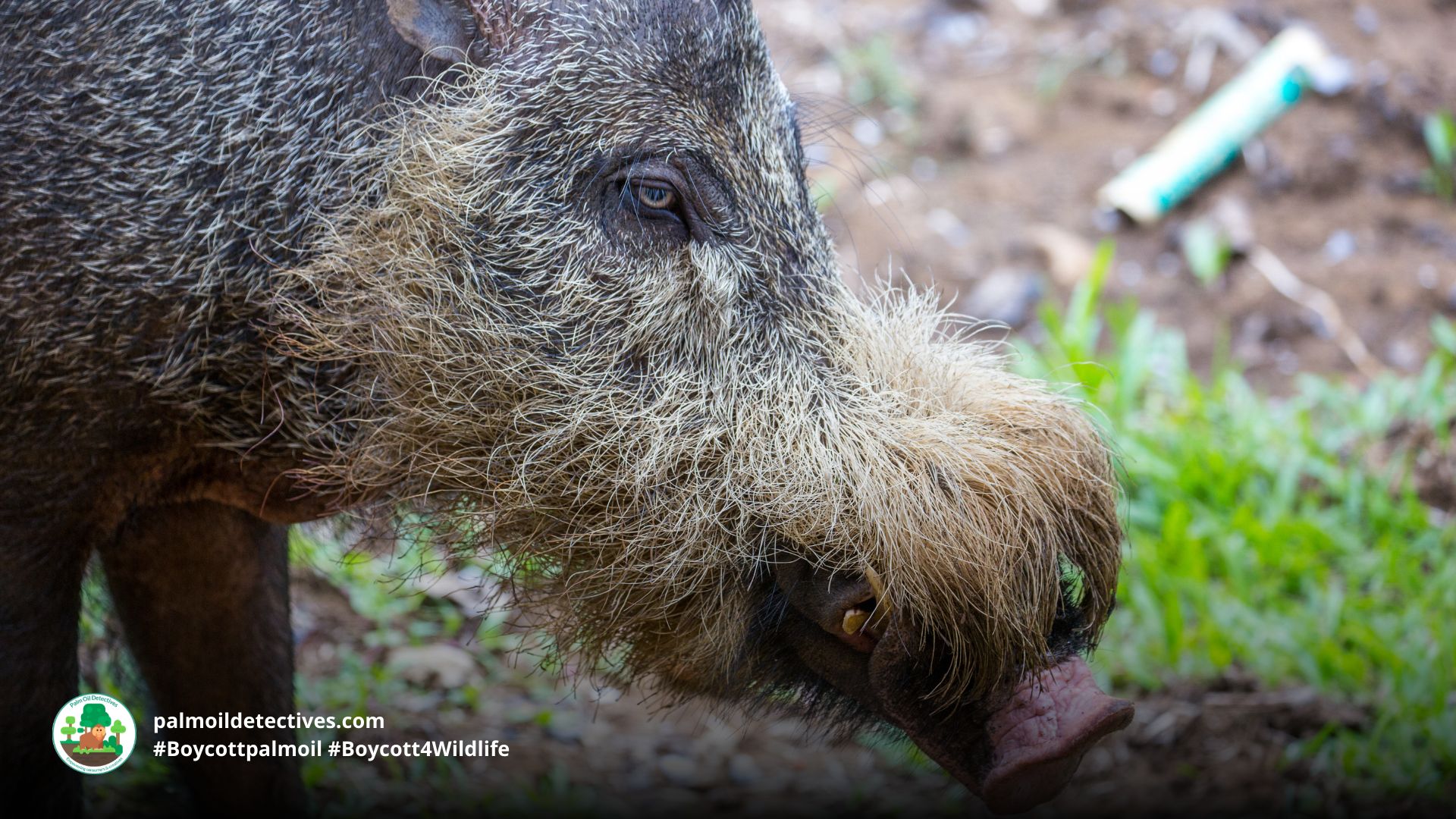
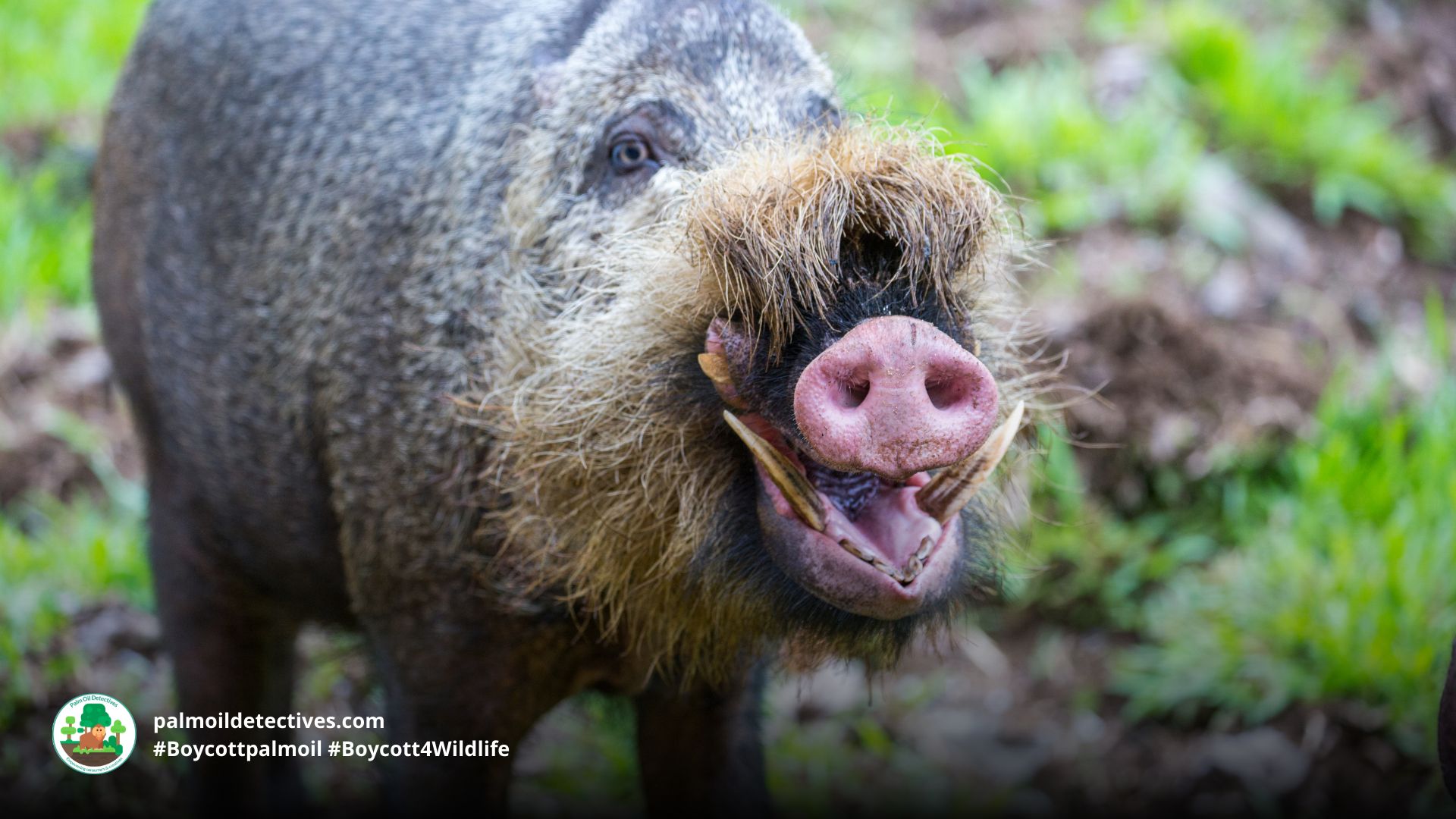
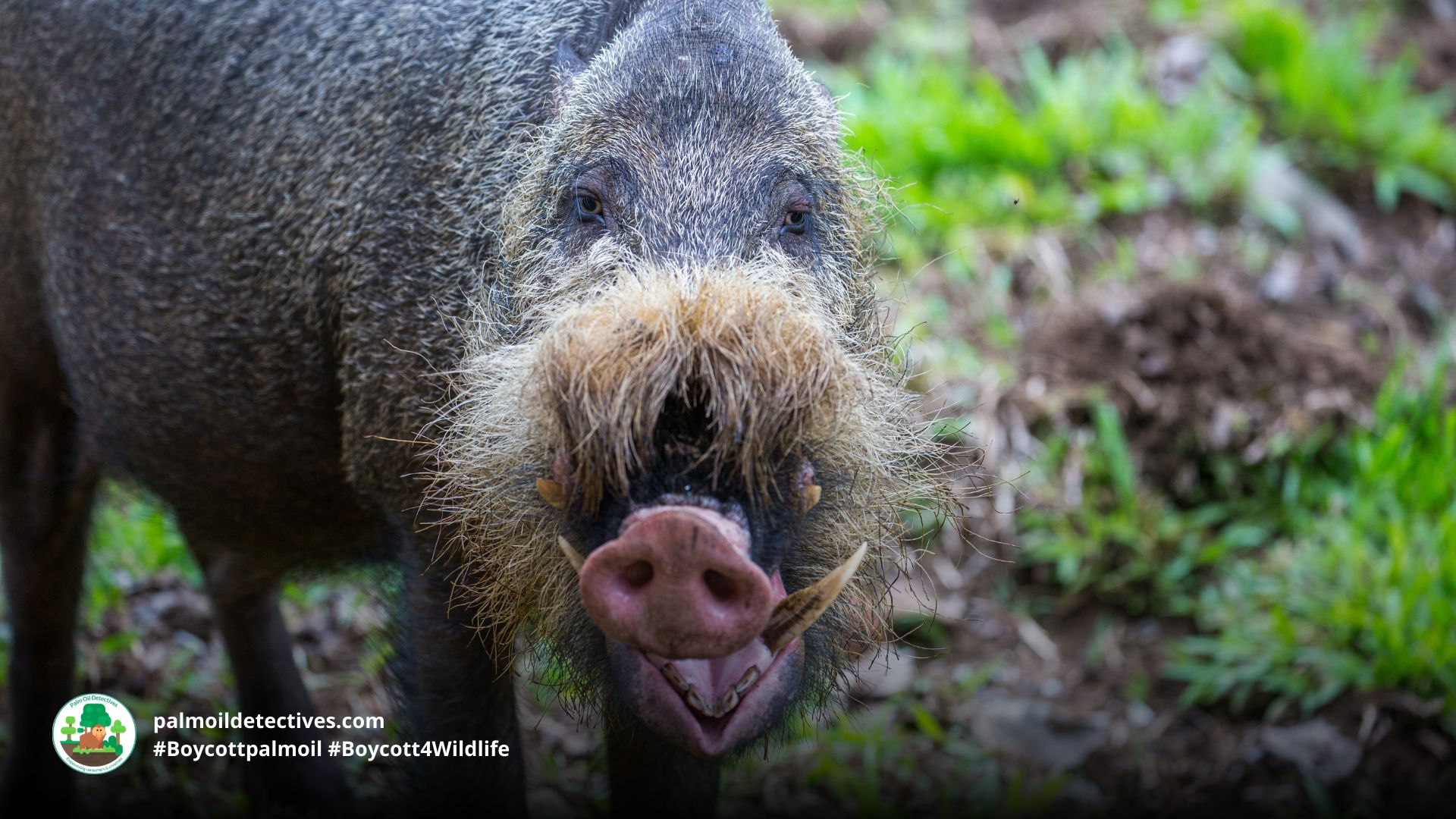
The Bearded Pig is a striking wild pig of the rainforest, recognised by their wiry “beard” of coarse hair framing a long, mud-streaked snout. Their shaggy coats, a mix of grey-brown and lighter streaks, seem made for blending into the dappled forest floor. Small, keen eyes glint with intelligence, and their long legs carry their robust bodies— weighing between 40 to 120 kilograms—through thick vegetation with quiet purpose.
Foraging families can often be heard before they’re seen, with soft grunts and snuffling sounds that echo through the undergrowth. In migration, the rhythm of hooves and the rustle of leaves mark their passage, as they travel great distances in search of fruiting trees.
The Palawan Bearded Pig (Sus barbatus ahoenobarbus), smaller and with a less pronounced beard, shares these traits, however they are adapted to the unique environment of Palawan Island.
In Sumatra, habitat loss and fragmentation have been the highest in the world over the last 20 years, putting S. b. oi at direct threat of extinction (Margono et al. 2011, Meitten 2012). The same situation probably applies to Bangka and the Riau Archipelago where the persistence of the species is unclear today.
IUCN Red List
Diet
Bearded Pigs are omnivores, thriving on a diverse diet of fruits, seeds, roots, tubers, fungi, and small invertebrates. They are keystone seed dispersers in the rainforest, consuming figs, dipterocarp seeds, and other forest fruits, and scattering seeds through their foraging. When natural food is scarce, they may venture into fields to feed on crops like maize and rice.
Reproduction and Mating
These pigs breed year-round, but their reproduction often aligns with fruiting seasons. Females give birth to litters of four to eight piglets, born with striped coats that blend into the forest floor. Family groups are tightly bonded, with mothers fiercely protective of their young.
Geographic Range
Bearded Pigs inhabit rainforests, mangroves, and peat swamps across Borneo, Sumatra, the Malay Peninsula, and Palawan. While they thrive in intact forests, they are adaptable and can survive in logged forests and agricultural areas. However, their seasonal migrations require connected habitats, making forest corridors essential. Habitat fragmentation is a looming and major threat to this enigmatic wild pig.
Their population is believed to have declined by 30% over the last three generations (taken as 21 years) by hunting, shrinkage in distribution, and habitat destruction and degradation.
Threats
Palm oil and timber deforestation:
Bearded Pigs are losing their habitats at an alarming rate due to the expansion of out-of-control palm oil plantations, logging, and agricultural activities. The relentless clearing of forests for monoculture plantations not only reduces their foraging grounds but also fragments the connected landscapes they rely on for migration. Without intact forest corridors, their survival is increasingly precarious.
Illegal hunting and bushmeat trade:
Bearded Pigs are heavily hunted across their range for their meat. While some hunting is for subsistence, illegal hunting and commercial trade exacerbate the pressure on their populations. This unregulated hunting threatens not just the species but also the indigenous communities whose cultural practices and diets are deeply intertwined with their presence.
African swine fever and other diseases
Emerging infectious diseases, including African swine fever, pose a significant threat to wild pig populations. The rapid spread of this disease in Southeast Asia has raised concerns about its impact on already vulnerable species like the Bearded Pig. These diseases can decimate populations and further weaken their chances of survival.
Habitat fragmentation
The destruction of forest corridors caused by deforestation and infrastructure development disrupts the seasonal migrations of Bearded Pigs. Without connected habitats, these pigs are forced to remain in smaller, isolated areas, reducing access to food and increasing competition. Habitat fragmentation also isolates populations, which can lead to reduced genetic diversity over time.
FAQs
What does the Bornean Bearded Pig eat?
Bearded Pigs eat a mix of fruits, seeds, roots, fungi, and invertebrates. Their role as seed dispersers makes them essential to the rainforest ecosystem, as they help regenerate forests by spreading seeds through their droppings.
Is the Bearded Pig endangered?
The Bearded Pig is classified as Vulnerable. Populations are declining due to habitat destruction, hunting, and disease, and their reliance on intact forest corridors for migration makes them particularly vulnerable.
How are Bearded Pigs adapted to the tropical rainforest?
Bearded Pigs are highly adapted to rainforest life. Their migratory behaviour helps them track fruiting seasons, and their long snouts and strong jaws allow them to forage for tubers and seeds. Their omnivorous diet and ability to travel long distances and disperse seeds make them vital to forest health.
What are the physical characteristics of the Palawan Bearded Pig?
The Palawan Bearded Pig (Sus barbatus ahoenobarbus), a subspecies, is smaller and has shorter hair and a less pronounced beard compared to the Bearded Pig. Found exclusively on Palawan Island, they share the ecological significance of their mainland relatives in their seed dispersal activities that help forests to flourish.
Take Action!
The survival of the Bearded Pig depends on preserving their habitats and protecting forest corridors. Support indigenous-led conservation, boycott palm oil products, and advocate against illegal hunting to ensure their future. #BoycottPalmOil #Boycott4Wildlife
Support the conservation of this species
This animal has no protections in place. Read about other forgotten species here. Create art to support this forgotten animal or raise awareness about them by sharing this post and using the #Boycottpalmoil #Boycott4Wildlife hashtags on social media. Also you can boycott palm oil in the supermarket.
Further Information

Luskin, M., Ke, A., Meijaard, E., Gumal, M. & Kawanishi, K. 2017. Sus barbatus (errata version published in 2018). The IUCN Red List of Threatened Species 2017: e.T41772A123793370. https://dx.doi.org/10.2305/IUCN.UK.2017-3.RLTS.T41772A44141317.en. Downloaded on 15 February 2021.
Mongabay. (2022). The only pig species known to migrate: The Bearded Pig. Retrieved from https://news.mongabay.com/2022/09/the-only-pig-species-known-to-migrate-the-bearded-pig/
Mongabay. (2023). Bearded pigs: A cultural keystone species for Borneo’s indigenous groups. Retrieved from https://news.mongabay.com/2023/03/bearded-pigs-a-cultural-keystone-species-for-borneos-indigenous-groups-study/
Reko Forest. (n.d.). Wildlife of RER: The Bearded Pig. Retrieved from https://www.rekoforest.org/field-stories/wildlife-of-rer-the-bearded-pig/
Wildlife Conservation Society (WCS). (2022). Infectious diseases threaten Bornean pigs. Retrieved from https://blog.wcs.org/photo/2022/03/29/infectious-diseases-threaten-bornean-pigs-bearded/
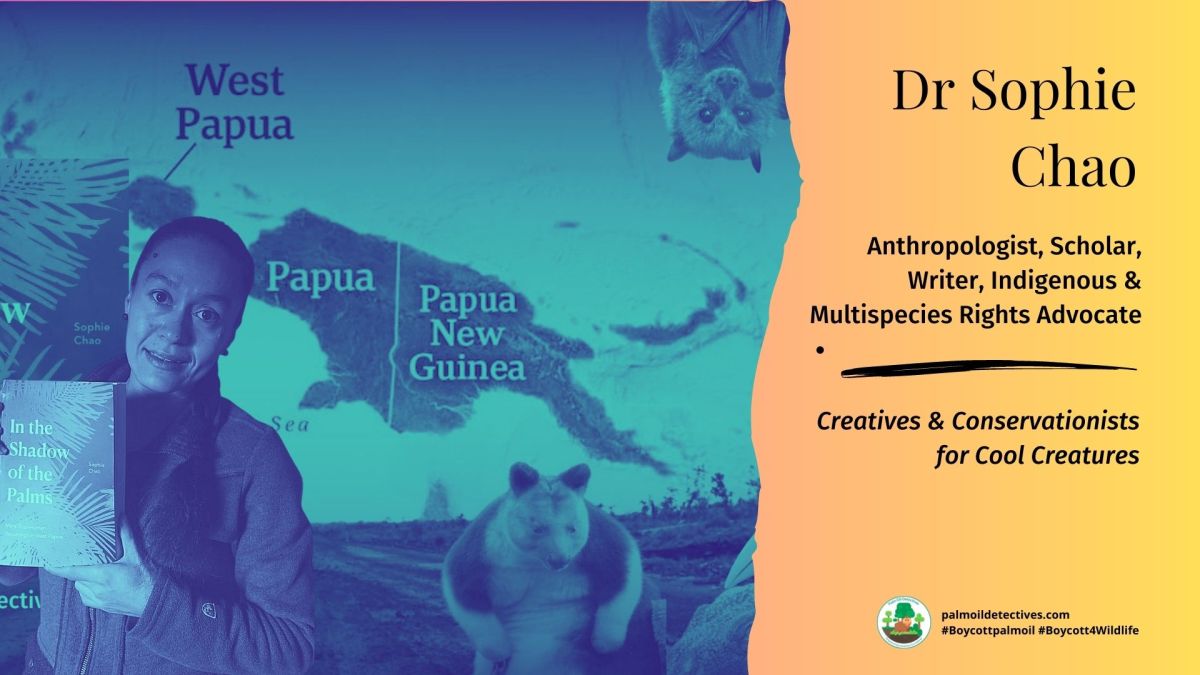
Borneo’s bearded pig: forest gardener and eocosysem protector!
Borneo – fourth-largest island in the world, home to more than 20 million people. With so many well known species on the island like elephants, rhinos and orangutans, one species continues to fly under the radar. Sus barbatus AKA the Borneo Bearded Pig should be the most emblematic animal on the island. This wild boar…
Keep reading

How can I help the #Boycott4Wildlife?
Take Action in Five Ways
1. Join the #Boycott4Wildlife on social media and subscribe to stay in the loop: Share posts from this website to your own network on Twitter, Mastadon, Instagram, Facebook and Youtube using the hashtags #Boycottpalmoil #Boycott4Wildlife.
2. Contribute stories: Academics, conservationists, scientists, indigenous rights advocates and animal rights advocates working to expose the corruption of the palm oil industry or to save animals can contribute stories to the website.





3. Supermarket sleuthing: Next time you’re in the supermarket, take photos of products containing palm oil. Share these to social media along with the hashtags to call out the greenwashing and ecocide of the brands who use palm oil. You can also take photos of palm oil free products and congratulate brands when they go palm oil free.
4. Take to the streets: Get in touch with Palm Oil Detectives to find out more.
5. Donate: Make a one-off or monthly donation to Palm Oil Detectives as a way of saying thank you and to help pay for ongoing running costs of the website and social media campaigns. Donate here
Discover more from Palm Oil Detectives
Subscribe to get the latest posts sent to your email.
 Palm Oil Detectives