
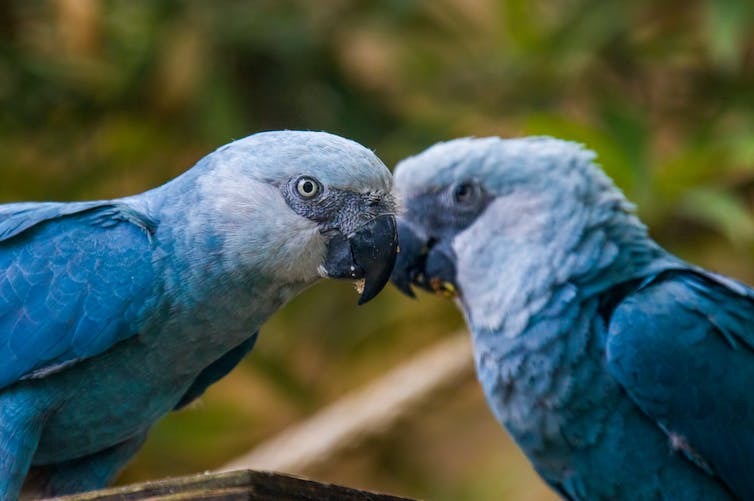
Ground-breaking research has found that wild parrots teach their chicks unique sound signatures so that they can identify their parents. We are only just scratching the surface of knowledge about these immensely intelligent non-human beings, protect them! Be #Vegan and #BoycottPalmOil #Boycott4Wildlife
It’s not just humans and #dolphins who use unique sounds 🔊🪇🎶 to connect with their young. #Birds like #parrots also teach their chicks unique sounds so that they can identify their mothers 🦜🎵🥁🦜 #Boycott4Wildlife to protect them! @palmoildetect https://palmoildetectives.com/2021/05/19/whats-my-name-how-wild-parrots-identify-their-young/
Humans and dolphins create unique sounds by which individuals are identified and there was some evidence to suggest captive parrots created ‘contact calls’ – special calls used to identify family and friends. But until now, it was not clear how or if this naming process worked in nature.
To test whether contact calls were innate or learned from parents, researchers from Cornell University and the University of California in the U.S. took eggs from the nests of wild green-rumped parrotlets (Forpus passerinus) and swapped them with eggs from other wild wild green-rumped parrotlet nests. Twelve nests were used in the swapping experiment.
Eight additional nests served as controls, where the eggs were removed but then put back without swapping.
By observing the chicks’ development through video and audio rigs, the scientists saw that the young parrots used the contact calls of their adoptive parents.
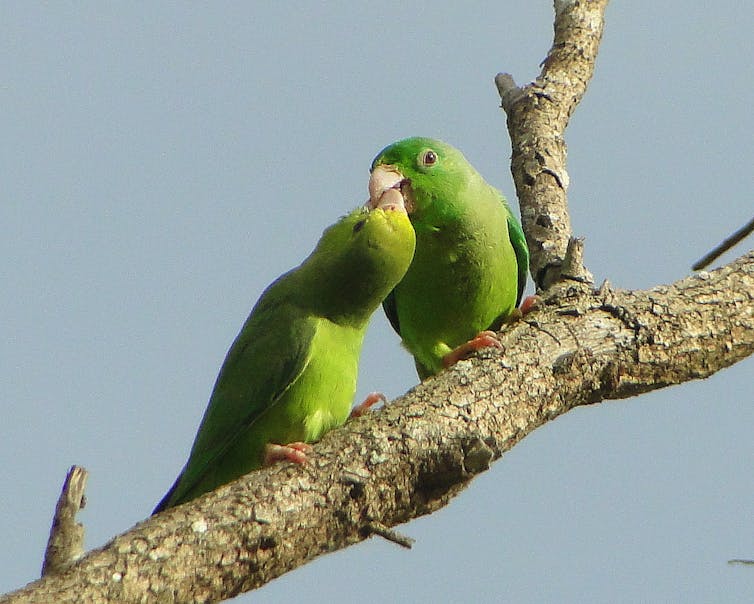
This suggests that the names used to identify them were learned, rather than hard-wired by DNA from their biological parents, the authors said.
“Our results provide the first experimental evidence for learned vocal production by naive parrots in nature. Nestling contact calls were more similar to the contact calls of their primary care-givers than to adults at other nests, despite half of the nestlings being raised by foster parents,” the authors wrote in their paper, which was published by the journal Proceedings of The Royal Society B.
Sunanda Creagh, Editor, The Conversation. This article is republished from The Conversation under a Creative Commons license. Read the original article.
Take Action in Five Ways
1. Join the #Boycott4Wildlife on social media and subscribe to stay in the loop: Share posts from this website to your own network on Twitter, Mastadon, Instagram, Facebook and Youtube using the hashtags #Boycottpalmoil #Boycott4Wildlife.
2. Contribute stories: Academics, conservationists, scientists, indigenous rights advocates and animal rights advocates working to expose the corruption of the palm oil industry or to save animals can contribute stories to the website.



3. Supermarket sleuthing: Next time you’re in the supermarket, take photos of products containing palm oil. Share these to social media along with the hashtags to call out the greenwashing and ecocide of the brands who use palm oil. You can also take photos of palm oil free products and congratulate brands when they go palm oil free.
4. Take to the streets: Get in touch with Palm Oil Detectives to find out more.
5. Donate: Make a one-off or monthly donation to Palm Oil Detectives as a way of saying thank you and to help pay for ongoing running costs of the website and social media campaigns. Donate here
Discover more from Palm Oil Detectives
Subscribe to get the latest posts sent to your email.
 Palm Oil Detectives