
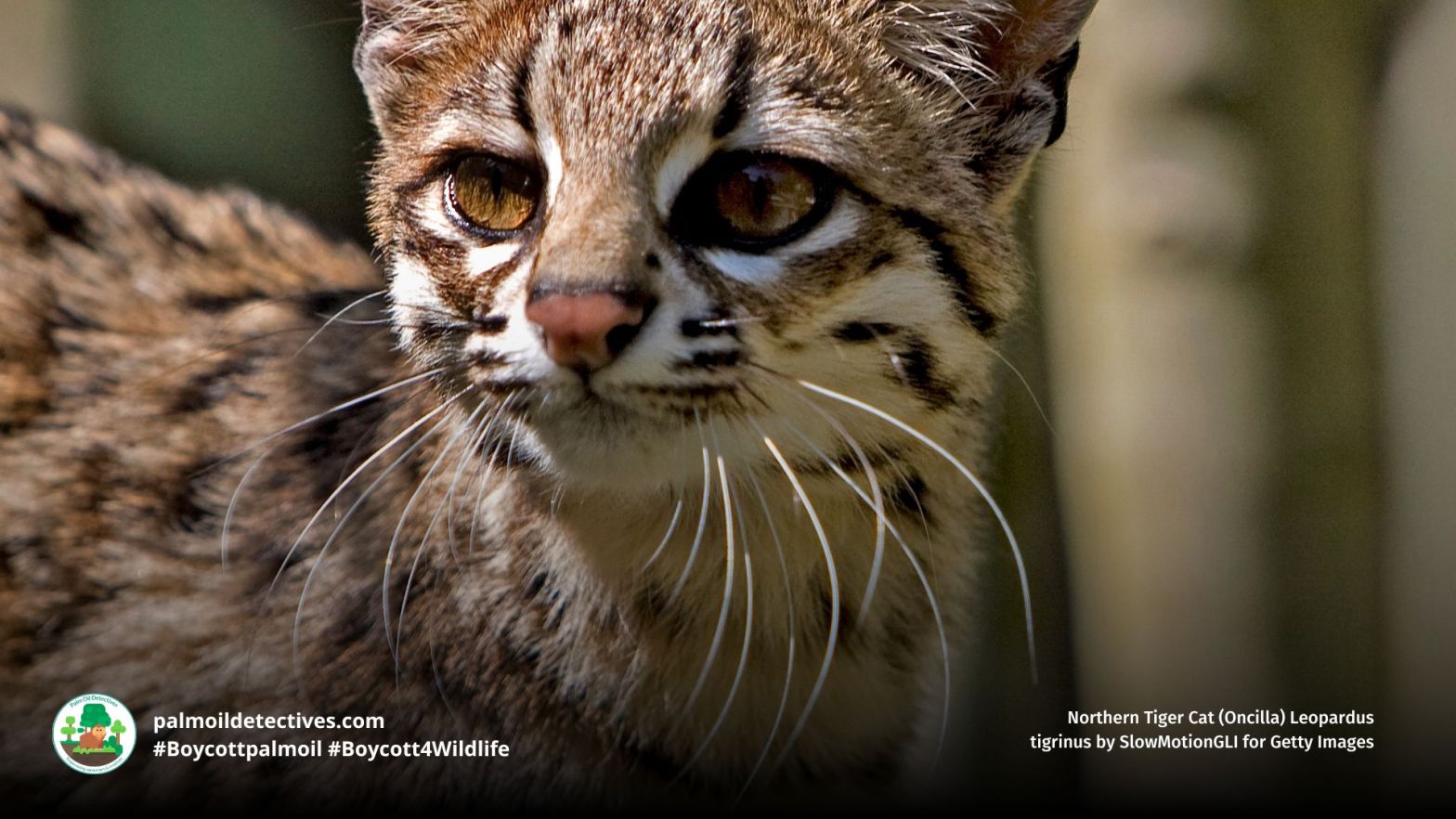
Northern Tiger Cat (Oncilla) Leopardus tigrinus
Vulnerable
Extant: Bolivia; Brazil; Colombia; Costa Rica; Ecuador; French Guiana; Guyana; Panama; Peru; Suriname; Venezuela.
Presence Uncertain: Nicaragua
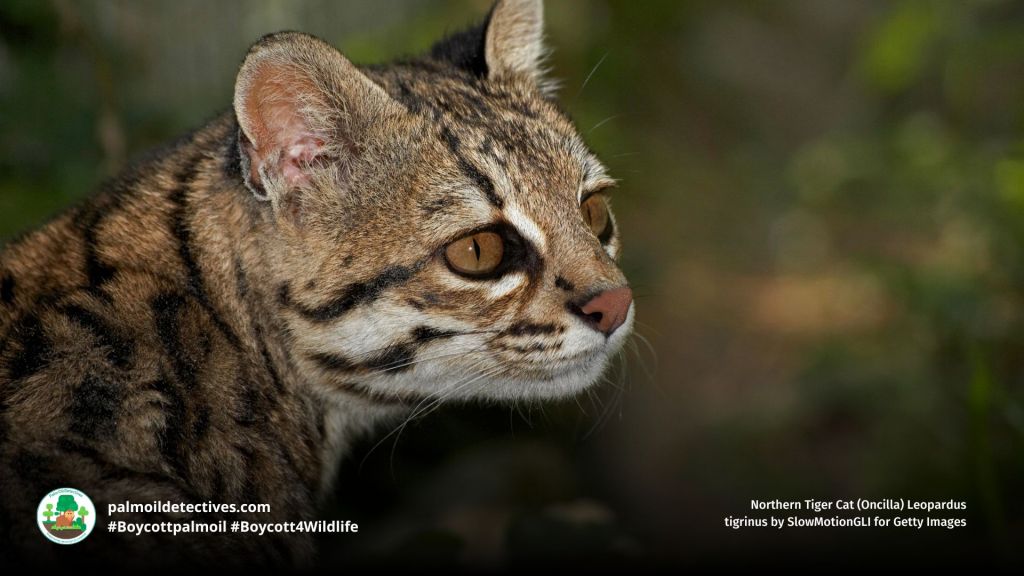
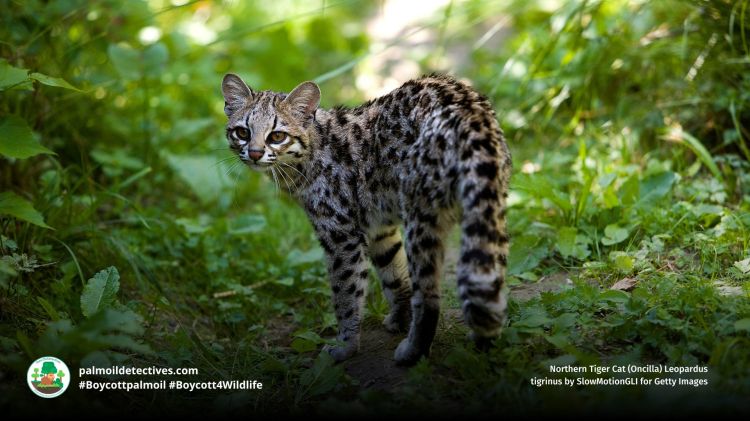
The northern tiger cat, also known as the oncilla Leopardus tigrinus, is a captivating small wild cat native to Central and South America. Distinguished by their striking, leopard-like coat marked with dark rosettes and a sleek, agile body, this elusive feline is a master of stealth and survival in the dense forests and grasslands they inhabit.
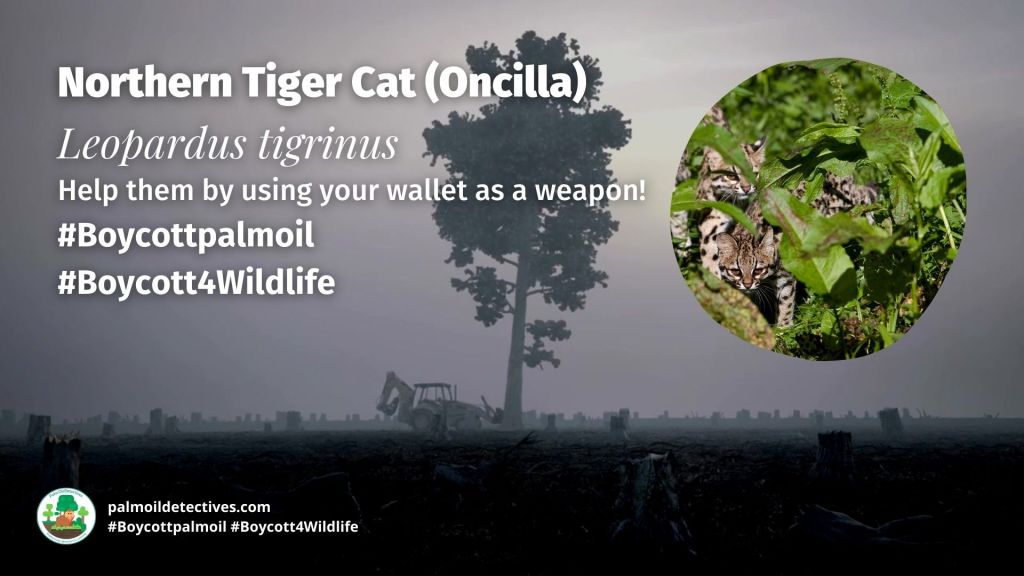
The northern tiger cat is a tiny predator, weighing only 1.5–3 kg, yet they play a significant role in maintaining ecological balance as a keystone predator. These solitary creatures, though mostly ground-dwelling, are adept climbers. They communicate through purring as kittens and have a unique “gurgle” as adults. Their habitats range from the semi-arid Caatinga to the Andean cloud forests. Tragically, this species is classified as Vulnerable, with populations declining due to habitat destruction for palm oil, soy, meat and mining, poaching, and habitat fragmentation. Indigenous-led conservation efforts are vital to protect their remaining habitats. #BoycottPalmOil #Boycott4Wildlife
The beautiful and elegant #Oncilla is a #wildcat 🐱 found in #SouthAmerica. They are #vulnerable due to #deforestation for #gold and #palmoil 🌴⛔️ and are hunted for their fur 😭 #Boycottpalmoil #Boycott4Wildlife #BoycottGold4Yanomami @palmoildetect https://palmoildetectives.com/2021/08/14/northern-tiger-cat-oncilla-leopardus-tigrinus/
The #Oncilla is a small wild #cat found in Central and #SouthAmerica. They are #vulnerable from #soy #meat #palmoil #deforestation. Resist and help them, be #vegan 🥦🍅🥒 and #Boycottpalmoil 🌴🪔⛔️#Boycott4Wildlife @palmoildetect https://palmoildetectives.com/2021/08/14/northern-tiger-cat-oncilla-leopardus-tigrinus/
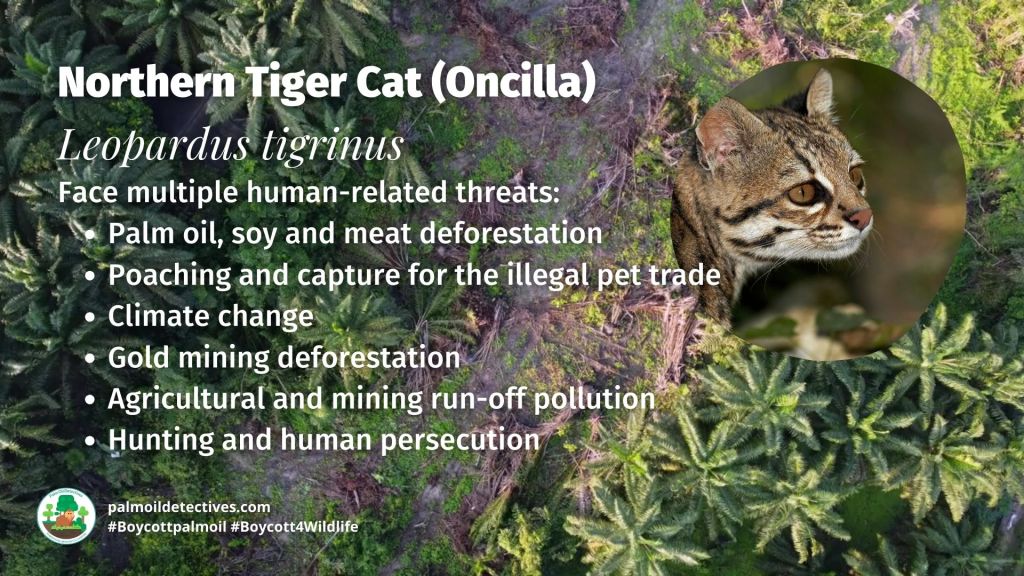
By and large, the greatest threat to these wild cats is the rampant rate of habitat loss, fragmentation and isolation. In the Andes cloud forests deforestation is mostly due to conversion to agriculture but also includes palm oil, hydroelectric dams, urban sprawl and road building (Payán and Gonzalez-Maya 2011, CI 2012).
IUCN Red list

Appearance and Behaviour
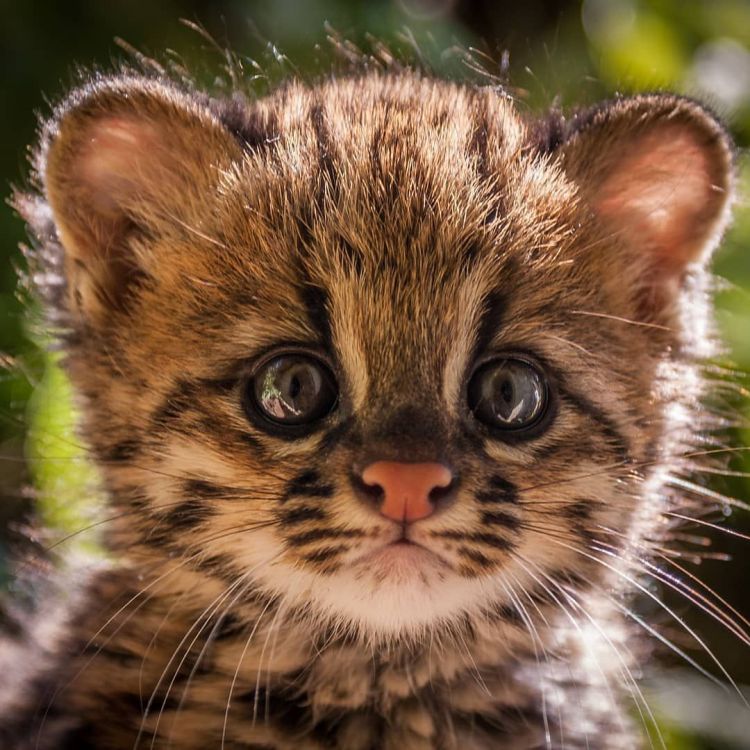
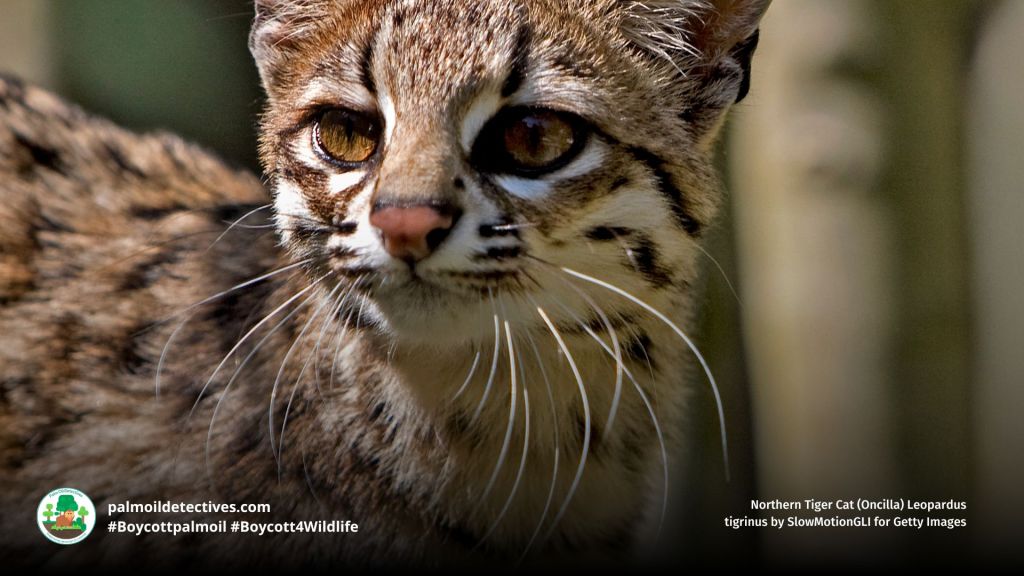
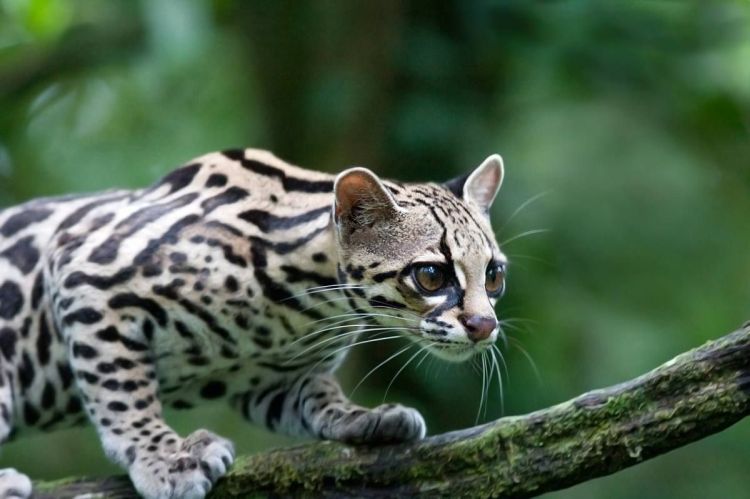
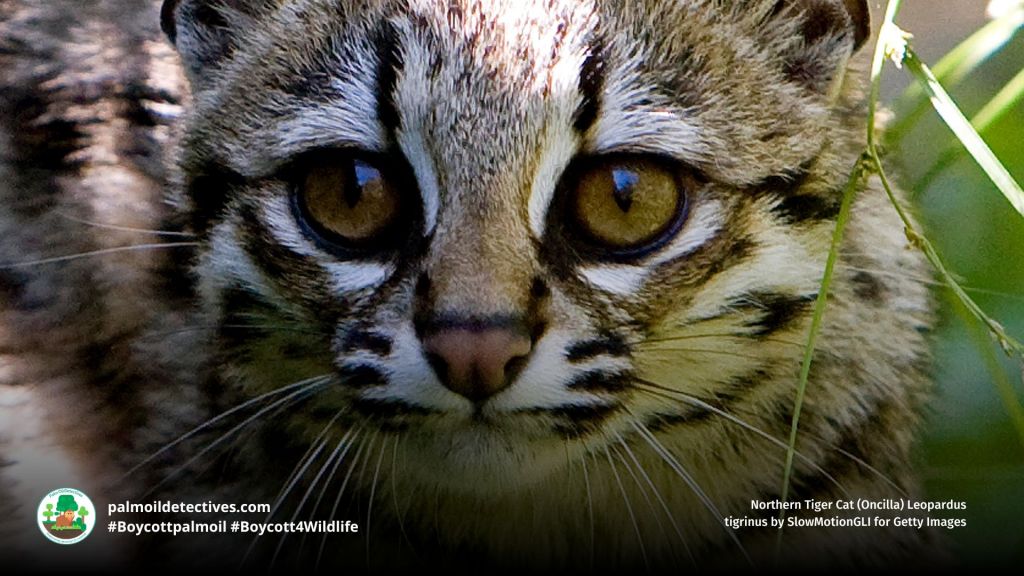
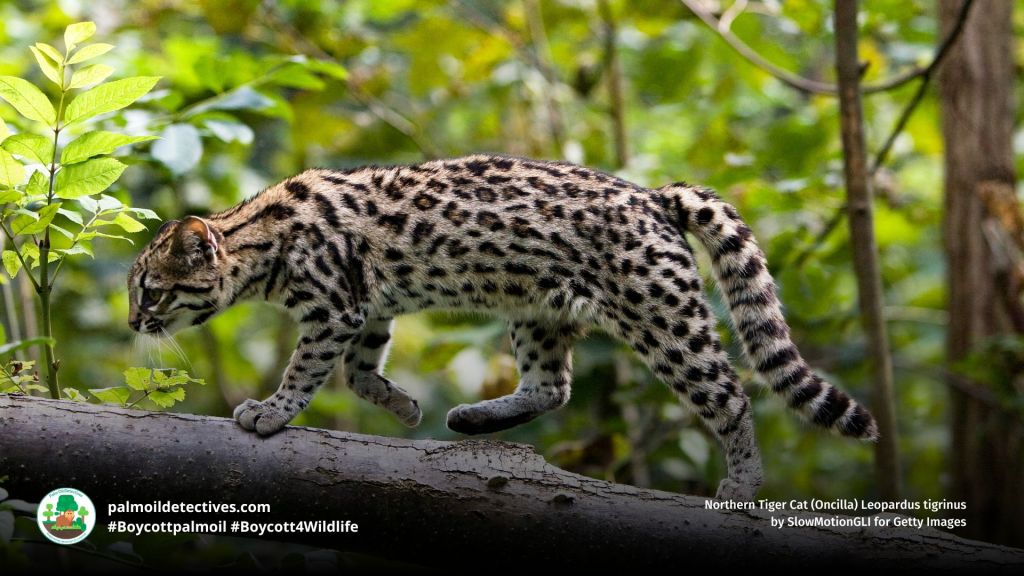
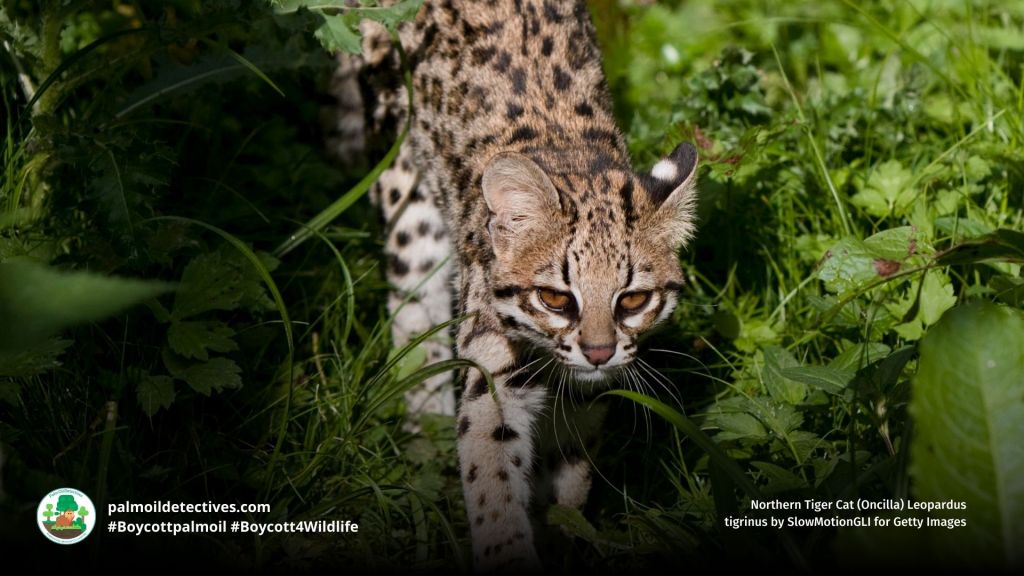
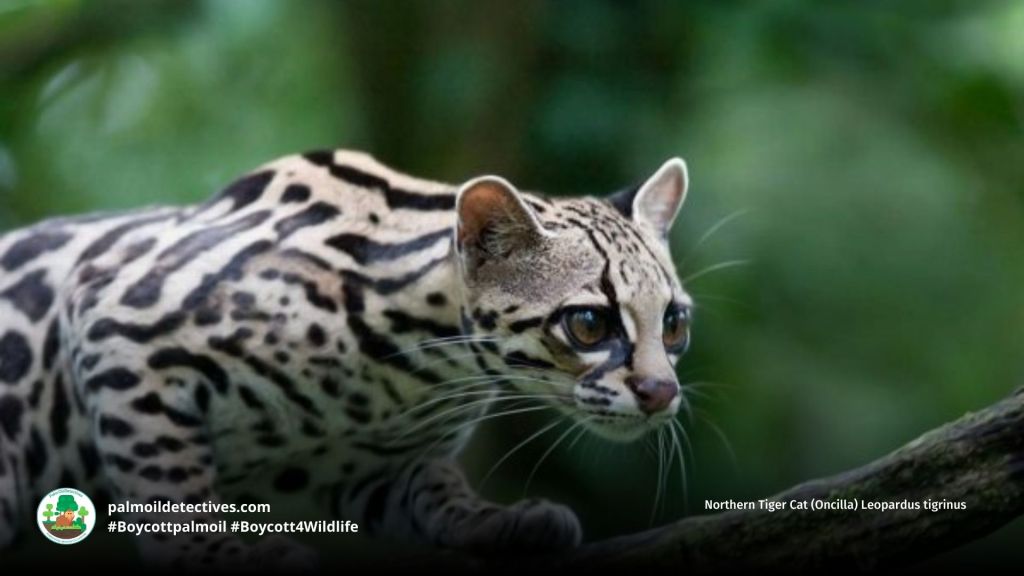
Northern Tiger Cats also known as the Oncillas are often mistaken for other South American small wild cat species such as margays or ocelots. Although oncillas are smaller, they otherwise look very similar to these species, oncillas are more slender and have larger ears.
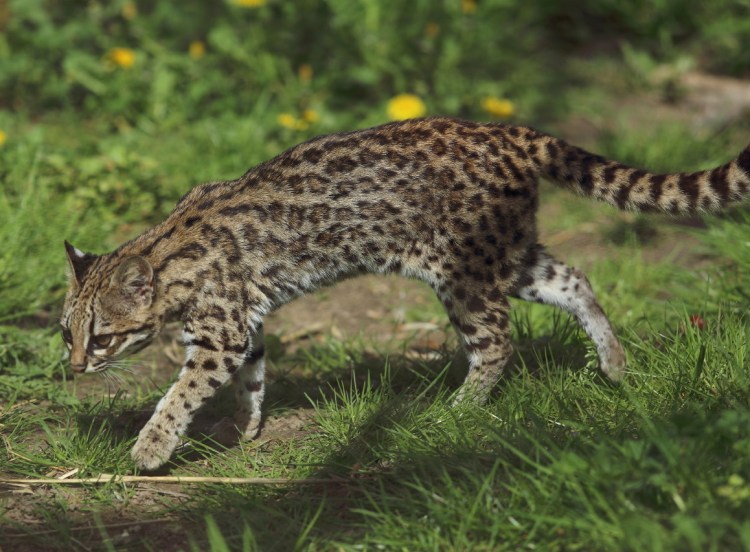
Oncillas are among the smallest wild cat species, with a body length of 38–59 cm and a long, bushy tail measuring up to 42 cm. Their fur is typically a tawny or yellowish-brown colour adorned with bold rosettes and spots, providing excellent camouflage in their forested habitats. Their large eyes are adapted for nocturnal hunting, making them highly effective at navigating and hunting in low-light conditions.
During the breeding season pairs are sometimes seen, but they are considered as highly solitary animals. Although they are primarily terrestrial, they can climb well. Young kittens purr, while adults make a short and rhythmic “gurgle” sound.
Known for their solitary and elusive nature, these cats are skilled climbers and can often be found resting or hunting in trees. However, they are also proficient terrestrial hunters, using their keen senses and stealth to ambush prey. Northern tiger cats are highly territorial and communicate through scent marking and vocalisations, although encounters between individuals are rare outside of mating.
Threats
IUCN Status: Vulnerable
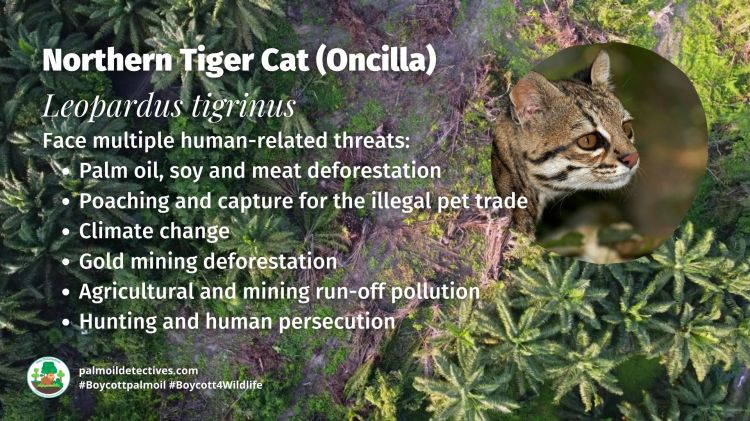
Deforestation and Habitat Loss:
The primary threat to northern tiger cats is the destruction and fragmentation of their forest habitats due to timber logging, palm oil, soy and meat agriculture, and urban expansion. Palm oil plantations and cattle ranching are significant drivers of deforestation across their range.
Illegal poaching and the illegal pet trade:
Oncillas were once heavily exploited for the fur trade decades ago, following the decline of the Ocelot trade (Payan and Trujillo 2006). Although international trade ceased, there is still some localised illegal hunting, usually for the domestic market.
Oncillas are often caught in snares set for other animals or killed for their beautiful pelts, which are sold in illegal wildlife trade markets. In some cases they are captured and sold into the illegal pet trade.
Human-Wildlife Conflict:
In some areas, these cats are persecuted and killed by farmers who view them as a threat to poultry or livestock.
Climate Change:
Altered rainfall patterns and rising temperatures caused by climate change are shrinking their habitat range and affecting prey availability.
Urgent conservation measures, including habitat protection and restoration, as well as indigenous-led agroecological practices, are critical for their survival.
Geographic Range
Oncillas are found in a broad range of habitats, from the lowland semi-arid Caatinga to cloud forests in the Andes. In Costa Rica the species is almost entirely confined to montane forests along the flanks of volcanoes and other high mountains from 1,000 m up to the treeline (paramo) and occupy cloud forest and high elevation elfin forests (J. Schipper pers. comm.). The Northern Tiger Cat is a poorly known small-sized (2.4 kg) solitary felid, with an average litter size of 1.12 kittens (1–4)
Diet
Northern tiger cats are carnivorous and primarily hunt small mammals, birds, reptiles, and insects. Oncillas are mainly nocturnal but in areas like Caatinga, where their diet primarily consists of diurnal lizards, these animals are more prone to be active in the daytime. They are opportunistic feeders, preying on whatever is most abundant in their environment. Their small size allows them to target prey that larger predators cannot, making them a vital part of the ecosystem as they help regulate populations of smaller animals.
Reproduction and Mating
Northern tiger cats are solitary animals, coming together only during the mating season. Females typically give birth to one or two kittens after a gestation period of 74–76 days. The young are dependent on their mothers for the first few months, learning essential hunting and survival skills before becoming independent.
Take Action!
Help protect northern tiger cats by supporting indigenous-led conservation efforts and advocating for stronger protections against deforestation. Use your wallet as a weapon and choose products free from palm oil. #BoycottPalmOil #Boycott4Wildlife
FAQ
What do northern tiger cats eat?
Northern tiger cats are obligate carnivores with a diet that consists of small mammals such as rodents, birds, reptiles, and insects. They are opportunistic hunters, preying on whatever is most readily available in their environment. Their ability to hunt both in trees and on the ground allows them to exploit a wide variety of food sources, which is crucial in fragmented habitats.
In areas where prey populations are declining due to habitat destruction, northern tiger cats face additional challenges in finding sufficient food. Conservation efforts that protect their prey species are essential for the survival of these elusive predators.
How many northern tiger cats are left in the world?
Precise population estimates are difficult due to the northern tiger cat’s elusive nature, but it is believed that fewer than 10,000 mature individuals remain in the wild. Populations are fragmented and continue to decline due to habitat destruction, poaching, and climate change.
Surveys conducted in key habitats, such as the Atlantic Forest in Brazil and other protected areas, show alarming declines in their numbers. Increased habitat protection and the establishment of wildlife corridors are urgently needed to ensure their survival.
What is the difference between an oncilla and a domesticated house cat?
Northern tiger cats (Leopardus tigrinus), or oncillas, resemble domestic cats in size but differ significantly in behaviour and adaptations. Oncillas are wild predators with leopard-like spots, slender bodies, and large eyes suited for nocturnal hunting. They are highly specialised hunters and climbers, adapted for survival in dense forests.
Unlike house cats, oncillas are solitary and elusive, avoiding human contact. Their diet consists exclusively of wild prey, and they play a crucial role in maintaining ecosystem balance by controlling populations of small animals.
Why are northern tiger cats endangered?
The northern tiger cat is classified as Vulnerable due to ongoing habitat destruction and fragmentation caused by logging, agriculture, and urbanisation. The expansion of palm oil plantations and cattle ranches has significantly reduced their range, isolating populations and limiting gene flow.
Additionally, they are threatened by illegal wildlife trade, roadkill, and persecution by humans who mistakenly view them as pests. Climate change further exacerbates these threats by altering their habitat and prey availability. Addressing these challenges requires urgent conservation action, including habitat protection and indigenous-led conservation initiatives.
You can support this beautiful animal
Merazonia wildlife rescue and sanctuary
International Society for Endangered Cats (ISEC) Canada
Costa Rica Wildlife Foundation
The Central American Oncilla Project
Further Information

Inaturalist. (n.d.). Leopardus tigrinus. iNaturalist.
Oliveira, T., Lima, B. C., Rosales, L. A. F., & Pereira, R. S. (2020). A refined population and conservation assessment of the elusive and endangered northern tiger cat (Leopardus tigrinus) in its key worldwide conservation area in Brazil. Global Ecology and Conservation, 22(5), e00927. https://doi.org/10.1016/j.gecco.2020.e00927
Payan, E. & de Oliveira, T. 2016. Leopardus tigrinus. The IUCN Red List of Threatened Species 2016: e.T54012637A50653881. https://dx.doi.org/10.2305/IUCN.UK.2016-2.RLTS.T54012637A50653881.en. Downloaded on 07 June 2021.
Wildcat Conservation. (n.d.). Northern Tiger Cat. Wildcat Conservation Alliance.
World Land Trust. (n.d.). Northern Oncilla.

How can I help the #Boycott4Wildlife?
Take Action in Five Ways
1. Join the #Boycott4Wildlife on social media and subscribe to stay in the loop: Share posts from this website to your own network on Twitter, Mastadon, Instagram, Facebook and Youtube using the hashtags #Boycottpalmoil #Boycott4Wildlife.
2. Contribute stories: Academics, conservationists, scientists, indigenous rights advocates and animal rights advocates working to expose the corruption of the palm oil industry or to save animals can contribute stories to the website.






3. Supermarket sleuthing: Next time you’re in the supermarket, take photos of products containing palm oil. Share these to social media along with the hashtags to call out the greenwashing and ecocide of the brands who use palm oil. You can also take photos of palm oil free products and congratulate brands when they go palm oil free.
4. Take to the streets: Get in touch with Palm Oil Detectives to find out more.
5. Donate: Make a one-off or monthly donation to Palm Oil Detectives as a way of saying thank you and to help pay for ongoing running costs of the website and social media campaigns. Donate here
Discover more from Palm Oil Detectives
Subscribe to get the latest posts sent to your email.
 Palm Oil Detectives