
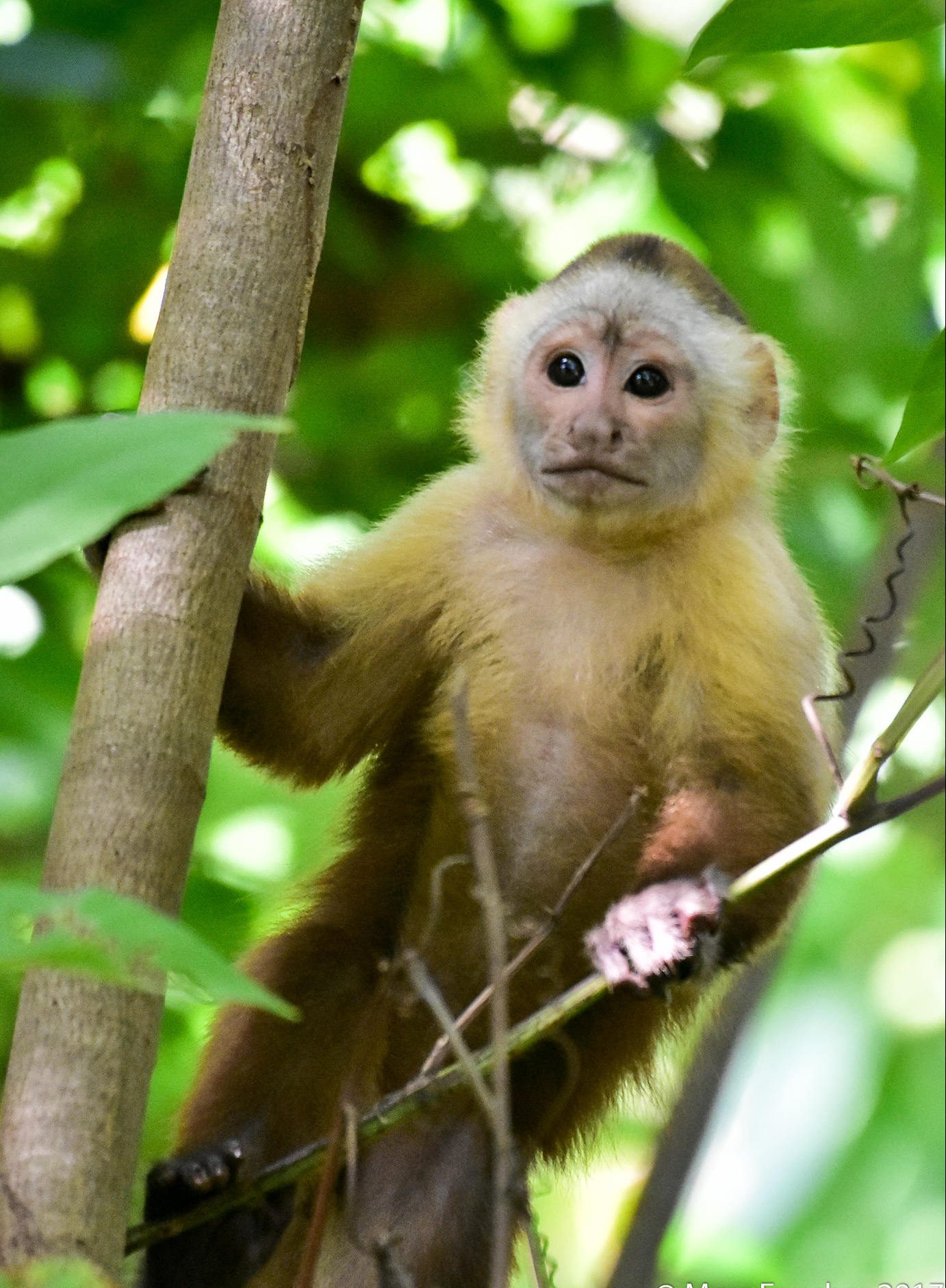
Santa Marta White-fronted Capuchin Cebus malitiosus
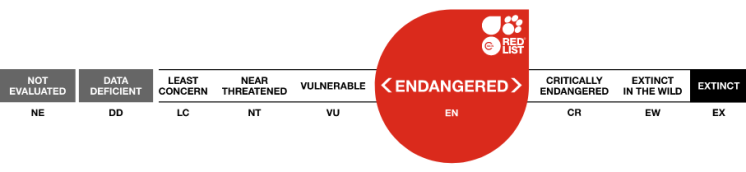
Red List Status: Endangered
Locations: Forests near the northwestern Sierra Nevada de Santa Marta, Magdalena and La Guajira regions, Colombia
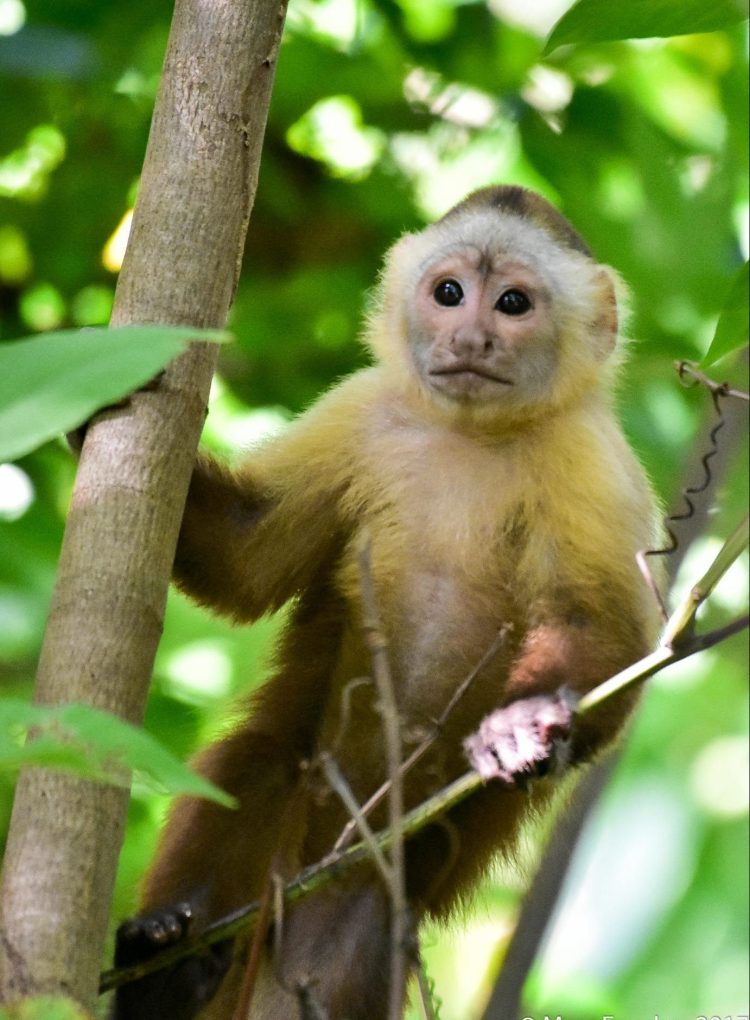
The Santa Marta white-fronted capuchin greets dawn light with urgent calls and agile leaps through dense forest canopy, their dark brown coats glinting cinnamon in sun-flecks. They face intense pressure from expanding palm oil plantations and cattle ranching that strip ancestral forests and sever vital water sources. Their loss would echo through these biodiverse forests and the lives of Indigenous communities who steward them. Use your wallet as a weapon and #BoycottPalmOil #Boycott4Wildlife.
Santa Marta White Fronted #Capuchins are ultra intelligent Colombian #primates threatened by severe #deforestation from cattle ranching and palm oil. Boycott palm oil and meat for their survival #BoycottPalmOil #Boycott4Wildlife @palmoildetect https://palmoildetectives.com/2021/10/09/santa-marta-white-fronted-capuchin-cebus-malitiosus/


Appearance & Behaviour
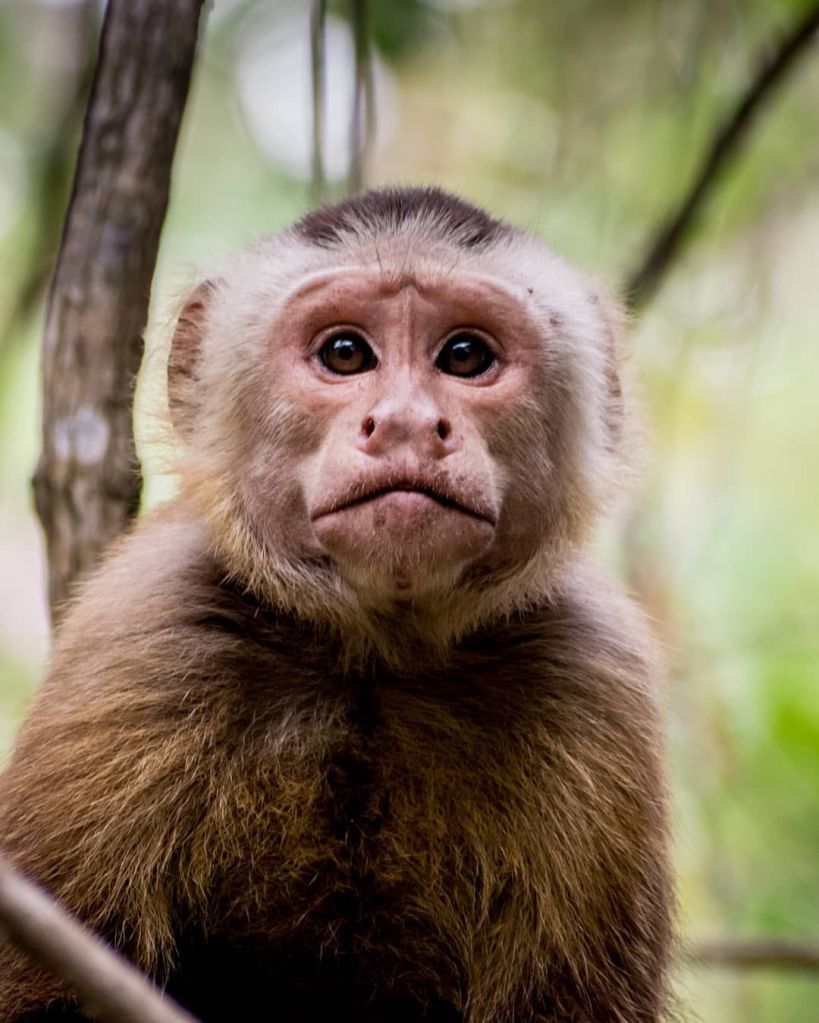
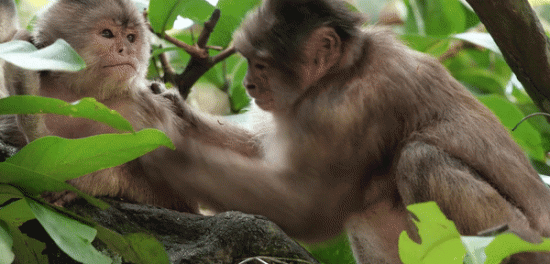
They have slender bodies measuring about 45.7 cm head-to-body and 43.3 cm of semi-prehensile tail length (Red List, 2015). Their deep brown fur is contrasted by pale yellow shoulders and ochre-tawny underparts. They move with remarkable grace, vaulting on long limbs and using their semi-prehensile tail for balance. In groups up to 35 individuals, adult males tolerate each other within their troop yet fiercely defend against outsiders. All members perform branch-break displays—an unusual habit where even infants snap twigs to the forest floor, signalling social cohesion.
Threats
The Santa Marta white-fronted capuchin is threatened in Colombia by habitat loss and fragmentation due to cattle ranching and oil palm agro-industries. Pet trade may also pose imminent threats to wild populations of the Santa Marta white-fronted capuchin, especially in areas where tourism is widespread.
IUCN red list
Palm oil deforestation
Endangered status stems largely from widespread clearing of forest for palm oil, which replaces biodiverse canopy with monocultures, destroying food-stock trees and disrupting water cycles (Red List, 2015). Traditional seafaring and agroecological practices, vital to Indigenous sovereignty, are displaced as lands fall under unsustainable industrial palm oil.
Cattle ranching
Ranch expansion on the Sierra’s lower slopes fragments capuchin habitat and increases human–wildlife conflict. Grazing lands replace complex forest layers with invasive grasses, accelerating soil erosion and water loss crucial to these capuchins’ survival (Red List, 2015).
Diet
They forage for fruits, seeds, flowers, young leaves and invertebrates. Their omnivorous diet includes insects, larvae, eggs and occasional small vertebrates, supporting seed dispersal and pest control — ecological roles central to forest regeneration (Wikipedia, n.d.).
Mating & Reproduction
Females bear a single infant after an estimated 160-day gestation. Newborns initially cling to mothers’ shoulders, later shifting to their backs. Sexual maturity arrives around four years, when males disperse to seek new groups; females remain in natal troops, reinforcing matrilineal bonds. Group members share grooming and infant care, strengthening social networks (Wikipedia, n.d.).
Geographic Range
Today, Cebus malitiosus occupies fragmented patches of dry tropical, lowland and montane forests at 200–1,000 m elevation near Santa Marta’s northwestern base. Historical clearing for agriculture and palm oil has reduced their range to under 5,000 km², with key populations in Sierra Nevada de Santa Marta National Natural Park.
FAQs
What makes the Santa Marta white-fronted capuchin unique?
The Santa Marta white-fronted capuchin displays a rare group-wide branch-breaking behaviour, where even infants participate, reinforcing social bonds. They exhibit darker fur and less extensive pale areas than other white-fronted capuchins, adaptations to their montane habitat’s cooler microclimate (Red List, 2015).
Why are they endangered?
Their Endangered status results from habitat fragmentation by palm oil and cattle ranches, which uproot Indigenous agroecological stewards and degrade water-rich forests. Limited range and low reproductive rates exacerbate vulnerability to climate-driven droughts and forest fires (Red List, 2015).
Take Action!
Use your wallet as a weapon and #BoycottPalmOil #Boycott4Wildlife. Support indigenous-led agroecology to defend capuchin homelands.
Donate to help orphaned capuchins that are rescued from traffickers. At Merazonia Wildlife Sanctuary
Further Information
Link, A., Boubli, J. & Lynch Alfaro, J. 2020. Cebus malitiosus. The IUCN Red List of Threatened Species 2020: e.T4084A81282214. https://dx.doi.org/10.2305/IUCN.UK.2020-3.RLTS.T4084A81282214.en. Downloaded on 05 June 2021.
CITES. (n.d.). Appendices I, II and III [Database]. Convention on International Trade in Endangered Species of Wild Fauna and Flora. https://cites.org/eng/app/appendices.php
Wikipedia. (n.d.). Santa Marta white-fronted capuchin. Wikipedia. https://en.wikipedia.org/wiki/Santa_Marta_white-fronted_capuchin

How can I help the #Boycott4Wildlife?
Take Action in Five Ways
1. Join the #Boycott4Wildlife on social media and subscribe to stay in the loop: Share posts from this website to your own network on Twitter, Mastadon, Instagram, Facebook and Youtube using the hashtags #Boycottpalmoil #Boycott4Wildlife.
2. Contribute stories: Academics, conservationists, scientists, indigenous rights advocates and animal rights advocates working to expose the corruption of the palm oil industry or to save animals can contribute stories to the website.



3. Supermarket sleuthing: Next time you’re in the supermarket, take photos of products containing palm oil. Share these to social media along with the hashtags to call out the greenwashing and ecocide of the brands who use palm oil. You can also take photos of palm oil free products and congratulate brands when they go palm oil free.
4. Take to the streets: Get in touch with Palm Oil Detectives to find out more.
5. Donate: Make a one-off or monthly donation to Palm Oil Detectives as a way of saying thank you and to help pay for ongoing running costs of the website and social media campaigns. Donate here
Discover more from Palm Oil Detectives
Subscribe to get the latest posts sent to your email.
 Palm Oil Detectives
One thought on “Santa Marta White-fronted Capuchin Cebus malitiosus”