
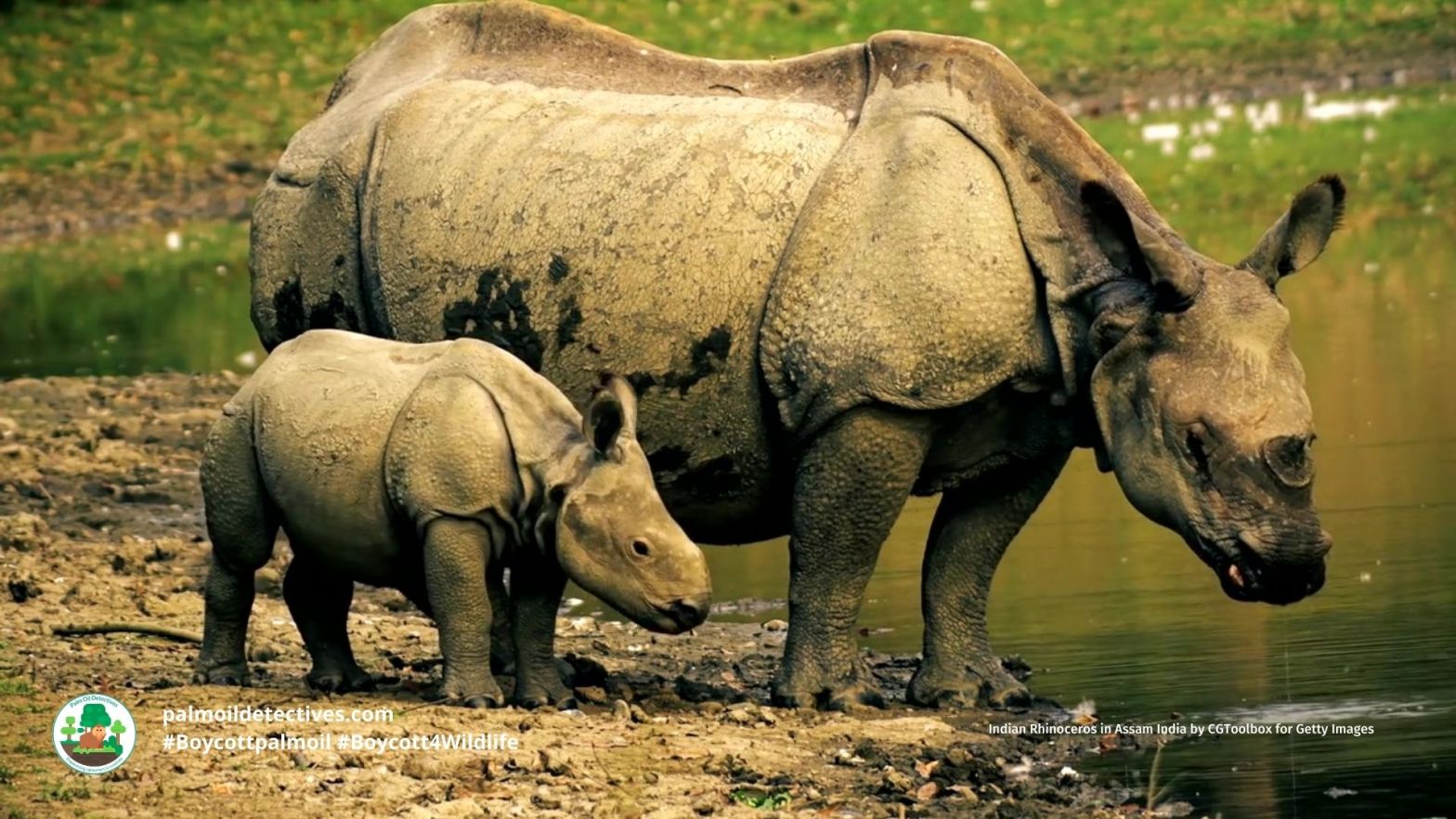
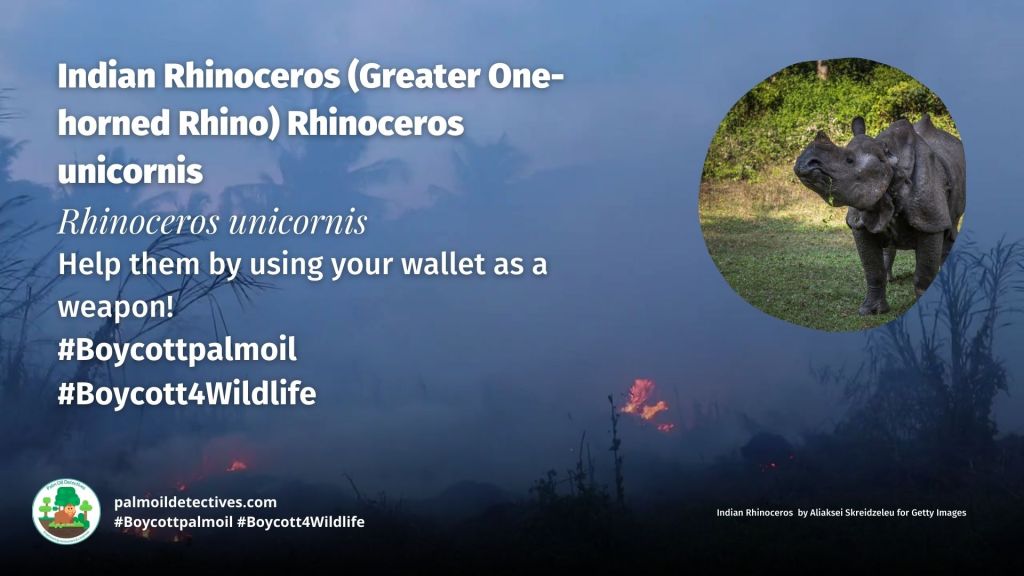
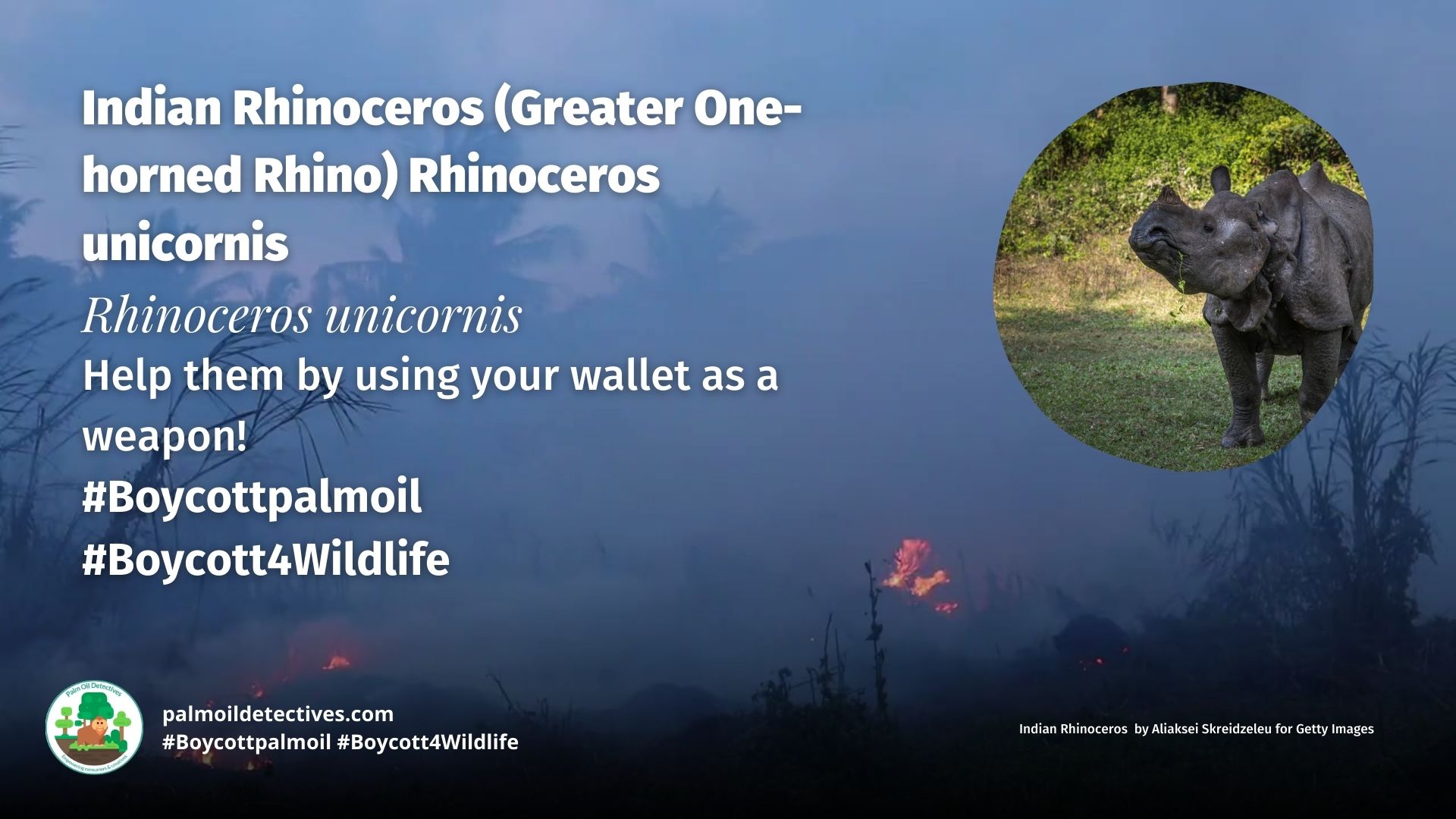
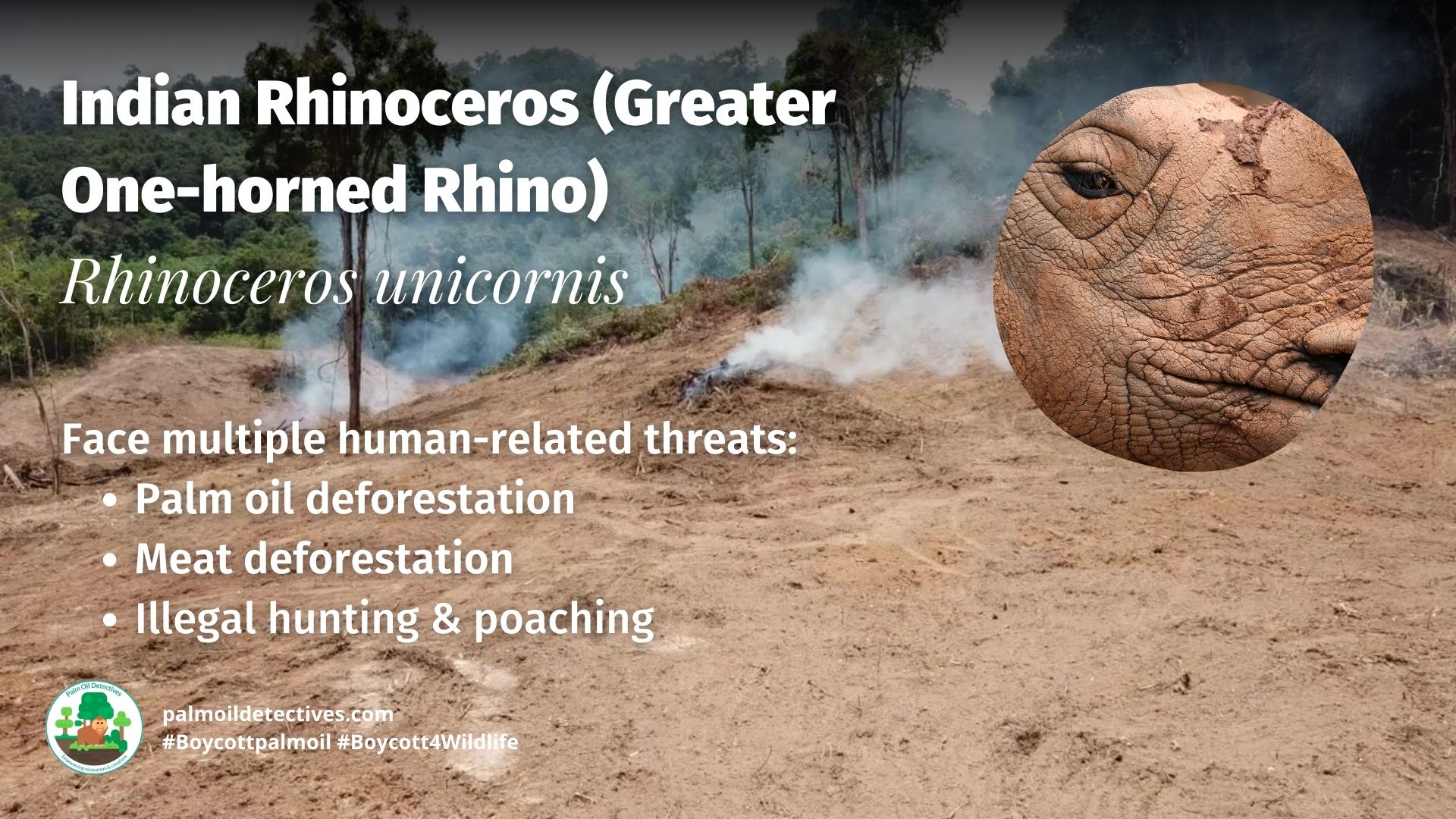
Indian Rhinoceros (Greater One-horned Rhino) Rhinoceros unicornis
Red List Status: Vulnerable
Extant (resident): India; Nepal
Extinct: Bangladesh; Bhutan
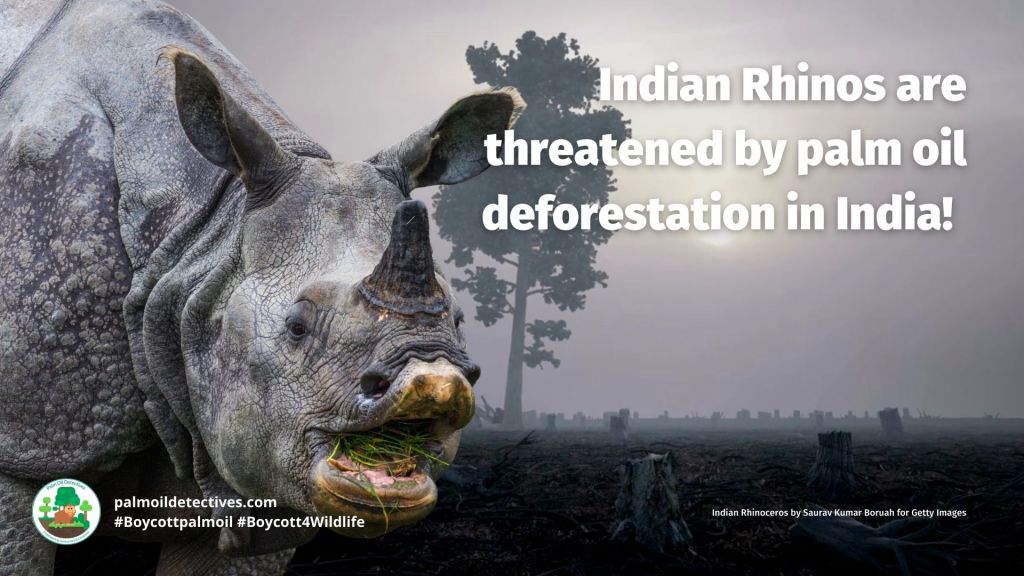
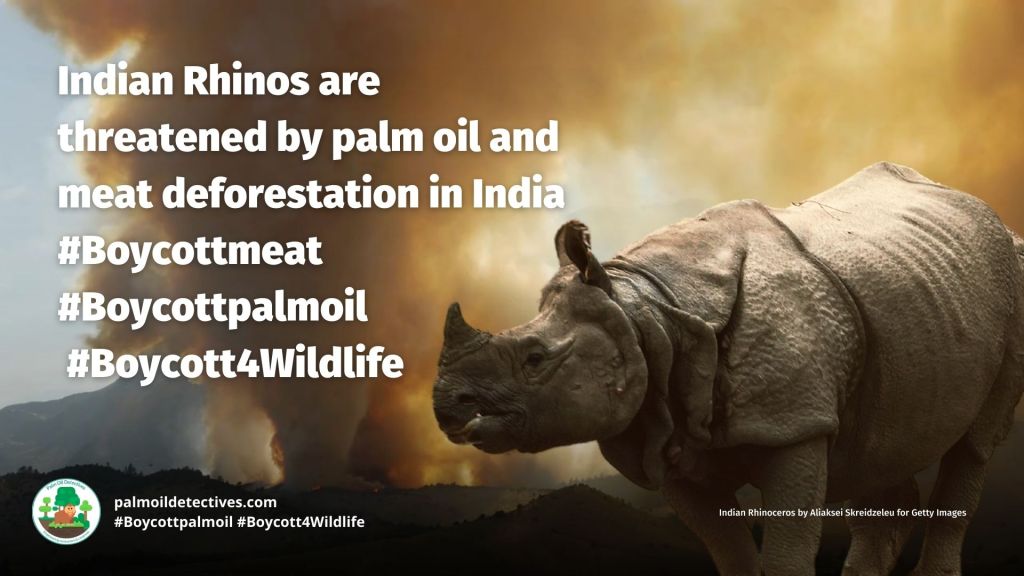
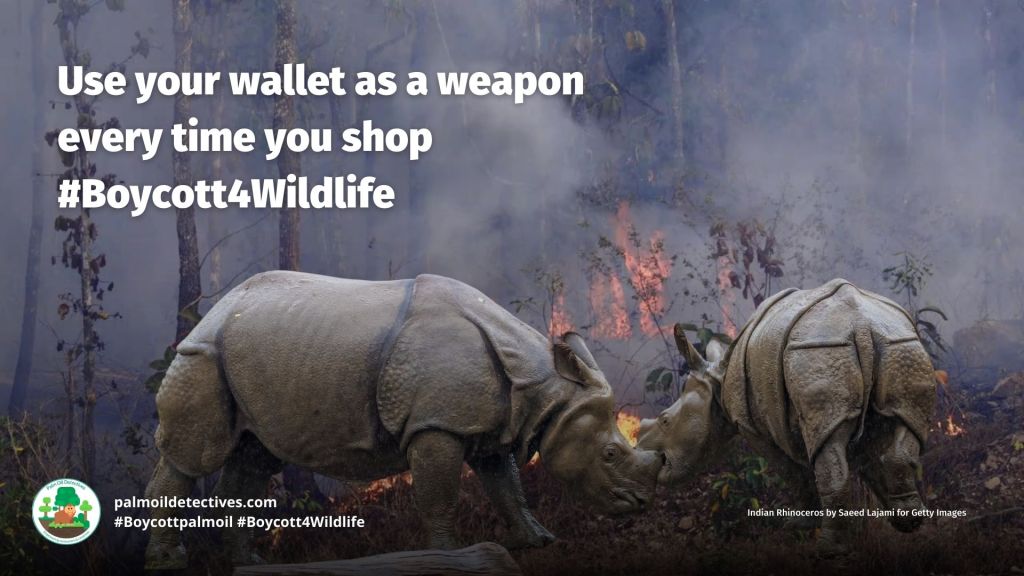
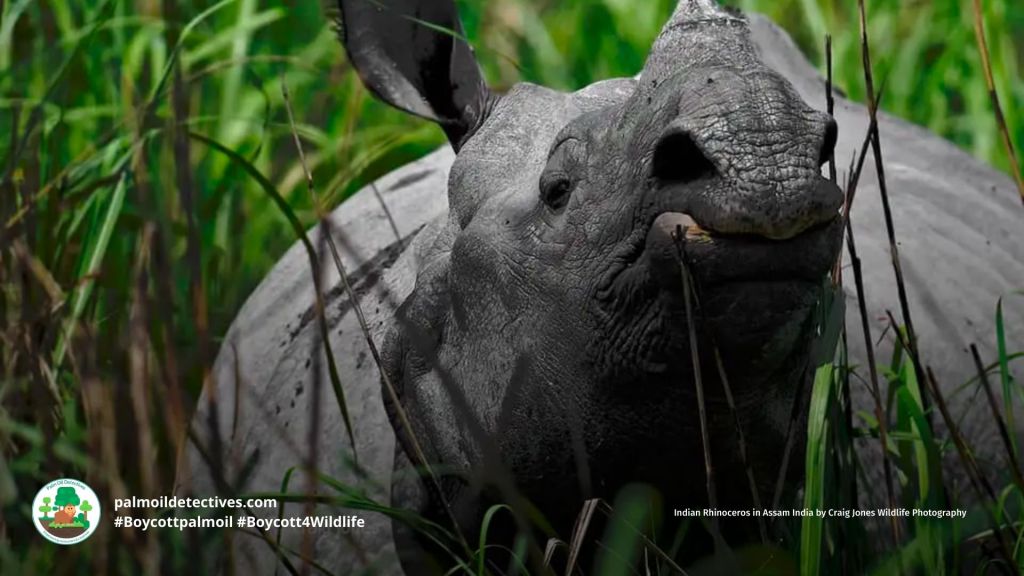
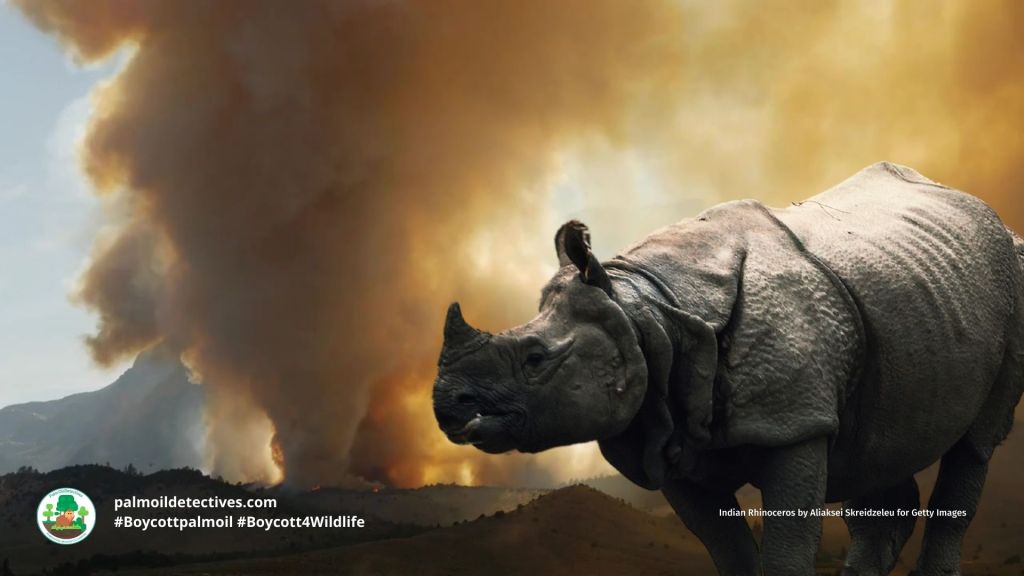
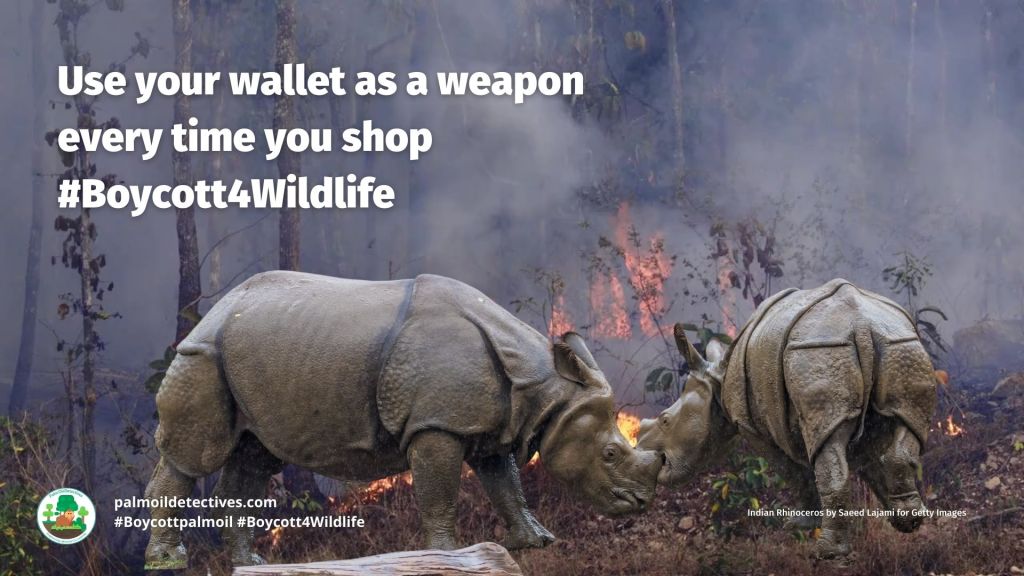
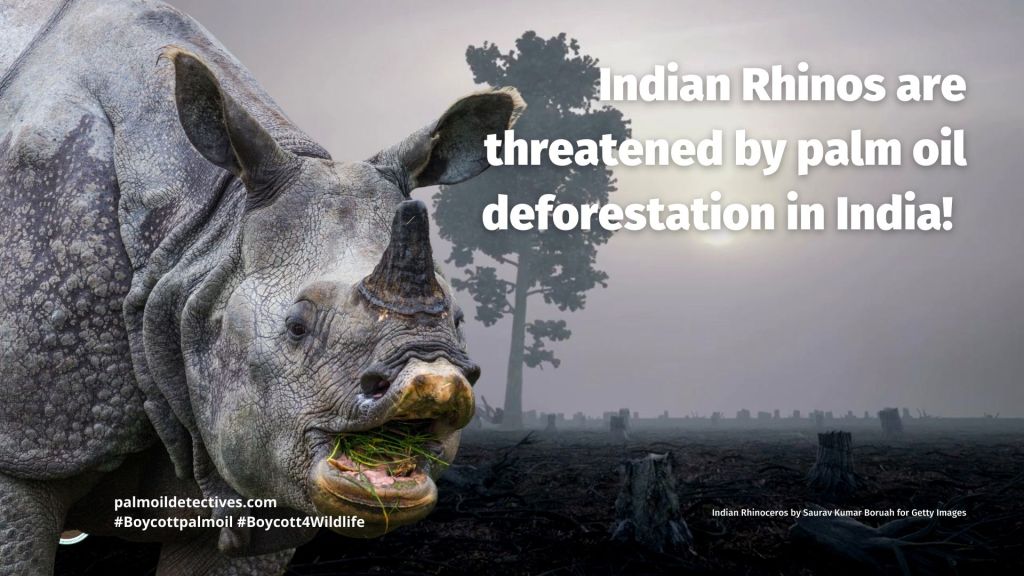
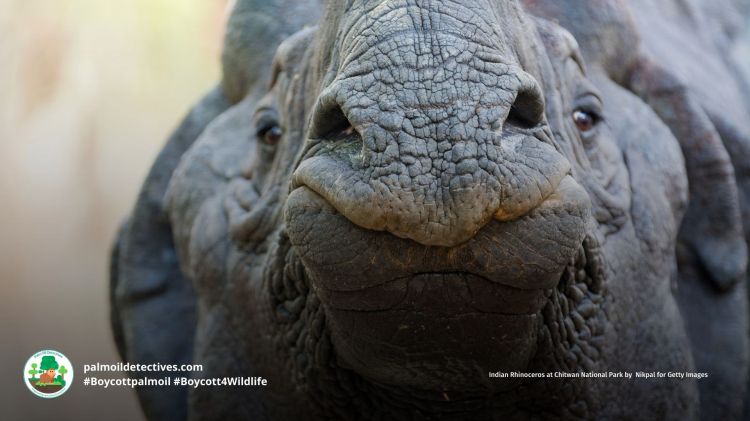
The largest of the three #rhinoceros species in #Asia, the Indian #Rhino has a distinctive and unique armour-plated look which lends them a fairytale quality that has captivated admirers for aeons. Although Indian rhino numbers have climbed over the past decades due to conservation, they are under imminent threat from the expansion of #palmoil #deforestation in the #Assam region of #India. A protected national park there is earmarked for destruction. Use your wallet as a weapon every time you shop and #Boycottpalmoil #Boycott4Wildlife
Indian #Rhinos 🇮🇳🦏🩶 are #vulnerable due to #poaching, #palmoil and #meat #deforestation in #Assam #India. Help save them each time you shop, be #vegan 🥕🥦🫶#Boycottpalmoil 🌴🪔🧐⛔️ #Boycott4Wildlife @palmoildetect https://palmoildetectives.com/2023/09/03/indian-rhinoceros-greater-one-horned-rhino-rhinoceros-unicornis/
Indian #Rhinoceros 🇮🇳🦏😿 are in trouble in #India their range in #Assam is earmarked for #palmoil #deforestation. Fight for them in the supermarket and #Boycottpalmoil 🌴🩸🚜🔥☠️🧐⛔️ #Boycott4Wildlife @palmoildetect https://palmoildetectives.com/2023/09/03/indian-rhinoceros-greater-one-horned-rhino-rhinoceros-unicornis/
Appearance & Behaviour
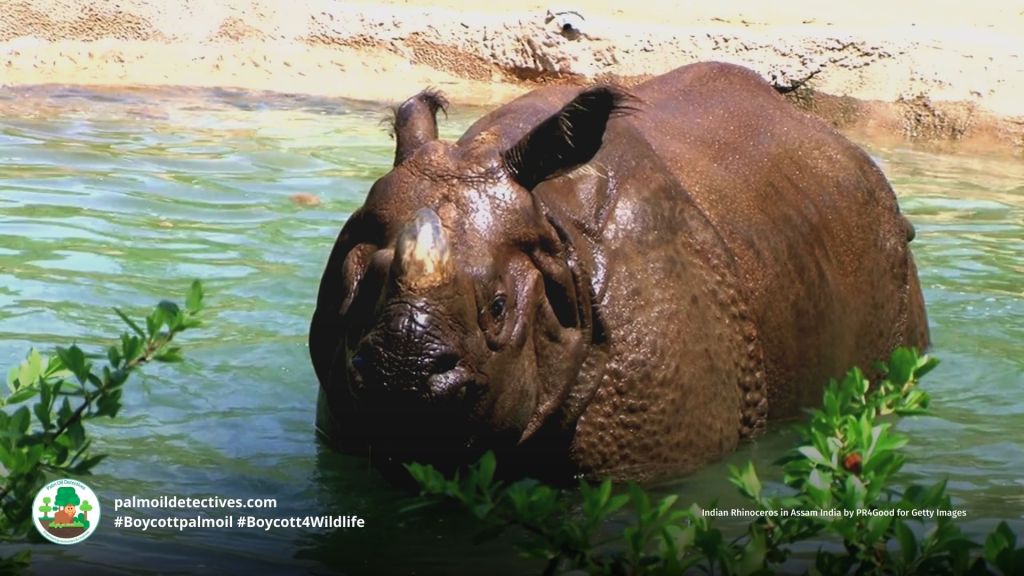
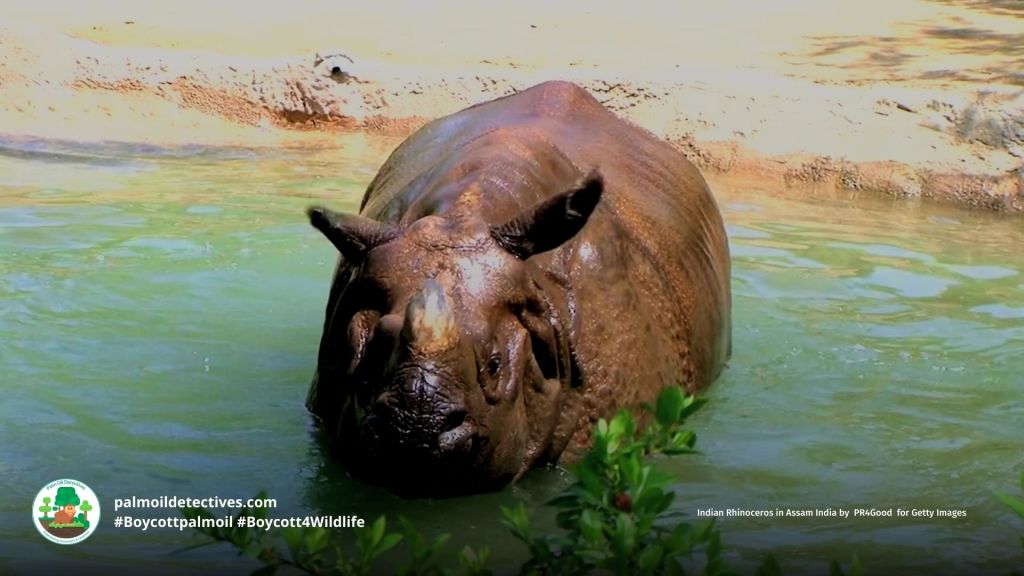
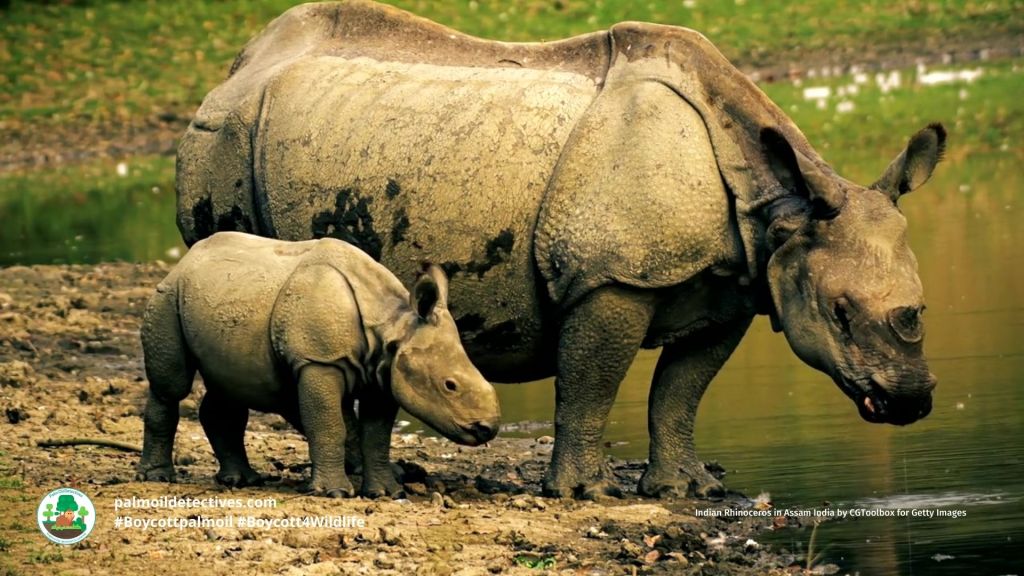
Known as the Greater One-Horned Rhinoceros or the Great Indian Rhino, the Indian Rhino is generally solitary, except when females are with their young. Loosely connected groups of a few individuals occur, especially in foraging areas or wallowing grounds. They feed mostly in the cool of the early morning, during the late afternoon, or at night. During the day, they spend a lot of time in water or wallowing in the mud in order to keep cool.
- Indian rhinos mostly feed during the cooler parts of the day: dawn, twilight and during the night. They spend the majority of the time in water or mud as a way of cooling down their large bodies.
- Male rhinos are prone to aggression when defending territories which can lead to a fight to the death. Fights include clashes of horns, charges and biting.
- They communicate with each other using up to 10 sounds including honking, roaring, snorting, shrieking, groaning, rumbling and humphing.
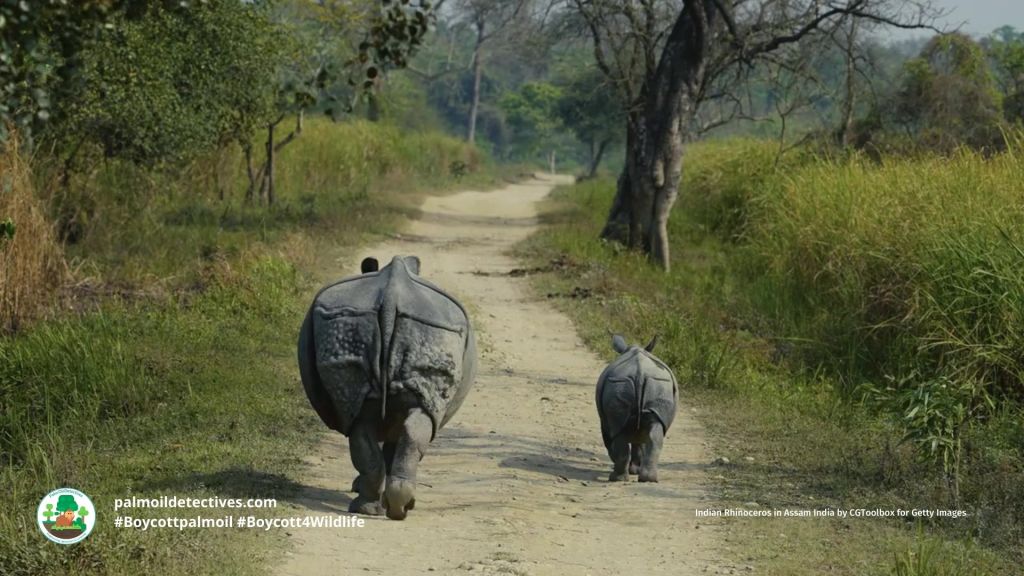
- Groupings of rhinos vary. Bulls are generally solitary except for when mating and fighting. Most are solitary however cows and calves remain together for up to 4 years after birth. Groupings of juvenile cows and bulls are common as well. During the monsoon season there are often groupings of up to 10 individuals.
- Groups of rhinos are often friendly and highly social with each other. They will greet each other by mounting flanks, nuzzling, licking, waving and bobbing their heads.


Interesting Facts
- Female cows are quite shy and generally will run away from danger in preference to attacking, although females will defend their calves. Bulls can be more aggressive especially to defend territory or during mating.
- Rhinos often bathe and wallow in muddy swamps during peak heat of the day. This is important for them to keep cool and ward off insects.
- Indian rhinos descend from “wooly” rhinos that were living in Tibet 3.6 million years ago. They possessed a hairy coat suitable to the cold alpine climate.
- Male and female Indian rhinos both have a single horn, which starts to show at around 6 years and grows to about 25 cm.
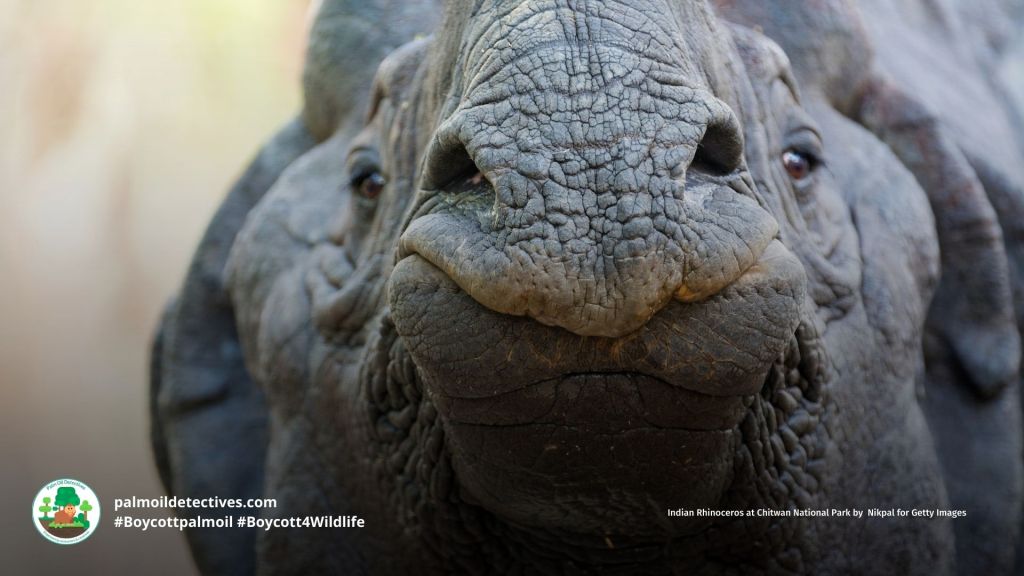
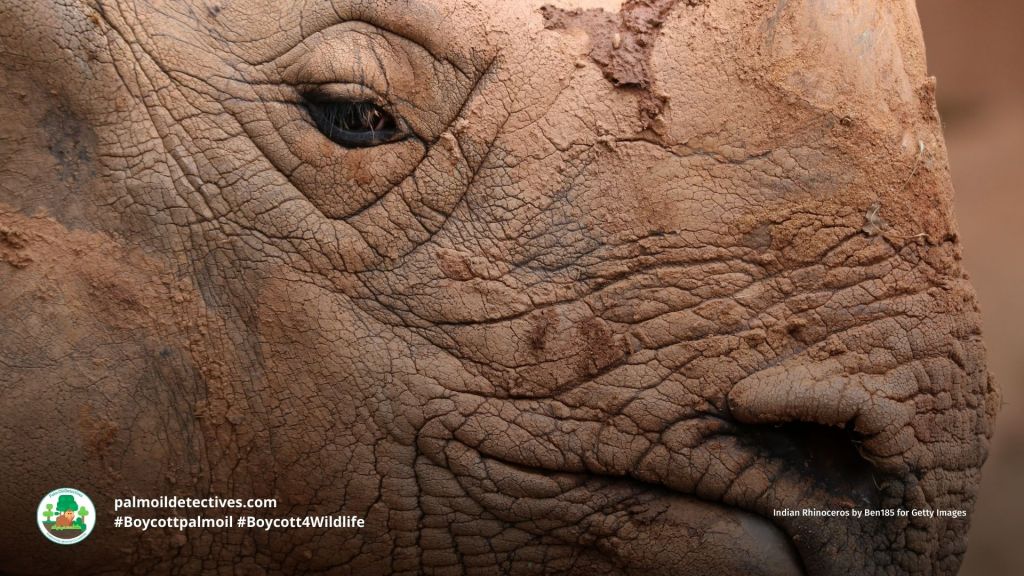
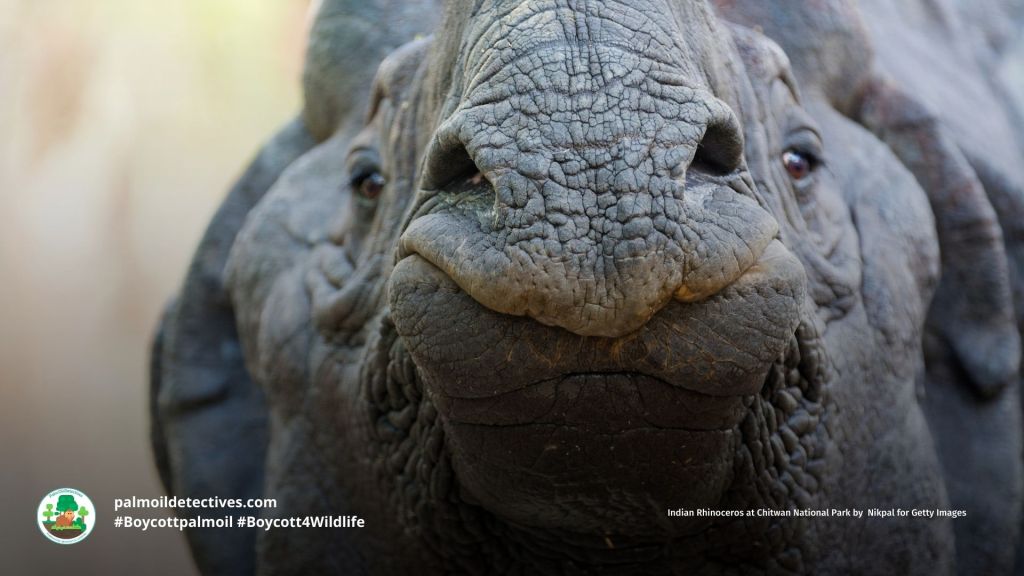
- Rhino’s skin may be as thick as 5 cm with a typical range across the species being 1.5-5 cm thick. Their pinkish coloured skin is due to the presence of abundant blood vessels under the skin. This assists them with temperature maintenance in their bodies.
- The word “rhinoceros” means “horn nose” and is from the Ancient Greek “ῥῑνόκερως”.
Threats
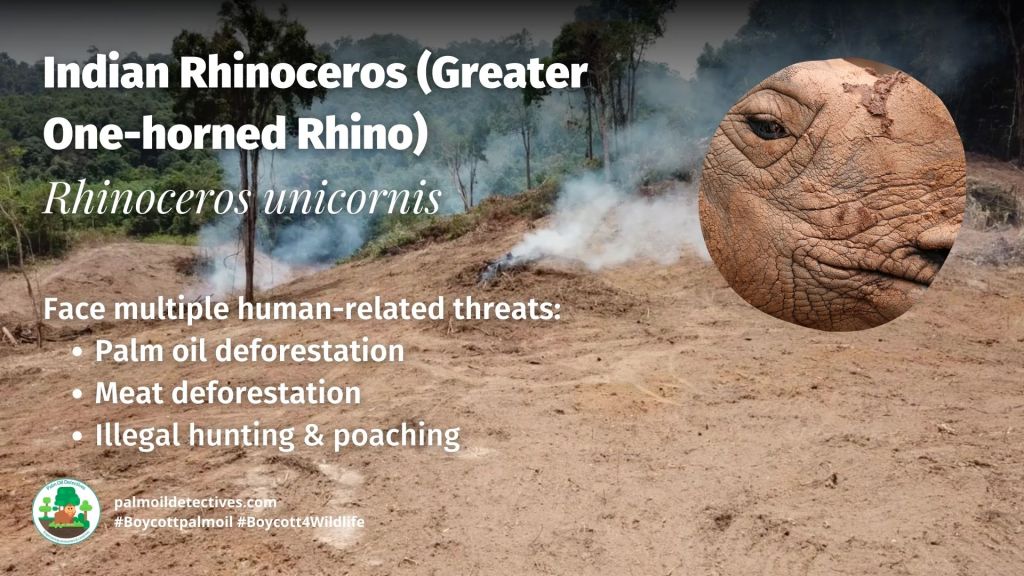
There are less than 3,500 individual Indian Rhinos left alive. The Indian Rhino faces multiple anthropogenic threats including:
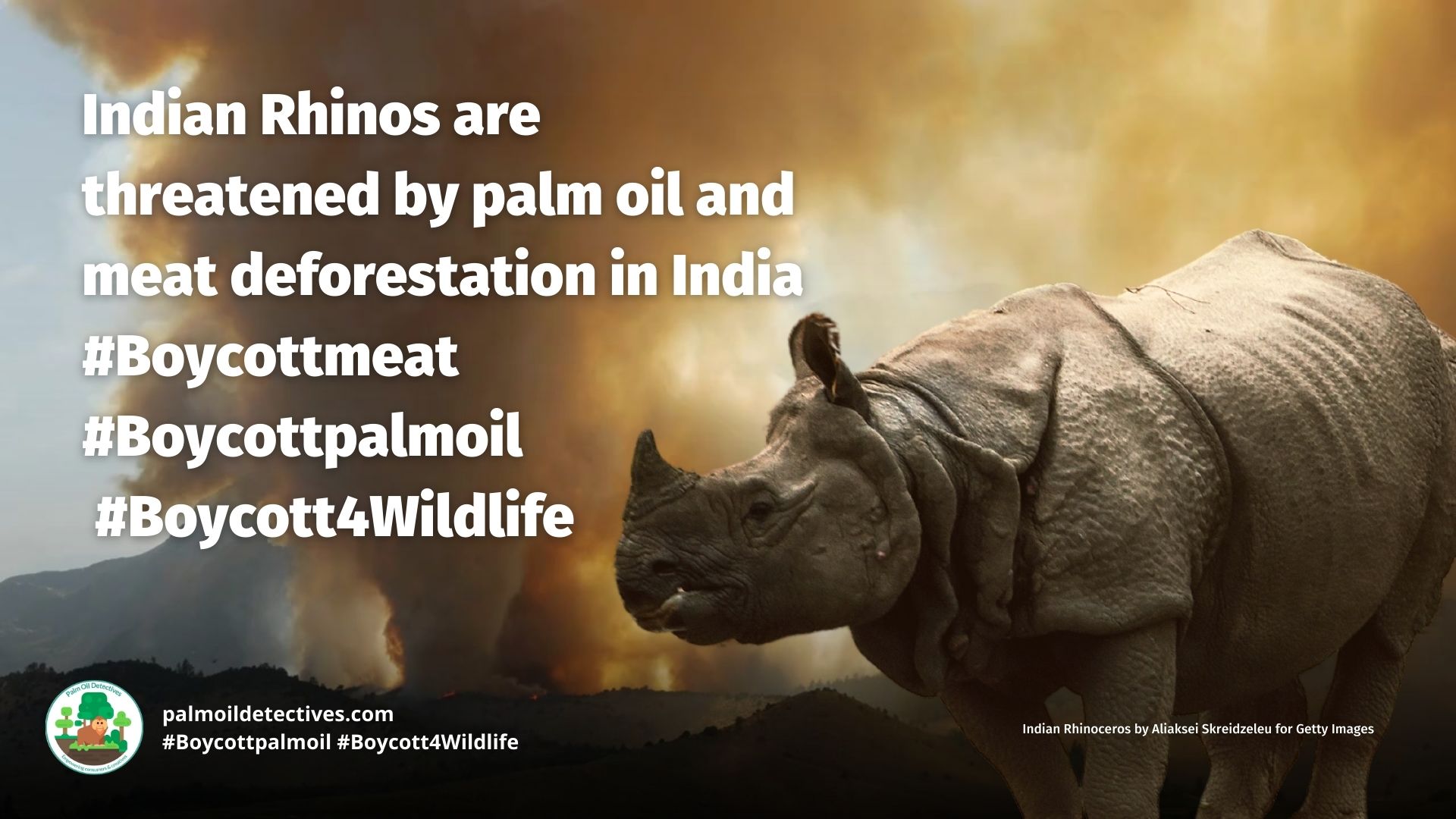
- Palm oil expansion: A significant part of their range in Assam is earmarked for destruction for palm oil.
- Livestock grazing and other agricultural expansion: Indian Rhinos leave their range of forage for food and are killed in retribution by farmers for eating crops.
- Competition with other animals for food in a shrinking range.
- Illegal poaching: During the 20th century Indian Rhinos were almost hunted to extinction. Poaching has decreased but still remains a present and looming threat. There were 150 Indian Rhinos illegally poached between 2000-2006.
Habitat
Indian rhinos prefer to live in the fertile and wet grasslands, forests and swamps of northern Asia. They once ranged across the entirety Indo-Gangetic Plain. Sadly now this has been drastically reduced to 11 sites in northern India and southern Nepal in an area spanning 20,000 km2.
85% of Indian Rhinos live in Assam, India. The small protected areas where these majestic giants roam is rapidly shrinking by palm oil and meat related deforestation.
Diet
Indian Rhinos are herbivores who eat fruit, aquatic plants, branches, grass, leaves and cultivated crops.
Mating and breeding
- Dominant bulls are aggressive with each other for mating rights with females and often fight to the death.
- Mating and pregnancy occurs throughout the year and gestation takes 480 days.
- Calves are born weighing approximately 70 kg.
- Calves are weaned after 12-18 months but will stay with their mothers for up to four years. After this time, the cow will chase away the juvenile rhino if she is preparing to give birth to another calf.
Support Indian Rhinos by going vegan and boycotting palm oil in the supermarket, it’s the #Boycott4Wildlife
Support the conservation of this species
This animal has no protections in place. Read about other forgotten species here. Create art to support this forgotten animal or raise awareness about them by sharing this post and using the #Boycottpalmoil #Boycott4Wildlife hashtags on social media. Also you can boycott palm oil in the supermarket.
Further Information
Ellis, S. & Talukdar, B. 2019. Rhinoceros unicornis. The IUCN Red List of Threatened Species 2019: e.T19496A18494149. https://dx.doi.org/10.2305/IUCN.UK.2019-3.RLTS.T19496A18494149.en. Accessed on 11 November 2022.
Indian Rhinoceros on Wikipedia: https://en.wikipedia.org/wiki/Indian_rhinoceros

How can I help the #Boycott4Wildlife?
Take Action in Five Ways
1. Join the #Boycott4Wildlife on social media and subscribe to stay in the loop: Share posts from this website to your own network on Twitter, Mastadon, Instagram, Facebook and Youtube using the hashtags #Boycottpalmoil #Boycott4Wildlife.
2. Contribute stories: Academics, conservationists, scientists, indigenous rights advocates and animal rights advocates working to expose the corruption of the palm oil industry or to save animals can contribute stories to the website.





3. Supermarket sleuthing: Next time you’re in the supermarket, take photos of products containing palm oil. Share these to social media along with the hashtags to call out the greenwashing and ecocide of the brands who use palm oil. You can also take photos of palm oil free products and congratulate brands when they go palm oil free.
4. Take to the streets: Get in touch with Palm Oil Detectives to find out more.
5. Donate: Make a one-off or monthly donation to Palm Oil Detectives as a way of saying thank you and to help pay for ongoing running costs of the website and social media campaigns. Donate here
Discover more from Palm Oil Detectives
Subscribe to get the latest posts sent to your email.
 Palm Oil Detectives
One thought on “Indian Rhinoceros (Greater One-horned Rhino) Rhinoceros unicornis”