
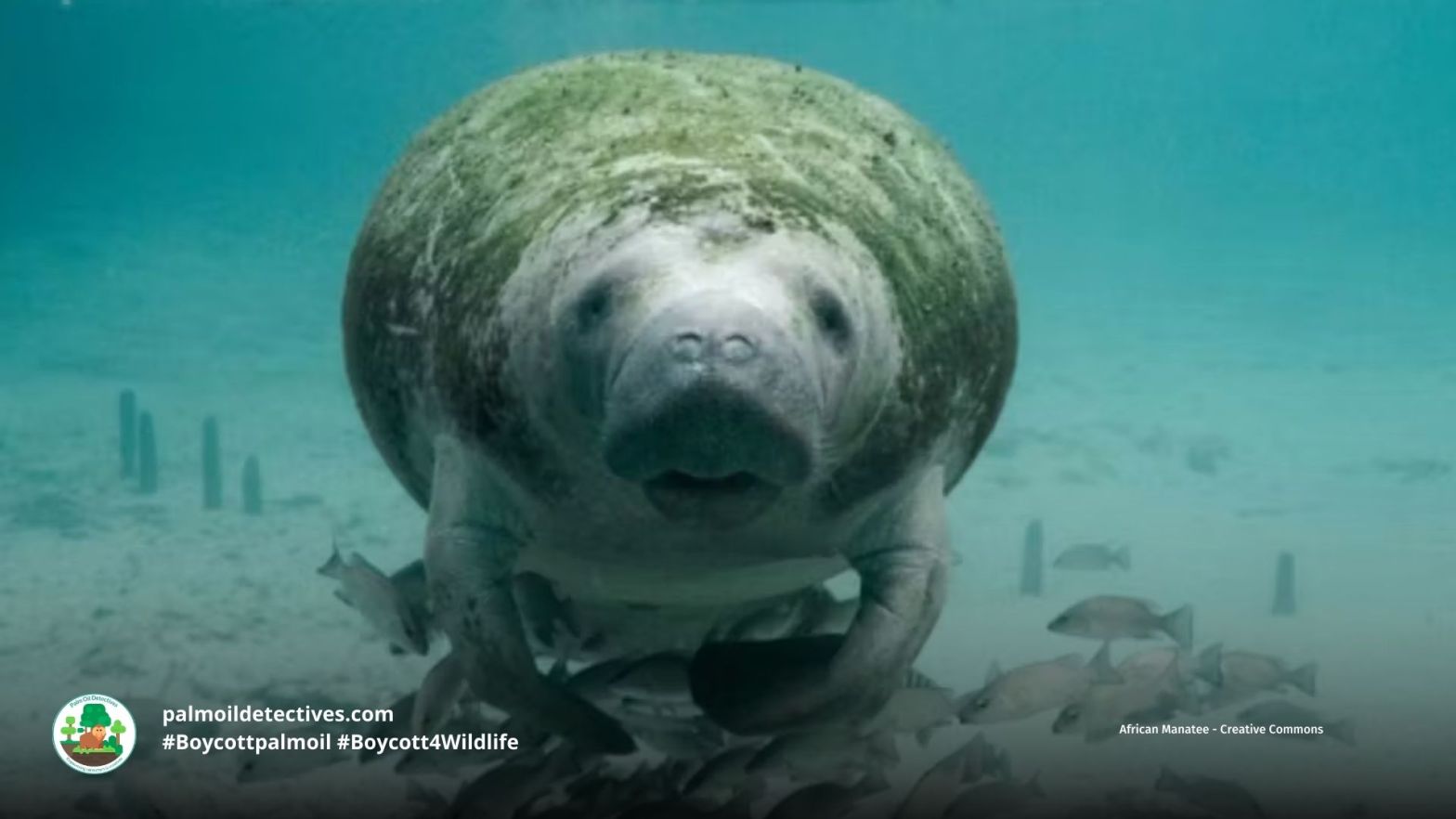
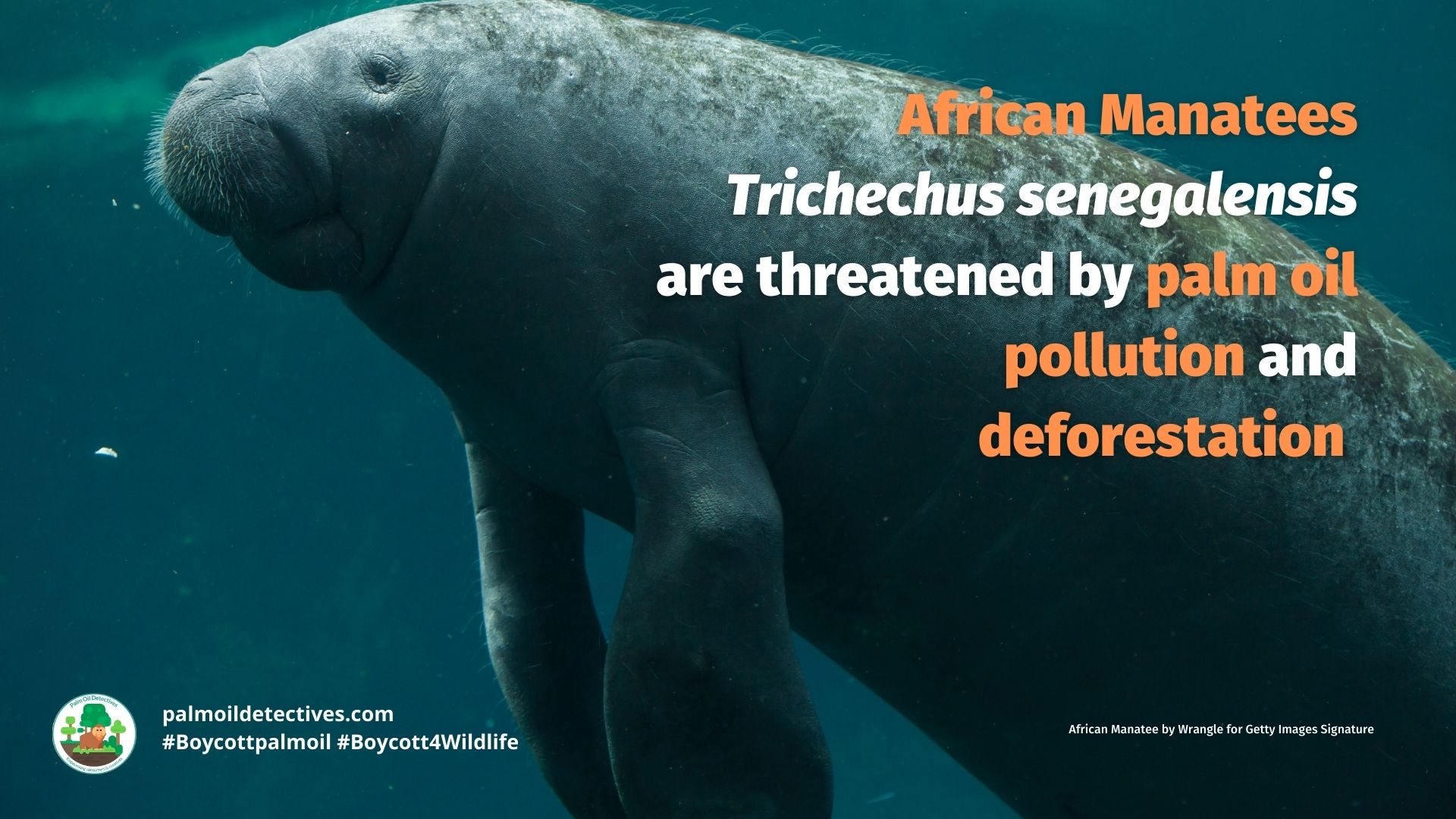
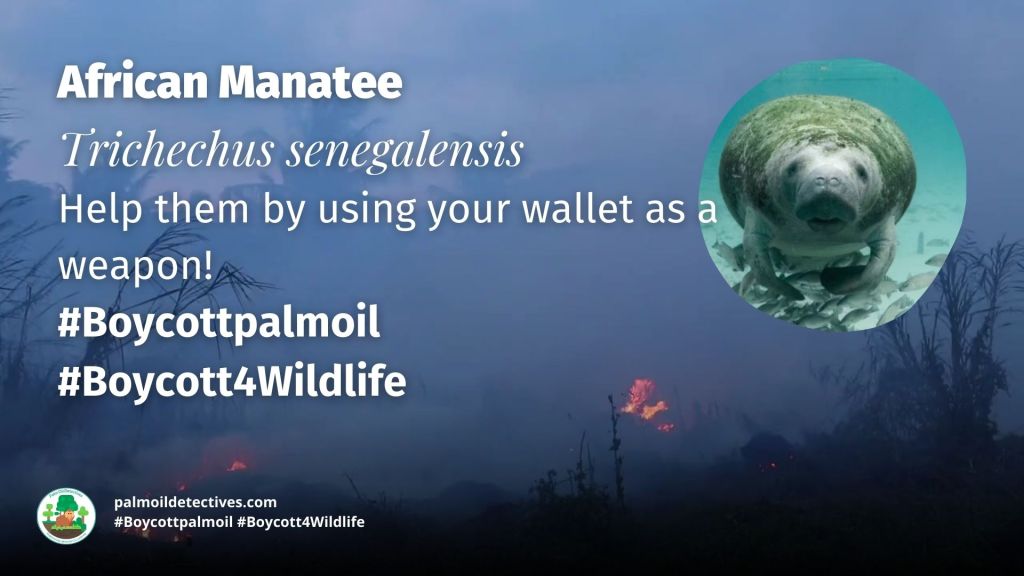
African Manatee Trichechus senegalensis
Vulnerable
Native – Extant (resident)
Angola; Benin; Cameroon; Chad; Congo; Congo, The Democratic Republic of the; Côte d’Ivoire; Equatorial Guinea; Gabon; Gambia; Ghana; Guinea; Guinea-Bissau; Liberia; Mali; Mauritania; Niger; Nigeria; Senegal; Sierra Leone; Togo
In the folklore of West Africa, there’s a fascinating character called Maame Water, believed to be a goddess of the sea, she symbolises wealth and beauty. Maame Water is none other than the African Manatee!
The Serer people of Senegal, the Gambia, and Mauritania hold the African Manatee in high regard, considering them sacred and a guardian of the secrets of the future according to their creation myth. This precious species is vulnerable from palm oil deforestation, hunting and pollution. They perform an essential service to mangrove ecosystems by keeping them healthy. Help them survive and #Boycottpalmoil #Boycott4Wildlife every time you shop!
African Manatees 🐋💙 have been a fixture in #African myths for millennia 🇨🇩🇨🇲🇬🇭🇱🇷 Now they a threatened by #palmoil 🌴🩸🔥 #hunting, #cocoa and the pet trade. Help them every time you shop and #Boycottpalmoil 🌴🪔⛔️ #Boycott4Wildlife @palmoildetect https://palmoildetectives.com/2023/10/08/african-manatee-trichechus-senegalensis/
#African #Manatees 🐋🩵 are #vulnerable from #palmoil 🌴🪔 #cocoa 🍫🫕 #deforestation and the #pet and #zoo trade. Fight for them and #Boycottpalmoil 🌴🪔☠️🔥🧐⛔️ #Boycott4Wildlife @palmoildetect https://palmoildetectives.com/2023/10/08/african-manatee-trichechus-senegalensis/
Appearance & Behaviour
African manatees are usually content with their own company, but they occasionally join forces with a few fellow manatees to rest together. They’re versatile creatures, active during both day and night, exploring their watery world. When the sun is high, you might spot them resting in the shallows, hidden away among mangrove roots or floating plants. And don’t be fooled by their peaceful appearance—they’re just avoiding the hustle and bustle of human activity.
African manatees enjoy their solitude but occasionally gather in small groups to rest together. They have a knack for finding quiet spots in shallow water, like mangrove roots or under floating plants, to take a break. You’ll hardly notice them gliding through the water as they move with grace and gentleness. Depending on the region, their activity patterns may vary, with some being active both during the day and night.
Fast Facts
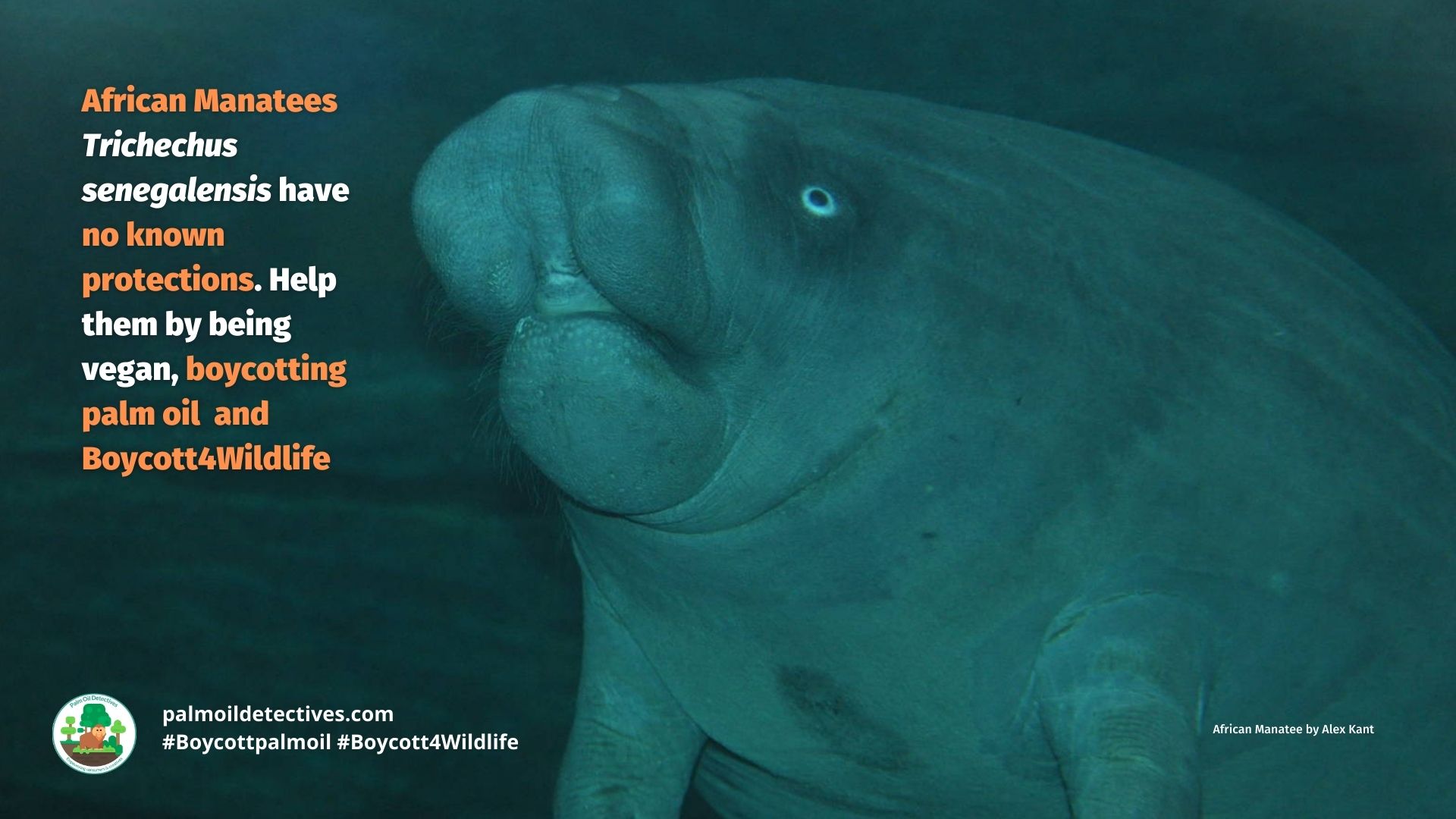
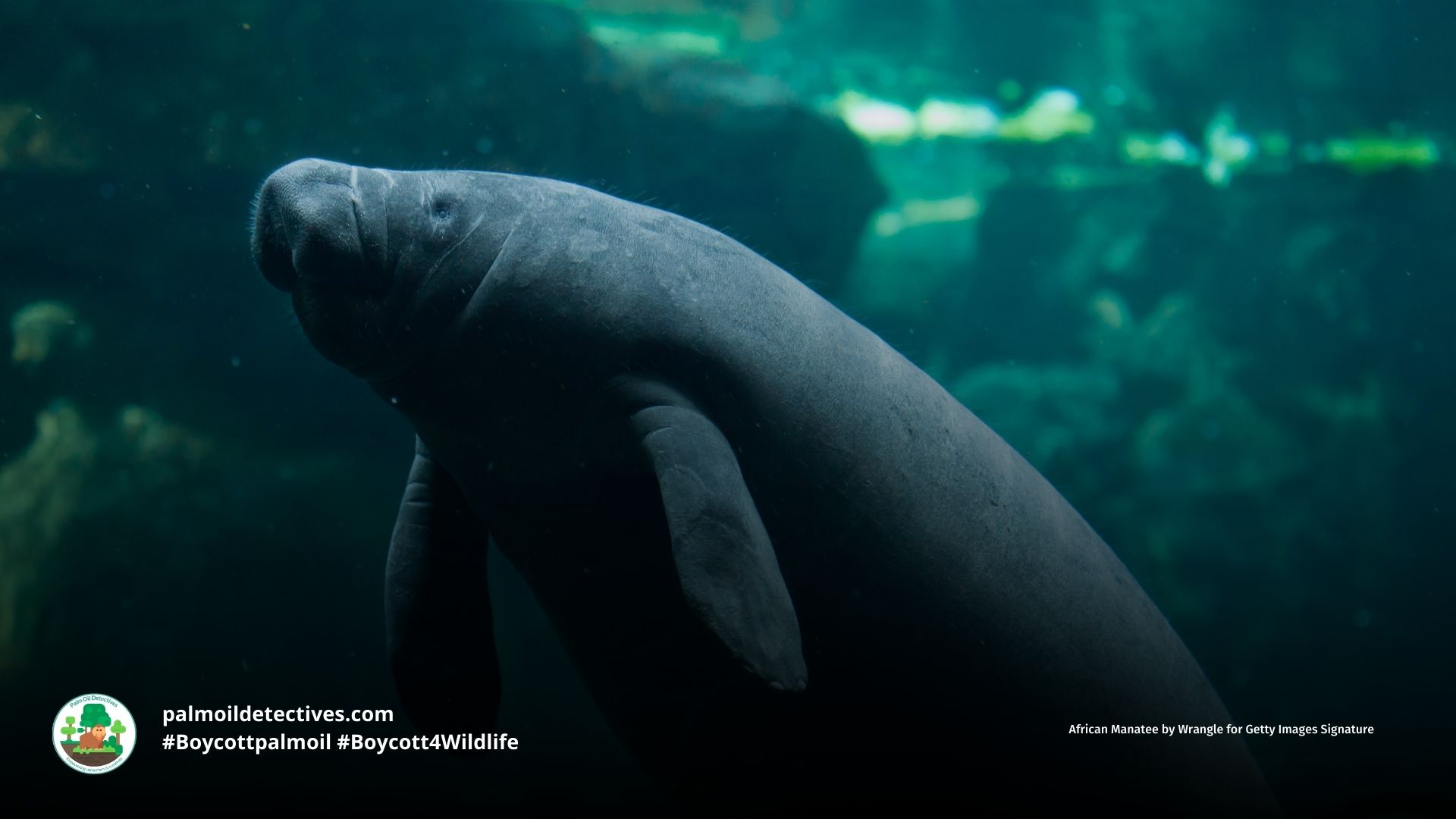
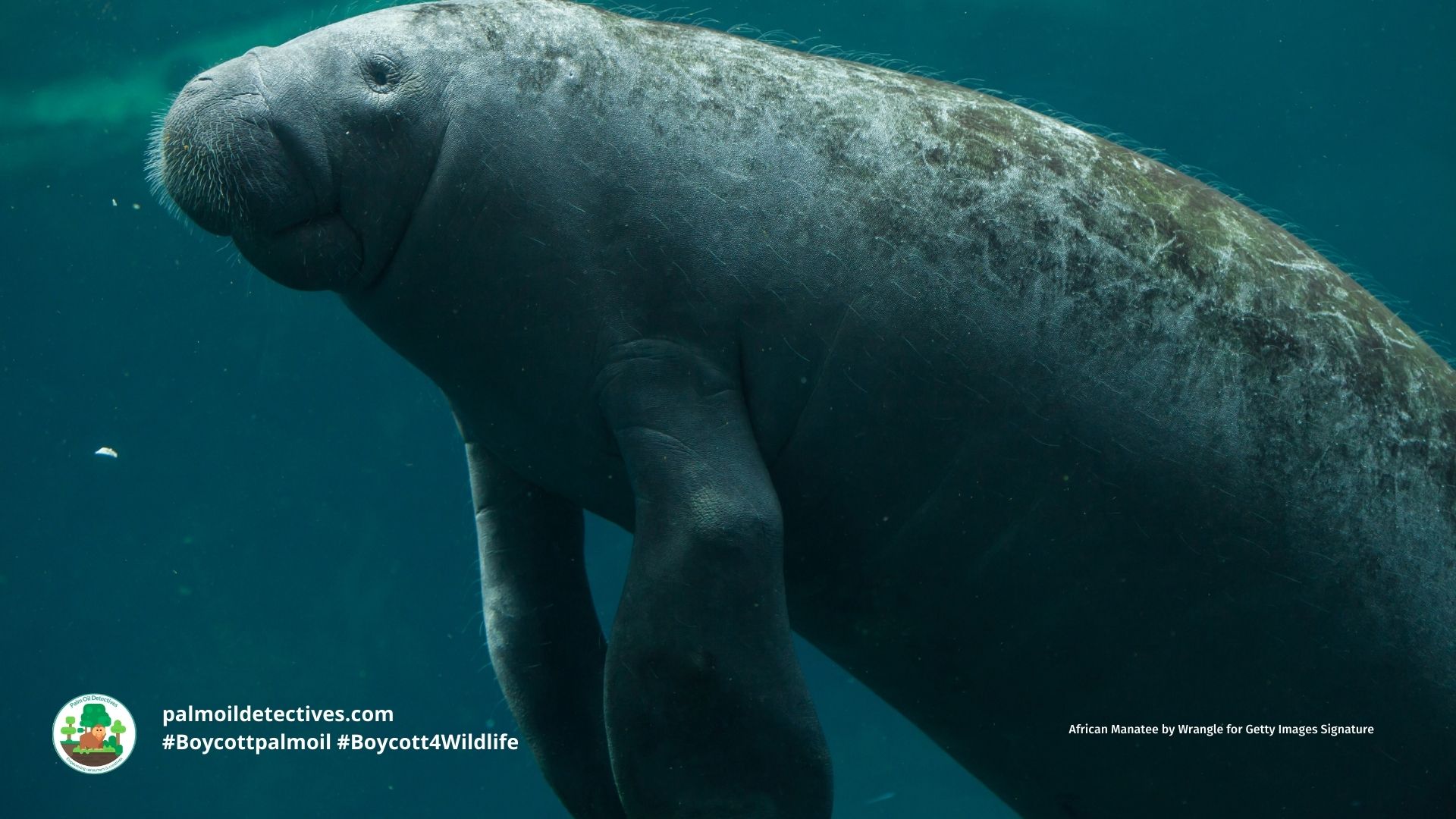
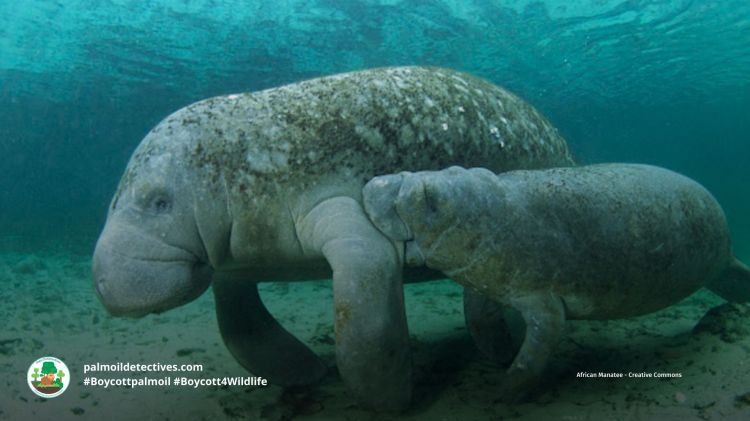
- African manatees resemble the American manatees but have distinctive white markings on their abdomens.
- African manatees have large front flippers used for paddling and bringing food to their mouths.
- They rely on strong molars to chew vegetation, their primary food source.
- When born, manatees have small incisors that are eventually lost, and new molars grow in their place.
- African manatees consume 4 to 9 percent of their body weight in wet vegetation daily.
It is crucial to protect these amazing beings and their habitats. One way you can make a difference is by boycotting palm oil, as its production often leads to deforestation and the destruction of important manatee habitats. By using your wallet as a weapon and opting for palm oil-free products, you can help them!

Threats
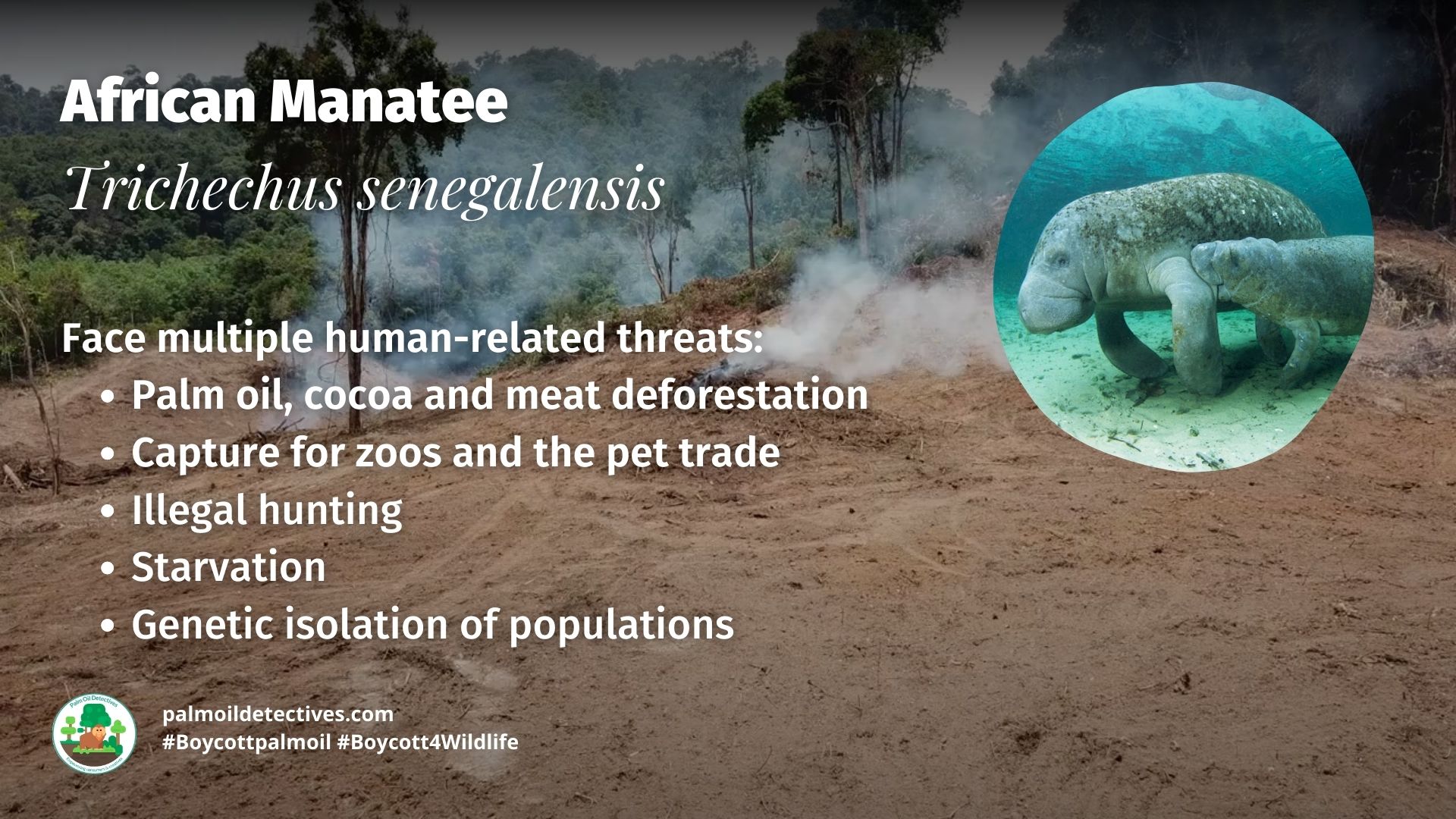
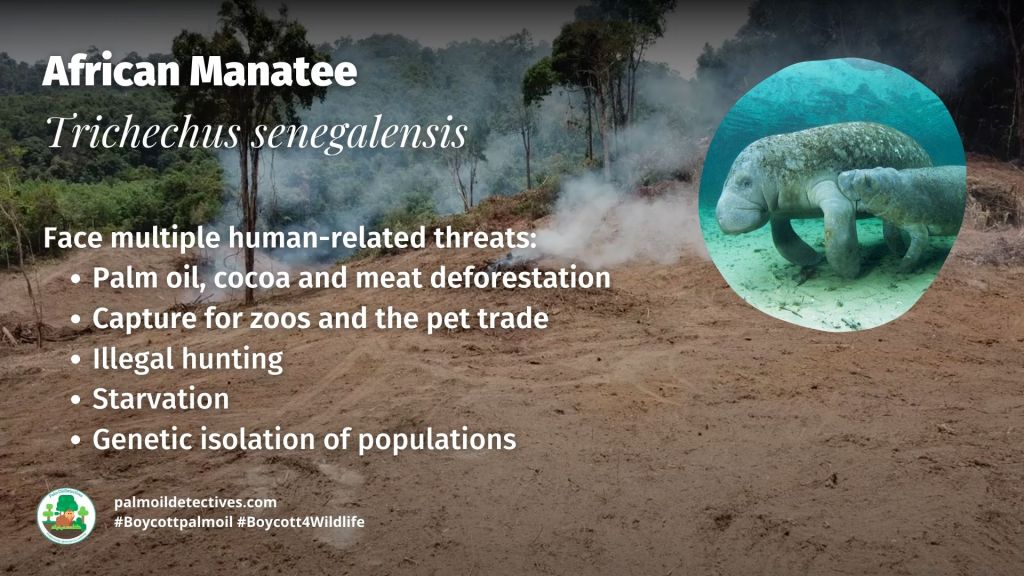
African Manatees face several major threats:
- Deforestation for palm oil, cocoa and other commodities: pesticide run-off from these industries into rivers is devastating to populations.
- Illegal poaching: for parts (meat, oil, bones, skin)
- Zoo and pet trade: Capture and sale to zoos, aquariums, and as pets
- Infrastructure growth: Increased damming and hydroelectric power use
- Genetic isolation of populations
- Accidents with turbines in dams: along with fishing nets
- Climate change and extreme weather incidents: droughts, tidal changes.
- Starvation during the dry season in the Niger River
Habitat
African manatees thrive in a variety of habitats across West and Central Africa. They can be found in rivers, estuaries, lagoons, coastal bays, lakes, and reservoirs. These gentle creatures prefer calm waters with easy access to food and freshwater.
Diet
These herbivorous beauties have a diverse palate. They munch on a variety of aquatic plants, grasses, and emergent vegetation. From Vossia to Cyperus papyrus, they savor the flavors of their leafy feasts. In certain areas, they might even surprise you by snacking on small fish or delectable mollusks. These manatees definitely know how to enjoy a well-rounded meal!
Mating and breeding
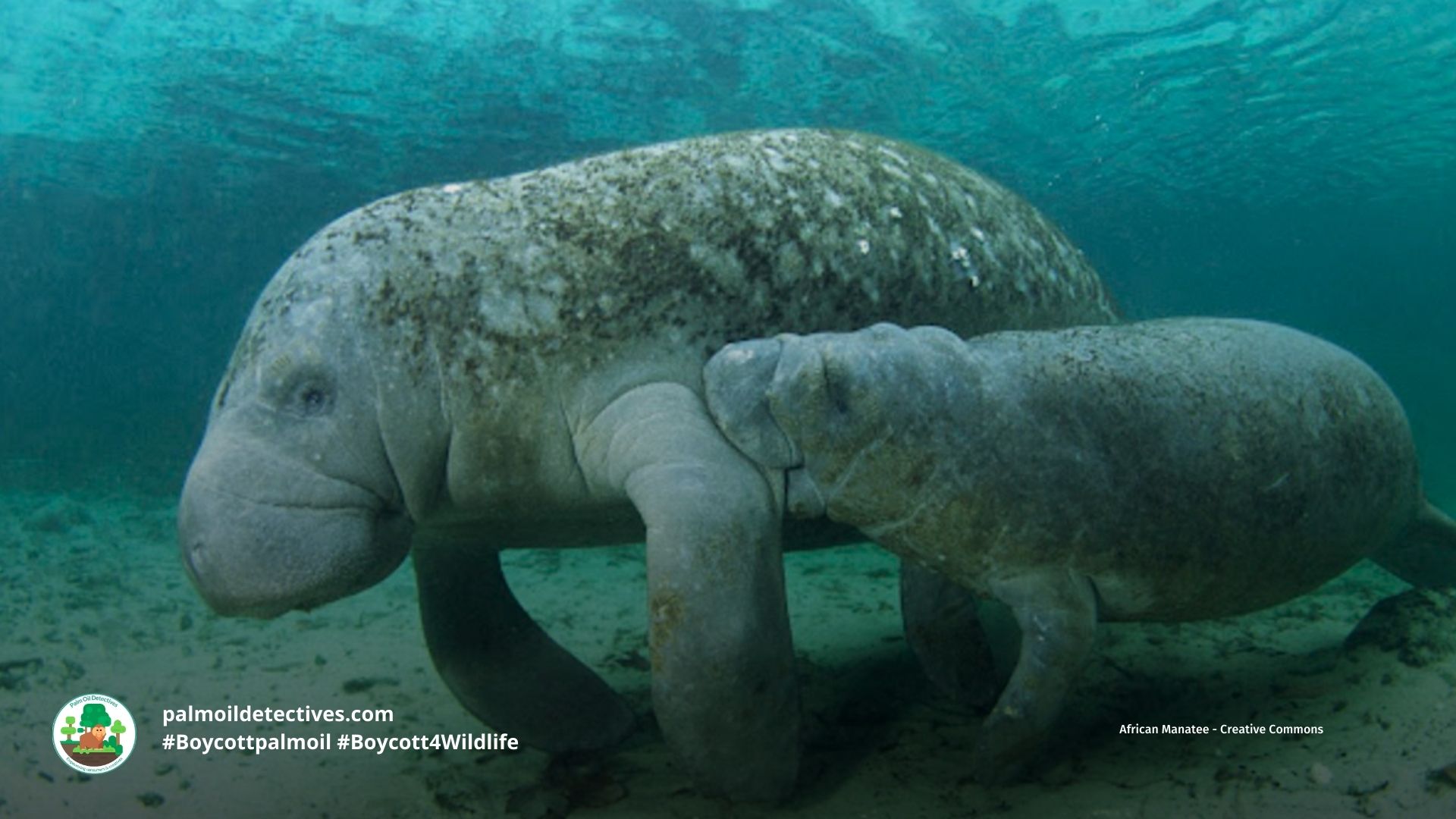
When it comes to family, African manatees keep it small and sweet. Mothers and calves form a strong bond, sticking together as a unit. While we don’t know all the details about their love lives, we have observed mating herds in various African countries. The little ones stay close to their moms for quite some time, but we’re still learning about their growth and development.
Support African Manatee by going vegan and boycotting palm oil in the supermarket, it’s the #Boycottpalmoil #Boycott4Wildlife
Support the conservation of this species
This animal has no protections in place. Read about other forgotten species here. Create art to support this forgotten animal or raise awareness about them by sharing this post and using the #Boycottpalmoil #Boycott4Wildlife hashtags on social media. Also you can boycott palm oil in the supermarket.
Further Information
Keith Diagne, L. 2015. Trichechus senegalensis (errata version published in 2016). The IUCN Red List of Threatened Species 2015: e.T22104A97168578. https://dx.doi.org/10.2305/IUCN.UK.2015-4.RLTS.T22104A81904980.en. Accessed on 02 June 2023.
1. African Manatee on Wikipedia – https://en.wikipedia.org/wiki/African_manatee
2. African Manatee on Animalia.bio – https://animalia.bio/african-manatee
3. How West African Manatees help keep mangroves healthy, One Earth.

How can I help the #Boycott4Wildlife?
Take Action in Five Ways
1. Join the #Boycott4Wildlife on social media and subscribe to stay in the loop: Share posts from this website to your own network on Twitter, Mastadon, Instagram, Facebook and Youtube using the hashtags #Boycottpalmoil #Boycott4Wildlife.
2. Contribute stories: Academics, conservationists, scientists, indigenous rights advocates and animal rights advocates working to expose the corruption of the palm oil industry or to save animals can contribute stories to the website.




3. Supermarket sleuthing: Next time you’re in the supermarket, take photos of products containing palm oil. Share these to social media along with the hashtags to call out the greenwashing and ecocide of the brands who use palm oil. You can also take photos of palm oil free products and congratulate brands when they go palm oil free.
4. Take to the streets: Get in touch with Palm Oil Detectives to find out more.
5. Donate: Make a one-off or monthly donation to Palm Oil Detectives as a way of saying thank you and to help pay for ongoing running costs of the website and social media campaigns. Donate here
Discover more from Palm Oil Detectives
Subscribe to get the latest posts sent to your email.
 Palm Oil Detectives
It is important to read labels so that you are not buying products with palm oil.
LikeLiked by 2 people