
What does it mean when you encounter snakes slithering along paths or find a bird nest with eggs? For Indigenous peoples in Malaysia, these are tell-tale signs passed down by their ancestors discouraging them from using the land. Instead, they must protect the area from unscrupulous developments.
The #Indigenous people’s respect for the land and their traditional #agriculture and #farming methods can teach us all to adapt to extreme weather and #climatechange. Take action and #BoycottPalmOil #Boycott4Wildlife 🌴🩸🚜☠️🧐⛔️ @palmoildetect https://palmoildetectives.com/2023/12/03/indigenous-farming-knowledge-is-science-not-superstition/
Written by By Dr Su-Hie Ting, Dr Gabriel Tonga Noweg, and Dr Yvonne Michelle Campbell, Universiti Malaysia Sarawak in Kuching for 360Info.org and republished under the Creative Commons Licence.
The Indigenous people’s respect for the land and their traditional agricultural practices can teach us to adapt to extreme weather conditions.
In 2021, Malaysia lost 123,000 hectares of natural forest. This is equivalent to 87 million tonnes of carbon emissions. The destruction ruined thousands of food, energy and livelihood sources for Indigenous communities.
Researchers say agriculture is a significant contributor to anthropogenic global warming and reducing agricultural emissions — largely methane and nitrous oxide — could play a significant role in climate change mitigation. American economist William R Cline believes global warming reduces yields because crops speed through their development, producing less grain as higher temperatures interfere with the ability of plants to retain moisture.
In large-scale farming, using bulldozers and other mechanised farming equipment compacts the soil, reducing the soil’s water storage capacity and increasing surface runoff during heavy rain. According to the German environmental organisation BUND, soil structure and humus levels in the soil are vital for flood protection.
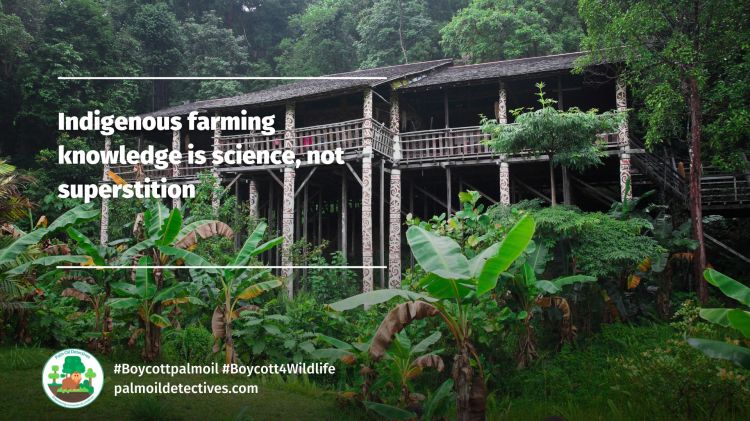
The Indigenous peoples in Malaysia have great respect for the land. The Bidayuh’s folktales or dondan teach the people that the land they inhabit does not belong to them, but to the spirits of the land.
Their folk wisdom on agricultural practices is based on that respect for the land. They don’t act as masters or owners of the land. To them, the land is a shared treasure, passed down from generation to generation.
The Bidayuhs will perform a ‘ngawah’ ritual on a selected piece of land a few months before carrying out any paddy planting activities. A traditional priest performs the Gawai ceremonies and presents offerings to spirits.
When they notice a particular creeping plant, the Indigenous people will not disturb or use that area. This isn’t mere superstition. There is science behind it.
Companion planting is when two plants are grown close together for the benefit of one or both plants. The presence of certain plant species can indicate that the land is not suitable for crops, like paddy. Some plants compete for nutrients or space if they are planted too close together. Other plants like sunflower seeds contain a toxin that prevents potatoes from growing fully, and since insects such as tomato hornworm and certain types of fungus thrive on corn and tomatoes, planting them together can contribute to a massive fungus attack.
The Indigenous communities in Sarawak have adopted environmentally responsive farming practices to adapt to extreme climate changes
A big issue is declining water resources due to unpredictable rainfall patterns. In the past, the farmers in Sarawak knew that there would be the northeast monsoon season at the end of the year until February and there would be dry weather from March to October. Floods, if any, would occur during the monsoon season.
However, in recent years rainfall has become unpredictable. Serious flooding in urban areas has been more prevalent in the middle of the year. This is because consecutive rainfall for two to four hours may cause flash floods. Indigenous farmers have ways to adjust their farming activities in anticipation of floods but they don’t have extensive irrigation systems to handle drought. Dry weather can cause crop failure, decrease crop yield and disrupt access to drinking water for livestock.
The land needs water to flourish. Soil cover is important to prevent or reduce erosion and flooding. It also acts as a sponge to soak up excess water and stabilise temperature. Soil moisture affects the weather, affecting both temperature and precipitation. As the temperature rises, the evaporation rate of soil moisture increases. The increased soil moisture evaporation helps cool the ground.
The Indigenous people know that the forest acts as a sponge
It retains water during rainy days, and gradually releases the water during dry periods. The traditional response is to improve the condition of the forest in their catchment area by planting more trees such as timber trees, bamboo, rattan and wild fruit trees.
Indigenous communities use plant resources for furniture and construction, consumption and medicinal purposes although different communities use plants in different ways. The Bidayuhs use Tongkat Alior ‘longjack’, as a remedy for hypertension while the Malays use it to enhance male sexual performance.
Planting more trees helps increase soil cover. In the long run, it will improve the capacity of the forest and water catchment areas to retain more water. This will ensure a more sustainable source of drinking water for the villages and maintain a stable temperature for the environment.
One of the main means of livelihood for the Indigenous people is wet paddy farming in lowland areas near rivers. The lower floodplain has fertile soil but is subject to flood damage during extreme weather conditions. Villagers use streams to irrigate their fields by making weirs or small dams to divert water to the paddy fields. However, this has become difficult as floods are becoming more frequent and unpredictable.
Paddy farmers have two traditional responses to flooding based on traditional knowledge. They farm on the slightly higher ground less likely to be affected by major and prolonged flooding. But since they avoid the lowland, they are left with a smaller area to plant paddy. In addition, paddy planted on higher ground does not grow well due to poorer irrigation and less fertile soil.
Farmers also adjust to changing climatic conditions by predicting the likelihood of a wet or dry year. By observing weather trends in the few months before planting season (normally between April and August), they decide whether to plant on the floodplain or higher ground.
This Indigenous knowledge for forecasting weather relies on signs from the environment. At the start of the dry season, usually after March, if there is a mist or fog early in the morning, it means it will be a dry year.
Birds can predict weather too. To the indigenous, if the ‘Burung Kangkok’ (hawk-cuckoo) chirps loudly and noisily when the fruit trees are about to blossom, it means it will be a good fruiting year. Researchers have discovered birds can detect rising and falling barometric pressure and can predict bad or cold weather when they detect a low-pressure centre or a cold front approaching.
Indigenous agricultural practices are different and interesting as a sustainable way of living because they are based on paying respect to the land. The main issue they have to contend with is the lack of water, and they have to develop farming strategies to effectively work with the land – rather than conquering or damaging the land.
Traditional agricultural practices can teach us to adapt to extreme weather conditions. However, Indigenous mitigation measures are difficult to implement because their traditional practices are at odds with large-scale farming.
Large-scale farming will increase to cater to the global population. Feeding a population of 9.1 billion in 2050 would require raising overall food production by some 70 percent between 2005 and 2050. Large-scale farming causes a reduction of the water storage capacity of the soil and, among other factors, will lead to rising temperatures. Large-scale farming contributes to climate change. Yet it is a necessity to feed the global population.
Professor Dr Su-Hie Ting is a lecturer at the Faculty of Language and Communication, Universiti Malaysia Sarawak (UNIMAS). Her research interests include ethnic groups and their language and culture.
Professor Dr Gabriel Tonga Noweg has a background in natural resource management, forestry, environmental conservation, biodiversity management and ethnobotany. He is currently a Principal Fellow at the Institute of Biodiversity and Environmental Conservation, UNIMAS. His current research interests include ethnobotany (medicinal plants), ecology of conservation areas, conservation of community-owned forests, ecotourism and biodiversity assessment. He is a registered consultant with Natural Resource and Environment Board (NREB) in Sarawak, Malaysia.
Dr Yvonne Michelle Campbell from the Faculty of Language and Communication, UNIMAS researches ethnolinguistics and Indigenous worldviews and has published journal papers on folk wisdom and cultural practices of the Bidayuh in Sarawak.
Originally published under Creative Commons by 360info™.
Written by By Dr Su-Hie Ting, Dr Gabriel Tonga Noweg, and Dr Yvonne Michelle Campbell, Universiti Malaysia Sarawak in Kuching for 360Info.org and republished under the Creative Commons Licence.
ENDS
Read more about indigenous rights and indigenous medicine and ways of seeing on Palm Oil Detectives
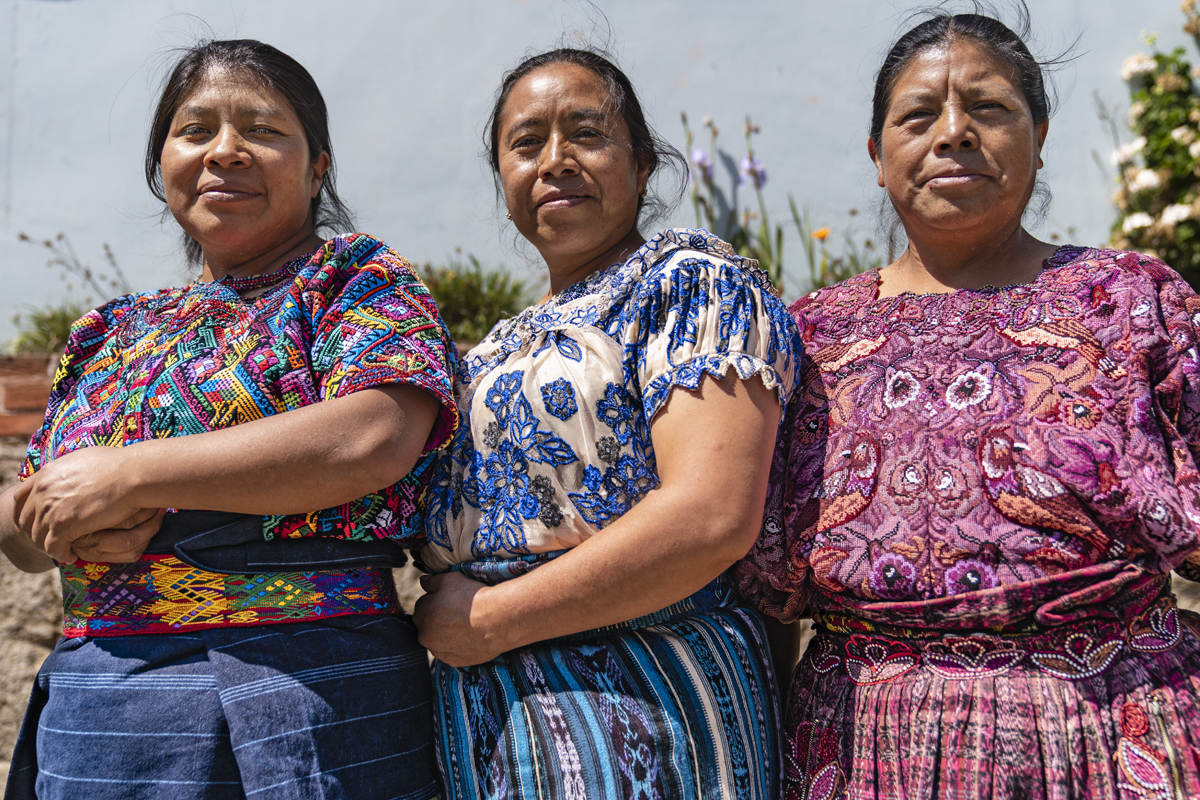
Indigenous Peoples Fight Climate Change
After wildfires, Belize’s indigenous people rebuild stronger based on “se’ komonil”: reciprocity, solidarity, gender equity, togetherness and community.
Read more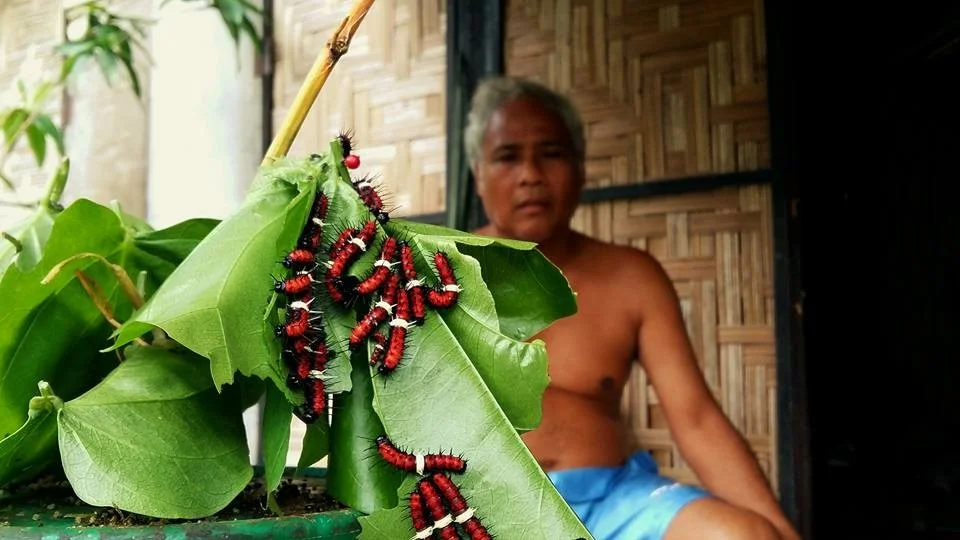
The Indigenous Malaysian concept of ‘Badi’: respecting the land and wildlife
The Indigenous Semai #indigenous people of #Malaysia can teach us a lot about how to protect people, planet and biodiversity. The Indigenous concept of #badi is not superstition or taboo, it’s about respecting…
Read more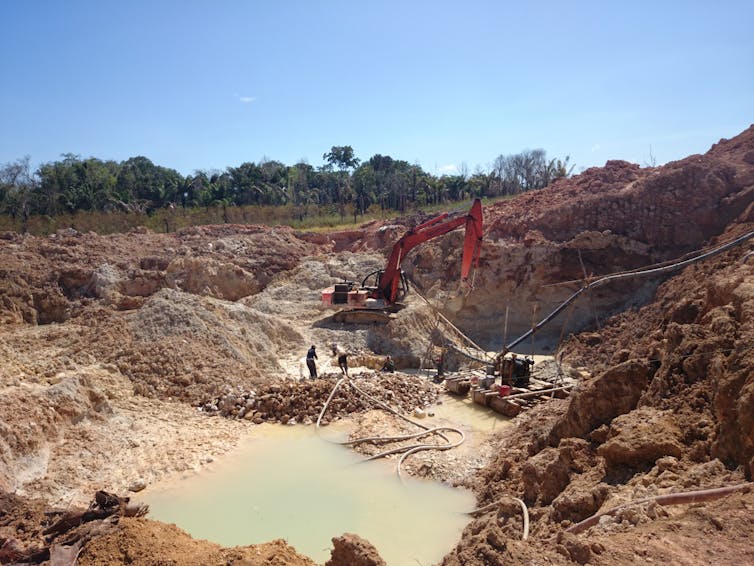
Indigenous Empowerment to Reverse Amazonia’s Mineral Demand
Illegal mining for minerals like gold is driving Amazonia deforestation. Empowering Indigenous peoples to care for biodiversity-rich areas is the key!
Read more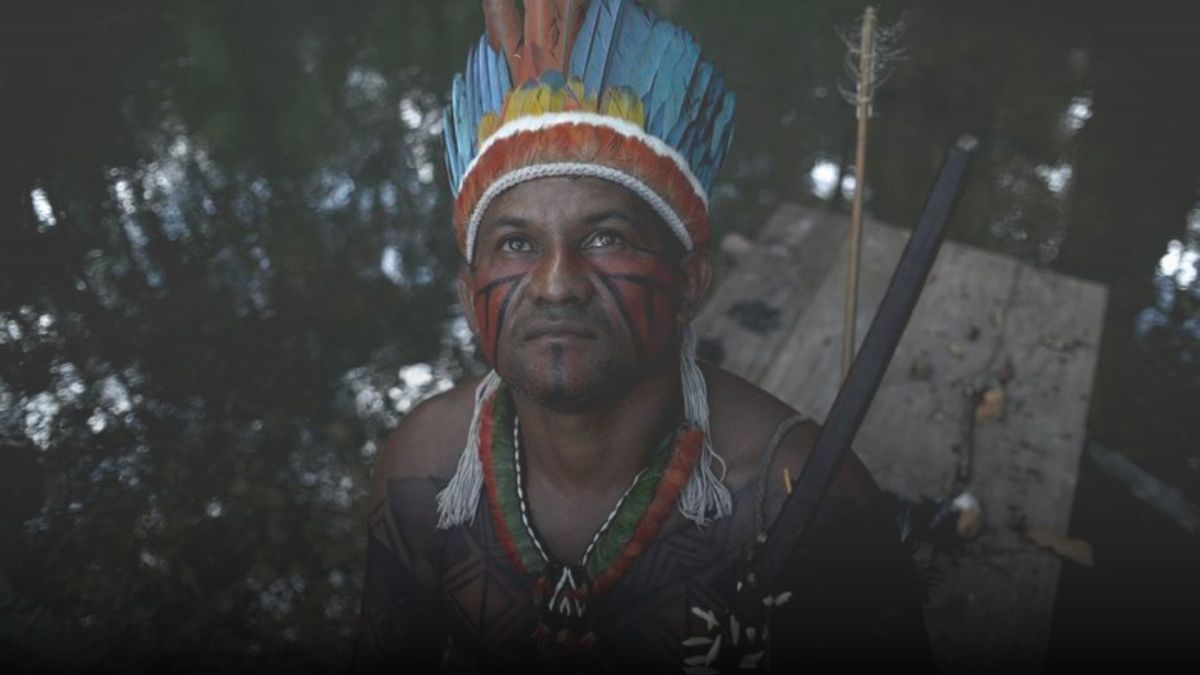
New Research: Indigenous Communities Reduce Amazon Deforestation by 83%”
Although #deforestation rates in the Brazilian #Amazon have halved, this globally critical biome is still losing more than 5,000km² every year. That’s an area three times larger than Greater London. By combining satellite…
Read more
Indonesia’s misinformation army ready for war in 2023
In 2023, Indonesia’s government is set to ratchet up greenwashing and propaganda on social media, fuelled by a well-resourced misinformation machine. But the biggest propagator of disinformation seems not to be political renegades,…
Read moreSomething went wrong. Please refresh the page and/or try again.
Take Action in Five Ways
1. Join the #Boycott4Wildlife on social media and subscribe to stay in the loop: Share posts from this website to your own network on Twitter, Mastadon, Instagram, Facebook and Youtube using the hashtags #Boycottpalmoil #Boycott4Wildlife.
2. Contribute stories: Academics, conservationists, scientists, indigenous rights advocates and animal rights advocates working to expose the corruption of the palm oil industry or to save animals can contribute stories to the website.






3. Supermarket sleuthing: Next time you’re in the supermarket, take photos of products containing palm oil. Share these to social media along with the hashtags to call out the greenwashing and ecocide of the brands who use palm oil. You can also take photos of palm oil free products and congratulate brands when they go palm oil free.
4. Take to the streets: Get in touch with Palm Oil Detectives to find out more.
5. Donate: Make a one-off or monthly donation to Palm Oil Detectives as a way of saying thank you and to help pay for ongoing running costs of the website and social media campaigns. Donate here
Discover more from Palm Oil Detectives
Subscribe to get the latest posts sent to your email.
 Palm Oil Detectives
Yes. It is science. Thank you 🌍👏
LikeLiked by 1 person
very welcome 🙂
LikeLiked by 1 person