
Short version
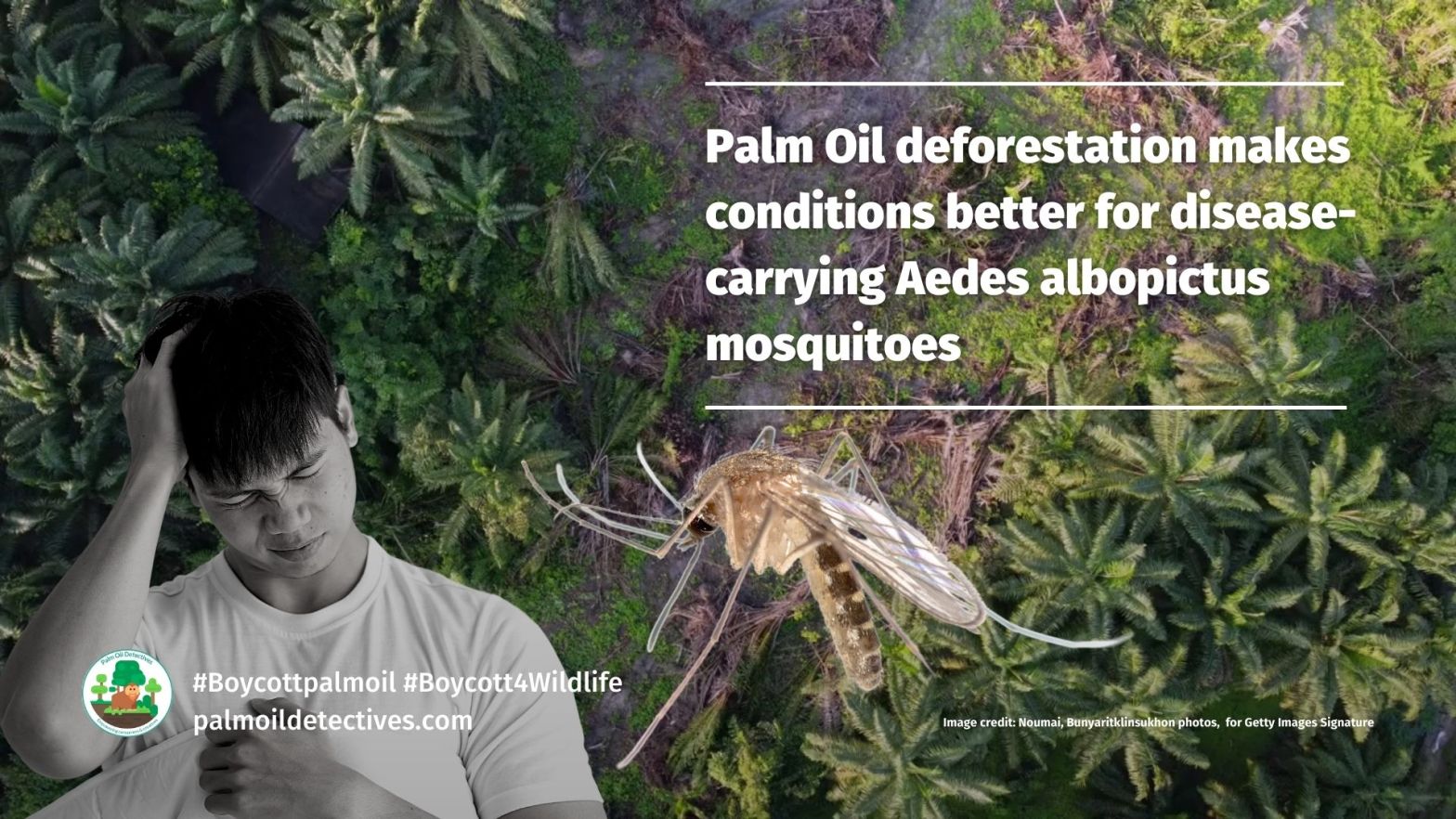
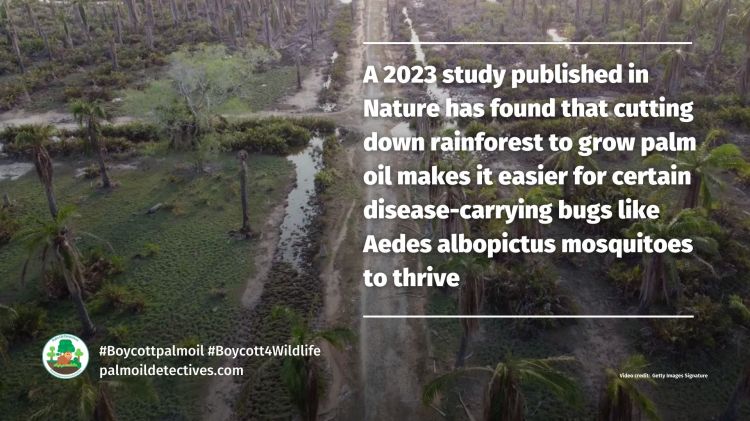
A 2023 study published in Nature has found that cutting down rainforest to grow palm oil makes it easier for certain disease-carrying bugs like Aedes albopictus mosquitoes to thrive.
The study looks at how these changes in land use affect the local weather and environment, which in turn makes it easier for the mosquitoes to complete their life cycle.
Specifically, turning forests into palm oil plantations can increase the chances of these mosquitoes growing by about 11%, which drops to around 5% as the palm oil plants mature. This could lead to more frequent outbreaks of diseases carried by these mosquitoes.
Aedes albopictus is known to transmit pathogens and viruses, such as the Yellow Fever, Dengue Fever, Chikungunya fever and Usutu virus. The study suggests careful policy-making and planning is urgently needed to assess how we use land, balancing the need for palm oil farming.
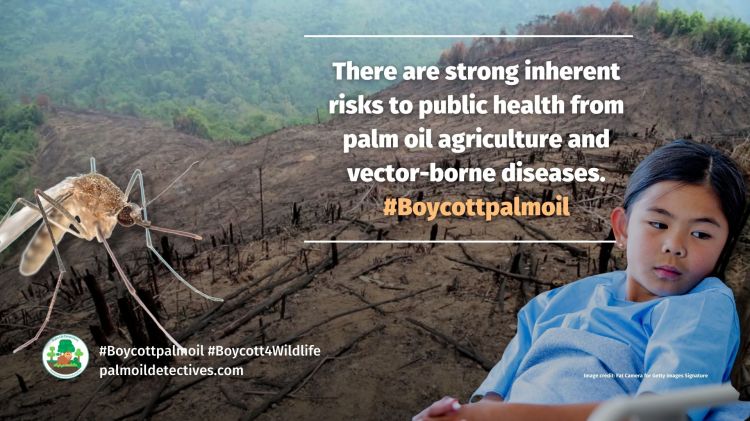
There are strong inherent risks to public health from palm oil agriculture and vector-borne diseases. #Boycottpalmoil
#Research study in @Nature finds #mosquitos carrying Dengue Fever are able to thrive in #palmoil plantations. #Humanhealth should be more important than #greed. Resist and fight back when you #Boycottpalmoil 🌴🪔🔥🤮🤒⛔️#Boycott4Wildlife @palmoildetect https://palmoildetectives.com/2023/12/30/research-palm-oil-deforestation-makes-conditions-better-for-disease-carrying-aedes-albopictus-mosquitoes/
Saager, E. S., Iwamura, T., Jucker, T., & Murray, K. A. (2023). Deforestation for oil palm increases microclimate suitability for the development of the disease vector Aedes albopictus. Scientific Reports, 13(1), [9514]. https://doi.org/10.1038/s41598-023-35452-6
Abstract
A major trade-off of land-use change is the potential for increased risk of infectious diseases, a.o. through impacting disease vector life-cycles. Evaluating the public health implications of land-use conversions requires spatially detailed modelling linking land-use to vector ecology. Here, we estimate the impact of deforestation for oil palm cultivation on the number of life-cycle completions of Aedes albopictus via its impact on local microclimates. We apply a recently developed mechanistic phenology model to a fine-scaled (50-m resolution) microclimate dataset that includes daily temperature, rainfall and evaporation. Results of this combined model indicate that the conversion from lowland rainforest to plantations increases suitability for A. albopictus development by 10.8%, moderated to 4.7% with oil palm growth to maturity. Deforestation followed by typical plantation planting-maturation-clearance-replanting cycles is predicted to create pulses of high development suitability. Our results highlight the need to explore sustainable land-use scenarios that resolve conflicts between agricultural and human health objectives.
Introduction
Agricultural development has an extensive impact on natural and socioeconomic systems worldwide1,2. The globally rising demand in versatile tropical crops, such as oil palm, has led to a rapid increase in agricultural exploitation in developing countries3,4. Although agricultural development can bring important economic benefits, it has well known implications for biodiversity and carbon storage especially in areas where agricultural land directly replaces pristine tropical rainforest5. Currently, however, the measurable health risks of different land-use types remain poorly evaluated and human health impacts are therefore rarely integrated into land-use decision making.
Infectious disease transmission is an important dimension of human health that can be affected by agricultural land-use change. Patz et al.6 proposed that changing landscapes could become ‘unhealthy landscapes’ because of numerous examples of land-use change being linked to infectious disease risks (e.g., Lyme disease, Nipah virus). Since then, numerous studies have linked agricultural land-use change to increased infectious disease incidence7,8,9,10. In a recent meta-analysis, Shah et al.11 found that exposure to agriculture on average almost doubled the risk of being infected by any pathogen, with the highest effect sizes being observed for tropical tree crop monocultures including oil palm (odds ratio (OR) = 3.25) and rubber (OR = 2.27).
One mechanism that could help explain such associations is a change in microclimatic conditions following the change in land cover, which may favour the development of disease vectors12,13. Ectothermic arthropod vectors are highly sensitive to changes in environmental temperature, which govern their metabolic rates and development, and therefore their fitness and population growth rates14,15. In addition, many disease vectors respond to changes in humidity and/or rainfall due to their aquatic life-stages, which require the availability of adequate water bodies for development15,16. The precise effects of climate on population abundance are nevertheless highly vector-specific.
The changes in microclimate associated with deforestation for agricultural expansion offer considerable potential to impact disease vector development. Forest canopies typically buffer against extremes in local temperature and humidity through interception, transformation and storage of solar radiation, leaf transpiration and altered airflow17. Landscapes in transition to tropical tree-based agriculture, such as rubber or oil palm plantations, often encompass a strong gradient in land-use intensity with many differences in vegetation cover, canopy height and community complexity. Both on a relatively small spatial and temporal scale, vegetation in these landscapes can range from 50 + meter high intact or selectively logged tropical rainforest, to clear-cut open land, to 10–20 m full-grown plantation trees, all with varying microclimatic features. Recently, Jucker et al.18 performed high-resolution modelling of microclimate in a transitioning oil palm landscape and showed that deforested areas and oil palm plantations experienced substantially higher daily temperatures and lower relative humidity compared with rainforest areas. Older plantations experienced lower temperatures and higher relative humidity than younger plantations, although they remained warmer and drier than the rainforest areas. Predicting how these microclimate differences might in turn impact mosquito development and thereby, potentially, vector-borne disease (VBD) risks, is essential to be able to direct both large- (i.e. deforestation) and small-scale (i.e. cultivation design) land-use policy decision making.
Multiple field and experimental studies have demonstrated that land-use change can accelerate disease vector development through altering microclimates19,20,21,22. Mechanistic models of vector development could be an important tool to translate these observational findings into predictions across different settings, and, eventually, into land-use policies23. By explicitly incorporating environment-development relationships, they are also useful in evaluating the complex interplay of different environmental variables, such as temperature and humidity. Multiple studies have, for instance, already assessed the complex effects of global climate change on local disease vector development using mechanistic models and have predicted an acceleration of disease vector development resulting in expanding as well as shifting global distributions in the coming decades24,25,26,27,28. Mechanistic modelling studies that incorporate the effects of land-use change are scarcer and are typically limited by lack of adequately fine-scaled datasets that can capture the microclimatic variation attributable to vegetation cover differences29,30.
Here, we extended a recently developed spatially explicit physiological development model for the mosquito Aedes aegypti28 to predict the impact of fine-scaled, tree cover-related changes in microclimate on the number of life cycle completions of the related arboviral disease vector Aedes albopictus. Detailed land-use and microclimate data from Malaysia18 was used to capture the impacts of tropical forest conversion to oil palm plantation on mosquito development at appropriate spatio-temporal scales31. A comprehensive representation of the interactions between microclimates and vector development is provided by evaluating the separate and combined effects of temperature and humidity. We use our results to infer the trajectories of mosquito population growth according to realistic land-use succession scenarios within an oil palm-agricultural landscape. With this study, we aim to determine to what extent a forest-to-plantation transition could enhance mosquito development as a result of changes in local temperature and humidity linked to land-use change. Our results have important implications for evaluating vector-borne disease risks of agricultural expansion.
Conclusions
We predict that microclimate change by deforestation for oil palm, which can occur in a mere months, could increase disease vector development suitability to an extent comparable to decades of global warming. Our model predicts that plantation maturation to higher vegetation cover moderates A. albopictus development rates, although suitability remains increased in lowland plantations compared to original forest areas. These results stress the importance of tropical forest protection and give directions for alternative oil palm plantation systems that minimize public health risks12,28.
Saager, E. S., Iwamura, T., Jucker, T., & Murray, K. A. (2023). Deforestation for oil palm increases microclimate suitability for the development of the disease vector Aedes albopictus. Scientific Reports, 13(1), [9514]. https://doi.org/10.1038/s41598-023-35452-6
ENDS
Read more about animals on the edge of extinction due to the threat of the palm oil industry
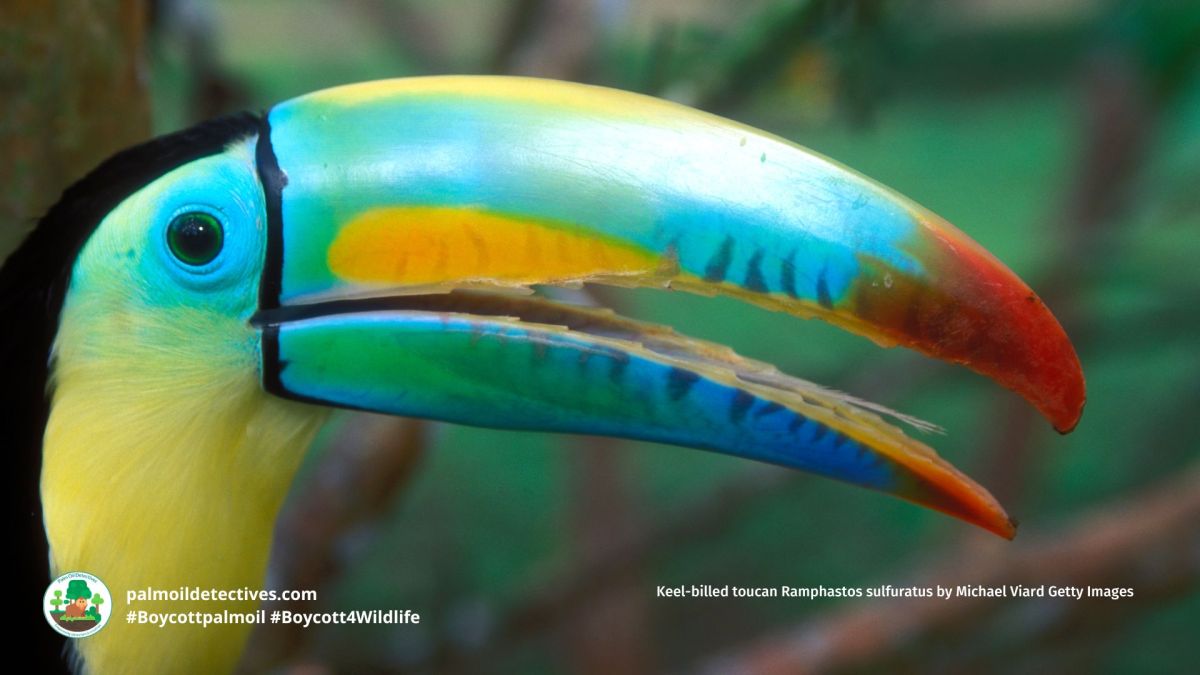
Keel-billed Toucan Ramphastos sulfuratus
Keel-billed Toucans have dazzling rainbow-coloured bills and are iconic to South America. Threats include hunting, palm oil and meat deforestation. Take action!
Read more
Asian Small-clawed Otter Aonyx cinereus
Asian Small-clawed Otters are the world’s smallest otter species and are Vulnerable from palm oil tea and coffee deforestation. Protect them, boycott palm oil!
Read more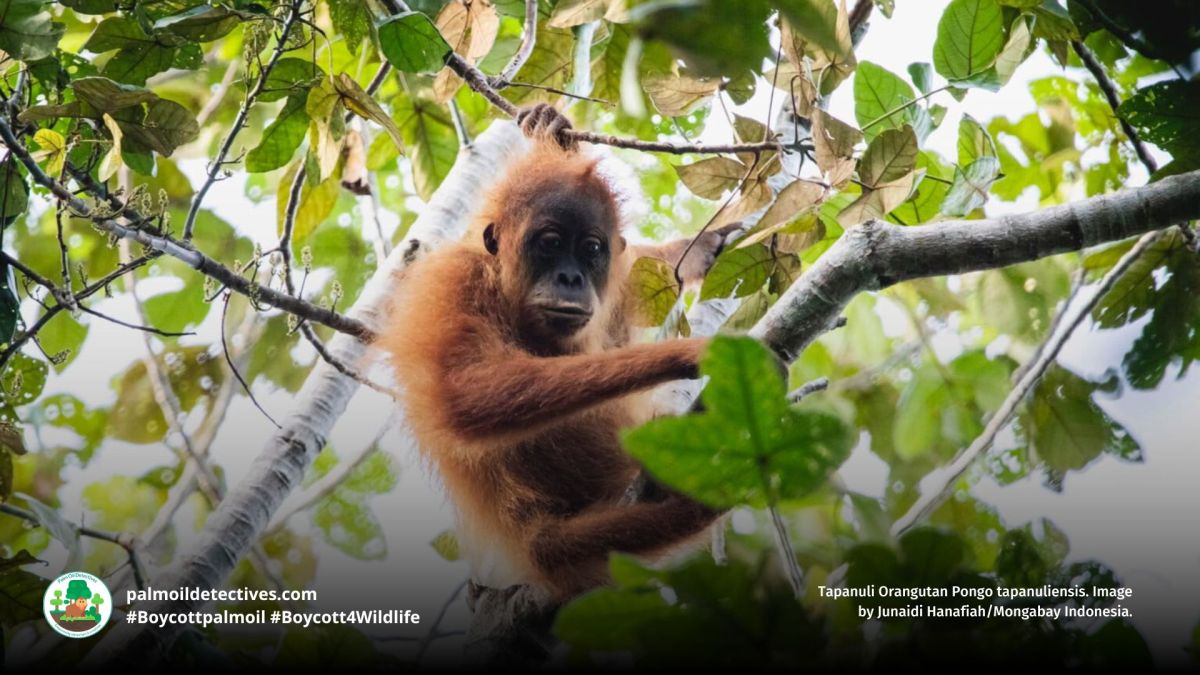
Tapanuli Orangutan Faces Extinction From Forest Protection Rollback
Save the Tapanuli orangutan! The rarest ape in the world faces extinction after floods, cyclones and now rezoning of their habitat in Sumatra #BoycottPalmOil!
Read more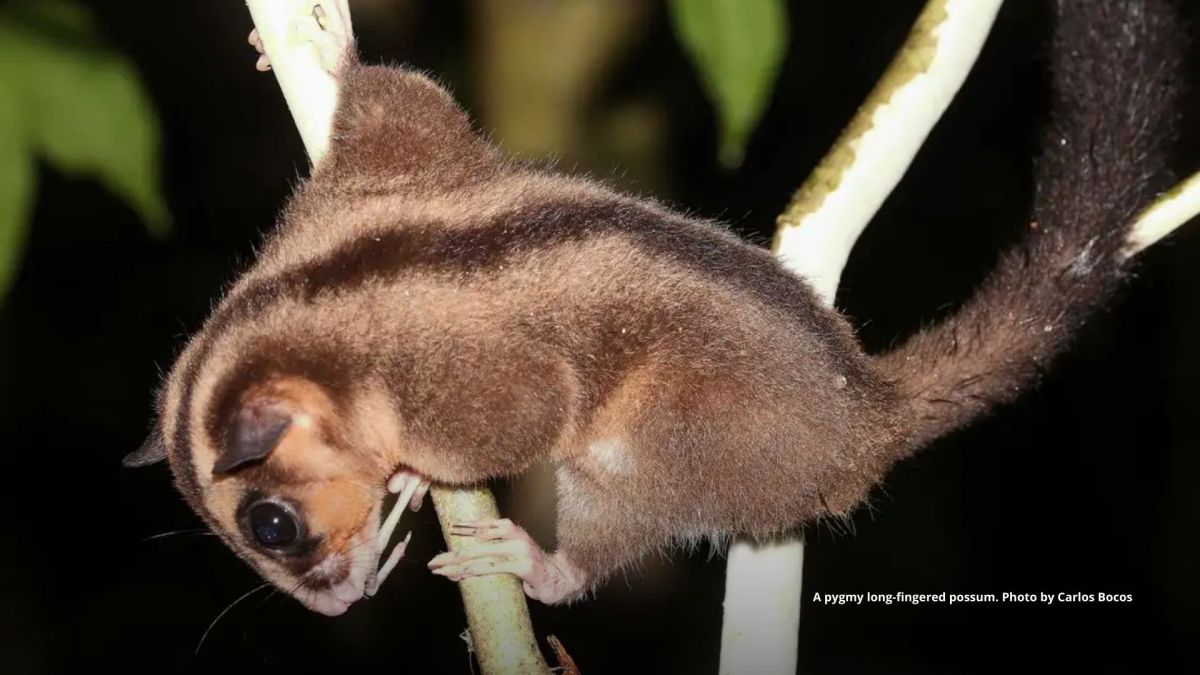
Marsupials thought extinct for 6,000 years found in West Papua
Two stunning marsupials thought extinct for 6000 years rediscovered in West Papua. Calls for rainforest protection even more urgent!
Read more
Trash into Treasure: Turning E-Waste and CO2 into Gold
Turning E-Waste and CO2 into Gold addresses e-waste challenges and contributes to CO₂ reduction efforts. Take action and boycott gold for Yanomami people!
Read moreSomething went wrong. Please refresh the page and/or try again.
Take Action in Five Ways
1. Join the #Boycott4Wildlife on social media and subscribe to stay in the loop: Share posts from this website to your own network on Twitter, Mastadon, Instagram, Facebook and Youtube using the hashtags #Boycottpalmoil #Boycott4Wildlife.
2. Contribute stories: Academics, conservationists, scientists, indigenous rights advocates and animal rights advocates working to expose the corruption of the palm oil industry or to save animals can contribute stories to the website.



3. Supermarket sleuthing: Next time you’re in the supermarket, take photos of products containing palm oil. Share these to social media along with the hashtags to call out the greenwashing and ecocide of the brands who use palm oil. You can also take photos of palm oil free products and congratulate brands when they go palm oil free.
4. Take to the streets: Get in touch with Palm Oil Detectives to find out more.
5. Donate: Make a one-off or monthly donation to Palm Oil Detectives as a way of saying thank you and to help pay for ongoing running costs of the website and social media campaigns. Donate here
Discover more from Palm Oil Detectives
Subscribe to get the latest posts sent to your email.
 Palm Oil Detectives