
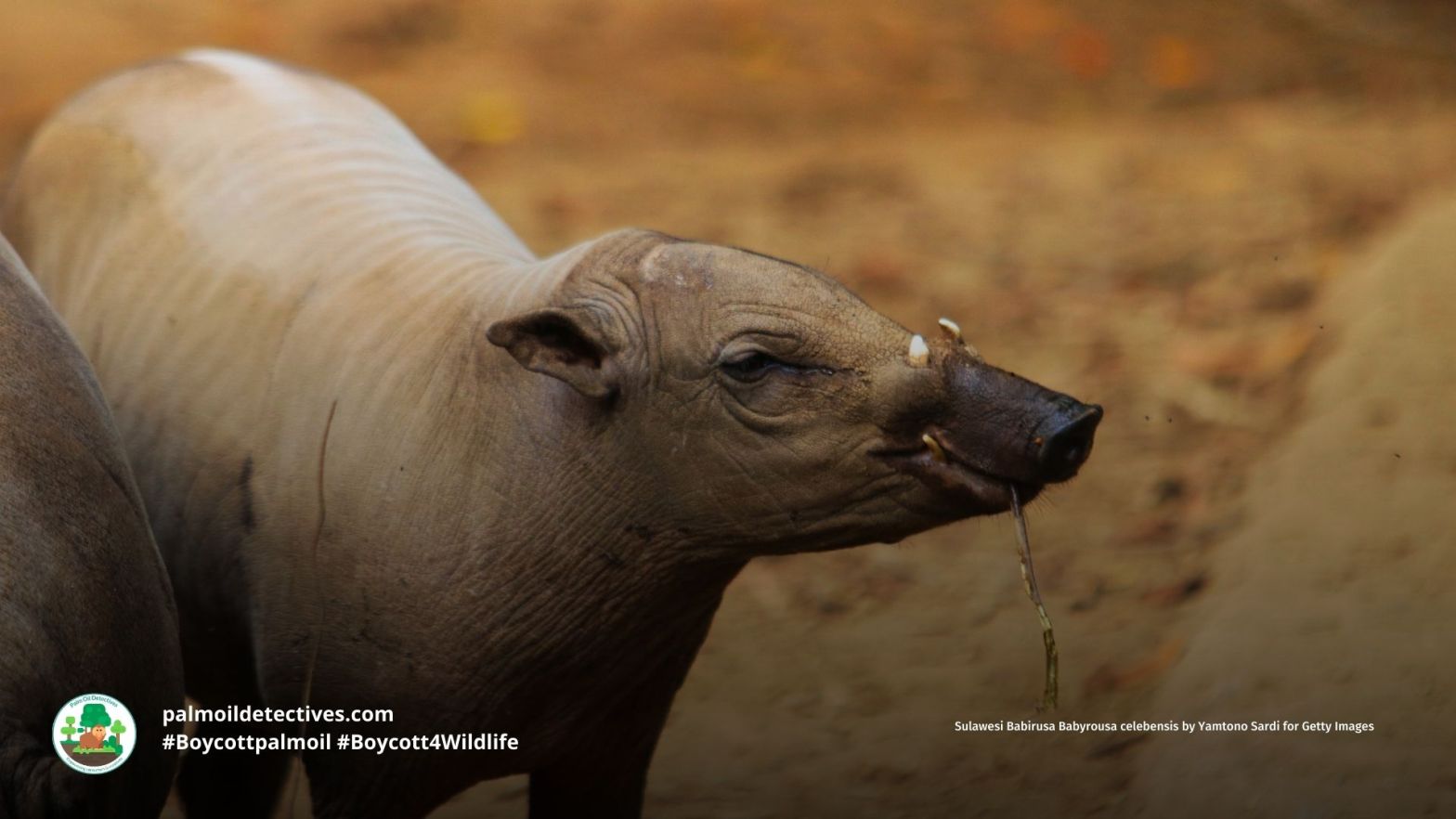
Sulawesi Babirusa Babyrousa celebensis
IUCN Red List: Vulnerable
Extant (resident): Sulawesi, Indonesia
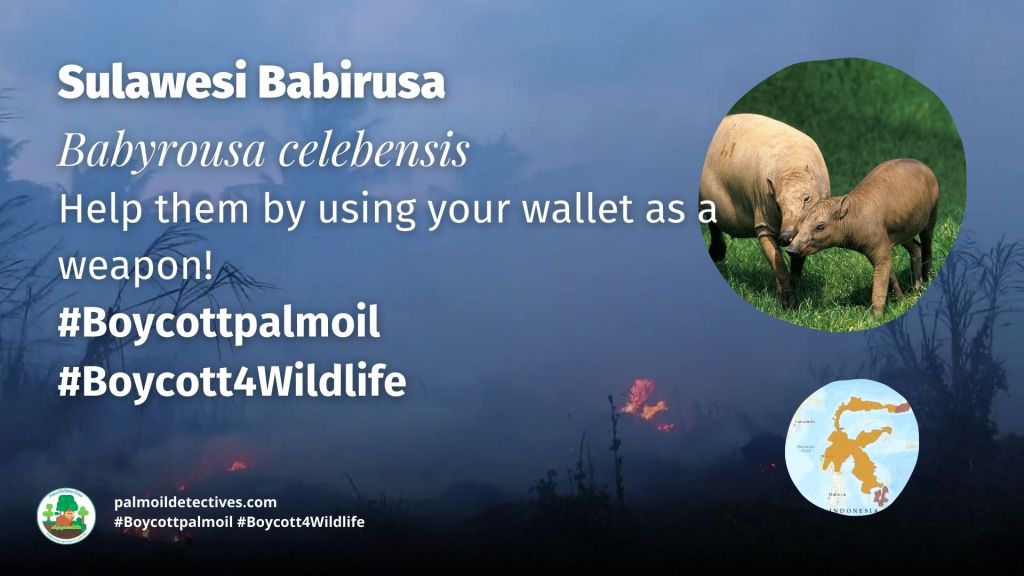
The Sulawesi Babirusa also known as the North Sulawesi Babirusa are wild pigs are found on Sulawesi Island along with nearby islands Lembeh, Buton, and Muna in #Indonesia.
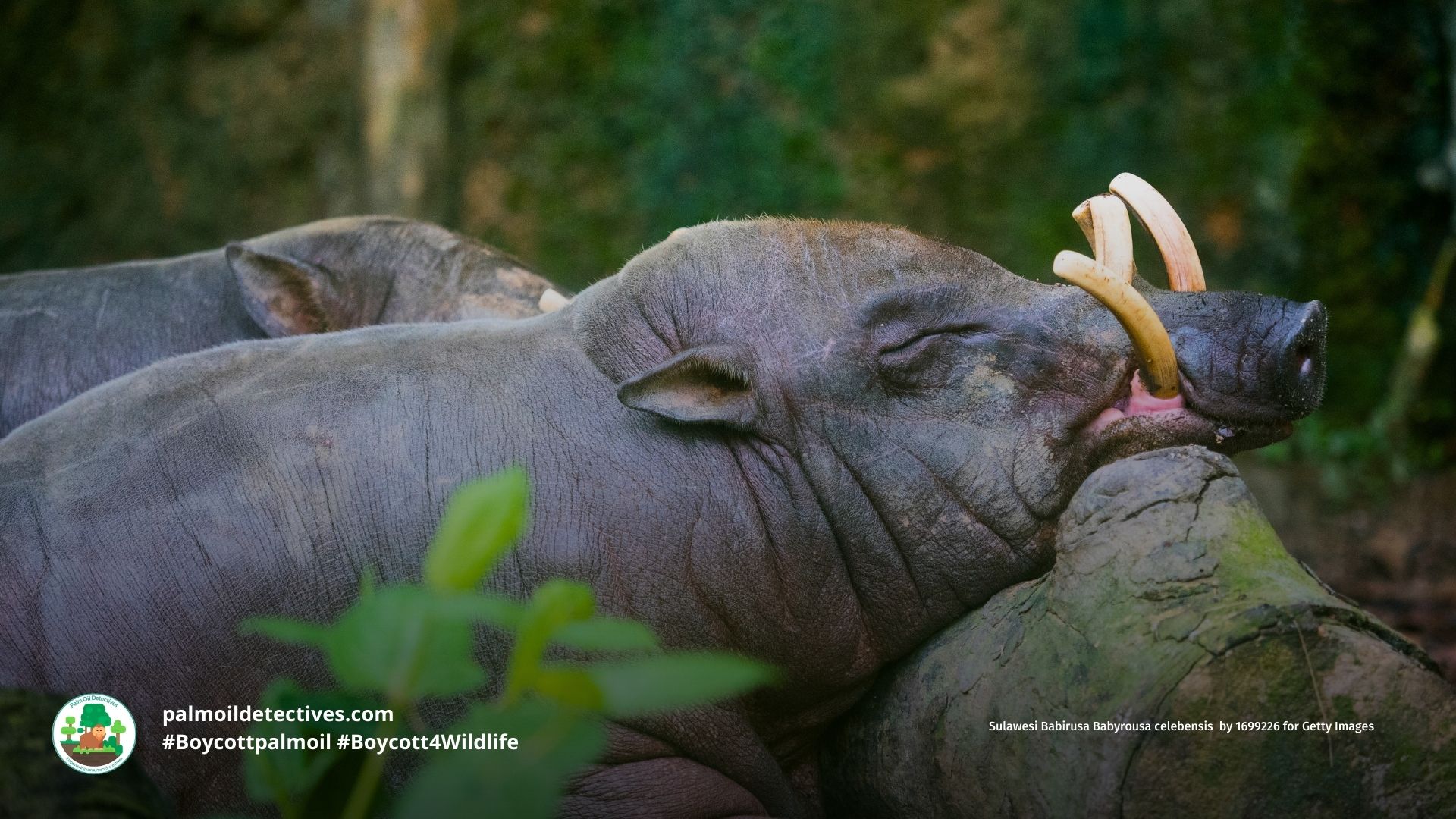
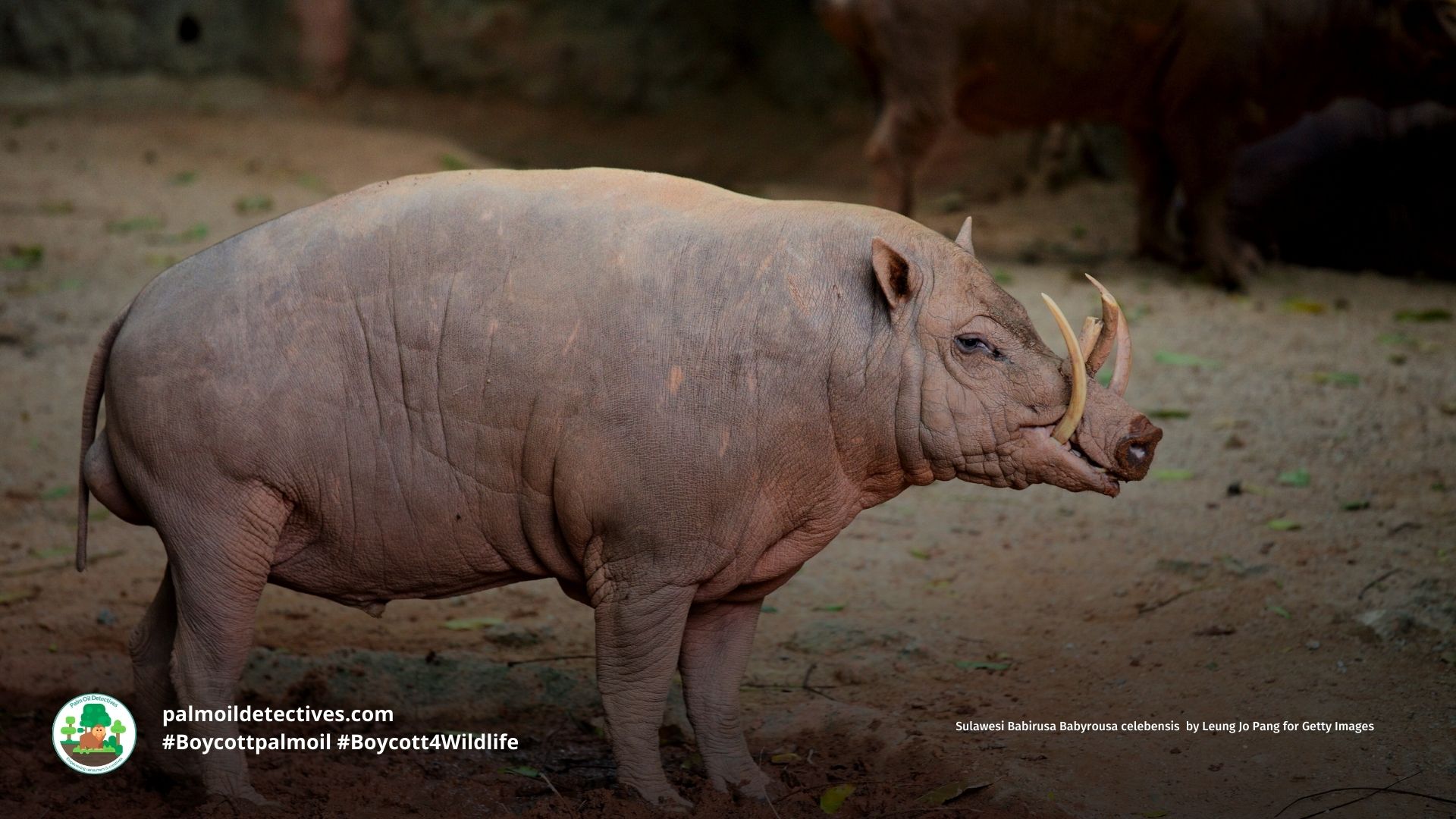
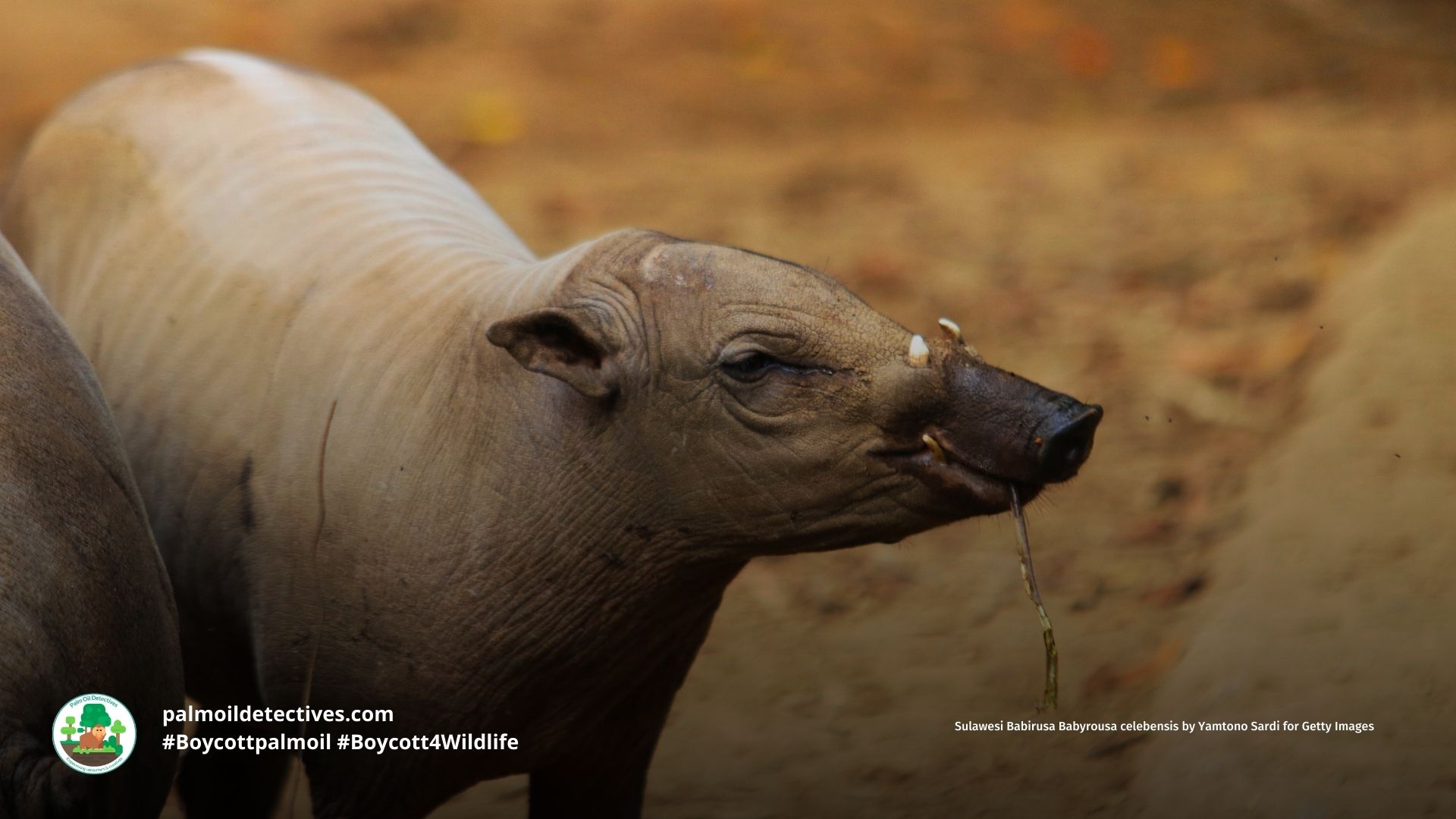
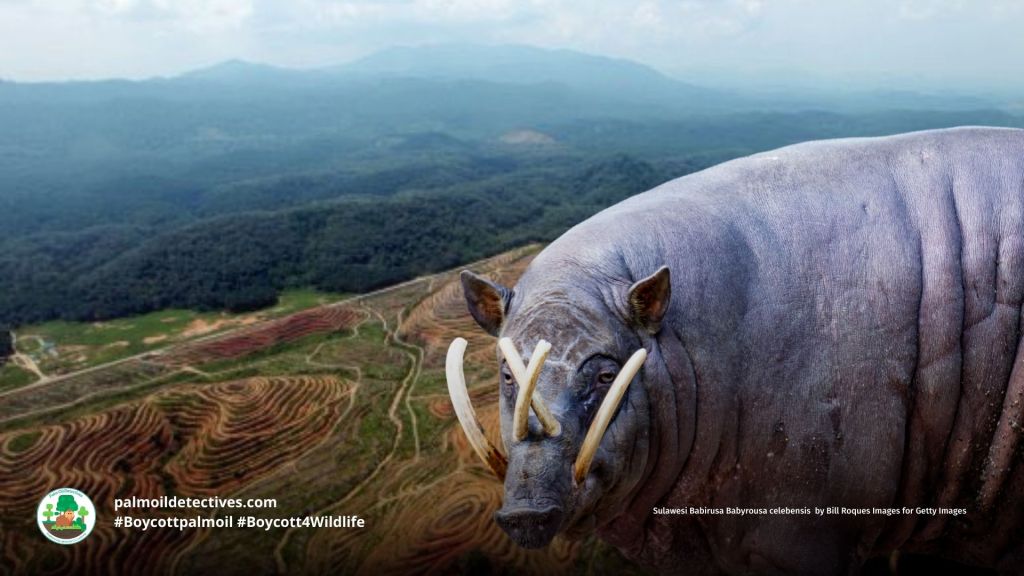
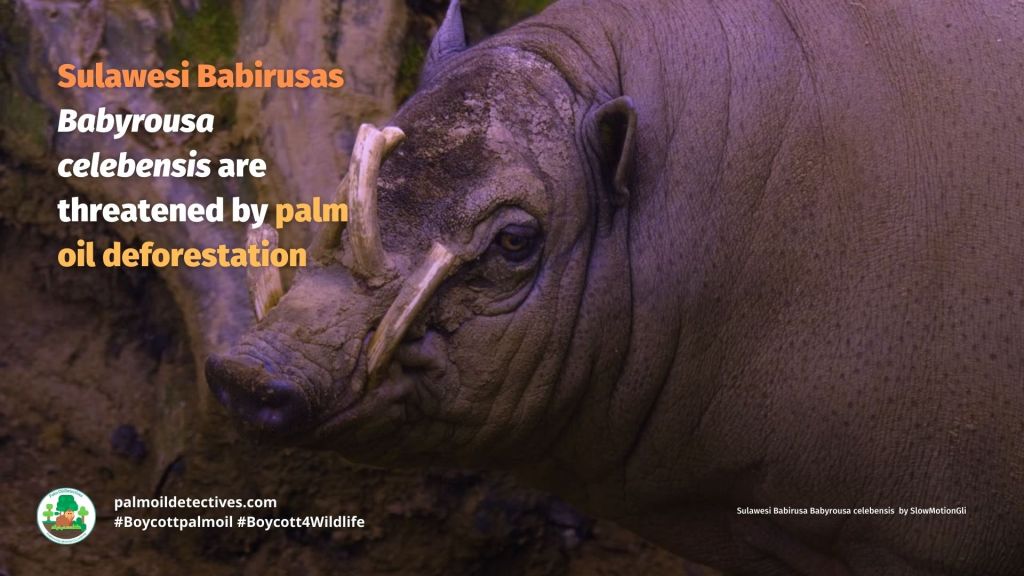
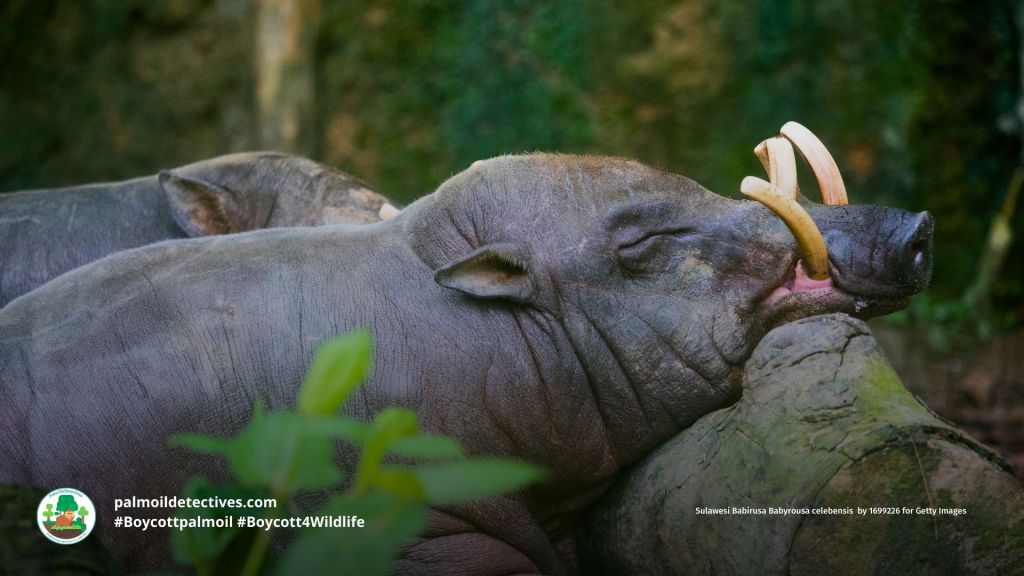
They have a mottled grey-and-brown skin that helps them blend into their forested habitat. One remarkable feature of babirusas is their large tusks. They have two pairs of elongated canine teeth that curve upward and backward towards their heads.
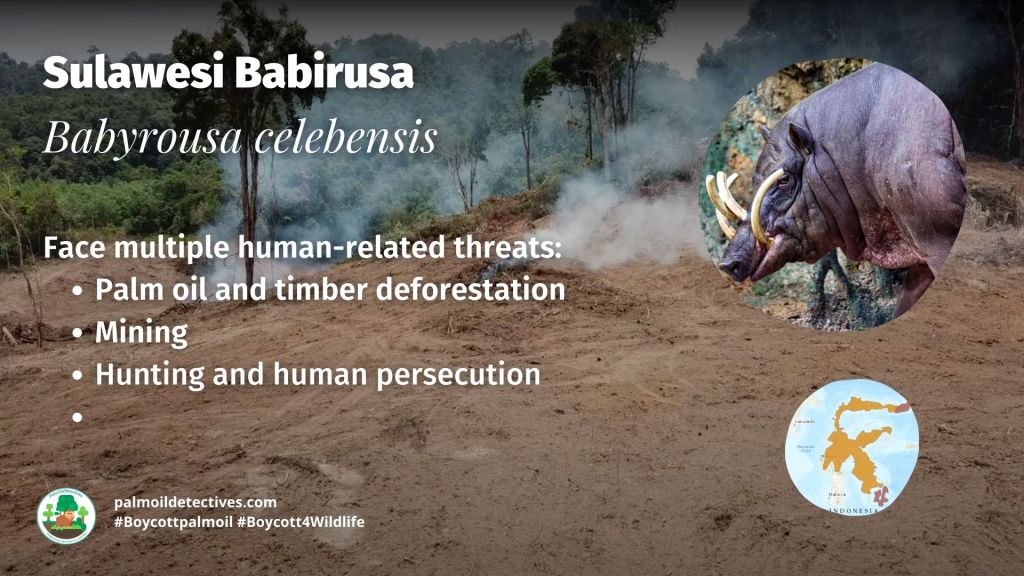
For males, their upper canines grow so long that they protrude through holes in the flesh on the top of their snouts. Sadly, these unique creatures are threatened by deforestation caused by the palm oil and timber industries along with hunting and mining. You can help by making conscious choices. Consider going vegan to support the movement against palm oil, and join the call to boycott palm oil and protect wildlife with the hashtags #Vegan, #Boycottpalmoil, and #Boycott4Wildlife. Together, we can make a difference for the Sulawesi Babirusa and their habitat.
Sulawesi Babirusa are wild #pigs 🐷🐖🩷 with big tusks in #Indonesia 🇮🇩 They are #vulnerable from #palmoil #deforestation and #hunting in Sulawesi. Fight for their survival, be #vegan 🥦🍅 and #Boycottpalmoil #Boycott4Wildlife 🌴🩸☠️🚫 @palmoildetect https://wp.me/pcFhgU-6sm
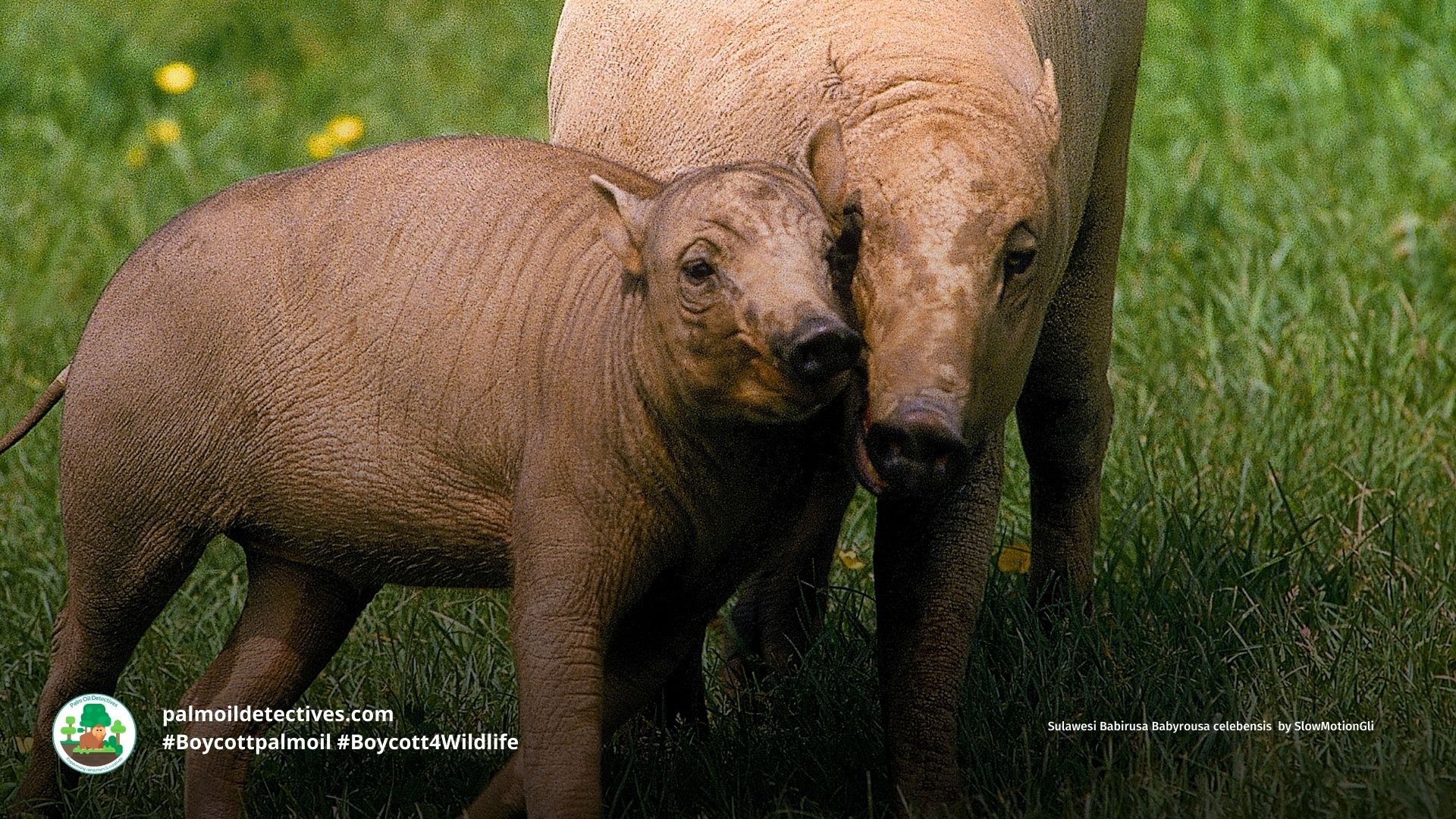
Nurturing and sweet Sulawesi Babirusa are #hogs native to #Sulawesi #Indonesia. They face multiple threats including human persecution, #hunting and #palmoil #deforestation. Help them survive #Boycottpalmoil #Boycott4Wildlife @palmoildetect https://wp.me/pcFhgU-6sm
Female babirusas have shorter canines that do not protrude as much. The local name for this unique creature translates to “pig-deer,” highlighting the resemblance of the male’s tusks to the antlers of a deer.
Sulawesi Babirusas are sociable creatures, with females typically forming small family groups and males occasionally living in bachelor herds or having a solitary existence. Dominance hierarchies are established by both males and females within their respective groups.
Appearance & Behaviour
Babirusas are diurnal wild pigs, being active during the day. They engage in foraging sessions during the mornings and late afternoons, while seeking rest during the scorching midday hours. It is common to find them congregating in large numbers around wallowing areas and salt licks. Communication among babirusas involves a diverse range of vocalisations, such as grunts, moans, screeches, growling, and teeth clattering.
Threats
- Palm oil deforestation: Over 75% of lowland forests on the island have been lost due to deforestation, driven by the expansion of palm oil production.
- Timber deforestation: Deforestation has also caused the depletion of more than 75% of lowland forests on Sulawesi, primarily for timber extraction.
- Hunting: Babirusas are hunted for food, particularly in North Sulawesi, where they are sought after for local markets.
- Iron ore mining and deforestation: The potential mining of iron ore, especially in the northwestern part of the northern peninsula, poses an additional threat to babirusa habitats.
- Climate change and extreme weather: The impacts of climate change and extreme weather events may exacerbate the challenges faced by babirusas, particularly in the natural dry zone of northwest central Sulawesi, leading to reduced tree cover and fruit availability.
- Accidental and deliberate trapping: In coastal areas, some babirusas are unintentionally or intentionally trapped for the Bali mask-making trade, specifically for their teeth. If you go to Bali – DO NOT buy a Balinese mask for this reason!
- Human population expansion: The expansion of towns, the growing number of restaurants, and the demand for non-Muslim preferences contribute to increased pressure on babirusa populations across the entire island.
Habitat
These fascinating creatures can be found in a variety of habitats throughout the region in the island of Sulawesi and nearby islands like Lembeh, Buton, and Muna in Indonesia. They primarily dwell in the underbrush of tropical forests and canebrakes, but also frequent the shores of rivers and lakes. Sulawesi babirusas have adapted to thrive in diverse environments, making use of both land and water habitats. Witness their incredible versatility as they navigate and thrive in the different landscapes of Sulawesi and its neighboring islands.
Diet
Sulawesi babirusas are versatile eaters, enjoying a wide-ranging diet including leaves, roots, fallen fruits, nuts, mushrooms, and even invertebrates. Occasionally, they demonstrate their hunting skills by preying on small mammals and birds.
Mating and breeding
North Sulawesi babirusas have the ability to reproduce all year round. When it’s time to give birth, female hogs prepare soft nests on the ground using dry vegetation. The gestation period for these remarkable creatures typically lasts for approximately 155 to 166 days. When the time comes, females give birth to 1 or 2 well-developed piglets, who quickly gain independence as they can stand on their own shortly after birth. Around 10 days old, the piglets begin to consume solid food, gradually transitioning from their mother’s milk. The weaning process takes place between 5 and 12 months of age, marking an important milestone in their development.
Support the Sulawesi Babirusa and other wild pigs by going vegan and boycotting palm oil in the supermarket, it’s the #Boycottpalmoil #Boycott4Wildlife
Support the conservation of this species
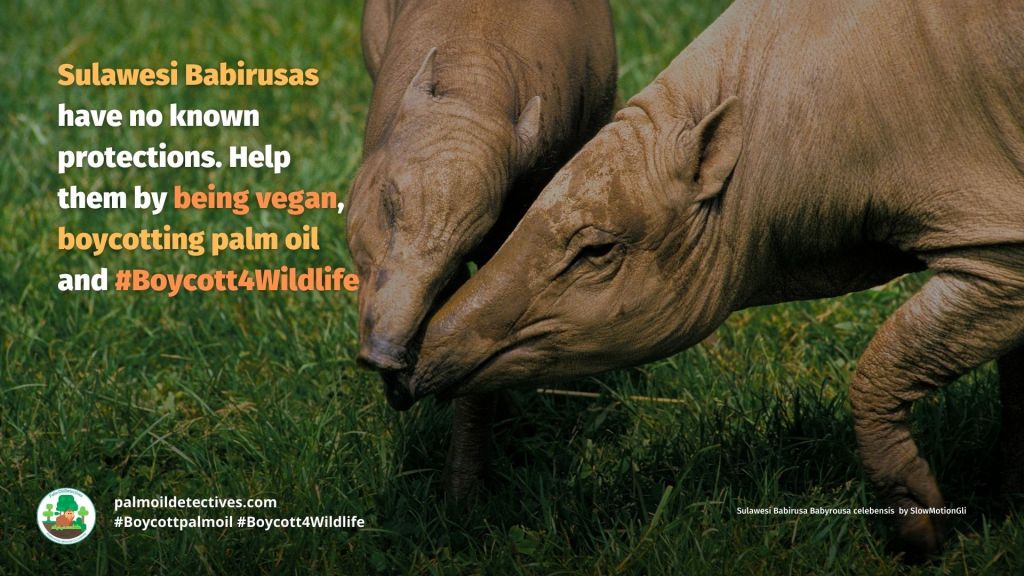
This animal has no protections in place. Read about other forgotten species here. Create art to support this forgotten animal or raise awareness about them by sharing this post and using the #Boycottpalmoil #Boycott4Wildlife hashtags on social media. Also you can boycott palm oil in the supermarket.
Further Information
Leus, K., Macdonald, A., Burton, J. & Rejeki, I. 2016. Babyrousa celebensis. The IUCN Red List of Threatened Species 2016: e.T136446A44142964. https://dx.doi.org/10.2305/IUCN.UK.2016-1.RLTS.T136446A44142964.en. Accessed on 02 June 2023.
North Sulawesi babirusa Wikipedia article – https://en.wikipedia.org/wiki/North_Sulawesi_babirusa
North Sulawesi babirusa on Animalia.bio – https://www.iucnredlist.org/species/136446/44142964

How can I help the #Boycott4Wildlife?
Take Action in Five Ways
1. Join the #Boycott4Wildlife on social media and subscribe to stay in the loop: Share posts from this website to your own network on Twitter, Mastadon, Instagram, Facebook and Youtube using the hashtags #Boycottpalmoil #Boycott4Wildlife.
2. Contribute stories: Academics, conservationists, scientists, indigenous rights advocates and animal rights advocates working to expose the corruption of the palm oil industry or to save animals can contribute stories to the website.




3. Supermarket sleuthing: Next time you’re in the supermarket, take photos of products containing palm oil. Share these to social media along with the hashtags to call out the greenwashing and ecocide of the brands who use palm oil. You can also take photos of palm oil free products and congratulate brands when they go palm oil free.
4. Take to the streets: Get in touch with Palm Oil Detectives to find out more.
5. Donate: Make a one-off or monthly donation to Palm Oil Detectives as a way of saying thank you and to help pay for ongoing running costs of the website and social media campaigns. Donate here
Discover more from Palm Oil Detectives
Subscribe to get the latest posts sent to your email.
 Palm Oil Detectives
One thought on “Sulawesi Babirusa Babyrousa celebensis”