
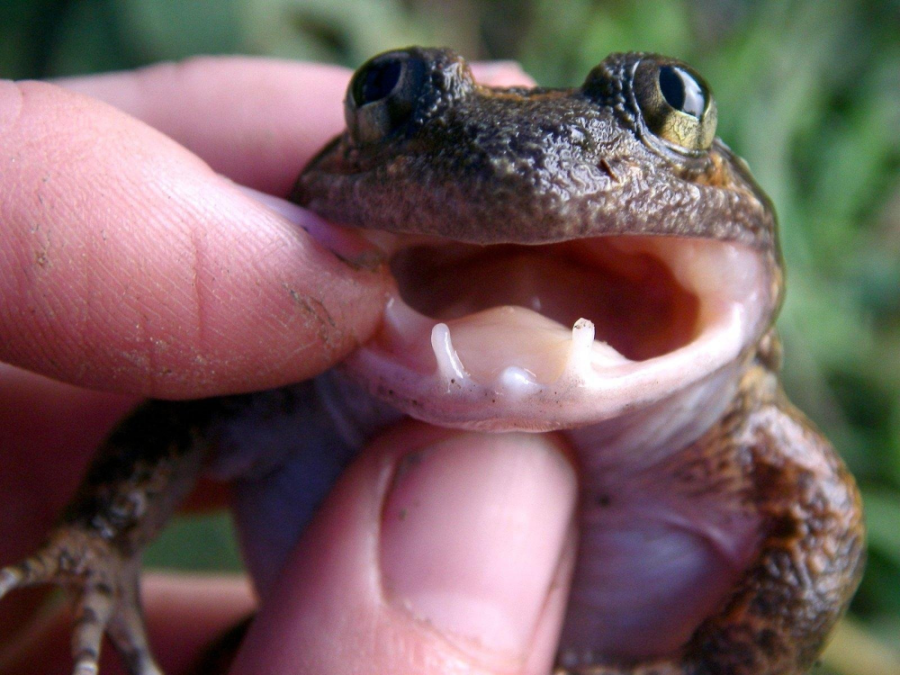
Researchers have identified a species of frog Limnonectes phyllofolia completely new to science. The tiny Indonesian amphibian is in the possession of little fangs. Researchers think that their fangs may be used to fend off would-be competitors for mating or territory. This species adopts a unique approach by laying their eggs on tree leaves. Adding to their distinct behavior, the male frogs play an active role in guarding and nurturing the nests. This discovery not only enriches our understanding of amphibian biodiversity but also highlights why it is absolutely crucial that we protect their home – rainforests in Indonesia. Help them every time you shop and #Boycottpalmoil #Boycott4Wildlife
#Researchers have identified a species of #frog Limnonectes phyllofolia completely new to #science. The tiny #Indonesian #amphibians have unusual fangs in their jaws thought to be used to defend territory #Boycottpalmoil #Boycott4Wildlife @palmoildetect https://palmoildetectives.com/2024/07/28/the-worlds-smallest-fanged-frog-found-in-indonesia/
Media release published on Science Alert, 21 December, 2023, read original. Jeffrey H. Frederick, Djoko T. Iskandar, Awal Riyanto, Amir Hamidy, Sean B. Reilly, Alexander L. Stubbs, Luke M. Bloch, Bryan Bach, Jimmy A. McGuire. A new species of terrestrially-nesting fanged frog (Anura: Dicroglossidae) from Sulawesi Island, Indonesia. PLOS ONE, 2023; 18 (12): e0292598 DOI: 10.1371/journal.pone.0292598
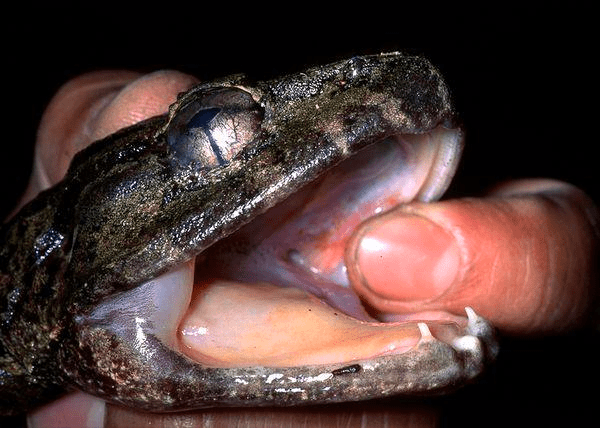
Frogs’ teeth aren’t known for being noteable or unusual. Typically frog teeth appear as tiny pinpricks on their upper jaws. However, one group of stream-dwelling frogs in Sulawesi, Indonesia have a strange adaptation: two bony “fangs” jutting out of their lower jawbone.
They use these fangs to battle with each other over territory and mates, and sometimes even to hunt tough-shelled prey like giant centipedes and crabs. In a new study, published in the journal PLOS ONE, researchers have described a new species of fanged frog: the smallest one ever discovered.
“This new species is tiny compared to other fanged frogs on the island where it was found, about the size of a quarter,” says Jeff Frederick, a postdoctoral researcher at the Field Museum in Chicago and the study’s lead author, who conducted the research as a doctoral candidate at the University of California, Berkeley. “Many frogs in this genus are giant, weighing up to two pounds. At the large end, this new species weighs about the same as a dime.”
In collaboration with the Bogor Zoology Museum, a team from the McGuire Lab at Berkeley found the frogs on Sulawesi, a rugged, mountainous island that makes up part of Indonesia. “It’s a giant island with a vast network of mountains, volcanoes, lowland rainforest, and cloud forests up in the mountains. The presence of all these different habitats mean that the magnitude of biodiversity across many plants and animals we find there is unreal — rivaling places like the Amazon,” says Frederick.
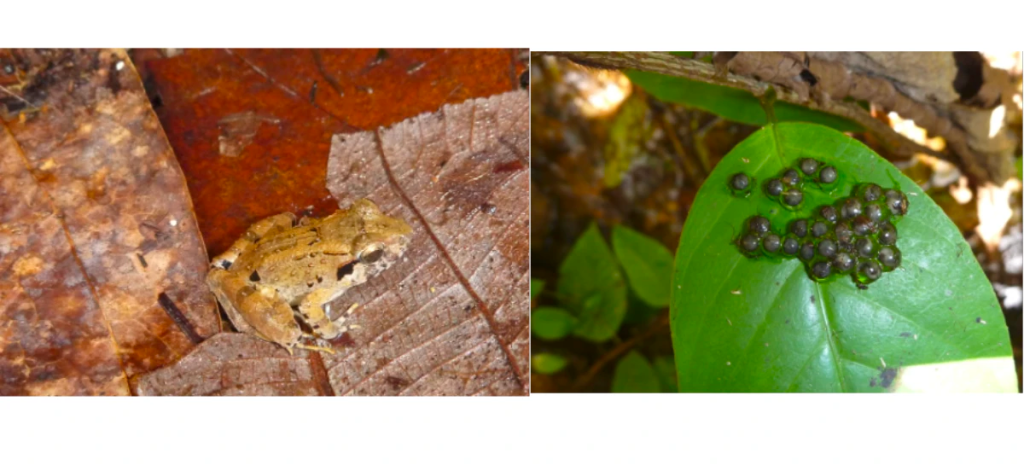
While trekking through the jungle, members of the joint US-Indonesia amphibian and reptile research team noticed something unexpected on the leaves of tree saplings and moss-covered boulders: nests of frog eggs.
Frogs are amphibians, and they lay eggs that are encapsulated by jelly, rather than a hard, protective shell. To keep their eggs from drying out, most amphibians lay their eggs in water. To the research team’s surprise, they kept spotting the terrestrial egg masses on leaves and mossy boulders several feet above the ground. Shortly after, they began to see the small, brown frogs themselves.
“Normally when we’re looking for frogs, we’re scanning the margins of stream banks or wading through streams to spot them directly in the water,” Frederick says. “After repeatedly monitoring the nests though, the team started to find attending frogs sitting on leaves hugging their little nests.” This close contact with their eggs allows the frog parents to coat the eggs with compounds that keep them moist and free from bacterial and fungal contamination.
Guarding behaviour of male frogs may be linked to them developing fangs for fighting
Closer examination of the amphibian parents revealed not only that they were tiny members of the fanged frog family, complete with barely-visible fangs, but that the frogs caring for the clutches of eggs were all male. “Male egg guarding behavior isn’t totally unknown across all frogs, but it’s rather uncommon,” says Frederick.
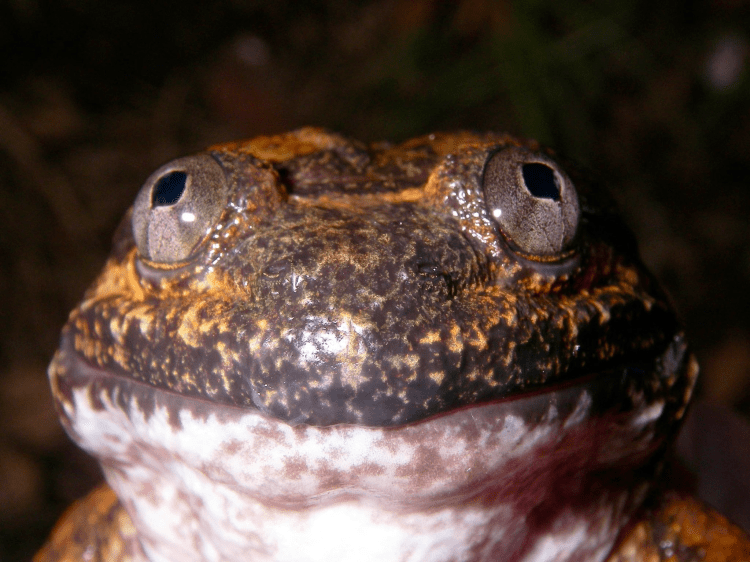
Frederick and his colleagues hypothesize that the frogs’ unusual reproductive behaviors might also relate to their smaller-than-usual fangs. Some of the frogs’ relatives have bigger fangs, which help them ward off competition for spots along the river to lay their eggs in the water. Since these frogs evolved a way to lay their eggs away from the water, they may have lost the need for such big imposing fangs. (The scientific name for the new species is Limnonectes phyllofolia; phyllofolia means “leaf-nester.”)
“It’s fascinating that on every subsequent expedition to Sulawesi, we’re still discovering new and diverse reproductive modes,” says Frederick. “Our findings also underscore the importance of conserving these very special tropical habitats. Most of the animals that live in places like Sulawesi are quite unique, and habitat destruction is an ever-looming conservation issue for preserving the hyper-diversity of species we find there. Learning about animals like these frogs that are found nowhere else on Earth helps make the case for protecting these valuable ecosystems.”
Media release published on Science Alert, 21 December, 2023, read original. Jeffrey H. Frederick, Djoko T. Iskandar, Awal Riyanto, Amir Hamidy, Sean B. Reilly, Alexander L. Stubbs, Luke M. Bloch, Bryan Bach, Jimmy A. McGuire. A new species of terrestrially-nesting fanged frog (Anura: Dicroglossidae) from Sulawesi Island, Indonesia. PLOS ONE, 2023; 18 (12): e0292598 DOI: 10.1371/journal.pone.0292598
ENDS
Learn about other animals endangered by palm oil and other agriculture
Learn about “sustainable” palm oil greenwashing
Read more about RSPO greenwashing
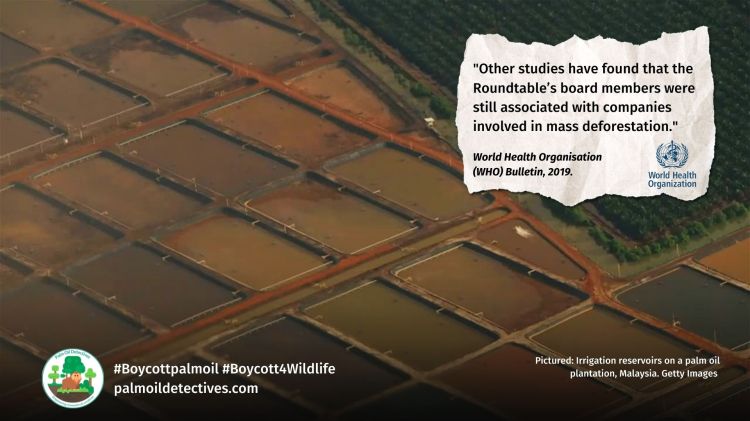
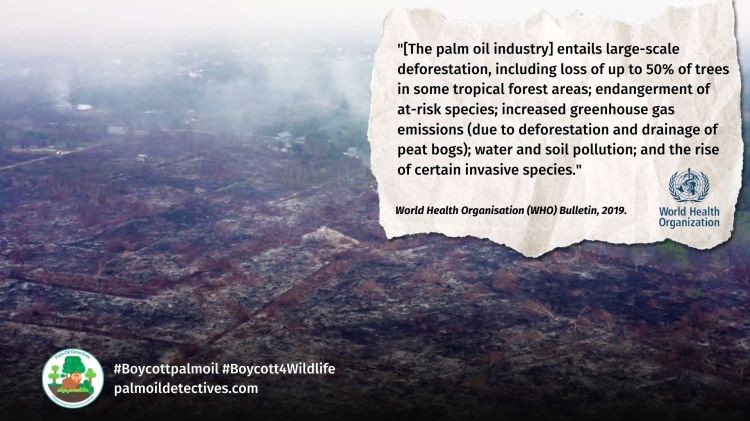
A 2019 World Health Organisation (WHO) report into the palm oil industry and RSPO finds extensive greenwashing of palm oil deforestation and the murder of endangered animals (i.e. biodiversity loss)



Take Action in Five Ways
1. Join the #Boycott4Wildlife on social media and subscribe to stay in the loop: Share posts from this website to your own network on Twitter, Mastadon, Instagram, Facebook and Youtube using the hashtags #Boycottpalmoil #Boycott4Wildlife.
2. Contribute stories: Academics, conservationists, scientists, indigenous rights advocates and animal rights advocates working to expose the corruption of the palm oil industry or to save animals can contribute stories to the website.






3. Supermarket sleuthing: Next time you’re in the supermarket, take photos of products containing palm oil. Share these to social media along with the hashtags to call out the greenwashing and ecocide of the brands who use palm oil. You can also take photos of palm oil free products and congratulate brands when they go palm oil free.
4. Take to the streets: Get in touch with Palm Oil Detectives to find out more.
5. Donate: Make a one-off or monthly donation to Palm Oil Detectives as a way of saying thank you and to help pay for ongoing running costs of the website and social media campaigns. Donate here
Discover more from Palm Oil Detectives
Subscribe to get the latest posts sent to your email.
 Palm Oil Detectives