
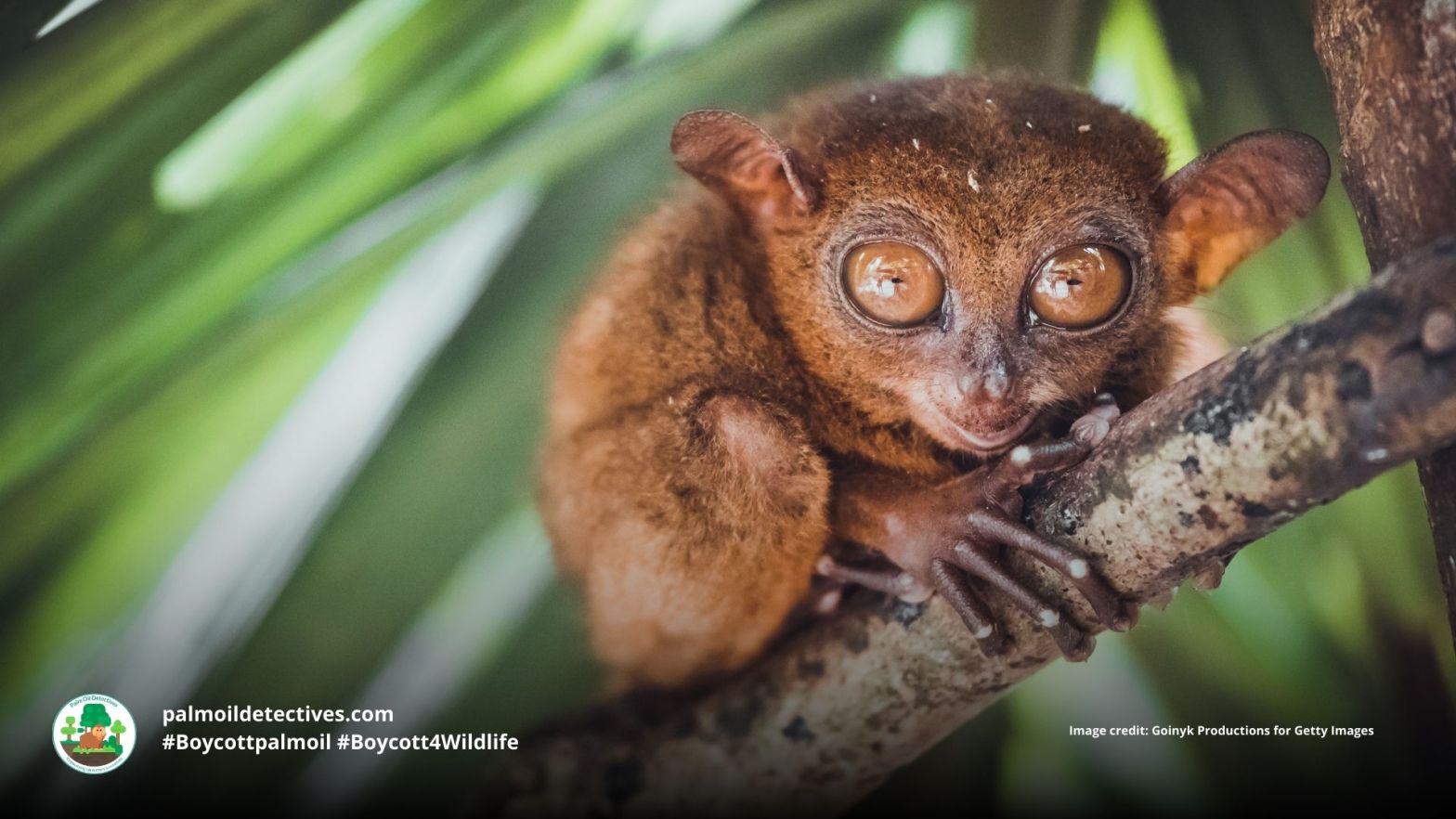
Philippine tarsier Carlito syrichta
Near Threatened
Extant (resident)
Philippines
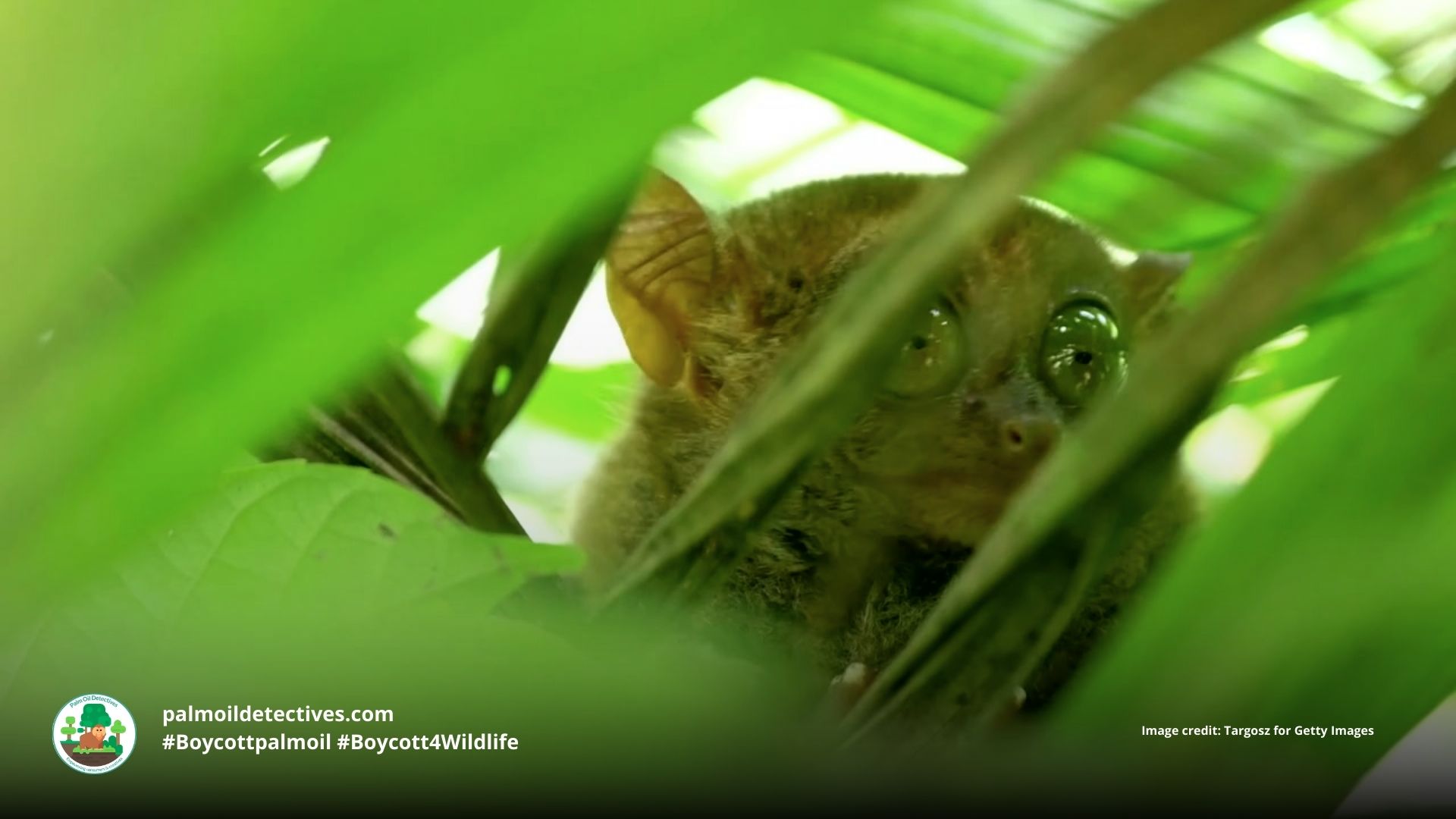
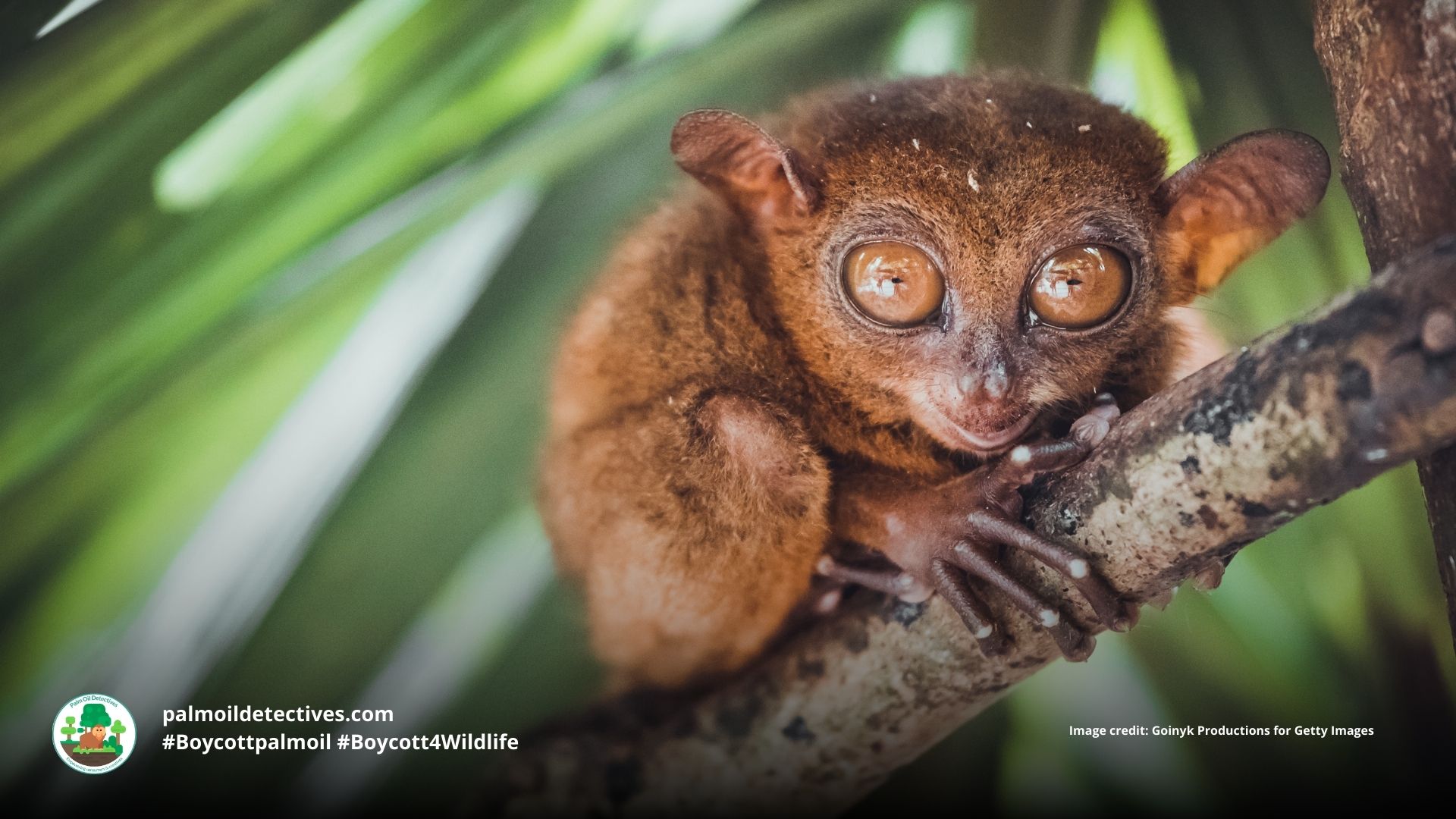
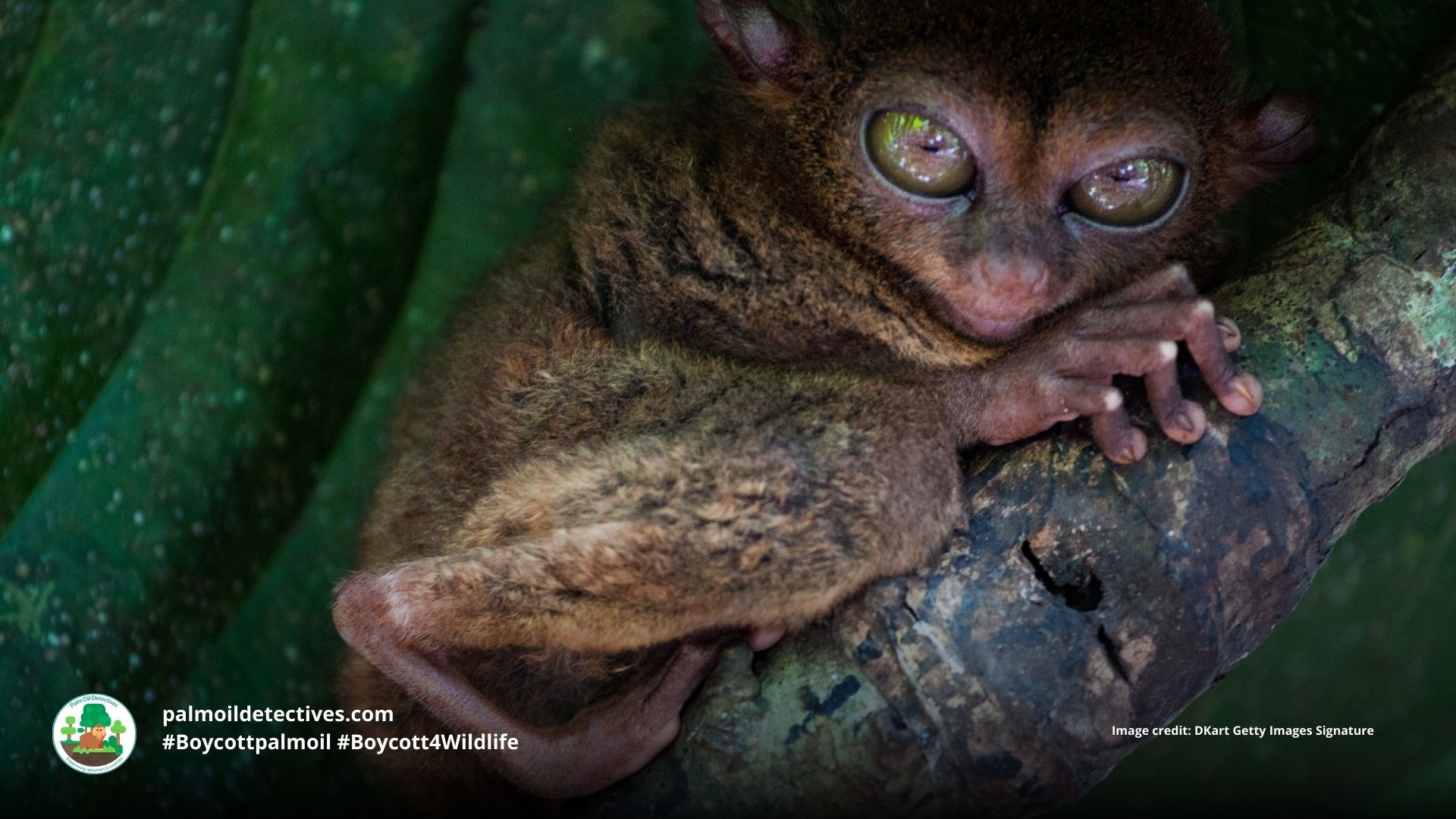
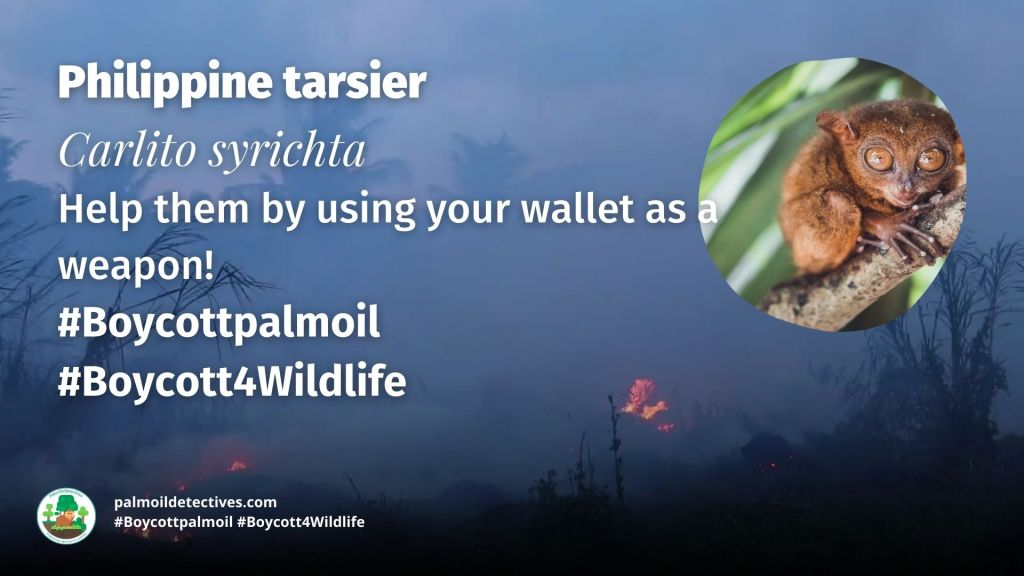
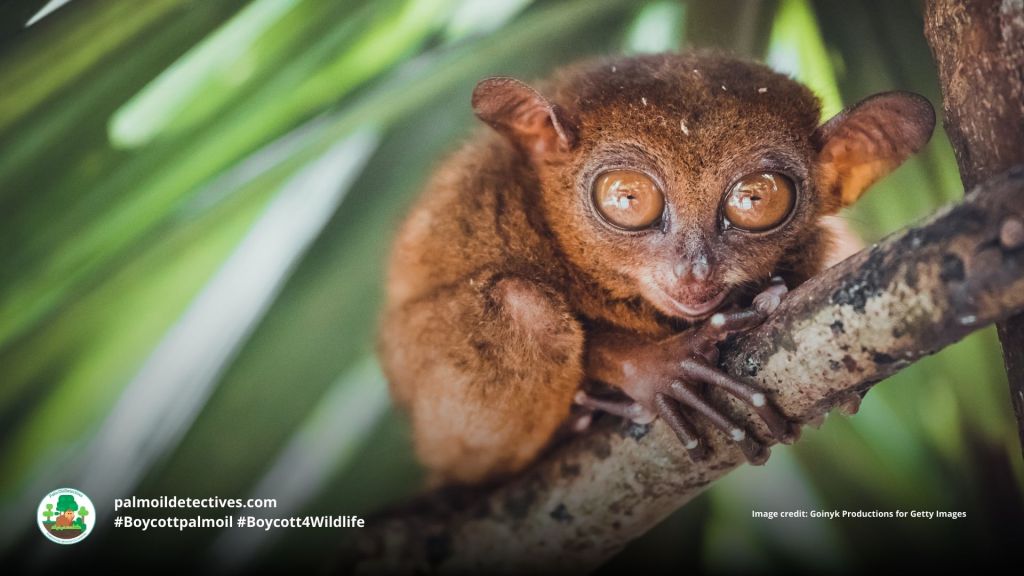
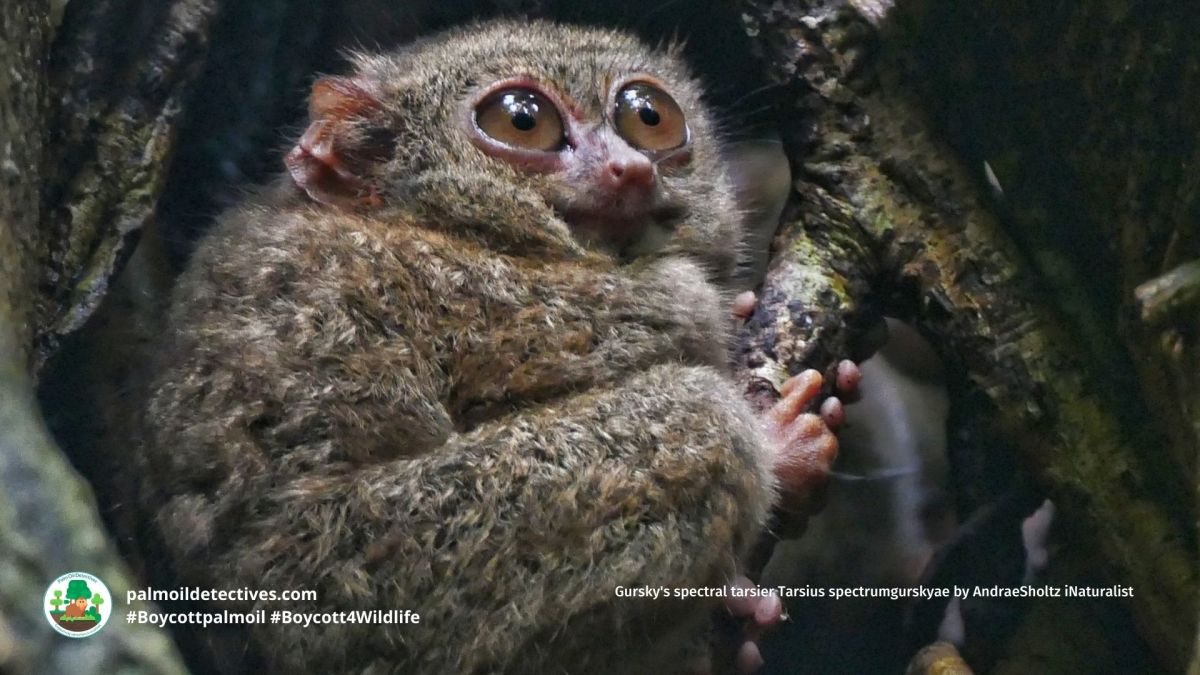
The Philippine #tarsier, Carlito syrichta, epitomises nocturnal secrecy, leading a mostly concealed life in the dense recesses of impenetrable bushes and forests of the #Philippines. They boast large and mesmerising eyes that aid with night vision. These tiny creatures have a distinct appearance and measuring around 8 to 16 cm. Their fur is soft and comes in various shades, often blending with their natural surroundings.Known for their incredible leaping abilities, tarsiers are agile hunters, relying on their keen sense of hearing to locate prey. Despite their small size, they play a vital role in maintaining the ecological balance in their habitat. They are now ‘Near Threatened’ due to multiple human-related threats including palm oil deforestation and the pet trade. Help them to survive #Boycottpalmoil #Boycott4Wildlife
Known for their incredible leaping abilities and huge eyes, Philippine tarsiers are agile hunters. They face multiple threats including #palmoil #deforestation. Help them every time you shop! #Boycottpalmoil #Boycott4Wildlife @palmoildetect https://wp.me/pcFhgU-74s
Kooky Philippine #tarsiers epitomise nocturnal secrecy and live in the dark of #Philippines forests. Their main threats are the #pet trade and #deforestation. Help them by using your wallet as a weapon and #Boycottpalmoil #Boycott4Wildlife @palmoildetect https://wp.me/pcFhgU-74s
Habitat
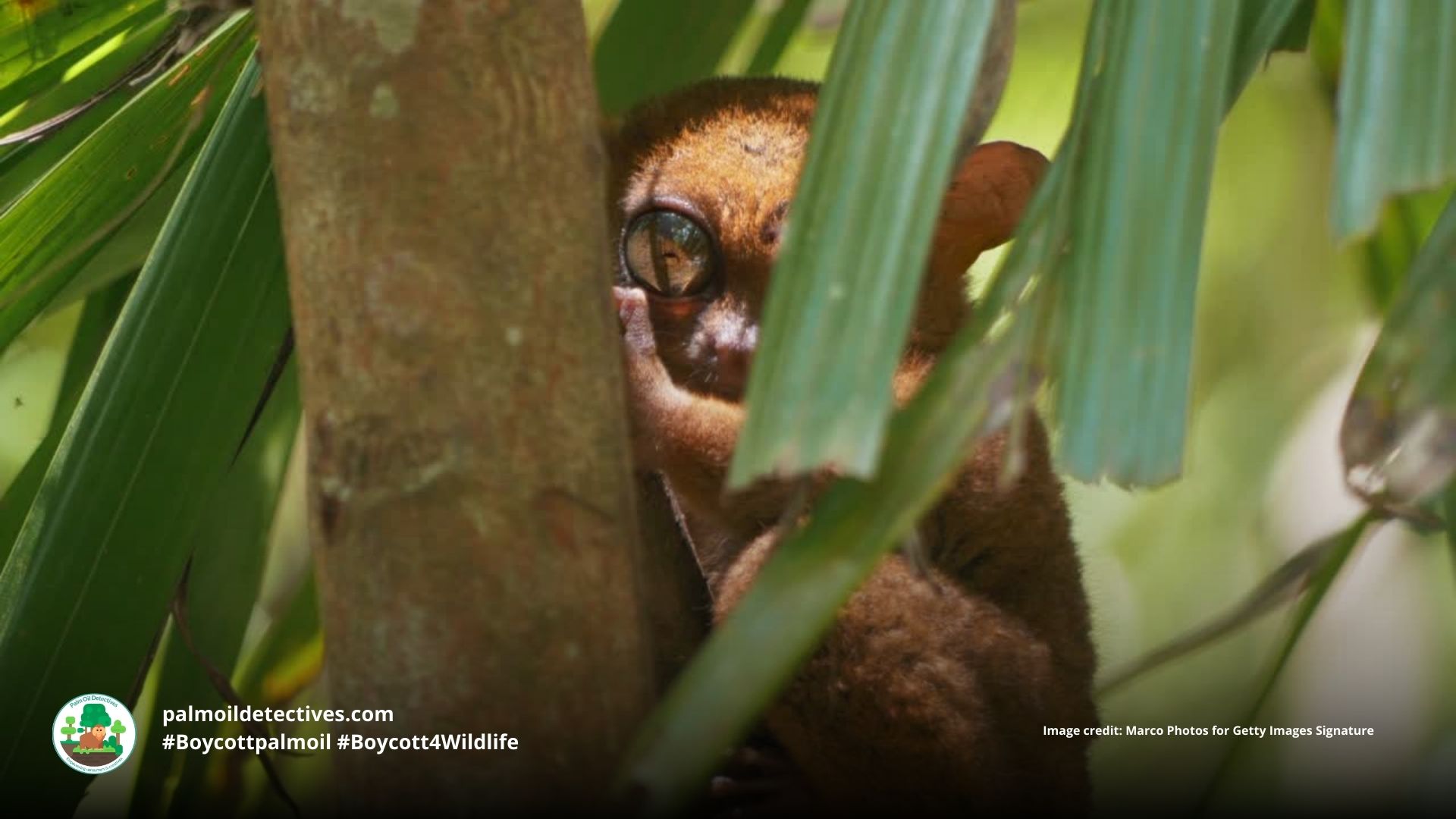
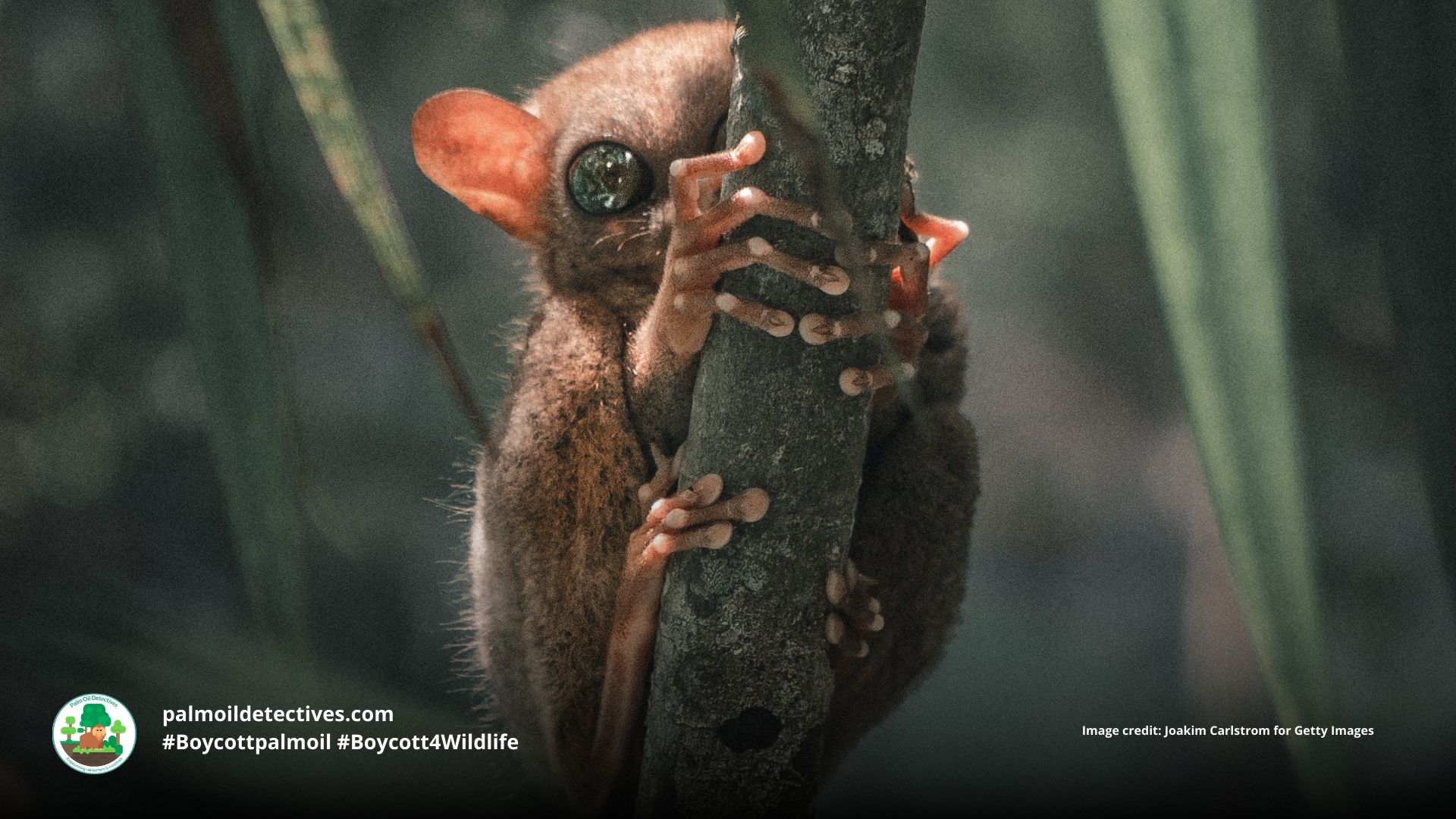
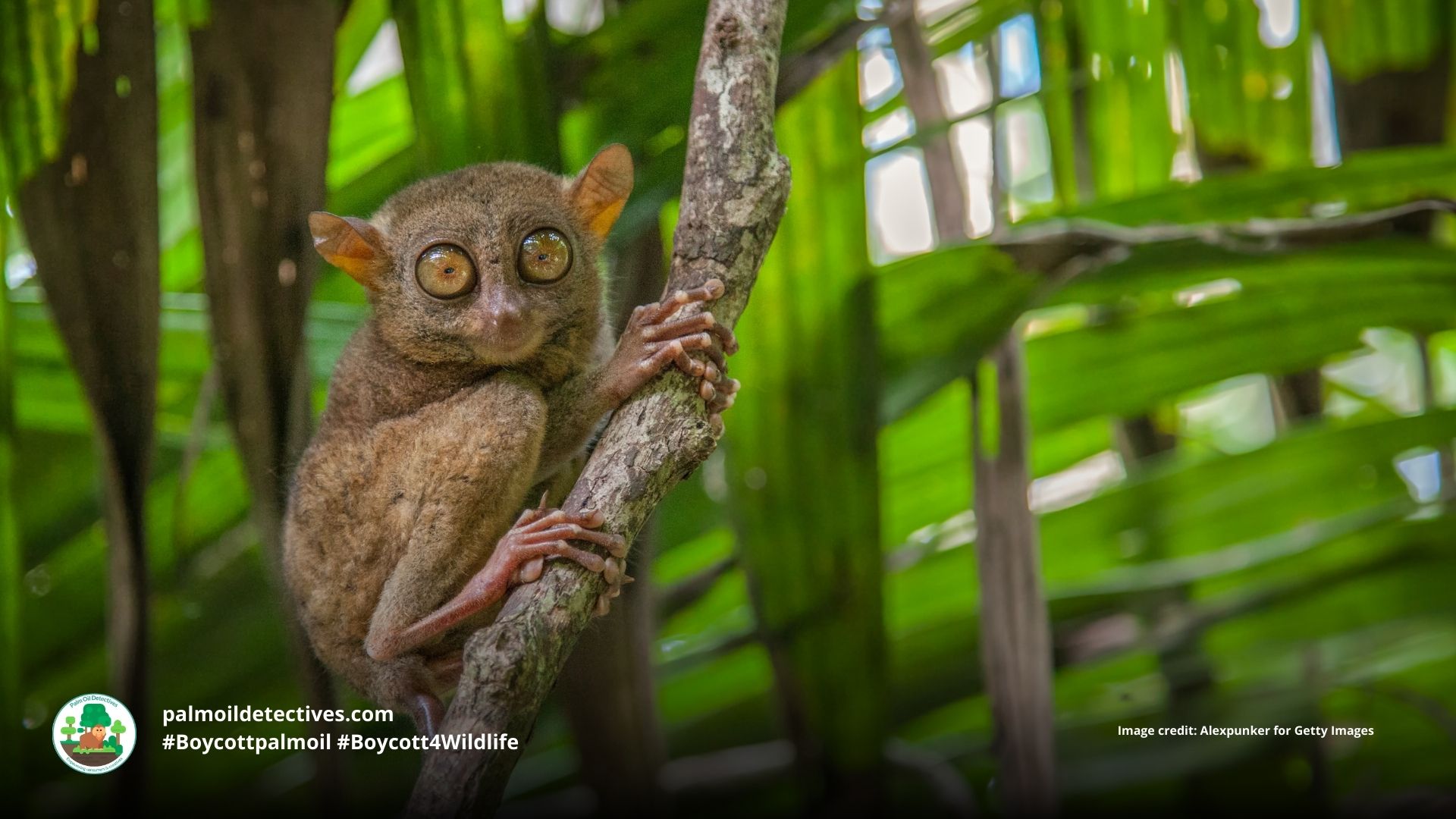
Endemic to the Philippines, the Philippine tarsier lives in lush tropical forests. These tiny and fragile looking primates are particularly abundant in specific regions such as Bohol, Leyte, Leyte, and Mindanao. Their habitat preference is dense vegetation, where they can navigate and forage efficiently in the tree canopies. Unfortunately, the expansion of multiple industries in the Philippines threatens their existence and they are now classified as ‘Near Threatened’.
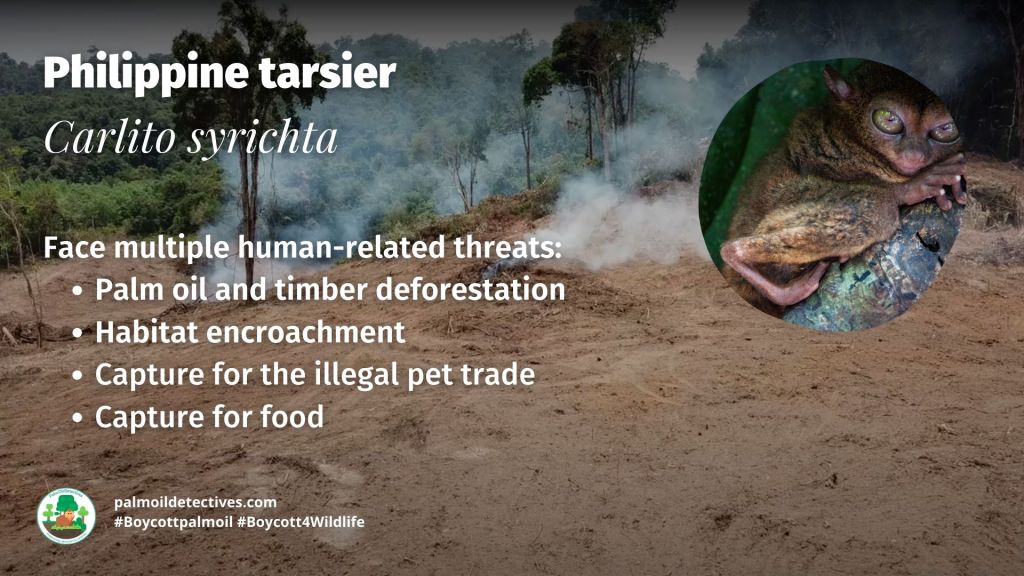
Threats
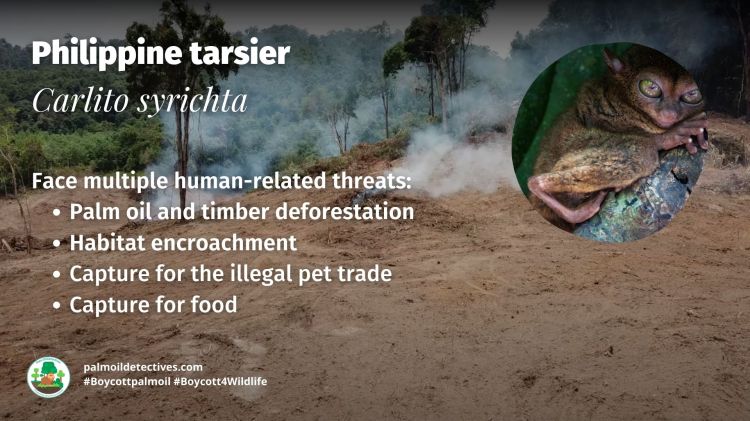
- Habitat Loss: Rapid deforestation and conversion of forests into agricultural land.
- Illegal Pet Trade: Despite being protected by law, the Philippine tarsier faces the threat of capture for the exotic pet trade.
- Tourism Impact: Unregulated tourism can disturb their natural habitats and stress the tarsiers.
Diet
These small primates are insectivores, primarily feeding on a variety of insects, including crickets, beetles, and caterpillars. They are one of the only species whose eyes weigh more than their brains. They are equipped with exceptional night vision and sensitive ears. Philippine Tarsiers skilfully navigate the dense vegetation of tropical forests to hunt for their prey.
Mating and breeding
Communication is a complex affair, involving audible calls, ultrasonic vocalisations, and scent markings. Tarsiers vocalise with a distinctive loud call, a sweet, bird-like twill, and ultrasound frequencies for distress and mating communication.
The gestation period lasts about six months, with a mating season from April to May, and females give birth to a single offspring per gestation. These tiny infants, born with eyes wide open, weigh only 25 grams. They are carried by their mothers until they are capable of independent movement. The close bond between mother and offspring is crucial for the survival of the species. Tarsiers that are captured for the pet trade rarely survive and reproduce, so it is critical that they remain living and reproducing in the wild. Only a month after being born, babies exhibit great agility and are able to leap from this point onwards.
Support the Philippine tarsier by going vegan and boycotting palm oil in the supermarket, it’s the #Boycott4Wildlife
Support the conservation of this species
This animal has no protections in place. Read about other forgotten species here. Create art to support this forgotten animal or raise awareness about them by sharing this post and using the #Boycottpalmoil #Boycott4Wildlife hashtags on social media. Also you can boycott palm oil in the supermarket.
Further Information
Shekelle, M. 2020. Carlito syrichta. The IUCN Red List of Threatened Species 2020: e.T21492A17978520. https://dx.doi.org/10.2305/IUCN.UK.2020-3.RLTS.T21492A17978520.en. Accessed on 27 December 2023.
Philippine Tarsier Wikipedia article https://en.wikipedia.org/wiki/Philippine_tarsier
Philippine Tarsier Animalia.bio https://animalia.bio/philippine-tarsier

How can I help the #Boycott4Wildlife?
Take Action in Five Ways
1. Join the #Boycott4Wildlife on social media and subscribe to stay in the loop: Share posts from this website to your own network on Twitter, Mastadon, Instagram, Facebook and Youtube using the hashtags #Boycottpalmoil #Boycott4Wildlife.
2. Contribute stories: Academics, conservationists, scientists, indigenous rights advocates and animal rights advocates working to expose the corruption of the palm oil industry or to save animals can contribute stories to the website.






3. Supermarket sleuthing: Next time you’re in the supermarket, take photos of products containing palm oil. Share these to social media along with the hashtags to call out the greenwashing and ecocide of the brands who use palm oil. You can also take photos of palm oil free products and congratulate brands when they go palm oil free.
4. Take to the streets: Get in touch with Palm Oil Detectives to find out more.
5. Donate: Make a one-off or monthly donation to Palm Oil Detectives as a way of saying thank you and to help pay for ongoing running costs of the website and social media campaigns. Donate here
Learn about other animals endangered by palm oil and other agriculture

Learn about “sustainable” palm oil greenwashing
Read more about RSPO greenwashing
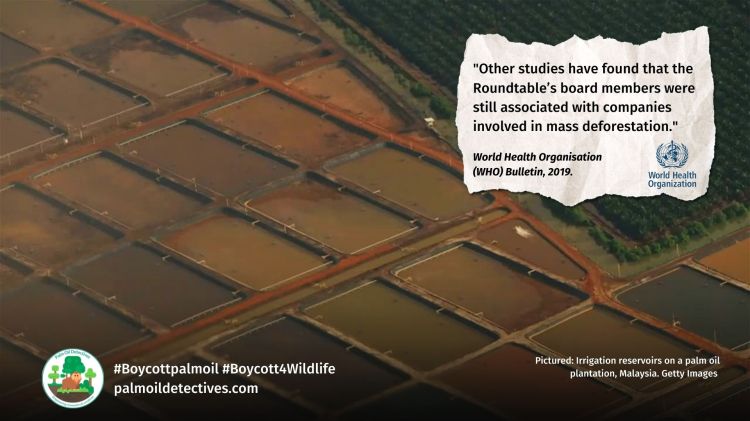
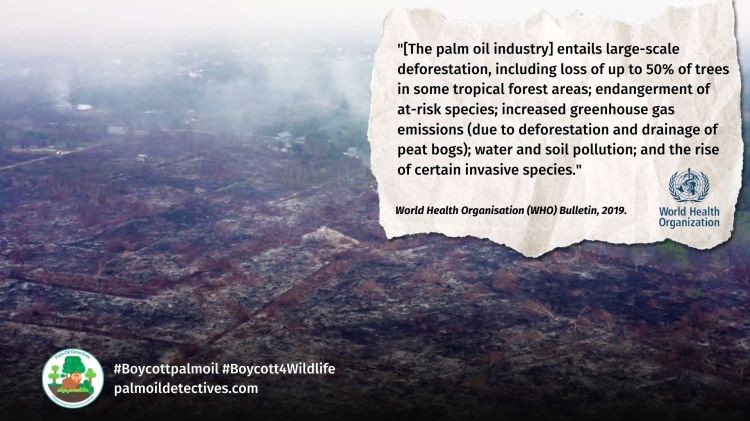
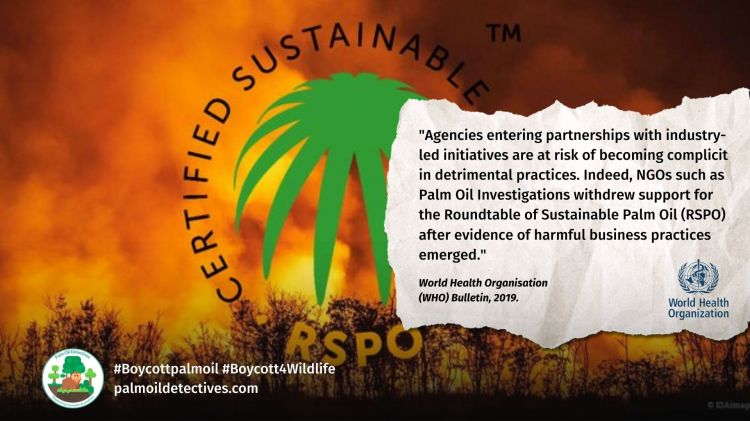
A 2019 World Health Organisation (WHO) report into the palm oil industry and RSPO finds extensive greenwashing of palm oil deforestation and the murder of endangered animals (i.e. biodiversity loss)


Discover more from Palm Oil Detectives
Subscribe to get the latest posts sent to your email.
 Palm Oil Detectives
One thought on “Philippine tarsier Carlito syrichta”