
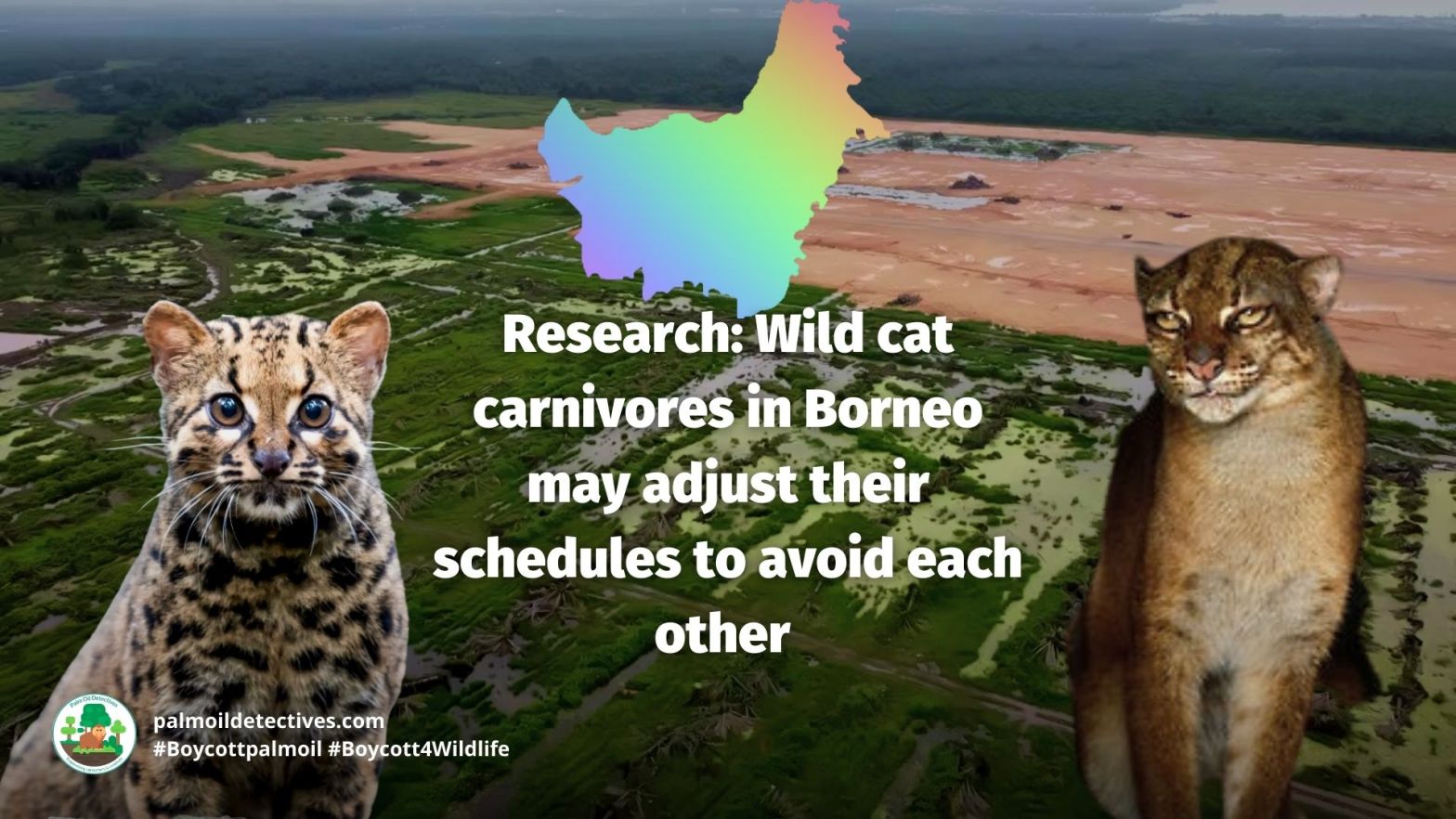
Study by Hiroshima University finds that due to increased human pressures from hunting, palm oil and other deforestation, wild cats and other carnivores in Indonesia and Malaysia may go out of their way to avoid other species – they negotiate space and resources for survival.
#Wildcat #carnivores 🐯🐅💛 in #Borneo 🇮🇩🇲🇾 may adjust their schedules to avoid each other as they compete for ever more scarce food 😿 Help them survive and #Boycottpalmoil 🌴🪔🔥🤮☠️🧐🙊⛔️ #Boycott4Wildlife every time you shop! @palmoildetect https://palmoildetectives.com/2024/08/25/research-wild-cat-carnivores-in-borneo-may-adjust-their-schedules-to-avoid-each-other/
Wildcat #carnivores like Borneo Bay #Cats 🐈 Marbled Cats 🐅 and Sunda Clouded Leopards 🐆 compete for scarce food 🥩 due to #palmoil and other #deforestation in #Borneo. Help them and #Boycottpalmoil 🌴🚫 #Boycott4Wildlife @palmoildetect https://palmoildetectives.com/2024/08/25/research-wild-cat-carnivores-in-borneo-may-adjust-their-schedules-to-avoid-each-other/
This is a media release from Hiroshima University based on peer reviewed research entitled: ‘Temporal activity patterns suggesting niche partitioning of sympatric carnivores in Borneo, Malaysia’, DOI: 10.1038/s41598-021-99341-6
Just as humans may leave their home five minutes early to avoid a talkative neighbour or depart work late to avoid a rude coworker, carnivorous mammals may go out of their way to avoid other species. But they’re not trying to navigate awkward social interactions; rather, they are negotiating space and resources for survival.
Researchers monitored this temporal niche partitioning intermittently over six years with 73 infrared trigger sensor cameras installed at three sites in the Malaysian state of Sabah on Borneo, the third largest island in the world. The international collaboration published their findings, and what they might mean for the mechanism of coexistence between competing mammals, on Oct. 6 in Scientific Reports.
“Approximately 20% of the world’s mammal species face the risk of extinction, mainly due to threats such as habitat loss and overexploitation. The status of mammals in the Indomalayan realm — one of Earth’s eight biogeographic regions, covering most of South and Southeast Asia — is among the world’s worst.”
~ First named author Miyabi Nakabayashi, Assistant Professor in the Graduate School of Advanced Science and Engineering at Hiroshima University.
One of the major roadblocks to effective and realistic solutions to lower the rate of endangered species is the scarcity of basic ecological information on mammals in the Indomalayan region, according to Nakabayashi.
“Information regarding temporal activity patterns of animals is crucial to assess responses to anthropogenic disturbances and to allow the implementation of proper conservation measures,” Nakabayashi said. “Camera trapping is one of the most useful techniques to study cryptic and rare animals.”
The researchers collected 37,379 photos over a total of about three active years. Although the first cameras were installed in 2010 and the last ones were removed in 2016, there were significant periods of bad weather or logistical issues — such as nesting insects — that rendered the cameras inoperable for long stretches of time.
In the dataset, the researchers identified nine distinct carnivore species with sample sizes larger than 10 and categorized their activity patterns by time of day. Of the species, six were active at night, two were active during the day and one was active regardless of time.
Some of the more closely related animals demonstrated a clear temporal segregation, including two wild cats, one of whom was nocturnal while the other preferred the day. However, the researchers also found that three species of civets were all active at night, which might be due to limited competition over resources because all three species eat a variety of food items, Nakabayashi said.
The researchers also found that tourism may have an impact on mammal behaviors. Tourism activities — mainly non-lethal ecotourism events — were conducted at all study sites during the study period. Only one site, however, hosted nocturnal tourism activities. Common palm civets at the other two sites had two clear peaks of temporal activity at night, but the same species at the site with nocturnal tourism had unclear and delayed temporal movement.
“The potential benefits of ecotourism may include reduced threats to wildlife ,” Nakabayashi said, noting that community-based ecotourism can bring significant benefits such as alternative income that incentivizes local communities and policy makers to protect the species in areas of interest. “But our results indicate that the temporal activity pattern of a species might be directly affected by tourism activity. The effect of tourism on animal behavior should be evaluated, even though it is non-lethal ecotourism.”
The researchers also recommended a two- to three-year-long study with at least 10 cameras to gather more data on the activities of the carnivores.
“Current information is too limited and sporadic to understand basic behaviors of mammals, which may affect the progress in evaluating and improving the threatened status,” Nakabayashi said. “We should accumulate more information on rare species to determine their basic ecology and to reassess whether current conservation management strategies are appropriate.”
JOURNAL
Scientific Reports
DOI
ARTICLE TITLE
Temporal activity patterns suggesting niche partitioning of sympatric carnivores in Borneo, Malaysia
This is a media release from Hiroshima University based on peer reviewed research entitled: ‘Temporal activity patterns suggesting niche partitioning of sympatric carnivores in Borneo, Malaysia’, DOI: 10.1038/s41598-021-99341-6
ENDS
Big, medium and small wildcats are disappearing as a result of deforestation for soy, palm oil and meat. Help them and #Boycott4Wildlife
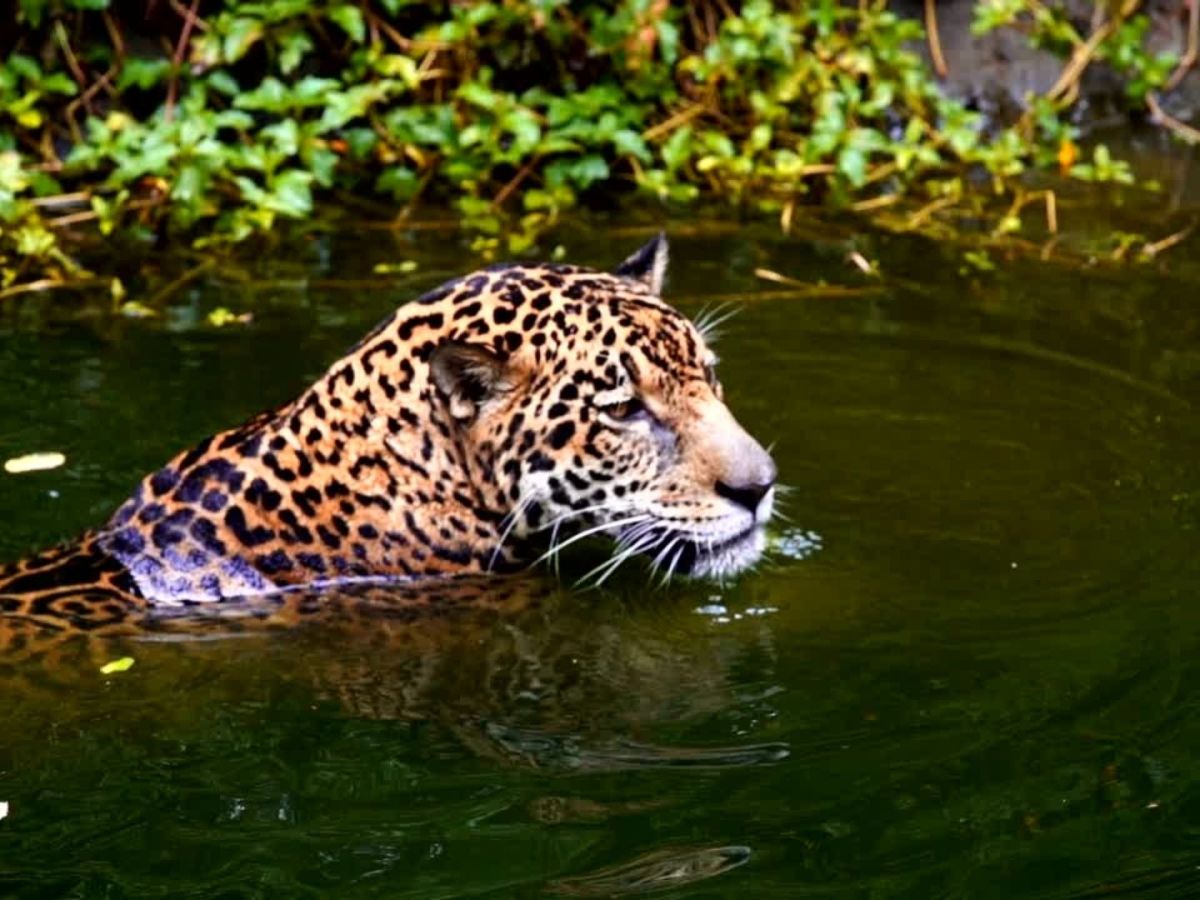
Hydroelectric Dams Take a Toll on Jaguars, Tigers and Lions
Forest loss for hydroelectric dams is a real threat to big cats contributing to climate change in South America and Asia. Help them survive and take action!
Read more
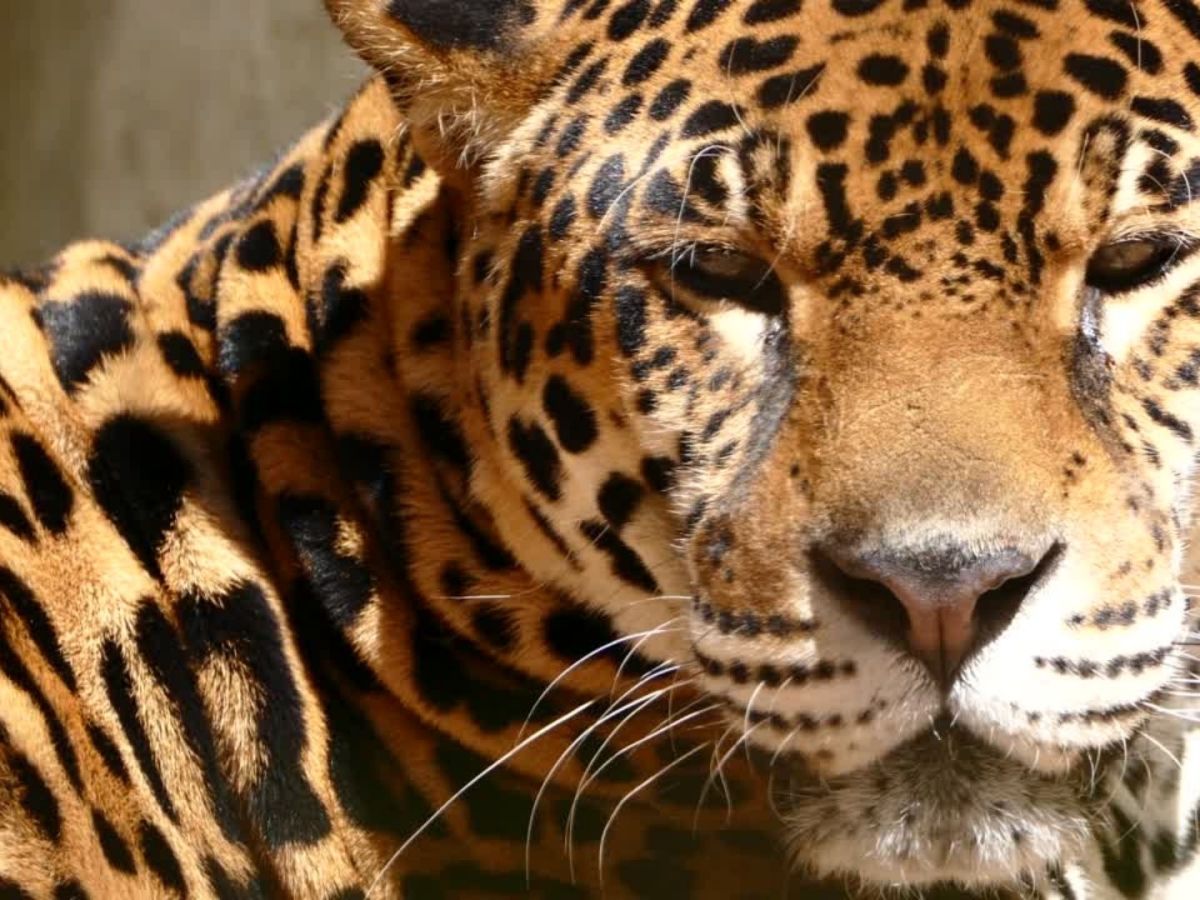
Jaguars vs Cows: JBS Fuelling Biodiversity Collapse in Brazil’s Forests
Global Witness report finds JBS, the world’s largest meat company, is directly linked to deforestation in the Amazon and Pantanal putting jaguars at risk
Read more
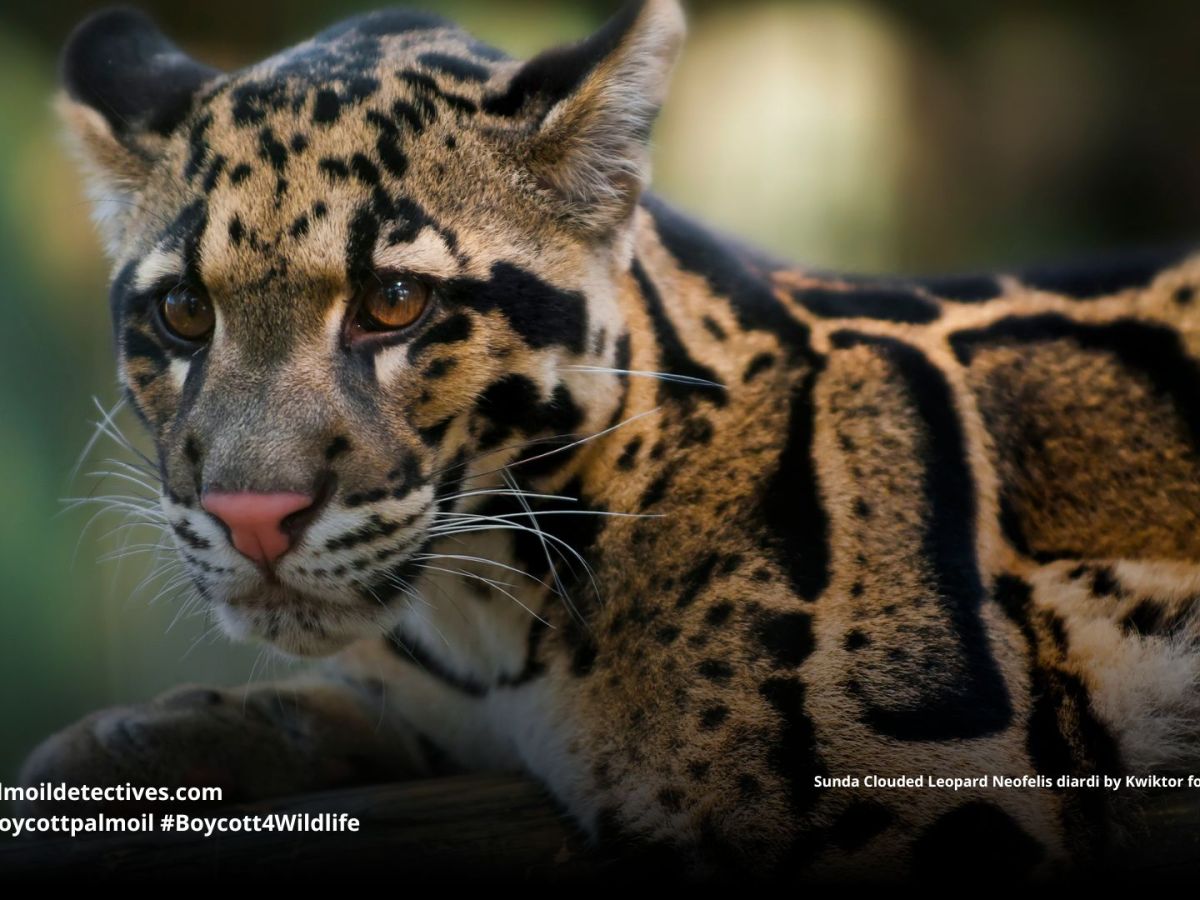
Sunda Clouded Leopard Neofelis diardi
Gliding through the rainforest canopy like a phantom predator, the Sunda Clouded Leopard moves with unmatched grace, making them one of the least understood big cats in the world. Their spectacularly patterned coat, the…
Read more

Andean Mountain Cat Leopardus jacobita
Known affectionately as ‘huana titi’ or ‘the cat from dry places’ by locals, the Andean mountain cat captivates with their mystery and elegance. This cat boasts an exceptional sense of hearing, attributed to their…
Read more

African Golden Cat Caracal aurata
The African golden cat’s striking coat varies from radiant red to elegant gray. They are a symbol of wild grace in the African jungle. This feline enchants a cacophony of sounds, from gentle meows…
Read more

Margay Leopardus wiedii
Graceful, athletic and beautiful feline of the Amazon jungle, margays are small wild cats endemic to South and Central America. Every margay has a unique spotted pattern on their coat. They depend heavily on…
Read more
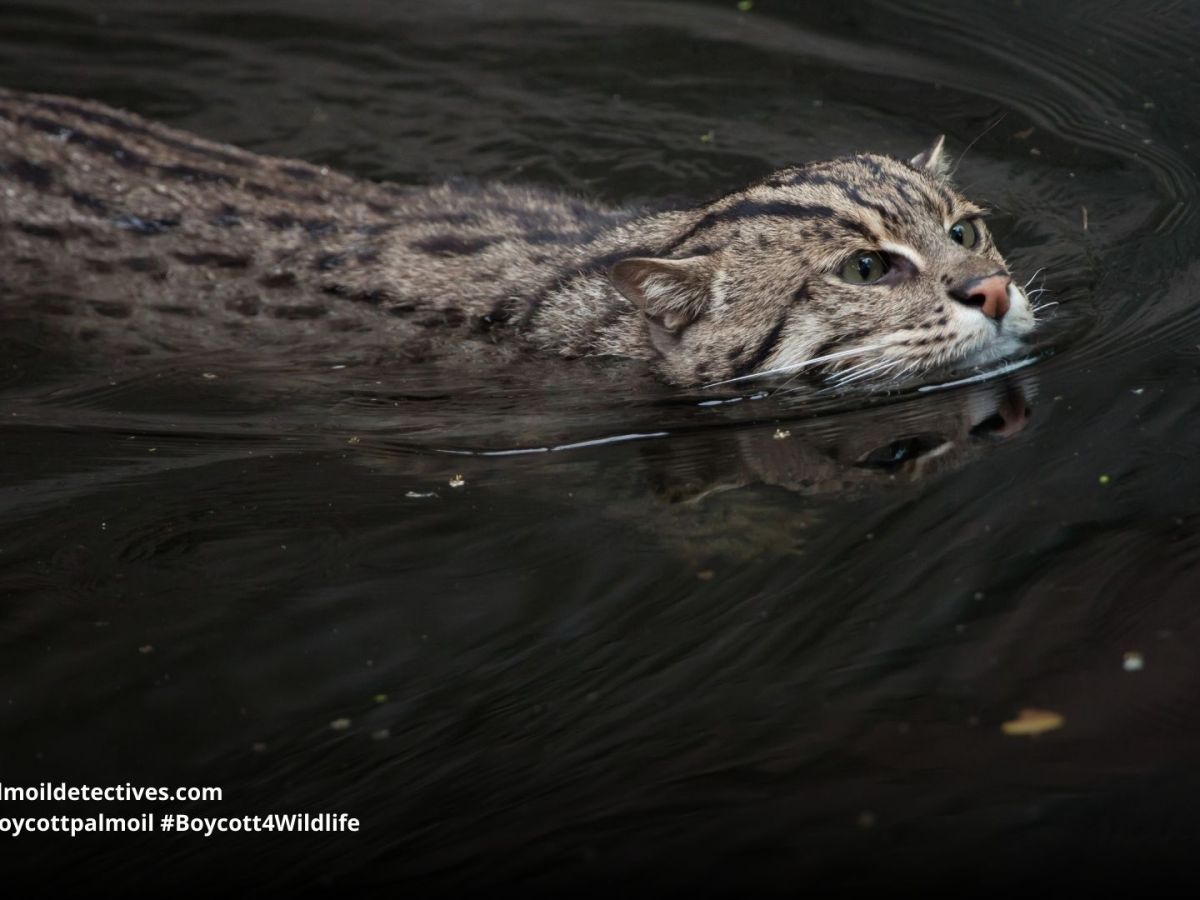
Fishing Cat Prionailurus viverrinus
Although they look cute and cuddly, the Fishing #Cat Prionailurus viverrinus has a feisty, firecracker temper. This small to medium sized wild cat can become defensive if approached in the wild. They are around…
Read more
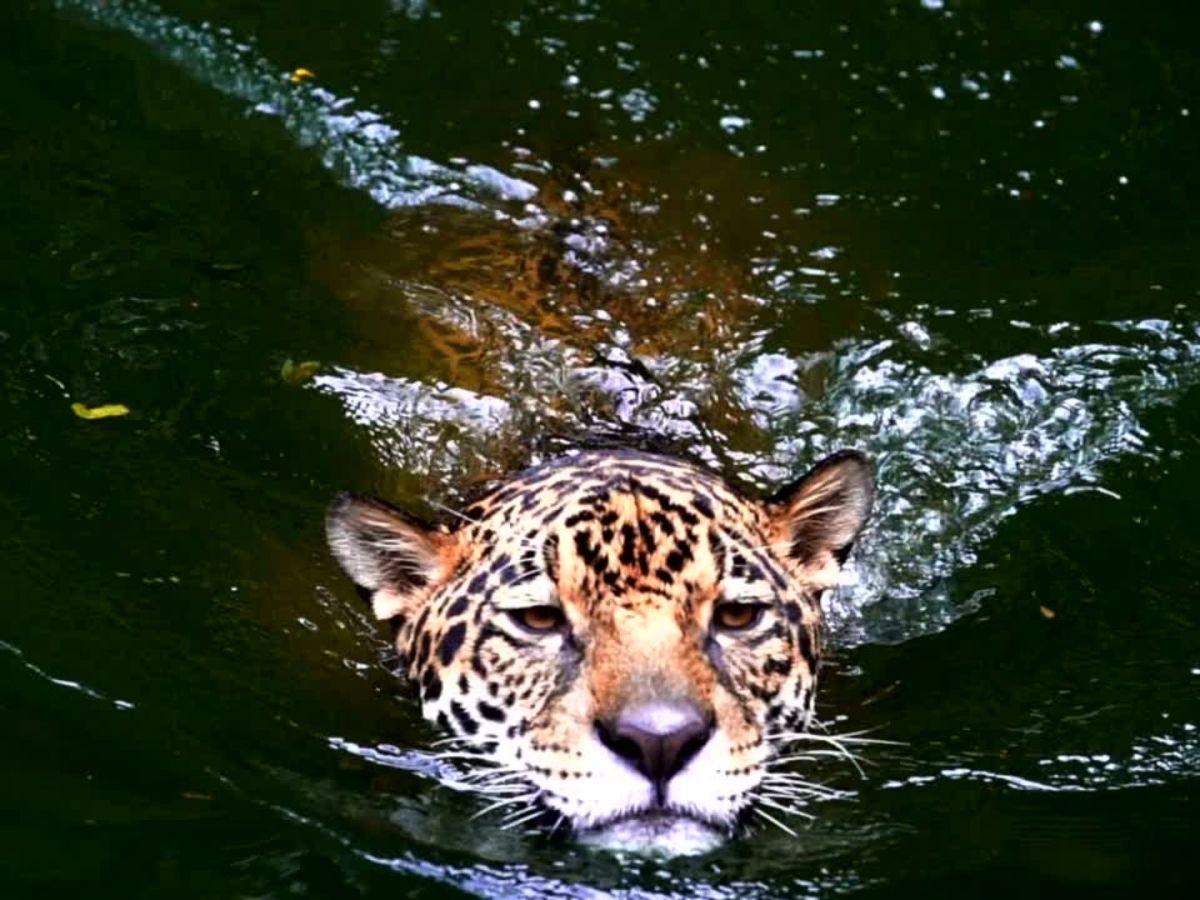
Jaguar Panthera onca
Jaguars, currently deemed Near Threatened, face a substantial habitat reduction of up to 25% in just over two decades. This decline stems from rampant deforestation for palm oil, soy, and meat, as well as…
Read more
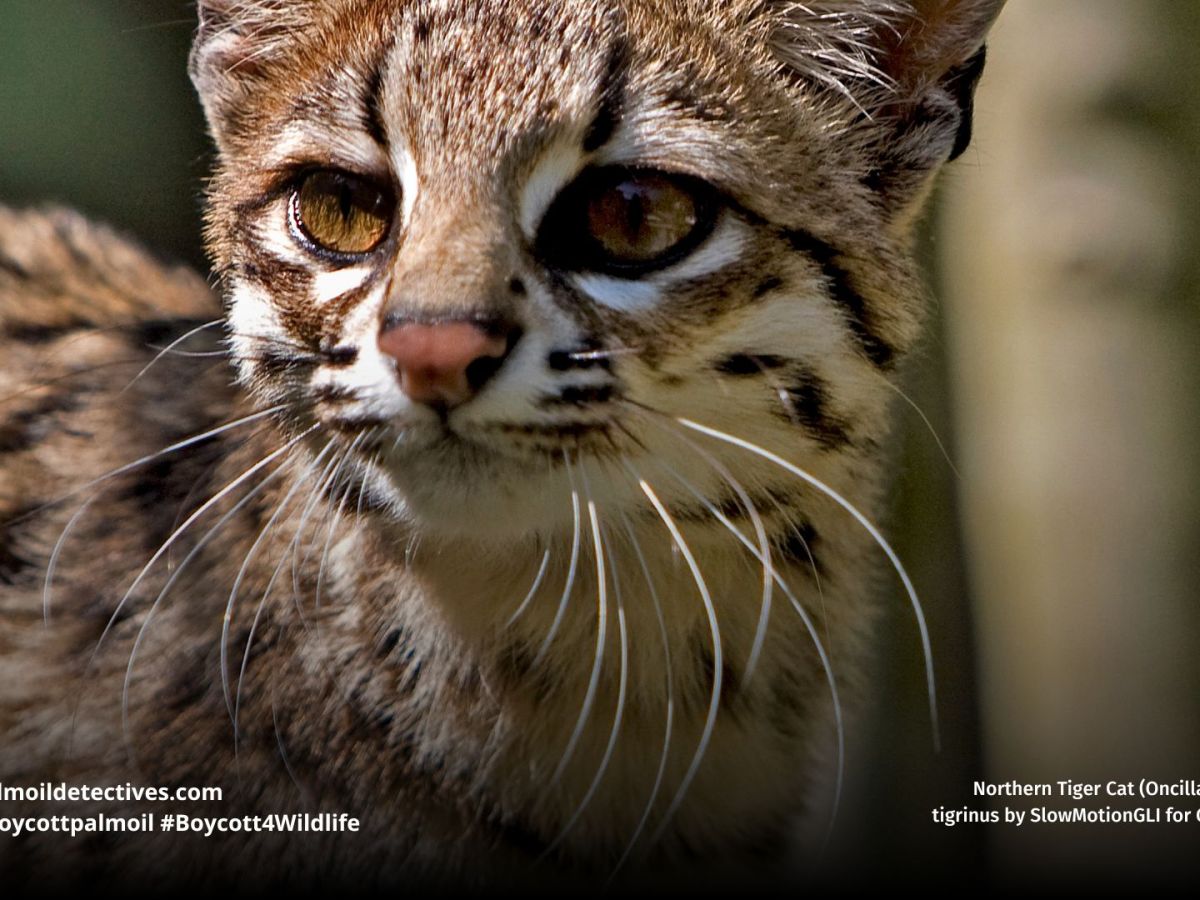
Northern Tiger Cat (Oncilla) Leopardus tigrinus
The northern tiger cat, also known as the oncilla (Leopardus tigrinus), is a captivating small wild cat native to Central and South America. Distinguished by their striking, leopard-like coat marked with dark rosettes and…
Read more
Something went wrong. Please refresh the page and/or try again.
Take Action in Five Ways
1. Join the #Boycott4Wildlife on social media and subscribe to stay in the loop: Share posts from this website to your own network on Twitter, Mastadon, Instagram, Facebook and Youtube using the hashtags #Boycottpalmoil #Boycott4Wildlife.
2. Contribute stories: Academics, conservationists, scientists, indigenous rights advocates and animal rights advocates working to expose the corruption of the palm oil industry or to save animals can contribute stories to the website.






3. Supermarket sleuthing: Next time you’re in the supermarket, take photos of products containing palm oil. Share these to social media along with the hashtags to call out the greenwashing and ecocide of the brands who use palm oil. You can also take photos of palm oil free products and congratulate brands when they go palm oil free.
4. Take to the streets: Get in touch with Palm Oil Detectives to find out more.
5. Donate: Make a one-off or monthly donation to Palm Oil Detectives as a way of saying thank you and to help pay for ongoing running costs of the website and social media campaigns. Donate here
Discover more from Palm Oil Detectives
Subscribe to get the latest posts sent to your email.
 Palm Oil Detectives