
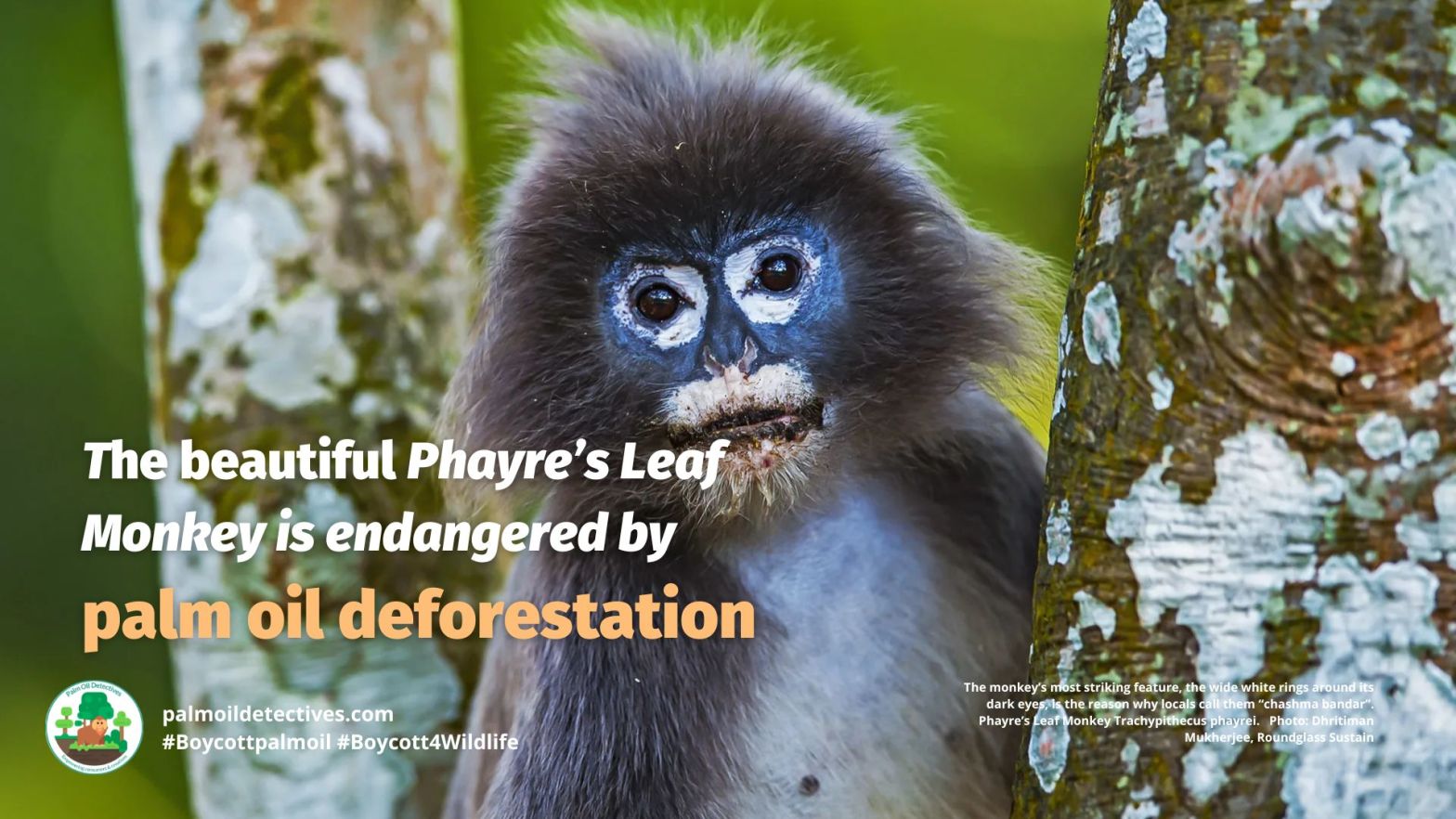
Phayre’s Leaf Monkey Trachypithecus phayrei
Endangered
Extant (resident)
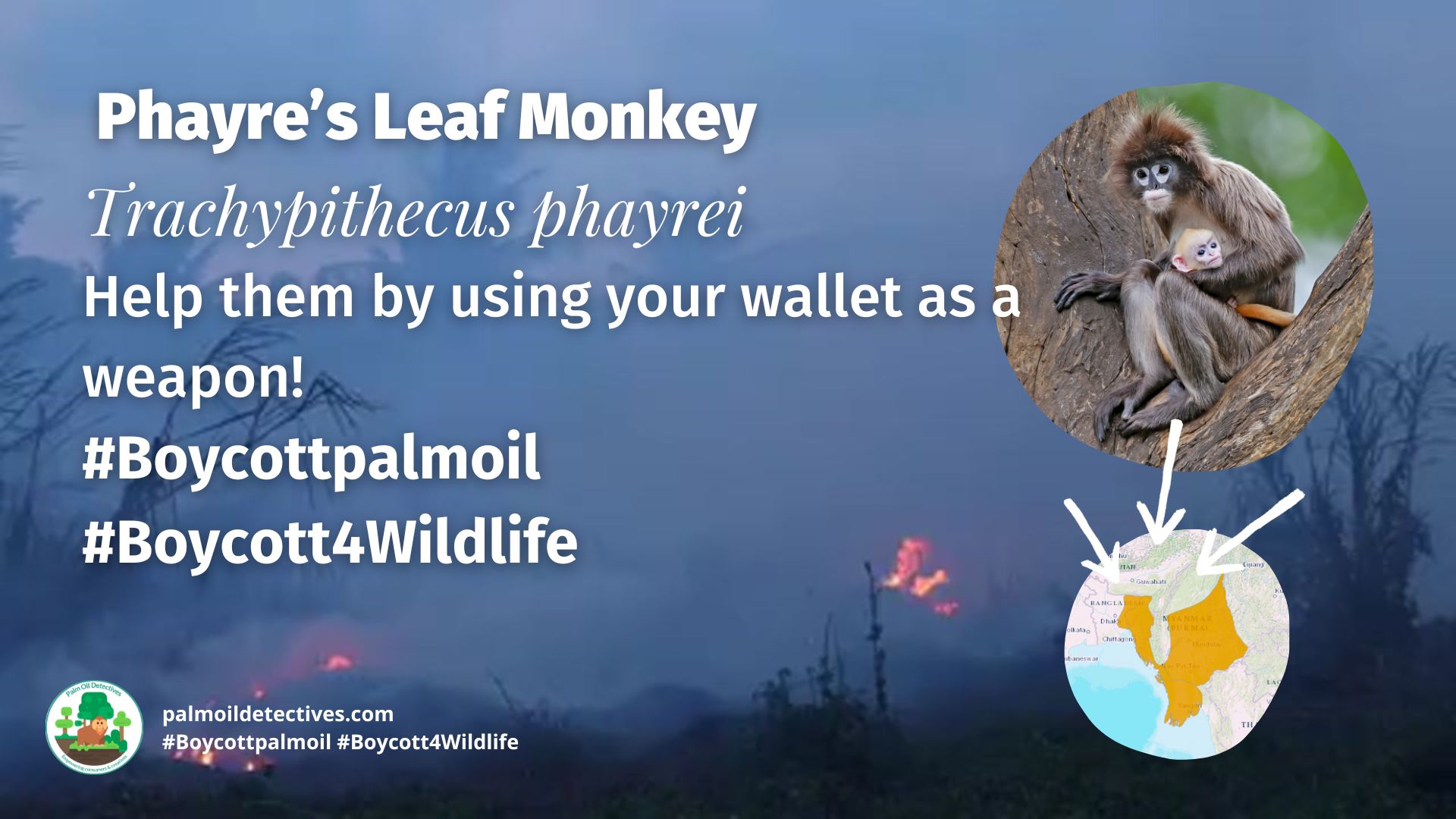
Bangladesh, India (Assam, Mizoram, Tripura), Myanmar
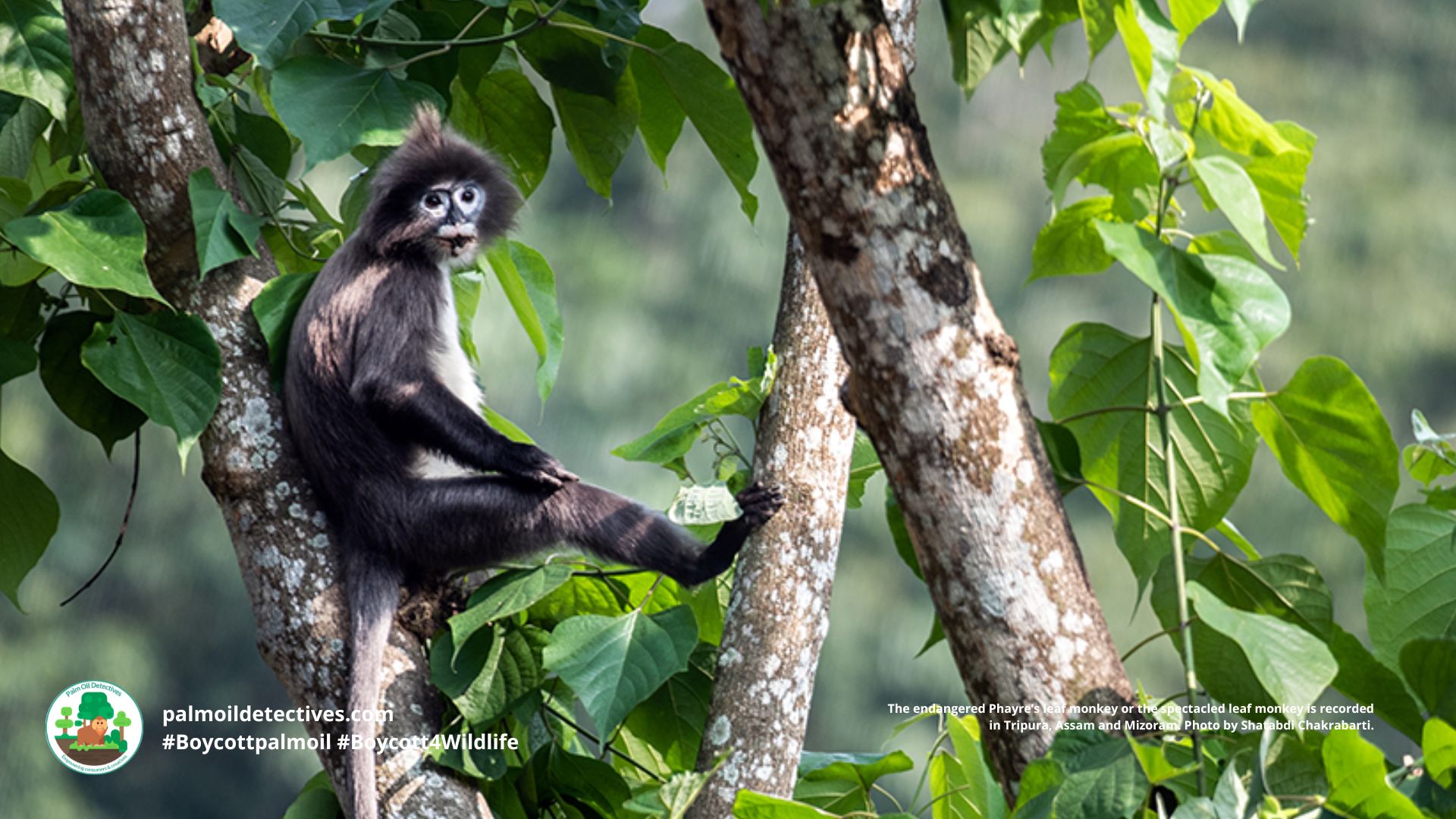
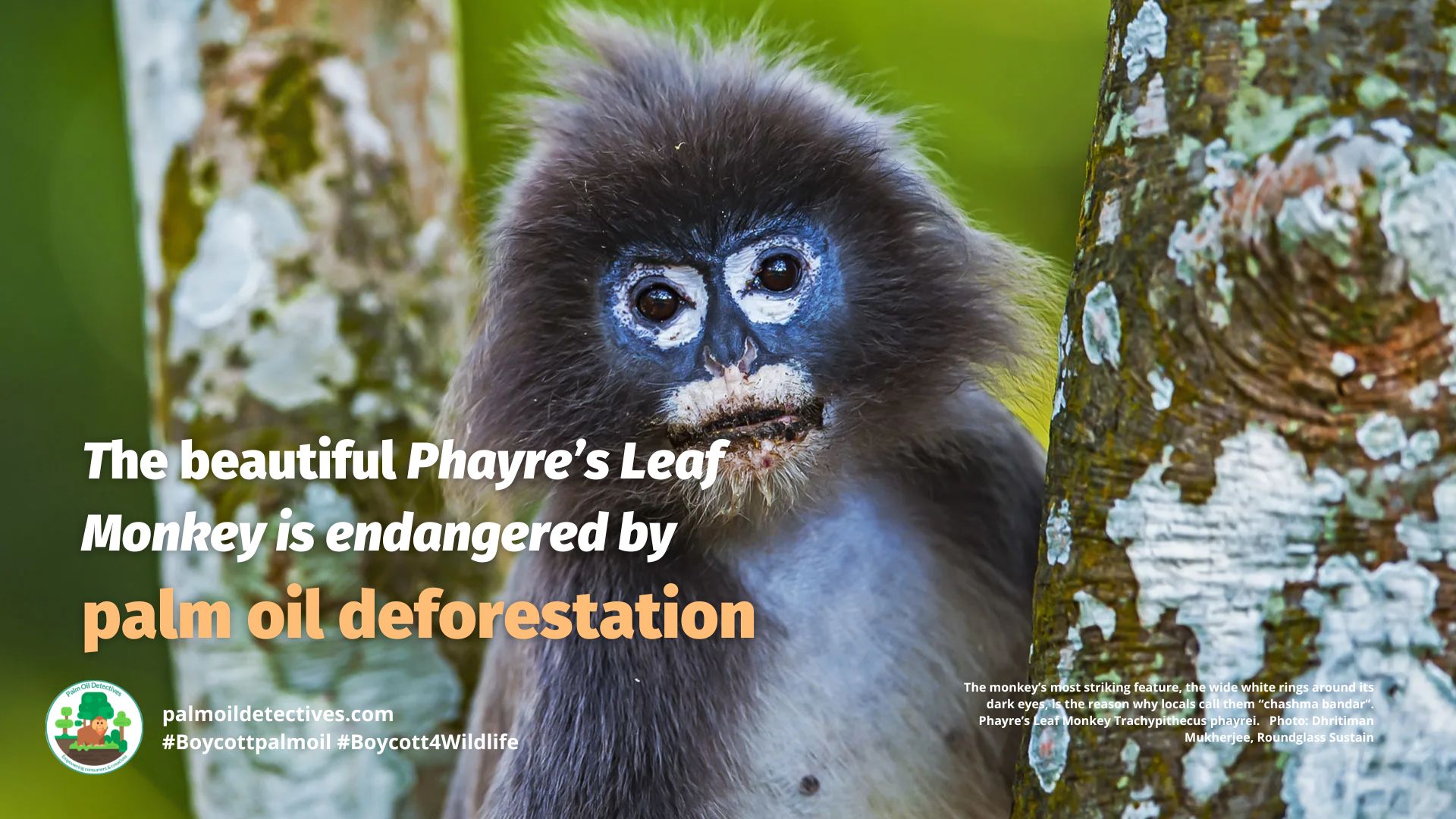
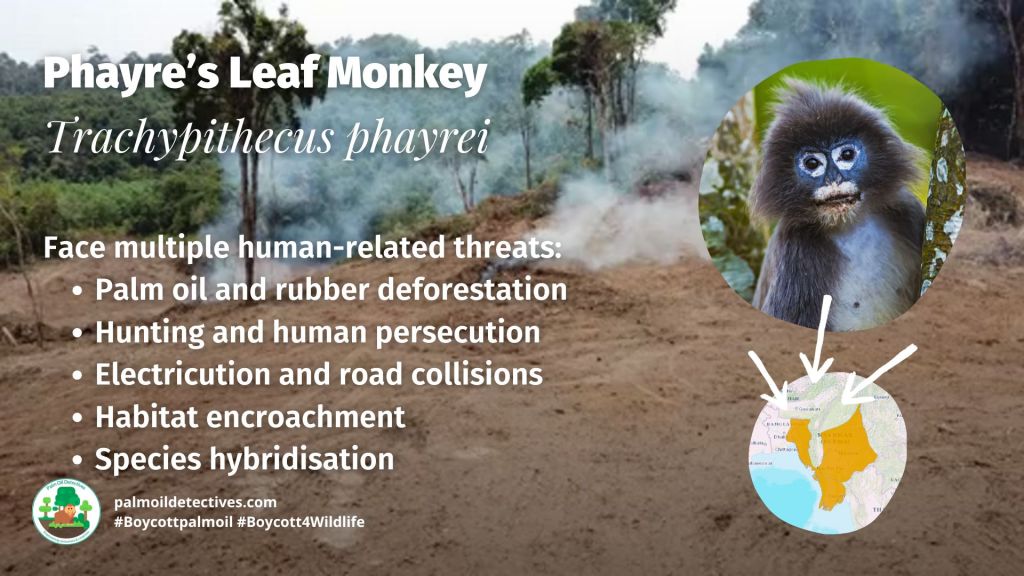
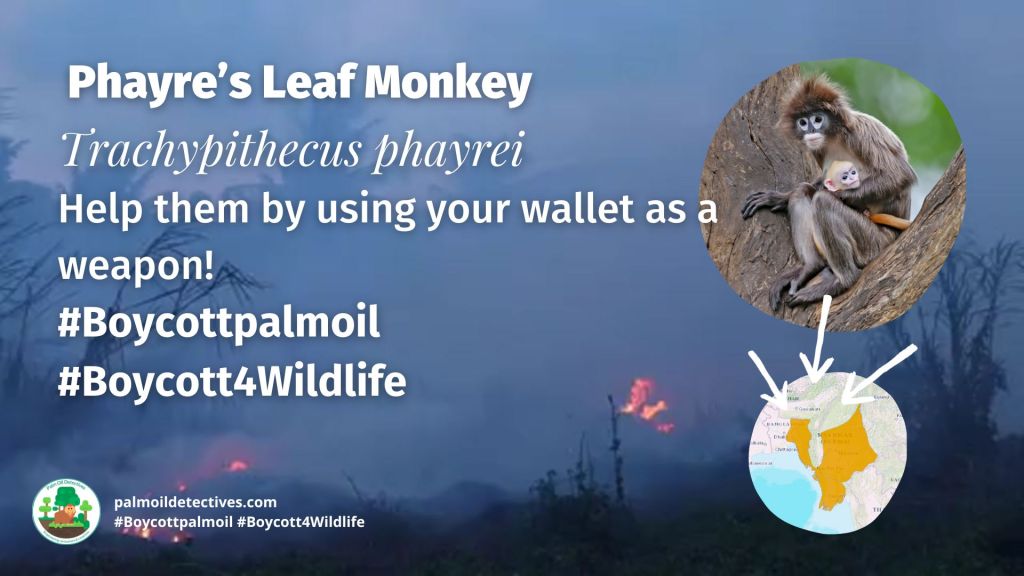
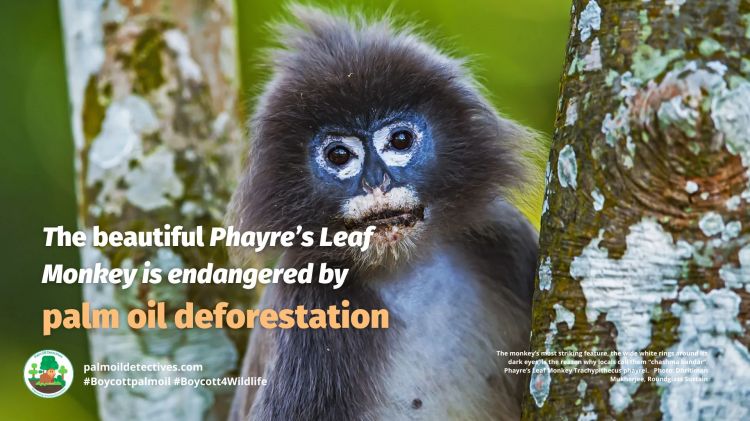
Phayre’s leaf monkey, also known as Phayre’s langur, are remarkable Old World monkeys distinguished by large, white-rimmed eyes that lend them a “spectacled” appearance. Known locally as ‘Chasma bandar’ they live mostly in the lush forests of India, Bangladesh and Myanmar. Major threats to their survival include habitat destruction from palm oil and rubber plantations, illegal hunting for traditional medicine, and habitat encroachment depleting their natural food sources. An emerging threat is interbreeding with other threatened monkey species. Join the fight to protect this unique species: #BoycottPalmOil #Boycott4Wildlife in the supermarket! If you care about animals, consider going #Vegan to protect their habitat and lives.
Known as ‘Chasma Bandar’ for their beautiful spectacled eyes 👓🐵🐒 Phayre’s leaf monkeys are a distinctive #monkey in #India 🇮🇳 #Bangladesh 🇧🇩, #endangered by #palmoil #deforestation 🌴🔥🚫 Fight for them! #Boycottpalmoil #Boycott4Wildlife @palmoildetect https://wp.me/pcFhgU-95q
With white-rimmed eyes and purple hair, Phayre’s Leaf #Monkeys 🐒 barely survive in forests in #Assam, #India, #Myanmar and #Bangladesh. A major threat is #palmoil #deforestation. Help them survive! #Boycottpalmoil 🌴🔥⛔️#Boycott4Wildlife @palmoildetect https://wp.me/pcFhgU-95q
Appearance & Behaviour
• Known locally as Chasma bandar in Bengali due to their “spectacled” appearance.
• Spend the majority of their time feeding, resting, and grooming.
• Often adapt their diet to available resources, including invasive species in rubber plantations.
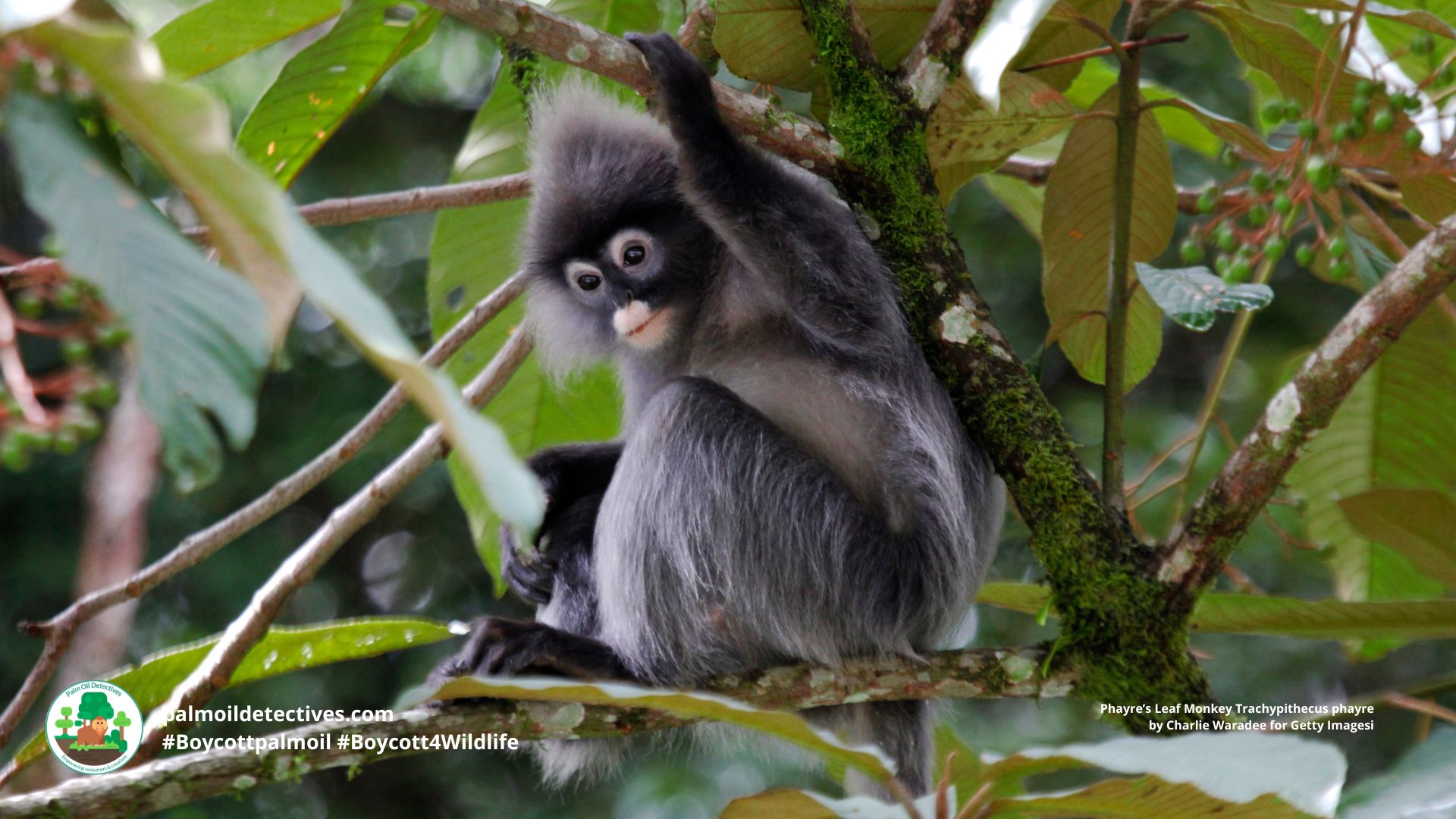
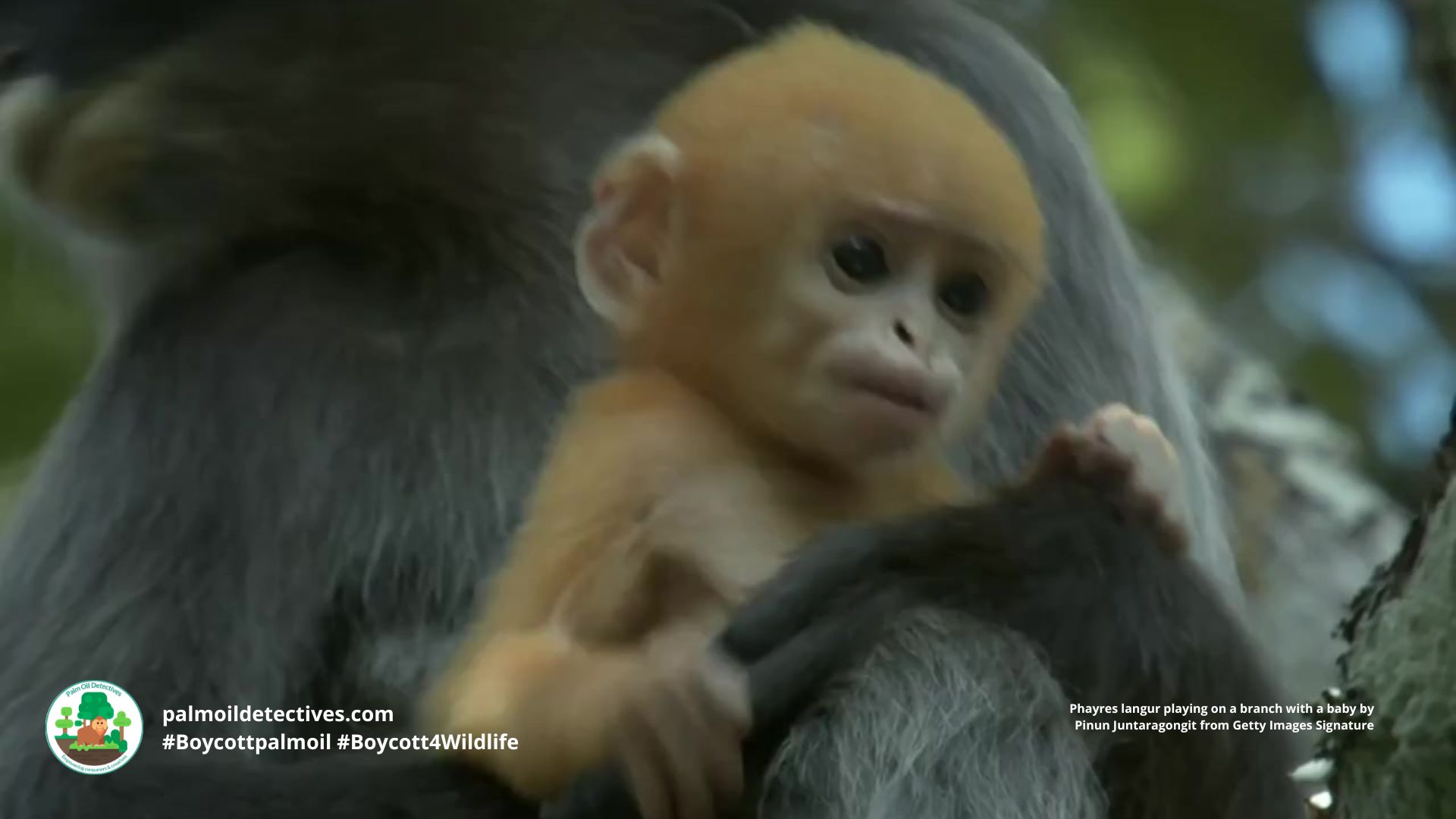
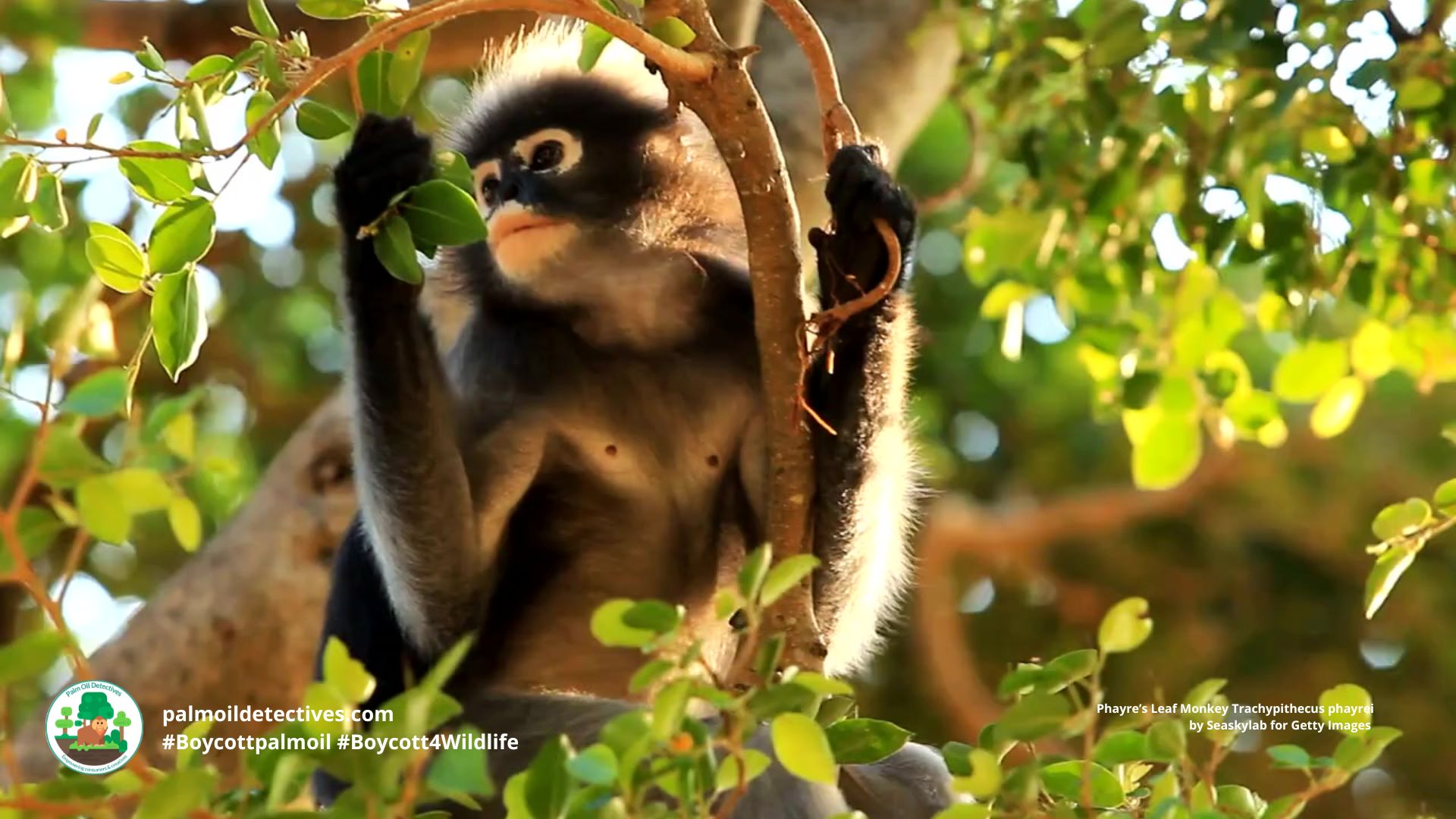
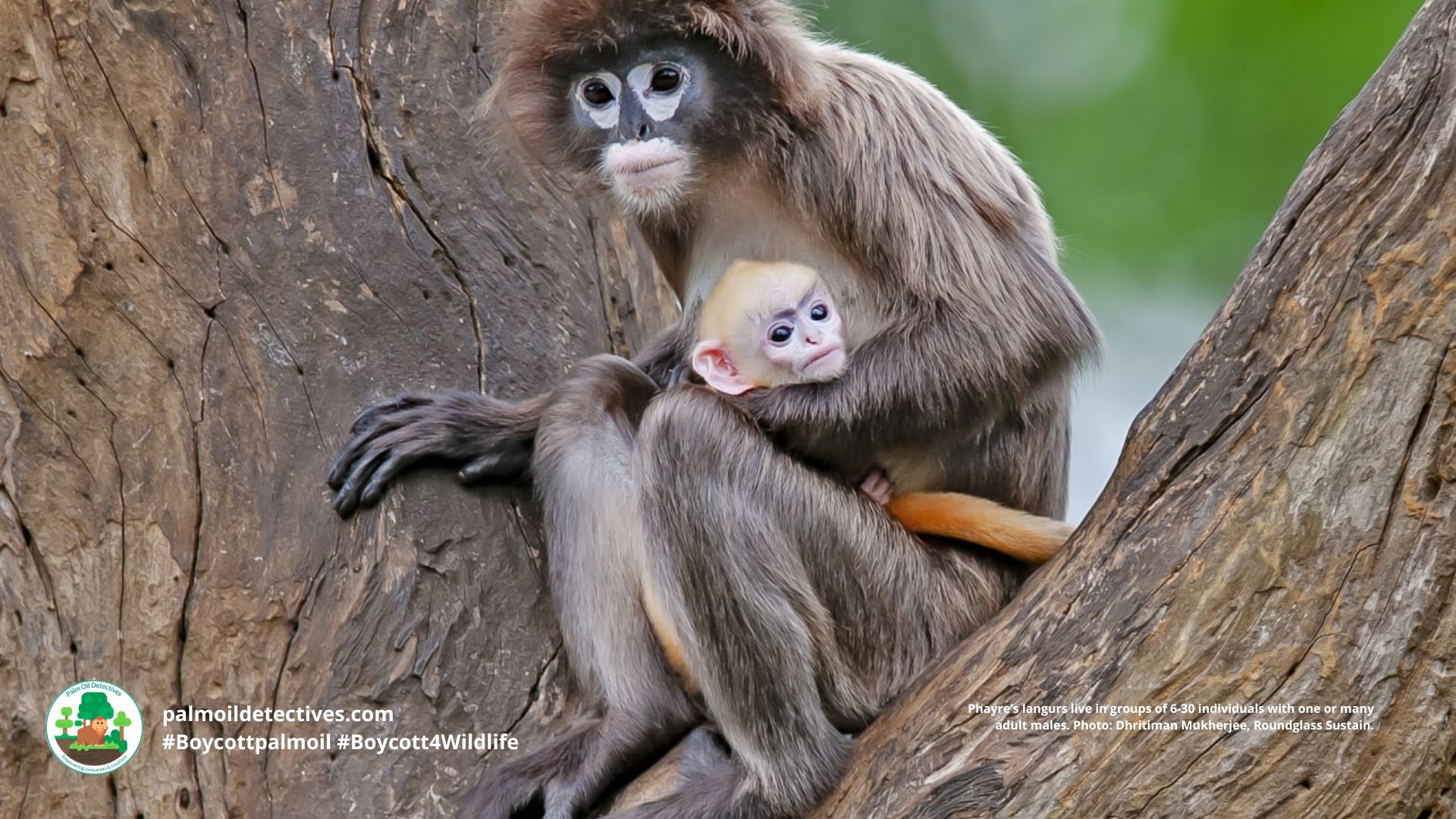
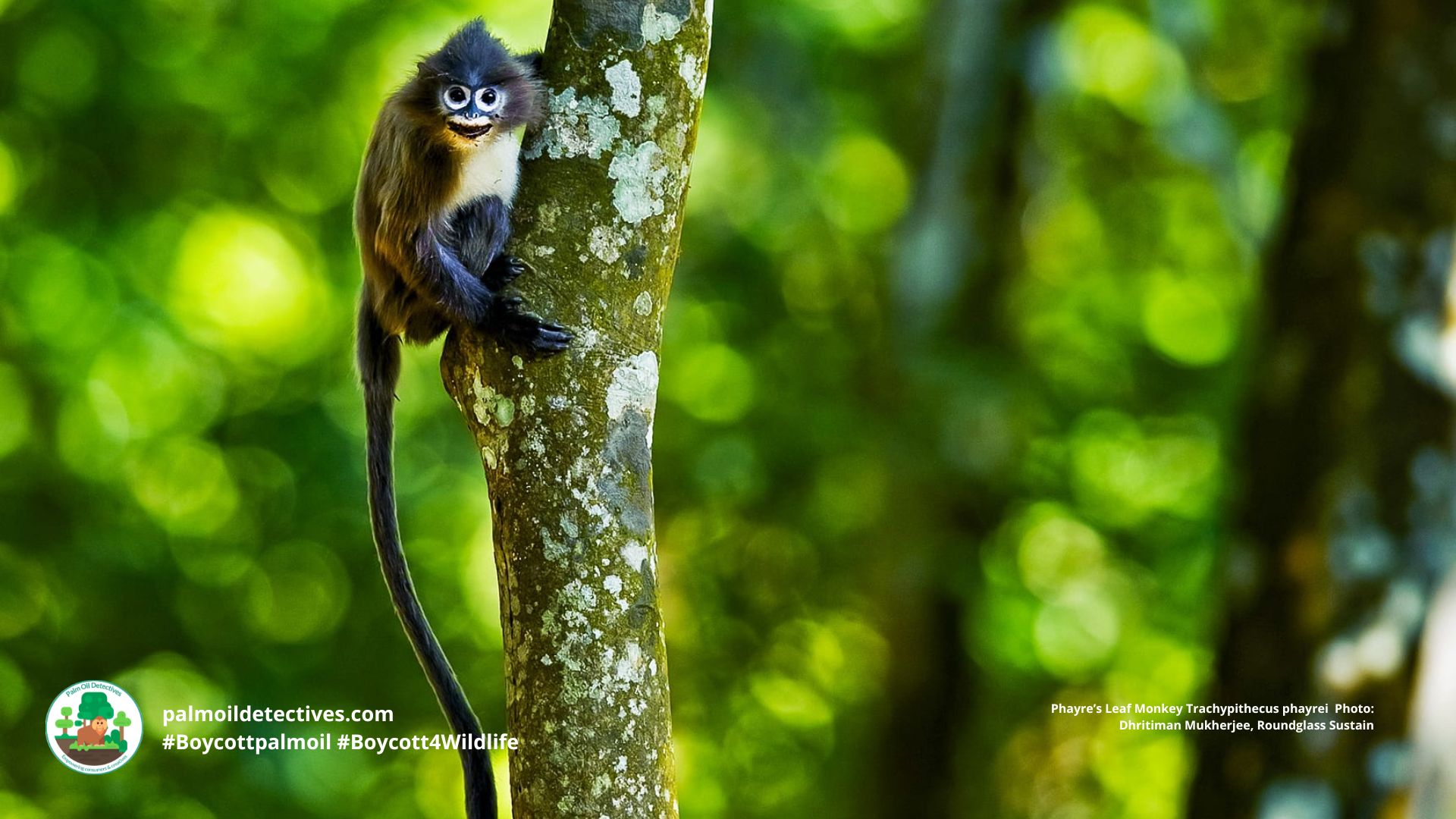
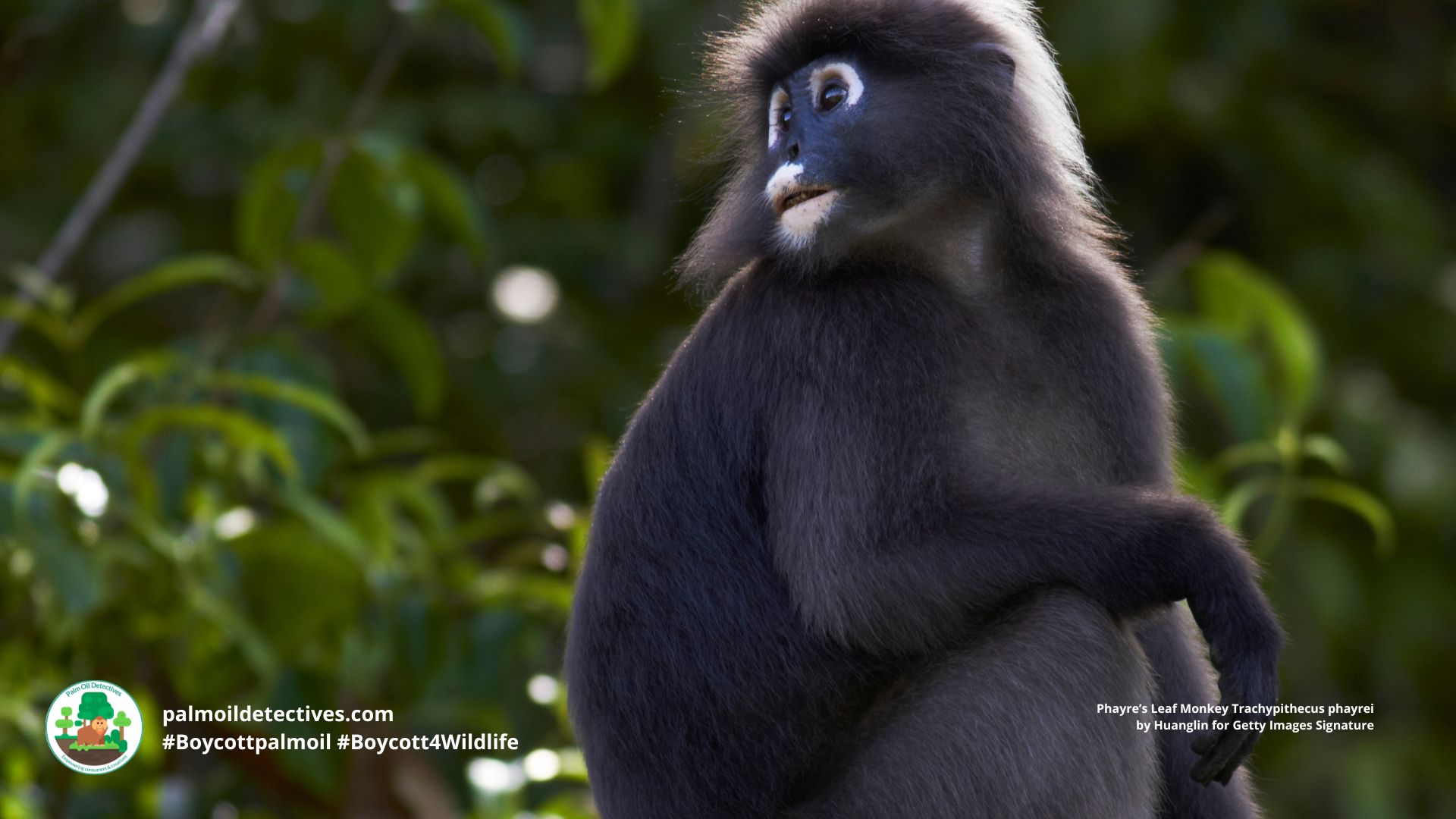
The Phayre’s leaf monkey has a striking species with soft, bluish-brown fur that contrasts with white patches around their eyes and mouth, giving them a bespectacled look. These monkeys move gracefully through the forest canopy, often leaping from tree to tree with agility. Living in small social groups, they demonstrate close bonds through grooming and playing. Their social hierarchy typically includes an alpha male, and they communicate with distinctive vocalisations such as loud calls for alarms and softer sounds for group cohesion. Watching these langurs traverse the trees with calm, measured movements is an awe-inspiring sight, underscoring their crucial role in the forest ecosystem.
Threats
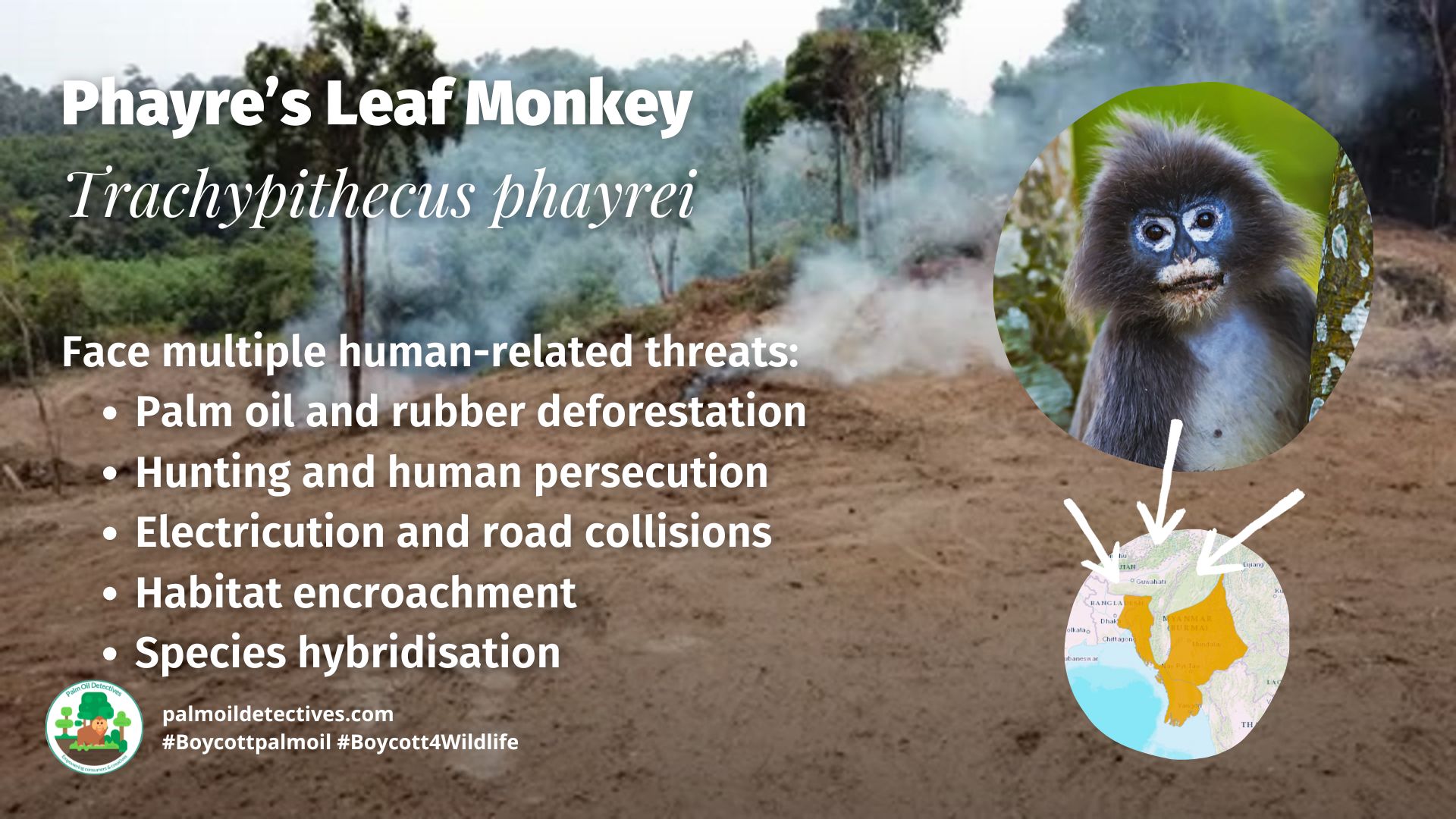
Habitat destruction and fragmentation
Vast areas of their habitat are lost due to commercial logging, agriculture, and monoculture plantations, especially for palm oil and rubber. This reduction in forest cover isolates populations and limits their food sources, further endangering their survival.
Hunting and Traditional Medicine
Phayre’s leaf monkeys are hunted for their gallstones, which are falsely believed to have medicinal properties. Additionally, they are hunted for meat in certain regions, severely impacting their population numbers.
Rubber Monoculture Deforestation
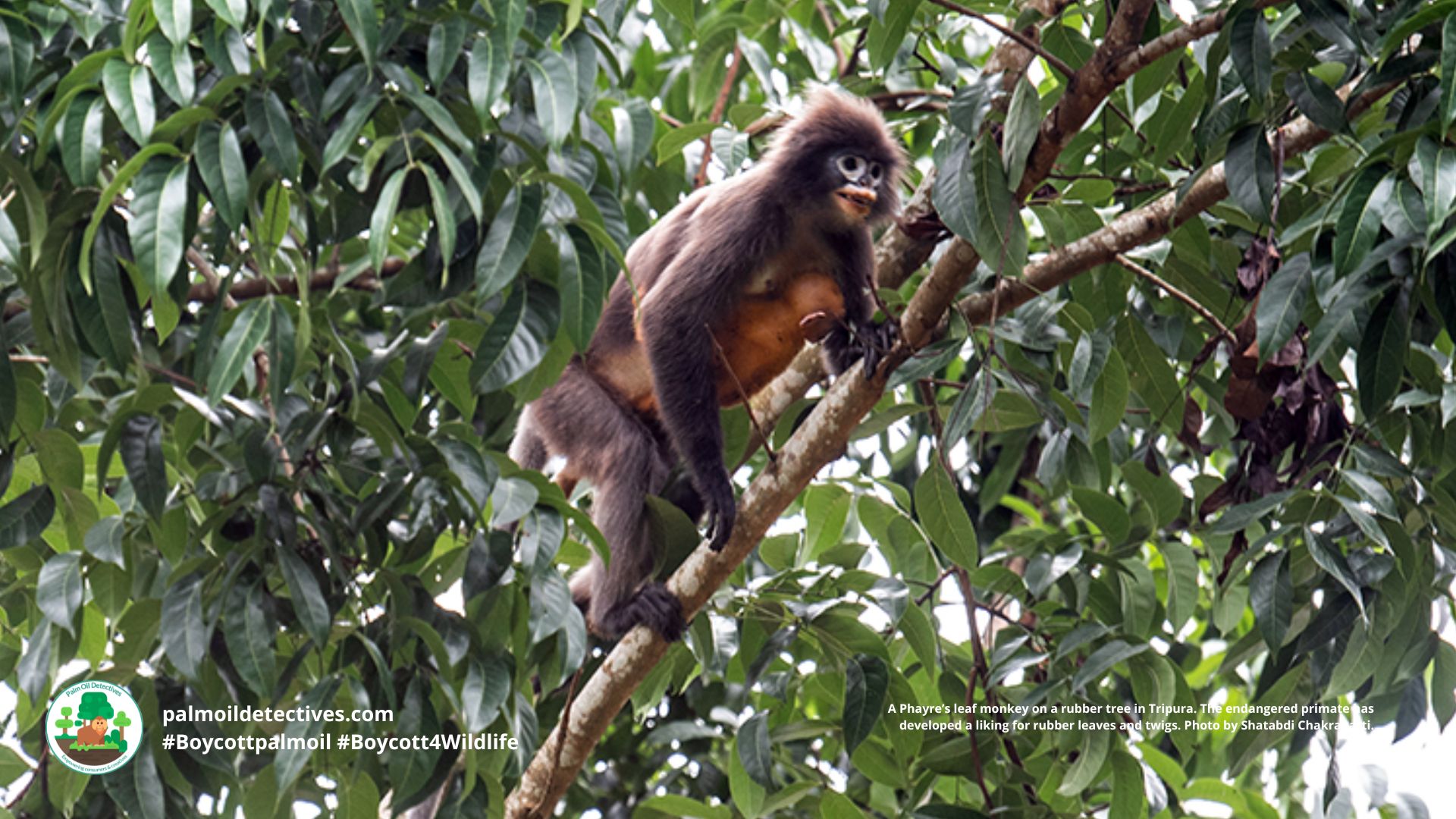
In areas like Tripura, large-scale rubber plantations have replaced natural forests, pushing the Phayre’s leaf monkey to adapt their diet to rubber leaves, which may not meet their full nutritional needs. This dependency compromises their health and survival in the wild.
Roadkill and Electrocution
Increasing roads and power lines within their forest habitat put Phayre’s leaf monkeys at risk of fatal encounters with vehicles and electrocution, both common threats as development encroaches further into their territory.
Palm Oil Monoculture Deforestation
The relentless expansion of palm oil plantations destroys primary forests, forcing Phayre’s leaf monkeys into limited spaces with reduced food availability, directly contributing to their population decline.
Interbreeding with other endangered monkey species
Species hybridisation with other endangered monkey species such as Capped Langurs in Bangladesh is occuring due to increased pressure on food sources through habitat destruction.
Habitat
This monkey occupies dense tropical, evergreen, and deciduous forests of Northeast India, Bangladesh, and parts of Myanmar. They prefer habitats with dense canopies for protection and ease of movement, where they share resources with other arboreal species but tend to avoid direct competition.
Diet
Phayre’s leaf monkeys are primarily folivorous, feeding on young leaves, shoots, and occasionally fruits, seeds, and flowers. In rubber plantation areas, they consume rubber leaves due to the scarcity of other natural foods, though their natural diet consists of a wide variety of native plants.
Mating and breeding
Phayre’s leaf monkeys exhibit complex social structures and mating behaviours. Females reach reproductive maturity at around five years, with a gestation period of approximately 205 days. These langurs practice polygynous mating, where dominant males mate with several females and play a protective role in the group. Young are cared for by their mothers, with weaning occurring at about 19-21 months.
Support Phayre’s Leaf Monkeys by going vegan and boycotting palm oil in the supermarket, it’s the #Boycott4Wildlife
Local and international conservation measures are in place for Phayre’s leaf monkey, including protection under CITES Appendix II and national wildlife laws in India and Bangladesh. Local NGOs and conservation groups are actively working to safeguard their habitats. Indigenous-led conservation efforts, focusing on traditional ecological knowledge, are crucial for their survival. Learn more about indigenous conservation approaches here and here.
Support the conservation of this species
This animal has no protections in place. Read about other forgotten species here. Create art to support this forgotten animal or raise awareness about them by sharing this post and using the #Boycottpalmoil #Boycott4Wildlife hashtags on social media. Also you can boycott palm oil in the supermarket.
Further Information
Bose, J., & Bhattacharjee, A. (2021, February). Perils of the Phayre’s leaf monkey. Mongabay India.
Chetry, D., & Ahmed, T. (2021). Trachypithecus phayrei. The IUCN Red List of Threatened Species 2021 https://www.iucnredlist.org/species/175862145/175862149
Nelaballi, S. (2023, September 23). Phayre’s Langur: A future denied. RoundGlass Sustain.
Wikipedia contributors. (2024, October 30). Phayre’s leaf monkey. In Wikipedia, The Free Encyclopedia.

How can I help the #Boycott4Wildlife?
Take Action in Five Ways
1. Join the #Boycott4Wildlife on social media and subscribe to stay in the loop: Share posts from this website to your own network on Twitter, Mastadon, Instagram, Facebook and Youtube using the hashtags #Boycottpalmoil #Boycott4Wildlife.
2. Contribute stories: Academics, conservationists, scientists, indigenous rights advocates and animal rights advocates working to expose the corruption of the palm oil industry or to save animals can contribute stories to the website.




3. Supermarket sleuthing: Next time you’re in the supermarket, take photos of products containing palm oil. Share these to social media along with the hashtags to call out the greenwashing and ecocide of the brands who use palm oil. You can also take photos of palm oil free products and congratulate brands when they go palm oil free.
4. Take to the streets: Get in touch with Palm Oil Detectives to find out more.
5. Donate: Make a one-off or monthly donation to Palm Oil Detectives as a way of saying thank you and to help pay for ongoing running costs of the website and social media campaigns. Donate here
Learn about other animals endangered by palm oil and other agriculture
Learn about “sustainable” palm oil greenwashing
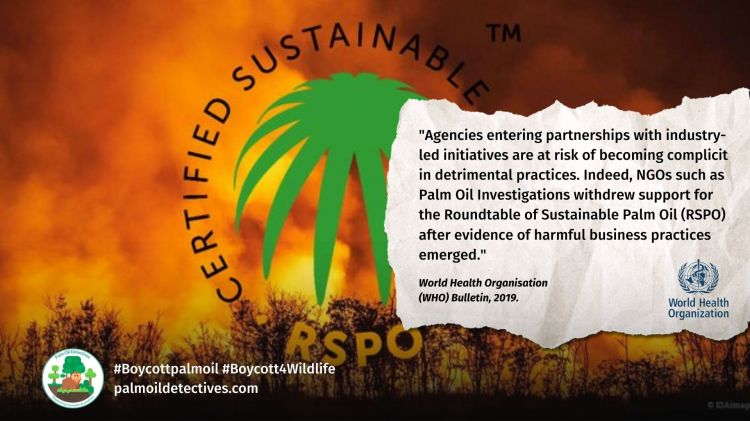
Read more about RSPO greenwashing
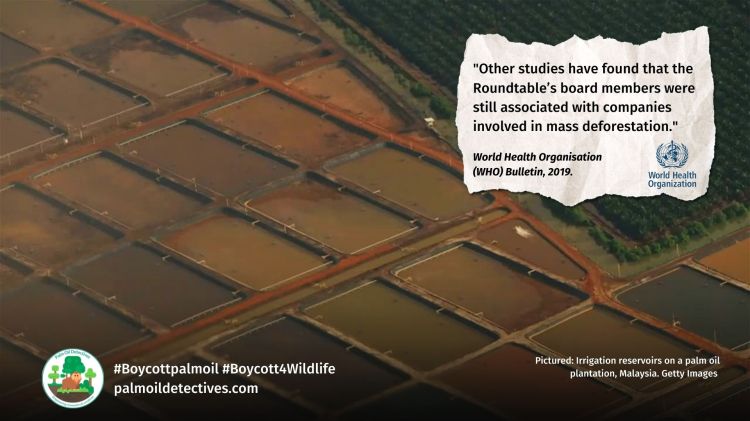
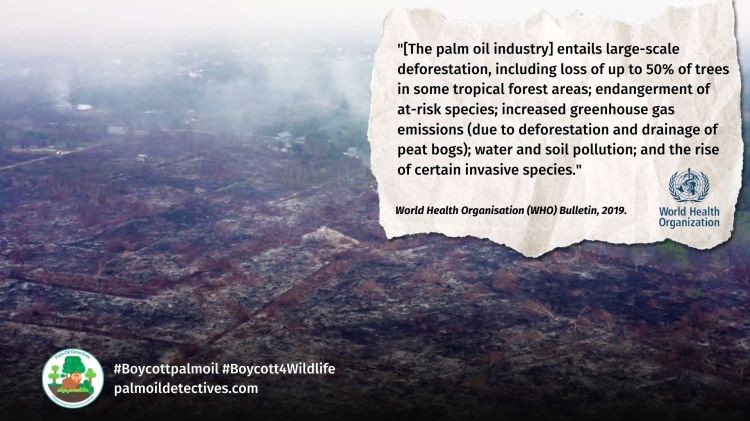
A 2019 World Health Organisation (WHO) report into the palm oil industry and RSPO finds extensive greenwashing of palm oil deforestation and the murder of endangered animals (i.e. biodiversity loss)


Discover more from Palm Oil Detectives
Subscribe to get the latest posts sent to your email.
 Palm Oil Detectives